Pakistan

KCCI urges federal intervention to waive demurrage, detention charges accrued during Transporters’ strike
Pakistan

KCCI urges federal intervention to waive demurrage, detention charges accrued during Transporters’ strike

KARACHI: The Karachi Chamber of Commerce and Industry (KCCI) has formally requested the Ministry of Maritime Affairs to urgently intervene and direct shipping lines, terminal operators, and port authorities to waive, suspend, or substantially reduce demurrage and detention charges for consignments that remained stuck at ports solely due to the nationwide goods transporters’ strike from 8th to 17th December 2025.In a letter sent to Federal Minister for Maritime Affairs Junaid Anwar Chaudhry, Chairman Businessmen Group Zubair Motiwala and President KCCI Rehan Hanif highlighted an extraordinary situation due to transporters strike that caused severe financial distress to the trading and industrial community. The strike resulted in a near-complete suspension of cargo movement to and from Karachi Port, Port Qasim, and associated terminals. During this period, import and export consignments remained immobilized at ports and terminals through no fault of the consignees or shippers, leading to the accumulation of heavy demurrage and container detention charges on a daily basis. They said that the prolonged disruption had a crippling impact on supply chains, production cycles, and export commitments. Exporters faced shipment delays, order cancellations, and loss of credibility with international buyers, while importers were unable to clear raw materials and essential inputs required for industrial operations. The demurrage and detention charges imposed during this forced stoppage have become an unbearable financial burden, particularly for small and medium enterprises, and threaten to erode already thin margins in an environment characterized by high energy costs, elevated interest rates, and overall cost pressures, they added.Chairman BMG and President KCCI mentioned that throughout the duration of the strike, KCCI, as the largest chamber of commerce in Pakistan, remained fully engaged in efforts to resolve the crisis. They actively mediated between goods transporters, port stakeholders, and relevant authorities, repeatedly cautioning that the continued paralysis of cargo movement amounted to economic sabotage and would inflict long-term damage on national trade and exports. KCCI’s consistent engagement and advocacy played an important role in facilitating dialogue and restoring normal operations; however, the financial consequences of the disruption continue to persist in the form of accrued demurrage and detention liabilities. They urged the Ministry of Maritime Affairs to intervene immediately and direct shipping lines, terminal operators, and port authorities to waive, suspend, or substantially reduce demurrage and detention charges for consignments that remained stuck at ports solely due to the transporters’ strike. They also requested that extraordinary facilitation measures be undertaken to ensure swift clearance of the backlog of containers so that trade flows may return to normal without additional financial strain on the business community. They firmly believe that timely intervention will not only mitigate the immediate losses suffered by the business community but will also reinforce confidence in the government’s commitment to safeguarding trade and industry during unforeseen crises.
Pakistan’s Foreign Exchange Reserves Surge on IMF Inflows
Pakistan

Pakistan’s Foreign Exchange Reserves Surge on IMF Inflows

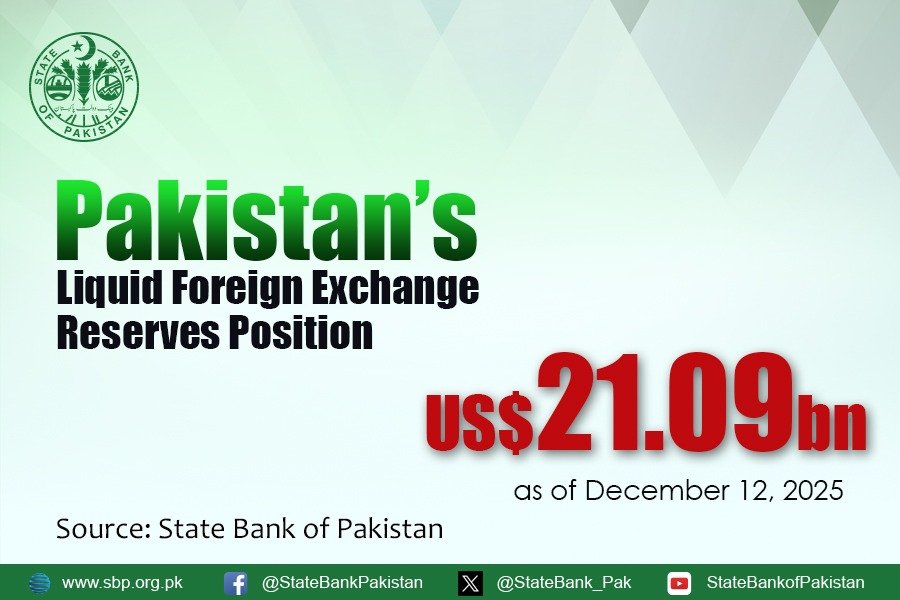
Pakistan’s liquid foreign exchange reserves recorded a strong weekly increase in December 2025, driven primarily by fresh inflows from the International Monetary Fund (IMF). The latest data released by the State Bank of Pakistan (SBP) highlights improving external liquidity conditions and renewed confidence in Pakistan’s macroeconomic stabilization efforts. This business blog breaks down the current foreign reserves position, compares it with the previous week, and explains why the IMF disbursement is significant for Pakistan’s economy. Pakistan’s Current Foreign Exchange Reserves Position (as of 12 December 2025) As of 12 December 2025, Pakistan’s total liquid foreign reserves stood at USD 21.09 billion, marking a notable week-on-week increase. In text form, the reserves position is as follows:• Foreign exchange reserves held by the State Bank of Pakistan (SBP): USD 15.89 billion• Net foreign reservesiled exchange reserves held by commercial banks: USD 5.20 billion• Total liquid foreign exchange reserves: USD 21.09 billion Weekly Increase in SBP Reserves During the week ended 12 December 2025, SBP’s foreign exchange reserves rose by USD 1.3 billion, increasing from USD 14.59 billion to USD 15.89 billion. According to SBP, this sharp rise was mainly due to the receipt of SDR 914 million (approximately USD 1.2 billion) from the IMF under: • The Extended Fund Facility (EFF), and• The Resilience and Sustainability Facility (RSF). This inflow significantly strengthened Pakistan’s reserve buffers and improved short-term external financing comfort. Foreign Exchange Reserves Position: Previous Week (as of 5 December 2025) For comparison, Pakistan’s liquid foreign reserves position one week earlier, on 5 December 2025, was as follows: • SBP-held foreign exchange reserves: USD 14.59 billion• Net foreign exchange reserves held by commercial banks: USD 5.03 billion• Total liquid foreign exchange reserves: USD 19.61 billion During that week, SBP’s reserves increased only marginally by USD 12 million, reflecting relatively stable inflows before the IMF tranche was formally accounted for. SBP had already confirmed that the SDR 914 million IMF disbursement was received during that period, with its impact scheduled to appear in the reserves data for the week ending 12 December 2025 which is now fully reflected in the latest figures. Why the IMF Inflow Matters for Pakistan’s Economy The IMF-linked increase in foreign exchange reserves carries several positive implications for Pakistan’s economy, including: • Improved external sector stability, reducing immediate balance-of-payments pressure• Greater confidence in the Pakistani rupee, supporting exchange rate stability• Enhanced investor sentiment, particularly among foreign portfolio and direct investors• Stronger import cover, improving Pakistan’s ability to finance essential imports The rise in reserves also signals continued policy alignment with IMF reform commitments, a key factor closely watched by global financial markets and rating agencies. Outlook: What to Watch Next Going forward, market participants will closely monitor:• Further IMF-related inflows or program reviews• Export performance and remittance trends• SBP’s monetary and exchange rate policy stance• External debt repayments and rollover plans Sustaining reserve accumulation will be critical for Pakistan as it navigates global economic uncertainty and domestic fiscal challenges in 2026.

PSX Hits Fresh Record, Nears 172,000 Milestone
Pakistan

PSX Hits Fresh Record, Nears 172,000 Milestone

KARACHI, Dec 18 — The Pakistan Stock Exchange (PSX) extended its record-breaking rally on Wednesday, nearing 172,000 milestone, with the benchmark KSE-100 Index closing at a new all-time high of 171,961 points after gaining 1,646 points, or 0.97%.The bullish momentum remained robust throughout the session, fueled primarily by better-than-expected current account figures for November, which boosted investor sentiment and triggered fresh buying across major sectors.Fertilizer, banking, and cement stocks led the advance, collectively contributing over 1,500 points to the index. Key performers included ENGRO Holdings, Fauji Fertilizer Company (FFC), United Bank Limited (UBL), Lucky Cement (LUCK), and Bank AL Habib (BAHL).Market participation stayed healthy, with total traded volume reaching 947.7 million shares and turnover hitting Rs 54 billion. TPL REIT Fund I (TPLRF1) topped the volume charts with around 75.8 million shares changing hands.Corporate developments added to the positive vibe. Maple Leaf Cement Factory (MLCF) announced a public offer to acquire an additional 11.72% stake in Pioneer Cement at Rs 478.43 per share, complementing an earlier share purchase agreement for 58.03%, taking its intended total holding to 69.75%.In another notable deal, the Nishat Group signed an SPA to acquire up to 75.69% of Rafhan Maize Products Limited (RMPL), a leading maize-based food processor with annual sales of approximately Rs 75 billion. DG Khan Cement (DGKC) is set to secure a significant 32.71% stake as part of the transaction, underscoring rising M&A activity in the market.Analysts noted that sustained foreign inflows and improving macroeconomic indicators continue to support the bullish trend.Outlook: The index may push toward further highs in Thursday’s session, the last of the week. However, a decisive weekly close above the psychological 170,000 level will be crucial to confirm the uptrend and maintain investor confidence.

Maple Leaf Cement Set to Take Control of Pioneer Cement with Over 69% Shareholding
Pakistan

Maple Leaf Cement Set to Take Control of Pioneer Cement with Over 69% Shareholding

Maple Leaf Cement Factory Limited (PSX: MLCF) is moving decisively to strengthen its position in Pakistan’s cement sector, as it prepares to acquire majority control of Pioneer Cement Limited. Following a newly announced public offer, Maple Leaf Cement’s total shareholding in Pioneer Cement is expected to exceed 69%, marking a major consolidation move within the industry. Public Offer to Acquire Additional Shares Pioneer Cement has formally notified the Pakistan Stock Exchange (PSX) that it received a Public Announcement of Public Offer from Next Capital Limited, which is acting as the Manager to the Offer on behalf of Maple Leaf Cement. Under this public offer, Maple Leaf Cement intends to acquire up to 26.62 million ordinary shares, representing 11.72% of Pioneer Cement’s issued and paid-up share capital. The offer price has been set at Rs 478.43 per share, in line with regulatory requirements. Prior Share Purchase Agreement Already Secured This public offer comes in addition to a previously executed Share Purchase Agreement (SPA) signed on December 17, 2025. Under that agreement, Maple Leaf Cement has already agreed to acquire 131.82 million shares, which accounts for 58.03% of Pioneer Cement’s share capital, at the same price of Rs 478.43 per share. Aggregate Shareholding to Cross 69% Once both transactions are completed, Maple Leaf Cement’s aggregate ownership in Pioneer Cement will rise beyond 69%, effectively transferring management control of Pioneer Cement to Maple Leaf Cement. This level of ownership firmly establishes Maple Leaf as the controlling shareholder. Breakdown of the Acquisition • Through Share Purchase Agreement(s):Maple Leaf Cement is acquiring 131,820,554 shares, representing 58.03% of Pioneer Cement’s total share capital, at a price of Rs 478.43 per share.• Through Public Offer:The company is seeking to acquire 26,623,096 additional shares, equivalent to 11.72% of the issued share capital, also at Rs 478.43 per share. Regulatory Compliance and Market Transparency The acquisition process follows Maple Leaf Cement’s Public Announcement of Intention dated November 13, 2025, and is being conducted strictly in accordance with the Securities Act, 2015 and the Listed Companies (Substantial Acquisition of Voting Shares and Takeovers) Regulations, 2017. This structured approach ensures regulatory compliance, transparency, and protection of minority shareholders. Strategic Impact on Pakistan’s Cement Sector Industry analysts view this acquisition as a strategic consolidation move aimed at enhancing operational efficiencies, expanding production capacity, and strengthening market positioning amid evolving demand dynamics in Pakistan’s construction and infrastructure sectors. With Maple Leaf Cement already among the leading players in the industry, gaining control of Pioneer Cement could unlock synergies in production, distribution, and cost optimization, potentially reshaping competitive dynamics within the cement market. Maple Leaf Cement’s acquisition of a controlling stake in Pioneer Cement marks one of the most significant corporate developments in Pakistan’s cement industry in 2025. As the transaction progresses toward completion, market participants will closely monitor its impact on valuations, sector consolidation, and future investment trends.

Pakistan’s Foreign Direct Investment Reduced in November
Pakistan

Pakistan’s Foreign Direct Investment Reduced in November

Pakistan’s foreign investment inflows faced renewed pressure in November, signaling cautious investor sentiment amid economic adjustments and global uncertainty. According to the latest data released by the State Bank of Pakistan (SBP), the country recorded foreign direct investment (FDI) of $179.7 million, marking a noticeable decline compared to $231.89 million in the same period last year (SPLY). The slowdown highlights the challenges Pakistan continues to face in attracting consistent foreign capital, despite ongoing reform efforts and policy recalibration. Month-on-Month Decline Signals Volatility A month-on-month comparison paints a sharper picture of volatility. In October, Pakistan attracted $385 million in foreign investment, meaning November’s figure represents a significant pullback in inflows. This fluctuation suggests that while short-term investment interest exists, confidence remains fragile and sensitive to macroeconomic and geopolitical developments. FDI Falls Sharply in First Five Months of FY26 Looking at cumulative performance, the trend remains subdued. During the first five months of FY26 (5MFY26), Pakistan attracted $927.43 million in FDI, down from $1.24 billion recorded during the same period last fiscal year. The year-on-year decline reflects ongoing structural challenges, including high financing costs, currency volatility, and cautious global capital flows toward emerging markets. Direct Investment Inflows Drop Nearly 44% Year-on-Year Breaking down November’s FDI composition: • Direct investment inflows stood at $270.44 million, reflecting a sharp 43.83% decline year-on-year.• Outflows fell to $90.74 million, down by over 63% YoY, offering some relief on the capital exit front. The decline in both inflows and outflows indicates reduced overall activity rather than aggressive divestment. Portfolio Investment Outflows Ease Portfolio investment under FDI also showed some improvement.In November, Pakistan recorded a portfolio outflow of $32.42 million through equity securities, compared to a much larger $59.14 million outflow in November 2024. While still negative, the narrowing gap suggests a slight stabilization in foreign investor confidence in Pakistan’s equity markets. Private vs Public Foreign Investment Trends Foreign private investment remained positive but moderated: • Private foreign investment totaled $150.53 million in November 2025, compared to $172.75 million in the same month last year. On the public side, however: • Foreign public investment recorded an outflow of $42.84 million, mainly through equity securities, further weighing on total inflows. Total Foreign Investment Declines Sharply Taking all components together, total foreign investment in November stood at $104.44 million, nearly half of the $194.87 million recorded in November 2024. On a cumulative basis, total foreign investment during 5MFY26 reached $313.66 million, a steep decline from $1.39 billion reported in the corresponding period last year. What This Means for Pakistan’s Economy The latest SBP data underscores a critical reality: Pakistan’s foreign investment recovery remains uneven. While reduced outflows and easing portfolio pressure offer modest positives, sustained FDI growth will depend on: • Policy consistency and regulatory clarity• Macroeconomic stability• Investor-friendly reforms• Improved energy and infrastructure outlook For Pakistan to regain momentum, long-term confidence not just short-term inflows must be rebuilt. November’s foreign investment figures highlight a period of recalibration rather than collapse. The coming months will be crucial in determining whether Pakistan can convert economic stabilization into renewed foreign investor confidence.

Pakistan

Historical Milestone: Pakistan Targets Permanent IMF Exit with $63bn Export Goal by 2029

Islamabad: The government has initiated high-level discussions to formulate a credible strategy for permanently exiting International Monetary Fund (IMF) programmes after the current $7 billion Extended Fund Facility concludes in September 2027. Sources told The Express Tribune that a recent meeting assessed Pakistan’s ability to sustain its economy without IMF support. The Planning Commission warned that without urgent reforms—building foreign exchange reserves and developing complete industrial value chains—the country risks entering another bailout programme. Planning Minister Ahsan Iqbal emphasised that achieving $63 billion in exports by 2029 is essential to make the current programme Pakistan’s last. Failure to reach this target would create persistent external sector gaps. The Commission’s assessment projects temporary widening of the current account deficit to below 2% of GDP (over $10 billion annually) as the economy shifts from stabilisation to growth. Additional financing needs are estimated at $4 billion in 2027-28, $5.5 billion in 2028-29, and $3 billion in 2029-30. Cumulative gross financing requirements could exceed $12 billion from 2028-31. These gaps can be bridged through $4 billion higher exports, $4 billion additional remittances, $3 billion new foreign direct investment, and agriculture import substitution, the assessment states. Converting $14 billion in short-term bilateral loans into long-term financing is also proposed to reduce external pressures. The Commission outlined a three-phase reform plan: fiscal, energy, governance and export-aligned reforms until 2027; accelerated industrialisation and investment attraction from 2029-32; and a shift toward high-quality, technology-driven growth thereafter. Prime Minister Shehbaz Sharif has directed the Commission to develop a results-oriented strategy under the Uraan Pakistan 10-year plan to sustain growth above 6%, control inflation, and build external buffers. However, critics question the practicality of ambitious targets, including a $1 trillion economy by 2035, amid declining investment, rising unemployment, and regional disparities.

Magnum Separates from Unilever, and Begins Operations in Pakistan as an Independent Company
Pakistan

Magnum Separates from Unilever, and Begins Operations in Pakistan as an Independent Company

Magnum, the Netherlands–based global manufacturer of frozen desserts and ice cream, has begun operations in Pakistan as an independent company. The company has expressed its intention to invest in expanding manufacturing capacity, strengthening cold-chain infrastructure, and enhancing digital capabilities in the near future. Read More: https://theboardroompk.com/worlds-largest-standalone-ice-cream-business-magnum-ice-cream-valued-at-9-1-billion-in-amsterdam-listing/ The establishment of Magnum Ice Cream Company Pakistan Limited (Magnum Pakistan) took place earlier this year following the global separation of the ice cream business from the Unilever Group. Although the ice cream division has been serving Pakistani consumers for the past three decades, the separation from Unilever Pakistan will now allow greater focus and dedicated attention to this sector.Magnum Ice Cream Company Pakistan plans to invest in expanding manufacturing capacity, reinforcing cold-chain infrastructure, and developing digital capabilities. These investments in Pakistan are expected to create more employment opportunities in the coming years and further strengthen the company’s commitment to economic growth and sustainability.Magnum Pakistan’s Country General Manager, Kayhan Zenginoglu, said: “This moment is a milestone for Magnum Pakistan. We are here to lead the frozen desserts and ice cream sector through bold innovation, global standards, and a deep understanding of consumers.” The company currently produces millions of liters of ice cream annually and expects an increase in production in the coming months. Building on this strong foundation, Magnum Pakistan has developed comprehensive plans to accelerate growth by expanding its presence in the premium products market and enhancing consumer experiences.

Chinese Firm Proposes €2 Billion to Boost Shipbuilding and Steel Work at Port Qasim
Pakistan, World

Chinese Firm Proposes €2 Billion to Boost Shipbuilding and Steel Work at Port Qasim

ISLAMABAD: A delegation from China’s Shandong Xinxu Group, led by Chairman Hou Jianxin, has expressed strong interest in developing a multi-billion-euro Integrated Maritime Industrial Complex (IMIC) at Pakistan’s Port Qasim, potentially marking one of the largest foreign investments in the country’s maritime sector in recent years.The five-member Chinese team met Federal Minister for Maritime Affairs Muhammad Junaid Chaudhry on December 18, 2025, to discuss the ambitious project, estimated to cost between €1 billion and €2 billion. The IMIC aims to revitalize Pakistan’s maritime and heavy industrial capabilities through three core components: reviving the dormant Iron Ore and Coal Berth (IOCB) Jetty—also known as the steel jetty—establishing advanced shipbuilding and shipbreaking facilities, and integrating a modern steel mill directly with port operations. Read More: https://theboardroompk.com/china-japan-tension-us-b-52-bombers-fly-with-japanese-jets-in-direct-response-to-sino-russia-drills/ The IOCB Jetty, originally designed for bulk cargo handling of iron ore and coal to support Pakistan Steel Mills, features a dedicated conveyor system and can accommodate vessels up to 75,000 deadweight tons. The proposal builds on the “Steel-to-Green Sea” initiative unveiled by the minister in November 2025, emphasizing sustainable development, job creation, and reduced import dependency.Minister Chaudhry welcomed the interest and urged the group to submit a detailed unsolicited proposal, including technical, financial, and environmental feasibility studies. A joint committee, comprising officials from the Ministry of Maritime Affairs and Shandong Xinxu representatives led by Additional Secretary Umar Zafar Sheikh, will review the roadmap.If approved, the project could transform Port Qasim into a regional hub for heavy industry and logistics, aligning with Pakistan’s goals for economic growth and environmental responsibility. Shandong Xinxu, a high-tech enterprise specializing in renewable energy and industrial projects, has been actively engaging with Pakistani authorities on maritime investments.This development underscores deepening Pakistan-China economic ties, potentially injecting significant capital and technology into the nation’s blue economy.

Beaconhouse, City School, LGS, Roots, City School and Others Granted Extension by CCP Till Dec 30 to Respond to Uniform Monopoly Notices
Pakistan

Beaconhouse, City School, LGS, Roots, City School and Others Granted Extension by CCP Till Dec 30 to Respond to Uniform Monopoly Notices

ISLAMABAD, Dec 17: The Competition Commission of Pakistan (CCP) has received requests from major private school systems seeking additional time to submit their replies to the show-cause notices.The proceedings relate to alleged violations of Section 4 of the Competition Act, 2010 concerning abuse of dominant position, requiring parents to purchase branded uniforms, stationery, and other mandatory supplies exclusively from designated vendors.After considering these requests, and to ensure due process and a fair, transparent opportunity of hearing for all parties, the Commission has granted an extension of time until 30 December 2025 for submission of responses. Some school systems have already submitted their written replies.The school systems issued show-cause notices include Beaconhouse School System, The City School, Headstart, Lahore Grammar School (LGS), Froebel’s, Roots International, Roots Millennium, KIPS, Allied Schools, Super Nova, Dar-e-Arqam, STEP School, Westminster International, United Charter School, and The Smart School, among others.Upon receipt of replies, the CCP will fix hearings at which the concerned schools or their authorized counsel will be given an opportunity to present their case in accordance with the law.CCP Chairman Dr. Kabir Ahmed Sidhu reiterated that the education sector is a vital public interest sector with a direct impact on millions of households. He affirmed that the Commission remains committed to ensuring fair competition, safeguarding consumer welfare, and conducting proceedings in a transparent, impartial, and lawful manner.

Pakistan

Pakistani Fintech ABHI Partners with Crypto Giant Zignaly to Launch First RWA Private Credit Product in UAE

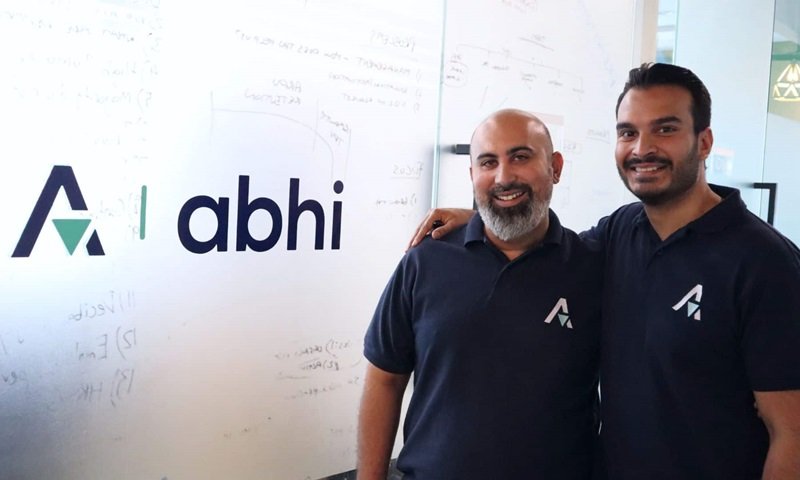
KARACHI: December 17, 2025: Pakistani-origin fintech ABHI announced a partnership to introduce Zignaly’s first Real-World Asset (RWA) private credit offering in the UAE.This milestone enables global stablecoin investors to earn short-duration, asset-backed yield generated directly from ABHI’s SME receivables portfolio with minimum ticket sizes as low as $10, according to the press released issued by ABHI.The product creates a direct bridge between on-chain liquidity and real economic activity. Through this product, ABHI will finance short-term SME receivables using stablecoin capital sourced via Zignaly’s 650k+ users who will gain exposure to yield derived from the financing of real-world invoices and working capital requirements. This collaboration represents the first live execution of ZIGChain’s RWA vision: delivering real yield rooted in genuine business activity, accelerating institutional adoption of blockchain based credit infrastructure. By combining ABHI’s established SME-financing engine with Zignaly’s distribution layer and ZIGChain’s wealth generation infrastructure, the launch introduces a scalable new asset category for the crypto ecosystem and establishes the foundation for a broader portfolio of tokenized private credit solutions.“The future of finance will lie in tokenization, and we are starting now. Partnering with ZIGChain represents the next chapter in ABHI’s mission to democratize financial access across MENAP. With stablecoin-enabled debt financing, we are unlocking an entirely new liquidity pathway for businesses. This collaboration allows us to serve clients with even greater speed while ensuring sustainable, diversified capital sources. As the region embraces digital finance, ABHI is proud to stand at the forefront of innovation, building solutions that strengthen the financial resilience of both employers and their workforce.” – Omair Ansari, Co-Founder & CEO, ABHI Middle East Limited.“This is a milestone for the entire RWA ecosystem and a clear validation of the ZIGChain vision. By connecting proven originators like ABHI with global on-chain liquidity, we demonstrate how real-world assets can move transparently and compliantly. ZIGChain’s infrastructure now enables stable, institution-grade yield to reach investors worldwide, and private credit is only the beginning. This integration marks the start of a scalable pipeline for tokenized credit, private debt, and a full spectrum of real-world yield products.” – Abdul Rafay Gadit, Co-Founder, ZIGChain.

Scroll to Top