Business

Pakistan Stock Exchange Decline Sparks Market Jitters as KSE-100 Slides Sharply
Business

Pakistan Stock Exchange Decline Sparks Market Jitters as KSE-100 Slides Sharply

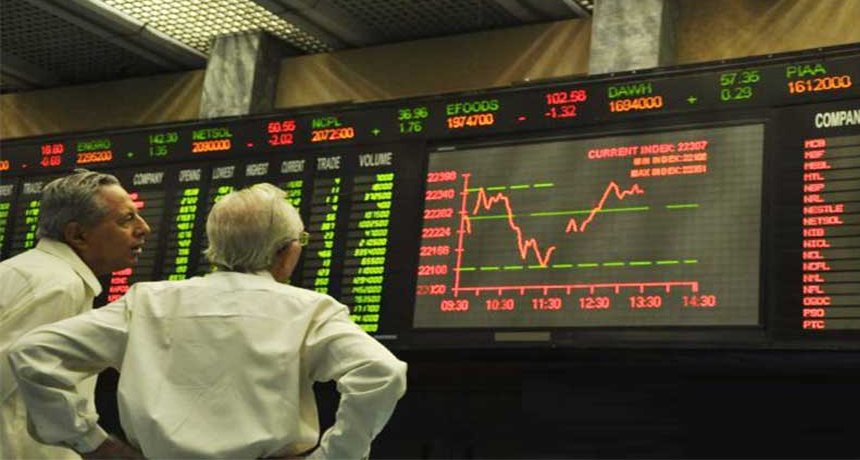
The Pakistan Stock Exchange decline dominated market headlines on Monday as intense selling pressure swept across major sectors, sending the benchmark Pakistan Stock Exchange into a steep downturn. Investors were left grappling with uncertainty as geopolitical tensions and fluctuating global energy prices rattled confidence, pushing equities into negative territory. Read More: https://theboardroompk.com/current-account-surplus-pakistan-reaches-427-million-in-february-raising-hopes-for-economic-stability/ By the end of the trading session, the benchmark KSE-100 Index closed at 149,178.66, down 4,687.50 points or 3.05%. The dramatic slide underscored mounting fears about economic stability and rising inflationary risks tied to global developments. Volatile Trading Reflects Pakistan Stock Exchange Decline Market activity throughout the day remained highly volatile. The index recorded an intraday high of 153,943.69 before plunging to a low of 148,747.72, highlighting a massive trading range of over 5,000 points. This sharp fluctuation mirrored investor nervousness and aggressive profit-taking. Total trading volume for the KSE-100 Index reached 153.18 million shares, indicating that despite bearish sentiment, market participation remained robust. However, overall market breadth painted a gloomy picture. Only 10 companies managed gains, while 85 declined, signaling broad-based weakness across sectors. A handful of stocks remained unchanged or untraded, reflecting limited optimism among traders. Key Sector Losses Drive Pakistan Stock Exchange Decline The Pakistan Stock Exchange decline was largely driven by heavy losses in critical economic sectors. Commercial banks led the downturn, dragging the index significantly lower. Fertilizer companies, oil and gas exploration firms, cement producers, and power generation companies also contributed to the steep fall. These sectors hold substantial weight in the benchmark index, meaning their collective weakness amplified the market’s downward momentum. In contrast, only minor support emerged from real estate investment trusts, technology and communication stocks, and select textile spinning companies far from enough to offset the widespread losses. Major Gainers and Losers Shape Market Sentiment Among the worst-performing stocks were leading names in cement, banking, and industrial segments, each registering losses exceeding 5%. Conversely, a few defensive and technology-linked stocks provided limited relief by posting modest gains. Despite these isolated pockets of strength, the overall sentiment remained fragile. Investors continued to shift toward safer positions, reflecting growing caution in the face of macroeconomic uncertainty. Broader Market Performance Amid Pakistan Stock Exchange Decline The downturn was not confined to blue-chip stocks. The broader All-Share Index also fell sharply, closing at 89,754.00, down 2,568.40 points or 2.78%. Total market volume across all listed companies stood at nearly 298 million shares, slightly lower than the previous session. However, the traded value increased to Rs20.19 billion, suggesting larger institutional trades and strategic repositioning by investors. Across 474 listed companies, only 90 recorded gains, while a staggering 324 closed lower, reinforcing the bearish tone. Geopolitical Tensions and Oil Price Volatility Weigh on PSX A key factor behind the Pakistan Stock Exchange decline was escalating geopolitical tension in the Middle East. Concerns over potential disruptions in global oil supply pushed energy prices into volatile territory. For an import-dependent economy like Pakistan, rising oil prices translate into higher inflation risks and increased fiscal pressure. As a result, investors fear tighter monetary conditions and slower economic growth factors that typically dampen equity market performance. Fiscal Year Gains vs Calendar Year Losses Interestingly, despite the recent downturn, the KSE-100 Index has still delivered a gain of over 23,500 points (18.75%) during the ongoing fiscal year. However, the calendar year tells a different story, with the market declining by nearly 24,900 points (14.29%) so far. This divergence reflects the complex interplay of domestic economic reforms, global uncertainties, and investor expectations. Outlook: Will the Pakistan Stock Exchange Decline Continue? Market analysts believe the near-term outlook remains uncertain. Much will depend on geopolitical developments, oil price trends, and upcoming economic policy signals. If external pressures ease and macroeconomic indicators stabilize, investor confidence could return potentially paving the way for a rebound. Until then, volatility is likely to remain a defining feature of the market.

KSE-100 Index Recomposition Sparks Market Buzz as New Corporate Entrants Reshape Benchmark
Business

KSE-100 Index Recomposition Sparks Market Buzz as New Corporate Entrants Reshape Benchmark

The latest KSE-100 Index Recomposition has captured the attention of investors, analysts, and market watchers alike, signaling fresh momentum in Pakistan’s evolving equity landscape. Conducted by the Pakistan Stock Exchange, the periodic review aims to ensure that the benchmark index continues to reflect the country’s most prominent and liquid listed companies. This time, the recalibration has introduced two new corporate players into the spotlight while phasing out two existing constituents. Set to take effect from April 1, 2026, the changes are expected to influence trading patterns, sectoral sentiment, and investor confidence in the months ahead. Why the KSE-100 Index Recomposition Matters for Investors The KSE-100 Index Recomposition is not merely a technical reshuffle it is a critical barometer of economic activity and corporate performance. The index serves as a key benchmark for institutional and retail investors tracking Pakistan’s stock market performance. During the review period from September 2025 to February 2026, companies were assessed primarily on the basis of market capitalization, a fundamental metric used to determine their relative weight and representation within the index. By aligning with this rule-based mechanism, the exchange reinforces transparency and ensures the benchmark remains reflective of real-time market dynamics. Incoming Companies in the KSE-100 Index Recomposition Two companies have secured entry into the benchmark following the latest review. Their inclusion underscores improved market valuation and investor confidence. • Arif Habib Corporation Limited has earned its place through strong capitalization metrics, highlighting its expanding footprint in Pakistan’s financial and investment ecosystem.• Power Cement Limited also joins the index, signaling renewed optimism in the construction and industrial materials sector. These additions are likely to draw increased institutional attention and potentially higher trading volumes, as index-linked funds and portfolios adjust their allocations accordingly. Outgoing Companies in the KSE-100 Index Recomposition While new entrants often create excitement, the KSE-100 Index Recomposition also involves the exit of companies that no longer meet the benchmark’s capitalization thresholds. • Unity Foods Limited will be removed from the index after experiencing relative changes in market valuation.• Pakgen Power Limited also exits the benchmark, reflecting the competitive shifts and evolving performance dynamics within Pakistan’s energy sector. Such transitions highlight the fluid nature of equity markets, where corporate standings can change rapidly based on financial performance, investor sentiment, and macroeconomic trends. How Index Reviews Strengthen Market Credibility Regular reviews like the KSE-100 Index Recomposition play a pivotal role in maintaining the credibility of Pakistan’s primary stock benchmark. By ensuring that only the largest and most liquid companies remain part of the index, the exchange strengthens its relevance for both local and foreign investors. Moreover, the timely release of updated constituent lists allows market participants to make informed investment decisions, fostering transparency and confidence. Analysts believe that such recalibrations also encourage companies to improve governance standards, profitability, and market engagement in order to secure or retain index inclusion. Market Outlook After the KSE-100 Index Recomposition With implementation scheduled for early April 2026, the reshuffle could trigger short-term volatility as portfolio managers rebalance holdings. However, in the long run, the KSE-100 Index Recomposition is expected to support market efficiency and investor trust. As Pakistan’s capital markets continue to mature, periodic adjustments to the benchmark index will remain essential for capturing the economy’s structural shifts from industrial expansion to financial sector innovation. For investors, staying updated on such developments is key to identifying emerging opportunities and managing risk in an increasingly dynamic investment environment.

PSX Down 19% from Peak — Brokerage Houses See Buying Opportunity Ahead with Caution
Business

PSX Down 19% from Peak — Brokerage Houses See Buying Opportunity Ahead with Caution

Karachi: JS Research has advised investors to adopt a strategy of cautious positioning and gradual accumulation in fundamentally strong stocks, viewing the current market downturn as a potential long-term opportunity. The Pakistan Stock Exchange (PSX) has corrected 19% from its January 2026 peak amid heightened risk-off sentiment driven by geopolitical tensions. The benchmark KSE-100 index has faced sharp volatility, recently trading around the 153,000–154,000 level after significant swings earlier in March. Analysts at JS Research, led by Muhammad Waqas Ghani, CFA, highlight that historical patterns indicate strong recoveries once geopolitical uncertainties ease. However, escalating Middle East tensions have propelled crude oil prices above US$100/bbl (up 63% in CY26 to date), with Pakistan’s imports linked to Dubai crude and refined products benchmarked around US$122/bbl for motor spirit (MS) and US$165/bbl for diesel. This surge threatens to inflate the country’s import bill and reignite inflationary pressures due to heavy reliance on imported energy. In the near term, energy-linked sectors—including Exploration & Production (E&Ps), Oil Marketing Companies (OMCs), and Refineries—are expected to outperform relatively. Meanwhile, high dividend-yielding segments such as Banks and Fertilizers may offer downside protection amid uncertainty. The report cautions that a prolonged crisis could materially alter the outlook but emphasizes that such volatile periods historically create attractive entry points for multi-year investors focused on quality companies.

Bank Alfalah's 18% of Accounts Now Held by Women, Deposits Hit PKR 237 Billion
Business

Bank Alfalah’s 18% of Accounts Now Held by Women, Deposits Hit PKR 237 Billion

Karachi, Pakistan, March 13, 2026: Bank Alfalah has released updated data highlighting its progress in advancing women’s financial inclusion across Pakistan, with growth in women customers, increased financing for women-led businesses, and broader representation of women across its workforce and leadership structures. Read More: https://theboardroompk.com/pakistan-external-financing-january-2026-inflows-raise-economic-eyebrows/ Women now hold 18% of the bank’s total accounts, representing approximately 650,000 customers. In 2025, the bank recorded a 12% increase in women account holders, while female customers contributed 11% of total deposits, amounting to PKR 237 billion. The bank also reported growth in lending to women across key economic sectors. In the SME segment, the number of women borrowers increased by 20% in 2025, with 117 women-led businesses financed, mainly in manufacturing and trading. Total SME financing for these businesses amounted to PKR 521 million. In agriculture, 857 women-led businesses received PKR 1.32 billion in financing in 2025, supporting dairy, livestock, and crop production. The bank also disbursed PKR 264 million in interest-free financing to 127 small-scale farmers under its Revive and Rise scheme. Bank Alfalah continues to support the Benazir Income Support Programme through digital disbursements across Pakistan. Since 2022, the number of women beneficiaries served through the bank has increased by 150%, reaching approximately 4.5 million women. Within its workforce, women currently represent 21% of employees. As of 31 December 2025, women also represented 16% of members across board committees, management committees, and their subcommittees, reflecting early progress in the bank’s broader efforts to strengthen women’s representation across leadership structures. The bank also continues to support women through community programs focused on entrepreneurship, education, and healthcare. Women now account for 18% of total accounts, with female deposits reaching PKR 237 billionWomen-led borrowing increased across the SME and agriculture segments, while BISP disbursements now reach around 4.5 million women through the bank. Women represent 21% of the workforce, with further progress reported across leadership and community programs.

Fertilizer Sector Profits Climb 10% to Rs141bn in 2025 on Strong Urea Sales
Business

Fertilizer Sector Profits Climb 10% to Rs141bn in 2025 on Strong Urea Sales

Pakistan’s listed fertilizer companies delivered a resilient performance in 2025, with aggregate after-tax profits rising 10% YoY to Rs141.1 billion, up from Rs129.0 billion in 2024, according to a sector update by Topline Securities. Read More: https://theboardroompk.com/honda-faces-first-annual-loss-of-15-7-billion-in-70-years-with-massive-ev-restructuring-charge/ The improvement was mainly driven by a strong 26% YoY increase in urea offtakes, which reached 6.7 million tons for the year, reflecting robust agricultural demand. Additionally, other charges dropped sharply by 32% YoY to Rs21.7 billion, providing significant relief to bottom-line figures. Key players led the charge: Fauji Fertilizer Company (FFC) recorded 16% sales growth to Rs432.4 billion and a 14% rise in profits to Rs73.5 billion. Engro Fertilizers (EFERT) and Fatima Fertilizer (FATIMA) also contributed strongly to the sector’s overall sales, which climbed 8% YoY to Rs981 billion. Gross margins for the sector expanded notably, supported in part by periodic discounts of Rs300–400 per bag on urea and DAP products. Over the longer term, the sector has shown impressive growth, with revenues more than doubling from Rs192 billion in 2016 to Rs981 billion in 2025, while EBITDA reached Rs238 billion. However, higher borrowing costs pushed finance charges up 69% YoY to Rs24.8 billion, partially offsetting operational gains. Analysts view the results as a sign of underlying strength in agricultural input demand despite periodic quarterly volatility seen earlier in 2025.

Wahdat Poultry Farm Eyes Rs637mn IPO on PSX to Boost Expansion and Value-Added Products
Business

Wahdat Poultry Farm Eyes Rs637mn IPO on PSX to Boost Expansion and Value-Added Products

Wahdat Poultry Farm Limited, a major Pakistani egg producer, has announced plans to list on the Pakistan Stock Exchange (PSX) through an initial public offering (IPO). Read More: https://theboardroompk.com/honda-faces-first-annual-loss-of-15-7-billion-in-70-years-with-massive-ev-restructuring-charge/ The company aims to raise approximately Rs637 million (around USD 2.3 million) to fuel expansion and diversification into value-added products. The IPO involves offering 53.1 million ordinary shares, equivalent to 15.84% of the post-IPO paid-up capital. It features a floor price of Rs12 per share, including a Rs10 premium. Of the total proceeds, Rs600 million represents fresh capital injection into the company for growth initiatives, while Rs37.228 million comes from the sale of existing shares by sponsor shareholder Naved Ali Khan. IPO Structure and Allocation The offering will use a book-building mechanism. Seventy percent of shares target institutional investors and high-net-worth individuals, with the remaining 30% allocated to the general public. The retail portion is fully underwritten. Topline Securities Limited serves as the lead manager and book runner. The prospectus was submitted to the PSX on Friday, March 13, 2026. Company Background and Operations Founded in 2006 and later incorporated as a public limited company, Wahdat Poultry operates as a vertically integrated poultry business. It focuses on egg production, grading, packaging, and distribution under the “Farm Fresh Eggs” brand. The company runs four automated layer farms with a capacity of around 430,000 birds, yielding up to 400,000 eggs daily. Products reach about 1,500 retail outlets in major cities like Karachi, Lahore, and Islamabad. It also supplies multinational food chains and exports to select international markets. Financial Performance and Growth Trajectory Revenue has grown steadily from Rs1.23 billion in FY21 to Rs2.79 billion in FY25. Profit after tax stood at Rs241.9 million in FY25, reflecting solid operational performance. Management views the IPO as a step to transition Wahdat into a high-value food-tech enterprise. The strategy prioritizes capital-efficient expansion to meet unmet market demand, enhance resilience, and drive sustainable growth. Use of Proceeds and Expansion Plans Rs270 million will fund a new liquid egg pasteurisation plant to enable value-added products. Another Rs180 million targets expanding poultry capacity by adding roughly 100,000 birds. The remaining Rs150 million supports working capital and development of a farm licensing model. This move aims to diversify beyond traditional table eggs into processed offerings, capitalizing on rising demand for hygienic, value-added egg products in Pakistan.

PSX Find Relief From Geopolitical Front, Jumps 9,697 points
Business

PSX Find Relief From Geopolitical Front, Jumps 9,697 points

PSX staged a remarkable rebound, with the benchmark KSE-100 Index surging by 9,697 points (+6.62%) to close at 156,177, marking the second-highest point gain in the history of the exchange. Read More: https://theboardroompk.com/saudi-aramco-turns-to-rare-spot-tenders-immediate-sales-bypass-hormuz-blockade/ “Trading commenced on a jubilant note as investor sentiment improved sharply following an early morning statement by Donald Trump indicating that the Middle East conflict may be nearing its end,” said Ali Najib, Deputy Head of Trading at Arif Habib Ltd. The optimistic development triggered aggressive buying at the open, pushing the market up by more than 5% within minutes, which led to a temporary trading halt in accordance with PSX circuit breaker regulations, he added. Once trading resumed after an hour, broad-based buying momentum continued across major sectors, driving the benchmark index to an intraday high of 158,354. However, some profit-taking in the final hour of trading trimmed earlier gains, leading the index to settle at 156,177 by the close. On the sectoral front, progress on Pakistan’s 5G spectrum auction remained in focus. The auction process is being conducted in two stages through electronic bidding, with six spectrum bands on offer. The first phase comprises five bidding rounds, while the second stage will commence following a one-day break. All three telecom operators—local subsidiaries of VEON, e&, and China Mobile—are participating in the auction. FFC, ENGROH, UBL, HUBC, MEBL, HBL, LUCK, PPL, OGDC, and SYS collectively contributed 5,692 points to the day’s rally. Despite the strong market performance, overall participation remained relatively modest, with total traded volume recorded at 484 million shares, while turnover stood at PKR 31.1 billion. K-Electric (KEL) led the volume chart, with 53.2 million shares traded during the session. Outlook: Yesterday’s expectation that markets were approaching a “peak fear” phase appears to have played out, as constructive developments on the Middle East front helped restore investor confidence and triggered a strong relief rally, resulting in the second-largest bull run in PSX history today. Going forward, if geopolitical conditions remain stable, the positive momentum may extend into the next session; however, investors are likely to remain cautious as markets continue to monitor external developments closely.

Ample Stocks of Ghee and Edible Oil Available Despite Geopolitical Tensions, Says Pakistan Vanaspati Manufacturers Association
Business

Ample Stocks of Ghee and Edible Oil Available Despite Geopolitical Tensions, Says Pakistan Vanaspati Manufacturers Association

KARACHI: Chairman of the Pakistan Vanaspati Manufacturers Association Sheikh Umer Rehan has assured that Pakistan currently holds sufficient stocks of ghee and edible oil to meet domestic demand for at least the next two months, dismissing concerns about any potential shortage in the country. Read More: https://theboardroompk.com/brent-tops-108-as-iran-conflict-disrupts-global-supply-routes/ He addressed the prevailing situation amid rising geopolitical tensions in the region, particularly the escalating strain involving Israel, the United States, and Iran. He clarified that despite the uncertain regional environment, Pakistan’s supply of ghee and edible oil remains stable and secure. Sheikh Umer Rehan stated that the country possesses adequate reserves of both ghee and edible oil, which are sufficient to cater to national consumption requirements. “Pakistan will not face any shortage of ghee or edible oil,” he said, emphasizing that the industry is fully prepared to maintain smooth supply in the market. He further noted that local manufacturers currently have sufficient quantities of raw materials as well as finished products available. In addition, several import consignments are continuously arriving in Pakistan, further strengthening the supply position. According to the PVMA chairman, multiple shipments of edible oil and oilseeds are presently en route to Pakistan through maritime routes. These consignments are expected to reach various ports in the country according to their scheduled timelines, after which they will be promptly supplied to local industries and distributed in the market. Sheikh Umer Rehan highlighted that the country’s ghee and edible oil industry is operating at full capacity, with production activities continuing as normal. He said industry stakeholders remain in close coordination with the government and relevant authorities to ensure that the supply chain remains uninterrupted and that consumers continue to receive edible oil products without disruption. He added that the Pakistan Vanaspati Manufacturers Association is closely monitoring the overall situation and working in collaboration with the government to further strengthen market supply so that the availability of ghee and edible oil remains stable across the country. Reassuring consumers, the PVMA chairman said that despite the prevailing regional tensions, the availability of ghee and edible oil in Pakistan is fully secure. He added that supplies of these essential commodities are expected to continue normally in the coming weeks as well.

Pakistan Stock Market Crash: KSE-100 Index Suffers Sharp Weekly Decline
Business

Pakistan Stock Market Crash: KSE-100 Index Suffers Sharp Weekly Decline

Pakistan Stock Market Crash dominated financial headlines this week as the benchmark KSE-100 Index witnessed one of its steepest weekly declines in recent months. Investor sentiment weakened considerably, pushing the index down to 157,496.10 points, compared to 168,062.17 points recorded on February 27, 2026. The benchmark index shed 10,566.07 points, translating into a 6.29% week-on-week decline, as aggressive selling across major sectors including banking, cement, fertilizer, and technology triggered widespread losses in the equity market. Heightened global uncertainty and geopolitical tensions in the Middle East amplified investor caution, leading many market participants to lock in profits and reduce exposure to riskier assets. Pakistan Stock Market Crash Impact on Market Capitalization The Pakistan Stock Market Crash also significantly eroded overall market value at the Pakistan Stock Exchange. Total market capitalization dropped sharply to Rs4.62 trillion as of March 6, 2026, compared with Rs4.96 trillion recorded a week earlier. This represents a contraction of Rs333.75 billion, reflecting a 6.73% weekly decline in the value of listed companies. In dollar terms, the equity market lost approximately $1.19 billion in value during the week, which was more than double the $538.64 million decline recorded in the previous week. The steep drop signals the intensity of selling pressure currently dominating the market. Dollar-adjusted returns remained negative at 6.26%, compared with negative 2.92% in the prior week, indicating that the majority of the losses were driven by falling stock prices rather than fluctuations in the exchange rate. Pakistan Stock Market Crash Linked to Economic Indicators Several macroeconomic developments also weighed heavily on investor sentiment during the week. Government savings data revealed that National Savings Schemes mobilization rebounded strongly in January, reaching Rs27.01 billion, representing a massive 545% month-on-month recovery from December’s slowdown. However, despite the monthly rebound, mobilization remained 28.8% lower year-on-year for FY2025-26, reflecting subdued household savings momentum. Meanwhile, Pakistan’s central government debt rose to Rs79.32 trillion in January 2026, marking a 9.98% increase year-on-year. The rise reflects increased domestic and external borrowing required to finance the country’s fiscal deficit. In the latest treasury auction conducted by the State Bank of Pakistan, the central bank successfully raised Rs581.7 billion through Market Treasury Bills (MTBs). However, authorities rejected all bids for 10-year floating-rate Pakistan Investment Bonds (PIBs) as cut-off yields increased by up to 39 basis points across tenors, signaling expectations of higher interest rates in the market. Adding to the economic pressure, Pakistan’s trade deficit widened by 8.4% month-on-month to $2.98 billion in February 2026. This occurred as exports plunged 25.6%, outweighing the decline in imports and intensifying concerns about the country’s external balance. Inflation also accelerated during the month. Pakistan’s Consumer Price Index (CPI) inflation rose to 7% year-on-year in February 2026, the highest reading since October 2024, compared with 5.8% in January. Rising price pressures further dampened investor confidence. Sectoral Drivers Behind the Pakistan Stock Market Crash Sector-wise performance clearly highlighted the broad-based nature of the Pakistan Stock Market Crash, with most major industries contributing to the benchmark’s decline. Commercial banks emerged as the largest drag on the index, erasing approximately 3,916 points. The banking sector’s heavy weighting in the index meant that declines in major banking stocks significantly amplified the overall market downturn. The cement sector followed, shaving over 1,500 points from the index as construction-related stocks faced heavy selling pressure. Meanwhile, fertilizer companies reduced the index by more than 959 points, reflecting profit-taking in previously strong performers. Other sectors that contributed significantly to the decline included: • Technology and communication companies• Investment banks and securities firms• Pharmaceutical companies• Textile composite manufacturers• Automobile assemblers• Power generation companies• Food and personal care producers• Oil marketing companies• Engineering and chemical firms Together, these sectors reinforced the widespread nature of the sell-off across Pakistan’s equity market. On the positive side, only a handful of sectors recorded modest gains. Refineries contributed 33.63 points, while oil and gas exploration companies added 5.91 points. Sugar sector stocks also provided a marginal positive impact of 2.03 points. Company-Level Winners and Losers At the individual company level, gains were limited. Among the top positive contributors: • Mari Petroleum Company Limited added 97.82 points• Attock Refinery Limited contributed 52.30 points• Pakistan Oilfields Limited added 28.81 points• K-Electric supported the index with 14.01 points Despite these gains, sharp declines in several heavyweight stocks kept the benchmark under pressure. Major laggards included: • United Bank Limited, which wiped out 1,140.50 points• Habib Bank Limited, which erased 637.55 points• Fauji Fertilizer Company, which reduced the index by 632.26 points Other major decliners included Lucky Cement, Engro Holdings, Systems Limited, MCB Bank, Bank Alfalah, Allied Bank, The Hub Power Company, Fatima Fertilizer, Meezan Bank, Fauji Cement, and DG Khan Cement, highlighting the intense selling pressure in large-cap stocks. Foreign Investors Continue Selling Pakistani Equities Foreign investment flows also played a key role in the market’s decline. Under Foreign Portfolio Investment (FIPI), overseas investors remained net sellers with an outflow of $22.11 million during the week. The bulk of the selling came from foreign corporates, which offloaded $29.69 million worth of equities. However, overseas Pakistanis provided partial support by purchasing $7.56 million, while foreign individual investors recorded marginal net buying. Interestingly, local investors absorbed the entire foreign outflow through Local Portfolio Investment (LIPI). Major local buyers included: • Banks and DFIs: $34.51 million• Insurance companies: $14.12 million• Corporate investors: $14.95 million• Other organizations: $10.25 million• Individual investors: $6.75 million On the selling side, mutual funds led the outflows with $55.97 million, followed by broker proprietary desks and Non-Banking Finance Companies (NBFCs). Outlook for the Pakistan Stock Market While the recent Pakistan Stock Market Crash has raised concerns among investors, analysts believe that future market direction will depend largely on: • Global geopolitical developments• Inflation trajectory and monetary policy expectations• Foreign investment trends• Pakistan’s macroeconomic stability If inflation continues rising or interest rate expectations strengthen, market volatility may persist in the coming weeks. However, long-term investors often view such corrections as opportunities to accumulate fundamentally strong stocks at lower valuations.

UBL Becomes Pakistan's Largest Branch Network Bank with Over 2,000 Outlets
Business

UBL Becomes Pakistan’s Largest Branch Network Bank with Over 2,000 Outlets

Karachi: United Bank Limited (UBL) has solidified its position as Pakistan’s leading bank by branch network, crossing the 2,000-branch milestone with a total of 2,009 domestic branches by the end of 2025, according to a latest report by Topline Securities. Read More: https://theboardroompk.com/china-presses-iran-for-safe-passage-of-oil-and-gas-through-strait-of-hormuz/ The bank added a massive 535 branches during the period, including 105 branches integrated through the successful amalgamation with Silkbank (effective March 2025) and an impressive 430 new branches opened via organic expansion. This aggressive growth strategy has given UBL the country’s most extensive physical presence, enhancing accessibility for retail and commercial customers across urban and rural areas. Analysts attribute UBL’s rapid network expansion to its focus on deposit mobilization, superior customer experience, competitive incentives, and digital-retail synergy, which also drove exceptional deposit growth and helped the bank post record profits of Rs130 billion in 2025 — the highest among listed banks. “This milestone reflects UBL’s commitment to deeper market penetration and financial inclusion,” a Topline Securities note highlighted, adding that the enlarged footprint positions UBL favorably against peers in a consolidating banking sector.

Scroll to Top