Auto

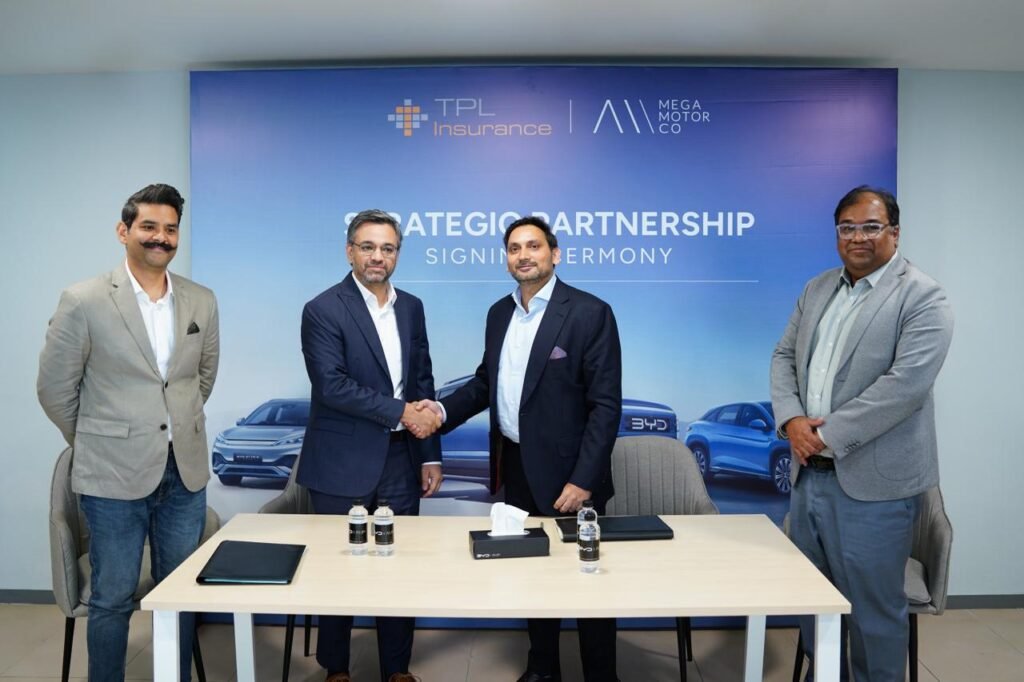
British International Investment Backs Mega Motor for Pakistan’s First EV Plant
Auto

British International Investment Backs Mega Motor for Pakistan’s First EV Plant

Karachi: Mega Motor Company (Private) Limited (MMC), official partner of BYD in Pakistan, has signed a financing agreement with British International Investment (BII), the UK’s development finance institution and impact investor, to support the establishment of Pakistan’s first purpose-built large-scale NEV manufacturing plant. Read More: https://theboardroompk.com/india-pm-modi-in-israel-focus-on-defence-tech-and-fta-progress/ Under the agreement, BII will provide long-term foreign currency financing, accounting for 25 percent of the total project cost, to be invested in MMC’s state-of-the-art, purpose-built NEV manufacturing facility. Scheduled to go live in H2 2026, the plant will deploy cutting-edge automation and world-class manufacturing systems, benchmarked against leading global automotive standards. The agreement is among the earliest green energy–linked funding arrangements for Pakistan’s automotive manufacturing sector and is expected to play a pivotal role in expanding access to affordable clean transport. Pakistan has the third worst air quality globally, and the transport sector alone contributes over 43 percent of our GHG emissions, according to Pakistan Institute of Development Economics. Research shows even a 30 percent shift to NEVs could cut total emissions by nearly 20 percent. Clean mobility is one of the fastest and most practical routes to cut carbon emissions, reduce oil imports and boost local green industry. The project is expected to create over 1,100 jobs, advance sustainable industrialisation, and deliver significant climate benefits, including avoiding an estimated 165,000 tonnes of CO₂ emissions by 2034. Aly Khan, CEO of Mega Motor Company (MMC), said, “Pakistan stands at a critical inflection point, where clean mobility is integral to achieving the country’s long-term economic and energy objectives. Through this collaboration, MMC is leading that transition laying the foundations of a globally competitive NEV ecosystem for the country. This greenfield investment will not only accelerate NEV adoption, but also help shape Pakistan’s automotive future by building a resilient value chain that creates jobs, enables knowledge and technology transfer, and strengthens long-term industrial capability.” Stephen Priestley, Managing Director and Head of Financial Services Group, and Industries, Technology and Services, at British International Investment said, “This investment aligns with our priority on supporting sustainable industrial transformation and climate action. It also accelerates Pakistan’s energy transition by enabling job creation in a growing green sector and strengthening its emerging clean transport ecosystem.” In parallel, MMC, with support from British International Investment, is implementing robust environmental, social, and governance (ESG) practices, including strengthened labour standards, occupational health and safety management, stakeholder engagement, and responsible supply-chain systems.

Hyundai Palisade Launch in Pakistan: A New Premium Benchmark
Auto

Hyundai Palisade Launch in Pakistan: A New Premium Benchmark

The Hyundai Palisade Launch in Pakistan marks a significant moment for the country’s automotive market. With its bold design, hybrid performance, and premium positioning, Hyundai has introduced its flagship SUV as a serious contender in the high-end segment. This launch isn’t just about a new vehicle it reflects a broader shift toward localization, innovation, and luxury in Pakistan’s evolving car market. Pricing, Variants & Booking Details of Hyundai Palisade Launch in Pakistan The Hyundai Palisade Launch in Pakistan introduces two locally assembled variants tailored for different customer preferences. The Palisade Smart variant offers an 8-seater configuration with an ex-factory price of Rs. 20,999,000, requiring a booking amount of Rs. 3,000,000. On the other hand, the Palisade Calligraphy, the top-tier variant, comes as a 7-seater priced at Rs. 22,999,000, with a booking amount of Rs. 3,300,000. These prices exclude additional charges such as Capital Value Tax (CVT), NEV Levy, and Advance Tax. Bookings are now officially open, with deliveries expected to begin in August. Positioned strategically, the Palisade competes directly with premium SUVs like the GWM Tank 500 HEV and Toyota Fortuner, making the segment more competitive than ever. Local Assembly Advantage in Hyundai Palisade Launch in Pakistan One of the most compelling aspects of the Hyundai Palisade Launch in Pakistan is its local assembly. Pakistan has become the first country outside South Korea to assemble this flagship SUV. This move not only reduces costs but also signals Hyundai’s long-term commitment to the Pakistani market. Unlike other regions where the Palisade is imported, local production allows for better pricing and accessibility an advantage that could reshape the premium SUV segment. Hyundai Palisade Launch in Pakistan: Engine & Performance Under the hood, the Palisade features a powerful 2.5-liter turbocharged hybrid engine producing 329 horsepower and 460 Nm of torque. This places it firmly among high-performance SUVs designed for both urban comfort and long-distance cruising. The hybrid setup ensures a balance between performance and efficiency, aligning with global automotive trends shifting toward electrification. Luxury Features in Hyundai Palisade Launch in Pakistan The Hyundai Palisade Launch in Pakistan lives up to its flagship status with a suite of premium features designed for comfort, technology, and convenience. Passengers can expect Nappa leather upholstery, a 14-speaker Bose sound system, and power-adjustable seating across all three rows. The SUV also includes tri-zone climate control, soundproof glass for a quieter cabin, and a dual panoramic sunroof extending across multiple rows. Additionally, the inclusion of 21-inch alloy wheels and self-damping suspension highlights Hyundai’s focus on both aesthetics and ride quality. Hyundai Palisade Launch in Pakistan vs Competitors In terms of size and road presence, the Palisade stands out. It features a longer wheelbase than both the Toyota Fortuner GR-S and the GWM Tank 500 HEV, making it one of the largest SUVs assembled locally. Inside, the SUV offers flexible seating configurations. The 7-seater variant provides captain seats in the second row for enhanced comfort, while the 8-seater variant uses a bench layout. Importantly, the third row is spacious enough for adults an area where many SUVs fall short. Why Hyundai Palisade Launch in Pakistan Matters The Hyundai Palisade Launch in Pakistan signals a shift toward premiumization in the local automotive industry. With local assembly, hybrid technology, and competitive pricing, it challenges established players and raises expectations for what a flagship SUV should offer. For buyers seeking a combination of luxury, performance, and practicality, the Palisade emerges as a compelling option that could redefine the segment.

Ghandhara Automobiles Profit Surge 2025: A Record-Breaking Half-Year Performance
Auto

Ghandhara Automobiles Profit Surge 2025: A Record-Breaking Half-Year Performance

The Ghandhara Automobiles Profit Surge 2025 has sent a powerful signal across Pakistan’s automotive and capital markets. Ghandhara Automobiles Limited (PSX: GAL) reported an extraordinary 173% jump in net profit for the half-year ended December 31, 2025 a performance that not only exceeded expectations but redefined the company’s financial trajectory. With net profit soaring to Rs2.92 billion, compared to Rs1.07 billion in the same period last year, GAL has positioned itself as one of the standout performers on the Pakistan Stock Exchange in FY2025. Ghandhara Automobiles Profit Surge 2025 Driven by Explosive Revenue Growth The most striking element behind the Ghandhara Automobiles Profit Surge 2025 is its phenomenal top-line expansion. Revenue climbed from Rs7.69 billion to an impressive Rs21.19 billion, marking a 175.6% year-on-year increase. This dramatic rise signals: • Aggressive expansion in vehicle sales volumes• Strong consumer demand recovery• Improved pricing power• Better production efficiency Even though the cost of sales rose sharply in line with higher volumes, gross profit surged by 203%, reaching Rs4.26 billion. This indicates that GAL didn’t just sell more vehicles it sold them more efficiently and profitably. Operational Excellence Strengthens Bottom Line Beyond revenue growth, GAL demonstrated disciplined cost management. While distribution costs increased as operations scaled up, administrative expenses grew at a much slower pace compared to revenue. Operational profit more than tripled, rising 207% to Rs3.97 billion, showing that the company is leveraging economies of scale effectively. Other income also contributed positively, adding over Rs311 million a healthy boost to operating strength. Finance Cost Collapse: A Strategic Masterstroke One of the most powerful contributors to the Ghandhara Automobiles Profit Surge 2025 was the dramatic reduction in finance costs. Finance expenses plunged 81.3%, dropping from Rs143.5 million to just Rs26.8 million. This sharp decline reflects: • Aggressive deleveraging• Reduced reliance on short-term borrowing• Increased shift toward cash-based vehicle sales•In a high-interest-rate environment, this move significantly protected profit margins and strengthened financial stability. Associate Profit Contribution Amplifies Earnings GAL’s 17.91% stake in Ghandhara Industries Limited (GHNI) proved to be a major earnings catalyst. The share of profit from its associate surged 181%, contributing Rs578 million to pre-tax profit. This strategic investment enhanced overall profitability and diversified income streams a key factor behind the record-breaking performance. Tax Impact and Final Profit Picture With profitability expanding sharply, taxation expenses naturally increased to Rs1.53 billion. Despite this, the company still delivered a net profit of Rs2.92 billion up nearly 173% year-on-year. Earnings Per Share (EPS) climbed to Rs51.25, compared to Rs18.77 in the same period last year a dramatic 173% increase that investors are closely watching. What the Numbers Really Mean In simple terms: • Revenue nearly tripled.• Gross profit more than tripled.• Finance costs collapsed.• Associate earnings almost tripled.• EPS surged to historic levels. This is not just growth it is strategic transformation. Why the Ghandhara Automobiles Profit Surge 2025 Matters The Ghandhara Automobiles Profit Surge 2025 highlights three major trends: If this trajectory continues, GAL could further solidify its position as a leading automotive growth story on the PSX. Investors, analysts, and industry observers will now be watching closely: Is this a one-off spike or the beginning of a sustained high-growth phase? One thing is certain GAL has shifted gears.

Pakistan Auto Loans Hit Rs328bn on Strong Demand Surge
Auto

Pakistan Auto Loans Hit Rs328bn on Strong Demand Surge

Pakistan’s auto loans have grown steadily due to strong consumer demand. Outstanding auto loans hit Rs328 billion in January 2026, up from Rs319 billion in December 2025. This marks the 14th straight month of increase, showing recovery in the auto sector. Read More: https://theboardroompk.com/pakistans-mobile-phone-imports-jump-31-4-to-1-139bn-in-7-months-of-fy2026/ Experts highlight resilient demand despite economic hurdles. Consumers rely more on bank financing for vehicles. Surging Auto Financing Trend Outstanding loans reached Rs328 billion in January. Growth continued for 14 months in a row. December saw slower rise due to model year changes. January picked up with new registrations. This follows peaks like Rs368 billion in June 2022. Current levels remain below that high. Banks offer flexible terms like lower markups. Reduced down-payments help buyers. The Rs3 million SBP cap aids small-car buyers. Middle-income groups benefit most. Policy Push for Bigger Growth Expert Mashood Ali Khan notes strong demand exists. Supportive policies can speed recovery. He suggests raising the financing cap to Rs6-7 million. This would open sedans and mid-range vehicles. Lower interest rates continue to help. Easing rates boost financing activity. Imports of CKD/SKD kits jumped 137% in 7MFY26. This supports assemblers and sales. Annual sales could exceed 200,000 units again. Broader benefits include jobs and revenues.

BYD Global Vehicle Sales Surpass Ford in Historic Automotive Shift
Auto

BYD Global Vehicle Sales Surpass Ford in Historic Automotive Shift

BYD Global Vehicle Sales have officially surpassed those of Ford Motor Company for the first time in history a milestone that signals a dramatic reshaping of the global automotive landscape. The Chinese automotive powerhouse BYD reported 4.6 million vehicle sales last year, overtaking Ford’s nearly 4.4 million units. The numbers confirm what industry insiders have been predicting: China’s electric vehicle revolution is no longer a domestic success story it is a global force. And the implications are massive. How BYD Global Vehicle Sales Climbed Past Ford For decades, Ford symbolized American automotive dominance. However, the momentum behind BYD Global Vehicle Sales reflects a powerful shift toward electric mobility, affordability, and tech-driven vehicles. While Ford saw a modest sales increase in the United States, it struggled in Europe and particularly in China now the world’s largest auto market. Domestic Chinese brands such as Xiaomi and Geely have rapidly gained market share by offering competitively priced, feature-rich electric vehicles. BYD, originally known for battery manufacturing, leveraged its vertical integration strategy to produce cost-efficient EVs at scale. The result? Rapid growth not just at home, but internationally. The EV Transition: Ford’s $19.5 Billion Wake-Up Call The surge in BYD Global Vehicle Sales highlights another reality: legacy automakers face enormous pressure adapting to the electric vehicle transition. Ford announced nearly $19.5 billion in charges to overhaul its EV strategy a move aimed at restructuring operations and accelerating competitiveness. The transition has proven costly and complex, as traditional automakers balance internal combustion vehicle profits with heavy EV investments. Meanwhile, BYD built its foundation on batteries and EV platforms from the start allowing it to scale faster and respond more aggressively to consumer demand. BYD Global Vehicle Sales Expansion Beyond China The story doesn’t stop at overtaking Ford. BYD exported 1.05 million vehicles in 2025 alone and aims to increase that to 1.3 million this year. The company is aggressively expanding across: • Europe• South America• Southeast Asia• Emerging markets Its strategy centers on affordable EV models packed with smart features an offering that resonates strongly in price-sensitive markets. However, challenges loom ahead. China’s government is gradually phasing out EV subsidies, and regulators are warning automakers against excessive price wars. 2026 could prove more competitive domestically. The Global Rankings: Toyota Still Leads Despite the dramatic reshuffle between BYD and Ford, Toyota Motor Corporation continues to dominate the global auto market. Toyota retained the No. 1 spot for the sixth consecutive year, with global sales rising 4.6% to 11.3 million vehicles. Its hybrid-focused strategy and diversified global footprint continue to provide stability amid industry disruption. Still, the real headline is clear: Chinese automakers are climbing rapidly and the rankings are no longer predictable. Why BYD Global Vehicle Sales Matter for the Future The rise of BYD Global Vehicle Sales signals three major trends reshaping the automotive industry: For investors, policymakers, and competitors alike, the message is unmistakable: the balance of power in the automotive industry is shifting eastward. If this trajectory continues, BYD’s climb may not stop at No. 6. Conclusion: A Turning Point in Global Auto History The fact that BYD has overtaken Ford in global vehicle sales is more than just a ranking shift it represents a historic turning point in automotive leadership. As BYD Global Vehicle Sales continue to expand internationally, and as traditional automakers struggle with costly EV transitions, the competitive map of the global auto industry is being redrawn in real time. The question now is not whether Chinese automakers will compete globally. It’s how far they will rise.

MINI Electric Pakistan Launch: Dewan Motors Introduces Premium Electric Mobility
Auto

MINI Electric Pakistan Launch: Dewan Motors Introduces Premium Electric Mobility

The MINI Electric Pakistan Launch has officially set the wheels in motion for a bold new chapter in Pakistan’s automotive landscape. Dewan Motors the official importer of BMW in Pakistan for over two decades unveiled the iconic British brand MINI with an exciting all-electric lineup. This strategic move not only expands Pakistan’s premium automotive segment but also signals a growing shift toward sustainable mobility. MINI Electric Pakistan Launch Introduces Three Distinct Electric Models The MINI Electric Pakistan Launch brings three cutting-edge electric vehicles (EVs) to local roads: The MINI Cooper Electric preserves the legendary three-door hatch design while embracing instant electric torque. Its agile handling and signature “go-kart” driving feel make it ideal for urban professionals navigating Pakistan’s bustling cities. This model combines: • Instant acceleration with zero tailpipe emissions• Compact design tailored for city driving• A tech-forward digital cockpit experience The all-new MINI Aceman Electric introduces a progressive crossover concept. It blends bold aesthetics with functional versatility, targeting a younger demographic seeking individuality and practicality. Its appeal lies in: • Elevated driving position• Contemporary interior design• Smart connectivity features The MINI Countryman Electric, the largest in the lineup, caters to families and long-distance drivers. It offers enhanced cabin space, advanced driver assistance systems, and premium comfort features, making it equally suitable for city commutes and intercity travel. Together, these three models demonstrate MINI’s evolution into a fully electric future while retaining its unmistakable personality. Why the MINI Electric Pakistan Launch Matters Pakistan’s EV market has been steadily gaining traction amid rising fuel costs and increased environmental awareness. The MINI Electric Pakistan Launch positions the brand as a premium alternative for customers who demand performance, style, and sustainability in one package. According to Zaeem Ul Haque, Director Operations at Dewan Motors, the introduction of MINI reflects the company’s commitment to innovation and environmental responsibility. Building on its long-standing relationship with BMW, Dewan Motors aims to deliver a seamless premium ownership experience through its established nationwide sales and aftersales network. This move also reinforces Karachi’s role as a hub for automotive innovation, as the city hosted this milestone event. Dewan Motors Strengthens Its Premium EV Portfolio For over 20 years, Dewan Motors has represented BMW in Pakistan, earning a reputation for quality, service excellence, and technical expertise. By adding MINI’s electric portfolio, the company is diversifying its premium offerings while aligning with global automotive trends. The transition to electric mobility is no longer a distant concept it’s becoming a reality on Pakistani roads. With MINI’s globally celebrated design philosophy and electric innovation, Dewan Motors is betting on a future driven by clean energy and intelligent engineering. The Future of Electric Mobility in Pakistan The MINI Electric Pakistan Launch is more than just a product introduction it’s a statement. It reflects growing consumer confidence in EV technology and signals that premium electric vehicles are no longer limited to international markets. As charging infrastructure gradually improves and policy support strengthens, MINI’s entry could accelerate EV adoption in Pakistan’s upper-tier automotive segment. Will this iconic brand redefine the perception of electric vehicles in Pakistan? If early excitement is any indication, the answer might just be electric.

Nissan Net Loss Forecast 2026 Signals Turbulent Year for Japanese Auto Giant
Auto

Nissan Net Loss Forecast 2026 Signals Turbulent Year for Japanese Auto Giant

Nissan Net Loss Forecast 2026 has sent shockwaves across the global automotive industry. The Japanese automaker now expects to post a staggering 650 billion yen ($4.2 billion) net loss for the fiscal year ending March 2026 nearly double earlier projections. The announcement highlights the mounting pressure on Nissan as it navigates weakening global demand, US trade tensions, and intensifying competition in the electric vehicle (EV) market. But is this the beginning of a deeper crisis or the painful phase of a strategic turnaround? Why the Nissan Net Loss Forecast 2026 Doubled The revised Nissan Net Loss Forecast 2026 reflects persistent headwinds in key markets, especially the United States. Earlier tariff hikes temporarily pushed duties on Japanese vehicles to 27.5%, affecting pricing and competitiveness. Although tariffs were later reduced to 15% in mid-September following a trade agreement, the earlier damage had already impacted sales momentum. Revenue is expected to fall by 5.8% year-on-year, bringing total annual revenue to approximately 11.9 trillion yen. This decline underscores softer consumer demand and pricing pressures in mature markets. In simpler terms: fewer cars sold, tighter margins, and heavier restructuring costs have pushed Nissan deeper into the red. A Silver Lining: Operating Loss Narrowed Significantly While the headline Nissan Net Loss Forecast 2026 appears alarming, there is a critical nuance investors are watching closely. Nissan has dramatically reduced its operating loss forecast from 275 billion yen (projected in October) to just 60 billion yen. This sharp improvement suggests that internal cost-cutting measures are beginning to bear fruit. Instead of viewing the situation as a collapse, some analysts interpret it as a company aggressively restructuring to survive and compete long-term. Inside Nissan’s Aggressive Restructuring Plan To combat ongoing losses, Nissan is implementing one of the most sweeping transformations in its history: • Global production plants will be reduced from 17 to 10 by March 2028.• Approximately 20,000 jobs will be cut worldwide.• Greater outsourcing and shared service models will streamline operations.• Marketing efficiency initiatives are being accelerated. Rather than presenting this as mere downsizing, Nissan describes it as a “responsible restructuring” designed to stabilize finances and enhance operational agility. If executed effectively, these structural changes could position Nissan for a leaner and more competitive future. Regional Performance: Mixed Signals Across Markets The third-quarter results (October–December 2025) further illustrate the complexity behind the Nissan Net Loss Forecast 2026. • Overall quarterly revenue declined 5% to 2.999 trillion yen.• Net loss stood at 28.3 billion yen slightly better than market expectations.• US sales dropped 3.7%, reflecting tariff-related challenges.• China, however, recorded a 12.7% sales increase, driven largely by newly launched electric vehicles. China’s performance signals a potential growth engine, particularly as EV adoption accelerates globally. Long-Term Challenges Still Loom Nissan’s difficulties extend beyond current market dynamics. The automaker has endured: • Leadership turbulence following the 2018 arrest and escape of former CEO Carlos Ghosn.• A failed merger attempt with Honda.• Heightened exposure to US trade tensions compared to other Japanese automakers. These structural and reputational challenges have compounded financial strain over recent years. Is the Nissan Net Loss Forecast 2026 a Crisis or a Reset? The projected $4.2 billion loss undeniably reflects a difficult year. However, the significant reduction in operating losses and steady restructuring progress suggest Nissan may be entering a critical transition phase. Investors and industry watchers are now asking: Will Nissan’s aggressive restructuring and EV momentum in China offset tariff risks and weak US demand? If the company successfully executes its cost-cutting and strategic pivot, the Nissan Net Loss Forecast 2026 could mark not just a downturn but the turning point toward long-term stability.

Pakistan Car Sales Hit 43-Month High in January 2026
Auto

Pakistan Car Sales Hit 43-Month High in January 2026

Pakistan’s automotive industry kicked off 2026 on a high note, with car sales (including LCVs, vans, and jeeps) reaching 23,055 units in January, marking a significant recovery in consumer demand. Read More: https://theboardroompk.com/pakistani-businessman-wins-gold-medal-at-dubai-2026-world-stamp-exhibition/ Record-Breaking Monthly Performance According to fresh data from the Pakistan Automotive Manufacturers Association (PAMA), January 2026 sales jumped 35.5% year-on-year from 17,010 units in January 2025. More impressively, the figure soared 73.6% month-on-month compared to December 2025’s 13,280 units. This makes January 2026 one of the strongest months in recent years for passenger vehicle sales. Key Drivers Behind the Surge Analysts at Topline Securities attribute the sharp rise to several positive economic factors. Lower interest rates have made auto financing more affordable, while easing inflation has boosted household purchasing power. Improved macroeconomic sentiment, along with the entry of new models and brands, has further encouraged buyers.Company-Level HighlightsSeveral players posted notable gains. Sazgar Engineering Works achieved its highest-ever monthly sales of 2,004 units, up 72% MoM, driven by strong demand for its models. Other major assemblers also benefited from the overall momentum, pushing cumulative 7MFY26 sales higher. Outlook Remains Optimistic Industry experts expect this positive trend to continue through FY26. Lower borrowing costs and the introduction of hybrid and plug-in hybrid vehicles are likely to sustain growth. The sector’s recovery signals renewed confidence in Pakistan’s economy after challenging periods.

Master Changan Pakistan Makes History in 2025: And Celebrates With Unmissable Offers
Auto

Master Changan Pakistan Makes History in 2025: And Celebrates With Unmissable Offers

Master Changan Pakistan has officially shifted gears into the fast lane. In a year defined by intense competition, rising prices, and long delivery wait times, the brand has achieved a landmark milestone emerging as Pakistan’s 4th largest automobile brand in 2025, climbing two positions in just one year. With over 65,000 units sold nationwide, Master Changan Pakistan has not only secured its place among industry heavyweights but has also become the number one brand among all new entrants and the leading Chinese automobile brand in the country. This rapid ascent signals a major shift in consumer trust and the company is celebrating in style. Why Master Changan Pakistan’s Rise Matters to the Auto Industry In an automotive market where delivery delays often stretch into months, Master Changan Pakistan has managed to break the norm. The brand’s growth reflects a carefully built portfolio focused on value, innovation, and accessibility, meeting the evolving needs of Pakistani consumers across segments. To mark this historic achievement, the company has rolled out exclusive Celebration Offers for February 2026, making premium vehicles more attainable just in time for Eid. Master Changan Pakistan Celebration Offers – February 2026 Oshan X7: Redefining the 7-Seater SUV Segment Pakistan’s highest-selling 7-seater SUV, the Oshan X7, is now available starting from Rs. 7,949,000, placing it under the PKR 8 million mark a first in its category. Customers can enjoy savings of up to PKR 700,000, along with the rare advantage of confirmed delivery before Eid. With limited stock available, this offer positions the Oshan X7 as the most accessible premium family SUV in the market today. Changan Alsvin: Sedan Comfort at a Hatchback Price The Changan Alsvin, starting from Rs. 3,789,000, delivers one of the strongest value propositions currently available in Pakistan. Buyers can benefit from massive savings across all variants, including a PKR 400,000 promotional benefit combined with two years of free maintenance worth PKR 125,000. For customers looking to upgrade to a proper sedan popularly known as a “Diggi waali Gaari” before Eid, this offer hits the sweet spot. Changan Karvaan Power: More Space, Better Value Starting from Rs. 2,949,000, the Changan Karvaan Power now comes with savings of up to PKR 100,000. Priced at par with competitors, it offers significantly more space and versatility, making it a preferred choice for families and businesses alike. This move further strengthens Master Changan Pakistan’s presence in the MPV segment. Confirmed Delivery Before Eid: A Rare Advantage While most automakers struggle with extended delivery timelines, Master Changan Pakistan stands out as the only brand offering confirmed pre-Eid delivery on selected models. This limited-stock advantage adds urgency and excitement to the celebration campaign. Leadership Speaks: Vision Behind the Milestone Commenting on the achievement, Mr. Danial Malik, CEO of Master Changan Motors, emphasized that this success is deeply rooted in customer trust: “Becoming Pakistan’s 4th largest automobile brand in such a short span of time would not have been possible without the trust and unwavering support of our customers across the country this milestone truly belongs to them.” What’s Next for Master Changan Pakistan? The journey is far from over. Looking ahead, Master Changan Pakistan plans to introduce 3 brands and 11 new models, spanning ICE, HEV, PHEV, REEV, and BEV drivetrains. This forward-looking strategy aims to give Pakistani consumers true range confidence, regardless of their mobility needs. Final Thoughts Master Changan Pakistan’s rapid rise is more than just a sales story it’s a signal of changing consumer preferences and growing confidence in modern, tech-driven automotive solutions. With limited-time celebration offers, confirmed pre-Eid delivery, and an ambitious roadmap ahead, the brand is firmly positioned to shape Pakistan’s automotive future.

BYD Lawsuit Against US Tariffs Signals a Turning Point in Global EV Trade
Auto

BYD Lawsuit Against US Tariffs Signals a Turning Point in Global EV Trade

BYD lawsuit against US tariffs has quickly become one of the most closely watched legal battles in global trade and for good reason. In a move that could redefine how governments impose emergency tariffs, the Chinese electric vehicle (EV) giant is now challenging Washington’s authority in a US federal court, potentially unlocking billions in trade opportunities across North America. Read More:https://theboardroompk.com/gold-price-in-pakistan-continues-its-relentless-climb/ On January 26, 2026, four US-based subsidiaries of BYD formally filed a lawsuit in the US Court of International Trade (CIT), targeting a sweeping series of tariff executive orders issued under the International Emergency Economic Powers Act (IEEPA). The court publicly disclosed details of the case recently, sending ripples across global automotive and energy markets. Who Is Behind the BYD Lawsuit Against US Tariffs? The plaintiffs are not symbolic entities they represent the operational backbone of BYD’s North American presence. These include BYD America LLC, BYD Coach & Bus LLC, BYD Energy LLC, and BYD Motors LLC. Together, they manage everything from electric bus manufacturing and battery systems to vehicle imports and regional sales. On the other side stand heavyweight US institutions, including the federal government, the Department of Homeland Security, Customs and Border Protection, the US Trade Representative, and the Treasury Department. The legal confrontation is as much about constitutional authority as it is about commerce. What Tariffs Is BYD Challenging? The BYD lawsuit against US tariffs targets nine executive orders issued since February 2025, covering a complex web of trade actions. Instead of listing them in a table, here’s what they collectively represent: First, there are border tariffs on Mexico and Canada, aimed at reshaping North American supply chains. Then come China-focused tariffs, including measures linked to fentanyl enforcement, “reciprocal tariffs,” and retaliatory actions. Finally, the lawsuit expands into newer territory country-specific tariffs on Brazil and India, tied to their energy trade relationships with Russia. BYD argues that none of these tariffs fall within the legal scope of IEEPA, calling them ultra vires, or actions taken beyond lawful authority. Why the BYD Lawsuit Against US Tariffs Matters So Much This case is not happening in isolation. Since 2025, thousands of US importers have launched similar challenges, creating what legal experts describe as the largest wave of trade litigation in modern US history. The legal momentum shifted dramatically when a small New York wine importer, V.O.S. Selections, won favorable rulings in both the CIT and the Federal Circuit Court. Those courts concluded that the President lacks authority to impose tariffs under IEEPA. The US government has appealed, and the Supreme Court heard arguments in November 2025, with a final decision expected in early 2026. To avoid conflicting judgments, the CIT has paused or “stayed” thousands of related cases, including BYD’s. Still, the strategic value of filing now is immense. Strategic Payoff for BYD’s North American Business Even while on hold, the BYD lawsuit against US tariffs preserves the company’s right to seek refunds on tariffs already paid, plus interest and legal costs. More importantly, it expands the legal challenge beyond the scope of the V.O.S. case, capturing newer tariffs that could shape future trade policy. BYD already has deep roots in the US. Since 2013, it has operated a major electric bus factory in Lancaster, California, producing up to 1,500 buses annually and employing over 750 union workers. Its US business today focuses on electric buses and large-scale energy storage projects for cities and utilities, generating an estimated $500 million to $1 billion in annual North American revenue. Could Passenger EVs Be Next? Here’s where curiosity turns into possibility. A favorable ruling could open the door for BYD’s passenger vehicle expansion into the US and neighboring markets. Mexico BYD’s largest overseas market last year with more than 120,000 vehicle exports could become a launchpad rather than a barrier. If tariffs are rolled back, vehicles from BYD’s Brazilian factory could enter the US with tariffs below 15%, while its previously stalled Mexican manufacturing project could regain momentum. That would dramatically reshape EV competition across the Americas. The Bigger Picture The BYD lawsuit against US tariffs is more than a legal dispute it’s a stress test for emergency economic powers, global supply chains, and the future of clean transportation. As the Supreme Court prepares its ruling, governments, automakers, and investors alike are watching closely. One decision could determine whether trade policy remains a blunt political instrument or returns to the rulebook of international law

Scroll to Top