Author name: Web Desk

Bank Alfalah Stock Split: PSX Announces Share Face Value Change and Trading Schedule Update
Editor pick, Pakistan

Bank Alfalah Stock Split: PSX Announces Share Face Value Change and Trading Schedule Update

The Bank Alfalah Stock Split has been formally announced through a Pakistan Stock Exchange notice, outlining key changes in share face value, settlement cycles, and trading mechanics. The development is expected to impact trading behavior and liquidity while keeping the overall paid-up capital unchanged. Read More: https://theboardroompk.com/chery-master-pakistan-starts-early-deliveries-of-tiggo-8-phev/ Under the corporate action, the face value of Bank Alfalah Limited shares will be reduced from Rs10 to Rs5. This change will take effect following the book closure scheduled for April 18, 2026. While such adjustments are technical in nature, they often attract investor attention because they increase the number of shares in circulation and improve accessibility for retail investors. Bank Alfalah Stock Split and Share Structure Adjustment The Bank Alfalah Stock Split will double the number of outstanding shares. The total shares will increase from 1.57 billion to approximately 3.15 billion. Despite this increase, the paid-up capital of the bank will remain unchanged. This means shareholders will receive twice the number of shares they previously held, but the price per share will adjust accordingly. The opening price on April 20, 2026, will be calculated at half of the closing price recorded on April 17, 2026. For example, if the share closes at Rs60 on April 17, the adjusted opening price after the split would be Rs30. Investors will still hold the same overall investment value, but the lower price per share often improves market participation. Settlement Cycle Changes During Bank Alfalah Stock Split The Pakistan Stock Exchange has also announced temporary changes to settlement cycles due to the Bank Alfalah Stock Split. Trading in Bank Alfalah shares will operate under a modified T+0 settlement cycle on April 17, 2026. This adjustment applies to BC-1 activity and ensures a smooth transition before the book closure. From April 20, 2026, which is the first working day after book closure, the normal T+1 settlement cycle will resume. However, shares will then reflect the revised face value and adjusted pricing structure. These temporary changes are designed to avoid settlement mismatches and ensure fair trading conditions for investors. Entitlement Contracts and Ex-Entitlement Trading The Bank Alfalah Stock Split also affects entitlement contracts across multiple months. Contracts such as APRB, MAYB, and JUN will follow a defined schedule for opening, closing, and settlement dates. These contracts will qualify for entitlement benefits. On the other hand, ex-entitlement contracts including APRC, MAYC, and JUNB will operate on separate timelines. Trades under these contracts will not qualify for entitlement benefits and will be executed on an ex-benefit basis. This differentiation is important for traders dealing in futures or derivative contracts, as eligibility for benefits depends on contract type and trading timeline. Impact on Futures and Non-Standard Contracts As part of the Bank Alfalah Stock Split, the stock will transition into non-standardized contract categories within the Cash Settled Futures framework. These categories include CAPRN2, CMAYN2, and CJUNN1 contracts effective April 20, 2026. Despite these technical adjustments, the broader trading and settlement framework of the exchange will remain unchanged. Investors can continue trading normally after the transition period. Why the Bank Alfalah Stock Split Matters The Bank Alfalah Stock Split is primarily aimed at improving liquidity and making shares more accessible to retail investors. Lower share prices often encourage higher trading volumes and broaden participation in the market. Historically, stock splits do not change a company’s fundamental value. However, they often create positive sentiment, particularly among small investors who find lower-priced shares easier to accumulate. For institutional investors, the adjustment mainly involves operational changes in settlement and contract specifications rather than any change in valuation. Key Takeaways for Investors Investors should note that the Bank Alfalah Stock Split will: • Reduce face value from Rs10 to Rs5• Double the number of outstanding shares• Adjust the opening price after book closure• Temporarily modify settlement cycles• Introduce new contract specifications for futures trading These changes are technical but important for traders, especially those dealing in short-term strategies or derivatives.

Pakistan Economy Shows Stability but ADB Warns of Significant Downside Risks Ahead
Pakistan

Pakistan Economy Shows Stability but ADB Warns of Significant Downside Risks Ahead

The Asian Development Bank (ADB) said on Friday that Pakistan’s economy has stabilised and begun to show stronger momentum, but warned that “downside risks are significant”. The ADB stated that recent improvements in growth and a decline in inflation reflect progress supported by tight macroeconomic policies and ongoing economic reforms. However, it cautioned that external and fiscal pressures continue to pose challenges to long-term stability. Read More: https://theboardroompk.com/chery-master-pakistan-starts-early-deliveries-of-tiggo-8-phev/ The Asian Development Bank states that Pakistan economy recovers during fiscal year 2025 as growth improves and inflation declines. This improvement links with tight macroeconomic policies and ongoing economic reforms. The report highlights that Pakistan economy outlook ADB report reflects both progress and vulnerability at the same time. Growth strengthens as inflation slows The Asian Development Bank notes that Pakistan economy shows recovery supported by falling inflation and better fiscal control. Economic activity improves during FY2025, which ends on June 30. According to the report, structural reforms help stabilize macroeconomic conditions. These reforms also support investor confidence and external balance. ADB Country Director for Pakistan Emma Fan says Pakistan economy shows stronger momentum. She notes that reforms remain critical for long-term stability. GDP growth forecast shows gradual improvement The Asian Development Outlook April 2026 projects steady growth for Pakistan economy in coming years. Real GDP growth is expected to reach 3.5 percent in FY2026. It further increases to 4.5 percent in FY2027. This compares with 3.1 percent growth recorded in FY2025. The report suggests that manufacturing recovery and higher investment drive this growth trend. Private sector activity also supports expansion. Pakistan economy outlook ADB report emphasizes that sustained reform remains key for maintaining this momentum. Inflation expected to rise in coming years The report also warns that inflation may increase in future fiscal years. Average inflation may reach 6.4 percent in FY2026 and 6.5 percent in FY2027. Rising oil prices and global supply disruptions contribute to this pressure. Trade route instability linked to geopolitical tensions also adds risk. ADB states that inflation control depends on careful monetary policy and external stability. Monetary policy expected to remain cautious The central bank is expected to follow a cautious monetary policy approach. The goal remains to stabilize inflation within a 5 to 7 percent target range. Policy easing may support growth, but authorities must balance it with inflation risks. The report suggests that monetary decisions will play a key role in shaping Pakistan economy outlook ADB report results in coming years. Investment and reform drive future growth The report highlights that future growth depends on private sector investment. Recent reforms improve investor confidence and stabilize foreign exchange conditions. Construction activity is expected to rise due to fiscal incentives introduced in the FY2026 budget. Reconstruction efforts after floods also support economic activity. Industry and services sectors both benefit from improved monetary conditions. ADB notes that reform implementation is essential for long-term sustainability. External risks remain a major concern Despite improvement, Pakistan economy faces significant external risks. Global uncertainty remains a key challenge for stability. A prolonged Middle East conflict could increase energy and fertilizer costs. This may reduce agricultural and industrial output. It may also reduce remittance inflows and widen current account deficit. ADB warns that Pakistan must continue adjustment programs to strengthen resilience. Pakistan economy outlook ADB report stresses that external shocks remain a serious threat. Fiscal pressure and structural challenges continue Fiscal stability remains another concern for Pakistan economy. External borrowing requirements and import costs may increase pressure. Structural barriers also slow down long-term growth potential. These include energy inefficiencies and limited industrial productivity. ADB highlights that policy consistency and reform continuity remain essential. Without reforms, economic gains may weaken quickly under global pressure. Construction and services sector show improvement Despite risks, some sectors show positive movement. Construction activity increases due to fiscal incentives and rebuilding projects. Services sector also benefits from improved liquidity and consumer activity. These sectors contribute to overall improvement in Pakistan economy outlook ADB report findings. However, it also warns that risks remain significant. Global uncertainty, inflation pressure, and fiscal challenges continue to threaten long-term stability.

Chery Master Pakistan Starts Early Deliveries of Tiggo 8 PHEV
Auto, Editor pick

Chery Master Pakistan Starts Early Deliveries of Tiggo 8 PHEV

KARACHI: April 10: Chery Master Pakistan has commenced deliveries of its Tiggo 8 Plug-in Hybrid Electric Vehicle (PHEV) to pre-registered customers, as per the April 2026 delivery timeline, the company said on Friday. Read More: https://theboardroompk.com/pakistan-oil-gas-sector-reports-three-discoveries-in-march-2026-amid-isreal-us-war-on-iran/ The Tiggo 8 PHEV was opened for advance bookings in January 2026 at an introductory price of Rs10,999,000 but following the strong demand, the price was revised to Rs11,299,000 effective February 1, 2026. The early rollout marks a key milestone for Chery Master Pakistan, reflecting execution on committed delivery timelines and readiness across production, supply chain, and aftersales infrastructure. The company said the deliveries are aligned with its “HELLO CHERY” customer-first approach, focused on technology-led ownership and service readiness from day one. Positioned as Pakistan’s only 7-seater plug-in hybrid in the D-SUV segment, the Tiggo 8 PHEV is powered by Chery Super Hybrid (CSH) technology. The vehicle produces 496 horsepower and 735 Nm of torque, offering an electric-only range of up to 90 kilometres and a combined driving range of approximately 1,200 kilometres. The SUV integrates a range of premium and technology features, including a three-row cabin configuration, advanced infotainment system, and Sony sound system. Interior highlights include a “Queen Co-Pilot” zero-gravity passenger seat with massage functionality, heating and ventilation options, and a cabin with 78.9% soft-wrap materials. A driver-focused audio system is also included. On safety, the Tiggo 8 PHEV carries a five-star global safety rating and is equipped with 10 airbags along with advanced driver assistance systems (ADAS), positioning it among the more feature-rich offerings in its category. To support deliveries, the company has established a nationwide 3S dealership network comprising 10 operational outlets, with plans to expand to 20 locations by 2027. Chery entered the Pakistani market through a partnership with Master Auto Engineering, part of the Master Group, which has over six decades of manufacturing experience in the country. The collaboration agreement was signed in May 2025.Globally, Chery operates in more than 120 countries with a user base exceeding 18.5 million and has remained China’s largest automobile exporter for 23 consecutive years. The early deliveries come as Pakistan’s auto market increasingly shifts towards hybrid and electrified mobility, driven by rising fuel costs and evolving consumer demand.

Pakistan May Face Urea Shortage of 500,000 Tonnes
Business

Pakistan May Face Urea Shortage of 500,000 Tonnes

Pakistan could face a severe fertilizer crisis as official projections warn of a urea shortage of up to 500,000 tonnes during the Rabi 2026–27 season. The alarming estimate, presented by the Ministry of National Food Security and Research, highlights growing risks to agricultural productivity if key fertilizer plants remain partially shut and demand continues to rise. The report underscores a fragile supply-demand balance. It warns that even minor disruptions in production could push the country toward a significant shortfall. Supply Risks Intensify Ahead of Kharif 2026 According to the ministry’s projections, urea availability during Kharif 2026 remains highly sensitive to the operational status of major fertilizer plants. These include Fatima Fertilizer, Fauji Fertilizer Company’s Port Qasim plant, and Agritech Limited. Multiple scenarios assessed by officials show that supply constraints are likely if these plants do not operate at full capacity. In the worst-case scenario, where two major plants remain shut and one operates partially, domestic production could fall sharply. This scenario could lead to a mismatch between supply and demand. As a result, farmers may struggle to secure adequate fertilizer during critical crop cycles. Even in relatively improved scenarios, the supply outlook remains tight. Analysts say this reflects deeper structural weaknesses in Pakistan’s fertilizer production system. Worst-Case Scenario Signals Sharp Shortfall Under Scenario I for Kharif 2026, total urea availability is projected at 3.478 million tonnes. This includes 0.8 million tonnes of opening inventory and 2.678 million tonnes of domestic production. However, estimated offtake stands at 3.364 million tonnes. This would leave a closing inventory of just 114,000 tonnes. More critically, buffer stock could turn negative by 186,000 tonnes. Such a situation would significantly reduce the country’s ability to absorb shocks. Any unexpected surge in demand or disruption in production could worsen the crisis. Officials warn that maintaining a healthy buffer stock is essential. Without it, price volatility and supply shortages could intensify. Rabi 2026–27 Outlook Raises Alarm The situation appears even more concerning for the Rabi 2026–27 season. Projections suggest that shortages could persist despite the assumption that all plants resume operations from October. Under Scenario I for Rabi 2026–27, total urea availability is expected to reach 3.332 million tonnes. This includes 181,000 tonnes of opening inventory and 3.151 million tonnes of production. Against an estimated offtake of 3.486 million tonnes, the country could face a deficit. Closing inventory may fall to negative 154,000 tonnes, while buffer stock could decline further to negative 454,000 tonnes. Even under Scenario II, where only one plant remains offline during Kharif, the outlook remains challenging. Total availability is projected at 3.631 million tonnes, with closing inventory at 145,000 tonnes. However, buffer stock would still remain negative at 155,000 tonnes. These projections clearly indicate that supply-demand imbalances may continue into the next crop cycle. Rising Demand and Smuggling Risks The ministry has also highlighted rising demand as a key concern. Urea offtake is expected to increase during Kharif 2026 due to improved farm economics compared to last year. At the same time, a significant price gap between domestic and international markets could create additional pressure. Currently, urea prices in Pakistan stand at around Rs4,500 per 50 kg bag, compared to nearly Rs14,000 in global markets. This disparity may encourage cross-border smuggling. Such activities could further reduce local availability and deepen the supply crisis. Officials stress that controlling smuggling will be critical. Without effective enforcement, even adequate production may fail to meet domestic demand. No Imports Planned Amid Growing Concerns In a surprising move, the ministry’s projections assume zero urea imports in the coming months. This decision has raised concerns among industry experts. Imports often serve as a buffer during periods of shortage. Without them, Pakistan’s reliance on domestic production becomes absolute. Analysts warn that any disruption in local manufacturing could have immediate and severe consequences. They urge policymakers to keep import options open as a contingency measure. DAP Supply Stable but Risks Remain While urea faces potential shortages, the outlook for DAP fertilizer appears relatively stable. Officials say supply-demand conditions remain balanced based on five-year average trends. However, international price volatility continues to pose a risk. Domestic fertilizer prices remain closely tied to global market movements and exchange rate fluctuations. Any sudden increase in international prices could impact affordability for local farmers. Urgent Need for Policy Intervention The ministry has called for immediate and proactive policy measures. It emphasises the importance of ensuring uninterrupted operations of all ten urea manufacturing plants. Officials believe that stabilising production is the most effective way to prevent shortages. They also recommend stricter controls to curb smuggling and maintain price stability. Without timely intervention, the consequences could be far-reaching. Reduced fertilizer availability may impact crop yields, increase food prices, and strain the overall economy.

Oil Prices Surge as Hormuz Crisis Deepens, Could Global Markets Face a $190 Shock?
Editor pick, World

Oil Prices Surge as Hormuz Crisis Deepens, Could Global Markets Face a $190 Shock?

Global oil markets witnessed renewed volatility on Friday as prices climbed amid escalating concerns over supply disruptions linked to Saudi Arabia and severely restricted tanker traffic through the strategic Strait of Hormuz. Read More: https://theboardroompk.com/pakistan-oil-gas-sector-reports-three-discoveries-in-march-2026-amid-isreal-us-war-on-iran/ Despite the upward movement, both major oil benchmarks remained on track for a weekly loss. Market sentiment stayed mixed as traders weighed supply fears against cautious optimism surrounding a fragile ceasefire between the United States and Iran. Oil Prices Edge Higher Amid Supply Anxiety Brent crude futures rose by 58 cents, or 0.60%, reaching $96.50 per barrel in early trading hours. Meanwhile, West Texas Intermediate (WTI) crude gained 49 cents, or 0.50%, to trade at $98.36 per barrel. However, both benchmarks have recorded an 11% decline so far this week. This marks the steepest weekly drop since June 2025. Analysts attribute the decline to temporary easing of geopolitical tensions following a two-week ceasefire announcement. Still, uncertainty remains high. Market participants continue to monitor developments closely, especially disruptions affecting oil supply chains. Saudi Oil Infrastructure Hit by Attacks Fresh concerns emerged after reports confirmed attacks on Saudi energy infrastructure. According to official sources cited by the Saudi state news agency, the strikes have significantly impacted production capacity. The attacks reduced Saudi Arabia’s oil output by approximately 600,000 barrels per day. In addition, throughput on the East-West Pipeline dropped by around 700,000 barrels per day. These disruptions have intensified fears of a prolonged supply crunch. Analysts at ANZ noted that initial market relief has faded quickly as underlying risks resurface. Energy markets remain sensitive to any further escalation. Even minor disruptions could trigger sharp price swings in the coming days. Hormuz Traffic Remains Critically Low Shipping activity through the Strait of Hormuz remains severely restricted. Tanker traffic has fallen to less than 10% of normal levels despite the ceasefire agreement. Iran has maintained tight control over the waterway. Authorities have warned vessels to remain within designated territorial routes, further limiting movement. The Strait of Hormuz serves as a vital corridor for global oil and gas flows. Any disruption here has immediate global consequences. Market analysts are closely tracking tanker movements. According to IG analyst Tony Sycamore, traders are waiting for signs of increased activity as a signal of easing tensions. However, current conditions suggest otherwise. The continued slowdown in shipping has kept supply concerns alive. Ceasefire Fails to Calm Market Fears Although Iran and the United States agreed to a two-week ceasefire earlier this week, fighting has reportedly continued in some areas. This has raised doubts about the durability of the truce. The conflict, which began on February 28 following airstrikes involving the United States and Israel, has already caused widespread damage. Around 50 infrastructure sites across the Gulf region have been hit by drone and missile attacks. Additionally, nearly 2.4 million barrels per day of refining capacity remain offline, according to industry estimates. These factors continue to weigh heavily on market sentiment. Traders remain cautious, unwilling to fully trust the ceasefire. Pakistan Talks in Focus as Diplomatic Efforts Intensify Attention is now shifting to Pakistan, where high-level talks between Iran and the United States are taking place. Islamabad is hosting negotiations aimed at transforming the fragile ceasefire into a lasting peace agreement. Analysts believe Pakistan will push for de-escalation. However, some question whether it holds enough leverage to secure reopening of the Strait of Hormuz. Iran has reportedly proposed charging transit fees for ships passing through the strait under any future agreement. This idea has faced resistance from Western leaders and international organisations. The outcome of these talks could play a decisive role in shaping oil market trends. A breakthrough may restore shipping flows and stabilise prices. Oil Could Hit $190 if Crisis Persists Experts warn that oil prices could surge dramatically if disruptions continue. John Paisie, president of Stratas Advisors, stated that Brent crude could reach as high as $190 per barrel under current conditions. Such a spike would have severe global consequences. Higher energy costs could drive inflation, slow economic growth, and strain economies already facing challenges. On the other hand, any improvement in shipping flows could moderate prices. Even then, analysts expect oil to remain above pre-war levels for the foreseeable future. Global Markets Brace for Uncertainty The ongoing crisis has placed global markets on edge. Investors are closely watching geopolitical developments, particularly in the Middle East. Energy security has once again become a top concern. Governments and industries are evaluating contingency plans to manage potential shortages. While diplomatic efforts offer hope, risks remain significant. The coming days will be crucial in determining whether tensions ease or escalate further. For now, oil markets remain caught between fragile peace and persistent uncertainty.

Bilawal Bhutto Zardari Signals Hope as Pakistan Hosts Crucial US-Iran Talks in Islamabad
Politics

Bilawal Bhutto Zardari Signals Hope as Pakistan Hosts Crucial US-Iran Talks in Islamabad

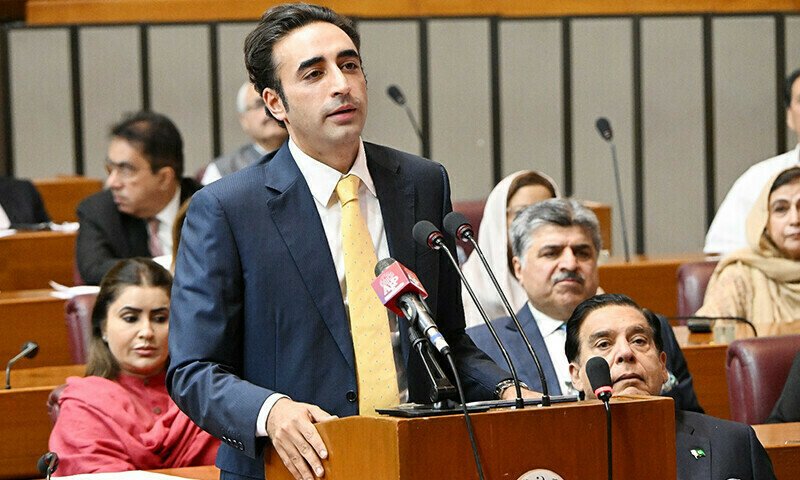
Bilawal Bhutto Zardari has said that lifting sanctions on Iran could unlock economic and strategic benefits not just for Pakistan, but for a broader global community, as Islamabad prepares to host crucial ceasefire talks between Iran and the United States. Read More: https://theboardroompk.com/pakistan-oil-gas-sector-reports-three-discoveries-in-march-2026-amid-isreal-us-war-on-iran/ Pakistan is set to play a central diplomatic role this week. Authorities have finalised all arrangements for high-stakes negotiations in Islamabad. The talks come after a fragile ceasefire between Washington and Tehran, raising cautious optimism across global markets and diplomatic circles. Pakistan Emerges as a Key Diplomatic Bridge Speaking about the upcoming dialogue, Bilawal Bhutto Zardari said the world is now increasingly looking toward Pakistan as a constructive force for peace. He stressed that Islamabad’s role goes beyond regional politics and reflects its growing importance in global diplomacy. He noted that the international community expects Pakistan to help stabilise volatile situations. According to him, hosting talks between Iran and the United States signals trust in Pakistan’s diplomatic capacity. Officials believe the Islamabad meeting could become a turning point. If successful, it may pave the way for broader agreements, including economic cooperation and regional security frameworks. Moreover, Pakistan’s involvement highlights its strategic position. It shares borders with Iran and maintains working relations with the United States. This balance places Islamabad in a unique position to mediate between both sides. Sanctions Relief Could Reshape Regional Economy Bilawal expressed strong hope that the talks would lead to the lifting of sanctions on Iran. He said such a move would not only benefit Pakistan but also contribute to global economic recovery. Sanctions have long restricted Iran’s trade, particularly in energy exports. If lifted, global oil supply could increase, potentially stabilising energy prices worldwide. For Pakistan, the benefits could be immediate. Access to Iranian energy resources could ease domestic shortages and reduce import costs. Trade routes between the two neighbours could also reopen, boosting cross-border commerce. Furthermore, regional connectivity projects could gain momentum. Economic corridors linking South Asia with the Middle East may see renewed investment. Analysts say this could reshape trade flows across the region. Bilawal emphasised that sanctions relief is not just a bilateral issue. Instead, it carries global implications, especially at a time when economies face inflationary pressures and supply chain disruptions. Strong Reaction to India’s Position While addressing foreign policy matters, Bilawal Bhutto Zardari also criticised Subrahmanyam Jaishankar, India’s External Affairs Minister. He said India’s stance reflects narrow-mindedness and frustration. According to him, such remarks reveal a limited outlook on regional cooperation. Bilawal argued that Pakistan is steadily emerging as a responsible global actor. He pointed out that constructive diplomacy, not criticism, is the need of the hour. The comments come amid ongoing tensions between Pakistan and India. Despite periodic escalations, both countries have managed to maintain ceasefire agreements in the past. Call for Long-Term Peace in South Asia Bilawal Bhutto Zardari highlighted the importance of resolving disputes between Pakistan and India. He said both nations cannot afford to leave conflicts unresolved. He noted that repeated tensions have harmed economic growth and stability in both countries. According to him, a sustained peace process is essential for long-term development. He also linked the ongoing US-Iran ceasefire talks to a broader vision of peace. He said such diplomatic efforts should serve as a starting point for resolving other conflicts. “Ceasefires must not remain temporary arrangements,” he stressed. “They should lead to lasting solutions.” Analysts agree that economic pressures are pushing countries toward dialogue. Rising inflation, energy shortages, and security concerns have increased the urgency for peaceful resolutions. Global Attention on Islamabad Talks The Islamabad talks have drawn international attention. Diplomats, policymakers, and investors are closely watching the outcome. A successful negotiation could strengthen Pakistan’s image as a mediator. It could also encourage future diplomatic initiatives hosted by Islamabad. On the other hand, failure to reach consensus may prolong uncertainty. This could impact global markets, particularly energy prices. Still, optimism remains. The recent ceasefire between Iran and the United States has created a window of opportunity. Experts say sustained dialogue is key to turning that opportunity into a lasting agreement. As talks begin, Pakistan stands at the center of a critical diplomatic moment. The outcome may influence not just regional stability but also global economic trends in the coming months.

Ishaq Dar Announces Visa on Arrival as US-Iran Delegations Land for Historic Negotiations
Editor pick, Pakistan

Ishaq Dar Announces Visa on Arrival as US-Iran Delegations Land for Historic Negotiations

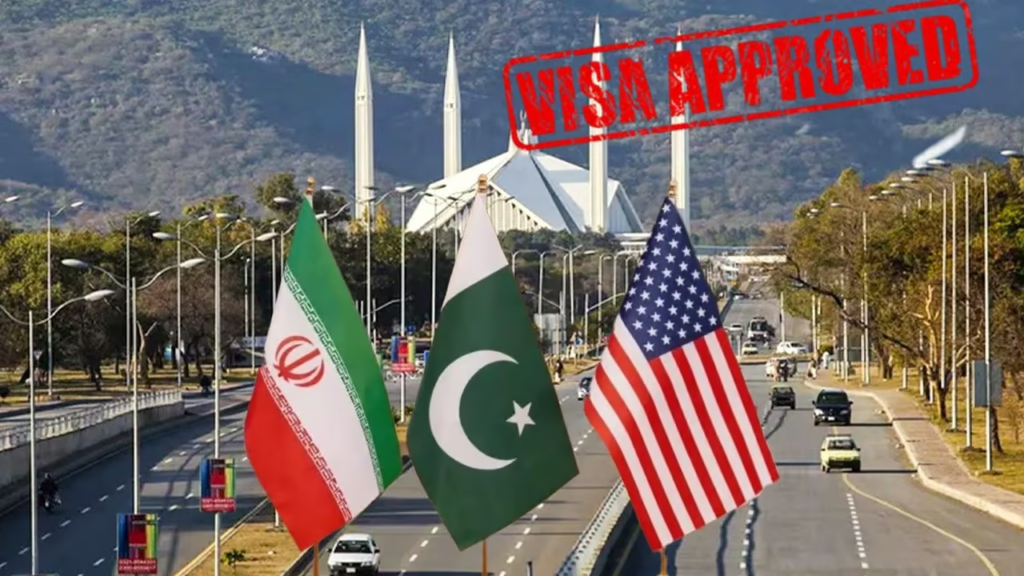
Pakistan has opened its doors to global diplomacy as Ishaq Dar announced visa-on-arrival facilities for delegates attending the highly anticipated “Islamabad Talks 2026,” a summit that could reshape geopolitical dynamics after a deadly conflict between United States and Iran. Read More: https://theboardroompk.com/pakistan-oil-gas-sector-reports-three-discoveries-in-march-2026-amid-isreal-us-war-on-iran/ In a statement shared on X, Ishaq Dar said Pakistan would facilitate all participants, including journalists and official representatives. He directed airlines to allow boarding without prior visas, assuring that immigration authorities in Pakistan would issue visas upon arrival. This move reflects Islamabad’s intent to position itself as a welcoming and neutral platform for high-stakes diplomacy at a critical global moment. Pakistan Opens Doors for Global Diplomacy The Islamabad Talks 2026 have already drawn significant international attention. Pakistan’s decision to ease entry requirements aims to ensure smooth participation from all stakeholders. Officials say the initiative highlights Pakistan’s proactive diplomatic approach. It also signals confidence in hosting one of the most consequential negotiations in recent history. By simplifying travel procedures, Islamabad is sending a strong message. The country wants dialogue to take precedence over bureaucracy. Analysts believe such facilitation could improve Pakistan’s global image as a peace broker. Moreover, the inclusion of journalists indicates a commitment to transparency. It allows global audiences to closely follow developments as they unfold. High-Level Delegations Arrive in Islamabad The talks come just days after a fragile ceasefire ended a six-week war between the United States and Iran. The conflict left thousands dead and triggered fears of a global economic slowdown. The American delegation is led by Vice President JD Vance. He is accompanied by key envoys including Steve Witkoff and Jared Kushner, both closely linked to former President Donald Trump. On the Iranian side, Parliamentary Speaker Mohammad Bagher Ghalibaf is heading the delegation. He is joined by Foreign Minister Abbas Araghchi and other senior officials. The presence of such high-ranking figures underscores the urgency of the talks. It also reflects the high stakes involved in securing lasting peace. Ceasefire on Edge as Talks Begin The Islamabad dialogue aims to convert a fragile ceasefire into a durable agreement. The truce, achieved after intense diplomatic efforts, remains vulnerable. Tensions across the Middle East continue to simmer. Any misstep could reignite hostilities, analysts warn. Global markets are also reacting cautiously. The six-week war disrupted oil supplies and raised fears of inflation and recession. Therefore, the outcome of these talks carries significant economic implications. Diplomats hope Islamabad can provide neutral ground for constructive engagement. Pakistan’s balanced relations with both countries may help bridge longstanding divides. Capital Under Tight Security Lockdown Authorities have imposed unprecedented security measures across Islamabad ahead of the talks. Key roads have been sealed, and security personnel deployed in large numbers. Surveillance systems have been enhanced to ensure maximum protection for visiting dignitaries. Officials confirmed that the negotiations will take place at a secure, undisclosed location. The lockdown has visibly reduced movement in the capital. Residents have been advised to avoid unnecessary travel during the summit. Security officials say these steps are necessary. They aim to prevent any disruption and ensure the talks proceed without incident. Global Stakes and Expectations The Islamabad Talks 2026 are widely seen as a critical test of diplomacy. World leaders and policymakers are closely monitoring developments. A successful outcome could stabilise the Middle East and ease global economic pressures. It may also lead to the lifting of sanctions on Iran, opening new trade opportunities. For Pakistan, the stakes are equally high. Hosting such a major diplomatic event enhances its international standing. It positions the country as a credible mediator in global conflicts. However, failure could prolong uncertainty. It may deepen divisions and delay economic recovery worldwide. Despite the risks, optimism persists. The ceasefire has created an opportunity for dialogue. Now, all eyes are on Islamabad to see whether that opportunity can turn into lasting peace.

Pakistan Oil & Gas Sector Reports Three Discoveries in March 2026 amid Isreal-US war on Iran
Business

Pakistan Oil & Gas Sector Reports Three Discoveries in March 2026 amid Isreal-US war on Iran

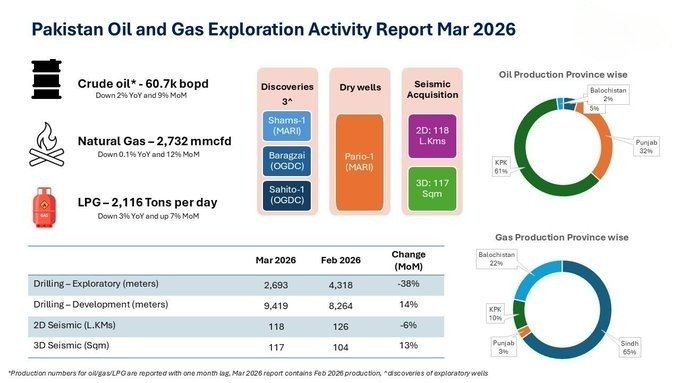
KARACHI: Pakistan has discovered three new fresh sources of oil and gas amid US-Israel war on Iran which has jolted whole world from energy perspective. Read More: https://theboardroompk.com/global-oil-prices-rise-as-iran-tensions-shake-markets-after-ceasefire-dispute/ Topline Securities has issued its latest Oil and Gas Exploration Alert, summarising activity across Pakistan for March 2026. The report points to three new hydrocarbon discoveries while noting a decline in overall production. Industry players are watching closely as the sector balances fresh finds with operational challenges. Three Successful Discoveries Spark Optimism The month saw three notable hydrocarbon discoveries. Mari Petroleum Company (MARI) struck success at Shams-1, while Oil & Gas Development Company (OGDC) announced finds at Baragzai X-1 and Sahito-1. These additions are expected to support future reserves and strengthen local energy supply. In contrast, one dry well was reported — Pario-1 in the Sujawal block, fully operated by MARI. Despite the setback, the discovery count remains positive for the sector.Production Declines but Recovery Signals Emerge Crude oil production stood at 60.7k barrels per day, down 9% month-on-month and 2% year-on-year. Natural gas output fell to 2,732 million cubic feet per day, registering a 12% MoM decline and a marginal 0.1% YoY drop. LPG production was recorded at 2,116 tons per day, up 7% MoM but down 3% YoY. Weekly trends, however, suggest flows may rebound soon due to recent disruptions in RLNG supply. Province-wise, Khyber Pakhtunkhwa led oil output at 61%, followed by Punjab at 32%. For gas, Sindh dominated with 65%, while Balochistan contributed 22%.Analysts believe the discoveries and expected production recovery could ease pressure on imports and support the country’s energy needs in the coming months.

Customs Seizes Over 300 Tolas of Gold at Karachi Airport Passenger Under Investigation
Pakistan

Customs Seizes Over 300 Tolas of Gold at Karachi Airport Passenger Under Investigation

Karachi’s Jinnah International Airport became the center of a major Customs gold seizure Karachi after officials confiscated more than 300 tolas of gold from a passenger and his family. The passengers arrived from Abu Dhabi and could not provide legal documentation for carrying the gold into Pakistan. Read More: https://theboardroompk.com/global-oil-prices-rise-as-iran-tensions-shake-markets-after-ceasefire-dispute/ Authorities said the discovery occurred during routine scanning of luggage and hand-carried bags. The initial detection prompted a detailed search, which led to the recovery of a large quantity of gold jewellery, gold bars, and foreign currency. The seized items included 281 tolas of gold jewellery, consisting of bangles and rings, along with 20 tolas of gold bars. In addition, Customs officials recovered $33,100 in US dollars and 366,000 UAE dirhams from the passenger. A case has been registered against the passenger for attempting to smuggle valuables into the country. Customs authorities have confirmed that all confiscated items are now in their custody. Officials emphasized that carrying undeclared gold and foreign currency violates Pakistan’s customs laws. The seizure underlines ongoing efforts to curb smuggling and protect the country’s financial system. Investment Expected to Flow into Pakistan Soon In a related development, Federal Minister for Board of Investment Qaiser Ahmed Sheikh stated that significant investment is expected to enter Pakistan within the next 15 days. Speaking on the ARY News program “Sawal Yeh Hai,” Sheikh said the Iran conflict is likely to end within two weeks. He predicted that normalcy would return rapidly afterward. Sheikh highlighted that Pakistan has emerged as a stable country amid regional instability. He noted that many Pakistanis who invested in Gulf countries, including the UAE, might repatriate their capital due to ongoing conflicts. “After the next 15 days, a huge inflow of capital will come to Pakistan. We only need to provide the right incentives to investors. Many Pakistanis who invested in the Gulf are now regretting it,” he said. The minister described the turmoil in the Middle East as “a blessing in disguise” for Pakistan. He emphasized that proper incentives, including reduced taxes, must be offered to attract and retain investment. “We also need to prevent investors from diverting funds to other countries such as Hong Kong,” Sheikh added. The Customs gold seizure Karachi and related foreign currency recovery highlight both regulatory enforcement and the economic opportunities for Pakistan. Analysts say that repatriated Gulf investment could strengthen local markets if properly channeled. Customs authorities confirmed that smuggling cases like this one are being closely monitored. They reiterated that any attempt to import undeclared valuables will face strict action under Pakistani law. Pakistan’s authorities continue to focus on enforcing customs regulations while the government prepares to capitalize on anticipated foreign investment. The combination of law enforcement and investor incentives may play a crucial role in strengthening Pakistan’s economic outlook in the coming weeks.

Global Oil Prices Rise as Iran Tensions Shake Markets After Ceasefire Dispute
World

Global Oil Prices Rise as Iran Tensions Shake Markets After Ceasefire Dispute

The energy market is once again on edge as global oil prices rise following renewed tensions between Iran and the United States. Investors reacted quickly to fresh geopolitical risks that could disrupt supply routes. The increase comes just a day after a sharp decline in crude markets, highlighting the volatility driven by ongoing diplomatic uncertainty. Oil Markets Rebound After Sharp Sell-Off Oil prices moved higher on Thursday after suffering a steep fall in the previous session. The earlier drop marked the biggest single-day decline since 2020 for US crude. However, the market quickly reversed direction as new developments emerged from the Middle East. Brent crude futures climbed by $4.08, reaching $97.06 per barrel. At the same time, West Texas Intermediate crude gained $3.18 to trade at $97.59 per barrel. The rebound shows how sensitive markets remain to political developments. Analysts say the shift reflects renewed fears about supply disruptions. Even minor escalations in tensions can trigger immediate price reactions. Iran Accuses US of Breaking Ceasefire Terms The latest surge comes after strong statements from Iranian leadership. Parliamentary Speaker Mohammad Bagher Ghalibaf accused Washington of violating key terms of a recently agreed ceasefire. He outlined three major concerns. First, he pointed to continued Israeli military activity in Lebanon. Second, he alleged a drone incursion into Iranian airspace after the ceasefire began. Third, he criticized the US stance against Iran’s uranium enrichment. These accusations have deepened mistrust between both sides. They have also increased uncertainty in global markets. As a result, global oil prices rise again as traders price in risk. Fragile Ceasefire Adds to Market Anxiety The ceasefire between Tehran and Washington was always seen as temporary. It aimed to pause hostilities and open the door for negotiations. However, conflicting interpretations have weakened the agreement. US Vice President JD Vance acknowledged that early-stage ceasefires often face complications. He downplayed the accusations and stressed that such agreements rarely hold smoothly in the beginning. At the same time, he reaffirmed Washington’s opposition to Iran’s nuclear ambitions. He also clarified that the ceasefire does not cover Lebanon. This directly contradicts Iran’s position. Earlier, US President Donald Trump suggested that Iran’s proposal could serve as a starting point for broader talks. However, the latest tensions have cast doubt on that possibility. Supply Concerns Drive Oil Price Momentum The primary driver behind the current rally remains supply risk. The Middle East plays a central role in global energy markets. Any disruption in the region can affect oil flows worldwide. Traders fear that escalating tensions could impact key routes such as the Strait of Hormuz. Even the possibility of disruption is enough to push prices higher. This explains why global oil prices rise despite recent declines. Markets are reacting to uncertainty rather than actual shortages at this stage. Energy experts say this pattern may continue. Prices could swing sharply depending on political developments. Buyers See Opportunity Below $100 Despite the volatility, some analysts see opportunity in the current price range. According to energy research firms, prices below $100 per barrel remain attractive for buyers. Refiners may use this period to secure supplies at relatively lower rates. This could help stabilize operations in the coming months. However, experts warn against excessive caution. If buyers delay purchases expecting further price drops, it could create supply imbalances. In such a case, even stable geopolitical conditions may not prevent shortages. Market Outlook Remains Uncertain The outlook for oil markets remains highly uncertain. On one hand, diplomatic efforts continue. On the other, rising tensions threaten to derail progress. The repeated pattern of escalation followed by temporary relief keeps markets unstable. As long as this cycle continues, global oil prices rise intermittently with each new development. Investors are closely watching upcoming talks. Any positive signal could ease pressure on prices. Conversely, further conflict could push oil well beyond current levels. Impact on Global Economy Rising oil prices have far-reaching consequences. Higher energy costs can increase inflation worldwide. This affects transportation, manufacturing, and household expenses. Developing economies remain particularly vulnerable. Countries that rely on imported oil face additional financial strain. This could slow economic growth. At the same time, higher prices may benefit oil-producing nations. However, the overall impact depends on how long the volatility persists. Markets Brace for More Volatility The latest developments show how quickly sentiment can shift in global markets. The moment tensions rise, prices respond immediately. For now, global oil prices rise as uncertainty dominates the energy landscape. The fragile ceasefire and conflicting claims continue to fuel instability. The coming days will prove critical. If diplomacy succeeds, markets may stabilize. If not, the world could face another wave of energy shocks.

Scroll to Top