Author name: Web Desk

Business sentiment turns negative as energy shocks, regional tensions weigh on firms: Gallup Survey
Business

Business Sentiment Turns Negative As Energy Shocks, Regional Tensions Weigh On Firms: Gallup Survey

KARACHI, April 23: Pakistan’s private sector confidence has deteriorated sharply in the first quarter of 2026, with a majority of businesses reporting worsening conditions amid rising energy costs and spillover effects from regional geopolitical tensions, according to a survey released by Gallup Pakistan. Read More: https://theboardroompk.com/karachi-businessmen-urges-govt-to-tackle-rising-extortion-robberies/ The 17th quarterly Gallup Business Confidence Survey, conducted in April 2026 based on responses from 510 businesses across the country, shows a broad-based decline across all key indicators — current performance, future expectations and perception of national direction. Only 41% of businesses described their current operations as “good” or “very good,” reflecting a 13 percentage point drop from the previous quarter. The net proportion of firms reporting positive conditions has fallen by 27%, indicating a clear shift toward pessimism after earlier gains. The outlook for the coming months appears even weaker. While 44% of respondents expressed optimism about future performance, a larger 57% expect conditions to worsen. The net future confidence score has declined by 25% compared to Q4 2025, pointing to growing uncertainty and weakening business momentum. Perceptions regarding the country’s overall direction also deteriorated significantly, with the score dropping to -32% from -8% in the previous quarter. The Gallup survey report notes that sentiment has firmly entered negative territory, reflecting heightened concern among businesses about the broader economic trajectory. Structural challenges continue to weigh heavily on the private sector. Inflation remains the top concern, cited by 37% of businesses, while concerns over fuel and petrol prices surged to 25%, highlighting intensifying cost pressures. Energy reliability remains another major issue, with 57% of firms reporting load-shedding on the day of the survey, a 15 percentage point increase from the previous quarter. Rising costs have emerged as the dominant operational risk, with 62% of businesses identifying inflation and input costs as their biggest challenge. The Gallup survey also shows declining confidence in economic management, as 46% of respondents believe governance has worsened, compared to 33% who see improvement. A key feature of the latest Gallup survey is the strong impact of regional developments, particularly tensions in the Middle East. Around 81% of businesses reported negative effects linked to these developments, primarily through rising fuel and energy costs. Nearly 58% of firms said their energy expenses had increased, while 73% reported overall cost escalation compared to the previous quarter. Looking ahead, 76% of businesses expect conditions to deteriorate further if regional instability persists over the next three months. The report concludes that Pakistan’s business environment is facing a period of heightened uncertainty, driven by a combination of domestic economic pressures and external shocks. While some sectors continue to show resilience, the overall trajectory suggests stagnation risks in the near term. Commenting on the findings, Bilal I. Gilani, Executive Director at Gallup Pakistan, said the simultaneous decline across all major indicators signals a clear shift toward pessimism within the business community, with external cost pressures playing a central role in shaping sentiment.

Karachi Businessmen Urges Govt to Tackle Rising Extortion, Robberies
Uncategorized

Karachi Businessmen Urges Govt to Tackle Rising Extortion, Robberies

KARACHI: Industrialists of the SITE Association of Industry have voiced grave concern over rising incidents of extortion, factory robberies, and the absence of a conducive business environment, urging the government to ensure protection and stability for economic activity. Read More: https://theboardroompk.com/strong-banking-industry-link-pakistan-bankislami-pushes-for-sme-financing-boom/ At a meeting held at the SITE Association, members apprised Inspector General of Police Sindh Javed Alam Odho of the deteriorating law and order situation and requested immediate measures to safeguard industries and provide a peaceful environment for uninterrupted operations. Senior police officials, SITE office-bearers, and a large number of members attended the session. SAI President Abdul Rehman Fudda strongly condemned the recent firing incident on an industrialist in North Karachi linked to extortion demands. He stressed that the safety of the business community must be guaranteed and pointed out rampant encroachments in SITE area, which the IG assured would be removed permanently. Mr. Odho also pledged strict action against extortionists and those attempting to harm industrialists. Patron-in-Chief Zubair Motiwala said the prevailing atmosphere in police stations discourages citizens from lodging FIRs, adding that crime incidents should be recorded without requiring names. He highlighted traffic congestion from Siraj Kassam Teli flyover to Nazimabad underpass, costing commuters at least 20 minutes daily. He also drew attention to aerial firing at weddings damaging solar panels, to which the IG assured stern action. Patron Saleem Parekh raised concerns over unannounced raids by SSGC Police, Railways Police, and KWSC Police, urging streamlining of their operations. He suggested donating a drone camera to the Association to strengthen its Crime Monitoring Cell. Former President Jawed Bilwani called for permanent removal of encroachments, restriction of heavy traffic during evening rush hours, and dedicated truck parking to ease congestion. He proposed that the first phase of the Safe City Project begin at entry and exit points of SITE area, with industries directed to install quality CCTV cameras and spotlights. Law & Order Committee Chairman Abdul Hadi revealed a shortage of 113 police personnel across SITE PS-A, PS-B, and the Crime Monitoring Cell, with only one of three police mobiles available for patrolling. He demanded at least 8–10 mobiles to ensure timely response. He added that factory robberies have resurfaced in the past five months, while broken-down vehicles on flyovers continue to disrupt traffic. DIG Traffic Pir Muhammad Shah informed participants that all Station Officers have been provided tablets for reporting violations. He said commuters are being given one month to adopt lane discipline, after which challans will be imposed, starting from Shahrah-e-Faisal. Steps are also being taken to improve traffic flow on Mauripur Road.

OGDCL Successfully Restores Gas Output in Attock Field
Business

OGDCL Successfully Restores Gas Output in Attock Field

Pakistan’s energy sector has received a significant uplift as Oil and Gas Development Company Limited announced the revival of gas production from the Jand-1 well in Attock District, Punjab. The company shared the development in an official notice submitted to the Pakistan Stock Exchange on Thursday. Gas production jumps sharply after revival OGDCL confirmed that the Jand-1 well now produces over 21 million standard cubic feet per day. This marks a sharp rise from its earlier output of around 7 MMSCFD. The increase highlights a major recovery in gas production at the site. Engineers achieved this output through a 32 by 64 choke at a wellhead flowing pressure of 3,585 psi. Officials described the improvement as a strong step toward strengthening domestic gas supply. Well faced shutdown due to technical challenges The company initially brought the Jand-1 well into production in 2019. It connected the well to the Dakhni Gas Processing Plant for supply operations. However, the well produced gas with high hydrogen sulfide content, which created technical risks. OGDCL later halted operations due to mechanical failure. The sour gas environment created difficult downhole conditions. These factors forced the company to suspend gas production from the well. Technical team executes complex revival plan OGDCL relied on its in-house technical experts to restore operations. The team conducted detailed assessments and risk analysis before launching the revival plan. Engineers retrieved damaged downhole materials and restored the well’s integrity. Officials said the operation required precision and careful planning. The team handled complex conditions while maintaining strict safety standards. This effort allowed the company to successfully resume gas production. New equipment ensures safer operations The company installed corrosion-resistant tubing to handle the sour gas environment. This upgrade will help ensure long-term safety and stable gas production. Engineers selected materials designed specifically for high hydrogen sulfide conditions. OGDCL confirmed that all operations followed strict health, safety, and environmental guidelines. The company aims to maintain consistent output while minimizing operational risks. OGDCL stands as Pakistan’s largest exploration and production company. It manages extensive operations that include exploration, drilling, and reservoir management. The company also provides engineering and technical support across projects. The firm controls more than 40 percent of Pakistan’s total awarded exploration acreage. This wide coverage gives it a leading role in developing the country’s hydrocarbon resources. The Government of Pakistan holds over 67 percent shares in the company. Other stakeholders include the OGDC Employee Empowerment Trust and the Privatisation Commission. Revival supports domestic energy supply The increase in gas production from Jand-1 can help ease pressure on the country’s energy system. Pakistan continues to face challenges due to declining natural gas reserves and rising demand. Experts believe that boosting domestic gas production can reduce reliance on costly imports. Local output remains a key factor in ensuring energy stability. The revival also reflects the importance of technical expertise in overcoming operational challenges. Successful recovery of such wells can unlock additional resources across the country. Energy sector watches next steps Industry observers will closely monitor how long the well sustains its current output. Continued stability can support long-term energy planning. OGDCL may also apply similar strategies to revive other underperforming wells. This approach could further strengthen national gas production capacity. The successful restart of Jand-1 signals progress for Pakistan’s energy sector. It highlights the potential of local resources when backed by technical capability and strategic planning.

Meezan Bank Monthly Card Spend Crosses Rs45bn as Digital Payments Gain Momentum
Business

Meezan Bank Monthly Card Spend Crosses Rs45bn as Digital Payments Gain Momentum

Karachi, April 23 : Meezan Bank has reported that its monthly card spend has exceeded Rs45 billion, signalling a significant shift in consumer payment behaviour and reinforcing the rapid growth of Pakistan’s digital payments ecosystem. Read More: https://theboardroompk.com/strong-banking-industry-link-pakistan-bankislami-pushes-for-sme-financing-boom/ The milestone comes amid a broader transition toward cashless transactions, with increasing adoption of cards, mobile applications and QR-based payments across the country. Banking industry data suggests that consumers are steadily moving away from cash, driven by convenience, security and expanding acceptance of digital payment channels. According to the State Bank of Pakistan, digital retail transactions in the country have reached 3.1 billion in a single quarter, with a cumulative value of Rs64 trillion. The central bank’s instant payment system, Raast, recorded 645.7 million transactions amounting to Rs18.5 trillion, while the total number of payment cards in circulation has risen to 66.7 million. Within this expanding landscape, Meezan Bank’s latest figures highlight the growing role of Islamic banking institutions in advancing digital financial services. Industry observers note that Shariah-compliant banks are increasingly investing in technology-driven solutions, positioning themselves competitively alongside conventional banking channels. The rise in card usage reflects evolving spending patterns, with consumers using cards for retail purchases, dining, travel, e-commerce and day-to-day transactions. Meezan Bank official said that this behavioural shift is being supported by improved payment infrastructure, wider merchant acceptance and enhanced security features. Meezan Bank attributed its growth to continued investment in secure payment systems and customer experience. These include advanced fraud monitoring, stronger authentication protocols and tokenised payment solutions, aimed at ensuring safer transactions across both local and international platforms. Meezan Bank official said that sustained growth in digital payments can deliver broader economic benefits, including improved documentation of financial activity, reduced reliance on cash handling and greater formalisation of the retail economy. It may also support financial inclusion by enabling easier access to banking services for previously underserved segments. With regulatory backing and ongoing initiatives such as Raast and merchant digitisation, Pakistan’s shift toward a cashless economy appears to be gaining pace. Meezan Bank’s Rs45 billion monthly card spend milestone is being seen as a reflection of this transition, underlining the increasing trust of consumers in digital financial services and the sector’s role in shaping a more connected and transparent economy.

Strong Banking Industry Link Pakistan: BankIslami Pushes for SME Financing Boom
Business

Strong Banking Industry Link Pakistan: BankIslami Pushes for SME Financing Boom

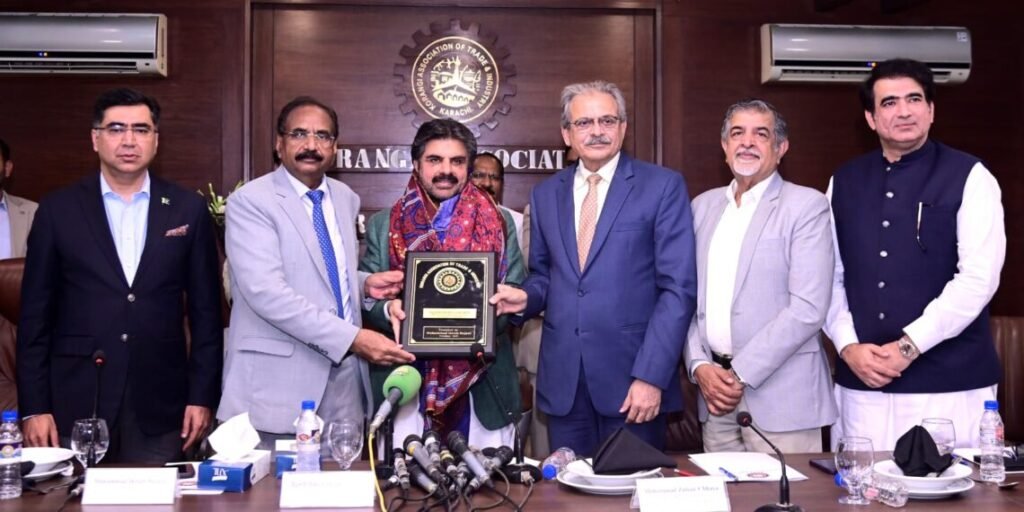
The concept of a Strong Banking Industry Link Pakistan is rapidly gaining momentum as industry leaders and financial experts unite to reshape the country’s economic future. During a high-profile engagement between BankIslami and Korangi Association of Trade and Industry (KATI), key stakeholders highlighted how closer collaboration could unlock industrial growth, boost exports, and energize small and medium enterprises. Read More: https://theboardroompk.com/attack-on-nrl-darigwan-site-repelled-area-secured-by-security-forces/ Strong Banking Industry Link Pakistan Key to Economic Stability Speaking at the event, Rizwan Ata emphasized that Pakistan’s long-term economic success hinges on a solid partnership between banks and industries. He stressed that without accessible and efficient financial systems, industrial expansion remains constrained. According to Ata, Islamic banking plays a crucial role by offering transparent and Shariah-compliant financing solutions. These mechanisms not only avoid interest-based systems but also promote real economic activity, encouraging sustainable business growth. He highlighted that Pakistan is currently witnessing improved global investor sentiment, presenting a rare opportunity for businesses to scale operations and attract foreign investment. SME Financing: The Missing Link in Industrial Expansion KATI President Muhammad Ikram Rajput drew attention to one of the most pressing challenges facing the industrial sector: limited access to affordable financing. He explained that industries, especially SMEs, struggle due to high borrowing costs and complex financing procedures. Easier and low-cost credit, he argued, could dramatically increase production levels and export capacity. Instead of presenting data in tables, Rajput’s insights paint a clear picture: • When financing is affordable, industries invest more in production• Increased production leads to higher exports• Higher exports strengthen Pakistan’s trade balance This cycle, if supported properly, could significantly accelerate economic growth. Strong Banking Industry Link Pakistan Needs Targeted Industrial Schemes Industry leaders called for more than just general support. Zubair Chhaya urged banks to introduce dedicated financial schemes specifically for industrial zones like Korangi. These proposed measures include: • Concessional financing for manufacturers• Export-focused financial products• Flexible working capital solutions Such targeted initiatives could help businesses scale operations efficiently while reducing financial pressure. Digital Banking and Policy Flexibility Take Center Stage Another major theme of the discussion was the need for modernization in banking services. Rashid Siddiqui emphasized that rigid banking policies often hinder industrial progress. Industrialists at the session proposed practical improvements, including: • Simplified loan approval processes• Competitive profit rates• Enhanced digital banking platforms• Specialized export financing packages These changes could bridge the gap between financial institutions and industrial needs, making banking more responsive and business-friendly. Islamic Banking: A Catalyst for Confidence and Growth A strong takeaway from the discussion was the growing importance of Islamic banking in Pakistan’s economic landscape. By aligning financial practices with ethical and transparent principles, Islamic banks like BankIslami are helping build trust among business communities. This trust translates into increased borrowing confidence, higher investments, and ultimately, a stronger industrial base. The Road Ahead: Collaboration is the Game Changer The event concluded with a unified message: Pakistan’s economic future depends on a robust and collaborative relationship between banks and industries. Both BankIslami and KATI reaffirmed their commitment to strengthening this partnership. With improved financing access, targeted policies, and digital innovation, the vision of a Strong Banking Industry Link Pakistan could soon become a reality fueling sustainable growth, boosting exports, and transforming the country’s economic trajectory.

Pakistan Set for Orbit: Two Astronauts Shortlisted for 2026 China Space Mission
Tech

Pakistan Set for Orbit: Two Astronauts Shortlisted for 2026 China Space Mission

The Prime Minister’s meeting with astronauts Khurram Daud and Muhammad Zeeshan Ali also highlighted the deepening strategic partnership between Pakistan and China. Joined by Chinese Ambassador Jiang Zaidong, PM Shehbaz Sharif remarked that the bilateral cooperation in space research is a testimony to the “ironclad” friendship between the two neighbors. He stated that the partnership is now ready to “reach for the stars and touch the heights of the sky,” adding a new dimension to their brotherly relationship. Read More: https://theboardroompk.com/attack-on-nrl-darigwan-site-repelled-area-secured-by-security-forces/ Training and Technical Readiness Under the framework agreement signed between SUPARCO and the China Manned Space Agency, the two astronauts will soon travel to China to begin specialized training at the Astronaut Centre of China. This rigorous program is designed to prepare them for the physical and mental demands of life in orbit. Officials from SUPARCO noted that the collaboration marks a transition for Pakistan from satellite-based operations to the complex realm of human spaceflight, placing the country among an elite group of nations. Scientific Goals of the Mission Ambassador Jiang Zaidong welcomed the Prime Minister’s remarks, describing the expanding space cooperation as a forward-looking step for both nations. Beyond the symbolic value, the mission aims to address global challenges such as climate resilience and food security through experiments conducted in space. The astronauts expressed their gratitude for the opportunity, vowing to work diligently to meet the nation’s expectations and to bring back valuable scientific data that will benefit the country’s academic and research institutions.

Bank Alfalah announce PKR 11.13B PAT for 1Q2026
Editor pick

Bank Alfalah announce PKR 11.13B PAT for 1Q2026

Karachi, Thursday, April 23, 2026: The Board of Directors of Bank Alfalah Limited (BAFL), in its meeting held on April 23, 2026, approved the Bank’s financial results for the quarter ended March 31, 2026. The Board of the Bank also approved an interim cash dividend of PKR 1.5 per share (30%) [Mar 25 (restated): PKR 1.25 per share (25%)]. Read More: https://theboardroompk.com/attack-on-nrl-darigwan-site-repelled-area-secured-by-security-forces/ The Bank reported profit after tax of PKR 11.13 billion, up by 58%. Earnings per share (EPS) stood at PKR 3.53 [Mar 25 (restated): PKR 2.23]. Bank’s profitability improved, supported by higher core income and supplemented by capital gains realized through timely management of portfolio. During the period, the shareholders of the Bank in its Annual General Meeting held on March 26, 2026 approved share split wherein the number of shares have been sub-divided into ratio of 2-for-1. Accordingly, issued and paid-up capital of the Bank has increased to 3,154,330,238 shares at face value of Rs. 5/- each, resulting in restatement of EPS and dividend per share ratios for comparative periods. Deposits of the Bank closed at PKR 2.47 trillion, while Current Deposits of the Bank also grew to PKR 1.02 trillion. Bank Alfalah continued its focused approach to build its non-remunerative deposits on average basis. Gross advances of the Bank amounted to PKR 1.08 trillion with diversified growth driven by Consumer, Small and Medium Enterprises (SME), and Agriculture segments. Net Interest Income (NII) of the Bank improved by 4.1% due to growth in average deposits and gross financing; whereas growth in Non Funded Income (NFI) was fueled by capital gains, increase in exchange income and growth in fee income earned via Remittances, Cards, Trade Business, G2P mandates and ADC services. Capital adequacy remained strong, with the ratio at 16.22% as of March 31, 2026, well above the regulatory requirement.

Govt Prepares Major Oil Reserve Plan
Editor pick, Pakistan

Govt Prepares Major Oil Reserve Plan

Prime Minister Shehbaz Sharif has launched a major plan to secure Pakistan’s oil reserves amid rising energy concerns.future. Authorities have started work on a comprehensive plan to build and maintain strategic reserves of crude oil. Officials shared updates during a high-level meeting held on Thursday. Government moves to secure oil reserves The prime minister chaired the meeting and reviewed progress on the initiative. He stressed that energy security holds critical importance for the country’s long-term planning. Officials briefed him on efforts to strengthen reserves in response to evolving regional challenges. The government aims to reduce risks linked to global oil supply disruptions. Strategic reserves will help Pakistan manage sudden shortages and price shocks. Authorities believe this step will create stability in the energy sector. Regional tensions shape policy direction During the meeting, the prime minister highlighted the impact of the current regional situation. He said timely energy conservation measures helped the country avoid a major crisis. Officials credited coordinated planning and reduced consumption for maintaining stability. The National Coordination and Management Council continues to monitor developments closely. The council reviews the situation daily and advises the government on necessary actions. Electric vehicles gain strong push The prime minister also emphasized a shift toward environmentally friendly transport. He directed authorities to gradually replace traditional vehicles with electric alternatives. He stated that government departments should only procure electric buses and motorcycles in the future. This move aims to reduce fuel consumption and lower carbon emissions. Officials informed the meeting that Pakistan plans to convert 30 percent of vehicles to electric within the next five years. This transition could save up to 4.5 billion dollars in fuel import costs. Incentives planned for public adoption Authorities have prepared measures to encourage public adoption of electric vehicles. Officials said government employees up to Grade 16 will receive electric motorcycles on easy instalments. The prime minister instructed departments to ensure transparency in subsidy distribution. He urged officials to speed up implementation under the National EV Policy. Experts believe these incentives can accelerate the transition toward cleaner transport. Lower costs and financial support may attract more consumers to electric options. Focus on battery storage solutions The government also plans to invest in battery storage technology. The prime minister directed authorities to develop a strategy that makes battery acquisition easier. This initiative will support storage of surplus electricity generated from solar energy. Officials highlighted the importance of efficient storage systems for renewable energy expansion. Authorities are currently preparing PC-I proposals for two pilot projects. These projects will focus on grid-level battery storage solutions. Experts expect these systems to improve energy reliability and reduce waste. Local oil and gas production increases Officials also briefed the prime minister on progress in local energy production. Oil and gas companies continue efforts to increase domestic output. Authorities believe higher local production will reduce dependence on imports. This strategy aligns with the broader goal of energy independence. The government aims to combine local production, strategic reserves, and renewable energy. This integrated approach will strengthen Pakistan’s energy framework. Long-term vision for sustainable growth The meeting highlighted a broader shift in Pakistan’s energy policy. Authorities now focus on sustainability, efficiency, and resilience. The prime minister stressed that future planning must balance economic growth with environmental protection. He urged all departments to align their policies with this vision. Officials believe the combined strategy of reserves, EV adoption, and renewable energy will reshape the sector. The coming years will determine how effectively these plans transform Pakistan’s energy landscape.

Big Change Coming to Imports in Pakistan
Business

Big Change Coming to Imports in Pakistan

Pakistan is preparing a major shift in its trade policy. The federal government is moving toward reducing import duties and removing thousands of non-tariff barriers. Officials say this step aims to improve market access and support economic activity. Government plans to remove thousands of barriers Sources revealed that authorities plan to eliminate more than 2,660 non-tariff barriers. These restrictions currently slow down imports across multiple sectors. The affected industries include mobile phones, cars, dairy products, textiles, steel bars, and medicines. Officials believe these barriers increase costs and delay supply chains. As a result, businesses struggle to access essential raw materials. The government now wants to create a more open and competitive market environment. Authorities confirmed that the removal process will begin in June 2026. The plan will roll out in phases. The government aims to complete the full process by November 2026. IMF pushes for trade reforms Pakistan has assured the International Monetary Fund that it will implement these reforms. The IMF has consistently urged Pakistan to ease import restrictions. It believes that removing barriers will help stabilize the economy. Officials say the reforms will allow industries to import raw materials more easily. This step will support production and exports. It will also reduce pressure on local supply chains. The IMF views these changes as necessary for long-term economic stability. Pakistan’s commitment signals progress in ongoing economic negotiations. Budget to introduce key duty reductions The upcoming federal budget will play a crucial role in this transition. Officials plan to introduce changes in 76 Harmonized System codes. These codes define categories of imported goods. Authorities will likely present duty reductions through the Finance Bill. The goal is to lower import costs and encourage trade activity. Experts believe that reduced duties will benefit both businesses and consumers. Lower import costs can lead to more competitive prices in local markets. Phased strategy for smooth transition The government has designed a phased strategy to avoid sudden disruptions. Officials will gradually eliminate or simplify all identified barriers. The reforms fall under the Export Policy Order and Import Policy Order. Authorities have set a target to remove 2,662 barriers by June 2026. They plan to complete the remaining adjustments by November 2026. This phased approach will give industries time to adapt. It will also allow regulators to monitor the impact of changes. Auto sector set for major overhaul At the same time, the government is reviewing a new auto policy. This policy could bring significant changes to car imports. Officials are considering a gradual reduction in duties on used car imports. The new policy is expected to take effect from July 1, 2026. Sources said the draft policy includes a phased reduction in additional customs duties and regulatory duties. The plan spans four to five years. By 2030, authorities expect major cuts in customs duty rates. Older vehicles may enter the market The proposed policy could allow the import of vehicles older than five years. However, authorities will enforce strict safety and environmental standards. Officials will require proper certification before approving such imports. This condition aims to ensure road safety and environmental protection. Experts believe this move could increase competition in the local auto market. It may also provide consumers with more affordable vehicle options. Consultations with IMF continue Authorities are currently preparing the draft auto policy. They have started initial consultations with the IMF. Officials plan to finalize the draft within the current month. After that, the government will hold further discussions with the IMF. Once completed, authorities will present the policy to the federal cabinet for approval. This process highlights the government’s effort to align economic reforms with international expectations. Businesses expect mixed impact Industry experts predict mixed reactions from businesses. Importers and manufacturers may welcome easier access to raw materials. However, some local producers may face increased competition. Economists believe the reforms could boost efficiency in the long run. They argue that open markets encourage innovation and productivity. At the same time, policymakers will need to support local industries during the transition. Balanced implementation will remain key to success. Reform signals shift in economic strategy These planned changes reflect a broader shift in Pakistan’s economic strategy. The government aims to move toward a more open and competitive trade system. Officials believe that reducing barriers will strengthen economic resilience. It will also improve Pakistan’s position in global markets. As the reform process begins, businesses and consumers will closely watch its impact. The coming months will determine how effectively these policies reshape the country’s trade landscape.

Teen Death Sparks Congo Virus Alarm in Karachi
Health

Teen Death Sparks Congo Virus Alarm in Karachi

A 17-year-old boy has died in Karachi after contracting Crimean-Congo Haemorrhagic Fever, widely known as Congo virus. Health officials confirmed the case on Thursday. The incident has raised concern across the city as Eidul Adha approaches. Teen tested positive before condition worsened According to the Sindh health department, doctors confirmed the virus in the teenager a day before his death. Medical teams admitted him to the Sindh Infectious Diseases Hospital for treatment. His condition worsened quickly despite medical care. Hospital officials revealed that the boy worked in livestock care. This exposure increased his risk of infection. Experts believe direct contact with animals played a key role in transmission. Congo virus spreads through ticks and animals Health experts explained that Congo virus spreads through infected ticks and livestock. People who handle animals remain at higher risk. The virus enters the body through tick bites or contact with infected blood. Doctors also warned about human-to-human transmission. Close contact with infected blood or bodily fluids can spread the virus. Caregivers and healthcare workers face risk if they ignore protective measures. The virus causes serious symptoms. Patients often develop high fever, muscle pain, and bleeding complications. Early diagnosis can improve survival chances. Authorities urge safety ahead of Eidul Adha Health authorities have issued a strong advisory as Eidul Adha nears. The festival involves large-scale animal handling and slaughter. This situation increases the risk of virus transmission. Officials have urged citizens to take precautionary steps. They advised people to wear gloves while handling animals. They also recommended long-sleeved clothing to reduce direct contact. Experts stressed the use of insect repellents to avoid tick bites. They encouraged buyers to check animals for ticks before purchase. Proper hygiene can prevent infection. Simple precautions can reduce risk Doctors emphasized simple but effective safety measures. People should avoid touching their face during animal handling. They should wash hands with soap regularly. Authorities also urged proper disposal of animal waste. Clean surroundings can reduce the spread of disease. Livestock workers and butchers need to follow strict safety protocols. Experts believe awareness plays a crucial role. Many infections occur due to lack of knowledge. Timely precautions can save lives. Karachi reports multiple Congo cases Health data shows a rising trend in recent years. In 2025, Sindh reported six Congo virus deaths. Five of those cases occurred in Karachi. Experts linked the spread to the movement of livestock from rural areas. Animals often carry infected ticks into urban centers. Without proper checks, the virus spreads quickly. Doctors have called for stronger screening systems. Early detection can prevent severe outcomes. Hospitals remain on alert Medical facilities in Karachi have increased preparedness. Doctors remain alert for new cases. Hospitals have set up isolation protocols for suspected patients. Health officials have also planned awareness campaigns. They aim to educate the public about symptoms and prevention. Early reporting can help control the spread. The recent death has acted as a warning. Authorities now push for strict vigilance during the Eid season.

Scroll to Top