Author name: Web Desk

Immediate Recovery of Rs217bn Super Tax Alarms Exporters, Industries on Brink of Collapse, Muhammad Ikram Rajput
Pakistan

Immediate Recovery of Rs217bn Super Tax Alarms Exporters, Industries on Brink of Collapse, Muhammad Ikram Rajput

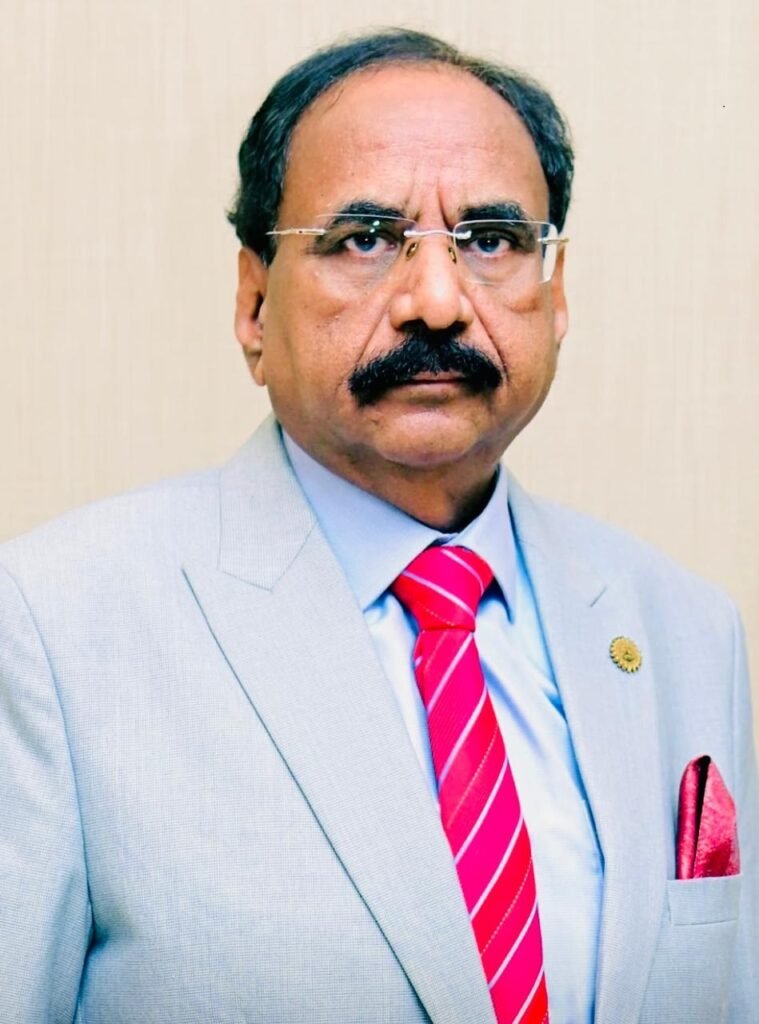
Business Unviable With Over 50pc Tax Burden; Consultative Installment Plan and Adjustment Against Export Refunds is Demanded, KATI President KARACHI: President of the Korangi Association of Trade and Industry (KATI), Muhammad Ikram Rajput, has expressed serious concern over the federal government’s decision to immediately recover Rs217 billion from exporters in the form of super tax for the period from 2022 to 2026, warning that the move could push already distressed industries towards collapse. Ikram Rajput said the industrial sector is already under severe pressure, and the sudden recovery of such a massive amount would further exacerbate the crisis. He termed the government’s decision alarming, stating that it would not only damage local industry but also pose serious risks to investment in the country. The KATI president pointed out that since the imposition of the super tax, the effective tax burden on industries has exceeded 50 percent, making it virtually impossible to conduct business. He added that high electricity and gas tariffs have already pushed production costs to the highest levels in the region, further eroding the competitiveness of Pakistani exports. Urging the federal government to reconsider its decision, Ikram Rajput called for immediate relief for the industrial and commercial sectors. He stressed the need for urgent and meaningful consultations between the government and trade and industry bodies across the country to develop a practical and industry-friendly mechanism. He proposed that instead of demanding lump-sum payment of four years’ dues, the outstanding super tax should be recovered through easy installments over a period of three to four years. Alternatively, he suggested offering special concessions on payment of 25 percent upfront, along with allowing adjustment against pending export refunds, to provide much-needed relief to cash-strapped exporters. Ikram Rajput said that failure to take immediate corrective measures could accelerate large-scale industrial closures, leading to job losses and causing irreparable damage to the national economy. He noted that local industry is already facing intense competition in the global market, and the imposition of super tax would further weaken exports and negatively impact industrial activity. The KATI president also highlighted that under the fixed tax regime in the past, taxes imposed on exporters were considered full and final settlement. As a result, exporters did not factor super tax into their cost structures. In this context, he said, holding exporters liable for retrospective super tax payments was unjustified. Ikram Rajput appealed to the government to initiate emergency consultations to support industry and trade, formulate a long-term and sustainable policy framework, and take decisions that ensure continuity of industrial operations and promote exports. He strongly urged the government to introduce policies that support export growth, stabilize investment, and contribute to overall economic development, emphasizing that sustainable economic recovery is not possible without facilitating the export sector.

Dun & Bradstreet Teams Up with Midas Safety to Boost Data-Driven Finance in Pakistan
Business

Dun & Bradstreet Teams Up with Midas Safety to Boost Data-Driven Finance in Pakistan

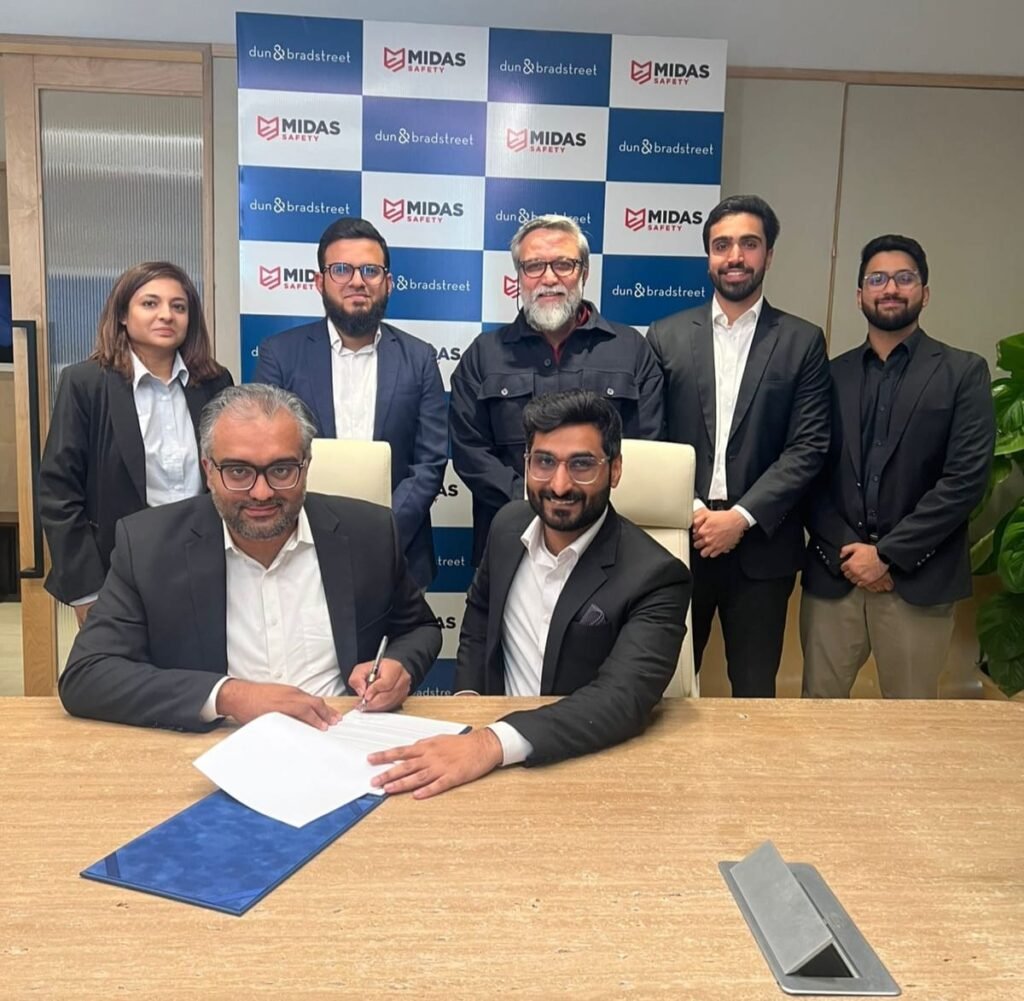
KARACHI: Dun & Bradstreet has partnered with Midas Safety through the deployment of D&B Finance Analytics. The partnership will enable Midas Safety to strengthen its financial decision-making capabilities through enhanced data-driven insights. The signing ceremony was held recently at the Dun and Bradstreet Pakistan Office, where representatives from both organizations came together to formalize the collaboration. The ceremony was attended by Khawaja Khurram, General Manager IT, Hasan Vohra, Group Commercial Finance Manager, and Kashan Mansoori CFO – from Midas Safety Pakistan. The collaboration reflects the growing demand among enterprises for strong analytics that give better visibility into finances and help teams make better decisions. D&B Finance Analytics solution helps corporate finance teams manage credit risk, streamline financial analysis, and access holistic company insights powered by Dun & Bradstreet’s global commercial database. With strong data intelligence at its core, the solution will equip Midas Safety to strengthen its finance initiatives and support its ongoing focus on operational efficiency and sustainable business growth. While talking about the collaboration, Zubair Qureshi, CBO Dun and Bradstreet Pakistan said, “We’re pleased to collaborate with Midas Safety as they adopt D&B Financial Analytics platform to strengthen its partner evaluation framework. This reflects how leading Pakistani enterprises are adopting global best practices to make smarter and sustainable partnership decisions”. Dun & Bradstreet is a global provider of business data and analytics. The company maintains one of the world’s largest commercial databases and provides data intelligence tools to support operations, compliance, and growth activities. More than 90% of the Fortune 600+ and millions of companies worldwide rely on Dun & Bradstreet data in support of their business decisions.

21st My Karachi Exhibition: CM Assures Release of Compensation to Gul Plaza Shopkeepers Within 2 Months
Pakistan

21st My Karachi Exhibition: CM Assures Release of Compensation to Gul Plaza Shopkeepers Within 2 Months

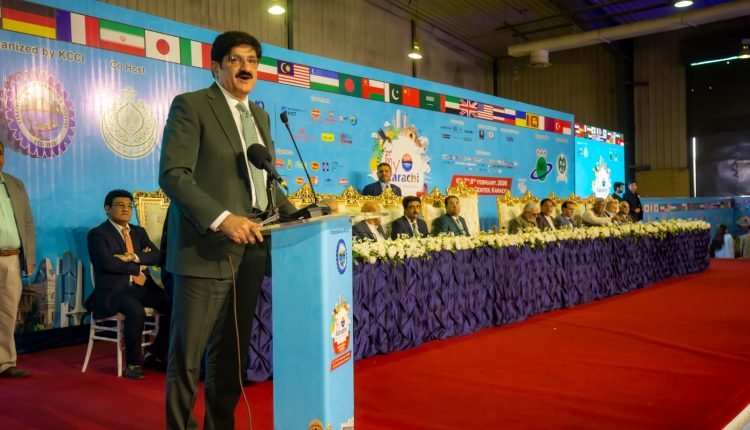
KARACHI: Chief Minister Sindh Syed Murad Ali Shah has stated that the government in collaboration with the Karachi Chamber is actively working to help shopkeepers restart their businesses and aims to ensure that compensation is provided within two months so that the shopkeepers can buy inventories to restart their businesses. While addressing the inaugural ceremony of 21st My Karachi – Oasis of Harmony Exhibition on Friday, the Chief Minister informed that several locations have been identified where affected shopkeepers will be facilitated to resume their businesses until the complete reconstruction of Gul Plaza. He clarified that no rent will be charged for these temporary shops, and the shopkeepers will only be required to bear the basic maintenance expenses. Sindh Minister for Industries Ikramullah Khan Dharejo, Sindh Minister FOR Culture and Tourism Zulfiqar Ali Shah, Chairman Businessmen Group Zubair Motiwala, Vice Chairmen BMG Anjum Nisar, Jawed Bilwani, Mian Abrar Ahmed, Tariq Yousuf, President KCCI Rehan Hanif, Vice President KCCI Muhammad Arif Lakhani, Chairman KCCI’s Special Committee for My Karachi Exhibition Muhammad Idrees, prominent businessman Arif Habib along with a large number of diplomats from friendly countries, businessmen, industrialists, KCCI Executive Committee Members were present on the occasion. Murad Ali Shah further stated that that the Sindh Government is providing compensation of Rs. 10 million each to the families of those who lost their lives in the Gul Plaza incident. As an immediate relief measure, Rs. 500,000 each is also being provided to the shopkeepers of Gul Plaza. Chief Minister further announced that the Gul Plaza building will be reconstructed in the same manner and with the same number of shops, while ensuring improved standards. He stated that the new building without a single square inch extra will be constructed in a better and safer manner within two years. Commenting on My Karachi Exhibition, he paid rich tribute to the Karachi Chamber for initiating the exhibition 22 years ago at a time when the city was facing difficult circumstances. He stated that the exhibition was launched to revive confidence, project a positive image of Karachi, and promote economic activity, adding that today people across the country eagerly wait for the My Karachi Exhibition every year. He further stated that the Sindh Government is working wholeheartedly for the overall improvement of Karachi. He recalled that during 2017–18, funds were provided to industrial town associations for the improvement of industrial estates, adding that the government continues to work in the same manner to improve the infrastructure in industrial areas. In this regard, a sum of almost Rs10 billion has been provided to all industrial associations this year with an advice to fully utilize the same by the end of June 2026. The Sindh government will only monitor whereas the business community will carry out the execution for improving infrastructure in industrial zones, he added. Syed Murad Ali Shah disclosed that more than Rs. 13 billion have also been provided to Mayor Karachi for improving drainage systems and roads. The law and order situation in Karachi has improved significantly, and traffic flow has also improved with the introduction of e-challan systems, he noted, while urging citizens to strictly follow safety measures while driving. On future plans, the Chief Minister said the Sindh Government is determined to accelerate development work in Karachi. He highlighted that the provincial government is working with the World Bank on the K-IV water project and aims to provide an additional 260 million gallons per day of water to the city. He added that work is also underway on desalination projects to address long-term water needs. Sharing details of his discussion with President World Bank, he said that President World Bank emphasized that while governments and institutions can allocate funds, meaningful participation of the private sector is essential for the success of major projects. Expressing his vision, he said it is his desire that the private sector works closely with the government, stressing that foreign investors will not come unless local investment takes place first. Chairman BMG Zubair Motiwala, while highly appreciating the presence of a large number of diplomats at the My Karachi Exhibition, urged the diplomatic community to project Karachi positively as a peaceful, progressive, and productive city where business activities are being conducted smoothly and confidently. He stated that the Karachi Chamber’s My Karachi Exhibition has become a landmark and a distinct identity of the Chamber, attracting not only local participants but also foreign exhibitors. He added that the core objective of the exhibition is to portray the soft and positive image of Karachi while providing the public an opportunity to purchase quality products at discounted rates ahead of Ramadan, thereby offering relief to consumers amid the prevailing inflationary pressures. Zubair Motiwala also appreciated the Sindh Government for undertaking numerous initiatives, particularly those aimed at improving infrastructure and strengthening healthcare services across the province. He pointed out that the Sindh Government has provided Rs. 9.46 billion to the industrial zones of Karachi for infrastructure development, expressing optimism that these funds will be utilized prudently and that the positive impact will soon be visible to the citizens of Karachi. Commending the Sindh Government’s support and cooperation in the rehabilitation of the Gul Plaza affectees, Chairman BMG stressed that the business community must also recognize its own responsibilities. He emphasized the need to address serious shortcomings at business premises, particularly the widespread presence of loose and unorganized wiring in markets, which often becomes a major cause of fire incidents. He urged traders to adopt precautionary measures and ensure that comprehensive fire safety arrangements are in place at commercial markets across Karachi. He observed that while the government’s timely intervention during such incidents is commendable and appreciated, it is equally important for stakeholders to proactively minimize the risk of such tragedies in the future through improved safety practices. Referring to various development projects currently underway in Karachi, Zubair Motiwala urged the Sindh Government to expedite their completion to reduce the hardships being faced by the public on the city’s roads. He

Reko Diq Project Under Strategic Review: Why Barrick Mining’s Next Move Matters
Pakistan

Reko Diq Project Under Strategic Review: Why Barrick Mining’s Next Move Matters

The Reko Diq Project, one of the world’s most talked-about gold and copper developments, has once again stepped into the global spotlight. Barrick Mining, the project’s largest stakeholder, has confirmed that its board is conducting a comprehensive review of all major aspects of the Reko Diq Project a move that could redefine the future of Pakistan’s mining landscape. Speaking during a post-earnings call, Barrick Mining CEO Mark Hill revealed that the review will examine capital allocation, security arrangements, and the overall development timeline of the Reko Diq Project. The process has already begun, and an official update is expected once the assessment concludes. For investors, policymakers, and industry watchers, this review is more than routine governance it is a strategic pause that could unlock long-term value or recalibrate expectations. Why the Reko Diq Project Is a Global Mining Prize Located in Pakistan’s mineral-rich Balochistan region, the Reko Diq Project is regarded as one of the world’s largest undeveloped gold and copper reserves. Its scale places it firmly on the radar of global commodity markets, especially at a time when copper demand is surging due to electric vehicles, renewable energy infrastructure, and global electrification. Gold, meanwhile, continues to act as a hedge against inflation and geopolitical uncertainty making the Reko Diq Project strategically attractive in today’s volatile economic environment. What Barrick Mining Is Reviewing in the Reko Diq Project Barrick Mining has clarified that the review will focus on three core pillars of the Reko Diq Project. First is capital allocation. Large-scale mining projects require multi-billion-dollar investments spread over decades. With global interest rates, commodity prices, and geopolitical risks constantly shifting, Barrick’s board is reassessing how and when capital should be deployed to maximize returns. Second is security arrangements. Operating in Balochistan requires robust, long-term security planning. By placing security under review, Barrick signals its intent to ensure sustainable operations while aligning with local and federal stakeholders. Third is the development timetable. Timelines directly affect project valuation, financing costs, and investor confidence. A refined schedule could help balance speed with risk mitigation. Ownership Structure of the Reko Diq Project Explained The Reko Diq Project’s ownership reflects a rare public-private partnership model in Pakistan’s mining sector. Barrick Mining holds a 50 percent stake, positioning it as the project’s technical and operational leader. Three federal state-owned enterprises collectively own 25 percent, ensuring alignment with national economic objectives. The Government of Balochistan holds the remaining 25 percent, giving the resource-rich province a direct stake in future revenues, employment, and regional development. This structure is designed to distribute risk, reward, and responsibility a crucial factor for a project of this magnitude. Why This Reko Diq Project Review Could Be a Game Changer The timing of this review is critical. Global mining companies are under increasing pressure to balance profitability with sustainability, security, and political stability. By reassessing the Reko Diq Project now, Barrick Mining may be positioning itself to future-proof the project against global economic shocks. For Pakistan, a successful and well-executed Reko Diq Project could mean billions in foreign investment, export earnings, job creation, and technology transfer. For Balochistan, it represents a rare opportunity for long-term economic transformation. What Happens Next for the Reko Diq Project Barrick Mining has stated that the review process has begun immediately, with a detailed update to follow upon completion. Markets and policymakers will be watching closely for signals related to revised budgets, timelines, or enhanced security frameworks. One thing is clear: the Reko Diq Project is no longer just a mining venture it is a strategic asset at the intersection of global commodities, national development, and regional stability.

Berlin Airport Paralyzed by Treacherous Black Ice Conditions
World

Berlin Airport Paralyzed by Treacherous Black Ice Conditions

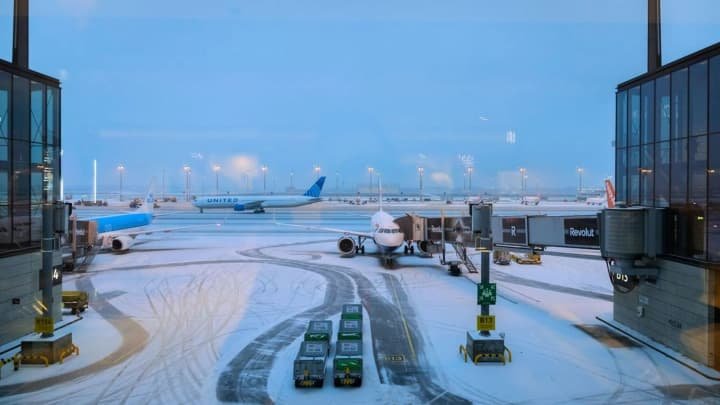
Berlin Brandenburg Airport (BER), the German capital’s main international hub, ground to a halt on Friday morning as severe weather wreaked havoc on operations. Freezing rain and black ice turned runways into slippery hazards, preventing any takeoffs or landings. Airport officials confirmed the suspension, which began Thursday evening, shows no immediate signs of lifting, leaving thousands of passengers stranded amid the winter chaos. Impact on Travelers and Airlines Passengers faced mounting frustration as flight boards displayed endless delays and cancellations. Many had arrived early, only to find check-in counters overwhelmed and lounges packed. Airlines like Lufthansa and EasyJet scrambled to rebook flights, offering vouchers for hotels and meals. One traveler, a business executive from London, described the scene as “utter disarray,” with families huddling in terminals and announcements echoing apologies. The economic ripple effects are significant. Berlin’s airport handles over 25 million passengers annually, and disruptions like this could cost millions in lost revenue for carriers and local businesses. Ground crews worked tirelessly overnight, applying de-icing agents to runways and taxiways. Despite their efforts, the persistent freezing rain rendered treatments ineffective, with surfaces remaining perilously slick. Meteorologists attribute the black ice to a rare combination of sub-zero temperatures and moisture from Atlantic weather systems. This phenomenon, where clear ice forms invisibly on surfaces, poses extreme risks to aviation safety. Efforts to Resume Operations and Future Precautions Airport spokeswoman Anna Müller stated that safety remains the top priority, with no risks being taken until conditions improve. “We’re monitoring the weather hourly,” she said. Teams are deploying advanced heating equipment and additional anti-slip materials in hopes of a midday restart. Forecasts predict a slight thaw by afternoon, but uncertainty lingers. If operations don’t resume soon, diversions to nearby airports like Leipzig or Hamburg may increase. This incident highlights Berlin’s vulnerability to extreme weather, prompting calls for infrastructure upgrades. Experts suggest investing in heated runways and better predictive tech to prevent future shutdowns. In the meantime, passengers are advised to check airline apps for updates and consider alternative travel options, such as high-speed trains connecting Berlin to major European cities. The disruption underscores broader climate challenges, with more frequent severe winters affecting global travel. Berlin officials promise a full review once the crisis passes, aiming to enhance resilience against such events.

Wall Street: Selloff Intensifies as AI Doubts Shake Investor Confidence
World

Wall Street: Selloff Intensifies as AI Doubts Shake Investor Confidence

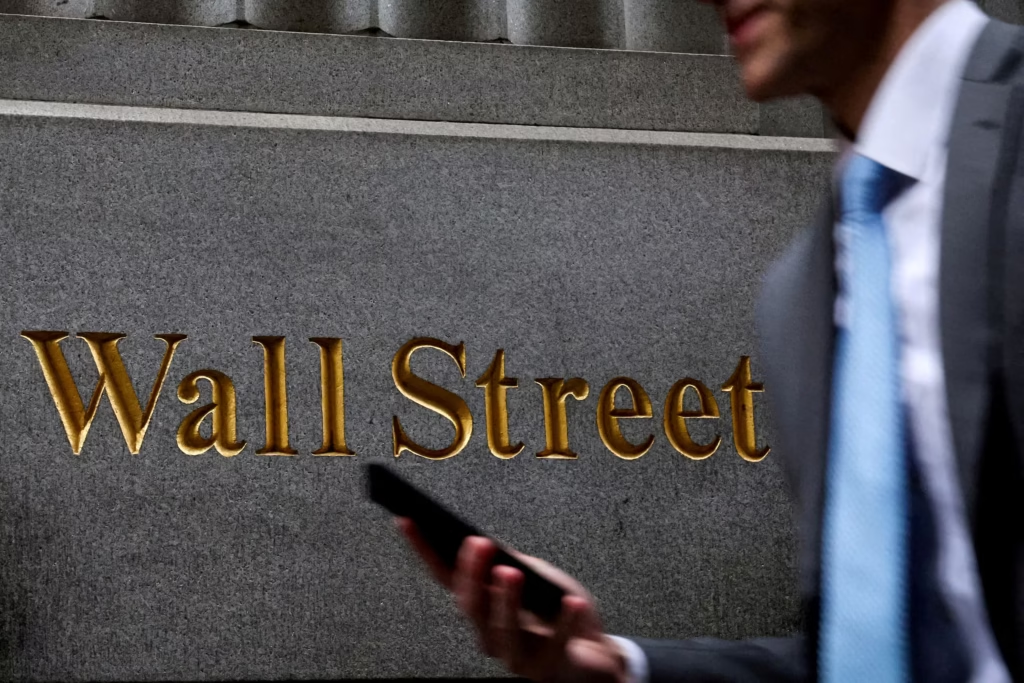
On February 6, 2026, global financial markets faced continued turmoil, with Asian equities leading the decline amid Wall Street’s ongoing rout and sharp drops in precious metals and digital currencies. The selloff, driven by AI-related profit fears and U.S. employment data, has investors rethinking core market drivers. Key Asian and U.S. Futures Movements South Korea’s Kospi index crashed 5%, triggering a brief halt in trading, while MSCI’s Asia-Pacific ex-Japan gauge slipped 0.9%. Japan’s Nikkei shed 0.7%, contributing to the region’s second straight day of losses. U.S. futures pointed to more pain, with S&P 500 e-minis down 0.6% and Nasdaq e-minis falling 1.1%. The broader S&P 500 has now erased its yearly gains, battered by economic signals. Fears that new AI technologies might cut into software firms’ revenues sparked the initial drop. This, combined with labor market fragility, has amplified selling pressure across asset classes. January’s U.S. layoffs hit a 17-year high for the month, per Challenger, Gray & Christmas, fueling recession worries and prompting a flight from riskier investments. Sharp Drops in Metals and Crypto Assets Gold prices retreated 1.6% to $4,691.76, and silver nosedived 8.9% to $64.912, as safe-haven demand waned in the volatile environment. Following a $2 trillion evaporation in crypto value on Thursday, bitcoin declined 3% to $61,238.64, and ether lost 1.8% to $1,813.77, extending the sector’s pain. Market analyst Tony Sycamore from IG in Sydney commented, “Investors are questioning their commitment to the pillars that have underpinned markets over the past six months: AI, crypto, and precious metals. This raises the odds of a deeper unwind.” With no detailed updates on European or emerging markets, the focus remains on U.S. and Asian trends. Analysts suggest this could evolve into a broader correction if sentiment doesn’t improve. Traders are bracing for potential policy responses, though immediate relief seems unlikely. Diversification strategies are gaining traction amid the uncertainty.

PIA Sale Leaves PSO Exposed: A Costly Aftershock of Privatization
Pakistan

PIA Sale Leaves PSO Exposed: A Costly Aftershock of Privatization

PIA Sale Leaves PSO Exposed to one of the most significant financial shocks in recent memory, as Pakistan State Oil (PSO) grapples with Rs. 30 billion in unpaid fuel dues following the sale of Pakistan International Airlines (PIA). While the privatization of the national flag carrier was pitched as a long-awaited reform, the fallout is now raising uncomfortable questions about risk management, accountability, and the hidden costs of state divestment. At the center of this unfolding situation is PSO Pakistan’s largest fuel supplier which provided aviation fuel to PIA for years, often amid delayed payments and mounting receivables. With PIA now sold, PSO finds itself exposed to billions in unsettled payments, turning a strategic reform into a financial headache. How the PIA Sale Leaves PSO Exposed to Financial Risk The core issue is simple but alarming: PIA’s outstanding fuel bills were not fully cleared before the sale. As a result, PSO is left chasing payments that may now fall into a grey area of responsibility. In explanatory terms, the situation looks like this: • PSO supplied jet fuel to PIA over an extended period• Payments were deferred, accumulating into massive receivables• PIA’s sale transferred ownership but not necessarily liabilities• PSO’s Rs. 30 billion remains unpaid and uncertain This exposure directly affects PSO’s cash flow, balance sheet strength, and working capital, especially at a time when global energy prices remain volatile. Why Rs. 30 Billion Matters More Than It Sounds To put things into perspective, Rs. 30 billion is not just a bookkeeping concern it represents: • Fuel procurement costs already incurred• Pressure on PSO’s liquidity and borrowing needs• Potential delays in payments to refineries and suppliers• Increased financing costs passed down the energy chain For a company that plays a critical role in Pakistan’s energy security, prolonged non-payment could ripple across multiple sectors. PIA Sale Leaves PSO Exposed Amid Governance Gaps The situation highlights a deeper structural issue: lack of clear financial safeguards during privatization. Industry experts argue that receivables of this scale should have been ring-fenced or settled before ownership changed hands. Instead, PSO now faces uncertainty over: • Who bears responsibility for legacy dues• Whether recovery will come from the government or the new owners• How long the dispute resolution process may take This ambiguity undermines confidence in future privatization efforts, especially for companies that do business with state-owned enterprises. Market Reaction and Investor Concerns Financial markets are watching closely. The fact that PIA Sale Leaves PSO Exposed has already raised concerns among investors and analysts who fear: • Earnings pressure if dues remain unpaid• Potential provisioning against receivables• Negative impact on dividend capacity Energy sector investors, in particular, are wary of policy-driven risks that can suddenly surface without warning. What Happens Next for PSO? PSO is reportedly engaging with relevant stakeholders to seek a resolution. Possible outcomes include: • Government-backed settlement of dues• Structured repayment plans• Legal or arbitration channels if disputes escalate However, until clarity emerges, the unpaid amount remains a shadow over PSO’s financial outlook. A Bigger Lesson for Pakistan’s Privatization Drive The controversy offers a crucial takeaway: privatization without financial cleanup creates new risks instead of solving old ones. If future sales follow a similar path, suppliers, lenders, and partners may demand stronger guarantees or avoid exposure altogether. As Pakistan pushes forward with economic reforms, ensuring transparency and accountability will be key to restoring trust. Final Thoughts The headline says it all PIA Sale Leaves PSO Exposed but the real story goes deeper. This is not just about unpaid dues; it’s about how reforms are executed and who ultimately bears the cost. For PSO, the next few months will be critical. For policymakers, this episode may serve as a cautionary tale they can’t afford to ignore.

Bioniks and PSO Provide Free AI-Enabled Prosthetics to Deserving Individuals in Karachi
Tech

Bioniks and PSO Provide Free AI-Enabled Prosthetics to Deserving Individuals in Karachi

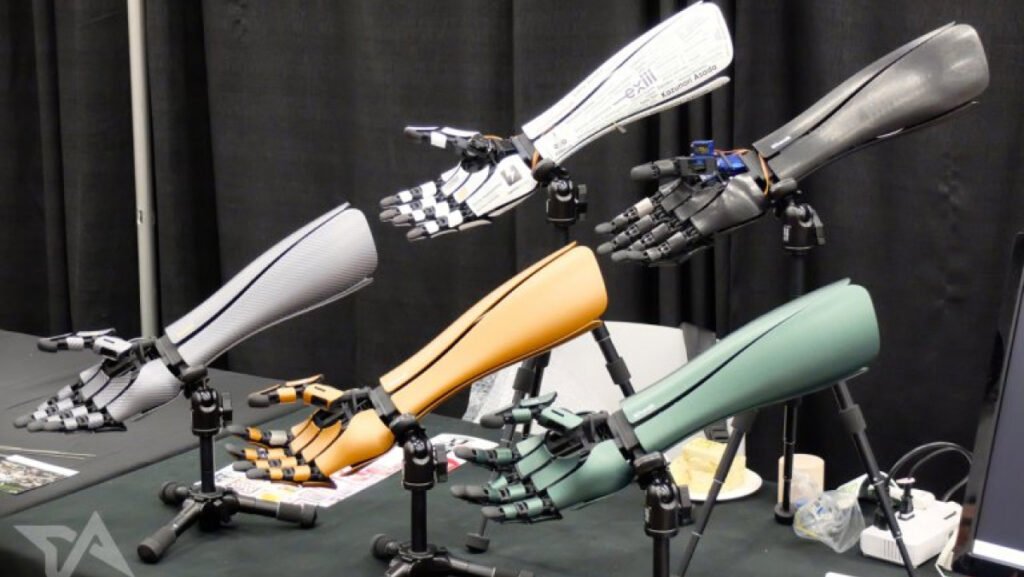
Karachi: Bioniks and Pakistan State Oil (PSO) have undertaken a joint initiative to provide prosthetic limbs to deserving and underprivileged individuals in order to bring positive change to their lives. Under this initiative, Bioniks and the PSO CSR Trust, with the help of AI technology, will provide artificial limbs to deserving and needy individuals who have lost their arms or legs. In this regard, a ceremony was held at PSO House, which was attended by beneficiaries of the initiative, including women and children. Bioniks CEO Anas Niaz stated that these locally manufactured prosthetic robotic limbs have been developed using advanced artificial intelligence technology and are highly effective in assisting with routine daily tasks. These prosthetic robotic limbs are also being exported from Pakistan to Jordan, while beneficiaries in Japan are also using these limbs. In collaboration with PSO, more than 100 individuals have so far been provided with prosthetic limbs, including men, women, and children. These artificial limbs are connected online through a cloud-based system to enable online troubleshooting support in case of any difficulty. The objective of this initiative by the PSO CSR Trust and Bioniks is to empower deserving and underprivileged individuals who have lost their arms or legs and help them reintegrate into the mainstream of life.

Volkswagen Reclaims Lead in Europe's BEV Market for 2025
Auto

Volkswagen Reclaims Lead in Europe’s BEV Market for 2025

Volkswagen reclaimed the title of Europe’s leading fully electric vehicle seller in 2025, outselling Tesla according to fresh JATO Dynamics figures published by Reuters on February 5, 2026. The milestone reflects Volkswagen’s successful push into electrification while Tesla encountered headwinds in a highly competitive landscape. Read More: https://theboardroompk.com/air-india-express-set-for-turnaround-profit-in-second-half-of-fiscal-2026/ Key Sales Figures Volkswagen achieved 274,278 BEV registrations in Europe last year, up 56% from 2024, bolstered by the popular new ID.7 and sustained demand for models like the ID.3 and ID.4. Tesla, by contrast, saw 236,357 units, down 27% year-over-year, ending its multi-year streak at the top. Drivers of the Change Volkswagen benefited from a refreshed and broader EV portfolio appealing to diverse buyers. Tesla struggled with an older, narrower range amid rising competition from local European brands and aggressive Chinese entrants. Additional pressure came from European consumer sentiment affected by Elon Musk’s political comments supporting far-right figures on the continent. Market-Wide Trends Europe’s BEV registrations grew 29% overall in 2025, outpacing the broader auto market’s 2.3% increase and indicating accelerating adoption despite economic pressures. JATO noted EVs took a “significant step forward,” with the data encompassing 28 countries including major non-EU markets. Outlook and Context This reversal highlights the challenges for pure-play EV makers like Tesla in mature markets with established competitors scaling up. Volkswagen’s gains demonstrate the value of lineup diversity and regional adaptation, setting the stage for continued rivalry in 2026 as incentives, charging networks, and new models shape demand.

Russia-US Nuclear Arm Treaty Expires, Risking New Arms Race
World

Russia-US Nuclear Arm Treaty Expires, Risking New Arms Race

The New START treaty, the last remaining nuclear arms control agreement between Russia and the United States, expired on February 5, 2026, ending more than half a century of mutual restraints on strategic nuclear arsenals. Read More: https://theboardroompk.com/pia-forges-major-cargo-alliance-with-air-france-klm-to-boost-global-exports/ This development removes verifiable limits on deployed warheads, missiles, and launchers, raising alarms about a potential new nuclear arms race involving the world’s major powers, including China’s expanding arsenal. Treaty Expiry and Immediate Consequences New START, signed in 2010 and extended once in 2021, capped each side at 1,550 deployed strategic nuclear warheads. With its lapse at midnight Prague time (February 5), neither Russia nor the U.S. is bound by these caps or inspection mechanisms. Russia proposed a one-year voluntary extension to allow time for successor talks, but the U.S. under President Trump did not formally respond. Moscow criticized the U.S. stance as “mistaken and regrettable,” stating both sides are now free to act independently while remaining open to diplomacy for stabilization. Russia’s Position and U.S. Silence Russian officials emphasized responsibility, readiness for countermeasures against new threats, and willingness to negotiate a comprehensive framework. President Putin had floated informal adherence for another year, but Trump made no public statement on the expiry. The White House indicated decisions on arms control would come on his timeline, with interest in a broader deal potentially including China. China’s Role and Rising Risks China’s nuclear stockpile, estimated at around 600 warheads (far smaller than the roughly 4,000 each for Russia and the U.S.), continues rapid growth. Beijing has refused trilateral talks, citing its smaller arsenal. Experts warn that the treaty’s end, combined with China’s buildup, could fuel an unconstrained arms race. Without transparency, predictability erodes, increasing crisis risks—exacerbated by AI, new technologies, and limited communication channels among nuclear states. Global Alarm and Calls for Action U.N. Secretary-General Antonio Guterres described the expiry as coming “at a worse time,” with nuclear weapon use risk at its highest in decades. He urged immediate negotiations for a successor with verifiable limits and risk reduction. Analysts predict both Russia and the U.S. could add hundreds of warheads within a couple of years under worst-case planning. The lapse ends Cold War-era restraint traditions, heightening global instability amid ongoing geopolitical tensions. This milestone underscores the fragility of nuclear arms control in a multipolar world, with no immediate replacement in sight despite diplomatic openings.

Scroll to Top