Author name: Web Desk

India to Retain Key Farm Protections in Trump-Era Trade Deal
World

India to Retain Key Farm Protections in Trump-Era Trade Deal

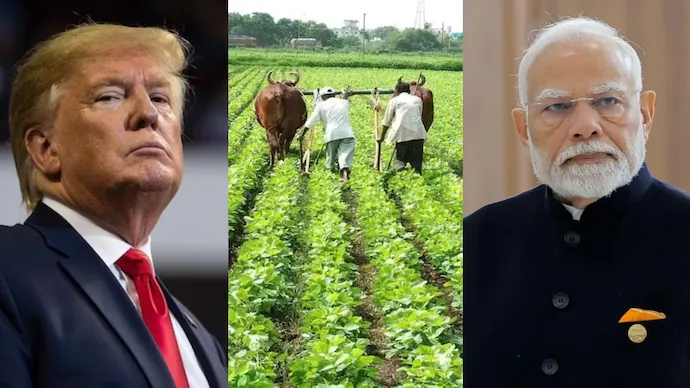
The Trump administration’s trade deal with India allows New Delhi to preserve protections in critical parts of its agriculture sector while opening markets in select areas. U.S. Trade Representative Jamieson Greer detailed the framework in a February 3, 2026, Reuters-reported CNBC appearance, following swift progress after Trump-Modi discussions. Read More: https://theboardroompk.com/imc-toyota-pakistan-brought-735m-fdi-6-5b-localization-savings-in-35-year-ceo/ Agricultural Concessions and Limits India agrees to zero duties on U.S. tree nuts, fruits, vegetables, wine, and spirits, hailed by Greer as significant for U.S. exporters. Yet, “key areas” of India’s farm sector remain protected, with no new access for guarded commodities such as rice, beef, soybeans, sugar, or dairy—mirroring exclusions in India’s EU deal. Greer indicated continued U.S. pursuit of broader access. Tariff Adjustments and Purchases India will cut tariffs on U.S. industrial goods to zero from 13.5%, while the U.S. reduces rates on Indian imports to 18% from 50%. India commits to phasing out Russian oil imports and ramping up $500 billion in U.S. purchases over years, spanning defense, energy, aircraft, telecom, and pharmaceuticals. Immediate tariff relief applies to American cars. Technical and Energy Elements The pact addresses non-tariff barriers through U.S. standards recognition processes. India’s shift from Russian energy aligns with diversification goals, supported by eased U.S. sanctions on Venezuelan oil. Path Forward Officials are finalizing terms, targeting quick completion before negotiating a fuller agreement. The deal resolves longstanding frictions, offering mutual economic benefits while respecting India’s domestic priorities in agriculture.

Pakistan in Talks for Benghazi Consulate After $4B Defense Deal to Bolster Libya's Eastern Authorities
World

Pakistan in Talks for Benghazi Consulate After $4B Defense Deal to Bolster Libya’s Eastern Authorities

Pakistan is advancing plans to establish a consulate in Benghazi, the eastern Libyan city controlled by the Libyan National Army (LNA), according to sources cited in a Reuters report published on February 3, 2026. Read More: https://theboardroompk.com/standard-chartered-connects-pakistani-smes-to-global-markets-through-tailored-foreign-exchange-solutions/ The move follows high-level engagements between Pakistani leaders and LNA commander Field Marshal Khalifa Haftar, who visited Islamabad recently, and comes amid a major $4 billion defense deal between Pakistan and the LNA. Diplomatic Boost for Eastern Authorities The proposed consulate would place Pakistan among a limited number of countries maintaining a diplomatic presence in Benghazi. Sources indicate this step could enhance the legitimacy and international standing of Libya’s eastern authorities in their long-standing rivalry with the U.N.-recognized government based in Tripoli, which controls the western part of the country. Tied to Expanding Defense Cooperation Talks on the consulate gained momentum after Pakistan’s army chief visited Benghazi in December 2025 to sign the multibillion-dollar arms agreement—one of Pakistan’s largest-ever defense exports. The deal, which Pakistani officials insist complies with U.N. restrictions, includes support for the Libyan air force’s capability development. During Haftar’s ongoing visit, discussions with Prime Minister Shehbaz Sharif, army chief Field Marshal Asim Munir, and air force leaders focused on broader bilateral cooperation, joint training, and regional issues. Libya’s Ongoing Division Libya has remained fractured since the 2011 NATO-backed uprising that ousted Muammar Gaddafi, escalating into civil war in 2014. The Tripoli-based government holds the west, while Haftar’s LNA dominates the east and south, including key oilfields. The U.N. arms embargo, in place since 2011, has proven largely ineffective according to experts. Limited Official Responses Pakistan’s prime minister’s office and foreign ministry did not comment on the report. Eastern Libyan authorities were not immediately reachable. The initiative reflects strengthening Pakistan-Libya ties, building on recent military pacts and Haftar’s alliances with regional players like the UAE. This development highlights Pakistan’s growing role in North African defense markets while navigating Libya’s complex political landscape.

From Shahab to Sejjil: Iran Has 2,000 km-Range Missile Deterrent
World

From Shahab to Sejjil: Iran Has 2,000 km-Range Missile Deterrent

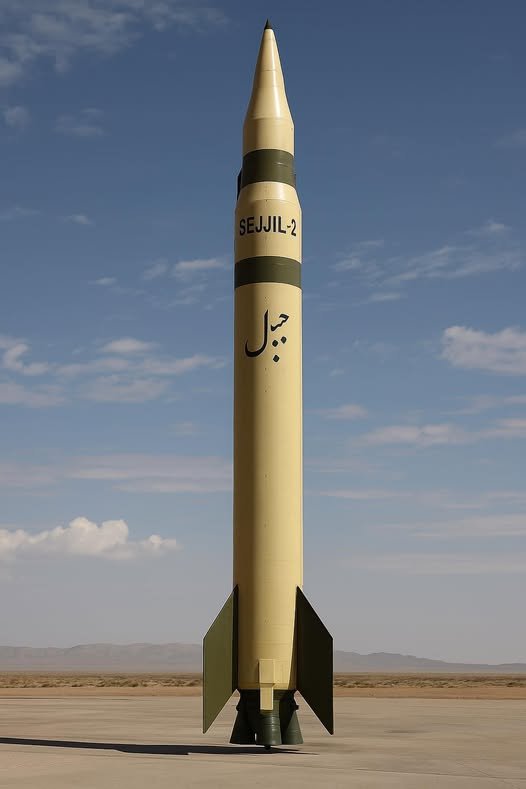
Iran’s ballistic missile program remains a cornerstone of its defense strategy, boasting the region’s largest inventory per U.S. assessments. A February 4, 2026, Reuters report outlines the arsenal’s scope as Tehran refuses to discuss limitations in upcoming nuclear negotiations with the U.S. in Oman. Read More: https://theboardroompk.com/former-australian-fast-bowler-brett-lee-urges-india-pak-match-icc-t20-world-cup/ Underground Network and Range Policy Missiles are housed in fortified underground complexes for protection and rapid deployment. Iran adheres to a 2,000 km self-limit, covering Israel and regional adversaries, while denying nuclear delivery intent. Diverse Arsenal Overview Short-range options like Shahab-1 (300 km) and Zolfaghar (700 km) complement medium- and longer-range systems: Shahab-3 (up to 1,300 km), Emad (1,700 km), Ghadr and Khorramshahr (2,000 km), Sejjil (2,000-2,500 km, high-speed solid-fuel), Khaibar (2,000 km), and Haj Qasem (1,400 km). These draw from foreign tech adapted domestically. Technological Progress Improvements focus on accuracy, maneuverability, and hypersonic features, exemplified by the Fattah system. Upgrades include composite materials and precision guidance, bolstering deterrence. Post-Conflict Recovery and Tensions Iran fired extensively in the June 2025 Israel war but claims enhanced capabilities afterward, with recent military visits highlighting upgrades. The program draws scrutiny as a potential nuclear vector and regional destabilizer, especially with U.S. preconditions in talks emphasizing missile curbs.

Former Australian Fast Bowler Brett Lee Urges India-Pak Match ICC T20 World Cup
World

Former Australian Fast Bowler Brett Lee Urges India-Pak Match ICC T20 World Cup

Former Australian fast bowler Brett Lee has voiced strong support for the highly anticipated India-Pakistan clash in the ICC T20 World Cup, while Pakistan’s Prime Minister Shehbaz Sharif defended the government’s decision to boycott the match as “appropriate.” Read More: https://theboardroompk.com/exports-plunge-15-pakistans-jul-nov-trade-deficit-widens-to-15-54-billion/ The controversy surrounds the group-stage encounter scheduled for February 15, 2026, in Colombo, Sri Lanka, amid the 20-team tournament co-hosted by India and starting on February 8. Lee Calls for Politics-Free Cricket In an interview on the ‘Mr. Cricket UAE’ podcast, Lee urged separating politics from sport. He said, “Let’s get the politics out of it. I really hope the match happens. I really hope they get the opportunity, because it is going to be super exciting. The whole world watches when India and Pakistan play one another.” The former player, who retired in 2012 after a 13-year international career, emphasized the global appeal of the rivalry. Pakistan’s Government Stance Pakistan cleared its team’s participation in the World Cup in Sri Lanka but announced on February 2 that it would skip the India match. Prime Minister Sharif, speaking on February 4, stated: “We have taken a very clear stand on the T20 World Cup that we won’t play the match against India because there should be no politics on the sports field. We have taken a very considered stance, and we should completely stand by Bangladesh, and I think this is a very appropriate decision.” The boycott demonstrates solidarity with Bangladesh, which was replaced by Scotland after refusing to play in India over security concerns linked to regional tensions. ICC Rejects Relocation Demands The International Cricket Council dismissed safety issues based on an independent assessment and rejected calls to shift matches to Sri Lanka, citing logistical challenges for late changes. This has deprived fans of one of cricket’s biggest fixtures, impacting tournament excitement. Broader Context and Implications Geopolitical strains between India and Pakistan continue to influence bilateral cricket ties, with the PCB yet to clarify its position on potential knockout encounters. While the boycott affects only the group game, it highlights persistent challenges in keeping politics out of sport despite widespread calls for the iconic rivalry to proceed.

Air India Express Set for Turnaround Profit in Second Half of Fiscal 2026
Pakistan

Air India Express Set for Turnaround Profit in Second Half of Fiscal 2026

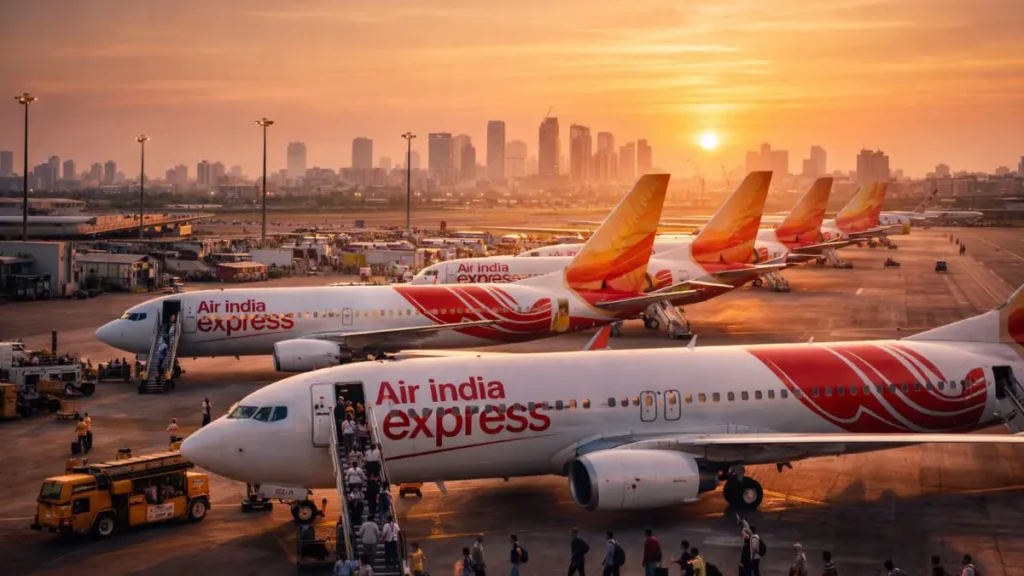
Air India Express anticipates recording its inaugural operating profit under Tata Group ownership during the second half of FY26 (ending March 2026), according to internal town hall insights reported by Reuters on February 5, 2026. This development highlights progress in the airline’s post-privatization recovery phase. Read More: https://theboardroompk.com/jf-17-export-boom-puts-pakistans-production-lines-under-pressure/ Key Drivers of Profitability Management attributes the forecast to enhanced capacity deployment, expanded market presence, better unit economics, disciplined cost management, and superior execution. These elements have helped offset sector-wide headwinds and supported a path toward financial stability. Strategic Investments and Growth Roadmap With a current fleet surpassing 100 narrowbody jets, Air India Express plans aggressive scaling, including more than doubling capacity in four to five years and aiming for over 200 aircraft. A recent order for 30 Boeing 737 MAX additions bolsters this ambition, though jet delivery delays pose constraints. Additionally, over $70 million is earmarked for cabin refurbishments to elevate service quality. Broader Implications for Tata Aviation The low-cost arm’s anticipated profitability offers encouragement amid ongoing challenges at flagship Air India, including external factors like airspace bans affecting operations. It reflects Tata’s multi-billion-dollar revival strategy for its aviation portfolio, emphasizing efficiency, network growth, and customer focus in a high-demand domestic market. This forecast positions Air India Express as a strengthening contributor to the group’s aviation ecosystem, with emphasis on consistent performance and margin improvement moving forward

JazzWorld Partners with Kazakhstan's QazCode to Boost AI and Software Exports
World

JazzWorld Partners with Kazakhstan’s QazCode to Boost AI and Software Exports

JazzWorld, the digital and technology arm of Jazz (a VEON group company), has signed a landmark Memorandum of Understanding (MoU) with Kazakhstan’s QazCode LLP to boost artificial intelligence (AI) and software exports from Pakistan. Read More: https://theboardroompk.com/standard-chartered-connects-pakistani-smes-to-global-markets-through-tailored-foreign-exchange-solutions/ Announced on February 4, 2026, the partnership also involves Teknosys (JazzWorld’s software arm) and Beeline Kazakhstan, aiming to foster joint innovation, digital trade, and regional market access for Pakistani tech solutions. Accelerating AI-Driven Exports The collaboration focuses on jointly developing and commercializing AI-powered products tailored for telecom, enterprise, and public-sector applications. Partners will exchange engineering best practices, establish innovation pipelines, and explore advanced domains like cloud infrastructure, high-performance computing, cybersecurity, and responsible AI. This initiative seeks to create export-ready digital platforms, enabling Pakistani innovations to scale into Central Asia and beyond. Talent Development and Infrastructure A key emphasis is on building human capital through joint training programs, research initiatives, staff exchanges, and pilot projects in AI engineering, data science, and product management. The partnership includes plans for joint R&D labs, testbeds, and proof-of-concept deployments to translate ideas into commercial success quickly. Governance and Long-Term Commitment A Joint Steering Committee will oversee strategic priorities, monitor progress, and meet quarterly to ensure accountability and measurable impact. All activities will adhere to data protection, cybersecurity, and regulatory standards in both countries. The MoU is set for an initial three-year term, with potential for expansion via project-specific agreements. Executive Perspectives Aamir Ibrahim, CEO of JazzWorld, commented: “This partnership reflects our ambition to move Pakistan up the global digital value chain. By combining JazzWorld’s scale and market access with deep engineering and AI capabilities, we are building export-ready platforms that deliver real economic value. Our focus is clear: turning innovation into sustainable growth, skilled jobs, and stronger digital competitiveness for Pakistan.” Oleksii Sharavar, CEO of QazCode LLP, added: “JazzWorld and QazCode share a common vision: transforming artificial intelligence into measurable business and societal impact. By aligning our engineering strength with JazzWorld’s regional footprint, this partnership is designed to move quickly from development to deployment across multiple markets.” The agreement underscores Pakistan’s maturing software and AI ecosystem, positioning it as a competitive digital exporter through responsible cross-border collaboration. It aligns with broader Pakistan-Kazakhstan efforts to enhance bilateral ties, including trade growth targets.

Standard Chartered Connects Pakistani SMEs to Global Markets Through Tailored Foreign Exchange Solutions
Business

Standard Chartered Connects Pakistani SMEs to Global Markets Through Tailored Foreign Exchange Solutions

Standard Chartered Bank Pakistan organized a dedicated client event in Islamabad on February 4, 2026, to showcase foreign exchange (FX) solutions designed specifically for the SME sector. The gathering highlighted ways to facilitate smoother international trade and expansion for local businesses. Read More: https://theboardroompk.com/wb-president-ajay-banga-pakistan-must-generate-30-million-jobs-to-secure-future/ SMEs as Economic Backbone Representing over 70% of non-agri jobs and a major export driver, SMEs are central to Pakistan’s growth story. Discussions centered on overcoming challenges in global dealings, with FX tools positioned as key enablers for efficient and confident market entry. Global Network and Specialized Services Leveraging presence in more than 53 countries, the bank delivers comprehensive support including in-depth market intelligence, seamless end-to-end FX processing, attractive pricing, and dedicated global trade guidance. This infrastructure helps reduce costs and complexities associated with cross-border payments and operations. Building Confidence and Partnerships Saadya Riaz, Head of Wealth and Retail Banking, remarked: “SMEs are a vital engine of Pakistan’s economy, driving growth and employment. At Standard Chartered, we are committed to supporting their ambitions by building long-term partnerships and by delivering tailored solutions, insights, and global expertise that will enable them to scale their businesses with confidence.” The event underscores Standard Chartered’s ongoing efforts to drive innovation and resilience in priority sectors. Through such engagements, the bank aims to equip SMEs with the tools needed to thrive internationally, contributing to broader economic development and export enhancement in Pakistan.

AI Emerges as Key Tool to Strengthen Pakistan-China Media Ties
Pakistan

AI Emerges as Key Tool to Strengthen Pakistan-China Media Ties

Artificial Intelligence (AI) is emerging as a powerful strategic instrument to strengthen media integration and deepen the longstanding bilateral ties between Pakistan and China. In a recent seminar held in Islamabad, Muhammad Zameer Asadi, a media fellow at the China International Press and Communication Center, highlighted AI’s transformative potential in reshaping global media landscapes and fostering closer cooperation between the two nations. Read More: https://theboardroompk.com/imc-toyota-pakistan-brought-735m-fdi-6-5b-localization-savings-in-35-year-ceo/ AI’s Role in Overcoming Barriers Asadi emphasized that AI technologies, including advanced translation, speech recognition, and real-time subtitling, effectively eliminate linguistic and communication obstacles. This enables seamless sharing of journalistic content, documentaries, interviews, and breaking news across languages, allowing Pakistani and Chinese media professionals to collaborate more efficiently. Enhancing Journalism and Trust Through intelligent data analysis, AI facilitates joint reporting on critical issues such as economic development, climate change, public health, and regional connectivity. Such efforts can boost public trust, knowledge exchange, and mutual understanding. Asadi noted that AI-driven media integration aligns with both countries’ ongoing digital transformations, serving as a key pillar for broader engagement. Economic and Security Applications AI supports economic diplomacy by delivering tailored business news, investment opportunities, and policy updates via smart recommendation systems. In combating misinformation—particularly around flagship projects like the China-Pakistan Economic Corridor (CPEC)—joint AI tools for fact-checking, sentiment analysis, and content verification were proposed as essential measures. Cultural Exchange and Future Collaboration For cultural connectivity, AI enables intelligent content curation, virtual exhibitions, and interactive documentaries that present traditions innovatively to younger audiences. Asadi advocated for joint AI training programs, virtual newsrooms, and digital journalism platforms to build journalists’ skills and ensure long-term sustainable media cooperation. He concluded that AI is not merely a technological tool but a strategic facilitator for intensive media interdependence, ultimately deepening trust and partnership. This vision supports shared goals of responsible technology use, ethical reporting, and inclusive digital development amid the ironclad Pakistan-China friendship.

Pak-China Boost Counter-Terror Efforts Through Tech and Intelligence Collaboration
World

Pak-China Boost Counter-Terror Efforts Through Tech and Intelligence Collaboration

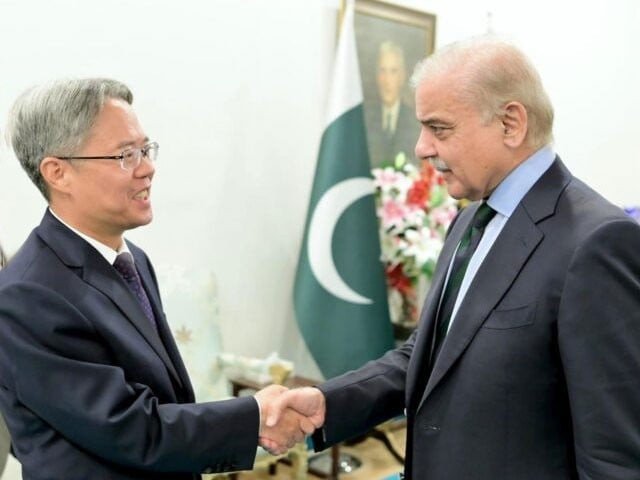
Pakistan and China have strengthened their strategic partnership with a new agreement focused on security cooperation. During a high-level meeting at the Ministry of Interior in Islamabad on Thursday, Federal Interior Minister Mohsin Naqvi hosted Chinese Ambassador Jiang Zaidong. Read More: https://theboardroompk.com/jf-17-export-boom-puts-pakistans-production-lines-under-pressure/ The discussions centered on counter-terrorism, internal security, and ways to enhance bilateral ties amid recent challenges. Enhanced Intelligence and Cyber Collaboration Both sides agreed to boost collaboration in intelligence sharing and combating cybercrime. This aims to counter terrorism more effectively and address emerging digital threats. The integration of modern Chinese technology was highlighted as key for future counter-terrorism operations. They also committed to deeper internal security cooperation and robust digital surveillance measures. Special Protection for Chinese Nationals A dedicated Special Protection Unit will be established to safeguard Chinese citizens and projects in Pakistan. Minister Naqvi stressed that protecting Chinese nationals remains a top priority. Ambassador Zaidong condemned recent attacks in Balochistan and reaffirmed China’s unwavering support for Pakistan’s fight against terrorism. The meeting included Minister of State for Interior Talal Chaudhry and senior officials. Naqvi praised the timely response by security forces in Balochistan and noted the resilience of Pak-China ties against attempts to undermine them. This development builds on ongoing efforts to fortify the all-weather friendship between the two nations.

WB President Ajay Banga: Pakistan Must Generate 30 Million Jobs to Secure Future
World

WB President Ajay Banga: Pakistan Must Generate 30 Million Jobs to Secure Future

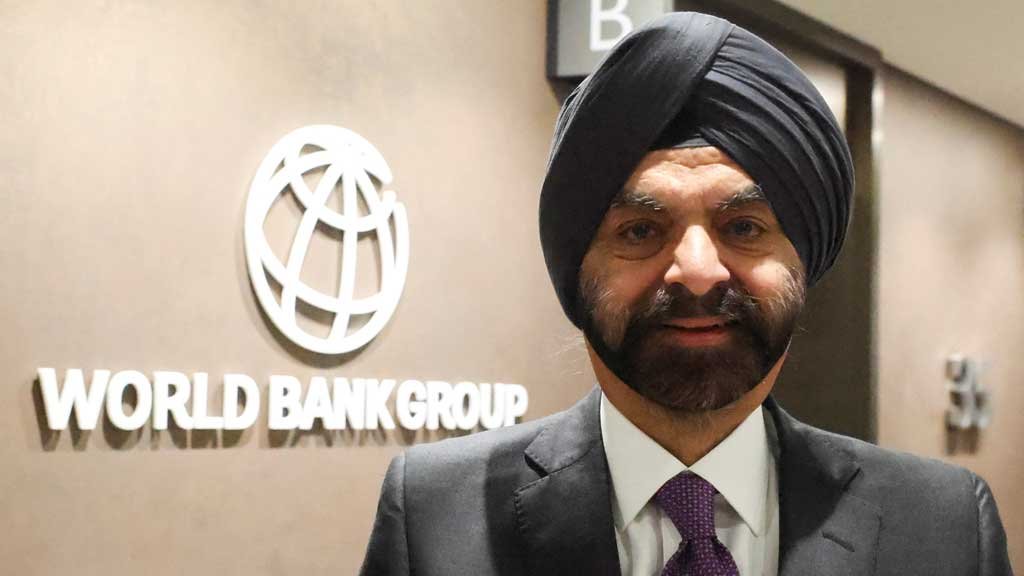
World Bank President Ajay Banga has highlighted Pakistan’s pressing need to create millions of jobs to harness its youthful population effectively. Speaking to Reuters in Karachi during his recent visit, Banga underscored that turning the youth bulge into an economic dividend requires immediate and sustained action on employment. Read More: https://theboardroompk.com/oil-prices-fall-over-1-on-us-iran-talks-confirmation/ Scale of the Employment Crisis According to Banga, Pakistan must produce 2.5 to 3 million jobs every year for the next ten years, totaling up to 30 million positions. This target addresses the influx of young workers and prevents risks like outward migration and domestic unrest. He called it a “binding constraint” on long-term growth, not just a side issue. Strategic Shift to Outcomes Banga explained that the World Bank is reorienting its work toward outcomes, with job creation at the center. Pakistan’s private sector drives most employment, so policies must encourage private investment. The 10-year Country Partnership Framework provides about $4 billion yearly in financing, blending public support with private-sector initiatives. Pathways to Job Growth A three-pronged approach was proposed: investing in infrastructure and human capital, easing regulations for businesses, and improving financial access for underserved groups like small enterprises and farmers. Key sectors include agriculture, tourism, healthcare, and infrastructure. Banga noted the rise of freelancers as a sign of entrepreneurial spirit, but they need better support to scale and create more jobs. He also touched on related challenges, such as power sector reforms to boost productivity and integrating climate resilience into everyday development. Banga expressed optimism, viewing Pakistan as a long-term opportunity for hope and progress through focused reforms.

Scroll to Top