Author name: Web Desk

Pakistan Federal Debt Reaches Rs78.529trn End-Dec 2025 on Local Borrowing
Pakistan

Pakistan Federal Debt Reaches Rs78.529trn End-Dec 2025 on Local Borrowing

Pakistan’s total federal government debt rose by Rs641 billion in the first six months of FY26 (July to December 2025), reaching Rs78.529 trillion by end-December, per State Bank of Pakistan figures. The increase stemmed mainly from a surge in domestic liabilities, offsetting a reduction in external debt. Read More: https://theboardroompk.com/9-dead-in-canadas-deadliest-school-shooting-18-year-old-suspect-identified-in-remote-b-c-town/ Breakdown of Debt Movements Domestic debt expanded by Rs891 billion (1.6%), climbing to Rs55.363 trillion from Rs54.472 trillion in June 2025. This uptick reflects greater borrowing from local banks and markets to meet financing gaps. External debt, however, fell by Rs251 billion to Rs23.166 trillion, aided by repayments totaling around USD6 billion so far in the fiscal year. SBP Governor Jameel Ahmad highlighted that further repayments of USD4.5 billion are planned by June 2026, maintaining external debt at 2022 levels through targeted policies. Broader Economic Implications Year-on-year, debt grew 9.6% (Rs6.882 trillion) from December 2024 levels. The pattern indicates continued fiscal pressures and reliance on domestic sources, despite signs of improved fiscal balance in the half-year, including contained spending. Experts note the government’s efforts to prioritize external debt management and achieve primary surpluses, though full-year targets face hurdles. The data signals ongoing challenges in balancing borrowing needs with debt sustainability in Pakistan’s evolving economic landscape.

9 Dead in Canada's Deadliest School Shooting: 18-Year-Old Suspect Identified in Remote B.C. Town
World

9 Dead in Canada’s Deadliest School Shooting: 18-Year-Old Suspect Identified in Remote B.C. Town

Canada is reeling from a tragic mass shooting at Tumbler Ridge Secondary School in remote British Columbia on February 10, 2026, one of the deadliest school attacks in the nation’s history. At least nine people died, including the suspect who died by apparent suicide, with over 25 others injured in the incident that spanned the school and a nearby residence. Official Response and Ministerial Deployment Prime Minister Mark Carney, visibly emotional, addressed the nation, describing the event as a “terrible” tragedy and promising the country would “get through this” and “learn from this.” He postponed international travel, ordered flags on government buildings flown at half-mast for seven days, and announced that Public Safety Minister Gary Anandasangaree was heading to the scene in Tumbler Ridge to coordinate federal support alongside provincial authorities. Carney emphasized national unity, stating it was time for Canadians to “come together… to support each other, to mourn together and to grow together.” A moment of silence was observed in the House of Commons, where Carney reiterated the nation’s shock and mourning. Details of the Attack and Investigation Police identified the suspect as 18-year-old Jesse Van Rootselaar, a local resident and former student who had dropped out years earlier. Authorities noted prior mental health-related police contacts at her home. The shooter first killed her mother and stepbrother at a residence before entering the school, where victims included five students (aged 12-13) and one teacher. The Royal Canadian Mounted Police responded swiftly, crediting quick action with preventing further loss of life. The motive remains under investigation, with no additional details released. British Columbia Premier David Eby indicated reviews of mental health system interactions with the suspect. The small coal-mining community of Tumbler Ridge (population around 2,400) has been left devastated, with the incident marking Canada’s deadliest school shooting since 1989 and one of the worst mass killings overall since 2020.

Foreign Direct Investment in Pakistan’s Insurance Sector Surges with SECP’s Approval of TPL-Jazz Deal
Business

Foreign Direct Investment in Pakistan’s Insurance Sector Surges with SECP’s Approval of TPL-Jazz Deal

Foreign Direct Investment in Pakistan’s Insurance Sector has received a major boost as the Securities and Exchange Commission of Pakistan (SECP) approved Jazz International Holding Limited’s acquisition of a controlling stake in TPL Insurance Limited. Read More: https://theboardroompk.com/sky-air-compressors-open-house-showcases-german-pakistan-industrial-innovation-in-karachi/ The landmark transaction signals renewed global confidence in Pakistan’s financial services industry particularly in the rapidly evolving digital insurance space. This strategic partnership between a leading digital insurer and a major international digital operator is more than a routine corporate acquisition. It represents a turning point for insurance penetration, fintech innovation, and foreign investor participation in Pakistan’s regulated sectors. Why This Foreign Direct Investment in Pakistan’s Insurance Sector Matters Pakistan’s insurance penetration remains significantly lower compared to regional peers. With a population exceeding 240 million and increasing smartphone adoption, the country presents immense untapped potential for digital insurance services. The acquisition is expected to: • Accelerate digital insurance adoption• Increase foreign capital inflows• Strengthen corporate governance standards• Promote financial inclusion through microinsurance solutions By enabling this transaction, SECP has demonstrated its commitment to building a transparent and investor-friendly regulatory ecosystem. Rather than merely approving a share transfer, the Commission conducted detailed due diligence to ensure compliance with corporate governance principles and prudent risk management frameworks. This strengthens market credibility and sends a powerful message to global investors evaluating Pakistan as an investment destination. Digital Insurance: The Future of Foreign Direct Investment in Pakistan’s Insurance Sector The timing of this development is particularly significant. SECP recently introduced a regulatory framework specifically designed for digital-only insurers and microinsurers a progressive reform aimed at modernizing Pakistan’s insurance landscape. This new framework supports:• Fully digital onboarding processes• Tech-driven underwriting models• Microinsurance products for underserved communities• Faster claims processing through automation By aligning regulatory reform with strategic foreign investment, SECP is laying the foundation for a digitally empowered insurance ecosystem. Jazz International’s involvement brings not just capital, but technological expertise, operational scale, and digital infrastructure elements critical for transforming traditional insurance models. Investor Confidence and Market Transparency Foreign investors often prioritize regulatory clarity, governance safeguards, and institutional transparency. SECP’s proactive facilitation of this deal reinforces Pakistan’s commitment to: • Strengthening regulatory oversight• Ensuring prudent management practices• Encouraging innovation without compromising compliance• Promoting sustainable market development This approval reflects a broader reform agenda focused on enhancing ease of doing business in Pakistan’s financial sector. How This Deal Could Reshape Pakistan’s Financial Landscape The acquisition could trigger a ripple effect across the insurance and fintech sectors. With increasing digital connectivity and mobile penetration, digital insurance products can reach segments previously excluded from formal financial services. Industry analysts believe this Foreign Direct Investment in Pakistan’s Insurance Sector may: • Encourage additional multinational players to explore Pakistan• Drive consolidation and modernization within the insurance industry• Enhance competition and product innovation• Boost overall FDI inflows into regulated sectors For consumers, this could mean affordable microinsurance, seamless mobile-based policy management, and improved claims efficiency. For investors, it signals regulatory maturity and growth potential. A Strategic Milestone for Pakistan’s Economy Foreign Direct Investment in Pakistan’s Insurance Sector is not just about capital it is about confidence. It reflects trust in regulatory institutions, belief in digital transformation, and optimism about Pakistan’s long-term growth trajectory. As SECP continues implementing structural reforms and strengthening governance standards, the country’s insurance industry appears poised for a digital leap. The TPL Insurance–Jazz International partnership may well be remembered as the catalyst that reshaped Pakistan’s insurance penetration story. The question now is: will more global players follow?

SKY Air Compressors Open House Showcases German-Pakistan Industrial Innovation in Karachi
Uncategorized

SKY Air Compressors Open House Showcases German-Pakistan Industrial Innovation in Karachi

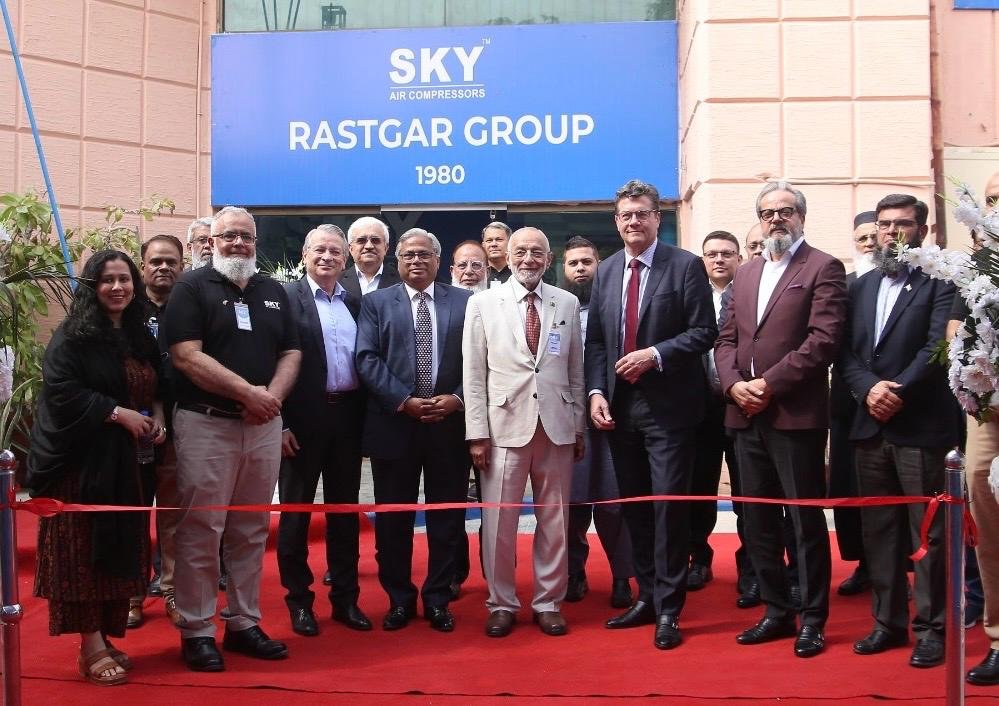
The SKY Air Compressors Open House made waves in Karachi’s industrial community as the German Consul General, Thomas E. Schultze, officially inaugurated the high-profile event at Rastgar & Company (Pvt.) Ltd.’s Korangi facility on February 11. But this wasn’t just another corporate gathering it was a powerful statement about sustainability, advanced engineering, and the future of industrial growth in Pakistan. Read More: https://theboardroompk.com/belt-and-road-international-general-practitioners-training-course-concludes-in-kashgar/ From diplomacy to decarbonisation, the event reflected a deeper collaboration between Germany and Pakistan in promoting energy-efficient industrial technologies. SKY Air Compressors Open House Begins with a Green Commitment The highlight of the inauguration ceremony was a symbolic tree plantation by the German Consul General a gesture that underscored the shared commitment to environmental responsibility and reduced carbon emissions. The SKY Air Compressors Open House placed sustainability at the center of discussion, emphasizing how modern compressed air systems can significantly reduce energy consumption in industrial operations. In an era where manufacturing costs and climate concerns are rising simultaneously, energy-efficient air compressor systems are no longer optional they are strategic investments. Industrial experts at the event stressed that compressed air systems account for a substantial portion of electricity usage in manufacturing plants. By upgrading to advanced German-engineered solutions, businesses can improve productivity while lowering operational costs and environmental impact. Strengthening Pakistan-Germany Industrial Collaboration Organised in collaboration with the German Pakistan Chamber of Commerce & Industry (GPCCI), the SKY Air Compressors Open House attracted multinational corporations, leading local manufacturers, industry associations, and technical professionals. This gathering highlighted the growing importance of bilateral trade and technology transfer between Germany and Pakistan. Germany, known globally for precision engineering and industrial innovation, continues to play a pivotal role in supporting Pakistan’s manufacturing modernization efforts. The event demonstrated how cross-border collaboration can unlock opportunities in: • Energy-efficient manufacturing• Industrial automation• Sustainable production processes• Technical knowledge transfer• Enhanced competitiveness in global markets Such partnerships are increasingly critical as Pakistan aims to expand exports and strengthen its industrial base. Technical Sessions Spotlight Energy-Efficient Compressed Air Systems One of the major attractions of the SKY Air Compressors Open House was the series of specialized technical sessions conducted by international experts who traveled specifically for the event. These sessions focused on: • Advanced energy-efficient compressed air systems• Portable air compressor applications for diverse industries• Best practices in system optimization• Reducing energy waste in manufacturing environments Experts explained that inefficient compressed air systems can lead to energy losses of up to 30%, directly impacting production costs. By implementing intelligent monitoring systems and modern compressor technologies, companies can dramatically improve operational efficiency. For Pakistan’s industrial sector especially textiles, pharmaceuticals, food processing, cement, and heavy manufacturing such advancements could translate into significant competitive advantages. Why the SKY Air Compressors Open House Matters for Pakistan’s Industry The timing of the SKY Air Compressors Open House is particularly significant. With rising energy tariffs and increasing global pressure to adopt sustainable manufacturing practices, Pakistani industries are actively seeking cost-effective and eco-friendly solutions. Efficient compressed air technology directly contributes to: • Lower electricity bills• Reduced carbon footprint• Improved machinery lifespan• Enhanced productivity• Greater export competitiveness Industry participants at the event noted that adopting modern compressor systems is not merely a technical upgrade it is a strategic move toward long-term sustainability and profitability. A Glimpse Into the Future of Sustainable Manufacturing The SKY Air Compressors Open House successfully combined diplomacy, sustainability, and industrial innovation under one roof. It showcased how technology-driven collaboration between Germany and Pakistan can pave the way for greener, smarter, and more competitive manufacturing. As Pakistan’s industrial landscape evolves, events like this signal a broader shift: from traditional manufacturing practices to energy-conscious, technology-enabled growth. If the enthusiasm witnessed in Korangi is any indication, the future of sustainable industrial development in Pakistan is gaining serious momentum.

Belt and Road International General Practitioners Training Course Concludes in Kashgar
World

Belt and Road International General Practitioners Training Course Concludes in Kashgar

The Belt and Road International General Practitioners Training Course has once again placed Kashgar at the center of regional healthcare collaboration. The third session of this flagship medical training initiative recently concluded at the First People’s Hospital of Kashgar, bringing together doctors from Pakistan and Tajikistan alongside 90 grassroots general practitioners from Kashgar’s medical consortiums. Read More: https://theboardroompk.com/pakistan-external-debt-servicing-hits-4-07-billion-in-q2-fy2026/ But this was more than just another training workshop it was a strategic step toward reshaping primary healthcare cooperation under the Belt and Road framework. A Practical Approach to Modern Healthcare The Belt and Road International General Practitioners Training Course focused on transforming theoretical knowledge into practical solutions. Through special lectures, clinical case analysis, and hands-on medical practice, participants explored: • Foundations of general practice and clinical reasoning• Integrated medical and preventive models for chronic disease management• Prevention and control strategies for zoonotic infectious diseases• Coordination mechanisms between primary and specialist hospitals• First-aid and emergency response skills• Public health emergency preparedness• Community-based health education strategies Rather than presenting rigid academic theory, the program emphasized making Chinese medical expertise “learnable, applicable, and replicable” a principle that aligns closely with developing countries seeking scalable healthcare models. Pakistan’s Role in Strengthening Primary Healthcare One of the most compelling aspects of the Belt and Road International General Practitioners Training Course was the active participation of Pakistani doctors. During the session, they shared practical insights into delivering primary healthcare under limited-resource conditions a challenge common across many Belt and Road partner countries. Their contribution highlighted the real-world realities of rural healthcare systems, offering valuable lessons in adaptability, efficiency, and community trust-building. This exchange turned the training into a two-way knowledge partnership rather than a one-sided learning experience. Building Momentum Since 2024 This latest session builds on two successful editions hosted by the First People’s Hospital of Kashgar: • August 2024: The inaugural session brought together medical professionals from Kyrgyzstan and local Kashgar practitioners for customized general practice training.• May 2025: Co-hosted with the Fifth Affiliated Hospital of Sun Yat-sen University, the second session welcomed doctors from Gilgit-Baltistan and Kashgar. Experts from Guangdong and Xinjiang introduced China’s “prevention-treatment-management” primary healthcare model. Each session has progressively strengthened China-Pakistan medical cooperation, laying a structured foundation for long-term healthcare collaboration. Why This Training Matters for the Region The Belt and Road International General Practitioners Training Course reflects a broader shift in global health diplomacy. Instead of focusing solely on infrastructure development, China is increasingly investing in human capital particularly in primary healthcare systems. For Pakistan, Tajikistan, and Central Asian countries, the implications are significant: • Improved chronic disease management frameworks• Better coordination between rural clinics and tertiary hospitals• Enhanced preparedness for infectious disease outbreaks• Stronger community health education systems In an era where public health crises can disrupt economies overnight, strengthening frontline healthcare capacity is both a medical and economic imperative. A Model for Replicable Healthcare Cooperation The Kashgar training program demonstrates how cross-border knowledge exchange can deliver tangible results. By focusing on general practitioners the backbone of any healthcare system the Belt and Road International General Practitioners Training Course is quietly building resilience at the grassroots level. As regional cooperation deepens under the Belt and Road Initiative, healthcare diplomacy is emerging as a powerful pillar alongside trade and infrastructure. For Pakistan and its neighbors, this partnership may well redefine the future of primary healthcare delivery. The real question now is: could this model become the blueprint for broader medical collaboration across Asia?

Pakistan External Debt Servicing Hits $4.07 Billion in Q2 FY2026
Pakistan

Pakistan External Debt Servicing Hits $4.07 Billion in Q2 FY2026

Pakistan external debt servicing has surged to $4.07 billion in the second quarter (Q2) of fiscal year 2026, raising fresh questions about the country’s fiscal pressures and repayment capacity. The latest data released by the State Bank of Pakistan (SBP) reveals a sharp 15% quarter-on-quarter increase, compared to $3.55 billion in Q1 FY2026. Read More: https://theboardroompk.com/oil-prices-climb-on-fragile-us-iran-talks-and-rising-india-demand/ But what’s driving this sudden spike and should businesses and investors be concerned? Let’s break it down. Why Pakistan External Debt Servicing Increased in Q2 FY2026 The rise in Pakistan external debt servicing was primarily fueled by higher principal repayments. • Principal repayments climbed to $2.72 billion, up from $2.35 billion in Q1.• Interest payments also increased to $1.35 billion, compared with $1.19 billion in the previous quarter. In simple terms, Pakistan paid back more of the actual borrowed amount, alongside higher interest costs creating a heavier outflow of foreign exchange. This surge comes at a time when Pakistan is carefully managing foreign reserves and stabilizing its macroeconomic environment. Government Debt: The Biggest Contributor to Pakistan External Debt Servicing The bulk of Pakistan external debt servicing in Q2 came from public debt obligations. Total public debt servicing rose to $3.32 billion, up from $2.92 billion in Q1. Breaking it down further: • Government debt repayments reached $3.03 billion, compared to $2.46 billion previously.• Principal repayments on government debt jumped to $2.09 billion.• Interest payments surged to $941 million, up sharply from $661 million. This indicates that sovereign obligations remain the largest strain on Pakistan’s external accounts. IMF and Foreign Exchange Liabilities Show Relief Interestingly, not all components increased: • IMF repayments declined to $232 million from $330 million.• Foreign exchange liabilities servicing eased to $57 million from $132 million. This provided some breathing space, but it wasn’t enough to offset the broader rise in repayments. Public Sector Enterprises See Lower Debt Servicing Public Sector Enterprises (PSEs) recorded a significant drop in repayments. • Total PSE external debt servicing fell to $92 million, compared with $195 million in Q1.• Guaranteed debt repayments declined sharply to $73 million.• Bank borrowing repayments moderated to $12 million. This decline suggests improved cash management or lower immediate repayment obligations for state-owned entities. Private Sector External Debt Servicing Jumps Sharply While government repayments dominated the numbers, the private sector also played a growing role. Private sector external debt servicing surged to $642 million, up from $407 million in Q1.Key drivers included: • Principal repayments on non-guaranteed debt rising to $447 million, nearly doubling from $237 million.• Interest payments increasing to $195 million. Notably, there was no servicing recorded under guaranteed private sector debt, indicating that private firms are managing independent external obligations. What Pakistan External Debt Servicing Means for the Economy The increase in Pakistan external debt servicing highlights three key economic realities: While the repayment of principal reduces future liabilities, the short-term impact tightens liquidity conditions and puts pressure on reserves. For investors and businesses, this signals continued fiscal discipline but also underscores the importance of export growth, remittances, and foreign investment inflows to balance external accounts. The Road Ahead With global interest rates still relatively elevated and refinancing risks present, Pakistan’s external debt trajectory will remain under close scrutiny in the coming quarters. The key question now is:Can export growth and economic recovery outpace rising repayment obligations? The answer will shape investor confidence and macroeconomic stability in FY2026 and beyond.

National Savings Schemes See Dramatic 80% Drop in December – Should Investors Be Concerned?
Business

National Savings Schemes See Dramatic 80% Drop in December – Should Investors Be Concerned?

National Savings Schemes experienced a dramatic slowdown in December, raising fresh questions about investor confidence in government-backed savings products. According to the latest data released by the State Bank of Pakistan (SBP), net savings mobilized plunged a staggering 80.8% month-on-month (MoM) falling to just Rs4.19 billion compared to Rs21.84 billion in November. Read More: https://theboardroompk.com/psx-witnesses-range-bound-session-up-896-points-to-183049/ This sharp contraction signals cooling investor appetite at a time when economic uncertainty, shifting interest rate expectations, and alternative investment opportunities are reshaping financial decisions across Pakistan. What Triggered the National Savings Schemes Slowdown? The December data paints a concerning picture for National Savings Schemes, particularly across key investment instruments that traditionally attract risk-averse savers. The biggest pressure came from Defence Savings Certificates (DSC) and Special Savings Certificates (SSC), both of which witnessed significant outflows. Rather than steady inflows supporting government-backed instruments, December recorded widening withdrawals and weaker fresh investments a trend that suggests investors may be reassessing returns amid evolving market dynamics. Breakdown: Where Did National Savings Schemes Lose Momentum? A closer look at individual instruments reveals how sharply the tide has turned: Defence Savings Certificates (DSC) DSC saw net withdrawals surge dramatically. In November, the outflow stood at just Rs0.71 billion. By December, this ballooned to Rs7.80 billion, indicating heightened investor exits. Regular Income Certificates (RIC) RIC continued to attract funds but at a significantly slower pace. Inflows declined from Rs5.27 billion in November to Rs2.58 billion in December nearly halving in just one month. Special Savings Certificates (SSC – R) SSC recorded a reversal in trend. After posting a Rs0.96 billion inflow in November, December turned negative with a Rs2.40 billion outflow, reflecting reduced confidence in medium-term savings instruments. Prize Bonds Prize Bonds offered a rare bright spot, improving slightly from Rs1.45 billion to Rs1.68 billion. However, the increase was modest and insufficient to offset larger declines elsewhere. Other Instruments Other National Savings Schemes instruments also weakened, declining from Rs14.87 billion in November to Rs10.13 billion in December. In total, net mobilization dropped by Rs17.65 billion within a single month a notable contraction that underscores fading momentum. Is Investor Confidence in National Savings Schemes Fading? Despite December’s sharp decline, cumulative mobilization for FY26 (July–December) remains strong at Rs156.11 billion. This suggests that while long-term demand for National Savings Schemes persists, the pace is clearly slowing toward the end of the calendar year. Several factors could be influencing this shift: • Expectations of further monetary policy adjustments• Attractive returns in alternative investment avenues• Liquidity needs toward year-end• Profit-taking by investors With interest rate dynamics evolving and inflation expectations stabilizing, savers may be diversifying beyond traditional government-backed certificates. What This Means for the Government and Investors National Savings Schemes play a critical role in supporting Pakistan’s domestic borrowing program. A sustained slowdown could increase reliance on alternative financing sources or prompt adjustments in returns offered on savings instruments. For investors, the decline signals an important moment to reassess portfolio strategies. While National Savings Schemes remain among the safest investment avenues, the question now is whether current returns are competitive enough to retain capital. The Road Ahead for National Savings Schemes The coming months will determine whether December was a temporary year-end dip or the beginning of a broader trend. If inflows continue to soften, policymakers may need to recalibrate profit rates or introduce new incentives to revive investor interest. Conversely, improved economic stability could restore confidence and momentum. One thing is certain: National Savings Schemes are entering a critical phase in FY26, and both investors and policymakers will be watching the numbers closely.

PSX Witnesses Range-bound Session, Up 896 points to 183,049
Business

PSX Witnesses Range-bound Session, Up 896 points to 183,049

The KSE-100 Index staged a rebound from its intraday low near 182,000, settling at 183,049—up 896 points—in a largely range-bound session. Read More: https://theboardroompk.com/pso-announces-donation-campaign-at-its-outlets-during-ramadan/ The index traded within a band of 182,052 to 183,801 during the day. ENGROH (+4.42%), LUCK (+2.49%), FABL (+9.07%), MCB, and BAFL collectively added 920 points to the index, providing strong support. Conversely, BAHL (-2.63%), PPL (-1.7%), and UBL (-0.56%) trimmed 311 points from gains, said Ali Najib, Deputy Head of Trading at Arif Habib Ltd. On the corporate front, PSX expects 12 IPOs in 2026, including Sitara Petroleum Services Ltd., which plans to raise up to USD 11.4mn to expand operations. Additionally, Pakistan and the UAE are nearing the signing of a CEPA agreement, aimed at enhancing bilateral trade beyond the current USD 8–10bn. Trading activity remained moderate, with volumes of 734 million shares and turnover of PKR 35bn. KEL led volumes with 120 million shares. Outlook: Our outlook remains unchanged, with the market expected to continue consolidating within the 180,000–190,000 range, accompanied by heightened volatility during this phase.

PSO Announces Donation Campaign at Its Outlets During Ramadan
Pakistan

PSO Announces Donation Campaign at Its Outlets During Ramadan

Karachi (Staff Reporter): Pakistan State Oil (PSO) has announced the launch of a donation campaign during the holy month of Ramadan in collaboration with its partners at selected outlets across the country. The initiative was formally inaugurated at a Memorandum of Understanding (MoU) signing ceremony held at PSO House. The ceremony was led by Chairman of the PSO CSR Trust, Rizwan Ahmed. Senior leadership from five prominent and reputable non-governmental organizations—LRBT, Patients’ Aid Foundation, Indus Hospital & Health Network, HANDS, and The Citizens Foundation—were also present on the occasion. Read More: https://theboardroompk.com/solar-investment-at-risk-as-unit-for-unit-system-ends-says-business-community/ Under this initiative, more than 130 flagship PSO fuel stations in major cities including Karachi, Lahore, Islamabad, Multan, Sukkur, Rawalpindi, and Peshawar are being transformed into active centers for social change. These stations will not only serve as fuel supply points but will also provide an effective platform for humanitarian service and charitable participation. To ensure that every Zakat and donation reaches deserving beneficiaries promptly, PSO has integrated modern and user-friendly digital payment systems at all participating retail locations. Through special messages and QR codes, customers can now turn their routine fuel stop into a meaningful act of charity and worship. This system makes the donation process simple, transparent, and immediate. Demonstrating a true example of corporate social responsibility, PSO is providing this entire platform and its prominent advertising spaces free of charge.

India Gain Edge: Pakistan Textile Body Urges Govt to Negotiate Duty-Free US Access for Cotton-Based Products
Business

India Gain Edge: Pakistan Textile Body Urges Govt to Negotiate Duty-Free US Access for Cotton-Based Products

The All Pakistan Textile Mills Association (APTMA) has issued a strong warning about growing threats to Pakistan’s textile and apparel exports, particularly in the crucial US market. Read More: https://theboardroompk.com/forex-reserves-exceed-29-billion-a-turning-point-for-pakistans-economy/ In a letter to Federal Minister for Commerce Jam Kamal Khan, APTMA urged the government to urgently engage with US authorities to secure preferential market access. The association highlighted recent trade shifts favoring competitors, which could erode Pakistan’s export share in its largest market. Competitive Disadvantages Emerge Major rivals have gained better terms in the US. India now faces an 18% tariff, slightly lower than Pakistan’s approximately 19%. The EU-India free trade agreement further strengthens India’s position. Most critically, Bangladesh has achieved zero-tariff access for garments and made-ups produced using American cotton. These changes intensify pressure on Pakistani exporters already battling high domestic challenges. Calls for Strategic Tariff Relief APTMA emphasized that Pakistan’s textile sector faces severe stress from elevated energy and input costs, high interest rates, regional taxes, and a tough overall business climate. Combined with competitors’ advantages, this risks significant market loss. The group proposed a targeted solution: seek duty-free US access for Pakistani textile and apparel items made from American cotton. In return, Pakistan would boost imports of US cotton. APTMA has already approached the American Embassy with a similar proposal to foster concessional access. Such an arrangement, APTMA argued, would bolster Pakistan’s exports, enhance bilateral trade ties, and increase US cotton sales. The letter stressed the need for immediate action amid a rapidly evolving competitive landscape.

Scroll to Top