Author name: Web Desk

DIFC, Pakistan Digital Authority to Host First Overseas Dubai FinTech Summit
Pakistan

DIFC, Pakistan Digital Authority to Host First Overseas Dubai FinTech Summit

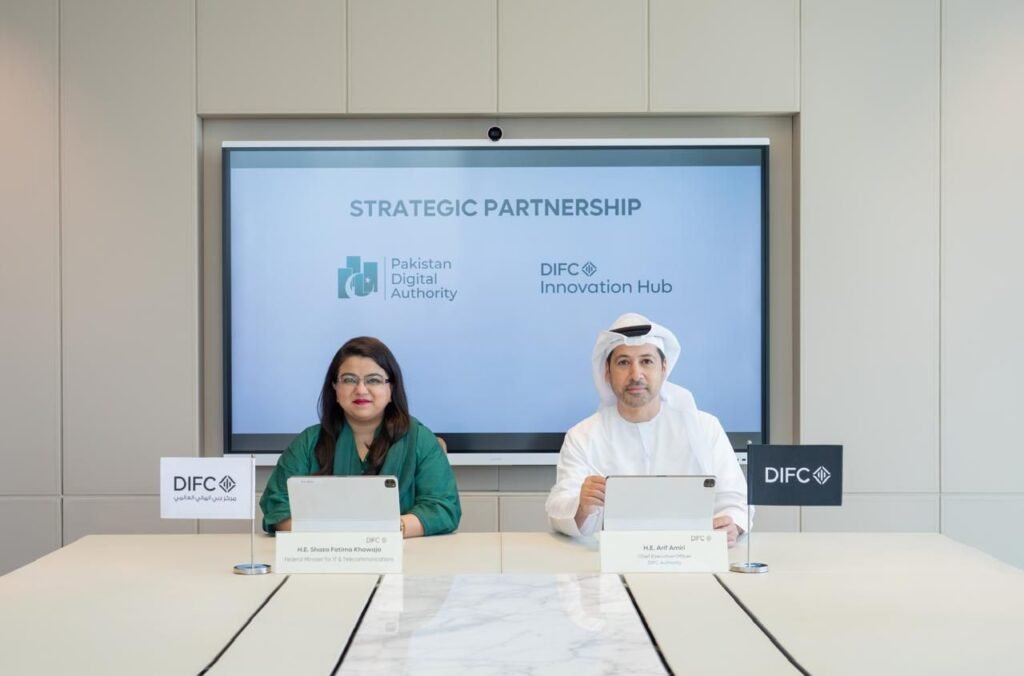
DIFC Innovation Hub, the largest start-up and innovation hub in the world operating out of Dubai International Financial Centre (DIFC), in partnership with the Pakistan Digital Authority, is launching the Pakistan FinTech Summit from 18 and 19 August 2026, positioning Pakistan as a strategic growth market within the global FinTech landscape. Read More: https://theboardroompk.com/fia-arrests-advertising-firm-z2c-cfo-in-rs735m-money-laundering-case/ The Pakistan FinTech Summit (PFS) is the first international expansion of the Dubai FinTech Summit, one of the world’s premier gatherings of Finance and FinTech leaders, organized by DIFC, the leading global financial center in the Middle East, Africa and South Asia (MEASA) region. Bringing together the region’s most influential policymakers, financial institutions, technology leaders, investors, and innovators, the Pakistan FinTech Summit aims to catalyze Pakistan’s rapidly evolving digital economy and accelerate the country’s position as a regional FinTech and digital financial services hub. His Excellency Arif Amiri, Chief Executive Officer, DIFC Authority, [Spokesperson], at DIFC, said: “We are pleased to expand the Dubai FinTech Summit to Pakistan, a rapidly emerging FinTech hub. The Pakistan FinTech Summit is a powerful reflection of DIFC’s ambition to lead the global dialogue on financial innovation and FinTech, underpinning Dubai’s commitment to enabling growth and unlocking cross-border innovation opportunities between the UAE, Pakistan, and South Asia. By lending expertise and thought leadership to such impactful gatherings, we are charting the future of finance.” Shaza Fatima Khawaja, Federal Minister of IT and Telecommunications (MoITT) said, “A credible FinTech ecosystem is built on innovation, regulatory clarity, and institutional trust. Pakistan is advancing all three in a disciplined and forward-looking manner. The Pakistan FinTech Summit, organized in collaboration with DIFC, reflects a strategic partnership grounded in shared ambition and mutual confidence. DIFC’s decision to convene its flagship FinTech platform under the Pakistan brand, beyond the UAE, is a strong signal of global trust in Pakistan’s emerging digital financial ecosystem and its reform trajectory.”
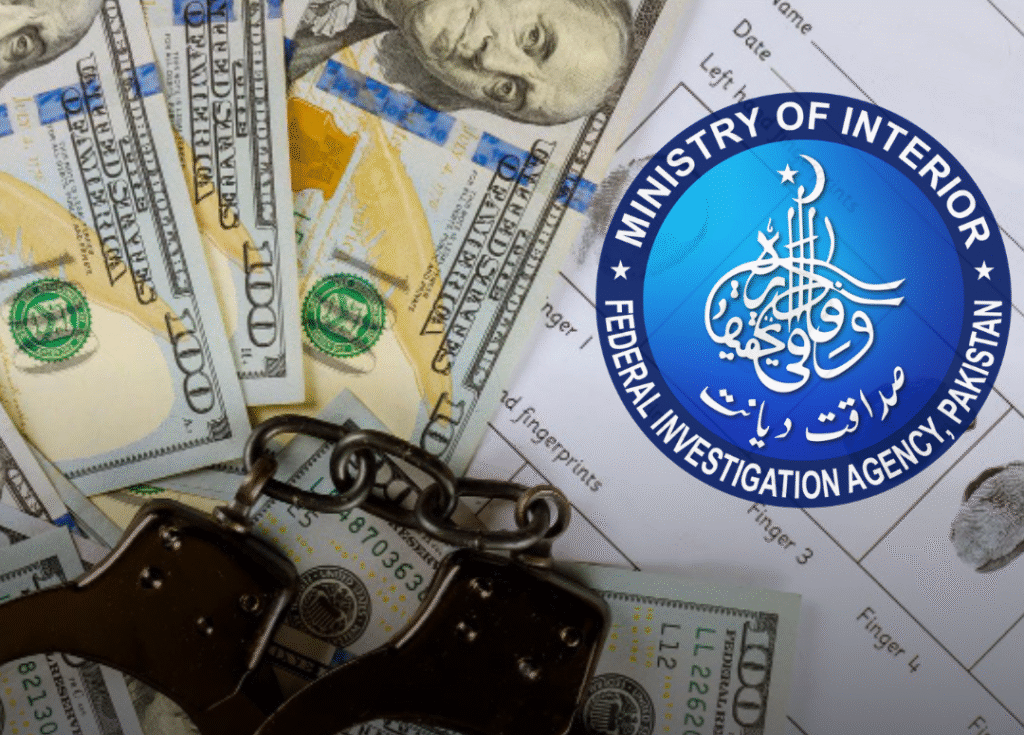
FIA Arrests Advertising Firm, Z2C, CFO in Rs735M Money Laundering Case
Pakistan

FIA Arrests Advertising Firm, Z2C, CFO in Rs735M Money Laundering Case

The Federal Investigation Agency (FIA) in Karachi has detained the Chief Financial Officer (CFO) of a prominent advertising firm in connection with a major case involving the illegal transfer of funds abroad. The incident highlights ongoing efforts to curb unauthorized money remittance networks operating outside formal banking channels. Read More: https://theboardroompk.com/british-international-investment-backs-mega-motor-for-pakistans-first-ev-plant/ Crackdown on Hawala Network The FIA’s Karachi Zone uncovered a sophisticated hawala/hundi operation that facilitated the unlawful transfer of 9 million UAE dirhams, equivalent to approximately Rs735 million, according a report by Abb Takk. Investigators identified the involvement of Z2C Pvt Ltd, a well-known advertising agency, which allegedly used informal channels to send substantial funds to foreign accounts. This bypasses Pakistan’s regulatory framework for foreign exchange and remittances. The hawala system, often used for quick but unregulated transfers, has been a target of FIA operations due to its links to potential money laundering and economic instability. Arrest and Ongoing Probe The CFO, identified as Faisal son of Muhammad Ilyas, was taken into custody by the FIA’s Corporate Crime Branch under FIR No. 10/2026. Officials confirmed his direct role in arranging and executing these illegal transactions. He remains in custody for further interrogation. Raids continue as authorities seek to apprehend other facilitators in the network. The FIA Director Karachi Zone stressed zero tolerance for such activities, vowing strict enforcement to protect the national financial system. The case remains under active investigation, with more developments expected soon.

British International Investment Backs Mega Motor for Pakistan’s First EV Plant
Auto

British International Investment Backs Mega Motor for Pakistan’s First EV Plant

Karachi: Mega Motor Company (Private) Limited (MMC), official partner of BYD in Pakistan, has signed a financing agreement with British International Investment (BII), the UK’s development finance institution and impact investor, to support the establishment of Pakistan’s first purpose-built large-scale NEV manufacturing plant. Read More: https://theboardroompk.com/india-pm-modi-in-israel-focus-on-defence-tech-and-fta-progress/ Under the agreement, BII will provide long-term foreign currency financing, accounting for 25 percent of the total project cost, to be invested in MMC’s state-of-the-art, purpose-built NEV manufacturing facility. Scheduled to go live in H2 2026, the plant will deploy cutting-edge automation and world-class manufacturing systems, benchmarked against leading global automotive standards. The agreement is among the earliest green energy–linked funding arrangements for Pakistan’s automotive manufacturing sector and is expected to play a pivotal role in expanding access to affordable clean transport. Pakistan has the third worst air quality globally, and the transport sector alone contributes over 43 percent of our GHG emissions, according to Pakistan Institute of Development Economics. Research shows even a 30 percent shift to NEVs could cut total emissions by nearly 20 percent. Clean mobility is one of the fastest and most practical routes to cut carbon emissions, reduce oil imports and boost local green industry. The project is expected to create over 1,100 jobs, advance sustainable industrialisation, and deliver significant climate benefits, including avoiding an estimated 165,000 tonnes of CO₂ emissions by 2034. Aly Khan, CEO of Mega Motor Company (MMC), said, “Pakistan stands at a critical inflection point, where clean mobility is integral to achieving the country’s long-term economic and energy objectives. Through this collaboration, MMC is leading that transition laying the foundations of a globally competitive NEV ecosystem for the country. This greenfield investment will not only accelerate NEV adoption, but also help shape Pakistan’s automotive future by building a resilient value chain that creates jobs, enables knowledge and technology transfer, and strengthens long-term industrial capability.” Stephen Priestley, Managing Director and Head of Financial Services Group, and Industries, Technology and Services, at British International Investment said, “This investment aligns with our priority on supporting sustainable industrial transformation and climate action. It also accelerates Pakistan’s energy transition by enabling job creation in a growing green sector and strengthening its emerging clean transport ecosystem.” In parallel, MMC, with support from British International Investment, is implementing robust environmental, social, and governance (ESG) practices, including strengthened labour standards, occupational health and safety management, stakeholder engagement, and responsible supply-chain systems.

India PM Modi in Israel: Focus on Defence, Tech, and FTA Progress
World

India PM Modi in Israel: Focus on Defence, Tech, and FTA Progress

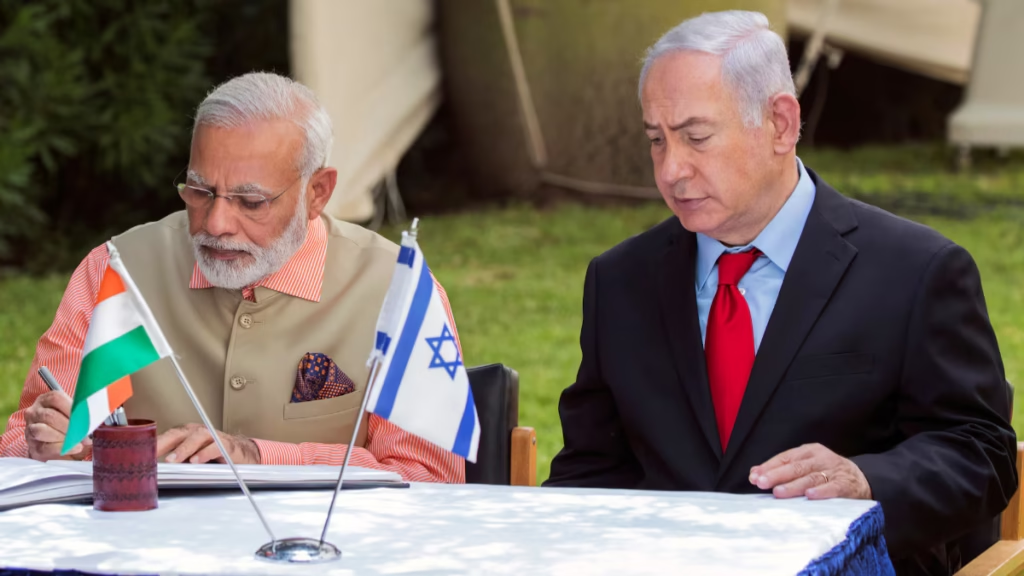
Prime Minister Narendra Modi departed for Israel on Wednesday for a two-day state visit. Read More: https://theboardroompk.com/pakistan-non-bank-financial-sector-growth-surges-21-in-h2-2025/ The trip aims to deepen the robust strategic partnership between India and Israel. High-Level Engagements and Agenda Modi will hold talks with Israeli Prime Minister Benjamin Netanyahu to discuss ways to strengthen cooperation. He is also scheduled to meet President Isaac Herzog and address the Knesset, Israel’s parliament. Key focus areas include defence, security, agriculture, water management, science and technology, innovation, cybersecurity, and trade. Both leaders have described each other as personal friends, highlighting the personal warmth in bilateral ties. Modi emphasized that ties have significantly strengthened in recent years under his leadership. The visit follows Modi’s historic 2017 trip to Israel and Netanyahu’s 2018 visit to India. Discussions will cover regional and global issues of mutual interest. Netanyahu has called the alliance “tremendous,” with expectations to expand in high-tech sectors like AI and quantum technologies. Trade, FTA Talks, and Broader Context Merchandise trade between the two nations reached $3.62 billion in 2024-2025. Negotiations for an India-Israel Free Trade Agreement (FTA) opened in New Delhi earlier this week. India values Israel as a key defence partner, with cooperation in military technology, including drones. The Adani Group operates Israel’s Haifa port, showcasing growing economic linkages. Full diplomatic relations began in 1992, evolving into a multifaceted partnership. Modi expressed confidence the visit will set new goals for strategic ties and advance a shared vision for innovation and prosperity. The trip occurs amid India’s balanced Middle East diplomacy, including ties with Gulf nations and Iran.It has drawn some domestic criticism due to the ongoing Gaza conflict. Overall, the visit signals India’s commitment to elevating defence, economic, and technological collaboration with Israel.

PM Shehbaz Invites Qatari Investors to tap Pakistan's Infrastructure, Energy and Agri Sectors
Pakistan

PM Shehbaz Invites Qatari Investors to tap Pakistan’s Infrastructure, Energy and Agri Sectors

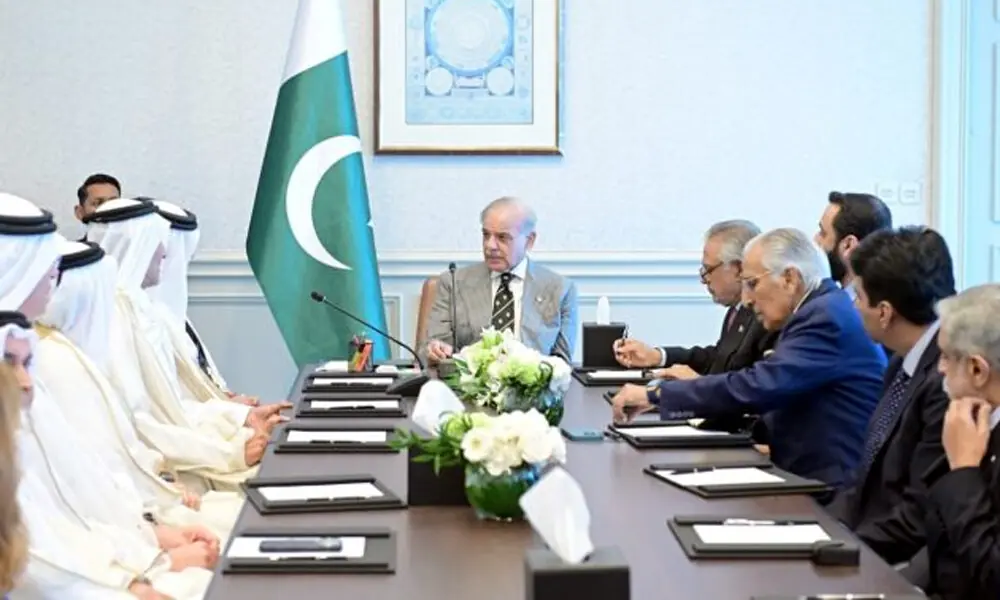
Prime Minister Shehbaz Sharif, during his official visit to Doha, urged Qatari businessmen to explore lucrative investment opportunities in Pakistan. Read More: https://theboardroompk.com/pakistan-non-bank-financial-sector-growth-surges-21-in-h2-2025/ He highlighted the country’s improving macroeconomic indicators and key reforms aimed at attracting foreign capital. Investment Drive in Key Sectors The Prime Minister invited members of the Qatar Businessmen Association (QBA), led by Sheikh Faisal bin Qassim Al Thani, to focus on infrastructure, logistics, energy, agriculture, technology, and export-oriented manufacturing. He emphasized Pakistan’s commitment to private-sector-led growth as a pillar of bilateral ties with Qatar. Sharif praised the Special Investment Facilitation Council (SIFC) as a one-window platform that ensures transparency, efficiency, and quick decisions for investors.Sheikh Faisal expressed strong interest in boosting business-to-business cooperation and actively exploring opportunities in Pakistan. Both sides agreed to sustain close engagement, including an upcoming task force visit to Doha later this month. They also planned business forums to convert discussions into real economic partnerships.Efforts will focus on facilitating linkages between entrepreneurs from both nations to strengthen private-sector relations. The meeting reaffirmed mutual dedication to expanding trade and investment through enhanced collaboration. Broader Economic and Trade Push In separate meetings, the Prime Minister stressed increasing bilateral trade volumes and diversifying Pakistan’s exports to Qatar, especially in agricultural products, food items, and value-added goods. He met Qatar’s Minister of State for Foreign Trade, Dr. Ahmed bin Mohammed Al-Sayed, who chairs the Pak-Qatar Joint Business Task Force. Both reviewed progress in economic cooperation and expressed satisfaction with the growing momentum in relations. They committed to implementing decisions from the 6th Session of the Pakistan-Qatar Joint Ministerial Commission. The Prime Minister again highlighted investment-friendly reforms and the SIFC’s role in easing foreign investment. Dr. Al-Sayed reiterated Qatar’s keenness to expand economic ties and private-sector linkages. The sides decided to hold a task force meeting during Ramadan to discuss specific Qatari investment proposals in Pakistan. These engagements underscore a shared resolve to deepen trade, investment, and industrial collaboration between the two countries.

Pakistan Non-Bank Financial Sector Growth Surges 21% in H2 2025 .
Business

Pakistan Non-Bank Financial Sector Growth Surges 21% in H2 2025 .

Pakistan Non-Bank Financial Sector Growth has emerged as one of the most compelling financial stories of 2025, signaling a shift in how capital is mobilized and invested across the country. According to the latest report by the Securities and Exchange Commission of Pakistan (SECP), the sector’s total assets surged to Rs. 6.84 trillion by December 31, 2025 marking an impressive 21% increase in just six months. This sharp rise from Rs. 5.635 trillion in June 2025 reflects more than just numbers it highlights increasing investor confidence, expanding financial inclusion, and a maturing alternative financial ecosystem beyond traditional banking. Fund Management Drives Pakistan Non-Bank Financial Sector Growth A major contributor to Pakistan Non-Bank Financial Sector Growth has been the fund management segment, which expanded by 17% during the second half of 2025. Mutual funds continue to dominate the landscape, managing Rs. 4.5 trillion in assets accounting for 66.3% of the entire sector. The number of funds and investment plans also climbed from 369 to 409, offering investors a broader range of opportunities. The asset allocation trend reveals a cautious yet diversified investor approach. A significant portion of investments flowed into relatively low-risk instruments, with money market funds taking the lead, followed by income funds and equity funds. This distribution underscores a balanced appetite for both stability and growth. Investor Boom Strengthens Pakistan Non-Bank Financial Sector Growth Retail participation is rapidly reshaping Pakistan Non-Bank Financial Sector Growth. The number of mutual fund investor accounts reached 845,000 by the end of 2025 an 8% increase in just six months. Even more striking is the long-term trend: investor accounts have doubled since December 2022. This surge reflects a growing awareness among individuals about capital market instruments and wealth-building opportunities beyond conventional savings. Voluntary pension schemes are also witnessing unprecedented traction. Participation surged to 143,154 accounts, marking a 30% increase since June 2025 and an extraordinary 170% rise over the past three years. This signals a cultural shift toward long-term financial planning and retirement security. NBFC Lending Expansion Fuels Pakistan Non-Bank Financial Sector Growth The lending segment of Non-Bank Financial Companies (NBFCs) has been a standout performer, registering a remarkable 65% growth in assets within six months. Total assets in this segment reached Rs. 824 billion, highlighting strong demand for alternative financing solutions. This rapid expansion indicates that businesses and individuals are increasingly turning to NBFCs for flexible and accessible credit options especially in areas underserved by traditional banks. Additionally, Shariah-compliant finance continues to gain traction, with assets reaching Rs. 2.47 trillion making up 36% of the total sector. This growth reflects the rising demand for Islamic financial products across Pakistan. Expanding Ecosystem Signals Long-Term Pakistan Non-Bank Financial Sector Growth The sector’s expansion is further evidenced by the increasing number of registered entities. The total count of NBFCs and Modarabas rose to 185, up from 174 in mid-2025. This steady increase signals strong institutional interest and a favorable regulatory environment. The Securities and Exchange Commission of Pakistan continues to play a pivotal role in fostering a transparent, resilient, and inclusive financial system. Its regulatory efforts are aimed at mobilizing savings, enhancing investor protection, and supporting sustainable economic growth. Why Pakistan Non-Bank Financial Sector Growth Matters Pakistan Non-Bank Financial Sector Growth is more than a financial milestone it represents a structural evolution in the country’s economic framework. With rising investor participation, diversified investment vehicles, and expanding credit access, the sector is becoming a key pillar of economic stability. As Pakistan navigates global economic uncertainties, the continued development of its non-bank financial ecosystem could prove critical in unlocking new growth avenues and strengthening financial resilience.

Cnergyico Pipeline Agreement Signals a Major Shift in Pakistan’s Fuel Transport
Pakistan

Cnergyico Pipeline Agreement Signals a Major Shift in Pakistan’s Fuel Transport

The Cnergyico Pipeline Agreement is set to redefine how fuel moves across Pakistan quietly, efficiently, and with far-reaching economic impact. In a strategic move, Cnergyico Pk Limited has secured board approval for a long-term infrastructure partnership that could transform diesel distribution nationwide. The agreement, signed with Asia Petroleum Limited, grants access to a 14-inch pipeline network for the next 20 years. While the deal may sound technical, its implications stretch from highways to industrial zones touching everything from logistics costs to public safety. Why the Cnergyico Pipeline Agreement Matters At its core, the Cnergyico Pipeline Agreement is about one thing: efficiency. Traditionally, fuel transportation in Pakistan relies heavily on tanker trucks a system that is not only costly but also prone to delays, accidents, and environmental risks. With this new arrangement, High Speed Diesel (HSD) will flow directly from refinery to storage through pipelines, bypassing congested roads. This shift introduces several key benefits: • Reduced transportation costs: Pipelines minimize fuel losses and lower operating expenses• Improved safety: Fewer tanker trucks mean reduced highway accidents• Operational reliability: Continuous flow ensures timely fuel availability In simple terms, it replaces a fragmented, road-heavy system with a streamlined energy corridor. From Refinery to Terminal: A Smarter Fuel Route Under the agreement, diesel produced at Cnergyico’s refinery will be transported to the Zulfiqarabad Oil Terminal via pipeline. From there, it integrates seamlessly into the broader infrastructure network. This includes linkage with the White Oil Pipeline system and storage hubs at Port Qasim two critical nodes in Pakistan’s energy supply chain. Instead of relying on multiple transport modes, the system creates a direct refinery-to-terminal corridor, reducing bottlenecks and ensuring faster distribution across the country. The real innovation lies not just in connectivity, but in continuity fuel moves uninterrupted, from production to storage. Economic and Environmental Impact of the Cnergyico Pipeline Agreement Beyond logistics, the Cnergyico Pipeline Agreement carries broader economic implications. Pipeline-based transport is widely recognized as more efficient than road haulage. By reducing fuel loss and operational costs, companies can improve margins and potentially pass on savings downstream. At the same time, fewer tanker trucks on highways can: • Lower carbon emissions• Reduce road wear and tear• Improve traffic flow in key industrial corridors For a country grappling with energy inefficiencies and urban congestion, this transition could be a quiet but meaningful step toward modernization. Regulatory Approvals and What Comes Next Like most infrastructure projects, the agreement is not yet fully operational. It remains subject to regulatory approvals and the completion of physical connectivity between systems. However, Cnergyico’s board has already authorized management to finalize definitive agreements once these conditions are met. This signals strong internal confidence and suggests that execution may follow swiftly. A Strategic Move for Pakistan’s Energy Future The Cnergyico Pipeline Agreement is more than a corporate development it’s a glimpse into the future of Pakistan’s fuel logistics. As demand for energy continues to rise, efficiency will become just as important as supply. Infrastructure-led solutions like this pipeline network could play a key role in bridging that gap. By shifting away from road dependency and investing in integrated transport systems, Pakistan may be laying the groundwork for a safer, more reliable, and cost-effective energy ecosystem.

BankIslami’s aik Introduces Fully Cashless Payments at Islamabad International Airport
Business

BankIslami’s aik Introduces Fully Cashless Payments at Islamabad International Airport

Karachi – February 24, 2026: aik by BankIslami Pakistan Limited has successfully rolled out a fully digital payment ecosystem at Islamabad International Airport, enabling passengers and visitors to complete transactions without the need for cash. Read More: https://theboardroompk.com/jazzcash-shortlisted-for-glomo-awards-2026-in-two-categories/ With merchants across the airport onboarded, QR codes have been deployed at major passenger touchpoints, including retail stores, service counters, and other facilities. The move allows travelers to conduct secure, seamless, and Shariah-compliant digital transactions throughout the airport premises. The implementation aligns with regulatory standards and frameworks established by the State Bank of Pakistan (SBP), positioning the initiative as a practical model for large-scale adoption of cashless systems within public infrastructure. The milestone was commemorated at an event held at the airport, attended by representatives from aik by BankIslami, airport management, and SBP officials. Ashfaque Ahmed, Chief Officer at aik, highlighted that the deployment reflects the institution’s commitment to strengthening digital infrastructure and enhancing everyday payment experiences. He emphasized that transforming a major national gateway into a cashless environment promotes efficiency, transparency, and broader financial inclusion, laying groundwork for Pakistan’s digital financial future. By digitizing one of the country’s key aviation hubs, aik by BankIslami continues to expand secure and accessible financial solutions that drive digital participation and support economic modernization.

JazzCash Shortlisted for GLOMO Awards 2026 in Two Categories
Pakistan

JazzCash Shortlisted for GLOMO Awards 2026 in Two Categories

Karachi, 24 February 2026 JazzCash, Pakistan’s leading digital financial services platform and part of VEON Group, together with Jazz, has been shortlisted for the prestigious GLOMO Awards 2026 in two major categories: Best FinTech & Digital Commerce Innovation and Best Mobile Operator Service for Connected Consumers. Read More: https://theboardroompk.com/foreign-investment-in-pakistan-secp-data-reveals-strong-investor-confidence/ The milestone recognizes JazzCash’s continued leadership in expanding financial inclusion while strengthening digital resilience in Pakistan’s rapidly evolving digital economy. As Pakistan advances under the Prime Minister’s cashless economy initiative, JazzCash has emerged as a key enabler of this national transformation. With over 1 million QR enabled Raast merchants, JazzCash is accelerating the shift from cash to digital transactions at scale. Through QR payments, mobile wallets, digital lending, and e-commerce integration, the platform is empowering MSMEs to participate in formal commerce, expand their customer base, and contribute to a more transparent and digitally driven economy. Commenting on the achievement, Murtaza Ali, CEO of JazzCash, said: “JazzCash was built to transform how Pakistanis pay, save and grow their businesses. Today, millions of customers and merchants rely on our platform every day to run their businesses, access credit and participate in the digital economy. As Pakistan moves toward a cashless future, our focus remains on strengthening the ecosystem that supports our customers by making digital payments seamless, expanding responsible credit and ensuring essential financial services remain secure and always accessible. We will continue to innovate to empower individuals and businesses and accelerate inclusive economic growth across the country.” JazzCash’s innovation journey has consistently earned global recognition. In 2017, it won the GSMA GLOMO Award for Best Mobile Product, Application, or Service for Women in Emerging Markets, reinforcing its commitment to financial inclusion and empowering underserved communities. More recently, JazzCash received Mastercard’s “Pioneering Telco to Launch Tap on Phone” award at Edge 2024 in Dubai. The platform was also nominated at the GLOMO Awards 2025 in the FinTech category, and this continued recognition in 2026 reflects its sustained global benchmarking in digital financial innovation and resilient connectivity. The winners of the GLOMO Awards 2026 will be announced during Mobile World Congress Barcelona 2026.

Foreign Investment in Pakistan: SECP Data Reveals Strong Investor Confidence
Pakistan

Foreign Investment in Pakistan: SECP Data Reveals Strong Investor Confidence

Foreign Investment in Pakistan is proving far more resilient than recent headlines suggest. In a decisive response to negative narratives, the Securities and Exchange Commission of Pakistan (SECP) has released compelling data showing that international investors are not exiting but steadily entering the Pakistani market. Between 2022 and 2025, 79 new foreign companies registered in Pakistan, while only 19 ceased operations. This means new entrants outpaced exits by more than four times a strong indicator that global businesses continue to see long-term value in Pakistan’s economy. Contrary to widely circulated claims, the SECP clarified that the figure of 125 foreign company closures has been misrepresented. That number actually reflects cumulative closures since 1977, not recent years reshaping the narrative around Pakistan’s investment climate. Foreign Investment in Pakistan: Capital Inflows and Corporate Activity Beyond company registrations, Foreign Investment in Pakistan is also reflected in substantial financial inflows. Over the past three years, foreign investors have injected approximately Rs40.7 billion into Pakistan’s private sector, signaling sustained economic engagement. Corporate activity has also been robust: • 61 foreign companies executed share transactions• 29 companies transferred shares to other foreign entities These movements highlight active portfolio restructuring rather than withdrawal often a sign of maturing markets rather than declining interest. Major Deals Driving Foreign Investment in Pakistan Several high-profile transactions further reinforce the upward trajectory of Foreign Investment in Pakistan, spanning key industries: • Energy sector: Saudi Aramco acquired a 40% stake in Go Petroleum• Energy retail: Wafi Energy acquired operations of Shell Pakistan• Logistics: DP World entered a joint venture with National Logistics Corporation• Pharmaceuticals: Pfizer sold its manufacturing plant to Lucky Core Industries These deals underline a critical shift: foreign companies are not leaving Pakistan they are restructuring, partnering, and reinvesting strategically. Global Interest Expands Across Markets In just the past month, Foreign Investment in Pakistan extended to 82 local companies, with investors coming from a diverse range of countries including: China, the United States, the United Kingdom, Germany, Australia, Turkey, Malaysia, South Korea, Denmark, South Africa, and Spain. This geographic diversity reflects Pakistan’s growing appeal as a multi-sector investment destination, rather than reliance on a single region. Foreign Investment in Pakistan: A Snapshot (2022–2026) Instead of raw tables, the data paints a clear narrative: Pakistan’s investment landscape shows a net positive inflow of companies, strong capital injection, and increasing transactional activity. With 1,157 foreign companies currently operational as of February 2026, the country continues to host a sizable international business presence. The ratio of entries to exits (79 vs. 19) suggests stability, while billions in inflows indicate confidence. Meanwhile, mergers, acquisitions, and joint ventures point to strategic repositioning rather than retreat. What This Means for Pakistan’s Economic Outlook The latest SECP data sends a powerful message: Foreign Investment in Pakistan is not declining it is evolving. Despite global economic uncertainty and local challenges, Pakistan remains on the radar of multinational corporations. The presence of ongoing negotiations and upcoming partnerships further signals that investment momentum is likely to continue in the near future. For policymakers, this reinforces the importance of maintaining regulatory stability. For investors, it presents an opportunity to enter a market where global players are already actively engaged. Conclusion: A Narrative Shift in Foreign Investment in Pakistan The story of Foreign Investment in Pakistan is no longer about exits it’s about renewed confidence, strategic deals, and sustained inflows. As the data clearly shows, perception and reality are diverging and the reality is far more optimistic.

Scroll to Top