Author name: Web Desk

PSX Hits Over 500,000 Investors for the First Time Ever
Pakistan

PSX Hits Over 500,000 Investors for the First Time Ever

Karachi: The Pakistan Stock Exchange (PSX) has reached a significant landmark in its history, with the total number of registered investors surpassing the half-million mark at 502,024 as of February 26, 2026. This marks the first time the exchange has crossed the 500,000 threshold, signaling deepening retail participation and growing confidence in Pakistan’s capital markets. Read More: https://theboardroompk.com/nha-boosts-pakistans-road-network-to-14480-km-in-118-districts/ According to a detailed update shared by Khurram Schehzad, Advisor to the Finance Minister, the surge reflects a dramatic acceleration in investor onboarding. Since June 2022, more than 227,000 new investors have joined the PSX — representing an impressive 83% expansion in just over 3.5 years. Notably, the number of investors added in this recent period (227,000) exceeds the total accumulated from the exchange’s inception until mid-2022 (approximately 275,000).The momentum has been particularly strong in recent months:January 2026 recorded the highest single-month addition ever, with 20,600 new investors.February 2026 additions have already exceeded 18,000 — and the month is not yet over. Schehzad highlighted that the majority of new entrants are young retail investors, attributing the trend to restored macro-economic stability, ongoing reforms, improved policy clarity, and credible growth prospects. “Capital markets deepen when trust builds,” he noted, adding that this shift is channeling household savings into productive assets — a vital foundation for sustainable economic expansion.The milestone comes amid a broader bull run in Pakistan’s equities. The KSE-100 Index has posted strong gains in 2026, building on record highs earlier in the year and reflecting optimism around institutional buying, potential foreign inflows, and a pipeline of over 16 new initial public offerings (IPOs) expected in 2026. When including other public market products such as commodities, mutual funds, and fixed-income instruments, the total investor count across Pakistan’s public markets now approaches 1.3 million — further underscoring the widening base of participation. Analysts view this development as a structural positive for the economy. Rapid growth in retail investor numbers — especially among younger demographics — indicates increasing financial inclusion and belief in the reform agenda led by the government and institutions. The PSX’s performance has positioned Pakistan among the stronger-performing emerging markets in recent periods, with the investor surge reinforcing the narrative of a maturing and more inclusive capital market ecosystem. As Pakistan continues to stabilize and reform, milestones like this half-million investor breakthrough serve as a barometer of public confidence and the potential for long-term capital formation.

NHA Boosts Pakistan's Road Network to 14,480 Km in 118 Districts
Pakistan

NHA Boosts Pakistan’s Road Network to 14,480 Km in 118 Districts

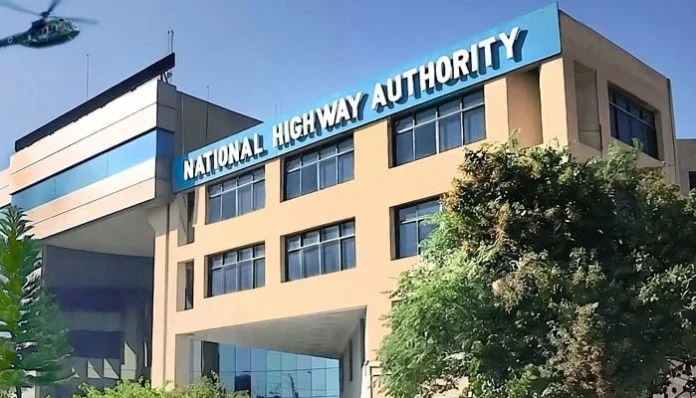
The National Highway Authority (NHA) has significantly expanded its road network to 14,480 kilometers, covering 118 districts across Pakistan. This milestone underscores the government’s dedication to improving connectivity, boosting economic activity, and promoting regional integration. Read More: https://theboardroompk.com/ccp-approves-acquisition-of-attock-cement-by-fauji-cement-and-kot-addu-power-company/ Province-Wise Coverage and Lengths The network includes 48 national highways, motorways, and strategic roads. Punjab leads with 4,080 km across 30 out of 36 districts, followed by Balochistan with 4,443 km in 27 districts. Sindh has 2,566 km spanning 26 districts, while Khyber Pakhtunkhwa covers 2,392 km in 25 districts. Additional stretches include 854 km in Gilgit-Baltistan, limited coverage in Azad Jammu and Kashmir (three districts), and 54 km in Islamabad Capital Territory. Ongoing Development and Quality Assurance The NHA is managing 71 projects under the Public Sector Development Programme (PSDP), valued at Rs3.4 trillion, with Rs681.37 billion already spent. Funding comes from government resources, foreign loans, and Public-Private Partnerships (PPP). To maintain high standards, independent supervisory consultants oversee construction, alongside dedicated Monitoring and Inspection teams. Projects follow FIDIC guidelines, with “The Engineer” ensuring impartial administration, quality control, timely execution, and dispute resolution. Timely funding alignment with schedules is emphasized to prevent delays. This expansion enhances logistics, reduces travel times, supports trade, and connects remote areas to markets, contributing to overall national progress.

Lahore ATC Grants Bail Relief to PTI Accused Until March 27 in May 9 Case
Politics

Lahore ATC Grants Bail Relief to PTI Accused Until March 27 in May 9 Case

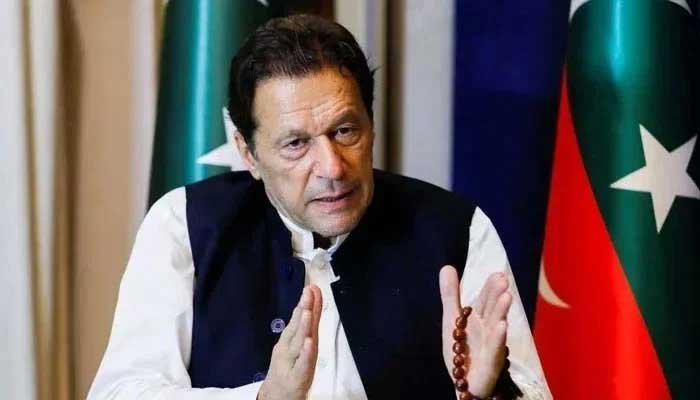
An anti-terrorism court in Lahore has once again extended interim bail to a group of PTI leaders and workers accused in the high-profile May 9 attack on Jinnah House. The ruling was issued on February 25, 2026, providing continued protection from arrest. Read More: https://theboardroompk.com/ccp-approves-acquisition-of-attock-cement-by-fauji-cement-and-kot-addu-power-company/ Hearing Details and Prosecution Request Under ATC Administrative Judge Manzer Ali Gill, the court heard bail petitions from the accused, who appeared in person. The prosecution sought more time to compile and present the full case record, noting that portions had been forwarded to the Lahore High Court. The judge approved the delay and ordered submission of the complete file at the next date, while directing both sides to come prepared with arguments. Key Accused and Incident Context Interim bail was extended till March 27 for Ali Imtiaz Warraich, Owais Younis, Syeda Fatima, Rukhsana Naveed, Kamran Saleem, Hasnain Ali, Taqi Khan, Malik Tariq, Ammar Nadeem, and Arshad. The charges stem from the May 9, 2023, riots and arson at Jinnah House in Lahore, triggered by events following Imran Khan’s arrest. Multiple PTI members have secured similar relief in related cases, reflecting ongoing judicial handling of the widespread unrest. Implications for Ongoing Trial This development allows the accused to remain out of custody as investigations and trial progress. The court stressed timely progress, ensuring the prosecution meets evidentiary requirements without further undue delays. Future hearings will focus on substantive arguments regarding bail confirmation or other reliefs.

Despite Truce, Rare Earth Crunch Worsens for US Aerospace and Semiconductor Firms
World

Despite Truce, Rare Earth Crunch Worsens for US Aerospace and Semiconductor Firms

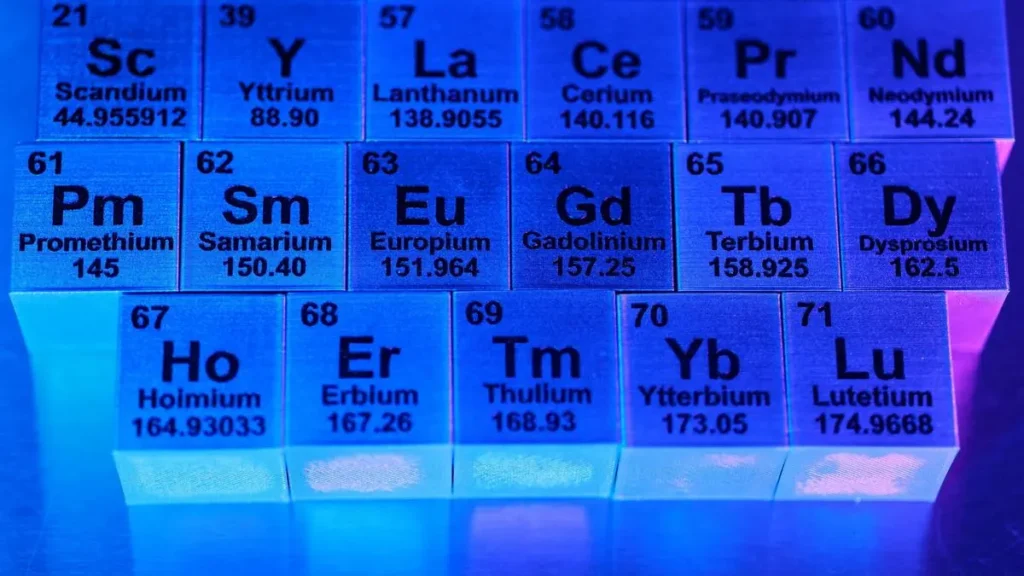
Despite a recent U.S.-China trade easing, suppliers to American aerospace and chip firms report worsening shortages of specialized rare earths like yttrium and scandium, according to Reuters sources. These elements, dominated by Chinese production, remain scarce for U.S. users. Read More: https://theboardroompk.com/ccp-approves-acquisition-of-attock-cement-by-fauji-cement-and-kot-addu-power-company/ Aerospace Coating Crisis Yttrium shortages have forced two North American coatings suppliers to halt output temporarily and ration material, favoring large clients while rejecting others. Essential for engine heat-resistant coatings, the element’s prices have skyrocketed dramatically. Demand pressures from airlines and major planemakers heighten risks, though core production lines are unaffected so far. Semiconductor Vulnerabilities Scandium, crucial for advanced 5G chips and related tech, sees U.S. manufacturers struggling with export license delays from China. With no domestic output and limited global supply, stockpiles risk depletion in months. Industry experts warn of potential disruptions to smartphone and base station components. Persistent Export Controls Impact Post-detente, U.S. imports show minimal recovery per customs data, unlike partial rebounds elsewhere. Controls requiring end-use details appear to single out semiconductors. Government responses include license support efforts and plans for diversified sourcing. Strategic Implications Ahead The shortages underscore China’s leverage in critical minerals. With a Trump-Xi meeting looming in March 2026, stakeholders watch for resolutions, while U.S. policy focuses on stockpiling and alternatives to safeguard national security and industrial output.

CCP Approves Acquisition of Attock Cement by Fauji Cement and Kot Addu Power Company
Pakistan

CCP Approves Acquisition of Attock Cement by Fauji Cement and Kot Addu Power Company

ISLAMABAD, FEB 26, 2026: The Competition Commission of Pakistan (CCP) has approved the proposed acquisition of the Attock Cement Pakistan Limited by Fauji Cement Company Limited and Kot Addu Power Company Limited, following a Phase-I competition assessment conducted under the Competition Act, 2010. Read More: https://theboardroompk.com/imf-delegation-engages-with-foreign-investors-body-in-pakistan-to-get-confirmation-on-macroeconomic-progress/ On February 3, 2026, Fauji Cement Company Limited and Kot Addu Power Company Limited filed a pre-merger application for the acquisition of controlling interest in Attock Cement Pakistan Limited from Pharaon Investment Group Limited. The proposed acquisition is pursuant to Scheme of Compromises, Arrangement, and Reconstruction Agreement dated January 30, 2026. Upon completion of the transaction, Fauji Cement Company Limited and Kot Addu Power Company Limited will acquire control of Attock Cement Pakistan Limited. Fauji Cement Company Limited, a subsidiary of Fauji Foundation, is a publicly listed company engaged in the manufacture and sale of cement and related products. Kot Addu Power Company Limited is a publicly listed energy company engaged in power generation. Attock Cement Pakistan Limited is a publicly listed cement manufacturer. The seller, Pharaon Investment Group Limited, is an international investment holding company based in Lebanon. CCP’s analysis noted that while there is a horizontal overlap between Fauji Cement Company Limited and Attock Cement Pakistan Limited, the post-transaction market share would remain below the statutory dominance threshold, and the cement sector in Pakistan continues to have multiple established competitors. CCP concluded that the proposed transaction is neither likely to create or strengthen a dominant position nor to substantially lessen competition or adversely affect the competitive structure of the market. Accordingly, the transaction has been authorized in accordance with the provisions of the Competition Act, 2010. The authorization is limited to CCP’s assessment of the transaction under Section 11 of the Competition Act, 2010 and does not affect any ongoing enquiries, proceedings, or matters pending before the Commission, the Competition Appellate Tribunal, or any other competent forum.This transaction reflects ongoing investment activity in Pakistan’s cement sector, which remains vital for infrastructure development and economic growth. CCP remains committed to facilitating pro-competitive investments while ensuring that market competition is preserved.

IMF Delegation Engages with Foreign Investors' Body in Pakistan to Get Confirmation on Macroeconomic Progress
Pakistan

IMF Delegation Engages with Foreign Investors’ Body in Pakistan to Get Confirmation on Macroeconomic Progress

KARACHI: The Overseas Investors Chamber of Commerce and Industry (OICCI) convened a dialogue between a visiting International Monetary Fund (IMF) delegation, led by Iva Petrova and Mahir Binici, and CEOs of leading member multinational companies. Read More: https://theboardroompk.com/karachis-circular-railway-set-for-comeback-with-adb-loan-technical-support/ The discussion focused on Pakistan’s economic outlook and the perspectives of foreign investors operating in the country. OICCI President Mr. Yousaf Hussain acknowledged the progress achieved in macroeconomic stabilisation. Fiscal consolidation is strengthening, primary balance discipline is improving, the external account has stabilised with reserve buffers rebuilding, inflation is moderating, and the financial sector remains resilient. The recent improvement in Pakistan’s credit ratings reflects enhanced fiscal discipline and renewed international credibility under the ongoing reform programme. While recognising these gains, Mr. Hussain emphasised, “The priority now is to transition from stabilisation to a phased yet sustained export-led growth path. Translating macroeconomic stability into higher productivity, employment, and investment requires a shift from fragmented measures to a centrally coordinated, technocrat-supported and well-sequenced medium-term reform programme under a comprehensive National Economic Plan. Such a plan should integrate fiscal, trade, industrial, energy, and human capital policies with clear milestones, transparent monitoring, and deeper coordination between the federation and provinces to achieve national economic priorities.” Secretary General OICCI Mr. M. Abdul Aleem noted that Pakistan’s strong geo-economic positioning offers significant potential that must be unlocked through greater policy coherence, predictability, and investment-focused improvements in the regulatory framework. He stressed the need for stronger incentivisation of export-led industrialisation to attract sustained long-term investment inflows. “Pakistan’s taxation framework continues to face structural challenges, particularly a narrow tax base and the disproportionate burden on the documented and compliant sector, including the salaried class,” said Mr. Aleem. “To enhance competitiveness and restore investor confidence, there is a need for a rationalised and competitive tax and import tariff regime, supported by a strong and consultative tax policy function and a clear medium-term policy direction. Equally important is avoiding retrospective taxation, ensuring timely clearance of pending tax refunds, simplifying compliance procedures, and strengthening documentation and enforcement across the economy,” he added. OICCI reaffirmed its commitment to continued engagement with policymakers and international partners to support reforms that sustain stability and promote long-term investment in Pakistan.

Pakistan Power Sector Crisis: NEPRA Sounds Alarm over Mounting Losses of Rs 265 Billion and Systemic Failures
Pakistan

Pakistan Power Sector Crisis: NEPRA Sounds Alarm over Mounting Losses of Rs 265 Billion and Systemic Failures

Pakistan Power Sector Crisis has once again taken center stage after the latest Performance Evaluation Report (PER) FY 2024–25 released by the National Electric Power Regulatory Authority (NEPRA). The findings reveal deep-rooted structural inefficiencies, soaring financial losses, weak governance, and growing public frustration painting a sobering picture of Pakistan’s electricity distribution landscape. With estimated financial losses of Rs. 265 billion due to transmission and distribution (T&D) inefficiencies alone, the report highlights how the sector continues to drain national resources despite repeated reform commitments. Pakistan Power Sector Crisis: The Rs. 265 Billion T&D Loss Problem Transmission and distribution losses remain one of the most pressing drivers of the Pakistan Power Sector Crisis. Despite NEPRA’s directives to bring losses within prescribed limits, not a single distribution company (DISCO) met its target in FY 2024–25. The largest contributors to the Rs. 265 billion shortfall were: • Peshawar Electric Supply Company (PESCO) – Rs. 87.48 billion• Quetta Electric Supply Company (QESCO) – Rs. 52.41 billion• Sukkur Electric Power Company (SEPCO) – Rs. 36.04 billion• Lahore Electric Supply Company (LESCO) – Rs. 35.17 billion Meanwhile, K-Electric reported a T&D loss of 14.73% against a 14.27% target under the current tariff determination. Although revised targets were approved under its 7-year investment plan (FY 2024–2030), the matter remains under adjudication in the Sindh High Court, leaving regulatory uncertainty unresolved. NEPRA emphasized that billions of rupees were approved for feeder optimization, advanced metering infrastructure, and network strengthening. However, implementation gaps continue to undermine operational efficiency. Recovery Crisis: Billing Gaps Fuel Circular Debt Beyond physical losses, the Pakistan Power Sector Crisis is being aggravated by weak revenue recovery. While some companies such as: • Islamabad Electric Supply Company (IESCO)• Gujranwala Electric Power Company (GEPCO)• Faisalabad Electric Supply Company (FESCO)• Multan Electric Power Company (MEPCO) achieved 100% recovery rates, others severely lagged behind. QESCO recorded the lowest recovery rate at just 38.7%, though slightly improved from 31.79% last year. HESCO and SEPCO hovered near 74%, while K-Electric maintained a 90.56% recovery ratio but still carried Rs. 74.6 billion in unrecovered amounts. Low recoveries contributed to an additional Rs. 132 billion loss, worsening Pakistan’s circular debt burden a chronic fiscal challenge impacting the broader economy. Load Shedding Controversy and Legal Battles The report sharply criticized ongoing load shedding despite adequate power allocations. Several DISCOs were found underutilizing available supply while resorting to outages a move NEPRA deemed a violation of regulatory standards. Legal proceedings were initiated against: • PESCO• QESCO• HESCO• SEPCO• K-Electric Each was fined Rs. 50 million, with daily penalties imposed on SEPCO and HESCO. However, PESCO and K-Electric have secured stay orders from the Appellate Tribunal. NEPRA also questioned the long-standing AT&C-based load-shedding policy, introduced in 2013. After 12 years, it has failed to meaningfully reduce aggregate technical and commercial losses, instead penalizing paying consumers. Reliability Crisis: SAIFI and SAIDI Targets Missed System reliability indicators SAIFI (frequency of interruptions) and SAIDI (duration of interruptions) showed widespread non-compliance. Not a single DISCO achieved SAIDI targets. Frequent outages continue to disrupt industrial productivity, business continuity, and household stability directly undermining economic growth. Delays in New Connections: 128,096 Consumers Still Waiting Under Performance Standards (Distribution) Rules 2005, DISCOs must provide 95% of new connections within prescribed timelines. While some companies met the benchmark, MEPCO and K-Electric failed to connect 13–14% of applicants on time. As of June 2025, 128,096 eligible consumers had paid but were still awaiting electricity connections, highlighting serious service delivery inefficiencies. Consumer Complaints and Safety Concerns In FY 2024–25, DISCOs recorded 7.42 million complaints. Notably, K-Electric accounted for 23% of total complaints, reflecting a structured reporting system. In contrast, SEPCO reported only 1,627 complaints raising questions about data transparency. Safety performance also deteriorated, with 118 fatalities reported, including 80 members of the public. Investigations under Section 27A of the NEPRA Act revealed grounding and earthing failures as key contributors. NEPRA imposed fines and ordered corrective action plans, but compliance remains inconsistent. The Reform Blueprint: Can Pakistan Fix Its Power Sector? To address the Pakistan Power Sector Crisis, NEPRA has recommended: • Restructuring large DISCOs into smaller, performance-driven units• Accelerating privatization and public–private partnerships• Phasing out AT&C-based load shedding• Deploying advanced digital monitoring systems• Strengthening consumer protection and complaint redressal mechanisms• Enhancing accountability and governance frameworks The message is clear: incremental fixes are no longer sufficient. Structural reform is imperative. Final Word The Pakistan Power Sector Crisis is no longer just an operational issue it is an economic risk. High T&D losses, poor recoveries, unreliable supply, safety lapses, and governance weaknesses collectively threaten fiscal stability and public trust. The coming years will determine whether reform momentum materializes into measurable transformation or whether the crisis deepens further, adding pressure to an already strained national economy.

Range-Extended Electric Vehicles Classification Sparks Industry Debate
Auto

Range-Extended Electric Vehicles Classification Sparks Industry Debate

Range-Extended Electric Vehicles classification has become the center of a growing controversy in Pakistan’s auto sector, raising serious questions about taxation, policy alignment, and market fairness. A recent decision by the Customs Classification Committee to categorize range-extended electric vehicles (REEVs) as battery electric vehicles (BEVs) has triggered alarm bells across the industry. While the ruling may appear technical on the surface, its implications could reshape Pakistan’s evolving electric vehicle (EV) landscape. What Is Behind the Range-Extended Electric Vehicles Classification? At the core of the issue is how REEVs are defined. These vehicles operate primarily using an electric motor but include a small internal combustion engine (ICE) that acts as a generator rather than directly powering the wheels. Based on this logic, the committee classified REEVs under HS Code 8703.8090 the same category used for fully electric vehicles arguing that propulsion is purely electric. However, the Pakistan Automotive Manufacturers Association (PAMA) strongly disagrees. According to the association, the presence of an ICE even as a generator means these vehicles cannot be treated as zero-emission BEVs. Range-Extended Electric Vehicles Classification and Tax Implications The classification is not just semantic it directly affects import duties and fiscal incentives. Here’s where the controversy intensifies: • Vehicles classified under BEVs attract 25% customs duty• Hybrid vehicles fall under a different code with up to 50% duty PAMA highlighted a discrepancy: the importer declared the vehicle as a BEV (lower duty), while the exporter in China classified it as a hybrid (higher duty). This, the association argues, could constitute misdeclaration under the Customs Act, 1969. The issue has been formally raised with the Federal Board of Revenue (FBR), seeking a review of the classification. Why Range-Extended Electric Vehicles Classification Matters for Policy Pakistan’s EV incentives are designed to promote zero-emission vehicles those operating entirely on battery power without any combustion engine. According to PAMA, extending these incentives to REEVs contradicts the spirit of the National Electric Vehicle Policy. The presence of an ICE, even as a generator, means these vehicles still rely on fossil fuels and produce emissions under certain conditions. Industry experts argue that classification should reflect not just propulsion mechanics but overall vehicle architecture and environmental impact. Industry Concerns: Market Distortion and Investment Risks Automakers warn that the current Range-Extended Electric Vehicles classification could create significant imbalances in the market. REEVs often come equipped with features such as: • A fuel tank (around 45 litres)• Emission levels comparable to hybrid vehicles• Performance dependent on both electricity and fuel when not externally charged Because of lower duties, REEV imports could surge, making them cheaper than locally assembled vehicles across multiple categories ICE, hybrid, plug-in hybrid, and even fully electric. This raises a critical concern: local manufacturing viability. Pakistan has invested heavily in Completely Knocked Down (CKD) assembly operations, supported by favorable tax regimes. If imported REEVs benefit from BEV-level concessions, local assemblers could face declining competitiveness and reduced investment incentives. Global Perspective and Future Outlook Globally, REEVs are typically classified as hybrids under international frameworks, including UNECE standards. Even the World Customs Organization is expected to introduce a separate HS code for REEVs by 2028 highlighting that current classifications remain a grey area. Meanwhile, Pakistan stands at a crucial policy crossroads. The upcoming Auto Policy 2026–31 will determine future tariff structures, tax treatments, and incentives for various vehicle categories, including BEVs, hybrids, and REEVs. Key institutions like the Engineering Development Board and the Ministry of Industries and Production are expected to play a decisive role in shaping the outcome. The Bigger Picture The Range-Extended Electric Vehicles classification debate is more than a regulatory dispute it reflects the growing pains of a transitioning auto industry. As Pakistan accelerates toward electrification, policymakers face a delicate balancing act: • Encouraging innovation• Ensuring fair competition• Protecting local industry• Staying aligned with global standards For now, all eyes are on whether the government will revisit the classification or allow a decision that could redefine the trajectory of Pakistan’s EV market.

Toyota Advances Governance Reform with Planned $19 Billion Share Sale
Auto

Toyota Advances Governance Reform with Planned $19 Billion Share Sale

Toyota Motor is set to orchestrate a substantial sale of its shares currently held by major Japanese financial institutions, valued at roughly $19 billion (3 trillion yen), according to sources cited in a Reuters exclusive on February 26, 2026. This initiative marks a potential landmark in unwinding longstanding cross-shareholdings. Read More:https://theboardroompk.com/karachis-circular-railway-set-for-comeback-with-adb-loan-technical-support/ Key Details on the Transaction Banks like Sumitomo Mitsui Financial Group and Mitsubishi UFJ Financial Group, along with insurers such as MS&AD Insurance Group, would sell portions of their Toyota stakes. Toyota intends to repurchase the shares via buybacks to enhance capital efficiency, while a secondary placement remains an option. The final amount could grow larger if more shareholders opt in. Driving Factors Behind the Move The plan aligns with Japan’s push to eliminate cross-shareholdings, a practice criticized for limiting shareholder influence and efficient capital use. Toyota has already been reducing these ties and faces calls from investors for stronger governance. The effort underscores the company’s response to regulatory encouragement from bodies like the Tokyo Stock Exchange. Potential Timeline and Impact Execution could begin this year (2026), subject to adjustments or cancellation. The announcement boosted Toyota’s stock performance modestly in early sessions. This development signals broader momentum in Japanese corporate reforms, potentially influencing other conglomerates.

KSE-100 Index Rally Signals Strong Comeback at the Pakistan Stock Exchange
Pakistan

KSE-100 Index Rally Signals Strong Comeback at the Pakistan Stock Exchange

The KSE-100 Index Rally took center stage on Thursday as the market staged an impressive comeback, reversing recent losses and reigniting investor confidence. After several sessions dominated by selling pressure, the benchmark index surged by 4,266.79 points (2.59%), closing at 168,893.08. The trading session was marked by intense volatility, with the index swinging across a wide range of over 6,400 points. It reached an intraday high of 169,374.27 and dipped to a low of 162,953.63, reflecting both cautious sentiment and aggressive buying activity. What Drove the KSE-100 Index Rally? The rally was largely fueled by a shift in investor behavior. As selling pressure eased, market participants began hunting for value in fundamentally strong stocks. This transition transformed a tentative recovery into a broad-based rally across multiple sectors. Improved sentiment encouraged re-entry into blue-chip stocks, signaling renewed optimism about the near-term market outlook. The strong closing level suggests that investors are increasingly confident about stability and potential upside in Pakistan’s equities market. Market Breadth Strengthens During the KSE-100 Index Rally The day’s recovery was not limited to a few stocks it was widespread. Out of 100 companies in the index: • 79 stocks closed higher• 21 stocks declined• 0 remained unchanged This positive breadth highlights the strength and sustainability of the rally, as gains were distributed across diverse sectors rather than concentrated in a few heavyweights. Top Performers and Laggards Among the standout performers were companies that posted significant gains: • NML surged by 9.93%• SNGP rose 8.36%• BOP gained 7.76%• AICL increased 7.18%• AKBL advanced 6.77% On the flip side, some stocks faced selling pressure: • UNITY dropped 10.02%• PGLC declined 9.84%• PAKT fell 7.56%• SSOM decreased 6.05%• JDWS slipped 3.11% Sectoral Contribution to the KSE-100 Index Rally The rally was strongly supported by key sectors that contributed the most points to the index: • Fertilizer sector added 878 points• Commercial banks contributed 570 points• Investment companies added 485 points• Cement sector contributed 467 points• Oil & gas exploration added 430 points However, some sectors lagged behind, including tobacco, sugar, and food-related industries, which experienced minor declines. Trading Activity Reflects Renewed Momentum Market participation significantly improved during the session: • KSE-100 trading volume: 355.32 million shares• Total market volume: increased to 692.40 million shares• Traded value: rose to Rs35.80 billion• Total trades: exceeded 343,000 across 487 companies In simple terms, higher trading volumes and value indicate that more investors actively participated in the market, reinforcing the strength of the rally. Stocks like UNITY, BOP, and KEL dominated trading activity, reflecting strong investor interest despite mixed price performance. Broader Market Performance Mirrors the KSE-100 Index Rally The broader market followed suit, with the All-Share Index climbing 1,889.56 points (1.91%) to close at 100,888.78. A total of 291 companies advanced, compared to 144 decliners, further confirming the widespread nature of the recovery. KSE-100 Index Rally in Perspective Despite recent fluctuations, the KSE-100 Index Rally adds to a larger trend: • The index has gained 43,266 points (34.44%) during the fiscal year• However, it remains down 2.97% year-to-date in the calendar year This contrast highlights an important narrative: while short-term volatility persists, the broader trajectory still signals long-term growth potential. Outlook: Can the KSE-100 Index Rally Sustain? The latest KSE-100 Index Rally underscores a critical turning point in market sentiment. If investor confidence continues to build and macroeconomic indicators remain stable, the rally could extend further in the coming sessions. However, volatility is likely to persist, making selective investing and sectoral analysis key for market participants.

Scroll to Top