Author name: Press Release

Matric arts students allowed to get admission in Intermediate – Pre-Medical & Pre-Engineering Groups
Pakistan

Matric arts students allowed to get admission in Intermediate – Pre-Medical & Pre-Engineering Groups

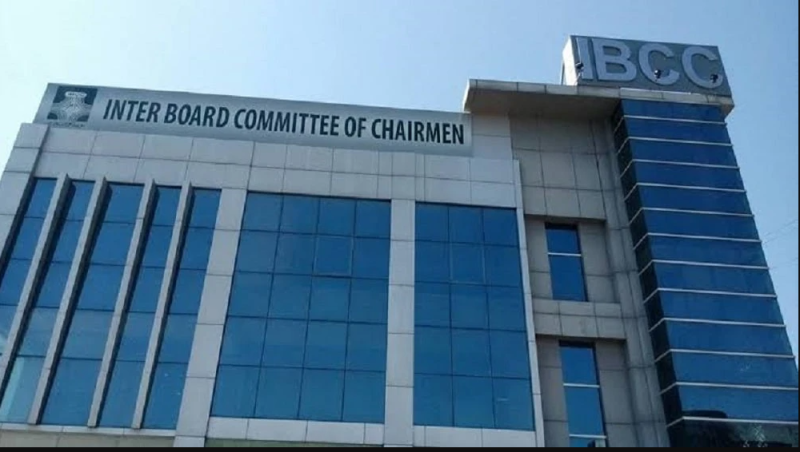
Islamabad, December 13, 2025 – In a groundbreaking shift for Pakistan’s education landscape, the Inter Boards Coordination Commission (IBCC) Forum has approved allowing students who pass their Secondary School Certificate (SSC) in the Arts Group to register for Higher Secondary School Certificate (HSSC) programs in Pre-Medical and Pre-Engineering, effective from the SSC 1st Annual Examination 2026. This policy, unanimously endorsed in the Forum’s 183rd meeting on December 4-5, aims to dismantle longstanding barriers, offering greater academic mobility and career options to thousands of students. The decision stems from years of advocacy amid Pakistan’s rigid stream selection system, where students as young as 14-15 must choose between Arts, Science, or Commerce without room for reversal. Many, influenced by parental pressure, family expectations, or limited counseling, opt for Arts only to discover later passions for STEM fields like medicine or engineering. This mismatch has left countless talented youth sidelined, forcing them into unrelated humanities degrees or the job market prematurely. Educators and stakeholders have long highlighted how early specialization stifles potential, exacerbating skill gaps in critical sectors. A November proposal by the federal government underscored the need to “broaden access to scientific and technical education,” providing “equal opportunities for academic and professional growth.” Feedback from bodies like the Pakistan Engineering Council (PEC), Pakistan Medical & Dental Council (PM&DC), Higher Education Commission (HEC), and National Curriculum Council (NCC) emphasized boosting STEM enrollment to meet national demands, while addressing dropout rates linked to mismatched streams. The notification, issued December 12, resolves that Arts passers may enroll in these groups, but boards must implement safeguards like minimum marks, merit criteria, or aptitude tests to maintain standards. Final approval rests with Boards of Intermediate and Secondary Education (BISEs) and Boards of Technical Education (BTEs) via their governing bodies. This reform is poised to empower students, fostering a more inclusive system where aptitude, not early choices, dictates futures.

KSE-100 Ends the Week on a Strong Note as Momentum Builds Toward New Highs
Pakistan

KSE-100 Ends the Week on a Strong Note as Momentum Builds Toward New Highs

Pakistan’s equity market closed the week with renewed optimism as the KSE-100 Index surged 1,289.83 points, ending Friday’s session at 169,864.52, up 0.77%. The bullish finish reflects the market’s growing confidence driven by strong sectoral performance, robust investor participation, and ongoing macroeconomic stability. The benchmark index traded in a wide intraday range of 1,631 points, touching a high of 170,052.87 and a low of 168,421.55, showcasing heightened activity and increased buying interest across major sectors. Total traded volume for the KSE-100 clocked in at 309.7 million shares, underscoring solid investor sentiment. Market Leaders and Laggards: Who Moved the Index? Out of 100 companies on the benchmark index:• 65 closed positive• 32 closed negative• 3 remained unchanged Top Gainers The session’s top performers were:• NML (+5.40%)• KAPCO (+3.76%)• CHCC (+3.74%)• MLCF (+3.19%)• MCB (+2.97%) Top LosersMeanwhile, the biggest decliners included:• PGLC (-3.88%)• SRVI (-3.57%)• JVDC (-3.16%)• GADT (-2.64%)• SSGC (-2.50%) Who Powered the Rally? Index Point Contributions: The stocks contributing the most points to the upside were:• FFC (+371.67pts)• MCB (+150.03pts)• SYS (+115.61pts)• PPL (+73.63pts)• HUBC (+72.37pts) Conversely, companies dragging the index lower included:• SRVI (-45.95pts)• ENGROH (-38.39pts)• DHPL (-17.56pts)• JVDC (-14.77pts)• DGKC (-12.91pts) Sector Performance: Fertilizers & Banks Lead the Charge Sector-wise, the KSE-100 gained strong support from:• Fertilizer (+442.80pts)• Commercial Banks (+312.43pts)• Cement (+176.23pts)• Oil & Gas Exploration (+155.20pts)• Technology & Communication (+123.67pts) A few sectors weighed on the index, including:• Investment & Securities (-53.98pts)• Leather & Tanneries (-45.95pts)• Property (-14.77pts)• Insurance (-8.87pts)• Tobacco (-5.71pts) Broader Market Overview: Healthy Activity Despite Lower Volume The All-Share Index closed at 102,725.12, gaining 553.85 points (0.54%). Market-wide:• Total volume: 873.03 million shares (down from 1.28 billion)• Traded value: Rs40.87 billion (down by Rs14.36bn)• Total trades: 378,060 across 482 companieso 259 closed upo 180 closed downo 43 remained unchanged Despite lower volumes compared to the previous session, the market displayed strong breadth and resilience. The Bigger Picture: A Remarkable Year for Pakistan’s Stock Market The KSE-100 continues its impressive run:• Up 44,237 points (35.21%) during the current fiscal year• Up 54,738 points (47.55%) in the 2025 calendar year so far These gains place the Pakistani equity market among the world’s top-performing indices, highlighting renewed investor confidence backed by improving macroeconomic indicators, strong corporate earnings, and positive foreign interest. Outlook: Can the Market Break New Records? The KSE-100’s strong close near the psychological level of 170,000 suggests that the momentum may continue into the coming sessions. With key sectors showing strength and macroeconomic conditions stabilizing, analysts anticipate further upside though volatility may persist as global markets react to geopolitical and oil price developments. Pakistan’s stock market continues to show that despite challenges, investor confidence and market fundamentals remain firmly on an upward trajectory.

Nationwide transport strike threatens to paralyze Pakistan’s economic lifeline, Business Community
Pakistan

Nationwide transport strike threatens to paralyze Pakistan’s economic lifeline, Business Community

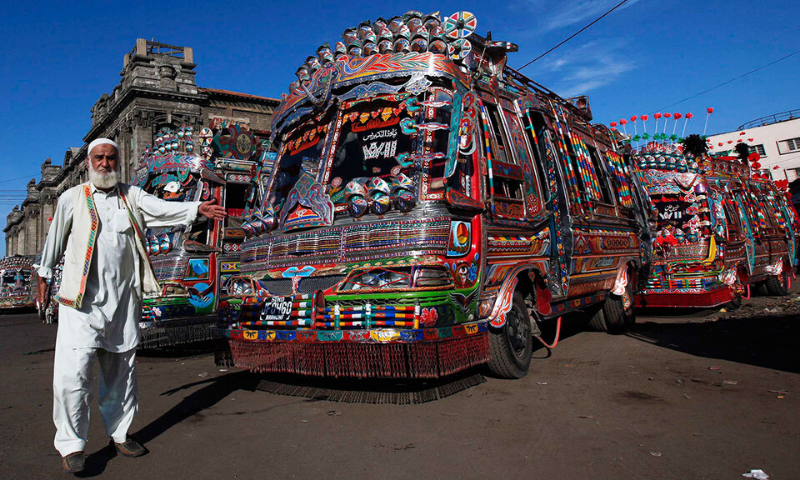
KARACHI: President Karachi Chamber of Commerce and Industry (KCCI) Rehan Hanif has expressed grave alarm over the ongoing countrywide strike by goods transporters, warning that the complete suspension of cargo movement is pushing Pakistan toward an unprecedented trade and industrial crisis. He stressed that with import and export consignments now stranded across ports, highways, and industrial zones, the consequences for businesses, manufacturing, and national revenue could be severe, long-lasting, and extremely costly. In a statement issued, President KCCI stated that the halt in transportation has effectively shut down the movement of raw materials to factories and the dispatch of finished goods to domestic and international markets. He cautioned that this disruption, if prolongs further, can cause irreversible damage to Pakistan’s supply chains, severely undermine export commitments, and weaken the country’s credibility in global markets. S.I.T.E. Association of Industry (SAI) has have sounded the alarm over the nationwide strike by goods transporters, warning that the halt in cargo movement is rapidly strangling Pakistan’s industrial and trade supply chain. In a detailed statement, SAI President Ahmed Azeem Alvi said the recurring strikes by transporters are causing deep and lasting damage to the national economy. He urged the government to step in without delay, stressing that no group should be allowed to disrupt the flow of essential goods or undermine economic stability. Mr Alvi called on the government to immediately revive and expand railway freight services between Karachi and major cities across the country. He said the introduction of high speed cargo trains could dramatically cut transportation time and costs while ensuring a steady and reliable movement of goods. “The strike has brought export and import cargo to a standstill. Exporters are unable to meet delivery deadlines promised to international buyers, and this raises serious concerns about potential order cancellations,” he cautioned. He noted that containers stranded at ports are now incurring heavy demurrage and detention charges, placing an additional financial burden on the business community. Mr Alvi warned that if industries do not receive raw materials soon, production could grind to a complete halt—triggering a ripple effect across the economy. “This is an extremely alarming situation,” he said. “The government must act immediately to restore cargo movement and prevent long term damage to Pakistan’s industrial and commercial sectors.”

EU Eyes Indefinite Freeze on Russian Assets to Fund Ukraine Aid
World

EU Eyes Indefinite Freeze on Russian Assets to Fund Ukraine Aid

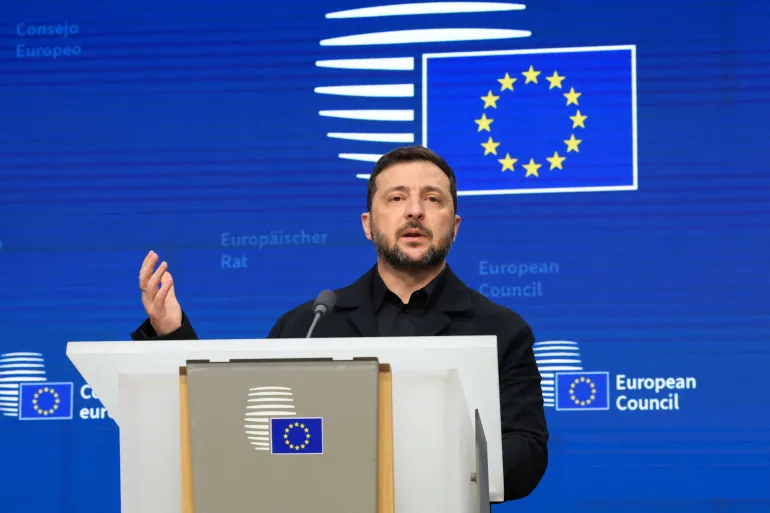
BRUSSELS – The European Union is poised to make a landmark move in its economic warfare against Russia, voting on Friday to indefinitely immobilize some 210 billion euros ($246 billion) in frozen Russian central bank assets held in Europe. This shift would pave the way for channeling the funds—or their profits—into loans and support for Ukraine, battered by nearly four years of Moscow’s full-scale invasion.For those new to the saga, it began on February 24, 2022, when Russian President Vladimir Putin launched a brutal assault on Ukraine, aiming to topple its pro-Western government. The unprovoked war has killed hundreds of thousands, displaced millions, and triggered the biggest energy crisis in decades. In response, the West imposed sweeping sanctions, including freezing around $300 billion in Russian sovereign assets worldwide—mostly central bank reserves parked in Europe, the U.S., and Japan. These windfalls, built from oil and gas exports, were meant to stabilize Russia’s ruble but became hostages in the geopolitical standoff. Since 2022, the EU has renewed the asset freeze every six months, a cumbersome process that risked legal challenges and economic fallout if not unanimous. Now, under a new legal framework, EU governments plan a qualified majority vote by 1600 GMT to lock them down “for as long as necessary,” shielding against disruptions to Europe’s markets. The assets, held mainly by Euroclear in Belgium, generate about 3 billion euros in annual interest—profits the G7 has already pledged for Ukraine’s reconstruction.Critics, including Russia’s central bank, slam the plan as “illegal expropriation,” warning of retaliation like asset seizures abroad. “This theft undermines global financial trust,” a Moscow spokesperson fumed. Yet EU foreign policy chief Josep Borrell hailed it as “solidarity in action,” potentially unlocking tens of billions for Kyiv’s defense and recovery amid stalled U.S. aid. The decision underscores Europe’s resolve post-Ukraine’s Kursk incursion and as winter looms. But risks linger: Legal battles in neutral courts could tie up funds, and escalation might spike energy prices. As one Brussels diplomat put it, “It’s not reparations yet—but it’s a step toward justice.” With the vote imminent, the EU balances retribution and restraint in a war without end.

Bulgaria's Coalition Collapses: Protests Force Resignation Weeks Before Euro Entry By Reuters Staff
Uncategorized

Bulgaria’s Coalition Collapses: Protests Force Resignation Weeks Before Euro Entry By Reuters Staff

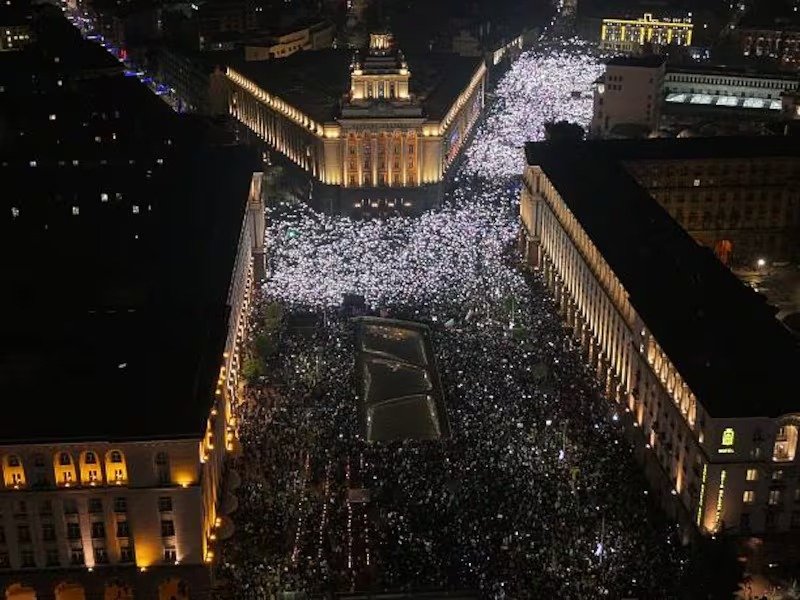
SOFIA – In a dramatic blow to Bulgaria’s fragile political landscape, Prime Minister Nikolay Denkov’s 11-month-old coalition government resigned on Thursday amid massive street protests, plunging the European Union and NATO member into fresh uncertainty just three weeks before it adopts the euro currency on January 1, 2026.The resignation caps a turbulent year for the Balkan nation of 6.5 million, where public fury over corruption, soaring inflation, and sluggish judicial reforms boiled over into nationwide demonstrations. Tens of thousands rallied in Sofia and other cities, chanting “No to the mafia state!” and demanding snap elections. Denkov, a technocrat from the pro-EU We Continue the Change (PP) party, cited an inability to pass key anti-graft legislation as the tipping point, announcing the government’s collapse in a televised address. “The people’s voice must be heard,” he said, paving the way for President Rumen Radev to appoint a caretaker administration. For outsiders unfamiliar with Bulgaria’s woes, the crisis stems from a vicious cycle of instability since 2021. Sparked by anti-corruption probes implicating figures from the long-ruling GERB party of ex-premier Boyko Borissov, the country has endured seven parliamentary elections in four years. No single bloc has secured a stable majority in the fragmented 240-seat assembly, leading to short-lived coalitions riddled with infighting. The latest PP-GERB alliance, formed in June 2024, promised EU-aligned reforms to unlock billions in bloc funds but faltered on internal rifts and public distrust—approval ratings plummeted below 20%.The timing is perilous: Bulgaria’s euro accession, delayed since 2020, symbolizes economic integration after decades of post-communist transition. Adopting the single currency could curb inflation (currently 5.2%) and boost trade, but analysts fear instability might derail final preparations, risking investor flight and credit downgrades. Protesters are divided. “This is our chance for real change—a corruption-free Bulgaria in Europe,” said Sofia student activist Maria Ivanova, 22, waving an EU flag. Yet others, like retiree Petar Stoyanov, 68, worry about chaos: “We’ve had enough elections; who will govern while we fight over scraps?” With parliament’s term intact, snap polls could come by March, extending the deadlock.The EU has urged calm, with Brussels monitoring closely to safeguard cohesion funds. As winter bites, Bulgaria teeters between hope and havoc, its euro dreams hanging in the balance.

U.S. Escalates Venezuela Sanctions with Tanker Seizures Amid Renewed Push Against Maduro
Uncategorized

U.S. Escalates Venezuela Sanctions with Tanker Seizures Amid Renewed Push Against Maduro

HOUSTON/LONDON/WASHINGTON, Dec 12 (Reuters) – The United States is ramping up its campaign against Venezuelan President Nicolas Maduro by preparing to intercept additional oil tankers, following this week’s seizure of a vessel carrying crude from the oil-rich nation. The move targets a shadowy fleet of ships evading sanctions and funneling oil to buyers like China, sources say, intensifying a long-simmering geopolitical feud. The interdiction marks the first direct U.S. seizure of a Venezuelan oil cargo since sanctions were imposed in 2019, suspending shipments worth nearly 6 million barrels, according to a source close to the matter. Venezuelan officials decried the action as “piracy” on international waters, while legal experts debate its compliance with maritime law, citing precedents under U.S. extraterritorial enforcement. This escalation coincides with a U.S. military buildup in the southern Caribbean, including naval deployments, as President Donald Trump—re-elected in 2024—vows to oust Maduro. Trump has branded the socialist leader a “dictator” and pledged harsher measures to starve his regime of revenue. The U.S.-Venezuela rift traces back to Maduro’s contested 2018 reelection, widely viewed as fraudulent by Western governments. In 2019, amid hyperinflation and humanitarian crisis, the Trump administration slapped crippling sanctions on PDVSA, Venezuela’s state oil company, freezing assets and barring U.S. firms from dealings. Washington recognized opposition figure Juan Guaido as interim president, sparking a global diplomatic standoff. Oil, comprising 95% of Venezuela’s exports, became the sanctions’ linchpin, aiming to defund Maduro’s security forces and force democratic elections. Yet Maduro clung to power, bolstered by allies Russia, Iran, and China, which imported discounted Venezuelan crude via “ghost” tankers—vessels with falsified flags and AIS trackers disabled. By 2023, under Biden, sanctions eased slightly to encourage dialogue, but Trump’s return has reversed course, invoking national security to justify interdictions. Analysts warn of ripple effects: Oil prices could spike if disruptions mount, while China—Venezuela’s top buyer—may retaliate with trade barriers. “This is economic warfare,” said Caracas-based economist Luisa Palacios. “Maduro’s grip weakens, but at what cost to global stability?” As U.S. vessels shadow the fleet, the showdown risks broader conflict, echoing Cold War-era proxy battles in Latin America.

Gold Prices Surge in Pakistan as Global Market Hits New Highs
Pakistan

Gold Prices Surge in Pakistan as Global Market Hits New Highs

Gold prices in Pakistan recorded a sharp jump on Friday, continuing the strong upward trend driven by a weaker US dollar and bullish momentum in the international market. The local bullion market experienced notable gains across all major categories of gold and silver, reflecting global market strength. 24K Gold Jumps Rs10,700, All-Time High: According to the latest data released by the All-Pakistan Gems and Jewelers Sarafa Association (APGJSA), the price of 24-karat gold rose by Rs10,700, pushing the per-tola rate to Rs454,262. Gold prices also increased on a 10-gram basis:: • 24K Gold (10 grams): Rs389,456 (up Rs9,174)• 22K Gold (10 grams): Rs357,014 This steady rise brings gold to one of its highest levels in Pakistan’s history, tightening investor interest and raising concerns for consumers ahead of the year-end wedding season. Silver Prices Also Rise : Silver followed in gold’s footsteps, witnessing a significant price jump in the domestic market.• 24K Silver (per tola): Rs6,684 – up Rs232• 24K Silver (10 grams): Rs5,730 – up Rs199 Silver’s upward momentum continues to attract small-scale investors who see it as a more affordable alternative to gold. Day-on-Day (DoD) & Monthly Performance: A quick look at the performance table shows just how much gold has appreciated during the year: Gold & Silver Price Summary (Pakistan Market)Date: 12 December 2025GOLD (24K per tola)• Today (Dec 12): Rs 454,262• Yesterday (Dec 11): Rs 443,562• Day Change: +Rs 10,700• 1 Month Change: +Rs 11,200• FYTD: +Rs 104,062• CYTD: +Rs 181,662 SILVER (per tola)• Today (Dec 12): Rs 6,684• Yesterday (Dec 11):: Rs 6,452• Day Change: +Rs 232• 1 Month Change: +Rs 1,022• FYTD: +Rs 2,902• CYTD: +Rs 3,334 The numbers make it clear: gold is one of the strongest-performing assets of the year, offering massive returns to investors who entered early. Global Market Update: In the international market, spot gold traded close to $4,329 per ounce, gaining nearly $53.4 (+1.25%) from the previous session. The rally was supported by: • A weaker US dollar• Safe-haven demand amid financial uncertainty• Increased speculative buying as markets expect a shift in US monetary policy This global push is directly fueling the domestic surge in Pakistan’s bullion market. Bottom Line: Gold Near Record Territory as Investors Shift Toward Safe Havens With both global and domestic markets posting strong gains, gold continues to establish itself as a top-performing safe-haven asset. As uncertainty persists across global markets and currencies fluctuate, investors in Pakistan are steadily increasing their exposure to bullion. Meanwhile, silver’s consistent climb also signals renewed confidence among retail investors. If current trends continue, Pakistan may witness another record high in gold prices before the end of the year.

IMF Praises Pakistan’s Monetary Discipline as SBP Anchors Inflation and Strengthens Economic Stability
World

IMF Praises Pakistan’s Monetary Discipline as SBP Anchors Inflation and Strengthens Economic Stability

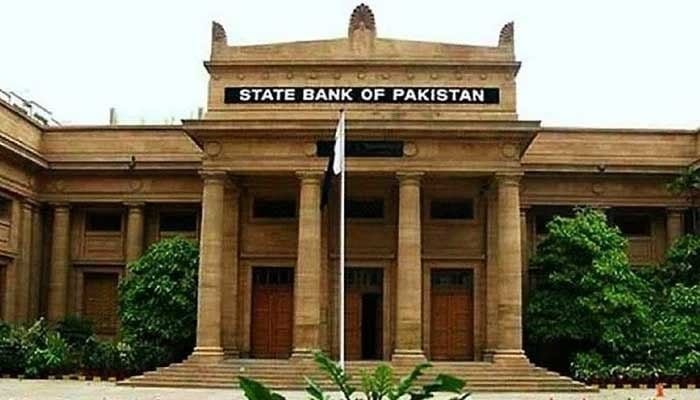
In a year marked by climate shocks, economic uncertainty and global volatility, Pakistan has quietly secured an encouraging vote of confidence from the International Monetary Fund (IMF). In its latest staff-level report for the second review, the IMF applauded the State Bank of Pakistan (SBP) for adopting an “appropriately tight” monetary policy stance, one that has played a crucial role in stabilizing the country’s macroeconomic outlook. Despite the severe supply disruptions triggered by recent floods, the SBP’s decision to hold the policy rate at 11% has helped anchor inflation expectations and keep Pakistan’s price pressures under control. According to the IMF, Pakistan’s inflation is expected to stay within the central bank’s medium-term target range of 5–7%, a notable achievement given the global inflation trend and domestic shocks. A Data-Driven Approach That Builds Trust: The IMF’s assessment underscores an important shift in Pakistan’s economic management: a more data-driven, transparent, and proactive central banking strategy. The report especially highlighted three SBP initiatives:• Strengthening its monetary policy framework• Enhancing communication with semi-annual monetary policy reports• Improving transparency through updated inflation expectations surveys These steps, according to the IMF, have helped the SBP manage inflation risks while also supporting a measured economic recovery. For businesses and investors, this signals a central bank that is more predictable, more transparent, and more aligned with global best practices, a crucial component for building long-term economic confidence. Monitoring Flood Impacts and Staying Vigilant: The IMF also pointed out that Pakistan must remain vigilant as the effects of recent floods continue to influence both inflation and the external sector. It urged the SBP to stay ready to take decisive action if inflationary pressures re-emerge. This call for continued vigilance highlights the delicate balance Pakistan must maintain: supporting recovery while keeping inflation expectations anchored. Foreign Exchange Reforms Strengthening Market Stability: On the foreign exchange front, the IMF had positive feedback as well. The State Bank’s efforts to rebuild foreign exchange reserves and deepen the interbank FX market have strengthened Pakistan’s external buffers. One significant reform praised by the IMF was the SBP’s revision of Foreign Exchange Exposure Limits (FEEL) for banks, an adjustment that gives financial institutions more flexibility in managing FX positions while maintaining robust risk controls. Additional areas where the IMF encouraged further reforms include:• Strengthening remittance channels• Gradually unwinding temporary capital flow measures• Continuing efforts to stabilize the exchange rate Advancing Financial Sector Reforms: Beyond monetary policy, the IMF also acknowledged Pakistan’s progress on broader financial reforms: • Developing domestic capital markets• Strengthening AML/CFT frameworks• Regulating virtual assets responsibly• Balancing innovation with investor protection These reforms are part of a comprehensive strategy to modernize Pakistan’s financial sector, align with global standards, and foster a healthier business environment. A Balanced Path Forward for Pakistan’s Economy: The IMF’s message is clear: Pakistan has taken important steps in the right direction, but maintaining momentum is essential. To sustain macroeconomic stability and reinforce investor confidence, the Fund advises Pakistan to continue: • Tight, data-driven monetary policy• Strong financial supervision and regulation• A flexible, market-based exchange rate• Deepening of FX and capital markets The combination of these measures, along with ongoing structural reforms, places Pakistan in a stronger position to navigate short-term shocks while laying the groundwork for long-term economic growth. For Pakistan’s business community, investors, and policymakers, the IMF’s latest assessment offers a grounded sense of optimism. While challenges remain, the country’s monetary policy discipline, strengthened financial reforms, and improving transparency are building a more resilient economic foundation. As global uncertainties persist, staying committed to reforms will be key to turning stability into sustainable growth and positioning Pakistan as a stronger player in the regional and international markets.

Renowned Economist says Pakistan's Remittances Boon Could be Hidden Curse
Pakistan

Renowned Economist says Pakistan’s Remittances Boon Could be Hidden Curse

ISLAMABAD – In a nation grappling with chronic economic woes, remittances from overseas Pakistanis have long been hailed as a vital lifeline, injecting $38 billion annually – equivalent to 10% of GDP – into the economy. Yet, a provocative new analysis by economist Atif Mian questions this narrative, arguing that these funds, born from the grueling sacrifices of 10 million expatriates toiling in low-wage jobs abroad, are ensnaring Pakistan in a “macroeconomic trap” rather than propelling it forward.Mian’s essay, published on his Substack, paints a stark picture of remittances as a double-edged sword. On one hand, they represent “free foreign exchange” from migrants enduring cramped living conditions in Gulf states and beyond, far exceeding the norm for countries at Pakistan’s income level – twice the expected ratio, as shown in comparative economic charts. Families back home rely on these transfers for survival, boosting immediate consumption and stabilizing household finances amid inflation and unemployment.However, the influx appreciates the rupee, triggering a classic “Dutch disease” effect: exports in tradable sectors like textiles and agriculture suffer as the currency becomes overvalued, making Pakistani goods uncompetitive globally. Investment-to-GDP ratios languish at historic lows, while consumption soars, perpetuating a cycle of stagnation. “If remittances are not managed properly, they can become a restraint on growth,” Mian warns, highlighting how this dynamic sustains elite rent-seeking in non-tradable industries like real estate, where politically connected tycoons convert windfalls into foreign assets.The irony is bitter: the sweat of poor laborers abroad inadvertently bolsters the purchasing power of the privileged at home. Pakistan’s export slump and prolonged currency overvaluation underscore the malaise, with bad policy – not migrant toil – as the culprit.Mian offers a roadmap out: The State Bank should aggressively build reserves during inflow spikes to curb overheating. A targeted foreign direct investment (FDI) strategy could channel funds into high-tech, export-oriented greenfield projects, mandating local partnerships for technology spillovers. Discourage speculative portfolio inflows and real estate bubbles to prioritize productivity.“Remittances don’t have to be a drag on growth. With the right macro policy, they can become a catalyst for financial stability, investment, and long-run development,” Mian concludes. As Pakistan eyes IMF talks and fiscal reforms, this critique arrives at a pivotal moment. Will policymakers heed the call, transforming expatriate resilience into national renewal, or let the trap tighten?

Pak-Qatar Family Takaful IPO Takes Off: Oversubscribed on Day One
Pakistan

Pak-Qatar Family Takaful IPO Takes Off: Oversubscribed on Day One

In a strong show of confidence from Pakistan’s capital market, Pak-Qatar Family Takaful Limited (PQFTL) made an impressive debut with its Initial Public Offering (IPO) being oversubscribed on the very first day of book building. The overwhelming investor interest underscores the company’s solid fundamentals and its position as a market leader in the fast-growing takaful industry. A Powerful Market Response on Day One: According to Shahid Ali Habib, CEO of Arif Habib Limited, a substantial volume of funds has already been deposited during the book-building process. He shared on his X (formerly Twitter) account that many more investors are expected to place their final bids on the last day of the offer a sign that sentiment around the IPO remains highly positive. The IPO consists of 50 million shares, representing 21.67% of post-IPO paid-up capital, with a floor price of Rs14 per share. Using the Dutch auction method, PQFTL will allocate 75% of shares to successful bidders while 25% is reserved for retail investors. A Market Leader With a Strong Track Record: Founded in 2006, Pak-Qatar Family Takaful is Pakistan’s first and largest dedicated Family Takaful operator. Today, it dominates the sector with: • 44% share of the overall family takaful market• Over 90% share of the dedicated takaful segment Such commanding strength doesn’t happen overnight. PQFTL has built its reputation by delivering consistent growth in net income and profit-after-tax (PAT). Its single-contribution products have played a vital role in accelerating asset accumulation while maintaining low acquisition costs of just 5% in FY24, a notable advantage in a competitive industry. A Forward-Looking Company With Long-Term Vision: The company’s ambition for innovation and diversification became clearer in 2022, when it became Pakistan’s first takaful operator to receive a Voluntary Pension Scheme (VPS) license. This strategic move positions PQFTL to capture long-term retirement savings, giving it a sustainable growth path for the coming decades. What the Oversubscription Really Means: The immediate oversubscription of PQFTL’s IPO indicates three important trends in Pakistan’s financial markets: For investors, PQFTL represents a rare opportunity to invest in a high-growth segment of Pakistan’s financial industry, one that continues to expand even during economic volatility. Pak-Qatar Family Takaful’s IPO success story is more than a market event, it’s a reflection of how Islamic finance, digital distribution, and long-term savings products are reshaping Pakistan’s financial landscape. As bids continue flowing in, all eyes are on the final book-building results, which are expected to set new benchmarks for future Shariah-compliant IPOs.

Scroll to Top