World

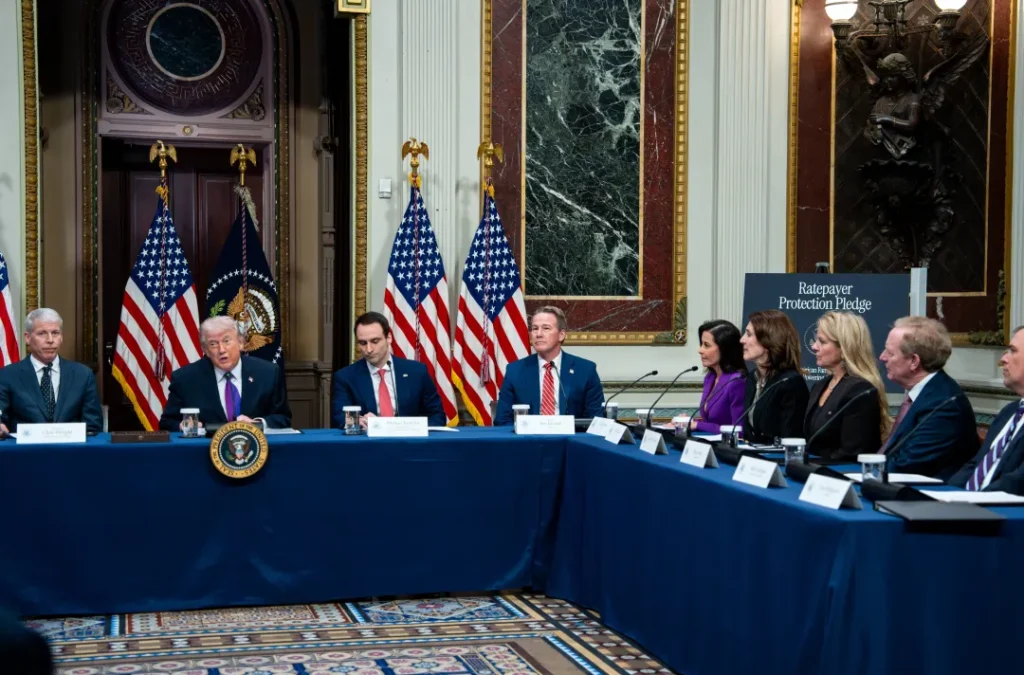
Trump Orders Tells His Colleagues to Identify Countries with Higher Defence Spending as Customers for US Weapons
World

Trump Orders Tells His Colleagues to Identify Countries with Higher Defence Spending as Customers for US Weapons

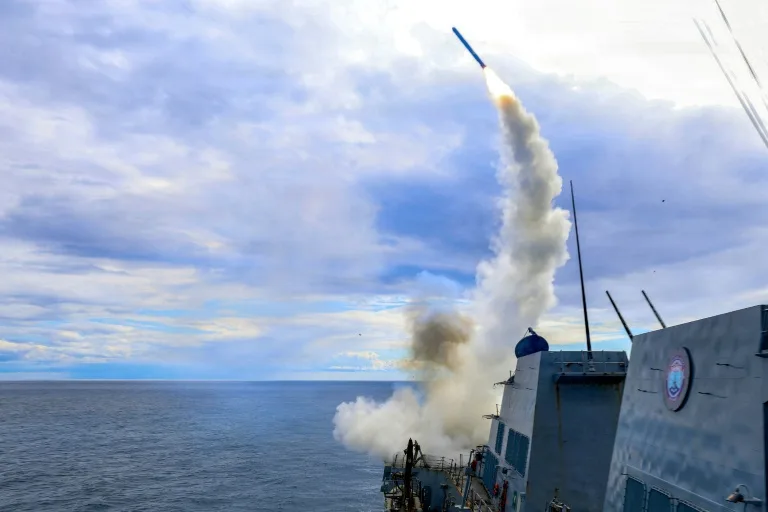
President Donald Trump issued an executive order on February 6, 2026, establishing the “America First Arms Transfer Strategy” to overhaul U.S. foreign military sales by prioritizing nations with robust defense spending and key regional roles. Read More: https://theboardroompk.com/toyotas-ceo-change-finance-focus-as-sato-steps-aside-after-three-years/ This marks a departure from decades of queue-based arms exports, focusing instead on aligning sales with U.S. national security and economic goals to speed deliveries and enhance domestic production. Shift to Favor High-Spending Strategic Partners The directive instructs agencies to favor partners investing heavily in self-defense, contributing to U.S. economic security, or holding critical geographic positions in American strategy. It ties into NATO’s 2025 Hague commitment to a 5% GDP defense spending standard, emphasizing burden-sharing. The approach aims to reward allies meeting higher thresholds while addressing complaints of delays from mismatched orders and limited U.S. capacity. No explicit list of prioritized nations appears in the order, leaving flexibility for implementation. Enhancing Production and Reducing Bureaucratic Hurdles Within 120 days, the Secretaries of War (Defense), State, and Commerce must submit a prioritized sales catalog and identify acquisition opportunities that reinforce supply chains and readiness. The order calls for improved transparency and faster processes, including end-use monitoring, to prevent backlogs that hinder U.S. and allied forces. Officials highlight using foreign investments to “supercharge” the defense industrial base, supporting Trump’s vision of revitalizing American manufacturing. The White House emphasized that the strategy ensures arms transfers advance U.S. interests without unnecessary delays, potentially accelerating exports to compliant allies amid heightened focus on homeland defense and deterring adversaries.

Karachi Hosts Grand Celebration of Sri Lanka’s 78th National Independence Day
World

Karachi Hosts Grand Celebration of Sri Lanka’s 78th National Independence Day

Karachi: The Sri Lanka Consulate in Karachi hosted a vibrant and memorable celebration on the occasion of Sri Lanka’s 78th National Independence Day, highlighting the enduring friendship between Sri Lanka and Pakistan. The event was presided over by H.E. Sanjeewa Pattiwila, Consul General of Sri Lanka in Karachi, who also hoisted the Sri Lankan national flag while the national anthem played, marking the historic day with pride and dignity. Read More: https://theboardroompk.com/shabbar-zaidi-calls-for-economic-reform-and-relocation-of-fbr-headquarters-to-karachi/ In his keynote address, Consul General Pattiwila reflected on Sri Lanka’s journey of resilience, economic recovery, and principled governance. “Within eighteen months, through collective struggle and determination, Sri Lanka has achieved tangible economic progress, and even in the face of Cyclone Ditwah, our strong foundations allowed us to rebuild and support our communities successfully,” he said.Consul General Pattiwila extended heartfelt gratitude to the Government and people of Pakistan for their unwavering support during natural disasters and throughout history. “Pakistan has been a true and reliable friend, providing humanitarian aid, security cooperation, and educational opportunities, including scholarships for hundreds of Sri Lankan students through the Allama Iqbal Scholarship Scheme,” he stated.The celebrations also highlighted Sri Lanka-Pakistan trade and technical cooperation. Consul General Pattiwila emphasized ongoing efforts to expand bilateral trade under the Pakistan-Sri Lanka Free Trade Agreement (PSFTA), noting potential opportunities in textiles, tea, medical supplies, agriculture, and joint technical ventures. A large number of Sri Lankan students currently studying in Karachi attended the ceremony, symbolizing the nation’s growing educational ties with Pakistan. The event also included prayers representing Buddhism, Hinduism, Christianity, and Islam, showcasing the nation’s cultural diversity.In a gesture of service and solidarity, the Sri Lanka Consulate, in collaboration with the Afzaal Memorial Thalassemia Foundation (AMTF) Pakistan, organized a blood donation campaign to benefit Pakistani thalassemia patients. Many Sri Lankans present at the event generously donated blood, reflecting the community’s compassion and shared commitment to humanity.Consul General Pattiwila praised the Sri Lankan expatriates working in Karachi as “true ambassadors of our nation,” recognizing their contributions across various sectors including finance, aviation, manufacturing, and logistics. Closing his speech, he urged attendees to join hands in unity and brotherhood, quoting President Anura Kumara Dissanayake: “Let us work together to build the beautiful shared dream of a thriving nation and a beautiful life.” The event successfully combined national pride, cultural heritage, and community service, reaffirming the strong bonds between Sri Lanka and Pakistan.

EU Charges TikTok Over Addictive Features; Major App Changes Demanded
World

EU Charges TikTok Over Addictive Features; Major App Changes Demanded

The European Union has issued preliminary charges against TikTok for breaching online content regulations, focusing on the app’s “addictive design” features that could harm users’ wellbeing, especially children. Read More: https://theboardroompk.com/former-australian-fast-bowler-brett-lee-urges-india-pak-match-icc-t20-world-cup/ The European Commission announced the findings on February 6, 2026, after a year-long investigation under the Digital Services Act (DSA). This landmark EU law mandates large platforms to mitigate risks from harmful content and practices. Key Allegations TikTok’s features, including infinite scroll, autoplay videos, push notifications, and a highly personalized recommender system, were cited as problematic. These elements constantly reward users with new content, fueling endless scrolling and shifting users into “autopilot mode.” This can lead to compulsive behavior and reduced self-control, the Commission alleged.The platform reportedly failed to properly assess risks to physical and mental health, particularly for minors and vulnerable adults. It ignored signs of excessive use, such as late-night activity by children or frequent app openings, and lacked effective mitigation like robust screen-time tools or parental controls. Potential Consequences TikTok may need to fundamentally change its app design in Europe to comply. Failure could result in a fine of up to 6% of parent company ByteDance’s global annual turnover—a potentially massive penalty given the company’s scale. The Commission emphasized protecting young users, with EU tech chief Henna Virkkunen stating actions are expected to redesign the service for better safety, especially for minors. TikTok strongly rejected the claims. A spokesperson called the findings “categorically false and entirely meritless,” vowing to challenge them through all available means. This follows prior DSA scrutiny, including a 2025 settlement over advertising transparency. The case highlights growing EU pressure on Big Tech to prioritize user safety over engagement-driven models.

Berlin Airport Paralyzed by Treacherous Black Ice Conditions
World

Berlin Airport Paralyzed by Treacherous Black Ice Conditions

Berlin Brandenburg Airport (BER), the German capital’s main international hub, ground to a halt on Friday morning as severe weather wreaked havoc on operations. Freezing rain and black ice turned runways into slippery hazards, preventing any takeoffs or landings. Airport officials confirmed the suspension, which began Thursday evening, shows no immediate signs of lifting, leaving thousands of passengers stranded amid the winter chaos. Impact on Travelers and Airlines Passengers faced mounting frustration as flight boards displayed endless delays and cancellations. Many had arrived early, only to find check-in counters overwhelmed and lounges packed. Airlines like Lufthansa and EasyJet scrambled to rebook flights, offering vouchers for hotels and meals. One traveler, a business executive from London, described the scene as “utter disarray,” with families huddling in terminals and announcements echoing apologies. The economic ripple effects are significant. Berlin’s airport handles over 25 million passengers annually, and disruptions like this could cost millions in lost revenue for carriers and local businesses. Ground crews worked tirelessly overnight, applying de-icing agents to runways and taxiways. Despite their efforts, the persistent freezing rain rendered treatments ineffective, with surfaces remaining perilously slick. Meteorologists attribute the black ice to a rare combination of sub-zero temperatures and moisture from Atlantic weather systems. This phenomenon, where clear ice forms invisibly on surfaces, poses extreme risks to aviation safety. Efforts to Resume Operations and Future Precautions Airport spokeswoman Anna Müller stated that safety remains the top priority, with no risks being taken until conditions improve. “We’re monitoring the weather hourly,” she said. Teams are deploying advanced heating equipment and additional anti-slip materials in hopes of a midday restart. Forecasts predict a slight thaw by afternoon, but uncertainty lingers. If operations don’t resume soon, diversions to nearby airports like Leipzig or Hamburg may increase. This incident highlights Berlin’s vulnerability to extreme weather, prompting calls for infrastructure upgrades. Experts suggest investing in heated runways and better predictive tech to prevent future shutdowns. In the meantime, passengers are advised to check airline apps for updates and consider alternative travel options, such as high-speed trains connecting Berlin to major European cities. The disruption underscores broader climate challenges, with more frequent severe winters affecting global travel. Berlin officials promise a full review once the crisis passes, aiming to enhance resilience against such events.

Wall Street: Selloff Intensifies as AI Doubts Shake Investor Confidence
World

Wall Street: Selloff Intensifies as AI Doubts Shake Investor Confidence

On February 6, 2026, global financial markets faced continued turmoil, with Asian equities leading the decline amid Wall Street’s ongoing rout and sharp drops in precious metals and digital currencies. The selloff, driven by AI-related profit fears and U.S. employment data, has investors rethinking core market drivers. Key Asian and U.S. Futures Movements South Korea’s Kospi index crashed 5%, triggering a brief halt in trading, while MSCI’s Asia-Pacific ex-Japan gauge slipped 0.9%. Japan’s Nikkei shed 0.7%, contributing to the region’s second straight day of losses. U.S. futures pointed to more pain, with S&P 500 e-minis down 0.6% and Nasdaq e-minis falling 1.1%. The broader S&P 500 has now erased its yearly gains, battered by economic signals. Fears that new AI technologies might cut into software firms’ revenues sparked the initial drop. This, combined with labor market fragility, has amplified selling pressure across asset classes. January’s U.S. layoffs hit a 17-year high for the month, per Challenger, Gray & Christmas, fueling recession worries and prompting a flight from riskier investments. Sharp Drops in Metals and Crypto Assets Gold prices retreated 1.6% to $4,691.76, and silver nosedived 8.9% to $64.912, as safe-haven demand waned in the volatile environment. Following a $2 trillion evaporation in crypto value on Thursday, bitcoin declined 3% to $61,238.64, and ether lost 1.8% to $1,813.77, extending the sector’s pain. Market analyst Tony Sycamore from IG in Sydney commented, “Investors are questioning their commitment to the pillars that have underpinned markets over the past six months: AI, crypto, and precious metals. This raises the odds of a deeper unwind.” With no detailed updates on European or emerging markets, the focus remains on U.S. and Asian trends. Analysts suggest this could evolve into a broader correction if sentiment doesn’t improve. Traders are bracing for potential policy responses, though immediate relief seems unlikely. Diversification strategies are gaining traction amid the uncertainty.

Russia-US Nuclear Arm Treaty Expires, Risking New Arms Race
World

Russia-US Nuclear Arm Treaty Expires, Risking New Arms Race

The New START treaty, the last remaining nuclear arms control agreement between Russia and the United States, expired on February 5, 2026, ending more than half a century of mutual restraints on strategic nuclear arsenals. Read More: https://theboardroompk.com/pia-forges-major-cargo-alliance-with-air-france-klm-to-boost-global-exports/ This development removes verifiable limits on deployed warheads, missiles, and launchers, raising alarms about a potential new nuclear arms race involving the world’s major powers, including China’s expanding arsenal. Treaty Expiry and Immediate Consequences New START, signed in 2010 and extended once in 2021, capped each side at 1,550 deployed strategic nuclear warheads. With its lapse at midnight Prague time (February 5), neither Russia nor the U.S. is bound by these caps or inspection mechanisms. Russia proposed a one-year voluntary extension to allow time for successor talks, but the U.S. under President Trump did not formally respond. Moscow criticized the U.S. stance as “mistaken and regrettable,” stating both sides are now free to act independently while remaining open to diplomacy for stabilization. Russia’s Position and U.S. Silence Russian officials emphasized responsibility, readiness for countermeasures against new threats, and willingness to negotiate a comprehensive framework. President Putin had floated informal adherence for another year, but Trump made no public statement on the expiry. The White House indicated decisions on arms control would come on his timeline, with interest in a broader deal potentially including China. China’s Role and Rising Risks China’s nuclear stockpile, estimated at around 600 warheads (far smaller than the roughly 4,000 each for Russia and the U.S.), continues rapid growth. Beijing has refused trilateral talks, citing its smaller arsenal. Experts warn that the treaty’s end, combined with China’s buildup, could fuel an unconstrained arms race. Without transparency, predictability erodes, increasing crisis risks—exacerbated by AI, new technologies, and limited communication channels among nuclear states. Global Alarm and Calls for Action U.N. Secretary-General Antonio Guterres described the expiry as coming “at a worse time,” with nuclear weapon use risk at its highest in decades. He urged immediate negotiations for a successor with verifiable limits and risk reduction. Analysts predict both Russia and the U.S. could add hundreds of warheads within a couple of years under worst-case planning. The lapse ends Cold War-era restraint traditions, heightening global instability amid ongoing geopolitical tensions. This milestone underscores the fragility of nuclear arms control in a multipolar world, with no immediate replacement in sight despite diplomatic openings.

India to Retain Key Farm Protections in Trump-Era Trade Deal
World

India to Retain Key Farm Protections in Trump-Era Trade Deal

The Trump administration’s trade deal with India allows New Delhi to preserve protections in critical parts of its agriculture sector while opening markets in select areas. U.S. Trade Representative Jamieson Greer detailed the framework in a February 3, 2026, Reuters-reported CNBC appearance, following swift progress after Trump-Modi discussions. Read More: https://theboardroompk.com/imc-toyota-pakistan-brought-735m-fdi-6-5b-localization-savings-in-35-year-ceo/ Agricultural Concessions and Limits India agrees to zero duties on U.S. tree nuts, fruits, vegetables, wine, and spirits, hailed by Greer as significant for U.S. exporters. Yet, “key areas” of India’s farm sector remain protected, with no new access for guarded commodities such as rice, beef, soybeans, sugar, or dairy—mirroring exclusions in India’s EU deal. Greer indicated continued U.S. pursuit of broader access. Tariff Adjustments and Purchases India will cut tariffs on U.S. industrial goods to zero from 13.5%, while the U.S. reduces rates on Indian imports to 18% from 50%. India commits to phasing out Russian oil imports and ramping up $500 billion in U.S. purchases over years, spanning defense, energy, aircraft, telecom, and pharmaceuticals. Immediate tariff relief applies to American cars. Technical and Energy Elements The pact addresses non-tariff barriers through U.S. standards recognition processes. India’s shift from Russian energy aligns with diversification goals, supported by eased U.S. sanctions on Venezuelan oil. Path Forward Officials are finalizing terms, targeting quick completion before negotiating a fuller agreement. The deal resolves longstanding frictions, offering mutual economic benefits while respecting India’s domestic priorities in agriculture.

Pakistan in Talks for Benghazi Consulate After $4B Defense Deal to Bolster Libya's Eastern Authorities
World

Pakistan in Talks for Benghazi Consulate After $4B Defense Deal to Bolster Libya’s Eastern Authorities

Pakistan is advancing plans to establish a consulate in Benghazi, the eastern Libyan city controlled by the Libyan National Army (LNA), according to sources cited in a Reuters report published on February 3, 2026. Read More: https://theboardroompk.com/standard-chartered-connects-pakistani-smes-to-global-markets-through-tailored-foreign-exchange-solutions/ The move follows high-level engagements between Pakistani leaders and LNA commander Field Marshal Khalifa Haftar, who visited Islamabad recently, and comes amid a major $4 billion defense deal between Pakistan and the LNA. Diplomatic Boost for Eastern Authorities The proposed consulate would place Pakistan among a limited number of countries maintaining a diplomatic presence in Benghazi. Sources indicate this step could enhance the legitimacy and international standing of Libya’s eastern authorities in their long-standing rivalry with the U.N.-recognized government based in Tripoli, which controls the western part of the country. Tied to Expanding Defense Cooperation Talks on the consulate gained momentum after Pakistan’s army chief visited Benghazi in December 2025 to sign the multibillion-dollar arms agreement—one of Pakistan’s largest-ever defense exports. The deal, which Pakistani officials insist complies with U.N. restrictions, includes support for the Libyan air force’s capability development. During Haftar’s ongoing visit, discussions with Prime Minister Shehbaz Sharif, army chief Field Marshal Asim Munir, and air force leaders focused on broader bilateral cooperation, joint training, and regional issues. Libya’s Ongoing Division Libya has remained fractured since the 2011 NATO-backed uprising that ousted Muammar Gaddafi, escalating into civil war in 2014. The Tripoli-based government holds the west, while Haftar’s LNA dominates the east and south, including key oilfields. The U.N. arms embargo, in place since 2011, has proven largely ineffective according to experts. Limited Official Responses Pakistan’s prime minister’s office and foreign ministry did not comment on the report. Eastern Libyan authorities were not immediately reachable. The initiative reflects strengthening Pakistan-Libya ties, building on recent military pacts and Haftar’s alliances with regional players like the UAE. This development highlights Pakistan’s growing role in North African defense markets while navigating Libya’s complex political landscape.

From Shahab to Sejjil: Iran Has 2,000 km-Range Missile Deterrent
World

From Shahab to Sejjil: Iran Has 2,000 km-Range Missile Deterrent

Iran’s ballistic missile program remains a cornerstone of its defense strategy, boasting the region’s largest inventory per U.S. assessments. A February 4, 2026, Reuters report outlines the arsenal’s scope as Tehran refuses to discuss limitations in upcoming nuclear negotiations with the U.S. in Oman. Read More: https://theboardroompk.com/former-australian-fast-bowler-brett-lee-urges-india-pak-match-icc-t20-world-cup/ Underground Network and Range Policy Missiles are housed in fortified underground complexes for protection and rapid deployment. Iran adheres to a 2,000 km self-limit, covering Israel and regional adversaries, while denying nuclear delivery intent. Diverse Arsenal Overview Short-range options like Shahab-1 (300 km) and Zolfaghar (700 km) complement medium- and longer-range systems: Shahab-3 (up to 1,300 km), Emad (1,700 km), Ghadr and Khorramshahr (2,000 km), Sejjil (2,000-2,500 km, high-speed solid-fuel), Khaibar (2,000 km), and Haj Qasem (1,400 km). These draw from foreign tech adapted domestically. Technological Progress Improvements focus on accuracy, maneuverability, and hypersonic features, exemplified by the Fattah system. Upgrades include composite materials and precision guidance, bolstering deterrence. Post-Conflict Recovery and Tensions Iran fired extensively in the June 2025 Israel war but claims enhanced capabilities afterward, with recent military visits highlighting upgrades. The program draws scrutiny as a potential nuclear vector and regional destabilizer, especially with U.S. preconditions in talks emphasizing missile curbs.

Former Australian Fast Bowler Brett Lee Urges India-Pak Match ICC T20 World Cup
World

Former Australian Fast Bowler Brett Lee Urges India-Pak Match ICC T20 World Cup

Former Australian fast bowler Brett Lee has voiced strong support for the highly anticipated India-Pakistan clash in the ICC T20 World Cup, while Pakistan’s Prime Minister Shehbaz Sharif defended the government’s decision to boycott the match as “appropriate.” Read More: https://theboardroompk.com/exports-plunge-15-pakistans-jul-nov-trade-deficit-widens-to-15-54-billion/ The controversy surrounds the group-stage encounter scheduled for February 15, 2026, in Colombo, Sri Lanka, amid the 20-team tournament co-hosted by India and starting on February 8. Lee Calls for Politics-Free Cricket In an interview on the ‘Mr. Cricket UAE’ podcast, Lee urged separating politics from sport. He said, “Let’s get the politics out of it. I really hope the match happens. I really hope they get the opportunity, because it is going to be super exciting. The whole world watches when India and Pakistan play one another.” The former player, who retired in 2012 after a 13-year international career, emphasized the global appeal of the rivalry. Pakistan’s Government Stance Pakistan cleared its team’s participation in the World Cup in Sri Lanka but announced on February 2 that it would skip the India match. Prime Minister Sharif, speaking on February 4, stated: “We have taken a very clear stand on the T20 World Cup that we won’t play the match against India because there should be no politics on the sports field. We have taken a very considered stance, and we should completely stand by Bangladesh, and I think this is a very appropriate decision.” The boycott demonstrates solidarity with Bangladesh, which was replaced by Scotland after refusing to play in India over security concerns linked to regional tensions. ICC Rejects Relocation Demands The International Cricket Council dismissed safety issues based on an independent assessment and rejected calls to shift matches to Sri Lanka, citing logistical challenges for late changes. This has deprived fans of one of cricket’s biggest fixtures, impacting tournament excitement. Broader Context and Implications Geopolitical strains between India and Pakistan continue to influence bilateral cricket ties, with the PCB yet to clarify its position on potential knockout encounters. While the boycott affects only the group game, it highlights persistent challenges in keeping politics out of sport despite widespread calls for the iconic rivalry to proceed.

Scroll to Top