Pakistan

Dutch Ambassador Visits FrieslandCampina Engro Pakistan to Discuss Dairy Sector Growth
Pakistan

Dutch Ambassador Visits FrieslandCampina Engro Pakistan to Discuss Dairy Sector Growth

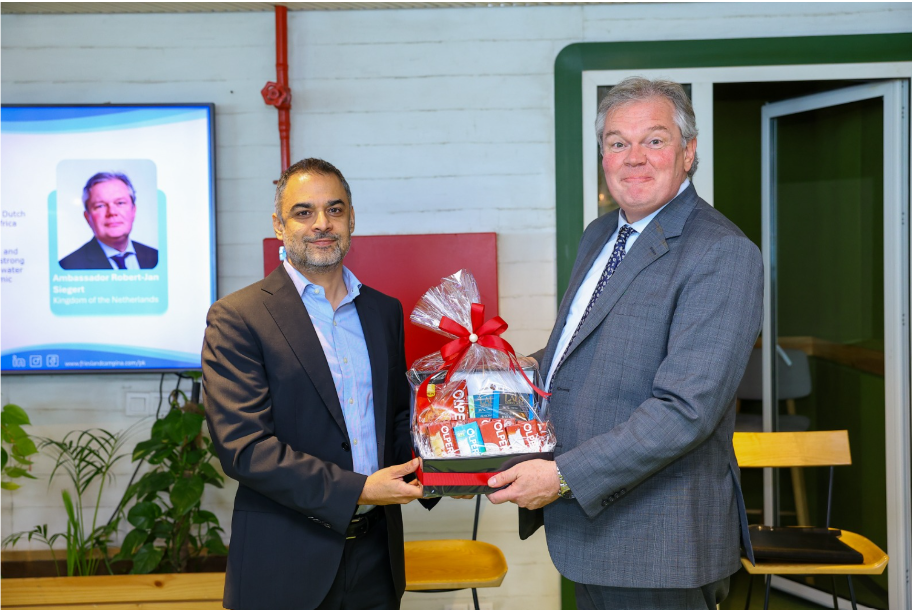
KARACHI: The Dutch Ambassador to Pakistan, H.E. Robert-Jan Seigert, visited the head office of FrieslandCampina Engro Pakistan Limited (FCEPL) to meet with the company’s leadership and discuss the future of Pakistan’s dairy sector, opportunities for sustainable investment, and the development of local talent. During the visit, FCEPL’s management shared an overview of the company’s performance, ongoing initiatives, and long-term business strategy while highlighting the potential for growth and modernization across Pakistan’s dairy industry. The discussions focused on strengthening the dairy value chain, expanding investment opportunities, promoting skills development, and enhancing the contribution of Pakistani professionals to the sector. Focus on Dairy Sector Growth and Modernization The meeting explored the evolving landscape of Pakistan’s dairy industry and its potential for sustainable expansion. Both sides discussed the importance of modern dairy practices, investment in local capabilities, and initiatives aimed at improving productivity and strengthening the country’s dairy ecosystem. The conversation also emphasized the role of skilled human resources in supporting industry development and driving long-term growth. Dutch Ambassador Highlights Public Health and Industry Potential Speaking during the visit, Dutch Ambassador Robert-Jan Seigert said Pakistan’s dairy sector offers significant opportunities for development, supported by a capable workforce and an increasing focus on modern farming and processing practices. He stressed the importance of improving access to safe dairy products, particularly for children, and encouraging consumers to shift from loose milk to safer packaged alternatives to improve public health outcomes. The ambassador also appreciated FCEPL’s contribution toward promoting safe dairy consumption and supporting the long-term sustainability of Pakistan’s dairy industry. FCEPL Reaffirms Commitment to Nutrition and Talent Development FCEPL Managing Director Kashan Hasan said the company was honored to host the Dutch Ambassador and share its vision for the future of Pakistan’s dairy sector. He noted that dairy plays a vital role in providing nutrition and supporting the livelihoods of millions of Pakistanis. Hasan emphasized that collaboration among industry stakeholders is essential to unlocking the sector’s full potential, adding that FCEPL remains committed to investing in local talent, supporting industry development, and expanding access to safe, nutritious, and high-quality dairy products. He said the company’s efforts continue to be guided by its purpose of “Nourishing Pakistan.” Townhall Session with Employees As part of the visit, Ambassador Seigert also participated in a townhall session with FCEPL employees. The interactive session focused on the potential of Pakistani talent, career opportunities within the dairy sector, and the role employees can play in shaping the industry’s future. Employees engaged in discussions on industry growth, innovation, and professional development. Commitment to Pakistan’s Dairy Industry The visit concluded with a shared commitment to continued collaboration among stakeholders to strengthen Pakistan’s dairy sector. Both parties reaffirmed the importance of investing in sustainable growth, supporting local talent, and improving access to safe and nutritious dairy products for consumers across the country.
LUMS, Pakistan Single Window Sign MoU to Strengthen Trade Facilitation and Customs Capacity
Pakistan

LUMS, Pakistan Single Window Sign MoU to Strengthen Trade Facilitation and Customs Capacity

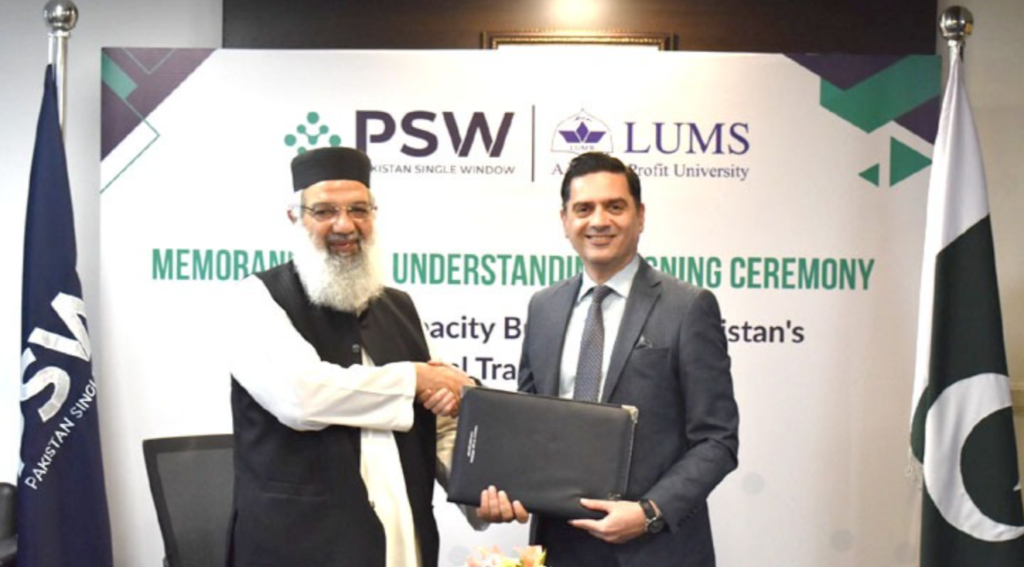
LAHORE: The Lahore University of Management Sciences (LUMS) and Pakistan Single Window (PSW) have signed a Memorandum of Understanding (MoU) to collaborate on capacity building, executive education, and research initiatives aimed at strengthening Pakistan’s trade facilitation ecosystem. The agreement was signed at the Pakistan Single Window headquarters in Islamabad by Aftab Haider, Chief Executive Officer of Pakistan Single Window, and Dr. Tariq Jadoon, Provost of LUMS, in the presence of senior representatives from both institutions. The collaboration is designed to combine academic expertise with practical industry knowledge to enhance professional competencies, promote evidence-based policymaking, and support the modernization of Pakistan’s cross-border trade environment. Partnership to Support FBR Customs Training Under the MoU, LUMS and PSW will jointly support capacity-building initiatives under the Federal Board of Revenue’s (FBR) Postgraduate Diploma (PGD) Program for Probationary Assistant Collectors of Customs. The collaboration will focus on strengthening knowledge and professional skills in areas including digital trade, trade facilitation, logistics, cross-border trade systems, data governance, and other subjects aligned with PSW’s mandate. The initiative aims to equip customs officials with the expertise required to navigate Pakistan’s evolving trade landscape and improve the efficiency of border management. Executive Education and Professional Development As part of the partnership, both institutions will jointly design and deliver executive education programmes, technical trainings, seminars, workshops, and other professional development initiatives. The agreement also provides opportunities for LUMS and PSW to participate in each other’s conferences, policy dialogues, exhibitions, and knowledge-sharing events, fostering greater collaboration between academia and the public sector. These initiatives are expected to strengthen institutional capacity while promoting best practices in customs administration and international trade. Joint Research to Support Policy Development The MoU also establishes a framework for collaborative research focusing on digital trade, logistics, trade facilitation, cross-border trade systems, and data governance. Both institutions will work together to develop policy papers, analytical studies, and other knowledge products aimed at supporting evidence-based policymaking and generating practical insights for stakeholders across Pakistan’s trade ecosystem. The research initiatives will also contribute to the FBR’s Customs training programme by integrating academic research with practical policy applications. Officials Highlight Importance of Collaboration Commenting on the partnership, Dr. Tariq Jadoon, Provost of LUMS, said the collaboration reflects the university’s commitment to advancing executive education and applied research that addresses national priorities. He noted that combining academic excellence with practical expertise would create meaningful learning opportunities while contributing to the strengthening of Pakistan’s trade and customs landscape. Pakistan Single Window CEO Aftab Haider said developing a modern and efficient trade ecosystem requires continuous investment in human capital and knowledge. He added that the partnership demonstrates PSW’s commitment to fostering innovation, building institutional capacity, and supporting the development of future leaders in customs and trade facilitation. Supporting Pakistan’s Trade Modernization The partnership reflects the shared commitment of LUMS and Pakistan Single Window to promoting professional excellence, research-driven policymaking, and institutional collaboration. By focusing on executive education, technical training, and applied research, the initiative is expected to contribute to the modernization of Pakistan’s cross-border trade systems while strengthening the country’s broader trade facilitation framework. The collaboration also supports ongoing efforts to improve customs efficiency, enhance digital trade capabilities, and develop a more competitive and transparent trade environment for Pakistan.

Citi Pharma Board Approves REIT Plan for Lahore Properties
Pakistan

Citi Pharma Board Approves REIT Plan for Lahore Properties

Citi Pharma Limited has approved a major corporate restructuring plan that proposes transferring two Lahore properties into a wholly owned subsidiary as part of a planned Real Estate Investment Trust (REIT) structure. The move aims to separate the company’s real estate assets from its core pharmaceutical business, subject to shareholder, court, and regulatory approvals. The Board of Directors of Citi Pharma Limited (PSX: CPHL) has approved a major corporate restructuring initiative by recommending a Citi Pharma Demerger Plan, paving the way for the transfer of key real estate assets into a wholly owned subsidiary as part of a proposed Real Estate Investment Trust (REIT) structure. The decision was taken during the board meeting held on July 8, 2026, according to a notification submitted to the Pakistan Stock Exchange (PSX). The proposed restructuring marks an important step in Citi Pharma’s long-term corporate strategy to separate selected real estate assets from its core pharmaceutical operations while creating a dedicated investment vehicle for property-related holdings. Board Approves Scheme of Arrangement Under the approved proposal, the board recommended a Scheme of Arrangement and Demerger that will transfer ownership of two immovable properties from Citi Pharma Limited to Citi Core Holdings (Private) Limited, a wholly owned Special Purpose Vehicle (SPV). The subsidiary has been incorporated specifically to facilitate the company’s proposed REIT framework, which is intended to hold and manage the transferred real estate assets. The company stated that the transfer forms part of a broader restructuring strategy aimed at enhancing the management and utilization of its property portfolio while supporting future investment opportunities. If approved, the restructuring will allow the pharmaceutical business and real estate assets to operate under separate structures, potentially improving operational efficiency and creating additional value for shareholders. Two Lahore Properties Included in the Transfer The Citi Pharma Demerger Plan covers two significant properties located in Lahore. The first property is a 4.1-kanal commercial site situated at 71-E, Hali Road, Gulberg III, one of Lahore’s established commercial districts. The second asset is a much larger 27.15-kanal property located at Mouza Haloki, near Khayaban-e-Zafar in Tehsil Model Town Extension, Lahore. These two properties will be transferred and vested in Citi Core Holdings (Private) Limited once all required approvals are obtained and the Scheme of Arrangement becomes effective. The transfer represents the initial phase of the company’s proposed REIT-based structure, under which real estate assets may be managed separately from the company’s pharmaceutical business. Share Swap to Serve as Consideration As consideration for the transfer of these assets, Citi Core Holdings (Private) Limited will issue 331,720,000 ordinary shares, each having a face value of Rs10, to Citi Pharma Limited. The number of shares has been determined in accordance with the Auditor’s Swap Ratio Certificate, which was prepared by independent chartered accountants. The swap ratio provides the basis for determining the value exchanged between the two entities and is intended to ensure that the restructuring is carried out on fair and transparent terms. Following the issuance of these shares, Citi Pharma Limited will continue to own the subsidiary, while the transferred real estate assets will be held under Citi Core Holdings (Private) Limited. Shareholders to Decide on the Proposal Although the board has approved and recommended the Citi Pharma Demerger Plan, the proposal has not yet become effective. The Scheme of Arrangement has been placed before the company’s shareholders following directions issued by the Lahore High Court. Shareholders are scheduled to consider the proposal during the Extraordinary General Meeting (EGM) held on July 8, 2026. Their approval is a mandatory requirement before the restructuring can proceed further. The company noted that shareholder support will play a crucial role in determining whether the proposed demerger moves to the next stage of implementation. Court Approval Still Required In addition to shareholder approval, the restructuring remains subject to formal sanction by the Lahore High Court. The court’s approval is a legal requirement under the applicable corporate laws governing schemes of arrangement and demergers in Pakistan. Only after the court grants its sanction can the company proceed with completing the asset transfer and implementing the restructuring. The company also emphasized that the transaction remains subject to compliance with all applicable legal, corporate, and regulatory requirements before it becomes fully effective. These approvals are intended to ensure that the interests of shareholders, creditors, and other stakeholders are adequately protected throughout the restructuring process. REIT Structure Could Unlock Long-Term Value The proposed REIT structure reflects a growing trend among companies seeking to optimize the value of their real estate holdings through dedicated investment vehicles. By transferring selected properties into a wholly owned SPV, Citi Pharma aims to establish a clearer separation between its operating pharmaceutical business and its property assets. Such restructuring can improve transparency, simplify asset management, and provide greater flexibility for future financing or investment opportunities related to real estate. Market participants often view these corporate restructuring initiatives as a way to unlock hidden asset value while allowing management to focus on its primary business operations. However, the ultimate benefits of the Citi Pharma Demerger Plan will depend on successful completion of the legal process, shareholder support, regulatory compliance, and the future development of the proposed REIT structure. Notification Submitted to PSX Citi Pharma disclosed the board’s decision through an official notification submitted to the Pakistan Stock Exchange. The filing informed investors that implementation of the Scheme of Arrangement will only proceed after obtaining all necessary approvals from shareholders, the Lahore High Court, and the relevant regulatory authorities. Until those approvals are secured, the proposed demerger and transfer of assets will remain subject to the completion of the prescribed legal process. The development represents an important corporate milestone for Citi Pharma as it seeks to strengthen its organizational structure and establish a separate platform for managing its real estate assets while continuing to focus on its pharmaceutical business.

Pakistan to Launch Offshore Oil and Gas Exploration After Nearly Two Decades
Pakistan

Pakistan to Launch Offshore Oil and Gas Exploration After Nearly Two Decades

Pakistan is set to begin offshore oil and gas exploration later this year for the first time in nearly two decades, marking a significant step toward strengthening energy security and reducing dependence on imported fuels. The government is also advancing refinery upgrades, strategic petroleum reserves, and broader petroleum sector reforms to enhance long-term energy resilience. ISLAMABAD: Pakistan is set to launch offshore oil and gas exploration later this year for the first time in nearly two decades as part of a broader strategy to strengthen the country’s energy security and reduce its dependence on imported fuels. Petroleum Minister Ali Pervaiz Malik announced the plan while briefing the National Assembly Standing Committee on Petroleum on Tuesday. He said the offshore exploration initiative would mark a significant step toward unlocking Pakistan’s untapped offshore hydrocarbon potential. The minister said the government is also working to establish strategic petroleum reserves to improve the country’s energy resilience during global supply disruptions. Two firms are currently conducting feasibility studies for the proposed reserves. Refinery Upgrade Policy Nearing Approval Ali Pervaiz Malik told the committee that the long-awaited refinery upgrade policy has been submitted to the federal cabinet and is expected to receive approval soon. He said the government is targeting clearance from the Economic Coordination Committee (ECC) on July 15, after which the policy will immediately move into implementation. The policy will enable domestic refineries to modernize their facilities and begin producing Euro-V standard fuels, which are cleaner and more environmentally friendly than the fuels currently produced in Pakistan. The minister reiterated that the government would not transfer the cost of refinery modernization to consumers. He said Prime Minister Shehbaz Sharif has decided against imposing any additional financial burden on petroleum users, ensuring that refinery upgrades will not result in higher fuel prices for consumers. Fuel Supplies Remained Stable During Regional Crisis Providing an update on the petroleum market, Ali Pervaiz Malik said Pakistan successfully maintained uninterrupted fuel supplies during the recent regional conflict despite limited domestic storage capacity. He said fertilizer plants and power stations continued operating without disruption as the government effectively managed petroleum inventories throughout the crisis. Although international crude oil prices have now fallen below pre-conflict levels, the minister noted that petrol and diesel prices remain relatively high because freight charges, insurance costs, and import premiums have yet to normalize. Pakistan imports around 70% of its petrol requirements and nearly one-third of its diesel demand, making domestic fuel prices highly vulnerable to fluctuations in international energy markets. Govt Pursuing Wider Petroleum Sector Reforms The minister said the government is moving ahead with broader reforms aimed at creating a more transparent and competitive petroleum market. These reforms include the gradual deregulation of fuel pricing, digitalization of the petroleum supply chain, and consideration of publishing daily Platts benchmark prices to improve transparency and help consumers better understand changes in domestic fuel prices. He added that the petroleum levy on petrol has exceeded Rs80 per litre, in line with commitments made under Pakistan’s agreement with the International Monetary Fund (IMF). Ali Pervaiz Malik also expressed confidence that the energy sector’s circular debt would not increase by the end of the current fiscal year as discussions with the IMF continue on measures to improve the sector’s financial sustainability. Committee Reviews CSR Spending During the meeting, members of the National Assembly Standing Committee on Petroleum also reviewed the utilization of Corporate Social Responsibility (CSR) funds by petroleum companies. Lawmakers raised concerns over delays in the use of CSR funds in Sindh and Balochistan and sought details of expenditures made under the program in Khyber Pakhtunkhwa. The committee emphasized the need for greater transparency and timely implementation of community development projects funded through CSR allocations, particularly in areas hosting oil and gas operations.

Federal Debt Hits Rs82 Trillion as Domestic Borrowing Surges
Pakistan

Federal Debt Hits Rs82 Trillion as Domestic Borrowing Surges

Pakistan’s federal government debt climbed to Rs82 trillion by the end of May 2026, driven primarily by higher domestic borrowing despite relatively stable external debt growth. The latest figures highlight increasing reliance on short-term domestic financing, rising debt servicing costs, and ongoing fiscal challenges as policymakers seek to balance financing needs with long-term sustainability. ISLAMABAD: Pakistan’s federal government debt rose to Rs82 trillion by the end of May 2026, reflecting continued borrowing to meet fiscal requirements, with domestic debt accounting for the majority of the increase. The latest debt data shows that domestic financing remained the government’s primary source of funding during the period, while external debt growth was moderated by a stronger rupee. Domestic Debt Accounts for Most of the Increase Pakistan’s domestic debt reached Rs58.1 trillion, recording a year-on-year increase of Rs4.7 trillion. Long-term domestic debt rose by Rs2 trillion to Rs47.3 trillion, while short-term domestic debt increased by 32%, climbing from Rs8.1 trillion to Rs10.7 trillion. The sharp rise in short-term borrowing came despite lower interest rates, indicating continued liquidity requirements and increased reliance on short-term financing instruments. Economists generally view higher short-term borrowing as increasing rollover risks because a larger portion of government debt must be refinanced more frequently, leaving public finances more exposed to changes in interest rates. External Debt Growth Remains Relatively Moderate Pakistan’s external debt reached Rs23.8 trillion, increasing by Rs1.3 trillion compared with Rs22.5 trillion a year earlier. However, short-term external debt rose sharply to Rs2.7 trillion, compared with Rs201 billion during the previous year. Officials attributed part of the increase to the reclassification of certain long-term debt obligations. The appreciation of the Pakistani rupee to around Rs278.4 per US dollar helped contain the increase in external debt when measured in local currency. Debt Servicing Costs Continue to Rise According to the available data, the federal government added an average of approximately Rs16 billion to its debt stock each day during the reporting period. Interest payments on total government debt exceeded Rs8 trillion during the fiscal year, placing significant pressure on public finances. High debt servicing costs continue to reduce the fiscal space available for development projects, social spending, and other growth-oriented expenditures. Debt Growth Outpaces Inflation The government’s total debt increased by Rs5.9 trillion over the past 12 months, representing annual growth of 7.8%. This exceeded the average inflation rate of 7%, indicating that the real debt burden continued to rise during the period. The figures suggest fiscal financing requirements remained higher than government revenue, resulting in continued borrowing to bridge the gap. Greater Reliance on Domestic Financing The latest debt composition indicates that most new borrowing came from domestic sources rather than external lenders. While greater reliance on domestic financing reduces immediate foreign exchange pressure, it also increases future domestic debt servicing obligations. Commercial banks and financial institutions continue to hold a significant share of government debt, and sustained government borrowing could limit the availability of credit for the private sector. Fiscal Sustainability Remains a Key Challenge The debt data highlights the importance of prudent debt management, stronger revenue mobilisation, and greater expenditure discipline to improve Pakistan’s long-term fiscal sustainability. The rise in short-term borrowing and changes in external debt composition also underline the need for transparent debt reporting and effective debt management practices. Without sustained fiscal reforms, continued growth in public debt could place additional pressure on future budgets and constrain economic development.

PSX Reconstitutes JS Momentum Factor Index, Adds Eight Companies in Latest Review
Pakistan

PSX Reconstitutes JS Momentum Factor Index, Adds Eight Companies in Latest Review

The Pakistan Stock Exchange (PSX) has completed the latest reconstitution of the JS Momentum Factor Index (JSMFI), adding eight new companies and removing eight existing constituents as part of its periodic review. The revised index composition became effective on July 7, 2026, reflecting companies with the strongest momentum characteristics in Pakistan’s equity market. KARACHI: The Pakistan Stock Exchange (PSX) has announced the latest reconstitution of the JS Momentum Factor Index (JSMFI), introducing eight new companies while removing eight existing constituents following its periodic index review. According to the exchange, the revised composition became effective on Tuesday, July 7, 2026, in line with the index methodology and review schedule. Eight Companies Added to the PSX JS Momentum Factor Index Following the latest review, the following companies have been included in the JS Momentum Factor Index: According to the PSX, these companies qualified for inclusion based on the momentum selection criteria outlined in the index methodology. The updated index represents a broad range of sectors, including energy, automobiles, cement, textiles, aviation, capital markets, and food processing. Eight Companies Removed from the Index As part of the rebalancing exercise, the following companies have been excluded from the JS Momentum Factor Index: The PSX noted that companies may enter or exit the index depending on their momentum performance and compliance with the index’s established methodology. Maple Leaf Cement and DG Khan Cement Receive Highest Weight Under the revised index composition, Maple Leaf Cement Factory Limited (MLCF) and D.G. Khan Cement Company Limited (DGKC) have been assigned the highest weighting of 20% each. The remaining constituent weightings are: Company Symbol Weight Maple Leaf Cement Factory Limited MLCF 20.00% D.G. Khan Cement Company Limited DGKC 20.00% Sui Southern Gas Company Limited SSGC 13.75% Sui Northern Gas Pipelines Limited SNGP 12.88% Ghandhara Automobiles Limited GAL 8.00% Thatta Cement Company Limited THCCL 6.54% PIA Holding Company Limited PIAHCLA 5.81% Pakistan Stock Exchange Limited PSX 4.53% Interloop Limited ILP 4.45% The Organic Meat Company Limited TOMCL 4.05% The allocation reflects each company’s relative momentum score under the index’s methodology. JS Momentum Factor Index Tracks High-Momentum Stocks The JS Momentum Factor Index is designed to track listed companies that demonstrate strong price momentum based on predefined screening criteria and index rules. Momentum-based indices are widely used by investors, fund managers, and market participants to identify stocks that have consistently outperformed over a specified period. Through periodic reviews and rebalancing, the index seeks to remain aligned with prevailing market trends by including companies with improving momentum while removing those whose performance has weakened. Periodic Reviews Strengthen Index Representation The Pakistan Stock Exchange conducts regular reviews of its benchmark indices to ensure they accurately reflect changing market conditions and maintain transparency in index construction. The latest reconstitution of the JS Momentum Factor Index reinforces the exchange’s commitment to providing reliable benchmark indices that assist investors and asset managers in evaluating investment opportunities across Pakistan’s equity market. With the revised composition now in effect, the JSMFI will continue to serve as an important benchmark for tracking momentum-driven stocks listed on the Pakistan Stock Exchange.

InfraZamin-Guaranteed, Bank of Punjab-Led Consortium Announce Financial Close of PKR 4.76 billion 10-Year Islamic Syndicated Financing for Air Link Communication Limited and Select Technologies Limited
Pakistan

Banking Consortium Secures PKR 4.76 Billion Islamic Financing for Air Link and Select Technologies Expansion

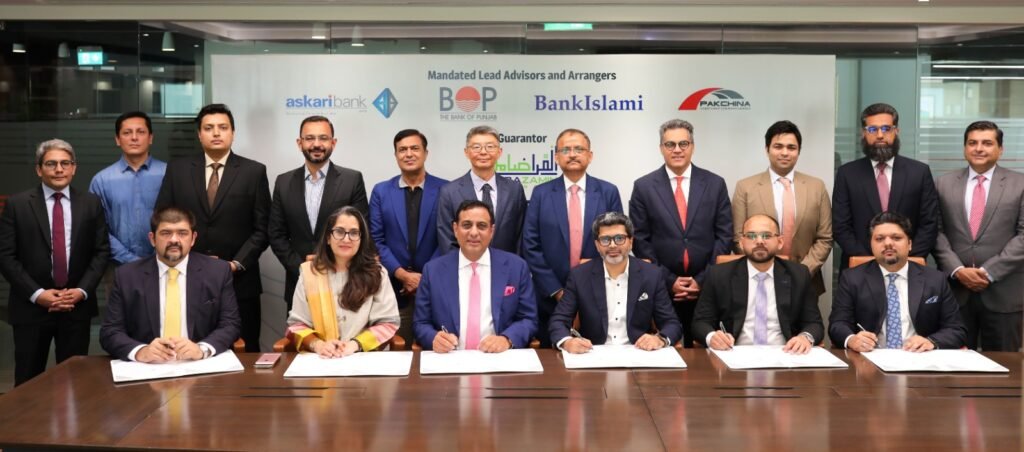
A banking consortium led by The Bank of Punjab, in partnership with InfraZamin Pakistan Limited, has achieved the financial close of a PKR 4.76 billion 10-year Islamic syndicated term finance facility for Air Link Communication Limited and Select Technologies Limited. The financing will support the expansion of smartphone, consumer electronics, and home appliance manufacturing at the Sundar Green Special Economic Zone, boosting local production, employment, and Pakistan’s industrialization agenda. Read More: https://theboardroompk.com/sbp-caps-minimum-savings-profit-protection-at-rs10-million-to-promote-investpak-and-government-securities/ KARACHI: A consortium of leading financial institutions, managed by The Bank of Punjab (BOP) and supported by InfraZamin Pakistan Limited, has successfully closed a PKR 4.76 billion 10-year Islamic Syndicated Term Finance Facility for Air Link Communication Limited and its wholly owned subsidiary Select Technologies Limited. The financing will fund the expansion of advanced manufacturing facilities at the Sundar Green Special Economic Zone, strengthening Pakistan’s domestic production of smartphones, consumer electronics, and home appliances while supporting the country’s import substitution and industrial development strategy. Banking Consortium Backs Landmark Islamic Financing The financing consortium comprises The Bank of Punjab, Askari Bank Limited, BankIslami Pakistan Limited, and Pak China Investment Company Limited, which acted as Mandated Lead Advisors and Arrangers (MLAAs). InfraZamin Pakistan Limited provided a PKR 3.57 billion credit guarantee, enabling the companies to secure a 10-year financing facility with improved pricing and an extended repayment tenure. The Bank of Punjab also served as the Intercreditor Agent, Investment Agent, Security Agent, Account Bank, and Shariah Advisor for the transaction. Expansion to Boost Local Manufacturing The financing will enable Air Link and Select Technologies to expand manufacturing capacity for smartphones, consumer electronics, and home appliances at the Sundar Green Special Economic Zone. The investment is expected to support Pakistan’s industrialization goals by increasing local production and reducing reliance on imported electronic products. As part of the project, a 1-megawatt solar power plant will also be installed to lower operating costs while reducing carbon emissions by an estimated 700 tonnes annually. Project to Produce Over One Million Smartphones Annually According to the companies, the expanded facility is expected to manufacture more than one million affordable smartphones each year, helping improve digital access and internet connectivity across Pakistan. The project is also expected to create approximately 450 direct jobs within five years, with 25% to 30% of positions reserved for women, promoting greater female participation in Pakistan’s manufacturing sector. Air Link Strengthens ‘Made in Pakistan’ Vision Air Link Communication Limited is one of Pakistan’s leading technology companies engaged in the distribution, retail, and manufacturing of mobile phones and consumer electronics. The company partners with several global brands, including Samsung, Apple (Authorized Reseller), Xiaomi, TECNO, itel, Acer, and iMiki. Its subsidiary, Select Technologies Limited, manufactures smartphones and consumer appliances locally through partnerships with Xiaomi and Hisense. The transaction follows Select Technologies’ successful Initial Public Offering (IPO), reflecting growing investor confidence in Pakistan’s electronics manufacturing sector. CEO Says Financing Will Drive Innovation and Employment Commenting on the transaction, Muzzaffar Hayat Piracha, Chief Executive Officer of Air Link Communication Limited, said the financing would accelerate the company’s “Made in Pakistan” strategy. He said the 10-year financing facility backed by InfraZamin would support innovation, product expansion, and the creation of direct and indirect employment opportunities, particularly for Pakistan’s youth and women. InfraZamin Highlights Industrial Growth Maheen Rahman, Chief Executive Officer of InfraZamin Pakistan Limited, said the financing would strengthen local manufacturing, improve digital inclusion, generate employment, and create export opportunities. She noted that collaboration between commercial banks and development finance institutions demonstrates how innovative financing structures can support sustainable industrial investment. Banks Call Transaction a Milestone for Islamic Finance Officials from The Bank of Punjab, Askari Bank, BankIslami Pakistan, and Pak China Investment Company described the transaction as a landmark achievement for Pakistan’s industrial financing landscape. They said the blended finance structure, supported by InfraZamin’s credit guarantee, demonstrates the growing role of innovative Islamic financing solutions in mobilizing long-term private capital for strategic industrial investments. The consortium added that the transaction establishes a new benchmark for Islamic syndicated financing while reinforcing confidence in Pakistan’s manufacturing sector and sustainable economic development.

Government Approves NBFC Inclusion in Apna Ghar Scheme to Expand Housing Finance Access
Pakistan

Government Approves NBFC Inclusion in Apna Ghar Scheme to Expand Housing Finance Access

The federal government has approved the inclusion of lending Non-Banking Finance Companies (NBFCs) as Participating Financial Institutions under the Prime Minister’s Apna Ghar Program (PM-APG). The move is expected to broaden access to affordable housing finance by allowing eligible NBFCs and microfinance companies to offer subsidized home loans to underserved segments across Pakistan. Read More: https://theboardroompk.com/ayatollah-ali-khamenei-funeral-begins-as-millions-gather-in-tehran/ ISLAMABAD: The federal government has approved the inclusion of lending Non-Banking Finance Companies (NBFCs) as Participating Financial Institutions (PFIs) under the Prime Minister’s Apna Ghar Program (PM-APG), significantly expanding access to affordable housing finance for first-time homebuyers. The decision follows a proposal by the Securities and Exchange Commission of Pakistan (SECP) and is aimed at extending housing finance beyond traditional banking channels to reach a larger segment of the population. NBFCs to Offer Housing Loans Under Apna Ghar Program Under the approved framework, eligible non-banking housing finance companies and investment finance companies will be able to provide home loans of up to PKR 10 million under the Apna Ghar Scheme. Meanwhile, microfinance companies participating in the program will be authorized to extend housing loans of up to PKR 5 million, enabling lower-income households to access affordable financing options. The inclusion of NBFCs is expected to increase competition in the housing finance market while improving access for individuals with limited relationships with conventional banks. Subsidized Home Loans for First-Time Buyers The government’s housing scheme continues to offer attractive financing terms for eligible first-time homebuyers. Successful applicants can obtain home financing with repayment periods of up to 20 years, while benefiting from a subsidized 5% mark-up rate for the first 10 years of the loan. The program also includes risk coverage measures designed to support both borrowers and participating financial institutions. SECP Issues Regulatory Framework for Participating NBFCs Following the approval, the SECP has introduced a comprehensive regulatory framework outlining the operational requirements for NBFCs participating in the scheme. The guidelines cover: The framework aims to ensure responsible lending practices while maintaining transparency and financial stability. Move Expected to Boost Financial Inclusion The inclusion of NBFCs under the Prime Minister’s Apna Ghar Program is expected to strengthen Pakistan’s housing finance ecosystem and improve financial inclusion. By allowing a wider range of financial institutions to participate, the government aims to make home ownership more accessible for underserved communities and middle-income households across the country. Implementation of the initiative will take place through direct lending by eligible NBFCs as well as partnerships with banks and development finance institutions where required.

Lucky Investments Launches Lucky Islamic Dividend Yield Fund to Expand Shariah-Compliant Investment Options
Pakistan

Lucky Investments Launches Lucky Islamic Dividend Yield Fund to Expand Shariah-Compliant Investment Options

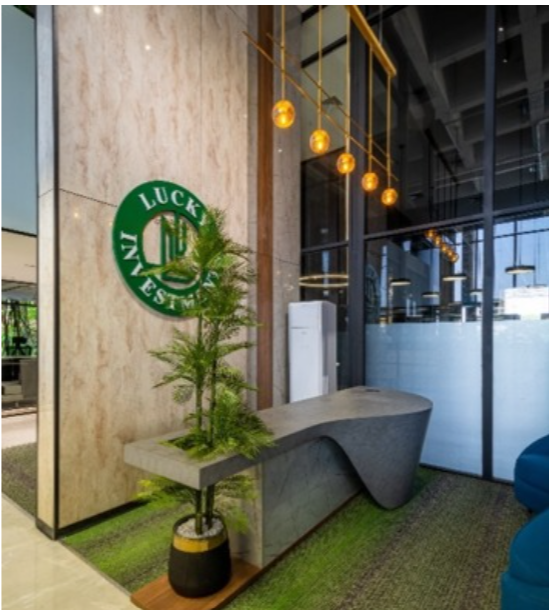
Lucky Investments Limited has launched the Lucky Islamic Dividend Yield Fund (LIDYF), a new open-end Shariah-compliant equity fund aimed at providing investors with competitive Halal returns through investments in dividend-paying listed companies while offering long-term capital appreciation. The Fund expands the company’s Islamic investment portfolio and is designed for investors seeking sustainable dividend income, professional portfolio management, and diversified exposure to high-quality Shariah-compliant equities. KARACHI: Lucky Investments Limited has announced the launch of the Lucky Islamic Dividend Yield Fund (LIDYF), an open-end Shariah-compliant equity fund designed to provide investors with competitive Halal returns through investments in dividend-yielding Shariah-compliant listed companies while offering the potential for long-term capital appreciation. The launch comes amid growing demand for Islamic investment products in Pakistan and further strengthens Lucky Investments’ portfolio of Shariah-compliant financial solutions. Lucky Islamic Dividend Yield Fund Aims to Deliver Halal Income and Long-Term Growth The Lucky Islamic Dividend Yield Fund has been designed for investors seeking sustainable dividend income alongside long-term capital appreciation through investments in high dividend-paying Shariah-compliant listed companies. According to Lucky Investments, the Fund follows a disciplined investment strategy under the supervision of professional portfolio managers while maintaining prudent risk oversight. By focusing primarily on quality dividend-paying Shariah-compliant companies listed on the stock exchange, the Fund aims to generate regular Halal income while helping investors build long-term wealth. Lucky Investments Expands Its Islamic Investment Portfolio With the introduction of the Lucky Islamic Dividend Yield Fund, Lucky Investments has broadened its suite of Islamic investment products to serve investors with varying financial goals and risk appetites. The company’s Shariah-compliant offerings now include solutions for: The expanded product range is intended to provide investors with greater flexibility in building diversified Islamic investment portfolios. CEO Highlights Commitment to Shariah-Compliant Investing Commenting on the launch, Mohammad Shoaib, CFA, Chief Executive Officer of Lucky Investments Limited, said: “Lucky Islamic Dividend Yield Fund reflects our commitment to provide investors innovative, professionally managed Shariah-compliant investment solutions. Dividend-paying equities have historically played an important role in long-term wealth creation, and this Fund enables investors to participate in quality businesses while seeking regular Halal income and capital appreciation through a disciplined investment approach.” He added that dividend-paying equities have consistently contributed to long-term wealth creation and that the Fund provides investors with an opportunity to participate in quality businesses while earning regular Halal income. Who Can Invest in the Lucky Islamic Dividend Yield Fund? The Fund is particularly suitable for investors looking for: Investors can subscribe through Lucky Investments’ nationwide branch network, the digital investor portal, the Lucky Funds mobile application, and the company’s authorized distribution partners across Pakistan. Rising Demand for Islamic Mutual Funds in Pakistan Pakistan’s Islamic asset management industry continues to witness steady growth as more investors seek Shariah-compliant investment options that combine ethical investing with competitive returns. Dividend-focused Islamic equity funds are increasingly becoming a preferred choice for investors aiming to generate regular income while achieving long-term capital appreciation.

GO Petroleum Shutdown Rumors: Sitara Petroleum Breaks Silence as Market Speculation Intensifies
Pakistan

GO Petroleum Shutdown Rumors: Sitara Petroleum Breaks Silence as Market Speculation Intensifies

KARACHI: GO Petroleum shutdown rumors have spread rapidly across social media, creating uncertainty among fuel consumers, investors, and dealers across Pakistan. Images and online claims suggesting that Gas & Oil Pakistan Limited (GO Petroleum) had ceased operations fueled widespread speculation, prompting one of the company’s largest business partners to publicly address the reports. Sitara Petroleum Service Limited (SPSL), Pakistan’s largest dealer operating under the GO Petroleum brand, has clarified that it has received no official communication indicating that GO Petroleum is shutting down its operations. The statement comes as market participants closely monitor developments in Pakistan’s petroleum sector, where unverified reports can quickly affect investor confidence and consumer sentiment. SPSL Responds to GO Petroleum Shutdown Rumors Responding to questions raised by Mettis Global, SPSL Chief Executive Officer Zaheer Baig dismissed the growing speculation surrounding GO Petroleum. According to the CEO, SPSL has not received any official information confirming that GO Petroleum has suspended or intends to suspend its business operations. He added that the company does not comment on market speculation or unverified reports, maintaining its long-standing policy of responding only to officially confirmed developments. The clarification marks the first public response from a major stakeholder directly associated with GO Petroleum since the rumors began circulating. SPSL Operates the Largest GO Petroleum Dealer Network The market’s attention is understandable given SPSL’s significant relationship with GO Petroleum. According to the company’s April 2026 Initial Public Offering (IPO) Prospectus, SPSL operates 61 retail fuel stations across Pakistan. Of these, 54 stations operate under the GO Petroleum brand, making SPSL the largest dealer in GO Petroleum’s nationwide retail network by sales volume. The remaining seven fuel stations operate under the Aramco brand. Given this extensive partnership, any confirmed disruption at GO Petroleum would naturally raise concerns regarding fuel supply chains, dealer operations, logistics, and customer services. Sitara Petroleum Says Business Continues Normally SPSL has sought to reassure customers and investors by confirming that its retail fuel stations and logistics operations continue without interruption. The company stated that its day-to-day business activities remain fully operational. Management also emphasized that, as a publicly listed company, SPSL continuously monitors operational risks and maintains comprehensive business continuity and contingency plans to safeguard its operations against unforeseen events. However, the company declined to speculate on hypothetical scenarios regarding GO Petroleum’s future. Investors Await Official Statement from GO Petroleum The absence of any official statement from GO Petroleum has continued to fuel public curiosity. While social media reports can spread rapidly, listed companies are generally required to disclose material developments through the appropriate regulatory channels. SPSL reiterated that protecting shareholder interests remains one of its highest priorities and assured investors that any material information requiring disclosure would be communicated promptly in accordance with regulatory requirements. According to the company, no such event has occurred to date. No Confirmation of Shutdown As of the filing of this report, GO Petroleum has not issued any official statement confirming or denying the shutdown rumors circulating online. Until an official announcement is made by GO Petroleum or the relevant regulatory authorities, claims regarding the company’s closure remain unverified. For consumers, dealers, and investors, SPSL’s clarification indicates that business operations linked to its GO-branded retail network continue without disruption despite the ongoing speculation. The GO Petroleum shutdown rumors illustrate how quickly unverified information can influence sentiment in Pakistan’s energy sector. For now, Sitara Petroleum maintains that it has received no official communication suggesting GO Petroleum is closing its operations, and its own retail and logistics businesses continue to operate normally.

Scroll to Top