
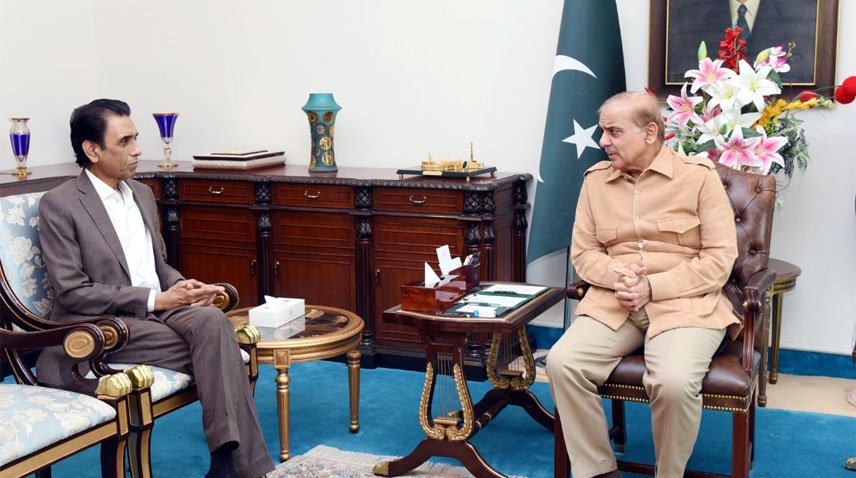
Prime Minister Shehbaz Sharif on Thursday approved an increase in ECC membership by including Federal Minister for Education Khalid Maqbool Siddiqui in the Cabinet’s Economic Coordination Committee. The move comes as the government continues efforts to strengthen economic decision making and coordination at the federal level.
According to an official statement, the prime minister expressed confidence that Khalid Maqbool Siddiqui would actively participate in the committee’s work and contribute toward national development and economic progress.
“I am hopeful that Khalid Maqbool Siddiqui will play an active role as a member of the ECC and will make his full contribution toward the development of the country and the nation,” the prime minister said.
ECC Holds Key Role in Economic Decisions
The Economic Coordination Committee remains one of the most influential cabinet bodies in Pakistan. The committee handles major economic and financial matters and reviews urgent policy decisions before they receive formal approval from the federal cabinet.
The ECC membership includes senior federal ministers and top government officials linked to finance, trade, energy, planning, and economic affairs. The committee works as a fast track platform for addressing pressing economic challenges facing the country.
Officials say the body plays a central role in decisions related to subsidies, import policies, energy pricing, financial approvals, and economic reforms.
Finance Minister Usually Chairs ECC Meetings
The committee operates under the federal cabinet and is generally chaired by the Finance Minister. However, Prime Minister Shehbaz Sharif may chair meetings when necessary, especially during periods of major economic importance or policy discussions.
The addition of Khalid Maqbool Siddiqui is being viewed as an effort to broaden representation within the committee and strengthen coordination between different ministries.
Government officials believe expanding ECC membership can improve policy consultation and help ministries work more closely on economic priorities linked to education, development, and public welfare.
Government Focuses on Economic Stability
The development comes at a time when Pakistan continues to face economic challenges linked to inflation, fiscal reforms, and global financial uncertainty. The government has recently increased efforts to stabilise the economy through policy reforms and coordination with international financial institutions.
Analysts say decisions taken by the ECC directly influence economic management and investor confidence. The committee’s role has become increasingly important as Pakistan works on fiscal planning, development projects, and economic recovery measures.
The latest inclusion in the ECC membership reflects the government’s attempt to strengthen institutional participation in economic governance and decision making.