Editor pick

Pakistan Jewellers Tax Reform 2026 Sparks Hope After FIA Raid Controversy
Editor pick

Pakistan Jewellers Tax Reform 2026 Sparks Hope After FIA Raid Controversy

Pakistan Jewellers Tax Reform 2026 is quickly becoming one of the most talked-about developments in the country’s gold and jewellery market. At a time when traders are facing uncertainty, raids, inflation, and increasing business pressure, the newly proposed tax mechanism has created fresh hope for thousands of jewellers across Pakistan. The proposed “Special Procedure for Income Tax 2026” under Section 99C of the Income Tax Ordinance 2001 promises to introduce a simpler, transparent, and business-friendly taxation system for the jewellery sector. However, the announcement comes amid rising tensions in Karachi after traders at Karachi Jewellers Centre staged a strong protest against an alleged illegal raid conducted by the Federal Investigation Agency (FIA). The protest forced markets to shut down completely, exposing the growing frustration within Pakistan’s jewellers community. Pakistan Jewellers Tax Reform 2026 Offers Simpler Tax Structure According to All Pakistan Sarafa Gems & Jewellers Association President Qasim Shikarpuri, the proposed system is designed to eliminate unnecessary complications and reduce fear among traders. Under the suggested framework, jewellers will be taxed through a straightforward turnover-based model instead of complicated valuation methods that often create disputes between traders and tax authorities. The proposal introduces separate final tax rates for different segments of the jewellery business, including goldsmiths, retailers, manufacturers, and bullion dealers. Industry representatives believe this categorization could finally bring clarity to a sector that has long struggled with inconsistent taxation policies. Gold Price Fluctuations Push Government Toward Flexible Tax Rules One of the biggest concerns for jewellers has always been the volatile nature of gold prices. The proposed Pakistan Jewellers Tax Reform 2026 directly addresses this issue. Instead of forcing traders to declare the constantly changing monetary value of their stock, jewellers would only need to declare inventory in grams or tola. This move is being welcomed as a practical solution that could save businesses from massive accounting complications caused by daily gold price fluctuations. The proposal also includes simplified tax return procedures, which could reduce paperwork and improve compliance across the sector. Business leaders argue that a less complicated system may encourage more traders to enter the documented economy voluntarily rather than operating informally. Major Relief Proposed for Pakistan’s Jewellery Traders Another major feature attracting attention is the promise that once taxes are paid under the special procedure, jewellers would not face re-assessment or additional proceedings. For years, traders have complained about repeated notices, audits, and alleged harassment by authorities. Many within the jewellery market believe this new approach could restore confidence between businesses and government institutions. The proposal also encourages banking channels and digital payment systems, which aligns with Pakistan’s broader push toward financial transparency and digital economic reforms. Industry experts believe this could help increase tax collection while simultaneously reducing tensions between regulators and traders. Karachi Jewellers Centre Protest Intensifies Pressure on Authorities While hopes are rising around the tax reform proposal, anger among traders escalated dramatically after the alleged FIA operation at Karachi Jewellers Centre in Saddar. Jewellers shut down shops and launched a fierce protest, calling the raid unlawful and demanding immediate action against what they described as harassment of the business community. The association condemned the operation in strong words and demanded a transparent investigation into the incident. The protest highlighted the fragile relationship between enforcement agencies and traders at a time when the government is attempting to build trust with the business sector through new taxation reforms. Pakistan Jewellers Tax Reform 2026 Could Expand Tax Net Supporters of the proposal say the reform is not just about easing business operations. They argue it could play a major role in documenting Pakistan’s economy and expanding the national tax base. By introducing a predictable and trader-friendly system, authorities may finally succeed in bringing more jewellery businesses into the formal economy. Analysts believe the success of the policy will depend heavily on whether the government can balance enforcement with trust-building measures. For now, Pakistan’s jewellers are watching closely. Many see the proposed Pakistan Jewellers Tax Reform 2026 as a potential turning point that could either stabilize the industry or deepen tensions if implementation fails to address traders’ long-standing concerns.

NEPRA Rejects NGC Review Petition, Reaffirms Competitive Power Market Reforms
Editor pick

NEPRA Rejects NGC Review Petition, Reaffirms Competitive Power Market Reforms

The National Electric Power Regulatory Authority (NEPRA) rejected the NGC review petition and reaffirmed its decision to move Pakistan toward a competitive electricity market. The regulator dismissed the petition filed by the National Grid Company (NGC) against the registration of the Central Power Purchasing Agency Guarantee Limited (CPPA-G) as a Special Purpose Agent (SPA) and the approval of the Agency Code. In its detailed order issued on May 13 2026 NEPRA stated that the NGC review petition failed to identify any legal error or provide fresh evidence that could justify a review under the NEPRA Review Procedure Regulations 2009. The Authority said the petition did not meet the legal requirements necessary for reopening the earlier determination. The decision marks another major step in the implementation of the Competitive Trading Bilateral Contract Market (CTBCM) framework in Pakistan’s power sector. NEPRA maintained that the transition toward a direct bilateral market system remains necessary to improve transparency financial discipline and accountability. NEPRA Rejects Centralized Billing Requests The NGC review petition mainly challenged the shift from centralized billing and settlement through CPPA-G to direct contractual arrangements between market participants. NGC requested the continuation of the existing mechanism for recovering Use of Transmission System Charges (UoTSC) and Pak Matiari Lahore Transmission Company (PMLTC) charges. However NEPRA rejected these demands and stated that the CTBCM framework requires direct billing settlement and payment recovery between market participants. The regulator said the old centralized pooling system no longer fits within the new market model. According to the Authority the direct contractual system will force entities to become financially responsible and improve payment discipline in the power sector. NEPRA explained that centralized arrangements often create inefficiencies and weaken accountability among market players. The regulator also stressed that Pakistan’s power sector needs structural reforms to reduce circular debt and improve operational performance. Officials believe competitive market practices can encourage better financial management and reduce long term risks. PMLTC Charges Not Treated as Legacy Contracts The NGC review petition also argued that PMLTC charges should receive the status of legacy pass through liabilities. NEPRA rejected this position and clarified that only Power Purchase Agreements (PPAs) and Energy Purchase Agreements (EPAs) qualify as legacy contracts under the market framework. The Authority stated that transmission related liabilities do not fall within the legal definition of legacy contracts. As a result NEPRA refused to allow continued recovery of transmission charges under older arrangements. The decision strengthens the regulator’s position on implementing a fully competitive electricity market without exceptions that could weaken the new system. Energy experts say the ruling sends a clear message that NEPRA intends to move forward with reforms despite opposition from some stakeholders within the power sector. NEPRA Dismisses Concerns Over Payment Risks NGC also raised concerns about payment security under the direct billing model. The company argued that transmission entities could face higher risks if centralized payment mechanisms ended. However NEPRA dismissed these concerns and stated that centralized systems only redistribute payment risks rather than eliminate them. The Authority maintained that each market participant must take responsibility for managing receivables and contractual obligations. According to the regulator direct contractual arrangements will encourage stronger financial discipline and better risk management practices among electricity sector companies. The Authority also rejected several additional proposals submitted through the NGC review petition. These included requests to introduce a pay first dispute later mechanism extend delayed payment surcharge provisions to transmission charges and grant priority payment status to NGC. NEPRA ruled that such measures would contradict the principles of a competitive bilateral electricity market. The regulator emphasized that no entity should receive special financial protections outside the approved market framework. Competitive Electricity Market Reforms Continue The rejection of the NGC review petition represents another important development in Pakistan’s ongoing electricity sector reforms. The CTBCM framework aims to replace the old centralized power purchasing structure with a market based system. Under the new model electricity buyers and sellers will enter direct contracts instead of relying on a single centralized purchasing entity. Policymakers believe this transition can improve efficiency encourage competition and reduce financial pressures within the power sector. Pakistan’s electricity sector has struggled for years with circular debt delayed payments and governance issues. Authorities hope market reforms will help address these longstanding problems and create a more sustainable energy system. Despite concerns raised by some market participants NEPRA has continued to support reforms designed to modernize the electricity market and improve investor confidence. Analysts believe the successful implementation of the CTBCM framework could reshape Pakistan’s energy landscape and strengthen financial accountability across the sector.

JazzCash Crosses 60 Million Registered Customers, Accelerates Pakistan's Shift to a Cashless Economy
Editor pick, Pakistan

JazzCash Crosses 60 Million Registered Customers, Accelerates Pakistan’s Shift to a Cashless Economy

Karachi: JazzCash, Pakistan’s leading digital financial services provider and a subsidiary of VEON Ltd. (Nasdaq: VEON), has crossed 60 million registered customers, processing PKR 16.8 trillion (approximately USD 59.7 billion) in Gross Transaction Value in the twelve month period ending March 31, 2026, up 56% year-on-year, as demand for digital payments, lending, and disbursement services continued to accelerate The rapid expansion in transaction value was driven by a 47.3% year-on-year jump in twelve-month transaction volume and a 35.8% rise in the average number of transactions per user in Q1 2026, reflecting that existing users are transacting more frequently and across a broader range of services. The platform added ten million registered customers during the last twelve months, reaching 60 million by the end of March 2026, with 29.2 million customers active during Q1 2026. Transaction growth is anchored in a deepening merchant network and a sustained shift to digital point-of-sale. Earlier this year, JazzCash celebrated the onboarding of its one millionth Raast QR-enabled merchant, establishing Pakistan’s largest digital payment acceptance network across corner shops, micro-entrepreneurs, and retailers. The milestone advances the national cashless economy agenda championed by Prime Minister Shehbaz Sharif and the State Bank of Pakistan to promote digital financial inclusion and economic transparency. Murtaza Ali, CEO of JazzCash, said: “The State Bank of Pakistan’s progressive regulatory environment continues to open new frontiers for digital financial services. Building on our payments and lending infrastructure, JazzCash aims to bridge Pakistan’s protection gap through its insurtech vertical, introduce asset fractionalization to bring high-value investments within reach of Pakistanis, and democratize access to stock markets and digital assets. We are also deepening our cross-border remittance capabilities, expanding JazzCash’s regional footprint in the Gulf to make it faster and more convenient for Pakistani nationals abroad to send money home directly to JazzCash wallets.” Across payments, disbursements, and government services, JazzCash’s role as a critical financial infrastructure partner continued to deepen in Q1 2026. QR adoption spread across SMEs and everyday retail, with digital transaction records enabling merchants to build verifiable business histories and access formal credit. Enterprise customers processed payroll through JazzCash at significantly higher volumes, while government welfare transfers reached beneficiaries faster and more reliably through the platform. Federal and provincial bodies also increasingly utilized JazzCash to collect citizen payments, including traffic challans, motorway tolls, and national identification fees, reflecting the accelerating shift toward cashless government services across Pakistan. Digital lending continued to scale. JazzCash enabled the issuance of 202,000 average loans per day in Q1 2026, extending formal credit to individuals and SMEs, including women-led enterprises, that have historically operated outside formal financial channels’.

BingX Names World Champion Enzo Fernández as Global Ambassador Ahead of 2026 FIFA World Cup
Editor pick

BingX Names World Champion Enzo Fernández as Global Ambassador Ahead of 2026 FIFA World Cup

Pakistan, May 13, 2026 – BingX, a leading cryptocurrency exchange and Web3-AI company, today named two-time football world champion Enzo Fernández as its Global Ambassador. The partnership builds on BingX’s global sports partnership strategy following its recent partnership with Scuderia Ferrari HP and renewal with Chelsea FC, arriving at a pivotal moment ahead of the 2026 FIFA World Cup, positioning BingX to engage billions of fans worldwide on football’s greatest stage. As one of the most exciting talents of his generation, Fernández, who plays for Chelsea FC, and represents the Argentina national team, embodies ambition, precision, and resilience. Through this collaboration, BingX aims to connect the precision and performance of elite sport and digital finance, inspiring a new generation of users to take control of their future. The partnership will unfold through global campaigns, digital experiences, and fan-focused initiatives throughout the 2026 World Cup period and beyond. This announcement marks a significant milestone in BingX’s global expansion and evolution of its brand identity as a premium, globally recognized platform. Following its partnership with Chelsea FC in 2024 and a multi-year collaboration with Scuderia Ferrari HP in early 2026, Enzo Fernández has become the company’s first individual athlete Global Ambassador. Fernández’s journey from Buenos Aires to the pinnacle of world football mirrors BingX’s own trajectory of growth, determination, and global ambition. “This partnership marks an important step in BingX’s growth across Latin America,” said Pablo Monti, Spokesperson of BingX. “Enzo Fernández represents a rare combination of adaptability, intelligence, and control under pressure. These qualities strongly resonate with BingX and reflect the mindset behind how BingX helps users navigate fast-moving financial markets with confidence across crypto, stocks, forex, commodities, and beyond.” “I’m proud to join BingX as a Global Ambassador,” said Enzo Fernández. “For me, success is built in the unseen moments: the discipline, the belief, and the consistency behind every decision. That mindset is what drew me to BingX. It’s a platform known for trust and reliability, and I’m looking forward to the journey ahead and what we can build over time. Together, we want to inspire people to trust themselves, take control, and build their own path forward.”

Trademark, Copyright, Patent Services to go fully digital under six-month reform drive: DG IPO-Pakistan
Business, Editor pick

Trademark, Copyright, Patent Services to go fully digital under six-month reform drive: DG IPO-Pakistan

KARACHI: Director General of the Intellectual Property Organization of Pakistan, Noman Aslam, announced that IPO Pakistan has launched an aggressive six-month digital transformation strategy aimed at modernizing Pakistan’s intellectual property ecosystem through automation, artificial intelligence, and online complaint management systems. The initiative is intended to make trademark, copyright, and patent services faster, more transparent, and business-friendly. Speaking during his visit to the Karachi Chamber of Commerce & Industry, Noman Aslam said IPO Pakistan is moving away from traditional paperwork-based procedures toward a modern digital framework designed to reduce delays, improve examination quality, and minimize litigation linked to trademark disputes and registration issues. The meeting was attended by KCCI President Muhammad Rehan Hanif, Senior Vice President Muhammad Raza, former President Abdullah Zaki, members of the Executive Committee, and senior IPO officials. The DG explained that IPO Pakistan mainly serves as a facilitating and coordinating body, while complaints regarding infringement, piracy, counterfeiting, and unauthorized use are referred to relevant enforcement agencies depending on the nature of the violation. He said Pakistan Customs handles border-related infringements and piracy, the Federal Investigation Agency deals with copyright-related cases, while police manage trademark and market-level violations. Highlighting ongoing reforms, Noman Aslam informed participants that an Online Complaint Management System (CMS) has been launched and shared with 15 major chambers of commerce across Pakistan. The portal allows businesses to electronically file complaints and monitor cases online without visiting IPO offices. Chambers have also been given representation in IPO’s Enforcement Committees. He urged KCCI to spread awareness of the CMS among its members, particularly SMEs and startups, to help them benefit from the track-and-trace complaint mechanism designed to reduce paperwork and unnecessary visits. He added that IPO Pakistan is working on integrating its CMS with FIA and other law enforcement agencies to establish complete digital tracking of IP complaints, with a target of resolving cases within 30 days. The organization is also implementing a six-month roadmap focused on digitalization, automation, and institutional modernization while conducting webinars, workshops, and training sessions in collaboration with chambers and trade bodies to strengthen Pakistan’s innovation and knowledge economy. Responding to concerns regarding delays and workforce limitations, Noman Aslam said recent recruitments had helped reduce pending cases, but the organization was still dissatisfied with the pace of work. This prompted the adoption of AI-powered systems and automated processes aimed at improving transparency, consistency, and efficiency in trademark and patent examinations. He said IPO Pakistan has introduced job descriptions, performance benchmarks, and KPIs while continuously deploying AI-assisted technologies to improve service delivery. He added that more digital and AI-based services would be introduced over the next six months. Discussing Pakistan’s international obligations, he said trademark rules and procedures are being updated, while the Patent Ordinance 2000 is also being revised in line with global technological and business developments. Following stakeholder consultations, the draft amendments will soon be forwarded to the ministry and Cabinet for approval, while copyright laws are also being modernized. Earlier, KCCI President Muhammad Rehan Hanif highlighted concerns of the business community regarding delayed implementation of intellectual property laws. He said lengthy trademark and copyright registration procedures create major difficulties for genuine entrepreneurs and innovators, often allowing counterfeit or deceptively similar products and brand names to enter the market, causing financial and reputational damage to original businesses. He stressed the need to improve awareness regarding intellectual property laws, trademark protection, and enforcement procedures, particularly for SMEs and startups. He proposed introducing a user-friendly digital trademark search and pre-screening facility that would allow businesses to instantly verify the availability of brand names, logos, and trademarks before filing applications, integrated with online fee submission and application tracking systems. Muhammad Rehan Hanif also pointed out that many businesses suffer losses when misleading or deceptively similar names are approved, forcing companies into lengthy appeals and opposition proceedings. He urged IPO Pakistan to adopt stronger scrutiny mechanisms at the initial examination stage to prevent unnecessary litigation and market confusion. He further called for clearer and more widely publicized enforcement mechanisms for trademark infringement, copyright violations, and counterfeiting cases, noting that many businesses remain unaware whether complaints should be directed to IPO Pakistan, FIA, police, or other agencies. He requested IPO Pakistan to issue comprehensive complaint-handling guidelines and awareness material, assuring that KCCI would actively share such information with its members and the wider business community.

Spotify Marks 20th Anniversary with “Spotify 20: Your Party of the Year(s)” – A Personalized In-App Experience Celebrating Fans’ Listening Journeys
Editor pick

Spotify Marks 20th Anniversary with “Spotify 20: Your Party of the Year(s)” – A Personalized In-App Experience Celebrating Fans’ Listening Journeys

To celebrate its 20th anniversary, Spotify is giving listeners a special gift: a fully personalized look at their entire music history. Starting today, fans can unlock the “Spotify 20: Your Party of the Year(s)” experience within the Spotify app, offering a nostalgic and highly shareable experience that brings their listening journey to life.  The experience will include never-before-shared data for users to look back at their time on Spotify since they first joined, including: To top it all off, users will get an All-Time Top Songs Playlist—a collection of their top 120 tracks, complete with play counts shown, ready to save to their library.  Each data story will come with a custom share card that can be saved, sent to friends or uploaded to social platforms like Instagram.  To find it, simply open the Spotify mobile app and search “Spotify 20” or “Party of the Year(s)” – or visit spotify.com/20 on a mobile device. Designed as a personalized time capsule, the experience captures the moments that defined listeners’ music journeys, and celebrates the artists and fans who have shaped Spotify and music culture over the past 20 years. You can find more details on ourFor the Record blog here.

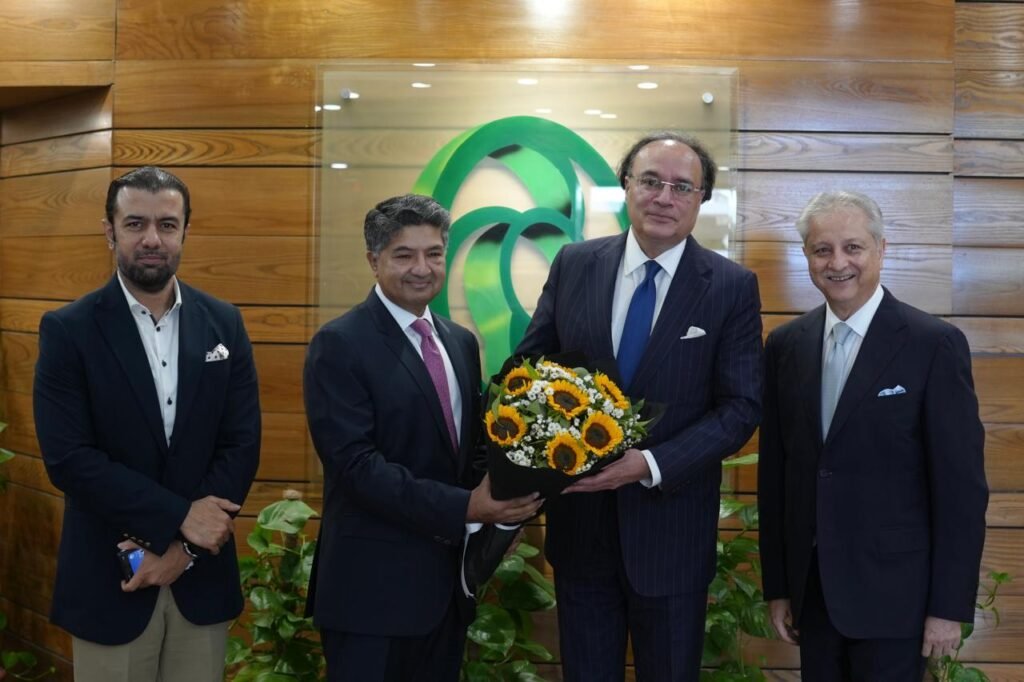
Karachi: Mr. Atif Ikram Sheikh, President FPCCI, has apprised that a high-profile Chinese trade & industry delegation – comprising over 50 prominent business leaders and investors – visited the Federation House in Karachi on Monday to engage with local industrialists, traders and investors – and, explore new avenues for economic cooperation. Mr. Atif Ikram Sheikh explained that the visit, officially facilitated by Pakistan’s Ambassador to China, H. E. Khalil Hashmi, marks one of the most significant and largest industrial and investment delegations from China to Pakistan in history. The Ambassador also announced that Pakistan is going to organize an export promotion exhibition in China – comprising of 18+ sectors representing key areas of Pakistani economy and potential exports. Pakistan’s Ambassador to China, H. E. Mr. Khalil Hashmi, emphasized the strategic importance of this engagement. Our primary goal is to effectively transform our historic diplomatic and strategic friendship into a sustainable, robust economic partnership. H. E. Mr. Khalil Hashmi added that this delegation's presence in FPCCI Head Office in Karachi is a testament to the growing desire for industrial collaboration, technology transfer and long-term joint ventures between the private sectors of our two great nations – and, we are fully committed to facilitating these vital connections. Mr. Saquib Fayyaz Magoon, SVP FPCCI, informed that the delegation held important Business-to-Business (B2B) discussions with Pakistani entrepreneurs. Both sides reached a strong consensus on the urgent need to strengthen bilateral trade relations through direct investment, industrial relocation, technology transfer and joint ventures. Mr. Saquib Fayyaz Magoon highlighted that the visiting delegates represent a diverse and strategic range of key economic sectors; including mines and minerals, chemicals, textiles, manufacturing, renewable energy, information technology, the automobile industry, food processing and agriculture. Mr. Abdul Mohamin Khan, VP & Regional Chairman Sindh, FPCCI, echoing these sentiments, elaborated that the leadership of the Federation of Pakistan Chambers of Commerce and Industry (FPCCI) appreciates the transformative potential of this engagement for the economy of Pakistan and employment generation. Mr. Abdul Mohamin Khan stressed that, to successfully boost exports to China, Pakistan must strategically shift its focus toward value-added products and stringent quality control. He noted that there are vast, lucrative opportunities for Chinese investment – particularly in industries and manufacturing consisting of multiple, diverse sectors – which will accelerate and enrich broad-based economic cooperation. Mr. Nasir Khan, VP FPCCI, urged local companies to capitalize heavily on Chinese expertise, modern technology, extensive industrial experience and global accomplishments. He urged Pakistani traders to use these interactions to actively explore new trade routes and investment avenues. Furthermore, he remarked that expanding fraternal ties into the private sector and translating them into robust economic cooperation will be a genuine game-changer. Mr. Shabbir Mansha, Chairman of the Pakistan-China Business Council of FPCCI, reinforced the immediate and profound need for consistent trade promotion and B2B activities between Pakistan and China. He noted that sustained interaction is the only viable path to bridging the existing trade gap; fostering mutual growth and ensuring that diplomatic goodwill yields tangible economic prosperity for the people of Pakistan.
Business, Editor pick

High-Profile Chinese Trade Delegation Visits FPCCI Karachi to Bolster Economic Ties and Joint Ventures Atif Ikram Sheikh, President FPCCI

Karachi: Mr. Atif Ikram Sheikh, President FPCCI, has apprised that a high-profile Chinese trade & industry delegation – comprising over 50 prominent business leaders and investors – visited the Federation House in Karachi on Monday to engage with local industrialists, traders and investors – and, explore new avenues for economic cooperation. Mr. Atif Ikram Sheikh explained that the visit, officially facilitated by Pakistan’s Ambassador to China, H. E. Khalil Hashmi, marks one of the most significant and largest industrial and investment delegations from China to Pakistan in history. The Ambassador also announced that Pakistan is going to organize an export promotion exhibition in China – comprising of 18+ sectors representing key areas of Pakistani economy and potential exports. Pakistan’s Ambassador to China, H. E. Mr. Khalil Hashmi, emphasized the strategic importance of this engagement. Our primary goal is to effectively transform our historic diplomatic and strategic friendship into a sustainable, robust economic partnership. H. E. Mr. Khalil Hashmi added that this delegation’s presence in FPCCI Head Office in Karachi is a testament to the growing desire for industrial collaboration, technology transfer and long-term joint ventures between the private sectors of our two great nations – and, we are fully committed to facilitating these vital connections. Mr. Saquib Fayyaz Magoon, SVP FPCCI, informed that the delegation held important Business-to-Business (B2B) discussions with Pakistani entrepreneurs. Both sides reached a strong consensus on the urgent need to strengthen bilateral trade relations through direct investment, industrial relocation, technology transfer and joint ventures. Mr. Saquib Fayyaz Magoon highlighted that the visiting delegates represent a diverse and strategic range of key economic sectors; including mines and minerals, chemicals, textiles, manufacturing, renewable energy, information technology, the automobile industry, food processing and agriculture. Mr. Abdul Mohamin Khan, VP & Regional Chairman Sindh, FPCCI, echoing these sentiments, elaborated that the leadership of the Federation of Pakistan Chambers of Commerce and Industry (FPCCI) appreciates the transformative potential of this engagement for the economy of Pakistan and employment generation. Mr. Abdul Mohamin Khan stressed that, to successfully boost exports to China, Pakistan must strategically shift its focus toward value-added products and stringent quality control. He noted that there are vast, lucrative opportunities for Chinese investment – particularly in industries and manufacturing consisting of multiple, diverse sectors – which will accelerate and enrich broad-based economic cooperation. Mr. Nasir Khan, VP FPCCI, urged local companies to capitalize heavily on Chinese expertise, modern technology, extensive industrial experience and global accomplishments. He urged Pakistani traders to use these interactions to actively explore new trade routes and investment avenues. Furthermore, he remarked that expanding fraternal ties into the private sector and translating them into robust economic cooperation will be a genuine game-changer. Mr. Shabbir Mansha, Chairman of the Pakistan-China Business Council of FPCCI, reinforced the immediate and profound need for consistent trade promotion and B2B activities between Pakistan and China. He noted that sustained interaction is the only viable path to bridging the existing trade gap; fostering mutual growth and ensuring that diplomatic goodwill yields tangible economic prosperity for the people of Pakistan.

When our borders are secure, factory wheels keep turning, markets stay vibrant, and trade flourishes, Says Zubair Motiwala
Business, Editor pick

When our borders are secure, factory wheels keep turning, markets stay vibrant, and trade flourishes, Says Zubair Motiwala

KARACHI: Zubair Motiwala, Patron-in-Chief of the SITE Association of Industry Karachi, has said that the brave soldiers of the Pakistan Army are not merely the defenders of our borders — they are the guardians of our businesses, our industries, and our entire economy. Addressing the prestigious Maarka-e-Haq ceremony, Zubair Motiwala said, “When our borders are secure, factory wheels keep turning, markets stay vibrant, and trade flourishes. The courage and sacrifices of our armed forces are not just a matter of national pride — they are the very foundation upon which our economic progress rests.” He further emphasised that Pakistan’s business and industrial community has always held the selfless sacrifices of the armed forces in the highest regard. “It is our collective duty to place national interests above commercial gains and stand in solidarity with our armed forces on every front,” he added. Mr. Motiwala urged business community to treat the strengthening of Pakistan’s economy as a sacred national responsibility, stressing that a robust economy is the surest guarantee of a strong defence. The ceremony was attended by Sector Commander ISPR Sindh, FPCCI Senior Vice President Saquib Fayyaz Magoon, Muhammad Farhan Ashrafi, Former Vice President, Khalid Riaz former SVP & Tahir Goreja VP of SITE Association of Industry, along with a large number of distinguished figures from the trade, industrial, and civil society sectors.

Editor pick

Pakistan 5G Services Rollout Set for Mid-August Amid Low Availability of 5G Handsets

Pakistan 5G services are expected to launch commercially across the country by mid-August this year as telecom companies accelerate preparations for next-generation internet services. The move aims to provide users with faster internet speeds, better streaming quality, and improved digital connectivity. However, the telecom sector faces a major challenge due to the low availability of 5G-enabled smartphones in Pakistan. Industry officials say only around 5% of mobile handsets currently in use support 5G technology. Despite the challenge, telecom operators have already started installing infrastructure and importing equipment to prepare for the nationwide rollout. Telecom Operators Prepare for Commercial Launch Pakistan conducted a major 5G spectrum auction in March this year and generated nearly $507 million in revenue. The government sold 480 MHz spectrum to telecom companies for next-generation mobile services. Three major telecom operators — Jazz, Zong, and Ufone — secured frequencies during the auction to expand 5G operations. According to the Pakistan Telecommunication Authority (PTA), the government sold two lots in the 700 MHz band, all five lots in the 2,300 MHz band, all 19 lots in the 2,600 MHz band, and 22 out of 28 lots in the 3,500 MHz band. Jazz emerged as the biggest buyer in the auction. The company acquired 190 MHz spectrum, including frequencies in multiple bands needed for faster and wider 5G coverage. Telecom industry officials confirmed that all operators had already placed orders for 5G equipment and network infrastructure. Some telecom companies have also started testing 5G internet services at selected sites where equipment installation has been completed. Jazz Plans Rapid Expansion of 5G Sites Jazz officials say the company has already launched 5G services at nearly 150 testing sites. The operator now plans aggressive expansion in the coming months. A senior Jazz official said the company aims to install equipment at 1,000 sites during the initial rollout phase. The number may increase to 2,500 sites by December this year. Kazim Mujtaba, President Jazz GSM, said the company wants a phased and disciplined rollout instead of rushing for publicity. “We are deliberately piloting with around 180 sites today and scaling from July as the ecosystem matures,” Mujtaba said. He added that the company would continue expanding where 5G services provide meaningful value to consumers and businesses. iPhone Users May Not Get 5G Until 2027 While Android users may start using Pakistan 5G services later this year, iPhone users are likely to face delays. Officials from the IT and telecom ministry said Apple has informed Pakistani authorities that it may enable 5G services for iPhones in Pakistan only after evaluating the market size in 2027. Currently, Apple does not support 5G connectivity for Pakistani users even though the technology works in many other countries. Industry experts believe high import taxes on iPhones and other premium devices have significantly reduced Apple’s market share in Pakistan. As a result, Apple sees limited commercial incentive to activate 5G services immediately. In contrast, Samsung handsets already support 5G services in Pakistan. Telecom Industry Demands Tax Relief Telecom officials argue that heavy taxation remains one of the biggest obstacles to digital growth in Pakistan. Industry representatives say the telecom sector ranks among the highest taxed industries in the country, especially on mobile recharge services and imported devices. Kazim Mujtaba said telecom companies should be treated as critical infrastructure providers rather than revenue-generating sectors. “At nearly 45%, telecom is among the most heavily taxed sectors. You cannot build a future-ready Pakistan on yesterday’s tax model,” he said. Officials believe reducing taxes on smartphones and telecom services could accelerate the Digital Pakistan vision and increase internet usage nationwide. They also expect internet consumption to rise sharply over the next few years due to growing use of platforms like YouTube and TikTok. Low Availability of 5G Phones Remains a Challenge The shortage of affordable 5G-enabled devices remains a serious hurdle for telecom operators. Industry officials say local manufacturers have started producing 5G smartphones, but supply remains limited compared to demand. Telecom companies are now pushing for a mobile phone installment scheme to increase access to 5G devices. Under the proposal, consumers would buy smartphones through monthly installments. However, telecom companies want strict measures against defaulters. Officials proposed that users who fail to pay installments should face a ban on obtaining SIM cards from any telecom operator in Pakistan. The telecom industry had introduced installment-based mobile financing in the past, but companies faced default rates between 30% and 40%. Zong has reportedly opposed the latest proposal. The company argues that competitors like Jazz and Ufone have associated banking networks that could give them an unfair advantage in financing mobile phones. Despite these concerns, telecom companies remain optimistic that Pakistan 5G services will improve internet quality, support digital businesses, and strengthen the country’s technology sector in the coming years.

Pakistan Must Now Win the “Battle for Economy” After Triumph in “Battle for Truth”, PVMA
Editor pick, Pakistan

Pakistan Must Now Win the “Battle for Economy” After Triumph in “Battle for Truth”, PVMA

Historic Success of “Bunyan-un-Marsoos” Strengthened Pakistan’s Global Standing: Sheikh Umer Rehan KARACHI: Chairman of the Pakistan Vanaspati Manufacturers Association, Sheikh Umer Rehan, paid tribute to the Pakistan Armed Forces and the nation on the completion of one year of the historic “Battle for Truth – Bunyan-un-Marsoos,” calling it a defining moment that enhanced Pakistan’s security, dignity, and international image. In a statement issued on the occasion, Sheikh Umer Rehan said that with the blessings of Almighty Allah, the unity of the nation, and the professionalism and sacrifices of the armed forces, Pakistan achieved a historic success against India. He said the sacrifices of the martyrs brought stability, peace, honor, and global respect to the country. He credited Prime Minister Shehbaz Sharif and Syed Asim Munir for their leadership, saying their vision and strategic approach had transformed Pakistan into a strong and unconquerable defensive power. According to him, the armed forces effectively defeated hostile designs and safeguarded the country’s sovereignty and national dignity. Sheikh Umer Rehan stated that Pakistan is now regarded among the world’s secure and respected nations. He stressed that after succeeding in the “Battle for Truth,” the country must now focus on winning the “Battle for Economy” to transform Pakistan into a true Asian Tiger. He further said Prime Minister Shehbaz Sharif had played a vital role in strengthening the economy through national unity, economic stability, and a development-focused vision, while the armed forces demonstrated Pakistan’s strength globally through courage, sacrifice, and professionalism. The PVMA chairman expressed confidence that unity between the government, armed forces, industrialists, traders, and the public would help Pakistan achieve lasting economic stability and emerge as one of the world’s leading developing economies. He added that nationwide celebrations marking the success of “Bunyan-un-Marsoos” reflected the deep respect and admiration the public and business community hold for the Pakistan Army and its sacrifices. Concluding his remarks, Sheikh Umer Rehan said the people of Pakistan stand shoulder to shoulder with their armed forces and remain ready to make every sacrifice for the country’s defense, development, and prosperity. He reaffirmed that industrialists, traders, and the business community would continue supporting efforts for Pakistan’s economic growth and stability.

Scroll to Top