Business

Nestlé Pakistan's $100 Million Investment in Sustainability Yields Results, Wins OICCI Award
Business

Nestlé Pakistan’s $100 Million Investment in Sustainability Yields Results, Wins OICCI Award

KARACHI: Nestlé Pakistan’s efforts towards creating shared value for people, planet and business were recognized due to its initiatives on Climate & Net Zero, regenerative agriculture and circularity at the 4th Pakistan Climate Conference, as it won the top Climate Champion Award second time in a row. Read More: https://theboardroompk.com/pakistan-car-sales-hit-43-month-high-in-january-2026/ The 2nd Climate Excellence Awards by Overseas Investors Chamber of Commerce & Industry, representative body of over 200 multinational companies from 30 countries and 14 sectors, hosted the 4th Pakistan Climate Conference and the second edition of Climate Excellence Awards that saw over 80 entries this year. Addressing the conference, Federal Minister for Climate Change & Environmental Coordination Dr. Musadik Masood Malik stressed on mobilizing investment and implementing innovative solutions being driven by the upcoming generation to accelerate the country’s transition towards climate-resilient development. “We need to place bets on these young starry-eyed people because they are the future of Pakistan, and they will lead us out of these climate challenges.” Earlier, Federal Minister for Finance & Revenue, Senator Muhammad Aurangzeb in his address said, “OICCI’s 4th Pakistan Climate Conference has underscored the urgency of climate action and the pivotal role private sector plays in driving sustainable solutions.” He also highlighted government’s role to mitigate climate challenges with Pakistan’s access to $1.3 billion in climate financing from the IMF, World Bank and ADB. Jason Avanceña Chief Executive Officer, Nestlé Pakistan said, “Through the Pakistan Climate Conference, OICCI has pushed for actionable recommendations that support Pakistan’s shift towards a more climate- resilient economy. Earlier at Davos, Nestlé also announced an additional USD 60 million investment in Pakistan to support sustainability and green projects, agricultural services transformation, automation and digitalization. This builds on USD 40 million invested between 2023 and 2025, bringing total planned investment to USD 100 million over six years and is a testament to Nestlé’s commitment to Pakistan,” he said. Speaking on the occasion, Sheikh Waqar Ahmad, Head of Corporate Affairs & Sustainability Nestlé Pakistan said, “We are committed to be a force for good, with sustainability at the heart of our business. Our efforts underscore our commitment to creating shared value, as we take significant strides towards a cleaner environment and a more sustainable future.” Nestlé, under its global Net Zero commitments aims to reduce greenhouse gas emissions by 50% till 2030, on the road to Net Zero by 2050. Nestlé Pakistan also achieved more than a 50% reduction in greenhouse gas emissions versus the 2018 baseline through large-scale investments of 9.6MW solar power and a 20- ton-per-hour biomass boiler at Kabirwala. Nestlé also reduced virgin plastic by 33% and introduced recyclable flexible packaging. The company is also supporting collection and recycling of 11,000 tons of packaging waste through its Clean Gilgit-Baltistan Project in line with the UN’s Sustainable Development Goals (SDGs) 13 and 15.


KSE-100 Index Faces Volatility as Bulls Lose Grip
Business

KSE-100 Index Faces Volatility as Bulls Lose Grip

The KSE-100 Index closed Tuesday’s trading session on a cautious note, reflecting the tug-of-war between aggressive intraday buying and heavy sector-led selling. Despite staging a sharp rally earlier in the session, the benchmark index ultimately settled at 182,153.55 points, slipping 186.83 points or 0.10% by the close. What made the session particularly intriguing was the wide intraday swing of over 1,700 points, signaling nervous investor sentiment amid profit-taking in heavyweight sectors. At its peak, the KSE-100 Index surged to 183,216.67 points, while the day’s low touched 181,499.28 points, underscoring how quickly market momentum shifted. KSE-100 Index Trading Activity Signals Heightened Market Churn Market participation remained robust, with 636 million shares traded within the index. However, the advance-decline ratio painted a cautious picture. Out of the 100 constituent companies, 58 stocks closed in the red, while only 39 managed gains, and three remained unchanged. This imbalance highlights how selective buying failed to offset broader-based selling pressure, particularly in financial and technology stocks. Top Losers Pull KSE-100 Index Lower Several index heavyweights weighed heavily on performance. TRG led the decline with a sharp fall of over 9%, followed closely by K-Electric, Allied Bank, Sazgar Engineering, and Habib Bank Limited. From a points perspective, HBL alone erased nearly 170 points from the index, making it the single largest drag of the session. TRG, KEL, AKBL, and Bank Alfalah collectively amplified downside pressure, signaling institutional-level profit booking in the banking and tech space. Energy and Cement Stocks Cushion the KSE-100 Index Despite the overall decline, select sectors provided meaningful support. Engro Holdings emerged as the session’s star performer, contributing almost 493 index points, while Lucky Cement, Fauji Fertilizer, Hub Power, and Cnergyico also played key roles in limiting losses. This divergence reflects a rotation toward defensive and value-driven plays, particularly in cement, fertilizer, and refinery stocks, segments often favored during uncertain market phases. Sector-Wise Performance: Banks vs. Investment Companies The KSE-100 Index was primarily dragged down by commercial banks, which collectively shaved off nearly 565 points. Weakness was also observed in technology, oil & gas exploration, power generation, and textile composite sectors. In contrast, investment banks and securities companies delivered a strong counterbalance, adding close to 495 points, while cement, refinery, fertilizer, and oil marketing companies offered additional upside support. Broader Market Mirrors KSE-100 Index Weakness The cautious mood extended to the broader market, with the All-Share Index closing at 109,435 points, down 0.38%. While total traded volume rose to over 1.06 billion shares, the overall traded value dropped sharply to Rs37.9 billion, indicating reduced conviction behind buying activity. Out of 481 listed companies, only 151 closed higher, while 280 ended lower, reinforcing the day’s risk-off sentiment. High-Volume Stocks Reveal Speculative Interest Trading activity was dominated by K-Electric, Cnergyico, and WorldCall Telecom, with retail-driven stocks once again capturing attention. Notably, Cnergyico stood out, combining high volumes with strong price appreciation often a signal of short-term speculative momentum. Bigger Picture: KSE-100 Index Still a Long-Term Winner Despite the day’s pullback, the broader trend remains undeniably strong. The KSE-100 Index has gained over 56,500 points, or 45%, during the current fiscal year, while calendar-year gains stand at more than 8,000 points, translating into a 4.65% rise so far. This context suggests that recent volatility may reflect healthy consolidation rather than a trend reversal, especially as investors reassess valuations after a historic rally.

Gold Price in Pakistan Signals Fresh Momentum in the Bullion Market
Business

Gold Price in Pakistan Signals Fresh Momentum in the Bullion Market

The gold price in Pakistan moved upward once again on Tuesday, reinforcing gold’s reputation as the country’s most trusted safe-haven asset. As inflation worries persist and global markets send mixed signals, local investors are keeping a close eye on bullion rates and today’s increase has certainly caught attention. According to the All-Pakistan Gems and Jewelers Sarafa Association (APGJSA), the price of 24-karat gold surged by Rs1,500 per tola, pushing rates to a striking Rs526,262 per tola. This upward move reflects both domestic demand pressures and global market dynamics that continue to influence precious metals. Gold Price in Pakistan Today: Latest Market Rates Explained In the local bullion market, gold prices rose across multiple purity categories: • 24-karat gold (per tola) climbed to Rs526,262, compared to Rs524,762 a day earlier.• 24-karat gold (per 10 grams) increased by Rs1,286, reaching Rs451,184.• 22-karat gold (per 10 grams) was quoted higher at Rs413,600, reflecting strong retail demand. In simple terms, gold has added Rs53,000 per tola over the past month, highlighting how quickly prices have accelerated. Since the start of the fiscal year, the gold price in Pakistan has surged by more than Rs176,000 per tola, underlining gold’s role as a hedge against currency depreciation and economic uncertainty. Silver Prices Stay Flat Despite Gold Rally While gold captured headlines, silver remained steady in the domestic market. 24-karat silver continued to trade at Rs8,615 per tola and Rs7,385 per 10 grams, showing no day-on-day change. Although silver has posted moderate gains over the past month and fiscal year, it has clearly lagged behind gold’s explosive performance a trend that suggests investors are prioritizing wealth preservation over industrial demand-linked metals. Why the Gold Price in Pakistan Is Rising Now The recent jump in the gold price in Pakistan isn’t happening in isolation. Several interconnected factors are at play: Global Gold Market Movements Internationally, spot gold hovered near $5,028 per ounce, slightly lower by 0.02 percent from the previous session. Despite this marginal dip, prices remain historically elevated as traders brace for key U.S. economic data that could influence the Federal Reserve’s interest rate strategy. Lower or delayed interest rate cuts typically support gold prices, as bullion becomes more attractive when yields on fixed-income assets weaken. Currency Pressures at Home The Pakistani rupee’s vulnerability against major currencies continues to add upward pressure on local gold prices. Even small movements in the global gold rate can translate into significant jumps in PKR terms. Safe-Haven Demand With geopolitical tensions, global inflation concerns, and uncertain growth outlooks, gold remains the asset of choice for Pakistani households and investors seeking long-term security. What This Means for Investors and Consumers For investors, the rising gold price in Pakistan reinforces gold’s status as a long-term store of value rather than a short-term trading instrument. Analysts suggest that unless global monetary policy tightens unexpectedly, gold prices may remain elevated in the coming months. For consumers, especially those planning weddings or jewelry purchases, today’s rates may prompt cautious buying or strategic waiting depending on global cues later this week. Final Thoughts: Is Gold Headed Higher in Pakistan? As global markets await critical U.S. economic indicators, the gold price in Pakistan is likely to remain sensitive to international developments and local currency trends. Whether you’re an investor, trader, or consumer, one thing is clear: gold continues to shine as Pakistan’s most reliable financial refuge in uncertain times.

Multan Sultans Sale Shakes Pakistan Cricket With a Rs2.45 Billion Deal
Business

Multan Sultans Sale Shakes Pakistan Cricket With a Rs2.45 Billion Deal

The Multan Sultans sale has rewritten the business playbook of the Pakistan Super League (PSL), sending a strong signal to investors, brands, and cricket fans alike. In a landmark auction held in Lahore ahead of PSL’s 11th edition, Walee Technologies acquired the Multan Sultans franchise for a record-breaking Rs2.45 billion, making it the most expensive team sale in PSL history. What makes this deal even more compelling is that the winning bid secures ownership for the next 10 years, reflecting long-term confidence in the commercial future of Pakistan cricket. Why the Multan Sultans Sale Matters for PSL’s Business Ecosystem The Multan Sultans sale is not just about a team changing hands it represents a strategic turning point for PSL’s valuation model. According to auction officials, the base price was set at Rs1.82 billion, drawing inspiration from the earlier sale of the Sialkot franchise at Rs1.85 billion. However, intense bidding momentum pushed the final price far beyond expectations. In practical terms, this means PSL franchises are no longer viewed as short-term sponsorship vehicles. Instead, they are now being positioned as long-term sports media assets, capable of generating value through broadcasting rights, digital monetization, brand partnerships, and fan engagement. A Surprise Twist: From Multan to Rawalpindi? Adding intrigue to the Multan Sultans sale, Walee Technologies CEO Ahsan Tahir announced a potential rebranding of the franchise to Rawalpindi, a move that instantly sparked debate across cricketing circles. Speaking at the ceremony, Tahir teased the crowd with a bold declaration: “Are you ready for a surprise? We will be going for Rawalpindi!” This possible shift underscores a crucial business reality brand geography matters. Rawalpindi, with its larger urban footprint and commercial appeal, could offer expanded sponsorship and fan-base opportunities, especially in digital-first markets. PCB’s Perspective on the Multan Sultans Brand PCB Chairman Mohsin Naqvi acknowledged the emotional and commercial weight of the Multan Sultans sale. While expressing personal attachment to the franchise, he made it clear that financial logic must prevail. He noted that it would be unreasonable to expect a buyer investing Rs2.45 billion to retain a legacy name without flexibility. Naqvi also credited former PCB Chairman Najam Sethi, who conceptualized the franchise in 2017, calling the sale “the culmination of a dream.” From a governance standpoint, this approach signals greater market freedom for franchise owners, a move likely to attract even larger investors in future PSL cycles. Who Is Walee Technologies and Why This Deal Fits Their Strategy Walee Technologies is a global player across media, finance, and technology, already familiar with the PSL ecosystem through its earlier acquisition of PSL livestreaming rights. The Multan Sultans sale aligns perfectly with the company’s digital-first vision, where sports content, data, and fan engagement converge. In business terms, the acquisition strengthens Walee’s vertical integration combining content ownership, distribution, and monetization under one umbrella. From Championship Glory to Ownership Reset The Multan Sultans franchise was launched in 2017 and competed in eight consecutive PSL seasons, clinching the championship title in 2021. However, uncertainty emerged last year when the PCB chose not to renew the ownership agreement with Ali Khan Tareen, temporarily taking control of the team. The Multan Sultans sale now brings closure to that chapter, replacing uncertainty with capital strength and strategic clarity. What the Multan Sultans Sale Signals for Pakistan Cricket In explanatory terms, this record deal highlights three major trends: First, PSL franchise valuations are rising rapidly, reflecting stronger commercial fundamentals. Second, corporate and tech-driven investors are entering sports ownership, bringing innovation and scalability.Third, the PCB is increasingly willing to let market forces shape the league’s future. As Najam Sethi aptly described it, this is not just a PSL moment it could be a turning point for Pakistan cricket’s global business narrative.

Pakistan's Central Bank Chief Defends High Interest Rates Citing Global and Domestic Risks
Business

Pakistan’s Central Bank Chief Defends High Interest Rates Citing Global and Domestic Risks

SBP Governor Jameel Ahmad reaffirmed the need for a tight monetary policy in a speech on February 9, 2026, at the AlUla Conference. Read more: https://theboardroompk.com/symmetry-group-approves-rs1-25bn-investment-plan-for-growth-and-acquisitions/ Despite falling inflation, the central bank holds the policy rate at 10.5%, prioritizing proactive measures to safeguard against future risks. He described high rates as necessary to handle anticipated global and domestic factors that might affect price levels. Preemptive Actions Key to Central Banking Role Ahmad explained that central banks must act timely and effectively to meet core goals. He called preemptive decisions the toughest part of the job, especially when high real interest rates draw criticism for slowing business and growth. Many fail to see looming threats, but the bank retains elevated rates to counter potential inflation drivers from international events and local pressures. Recent months show inflation below the 5-7% target, yet vigilance remains critical. Market Confidence in SBP’s Inflation Outlook The governor highlighted strong credibility, as analysts widely expect inflation to stay in the 5-7% range through this year and next. This consensus reflects trust in SBP’s guidance and policies. While acknowledging stakeholder concerns over borrowing costs, Ahmad emphasized readiness for unforeseen challenges. The stance supports macroeconomic stability over the next two years, avoiding aggressive easing that could undermine gains. Coordination with fiscal measures continues to balance growth aspirations with prudent risk management.

Meezan Bank Posts Rs89 Billion Profit in 2025; Gives Rs 28 Per Share Dividend
Business

Meezan Bank Posts Rs89 Billion Profit in 2025; Gives Rs 28 Per Share Dividend

Meezan Bank reported a Profit After Tax (PAT) of Rs. 89 billion for the year ended December 31, 2025, delivering a strong Return on Equity of 34%. This performance reflects the Bank’s continued commitment to creating sustainable value for its shareholders. Read More: https://theboardroompk.com/water-supply-suspension-halts-industrial-production-in-karachi/ Basic Earnings Per Share (EPS) stood at Rs. 49.54, compared to Rs. 56.62 in 2024. The Board of Directors has approved a final cash dividend of Rs. 7 per share (70%), bringing the total cash dividend for 2025 to Rs. 28 per share (280%), following the interim dividend of Rs. 21 per share (210%) paid during the first nine months of the year. Meezan Bank’s financial position remains robust, with a Capital Adequacy Ratio of 19.2%, well above the regulatory requirement of 11.5%. The Bank’s market capitalization has surpassed USD 3.2 billion, reinforcing its position as one of Pakistan’s most valuable companies. For the year ended 2025, Meezan Bank reported a net spread of Rs. 252.5 billion, compared to Rs. 287.0 billion in the previous year, primarily reflecting the impact of a lower policy rate environment. In contrast, the Bank’s non-funded income recorded strong growth of 13% year-on-year, rising to Rs. 32.6 billion from Rs. 28.9 billion in 2024, highlighting the diversification and resilience of its revenue streams. At year-end, Meezan Bank’s total deposits surpassed a significant milestone, reaching Rs. 3.30 trillion, representing a 28% increase from Rs. 2.58 trillion at the close of 2024. In addition, the Bank’s Roshan Digital Account (RDA) programme recorded cumulative inflows of USD 3.4 billion since inception, capturing 29% of total industry inflows. This achievement further reinforces Meezan Bank’s position as the preferred banking partner for overseas Pakistanis. As at year-end 2025, Meezan Bank’s gross financings stood at Rs. 1.69 trillion. The Bank maintained a strong asset quality profile, with a non-performing financing (NPF) ratio of 1.8%, among the lowest in the industry. Reflecting its prudent risk management practices, the non-performing financing coverage ratio remained robust at 146%. During the year, Meezan Bank also expanded its investment portfolio to Rs. 2.60 trillion, representing a significant growth of 39% compared to the end of 2024.

APNA Microfinance Bank Mobilink Microfinance Merger Moves Into Spotlight
Business

APNA Microfinance Bank Mobilink Microfinance Merger Moves Into Spotlight

The APNA Microfinance Bank Mobilink Microfinance merger has officially entered Pakistan’s financial conversation after the State Bank of Pakistan (SBP) granted approval for due diligence an early but meaningful step toward possible consolidation in the country’s growing microfinance sector. In a letter dated February 6, 2026, the central bank authorized Mobilink Microfinance Bank Limited to initiate a detailed due diligence review of APNA Microfinance Bank Limited (PSX: AMBL). While not a final merger approval, the move has ignited industry speculation about what could become one of the most notable microfinance combinations in recent years. Why the APNA Microfinance Bank Mobilink Microfinance Merger Matters Pakistan’s microfinance industry has been undergoing rapid transformation amid digital banking expansion, rising competition, and regulatory tightening. The APNA Microfinance Bank Mobilink Microfinance merger, if materialized, could reshape market dynamics by combining scale, technology, and outreach. According to SBP’s approval, Mobilink Microfinance Bank is permitted to conduct due diligence strictly in line with applicable laws, rules, and regulatory frameworks. This phase allows Mobilink to examine APNA’s financial health, asset quality, governance structure, and operational risks before deciding whether to proceed. Importantly, the SBP emphasized that this approval does not constitute consent for a merger or acquisition, reinforcing that regulatory oversight remains firm at every stage. Regulatory Framework Behind the Potential Merger If due diligence and negotiations conclude successfully, the proposed transaction would take place under Section 48 of the Banking Companies Ordinance, 1962, which governs bank mergers and amalgamations in Pakistan. SBP has outlined several non-negotiable conditions: Rather than using a table, these conditions can be explained clearly. First, all members of the due diligence team must sign strict confidentiality undertakings, with copies submitted directly to the central bank. Second, the due diligence approval is time-bound, valid for two months, expiring around April 6, 2026. Third, depositors’ funds from neither APNA nor Mobilink may be used at any stage of the proposed transaction. Additionally, SBP has stated that any future merger request will be assessed independently, including a satisfactory funding plan. The regulator also reserves the right to impose additional conditions as it sees fit. What This Means for APNA and Mobilink From a corporate perspective, the APNA Microfinance Bank Mobilink Microfinance merger remains firmly at a preliminary stage. In its official disclosure, APNA confirmed that the development has no immediate impact on its financial position or day-to-day operations. However, market observers view the approval as a strategic signal. Mobilink Microfinance Bank already one of the country’s largest digital microfinance players could significantly expand its footprint by integrating APNA’s network, customers, and regional strengths. For APNA, the process offers a potential pathway to scale, stability, and capital optimization at a time when microfinance institutions are facing margin pressure and rising compliance costs. Bigger Picture: Consolidation in Pakistan’s Microfinance Sector The APNA Microfinance Bank Mobilink Microfinance merger comes amid a broader trend of consolidation across Pakistan’s banking and non-banking financial sectors. Regulators have increasingly encouraged stronger balance sheets, improved governance, and sustainable growth models especially in financial inclusion-driven institutions. While the outcome remains uncertain, the SBP’s decision to allow due diligence suggests that regulatory doors are open, provided transactions are transparent, well-funded, and depositor-safe. What Happens Next? Over the next two months, Mobilink’s due diligence findings will determine whether negotiations progress toward a formal merger proposal. Only after SBP reviews a complete transaction structure including funding sources could final approval even be considered. Until then, the APNA Microfinance Bank Mobilink Microfinance merger remains a developing story one that could signal the next phase of evolution for Pakistan’s microfinance landscape.

High Taxes at 62-65%: Arif Habib Urges Govt to Talk to IMF for Reductions
Business

High Taxes at 62-65%: Arif Habib Urges Govt to Talk to IMF for Reductions

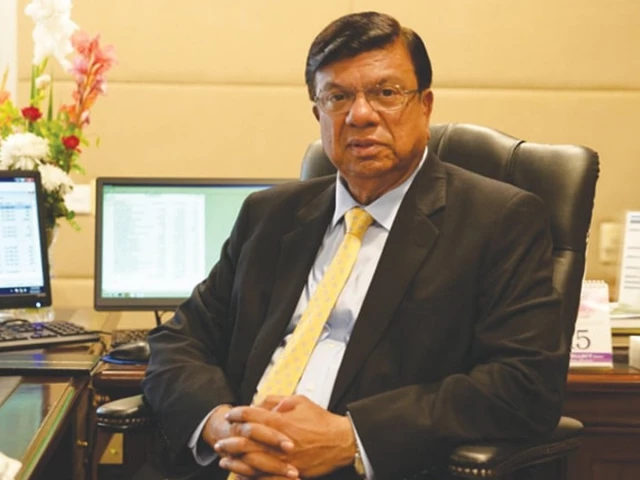
Prominent Pakistani businessman Arif Habib has indicated that the government is poised to negotiate with the IMF for reductions in business taxation rates. Read More: https://theboardroompk.com/pakistan-and-iran-target-enhanced-bilateral-cooperation-amid-regional-talks/ The objective is to alleviate the heavy tax load that discourages investment and hampers economic expansion. Burden of Layered Taxes on Businesses Habib pointed out that businesses face an effective tax rate of 62-65% when combining corporate tax at 29%, super tax, inter-corporate dividend tax, dividend tax, and Section 7E on property income. These multiple impositions, he argued, are a major deterrent to both domestic and foreign investors, contributing to persistently low FDI levels in the economy. Specific Reduction Proposals In discussions with high-level officials, including the prime minister and FBR chairman, Habib learned of plans to approach the IMF for relief. He suggested targeted changes: dropping corporate tax to 27%, eliminating inter-corporate dividend tax, abolishing certain provisions like Section 73, and lowering GST from 18% to 15%. He also called for a single-digit policy rate and stronger security to restore investor trust. Leveraging IMF Program Flexibility Under the ongoing $7 billion EFF, Pakistan must align fiscal policies with IMF guidelines. Recent overachievement on primary surplus targets offers potential room to propose a lower benchmark, generating fiscal space to accommodate tax relief without derailing the program. This approach seeks to foster growth while honoring international obligations. Potential Economic Benefits Lower taxes could encourage business expansion, improve competitiveness, and attract capital inflows critical for long-term stability. Habib shared these insights at the Karachi Literature Festival, underscoring the link between institutional reforms and economic performance.

Pakistan Stock Exchange Weekly Review: A Calm Surface Hiding Powerful Undercurrents
Business

Pakistan Stock Exchange Weekly Review: A Calm Surface Hiding Powerful Undercurrents

The Pakistan Stock Exchange weekly review for the first week of February 2026 tells a story that goes far beyond a near-unchanged index level. While the KSE-100 Index slipped just 44.91 points to close at 184,129.58, the market was anything but quiet beneath the surface. Investor nerves, macroeconomic signals, and sector-specific moves created a week defined by caution rather than conviction. At first glance, the numbers suggest stability. But a closer look reveals why traders chose patience over aggression. Why the Pakistan Stock Exchange Weekly Review Shows Investor Caution Throughout the week, the PSX remained range-bound as concerns grew over a potential super tax on high-earning corporates. This uncertainty discouraged risk-taking, especially in heavyweight sectors. At the same time, global cues particularly developments surrounding a possible US-India trade deal kept investors on alert. Adding to the cautious mood was a sharp rise in government T-bill yields, which made fixed-income instruments more attractive relative to equities. As a result, trading activity stayed selective, with investors rotating into defensive and high-quality names rather than broad-based buying. Market Capitalization Trends in This Pakistan Stock Exchange Weekly Review In rupee terms, total market capitalization edged down slightly to Rs5.43 trillion, reflecting a marginal weekly erosion of just Rs4.42 billion. This minimal change confirms that the market largely moved sideways rather than undergoing any meaningful correction. In dollar terms, capitalization slipped to $19.43 billion, underscoring how currency stability helped limit valuation swings. With USD-adjusted returns nearly flat, foreign investors saw little incentive to materially increase exposure during the week. Macroeconomic Signals Shaping the Pakistan Stock Exchange Weekly Review Several key economic developments shaped market sentiment. The State Bank of Pakistan (SBP) raised Rs823 billion in its latest Market Treasury Bill auction, with cut-off yields rising across all tenors. Investor preference leaned heavily toward the 12-month paper, highlighting expectations of tighter liquidity conditions. Meanwhile, Pakistan’s trade deficit narrowed sharply by 28.5% month-on-month, supported by record exports exceeding $3 billion and falling imports. While this was an encouraging short-term signal, the cumulative FY26 trade deficit widened year-on-year, reminding investors that structural external pressures remain unresolved. Inflation data added another layer of complexity. CPI inflation ticked up to 5.8%, driven mainly by rural price increases, while wholesale inflation stayed muted. This mixed inflation picture reinforced expectations that monetary policy may remain cautious rather than aggressively accommodative. Sector Performance Highlights in the Pakistan Stock Exchange Weekly Review Sector-wise, the market delivered a classic tug-of-war. Commercial banks emerged as the strongest pillar of support, contributing heavily to index stability amid expectations of sustained profitability in a higher-yield environment. On the flip side, Oil & Gas Exploration, Fertilizer, and Cement sectors dragged the index lower. Weak global energy prices, margin pressures, and tax-related uncertainty weighed heavily on these capital-intensive sectors. Technology, automobiles, and power generation stocks provided selective upside, reflecting investor appetite for growth stories with clearer earnings visibility. Stock Movers That Defined This Pakistan Stock Exchange Weekly Review Among individual stocks, ENGRO Holdings stood out as the single largest positive contributor, signaling continued confidence in diversified conglomerates. Major banks such as UBL and Meezan Bank also attracted strong buying interest, reinforcing the sector’s leadership role. Conversely, Pakistan Petroleum Limited and Fauji Fertilizer Company emerged as major laggards, reflecting broader weakness across energy and fertilizer plays. Heavyweight selling in these names kept the index from breaking higher despite gains elsewhere. Foreign and Local Investor Activity in the Pakistan Stock Exchange Weekly Review Foreign investors turned net sellers, with outflows of $11.44 million, led primarily by foreign corporates. However, this selling pressure was fully absorbed by local institutional investors, particularly mutual funds and companies, which stepped in as net buyers. This balance between foreign caution and local confidence prevented sharper downside moves and kept the PSX in consolidation mode. What This Pakistan Stock Exchange Weekly Review Signals Going Forward The takeaway from this Pakistan Stock Exchange weekly review is clear: the PSX is not lacking direction it is waiting for clarity. With fiscal policy risks, external obligations, and global developments still unfolding, investors appear content to stay selective rather than speculative. For now, stability is the theme. But beneath the calm, powerful macro and policy signals are quietly setting the stage for the market’s next decisive move.

Scroll to Top