Business

Pakistan’s iTANZ Secures $45 Million Tech Deals with Chinese Firms
Business

Pakistan’s iTANZ Secures $45 Million Tech Deals with Chinese Firms

Pakistan’s iTANZ Technologies Limited has signed Memorandums of Understanding (MoUs) worth around $45 million with three leading Chinese technology companies. The deals focus on artificial intelligence, robotics, digital platforms, and offshore software services. This development occurred during Prime Minister Shehbaz Sharif’s recent visit to China. Strategic MoUs Signed in Hangzhou iTANZ CEO Syed Asim Zafar represented the company in high-level B2B meetings in Hangzhou.The Pakistani delegation accompanied the Prime Minister to strengthen economic and strategic ties with China. MoUs were signed with Zhejiang Xiangyue Group, Suzhou Xuqing Intelligent Technology Co., Ltd., and Shanghai Shuhai ZhiLian Digital Technology Co., Ltd. These agreements cover technology transfer, joint market development, and digital transformation initiatives. iTANZ Technologies, listed on the Pakistan Stock Exchange, was formerly known as Zahur Cotton Mills Limited. It transitioned into IT after merging with ITANZ Technology Private Limited in 2025.The company now specializes in software development, IT services, and consultancy. Boost for Pakistan’s Digital Economy The $45 million (approximately Rs12.5 billion) indicative value highlights significant future opportunities. However, the actual realization depends on final agreements, due diligence, and regulatory approvals.This partnership aligns with broader Pakistan-China cooperation under frameworks like CPEC. Experts see it as a major step toward modernizing Pakistan’s technology sector. The deals aim to bring advanced AI and robotics capabilities to local markets. iTANZ plans to expand offshore software services and digital platform solutions. Analysts believe this will create new jobs and skill development opportunities in Pakistan. China remains a key partner for technology transfer and investment in the region. The visit to China also focused on wider economic collaboration between the two countries.iTANZ’s inclusion in the official delegation underscores government support for IT exports.Pakistan’s IT sector has shown steady growth in recent years. Such partnerships could accelerate this momentum significantly. The company expressed confidence in converting these MoUs into concrete projects soon.
Pakistan Govt Eyes 20% Windfall Tax on Oil Sector Rs130 Billion Profits During War Time
Business

Pakistan Govt Eyes 20% Windfall Tax on Oil Sector Rs130 Billion Profits During War Time

The Pakistani government is actively considering imposing a 20% windfall gain tax on oil sector companies that earned substantial profits following sharp increases in global fuel prices triggered by recent international conflicts. Authorities estimate that oil marketing companies and refineries collectively benefited from billions of rupees in additional profits after fuel prices surged domestically. Committee Formed to Review Recovery Mechanism Prime Minister Shehbaz Sharif has constituted a high-level committee headed by Finance Minister Muhammad Aurangzeb to examine ways of recovering an estimated Rs72 billion from oil marketing companies. Alongside the windfall tax issue, the committee has also been tasked with addressing salary concerns of foreign-qualified professors working under the Tenure Track System, whose pay has remained frozen since 2021 despite rising inflation. The panel is expected to review broader fiscal and policy matters linked to the upcoming federal budget and economic reforms. Petroleum Division Opposes Immediate Recovery The Petroleum Division has expressed reservations regarding immediate recovery of windfall gains from oil companies. Officials argue that the firms should first be compensated for inventory losses before any tax or recovery mechanism is implemented. They also believe the government should wait until global oil markets stabilize following the ongoing geopolitical crisis. Shortly after the conflict began, the government increased petrol and diesel prices by Rs55 per litre. This move reportedly generated around Rs130 billion in combined profits for refineries and oil marketing companies. According to tax authorities, a 20% windfall gain tax could potentially be imposed through a Statutory Regulatory Order (SRO), eliminating the need for fresh legislation. The tax would likely be applied once companies finalize their accounts for the current fiscal year. Another proposal under consideration involves passing recovered funds directly to consumers through reduced fuel prices in the future. Committee Reviews Wider Budget Priorities Although the committee recently held its first meeting, detailed discussions on the recovery mechanism were postponed. Senior officials indicated that any final decision would only be taken after the current crisis subsides. Beyond the oil sector, the committee is reviewing several major budget priorities for fiscal year 2026-27. These include cross-subsidies, public sector development spending, pending international litigation, and proposals allowing revenue-generating divisions to retain a portion of their collections. Finance Minister Aurangzeb’s committee will also evaluate tax reform proposals submitted by the Tax Policy Office, including performance-based funding models for government ministries and institutions. Salary Concerns in the Education Sector A significant part of the committee’s work also focuses on addressing compensation issues faced by highly qualified university professors under the Tenure Track System. These academics last received salary increases in 2021, while inflation and taxation have risen sharply since then. Officials noted that inflation has increased by nearly 87%, while the tax burden on this category has risen by approximately 81%, creating financial stress for many professionals in higher education. Industry and Consumer Concerns Representatives of the oil sector argue that sudden taxation measures could discourage future investment in Pakistan’s refining and fuel marketing infrastructure. Industry stakeholders warn that unpredictable fiscal policies may affect long-term sector expansion and modernization efforts. At the same time, consumers continue to face elevated fuel prices, which have contributed significantly to broader inflationary pressures across the country. Adding to concerns, the government is also expected to double the Climate Support Levy on fuel from July as part of its commitments under the IMF programme. Conclusion The government’s final decision on imposing a windfall gain tax will likely attempt to balance immediate revenue requirements with the long-term stability of Pakistan’s energy sector. The recommendations of the Finance Minister-led committee are expected to play an important role in shaping key fiscal and taxation policies in the federal budget for 2026-27.

Eidul Azha Generated Pakistan’s Half-Trillion-Rupee Informal Economy
Business

Eidul Azha Generated Pakistan’s Half-Trillion-Rupee Informal Economy

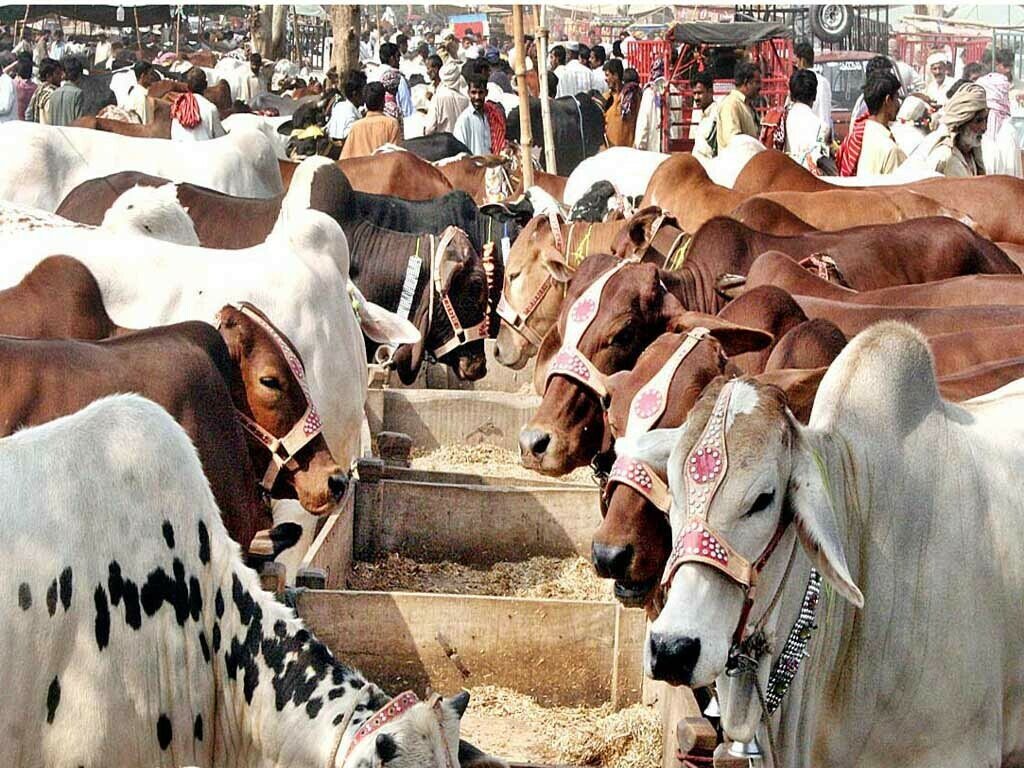
Karachi’s livestock markets begin buzzing with activity weeks before Eid al-Adha as traders bring cattle from Sindh, goats from Balochistan, and camels from various regions of the country. Beyond its religious significance, the annual qurbani ritual has evolved into one of Pakistan’s largest informal economic events. Every year, millions of Pakistanis participate in qurbani during the three days of Eidul Azha. Estimates suggest nearly 7.4 million animals are sacrificed nationwide, generating economic activity worth between Rs539 billion and Rs752 billion. According to analysis by Ammar H Khan, the base estimate stands at approximately Rs641 billion. This enormous private spending is equivalent to more than half of Pakistan’s annual federal development budget, despite operating entirely without formal government coordination. The system runs through religious obligation, household spending, and traditional market networks. The economic impact becomes visible in data from the State Bank of Pakistan, which shows a sharp increase in currency circulation before Eid as cash transactions surge for animal purchases, transportation, fodder, and related services. The livestock supply chain supports thousands of livelihoods. Farmers spend months raising animals using local fodder before traders transport them to urban cattle markets. Butchers, transporters, hide collectors, and mandi workers also earn significant income during the season. An average cow sells for around Rs110,000, with farmers retaining nearly 55 to 65 percent of the proceeds after expenses. Analysts estimate that roughly Rs420 billion flows into rural households within a single week, creating a major rural-to-urban economic transfer. Karachi alone reportedly spent around Rs185 billion on sacrificial animals in 2025, with more than two million animals traded in the city. Shared qurbani arrangements, where multiple families jointly purchase larger animals, also help middle-class households participate despite rising costs. Beyond commerce, Eidul Azha also functions as a large-scale private food distribution system. Around 532,000 tonnes of meat are distributed during the festival, with nearly one-third traditionally shared with underprivileged families and communities. Experts note that this level of private redistribution often exceeds the scale of many government-led food support programs. The annual event also highlights the size and importance of Pakistan’s informal economy, as many butchers, traders, transporters, and temporary workers earn a substantial portion of their yearly income during the Eid season. Despite its scale, much of this economic activity remains outside official statistics and formal documentation.

Government of Pakistan and Alibaba Sign Strategic MoUs to Accelerate AI Development, Digital Economy, and SME Growth
Business

Government of Pakistan and Alibaba Sign Strategic MoUs to Accelerate AI Development, Digital Economy, and SME Growth

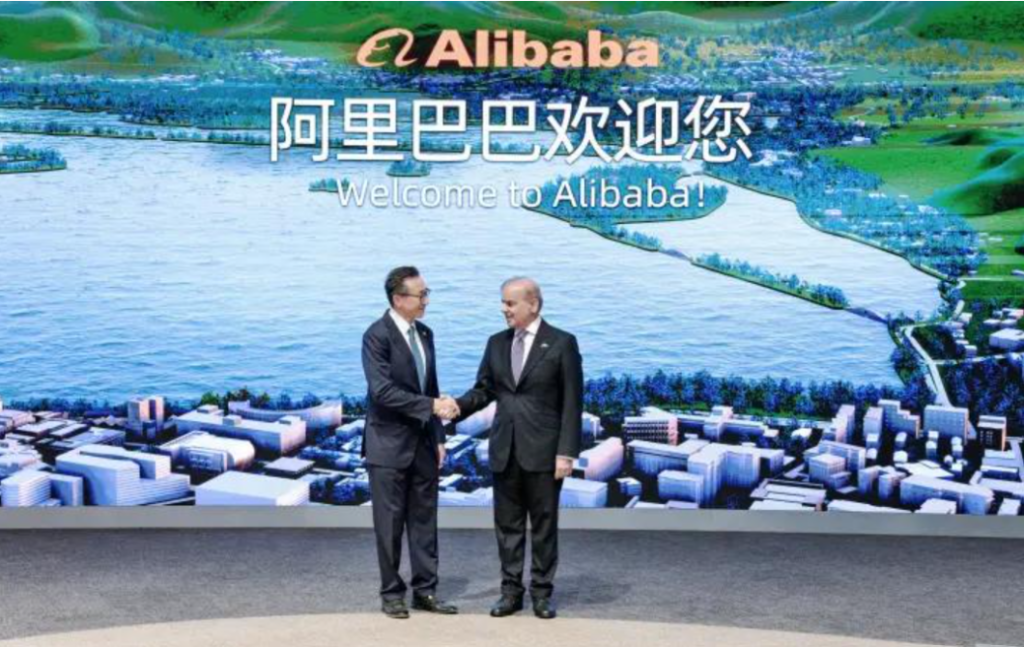
Partnerships spanning AI, cloud solutions, healthcare, SME enablement and digital payments aim to accelerate Pakistan’s digital transformation Hangzhou, China, 24 May 2026 – The Government of Pakistan and Alibaba have signed a series of Memoranda of Understanding (MoUs) covering artificial intelligence (AI), cloud solutions, digital skills, healthcare technology, e-commerce, SME development, and digital financial services, marking an important milestone in Pakistan’s ongoing digital transformation. The agreements were signed at Alibaba’s headquarters in Hangzhou, China, witnessed by Prime Minister Shehbaz Sharif and Alibaba Group Chairman Joe Tsai. Pakistani signatories include Ignite National Technology Fund (Ignite), Sky47, and the Small and Medium Enterprises Development Authority (SMEDA). Alibaba signatories include Alibaba Cloud, DAMO Academy, Alibaba.com and Koko Tech. Prime Minister Shehbaz Sharif appreciated the pace with which Alibaba has transformed itself into a globally leading digital entity with its notable contributions in E-Commerce, AI, Fintech and human resource development. He noted that together, Alibaba and government of Pakistan can transform the lives of the people of Pakistan by digital inclusion, youth empowerment, modernization of agriculture sector and digitization of financial sector. “Pakistan is home to extraordinary talent and immense digital potential,” said Joe Tsai, Chairman of Alibaba Group. “We believe AI, cloud technologies and embodied intelligence can play a transformative role in improving healthcare, empowering businesses to tap into global markets through digital exports and supporting long-term economic development.” Advancing AI & Cloud Capabilities Ignite and Alibaba Cloud will collaborate to develop secure, localized AI and cloud solutions for Pakistan, including AI foundation models for Urdu and regional languages designed to serve key sectors such as education, healthcare, and agriculture. The partnership will roll out nationwide AI and cloud skill programs targeting 500,000 individuals, including developers, students, and public sector employees, through trainings and certifications. To further nurture Pakistan’s tech ecosystem, the two parties will co-host a joint AI hackathon for young developers focused on smart agriculture, financial inclusion, and Urdu language technologies. Expanding AI-Powered Healthcare DAMO Academy and Sky47 will deploy AI-enabled healthcare solutions in Pakistan, centered on DAMO Academy’s multi-disease screening technology. This system uses non-contrast CT scans to detect lesions often difficult for the human eye to identify, enabling early screening for cancers including pancreatic and liver cancer. Sky47 plans to roll out the technology across cities such as Islamabad, Lahore, and Karachi. Separately, DAMO Academy and Ignite will build embodied intelligence capacity at Pakistani universities through online courses, workshops, and developer community activities. Empowering SMEs and Digital Commerce Alibaba.com and SMEDA will help Pakistani SMEs expand into global markets. The partnership will provide AI-powered digital trade training to 10,000 businesses using Alibaba.com’s enterprise AI agent Accio Work, enhancing their cross-border capabilities. The initiative will also onboard at least 2,000 SMEs onto the platform through a dedicated “Pakistan Pavilion”, a unified digital gateway showcasing the country’s diverse industries and connecting Pakistani sellers with over 50 million global buyers. Services including Trade Assurance and Verified Supplier certification will help build trust and accelerate export growth. Driving Financial Inclusion Koko Tech, a Daraz Group company, has signed a cooperation agreement with Ignite to introduce and scale a Buy Now, Pay Later (BNPL) solution in Pakistan, operating as a NBFC (Non-banking Finance Company). Koko Tech plans to invest US$ 3 million to expand digital payment services nationwide and create local employment. The initiative supports Ignite’s mission to foster technology innovation and advance Pakistan’s digital economy, contributing to broader goals of financial inclusion and innovation-led growth.

Pakistan’s Mobile Phone Assembly Drops Sharply by 35% in April 2026
Business

Pakistan’s Mobile Phone Assembly Drops Sharply by 35% in April 2026

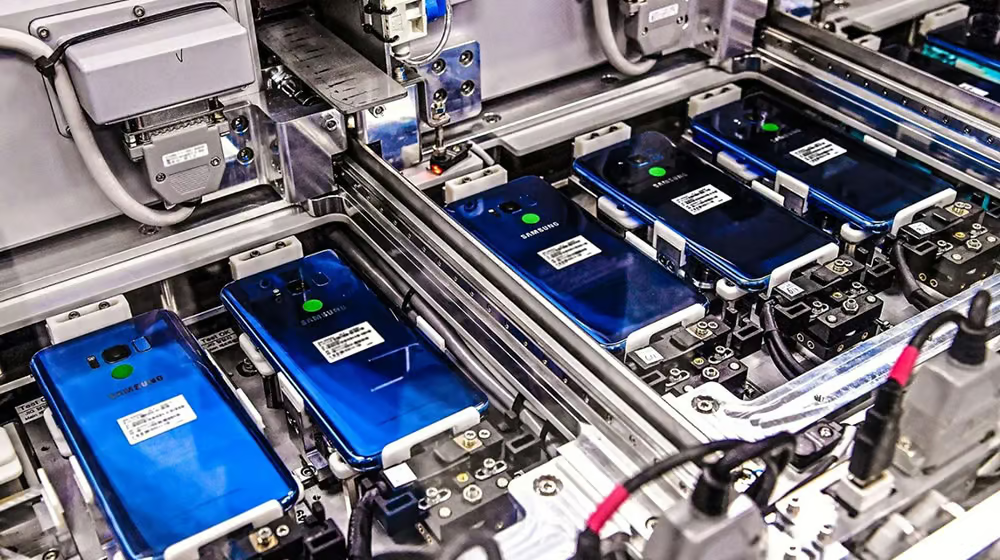
Pakistan’s local mobile phone assembly recorded a significant decline in April 2026, according to data released by the Pakistan Telecommunication Authority. Local assembly fell by 35 percent month-on-month to 1.81 million units, signaling a slowdown in the domestic manufacturing sector after months of steady growth. Read More: https://theboardroompk.com/pakistan-seeks-china-tariff-concessions-under-cpfta-phase-iii-to-boost-exports/ At the same time, mobile phone imports increased by 6 percent to 0.37 million units during April. As a result, the total number of mobile phones available in the market dropped by 31 percent to 2.18 million units. The government has been promoting local manufacturing and assembly through various incentives aimed at reducing dependence on imported handsets and conserving foreign exchange reserves. However, the latest figures indicate that challenges remain in sustaining production momentum. Industry experts attributed the decline to seasonal demand fluctuations and possible supply chain disruptions affecting local manufacturers. Despite the slowdown, cumulative local production during the first four months of 2026 reached 9.17 million units, meeting around 85 percent of total mobile phone demand in Pakistan, slightly lower than the 89 percent share recorded in March. The telecom sector continues to remain a major focus for economic policymakers seeking to strengthen local industry, encourage technology transfer, and create employment opportunities. Analysts believe that continued policy support, investment in technology, and supply chain improvements will be critical for long-term recovery and growth in the sector.

Pakistan Seeks China Tariff Concessions Under CPFTA Phase III to Boost Exports
Business

Pakistan Seeks China Tariff Concessions Under CPFTA Phase III to Boost Exports

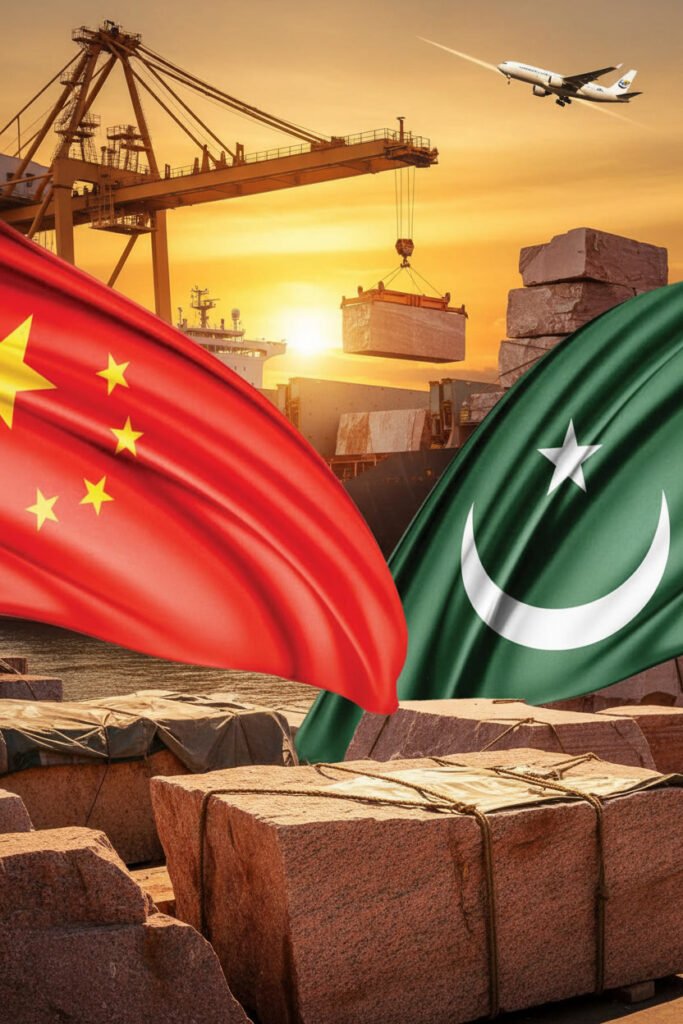
Pakistan is preparing to formally ask China for unilateral tariff concessions on nearly 700 product lines under the proposed third phase of the China Pakistan Free Trade Agreement, as Islamabad pushes for trade parity with ASEAN and African countries already benefiting from preferential Chinese policies. According to sources cited by Business Recorder, Commerce Minister Jam Kamal and Commerce Secretary Jawad Paul have arrived in Beijing to hold consultations with Chinese officials ahead of Prime Minister Shehbaz Sharif’s expected engagements in China. Pakistan Pushes for Equal Market Access Officials say Pakistan wants China to extend the same tariff advantages already granted to ASEAN members and 53 African countries. China introduced unilateral zero tariff access for African states from May 1, 2026, while ASEAN countries continue to receive preferential treatment under various trade arrangements. Pakistani authorities argue that concessions secured during earlier phases of the CPFTA have gradually lost their effectiveness because of China’s later agreements with competing economies. Islamabad believes Pakistani exporters now face higher tariffs than rivals from Southeast Asia and Africa in several sectors. Sources said Pakistan has completed a detailed review of Chinese import trends to identify sectors where Pakistani products can compete if tariff barriers are reduced. The proposed list includes around 700 tariff lines covering multiple export categories. Pakistan China Trade Imbalance Remains a Major Concern Pakistan’s trade imbalance with China remains one of the country’s biggest economic challenges. During fiscal year 2024–25, Pakistan exported goods worth around USD2.375 billion to China, while imports from China remained close to USD20 billion annually. Over the past five years, Chinese exports to Pakistan reportedly crossed USD100 billion, whereas Pakistani exports to China stayed near USD10 billion. Officials say Pakistan’s export basket relies heavily on raw materials such as cotton and copper, which limits export earnings because these products are later re imported into Pakistan as higher value finished goods. The government now wants to shift toward value added exports in sectors including textiles, minerals, engineering goods, and meat products. Officials estimate that Pakistan’s meat export potential alone could reach USD5 billion if market access improves. Focus on SPS Protocols and Green Channel Facility Negotiations under CPFTA Phase III are also focusing on removing non tariff barriers. More than a dozen Sanitary and Phytosanitary protocols and Technical Barriers to Trade agreements have reportedly been signed during the talks. Pakistan is also seeking additional trade facilitation measures, including the establishment of a “Green Channel” at the Khunjerab Pass border crossing. Officials believe faster customs clearance could help exporters reduce delays and improve supply chain efficiency. Rice Exports and Long Term Procurement Deals Pakistan is expected to request special relief for rice exports to China. Officials are likely to seek a waiver of the existing 1 percent import duty on Pakistani rice and request a special quota arrangement similar to the one previously offered by China during 2019 and 2020. Islamabad will also encourage Chinese state owned enterprises, especially COFCO, to enter long term procurement agreements with Pakistani rice exporters. Authorities believe stable procurement contracts could strengthen export growth and provide certainty to local suppliers. Visa Facilitation and Investment Demands Pakistani officials are also expected to request easier visa processing for exporters and businessmen traveling to China. Business groups have repeatedly argued that visa delays restrict market access and weaken trade engagement opportunities. At the same time, Islamabad wants China to increase investment and joint ventures in export oriented industries located in Pakistan. Officials say sustainable trade balance improvements will only be possible if Chinese companies help build local manufacturing and processing capacity. CPFTA Phase II Failed to Deliver Expected Results Pakistan and China have been operating under Phase II of the CPFTA since January 2020. However, officials believe the agreement has not produced the expected export growth for Pakistan. Bilateral trade reached nearly USD19.4 billion during 2024–25, but Pakistan’s exports remained mostly stagnant at around USD2.37 billion. The trade deficit with China now accounts for almost 59 percent of Pakistan’s total trade gap. Officials warn that without fresh tariff concessions and equal treatment in the Chinese market, Pakistan may continue struggling to fully benefit from the free trade agreement while China expands economic ties with other regions.

ABHI Microfinance Bank to Establish Nationwide Super Agent Network with CBA
Business

ABHI Microfinance Bank to Establish Nationwide Super Agent Network with CBA

KARACHI: ABHI Microfinance Bank Ltd. has entered into a strategic partnership with CBA, a major venture of EPL (PVT) Limited, in a move aimed at expanding financial accessibility, accelerating digital innovation, and empowering millions of retail merchants across Pakistan. Under the collaboration, ABHI Microfinance Bank will utilize CBA’s extensive digital network to launch a next-generation Super Agent Network along with customized retailer lending solutions. The partnership is designed to address key financial challenges faced by Pakistan’s Micro, Small, and Medium Enterprises (MSMEs), including limited access to liquidity, formal credit, and branchless banking services. According to the statement, the initiative will strengthen financial interoperability by expanding branchless banking services across urban and semi-urban areas through a compliant and technology-driven operational framework. The system will support real-time cash-in and cash-out services, digital transaction routing, and secure biometric account opening for underserved retail communities. The agreement also includes safeguards to ensure operational stability. Both parties retain the right to terminate the partnership in the event of an unresolved material breach following a 30-day cure period, or through a 30-day written notice without cause, provided all outstanding obligations and accounts are properly settled. A key feature of the partnership is the integration of instant digital credit facilities and working capital solutions directly into CBA’s merchant ecosystem. The initiative aims to replace traditional banking hurdles with a streamlined digital financing structure. The platforms will be connected through secure APIs and SDKs, with both organizations jointly responsible for technical integration and system testing to ensure operational reliability across financing cycles. Retailers will be able to apply directly through the digital platform, which will route alternative data sources — including real-time KYC verification and cash-flow histories — to ABHI for credit assessment. Once approved, customers will receive dedicated wallet accounts and immediate short-term financing disbursement. To protect the lending portfolio, the platform partner will provide a corporate guarantee along with a demand promissory note in favor of ABHI. The financing structure will also include automated debit authorities, structured collections mechanisms, continuous fraud monitoring, and strict anti-money laundering (AML) compliance procedures to safeguard the system.

PSX Raises Rs76.3bn for Finance Ministry in 6th GoP Hybrid Sukuk Auction
Business

PSX Raises Rs76.3bn for Finance Ministry in 6th GoP Hybrid Sukuk Auction

Karachi, 21 May: Pakistan Stock Exchange Limited (PSX) successfully raised Rs76.286 billion for the Ministry of Finance through the 6th Auction of Government of Pakistan Hybrid Sukuk (GHS) held on May 20, 2026, reflecting continued investor appetite for Shariah-compliant government securities. Read More: https://theboardroompk.com/gold-prices-in-pakistan-rise-by-rs5000-per-tola/ Meezan Bank played a leading role in the transaction as Joint Financial Advisor, contributing towards the structuring, development, and successful execution of the Sukuk programme, further reinforcing its position as a key player in Pakistan’s Islamic capital markets landscape. The auction attracted strong participation, with total bids received amounting to Rs262.197 billion in face value, while the total realized value of bids stood at Rs254.593 billion. According to the auction results, the cut-off rate for the one-year fixed rate discounted Sukuk was set at 12.4880 percent, showing a decline of 1.32 basis points. For the 10-year Variable Rental Rate Sukuk, the cut-off rental rate was recorded at 11.8569 percent, representing a spread of 0.4884 percent over the reference rate. The reference rate for the auction was 11.3685 percent. The successful raising of over Rs76 billion through the PSX platform highlights the growing role of the capital market in government debt mobilization, particularly through Islamic finance instruments. It also reflects the increasing depth of Pakistan’s Sukuk market as institutional investors continue to participate in Shariah-compliant avenues for fixed income investment. The Government of Pakistan Hybrid Sukuk programme has become an important instrument for broadening the investor base, supporting Islamic banking liquidity management, and providing the government with an alternative funding channel through the capital market. The successful issuance also reflects the collaborative efforts of the Ministry of Finance, State Bank of Pakistan (SBP), and Pakistan Stock Exchange (PSX) in strengthening the domestic Sukuk market through regular sovereign Islamic issuances and facilitating wider investor participation in Shariah-compliant investment instruments. Market participants said the strong bidding response indicates continued demand for sovereign-backed Islamic instruments, especially at a time when banks, mutual funds, and other institutional investors are actively seeking compliant investment options with government credit exposure.

Pakistan, Kenya Agree to Double Bilateral Trade in Five Years
Business

Pakistan, Kenya Agree to Double Bilateral Trade in Five Years

ISLAMABAD, May 21, 2026: Pakistan and Kenya have reaffirmed their commitment to significantly expanding bilateral economic ties, agreeing to double the volume of bilateral trade over the next five years during the Second Session of the Pakistan-Kenya Joint Trade Committee (JTC) held in Islamabad. Read More: https://theboardroompk.com/state-bank-of-pakistan-sbp-to-issue-rs75-commemorative-coin-to-mark-75th-anniversary-of-the-establishment-of-diplomatic-relations-between-pakistan-and-china/ The session was co-chaired by Mr. Jawad Paul, Secretary, Ministry of Commerce, Islamic Republic of Pakistan, and Ms. Regina A. Ombam, Principal Secretary, State Department for Trade, Republic of Kenya, with participation from representatives of various government departments from both countries. The Joint Trade Committee, a key bilateral platform for strengthening trade relations and addressing outstanding trade matters, reaffirmed the strong importance both countries attach to their economic partnership and future commercial cooperation. The session recorded meaningful progress across a broad range of priority sectors, with both sides agreeing to enhance cooperation in market access, export promotion, customs, investment, animal quarantine, plant protection, sanitary and phytosanitary measures, technical standards, pharmaceuticals, banking, trade dispute resolution, information and communication technology, tourism, and industry.

Gold Prices Witness Sharp Decline Across Pakistan
Business

Gold Prices Witness Sharp Decline Across Pakistan

Gold prices in Pakistan witnessed a sharp decline on Wednesday following a downward trend in the international bullion market. The price of gold per tola fell by Rs6,800 in the local market, bringing the new rate to Rs470,362. According to rates issued by the All Pakistan Gems and Jewellers Sarafa Association, the price of 10 gram gold also decreased by Rs5,830 and was traded at Rs403,259. Gold Prices Decline After Previous Stability The latest drop came a day after gold prices remained unchanged in Pakistan. On Tuesday, the rate of gold per tola stood stable at Rs477,162 before witnessing a major decline in Wednesday’s trading session. Jewellers and market analysts linked the decrease in local prices to the falling international gold market, which directly influences bullion rates in Pakistan. International Gold Market Sees Sharp Fall In the global market, the price of gold declined by $68 per ounce to settle at $4,480 per ounce, including a premium of $20. Analysts said international bullion prices continue to fluctuate due to changing investor sentiment, movements in the US dollar, and uncertainty surrounding global economic conditions. The decline in global prices contributed to the reduction in domestic gold rates across Pakistan. Silver Prices Also Decline Alongside gold, silver prices also recorded a notable decrease in the local market. The price of silver per tola dropped by Rs125 and settled at Rs7,974, according to the latest market rates. Traders said precious metals continue to experience volatility as investors closely monitor global financial developments and commodity market trends. Gold Market Remains Sensitive to Global Trends Pakistan’s gold market largely follows international bullion movements and currency exchange fluctuations. Any rise or fall in global gold prices quickly impacts local rates. Gold remains one of the most preferred investment and savings options in Pakistan, especially during periods of economic uncertainty and inflation. Jewellers expect continued fluctuations in prices over the coming days depending on developments in the international market.

Scroll to Top