Business

Second Massive Gold Price Plunge in Row, Rs25,500 Drop per Tola in Pakistan
Business

Second Massive Gold Price Plunge in Row, Rs25,500 Drop per Tola in Pakistan

Pakistan’s gold market experienced a significant downturn on Saturday, January 31, 2026, with the price per tola dropping by Rs25,500 to Rs511,862, according to the All-Pakistan Gems and Jewellers Sarafa Association (APGJSA). Read More: https://theboardroompk.com/gold-investors-witness-bloodbath-as-it-falls-rs35500-per-tola-to-rs537362-in-pakistan/ This decline mirrored a sharp fall in international gold rates, which decreased by $255 to $4,895 per ounce, including a $20 premium. The 10-gram gold price also fell by Rs21,862, settling at Rs438,839.e14373 Silver prices weren’t spared, dropping by Rs2,063 to Rs9,006 per tola. This comes after Friday’s even larger drop of Rs35,500 per tola, marking one of the steepest corrections in recent history. Global Triggers Behind the Decline The international bullion market saw panic profit-taking as gold and silver retreated from record highs earlier in the week. Analysts point to a strengthening US dollar and rising bond yields as key factors. US President Donald Trump’s appointment of Kevin Warsh as the next Federal Reserve Chair sparked market reactions, reducing expectations for aggressive interest rate cuts. Investors shifted toward riskier assets, exacerbating the sell-off. In global terms, Comex gold futures fell sharply, influencing local prices in Pakistan. This volatility reflects broader economic uncertainties, including geopolitical tensions and currency fluctuations. Impact on Local Economy and Investors In Karachi and other major cities, jewelers reported slower demand as buyers held off amid the price correction. For investors, this drop presents both risks and opportunities, with some locking in gains from previous highs. Wedding season shoppers might benefit from lower rates, but long-term holders face losses if prices don’t rebound soon. Experts advise monitoring US Fed policies and dollar movements for future trends. The analysts warn of continued volatility in the coming weeks. Overall, this event underscores gold’s role as a safe-haven asset prone to sudden shifts in global sentiment.

Energy and financial relief will accelerate industrial activity and exports, President KATI
Business

Energy and financial relief will accelerate industrial activity and exports, President KATI

Karachi: President of the Korangi Association of Trade and Industry (KATI), Muhammad Ikram Rajput, has welcomed the relief measures announced by Prime Minister of Pakistan Mian Muhammad Shehbaz Sharif, Federal Minister for Energy Sardar Awais Leghari, and Finance Minister Muhammad Aurangzeb for industries and exporters, terming them highly positive and timely for the national economy. Read More: https://theboardroompk.com/overseas-pakistanis-economy-the-backbone-powering-pakistans-economic-future/ He stated that the measures announced by the Prime Minister in his recent address to provide relief to the industrial and export sectors will not only play a vital role in economic recovery but will also lead to a reduction in production costs, promotion of industrial activities, and an increase in exports. The KATI President said that a reduction of PKR 4.04 per kilowatt-hour in electricity tariffs for industries will significantly lower production costs, enabling local industries to gain a competitive edge. Similarly, increasing the financing rate under the Export Refinance Scheme (ERS) from policy rate minus 3 percent to minus 6 percent is a major facility for exporters, providing them with cheaper and more effective financial support. He termed this move a major relief for the industrial sector. Expressing optimism, he said these measures will not only help resolve energy and financial challenges faced by industries but will also create a conducive environment for increased exports, enhanced economic activity, and the promotion of local and foreign investment. Muhammad Ikram Rajput described the Shehbaz Sharif government’s initiatives as effective and far-reaching for industrial development and expressed hope that this process of facilitating industrialists and exporters will continue in the future, so that the national economy becomes more stable and Pakistan emerges as a strong export-oriented country in the global market.

Meezan Bank Shares Risk-Sharing Expertise with Malaysia's Central Bank on Shariah-Compliant Solutions
Business

Meezan Bank Shares Risk-Sharing Expertise with Malaysia’s Central Bank on Shariah-Compliant Solutions

Karachi: 30 January:* Meezan Bank, Pakistan’s leading Islamic bank and one of the largest banks in the country, engaged with Bank Negara Malaysia (BNM), the Central Bank of Malaysia, under a focused knowledge-sharing initiative on risk-sharing finance. Read More: https://theboardroompk.com/cyber-threats-evolve-from-hackers-to-geopolitical-risks-governor-sbp/ On the invitation of BNM, Meezan Bank contributed as a speaker to a Programme titled “Incubation Programme on Risk-Sharing” designed for Islamic banking practitioners in Malaysia. The Programme focused on supporting the development of risk-sharing and non-debt-based financial solutions within the Malaysian Islamic banking sector by drawing on Meezan Bank’s market leadership and extensive experience in Islamic banking. Meezan Bank was represented by Mr. Shayan Ahmed Baig, Head of Shariah Compliance, who led discussions based on the Bank’s experience in structuring, implementing, and governing Shariah-compliant risk-sharing products in Pakistan. The sessions focused on translating conceptual risk-sharing principles into viable banking solutions, with detailed discussion on regulatory considerations, operational execution, and Shariah governance frameworks. Meezan Bank shared experience in assessing alternative product structures aligned with risk-sharing objectives and its local regulatory requirements. As part of the visit, Baig met with senior officials of BNM and presented Meezan Bank’s recently launched official history book, titled “Unconventional: The Bank No One Saw Coming,” to the Assistant Governor, BNM, highlighting the Bank’s journey and role in the development of Islamic banking in Pakistan. Meezan Bank’s participation in this programme reflects the growing international recognition of its pioneering role, technical expertise, and thought leadership in Islamic banking. Being invited by a foreign central bank highlights the Bank’s position as a benchmark institution in Islamic finance, not only in Pakistan but across key international markets.

PIA Privatization Enters a New Era as Arif-Habib Consortium Takes the Helm
Business

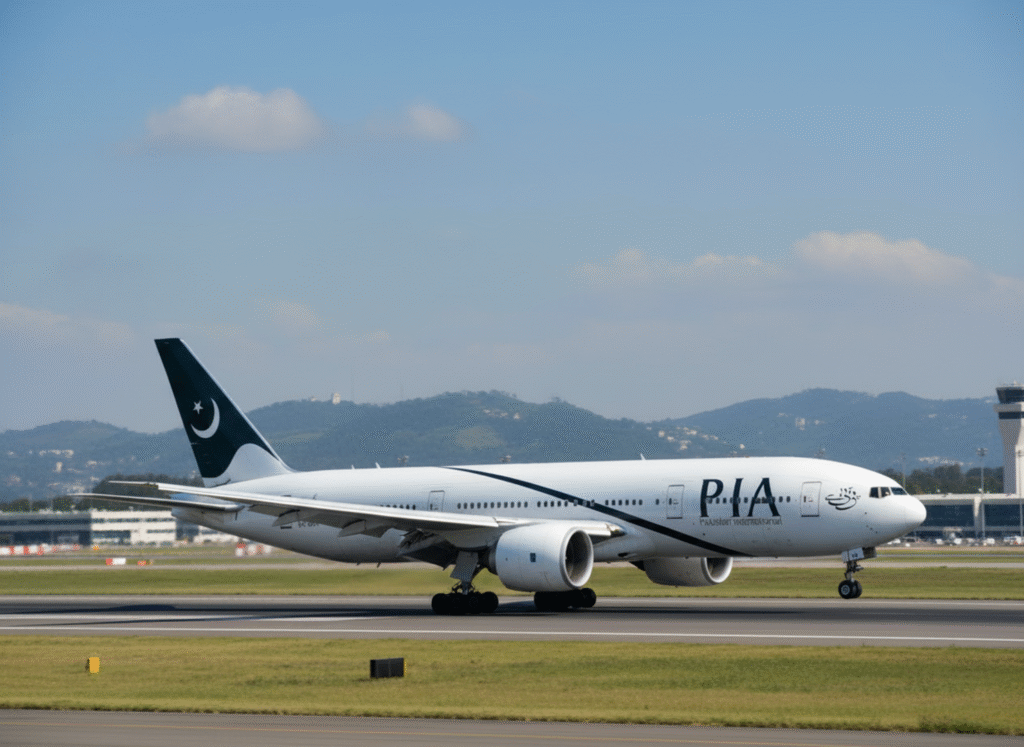
PIA Privatization Enters a New Era as Arif-Habib Consortium Takes the Helm

The long-anticipated PIA Privatization process has finally crossed a historic milestone. Pakistan International Airlines (PIA), the country’s national flag carrier, has officially been handed over to an Arif-Habib led consortium, marking one of the most consequential shifts in Pakistan’s aviation and public-sector reform landscape. Read More: https://theboardroompk.com/pia-launches-air-to-rail-partnership-seamless-travel-to-canada-and-uk-cities/ This handover is more than a change in ownership it represents a bold reset for an airline that once symbolized national pride but struggled for decades under mounting losses, inefficiencies, and governance challenges. For investors, policymakers, and travelers alike, PIA Privatization now moves from policy debate to real execution. Why PIA Privatization Matters for Pakistan’s Economy The significance of PIA Privatization extends far beyond aviation. As one of Pakistan’s most visible state-owned enterprises (SOEs), PIA’s chronic losses placed immense pressure on public finances. The transfer to private management reflects the government’s broader commitment to structural reforms, fiscal discipline, and private-sector-led growth. In recent years, PIA required repeated government bailouts, accumulated billions in debt, and faced operational disruptions that damaged its global standing. By bringing in a reputed financial and industrial group, policymakers are betting that professional management and commercial discipline can finally reverse the airline’s fortunes. Who Is the Arif-Habib Led Consortium? At the center of this landmark PIA Privatization is the Arif-Habib Group one of Pakistan’s most prominent conglomerates with deep expertise in financial services, investments, energy, and industrial management. The consortium’s involvement signals credibility and long-term intent. Market observers note that Arif-Habib’s track record of turning around complex businesses was a key factor in securing the deal. The group is expected to introduce modern governance structures, cost rationalization, and performance-driven decision-making areas where PIA historically struggled. What Changes Can We Expect After PIA Privatization? Under private management, PIA Privatization is expected to trigger a series of operational and strategic reforms. Instead of presenting these changes in a table, they can be understood through three key transformation pillars. First, operational efficiency is likely to improve through route rationalization, better fleet utilization, and stricter cost controls. Second, customer experience is expected to be a priority, with upgraded services, improved punctuality, and a renewed focus on international standards. Third, financial discipline will play a central role, as the consortium works to reduce losses, restructure liabilities, and restore investor confidence. Together, these changes could reposition PIA as a commercially viable airline rather than a fiscal burden. PIA Privatization and Investor Sentiment From a market perspective, PIA Privatization has already sparked renewed interest in Pakistan’s reform narrative. Analysts view the handover as a test case: if PIA can be stabilized and revived, it could accelerate privatization across other loss-making SOEs. The move also sends a strong signal to both local and foreign investors that Pakistan is willing to take politically difficult decisions to fix structural economic weaknesses. In a time of tight fiscal space, this credibility boost is critical. Challenges Ahead for PIA Privatization Despite optimism, PIA Privatization is not without risks. The airline operates in a highly competitive global aviation market, faces legacy labor issues, and must rebuild its international reputation. Fuel price volatility, regulatory compliance, and fleet modernization will also test the new management’s execution capabilities. However, experts argue that private ownership provides far greater flexibility to address these challenges than state control ever allowed. A Defining Moment for Pakistan International Airlines The handover of PIA to the Arif-Habib led consortium marks a defining chapter in Pakistan’s economic reform journey. PIA Privatization is no longer an abstract policy goal it is a living experiment in whether private-sector efficiency can rescue a national institution. If successful, this transition could redefine how Pakistan approaches state-owned enterprises for years to come. For now, all eyes are on how swiftly and decisively the new management can transform promises into performance.

https://theboardroompk.com/ogdc-ppl-mari-pol-get-billions-of-rupees-tax-relief-from-constitution-court/
Business

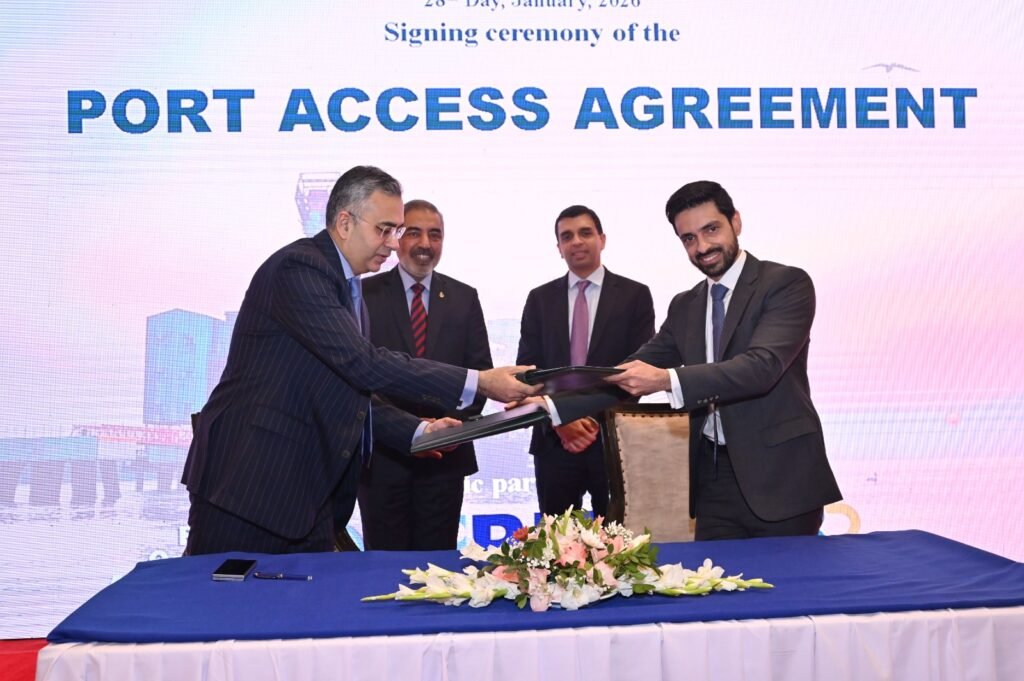
PIBT, Reko Diq Mining Company formally sign agreement for mineral exports

KARACHI: The agreement for the handling and export of copper-gold concentrates from the Reko Diq project has been formally signed on Wednesday here in Karachi between Pakistan International Bulk Terminal Limited (PIBT) and Reko Diq Mining Company (RDMC). Read More: https://theboardroompk.com/ogdc-ppl-mari-pol-get-billions-of-rupees-tax-relief-from-constitution-court/ Under this landmark agreement, PIBT has been designated as the primary export facility for Reko Diq’s minerals which will strengthen the country’s position in global commodity markets. “This partnership reflects a long-term collaboration between PIBT and Reko Diq to enable the efficient and reliable handling and export of Pakistan’s mineral resources. “Our port infrastructure and operational expertise are aligned with the project’s requirements, and we are committed to delivering excellence throughout this partnership,” said Sharique Azim Siddiqui, CEO of PIBT, on the occasion. He added that they appreciate the role their partners and supporting stakeholders in making this collaboration possible since Reko Diq is a strategic project for Pakistan’s economy, with the potential to generate multi-billion-dollar exports over its life. PIBT, located at Port Qasim, is Pakistan’s dedicated, fully mechanized multipurpose bulk handling terminal. With established bulk handling capabilities and planned upgrades to its export systems, PIBT is well-positioned to support the efficient handling and export of minerals, metals, and other natural earth commodities, while operating in line with international environmental, health, and safety guidelines and best practices. This partnership underscores the shared commitment of both organizations to unlocking Pakistan’s mineral potential and supporting sustainable economic growth through state-of-the-art infrastructure.

Super Tax Shock: Business Community Demands Refund Adjustments or Installments to Save Industries from Closure
Business

Super Tax Shock: Business Community Demands Refund Adjustments or Instalments to Save Industries from Closure

The Karachi Chamber of Commerce and Industry (KCCI) has expressed grave concern over the government’s move to aggressively collect super tax following the recent decision of the Federal Constitutional Court upholding its legality, warning that demanding massive tax payments in one go will severely disrupt business operations and further weaken Pakistan’s already fragile economy. Read More: https://theboardroompk.com/gold-per-tola-falls-rs1500-to-rs530562-in-pakistan/ President KCCI Muhammad Rehan Hanif, while acknowledging the court’s verdict and the government’s revenue requirements, stressed that the manner and timing of super tax recovery are equally critical, particularly when the business community is facing an unprecedented liquidity crunch caused by soaring energy tariffs, high interest rates, excessive taxation, and escalating input costs. He pointed out that industries across Pakistan, especially in Karachi, the country’s economic backbone, are already operating under extreme financial stress. The abrupt demand for super tax payments running into hundreds of billions of rupees will drain working capital, disrupt cash flows, and make it impossible for many businesses to meet routine obligations such as salaries, utility bills, raw material imports, and bank repayments. President KCCI emphasized that forcing businesses to deposit huge amounts of super tax in a single installment is neither practical nor sustainable. He urged the government to immediately allow adjustment of super tax liabilities against long-pending income tax and sales tax refund claims, which have already deprived exporters and manufacturers of much-needed liquidity for years. Alternatively, he said, the government must announce a clear, structured and business-friendly installment facility, enabling taxpayers to discharge their super tax liabilities over a reasonable period without paralyzing their operations. Such an approach, he added, would ensure better compliance while safeguarding industrial continuity and employment. Highlighting the broader economic implications, President Hanif warned that non-provision of relief mechanisms would inevitably lead to scaling down of operations, layoffs, and closure of small and medium-sized industries, particularly in export-oriented sectors such as textiles, engineering goods, pharmaceuticals, and value-added manufacturing. This, he cautioned, would not only reduce exports but also shrink the tax base instead of expanding it. He further noted that Pakistan’s cost of doing business has already surged to unsustainable levels due to exorbitantly high electricity and gas tariffs, multiple taxes, and regulatory burdens. Imposing super tax recoveries without flexibility at such a critical juncture could push many viable businesses into insolvency, aggravating unemployment and social instability. President KCCI reiterated that a weakened private sector cannot support revenue generation or economic recovery, and urged the government to adopt a collaborative approach by engaging with chambers of commerce and trade bodies before enforcing coercive measures. Rehan Hanif cautioned that if refund adjustments or installment facilities are not provided, the consequences will be severe and long-lasting, potentially triggering widespread industrial shutdowns, loss of investor confidence, and further contraction of economic activity. He stressed that sustainable revenue collection must go hand in hand with business survival, urging policymakers to act wisely in the national interest.

ABHI Microfinance Bank, Zanda Join Hands to Expand Digital Loans in Pakistan
Business

ABHI Microfinance Bank, Zanda Join Hands to Expand Digital Loans in Pakistan

Islamabad: In a move aimed at widening access to small-ticket digital financing in Pakistan, ABHI Microfinance Bank has entered into a strategic partnership with Zanda Financial Services (Pvt.) Ltd., a technology-enabled non-banking finance company, to deliver digital lending solutions through integrated digital platforms. Read More: https://theboardroompk.com/fawad-rana-wins-case-to-reclaim-lahore-qalandars-control-or-rs-2-3b-pay-out-ordered/ The collaboration combines ABHI Microfinance Bank’s regulated banking infrastructure with Zanda’s digital customer interface, creating a model that allows eligible users to apply for and access loans through a seamless mobile experience. Loan disbursement, wallet operations, and repayment channels will be supported through ABHI’s banking systems, ensuring the process operates within a secure and compliant financial framework. Industry observers see such partnerships as a growing trend in Pakistan’s financial sector, where banks and fintechs are increasingly working together to bridge the gap between formal finance and digitally active but underserved populations. By embedding credit into digital ecosystems, the initiative is expected to offer an alternative to informal borrowing channels that many low- and middle-income individuals rely on for short-term liquidity needs. The model focuses on short-tenure, small-value loans designed to support everyday financial requirements — from emergency expenses to short-term cash flow gaps. With customer verification, risk assessment, and system integrations forming a core part of the structure, both institutions aim to ensure responsible lending practices remain central to the offering. Beyond individual access to credit, the partnership signals a broader shift in how financial services are being delivered in Pakistan. Rather than relying solely on physical branch networks, banks are increasingly using technology partnerships to extend their reach into digital channels where customers already transact and engage. This approach is seen as key to accelerating financial inclusion while maintaining regulatory safeguards. For ABHI Microfinance Bank, the agreement aligns with its strategy of building ecosystem-based financial solutions that combine banking stability with fintech innovation. For Zanda, the partnership provides the regulated financial backbone required to scale digital lending in a structured environment. Together, the institutions are positioning themselves within Pakistan’s fast-evolving digital finance landscape, where demand for quick, accessible, and formal credit continues to rise. The agreement was formally signed by Mariam Pervaiz, Chief Commercial Officer, ABHI Microfinance Bank, and Saif Ul Islam, Chief Executive Officer, Zanda Financial Services. Also present at the ceremony was Kabeer Naqvi, Entrepreneur in Residence at ABHI Financials, along with representatives from both organizations.Mariam Pervaiz, CCO, ABHI Microfinance Bank, said the partnership reflects the Bank’s continued focus on inclusive, technology-led finance.“Digital access to formal credit is becoming essential for financial resilience. By partnering with Zanda, we are extending responsible lending through digital ecosystems where customers already operate, while ensuring the strength, compliance, and security of a regulated banking environment remain at the core of the experience.”Saif Ul Islam, CEO, Zanda Financial Services, noted that collaboration with a regulated bank is key to scaling sustainable digital lending.“Our platform is designed to make financing seamless and accessible. Working with ABHI Microfinance Bank allows us to combine innovation with financial discipline, enabling us to serve customers more efficiently while maintaining the trust and safeguards required in today’s financial landscape.”

PSX Hits Historic 191,000 Mark Amid Anticipated SBP Rate Cut
Business

PSX Hits Historic 191,000 Mark Amid Anticipated SBP Rate Cut

The Pakistan Stock Exchange (PSX) witnessed an unprecedented surge on January 26, 2026, as the benchmark KSE-100 index crossed the 191,000 level for the first time in history. Read More: https://theboardroompk.com/service-global-footwear-partners-with-chinas-golden-star-for-6-5mn-non-leather-footwear-jv-in-pakistan/ This milestone came ahead of the State Bank of Pakistan’s (SBP) Monetary Policy Committee (MPC) meeting, where analysts anticipate a policy rate cut of 50 to 100 basis points. At midday, the index hovered at 190,521.41, marking a gain of 1,354.59 points or 0.72%, driven by strong buying in key sectors. Sector-Wise Performance and Key Drivers Automobile assemblers, cement, fertilizer, oil and gas exploration companies, oil marketing companies (OMCs), power generation, and refineries led the charge. Index-heavy stocks like ARL, HUBCO, MARI, OGDC, FFC, HBL, and MCB traded in positive territory, boosting overall sentiment. Lower secondary market yields and improving remittances contributed to the bullish momentum. New oil discoveries of 9,500 barrels per day and defence deals exceeding $13 billion further reinforced investor confidence. Easing tensions between the US and Iran, along with strengthened defence ties with Saudi Arabia and Türkiye, added to the positive outlook. Broader Economic Context and Global Influences The previous week’s gains saw the KSE-100 close at a record 189,166.83 points, up 4,068 points or 2.2% week-on-week. This was supported by falling government bond yields and renewed foreign engagement. However, economists warn that Pakistan may miss the IMF’s 3.2% GDP growth target for the fiscal year, projecting 2.5% to 3% amid weakening exports and investments. Globally, gold prices surged past $5,000 per ounce due to safe-haven demand amid dollar weakness and US-Iran sanctions. The yen strengthened amid intervention speculation, impacting global markets with declines in Nikkei and S&P 500 futures. The SBP’s previous rate cut in December 2025 to 10.50% set the stage for further easing, with Governor Jameel Ahmad set to brief the media post-meeting. Despite intra-day volatility, the rally underscores Pakistan’s improving macroeconomic stability, though risks from geopolitical tensions remain.

BankIslami Launches Pakistan's First Shariah-Compliant Raast QR Payment Gateway via aikPay
Business

BankIslami Launches Pakistan’s First Shariah-Compliant Raast QR Payment Gateway via aikPay

BankIslami’s digital Islamic banking platform ‘aik’ has launched aikPay, marking Pakistan’s first Shariah-compliant Raast-enabled QR payment gateway. Built on the State Bank of Pakistan’s (SBP) Raast instant payment infrastructure, the solution enables real-time online payments through dynamic QR codes. Read More: https://theboardroompk.com/pakistan-petroleum-imports-decline-1-26-to-7-98-billion-in-first-half-of-fy26/ Key Launch Details The announcement came on January 23, 2026. It followed collaborative sessions with SBP and Raast representatives, including Muhammad Imaduddin (Director Digital Innovations & Settlement, SBP), Ahson bin Saeed (CEO, Raast Payments Pakistan), Sohail Sikandar (COO, BankIslami), and Ashfaque Ahmed (Chief Officer, aik). The gateway integrates seamlessly with Raast for instant, interoperable transactions. Core Features for Customers Instant payments from any Raast-enabled mobile banking app. Dynamic QR codes for quick scanning. Card-free checkout with immediate transaction confirmation. Full Shariah compliance, ensuring riba-free (interest-free) operations aligned with Islamic principles. Benefits for Merchants Nationwide reach via Raast interoperability. Real-time payment confirmation and instant settlement for better cash flow. Low-cost acceptance through competitive Merchant Discount Rates (MDR). Secure, smooth checkout suitable for SMEs, online businesses, institutions, and government entities. Official Statements Ashfaque Ahmed, Chief Officer of aik, said: “The world is shifting rapidly with technology, and digital payments have become an everyday habit. At aik, we remain steadfast in our mission to promote Riba-free digital banking and support Pakistan’s national direction towards a digital economy by offering innovative solutions that make everyday transactions smoother, faster, and more seamless.” Strategic Significance aikPay advances Pakistan’s digital economy goals by promoting inclusive, faith-aligned fintech. It leverages Raast’s instant payment system—Pakistan’s first—for end-to-end digital transactions among individuals, businesses, and government entities. The launch strengthens BankIslami’s position in Islamic digital banking while enhancing financial inclusion through accessible, secure, and compliant payment options. This development reflects growing momentum in Pakistan’s fintech sector, with emphasis on interoperability, speed, and adherence to Shariah standards.

Service Global Footwear Partners with China's Golden Star for $6.5mn Non-Leather Footwear JV in Pakistan
Business

Service Global Footwear Partners with China’s Golden Star for $6.5mn Non-Leather Footwear JV in Pakistan

Service Global Footwear Limited (SGFL), a subsidiary of Service Industries Limited, has approved a joint venture with China’s Golden Star Footwear Group Limited (GSFGL) to establish a manufacturing project for non-leather footwear in Pakistan. Read More: https://theboardroompk.com/nvidia-h200-suppliers-halt-production-as-china-blocks-chip-imports/ The announcement came after SGFL’s Board of Directors meeting on January 20, 2026, marking a step toward enhanced bilateral industrial cooperation. Joint Venture Structure and Equity Under the agreement, SGFL will hold a 51% equity stake, while GSFGL retains 49%. The new joint venture company (JVC) will be incorporated with a name subject to approval by the Securities and Exchange Commission of Pakistan (SECP). It will focus on producing and selling non-leather footwear for the domestic market and exports. Investment and Phased Approach The Phase-I project is estimated to cost $6.5 million, with contributions from both partners proportional to their shareholdings. Additionally, SGFL has approved a long-term equity investment of up to Rs1 billion in the JVC over the next five years, subject to shareholder approval under relevant company law provisions. Operational Setup The project will utilize SGFL’s existing leased land and building facility in Muridke, Punjab, initially for a one-year lease period. This leverages local infrastructure to kickstart manufacturing operations aimed at both local consumption and international markets. This collaboration underscores growing Pakistan-China economic ties in the manufacturing sector, particularly footwear, and is expected to boost export potential while supporting industrial growth in Punjab.

Scroll to Top