Author name: Web Desk

Agriculture Lab on Wheels Punjab: Transforming Farm Services Through Mobile Innovation
Pakistan

Agriculture Lab on Wheels Punjab: Transforming Farm Services Through Mobile Innovation

Agriculture Lab on Wheels Punjab marks a major step forward in Pakistan’s agricultural modernization, as the Punjab government rolls out mobile agricultural laboratories designed to deliver critical farm services directly to farmers’ doorsteps. The initiative reflects a growing shift toward technology-driven, farmer-centric solutions aimed at improving productivity, sustainability, and crop planning across the province. Read Mote: https://theboardroompk.com/punjab-food-authority-seizes-thousands-of-rotten-eggs-in-lahore/ Approved by the Punjab government under the leadership of Chief Minister Maryam Nawaz Sharif, the programme focuses on improving access to real-time soil and water testing—key inputs that directly influence crop yield, fertilizer use, and irrigation efficiency. Agriculture Lab on Wheels Punjab to Operate in 15 Districts Under the Agriculture Lab on Wheels Punjab initiative, mobile laboratories will initially be deployed across 15 districts, offering on-the-spot soil and water analysis. These labs eliminate the traditional delays and costs farmers face when sending samples to distant testing facilities. Through immediate testing and reporting, farmers will be able to: • Assess soil fertility accurately• Identify nutrient deficiencies• Evaluate water quality for irrigation• Make data-backed decisions on fertilizer application and crop selection This direct access to scientific data is expected to significantly enhance farm-level decision-making and reduce unnecessary input costs. Central Monitoring and Digital Oversight for Transparency To ensure efficiency and accountability, the Punjab government has established a central control room that will monitor the performance of all mobile laboratories. This centralized system will oversee scheduling, service quality, data accuracy, and operational transparency. Such digital oversight not only improves coordination but also builds trust among farmers by ensuring standardized and reliable testing results across districts. 100 Farmer Facilitation Centres to Complement Mobile Labs In addition to the Agriculture Lab on Wheels Punjab, the provincial government has approved the establishment of 100 container-based farmer facilitation centres across all districts. These centres will function as localized agricultural support hubs, equipped with: • Agriculture officers and technical experts• Digital advisory tools• Data call centres for real-time guidance• Access to government schemes and subsidies By combining mobile labs with permanent facilitation centres, Punjab is creating a hybrid service model that strengthens both outreach and continuity of agricultural advisory services. Driving Record Wheat Production and Farmer Welfare Chief Minister Maryam Nawaz Sharif expressed confidence that initiatives like Agriculture Lab on Wheels Punjab would help achieve a record wheat yield during the current season. Improved soil diagnostics, water management, and advisory support are expected to directly translate into higher productivity and better crop outcomes. She further highlighted that additional farmer welfare programmes are already underway, including: • The Kissan Card Scheme for financial inclusion• Tractor-related projects to improve mechanization• Subsidized agricultural inputs Together, these measures demonstrate a comprehensive policy approach to strengthening Punjab’s agricultural economy and improving rural livelihoods. Sindh Government Launches Affordable Seed and Geo-Marking Initiative While Punjab advances mobile agricultural services, the Sindh government has also announced major reforms to support farmers. The Sindh administration has decided to provide quality seeds at affordable prices throughout the province, ensuring better access to certified inputs. Additionally, the Sindh Seed Corporation will implement geo-marking of agricultural lands, a move aimed at: • Improving resource management• Enhancing crop planning accuracy• Supporting data-driven agricultural policies This initiative will enable more efficient allocation of inputs and long-term productivity improvements across Sindh. A New Era of Smart Agriculture in Pakistan The launch of Agriculture Lab on Wheels Punjab, alongside Sindh’s seed and geo-marking initiatives, signals a broader national shift toward smart agriculture. By integrating mobile technology, digital monitoring, and on-ground advisory services, provincial governments are addressing long-standing challenges faced by farmers. These reforms not only strengthen food security but also position agriculture as a modern, data-enabled sector capable of driving sustainable economic growth.


First Panda Bond: Pakistan Plans to Raise $250 Million in Yuan Market
Pakistan

First Panda Bond: Pakistan Plans to Raise $250 Million in Yuan Market

Pakistan is set to issue its first-ever Panda bond in the coming weeks, as announced by Finance Minister Muhammad Aurangzeb on January 14, 2026. Speaking at a seminar organized by Nutshell Group titled “Resetting Pakistan’s Economic Direction,” the minister revealed that the country plans to tap into China’s Renminbi (RMB)-denominated market for this debut issuance. Read More: https://theboardroompk.com/diversifying-debt-pakistan-advances-1b-panda-bond-strategy/ Panda bonds are yuan-denominated instruments sold in China’s domestic capital market, allowing foreign issuers like Pakistan to access one of the world’s largest and deepest funding pools. This move marks a significant shift from Pakistan’s traditional reliance on US dollar, euro, or Islamic sukuk issuances. Aurangzeb highlighted that issuing in RMB and swapping the proceeds into dollars could yield a 2.5% cost differential, describing it as a valuable saving where “every single bit counts.” The announcement comes amid broader efforts to diversify external financing sources, reduce overdependence on the US dollar, and align with prudent debt management under the ongoing IMF program. Key Details and Strategic Benefits The initial tranche is targeted at approximately $250 million (equivalent in RMB), as part of a potential larger $1 billion programmatic issuance. Preparations, including regulatory approvals from Chinese authorities and investor outreach, have been underway since late 2025, with strong interest from Chinese institutional investors reflecting confidence in Pakistan’s improving macroeconomic outlook. The finance minister emphasized that this debut will complement existing access to euro and sukuk markets while lowering borrowing costs through the interest rate advantage in China’s market. Aurangzeb linked the Panda bond to Pakistan’s debt sustainability gains, noting a drop in the debt-to-GDP ratio to 70% from 75%, extended average debt maturity beyond four years, and savings of around Rs850 billion in debt servicing last year—with similar expectations this year. By entering China’s onshore bond market, Pakistan aims to broaden its investor base, mitigate foreign-exchange risks, and support medium-term fiscal stability. Broader Economic Context The Panda bond initiative aligns with strengthened Pakistan-China economic ties, including the evolving phases of the China-Pakistan Economic Corridor (CPEC). As bilateral trade nears significant levels and cooperation expands into agriculture, minerals, AI, and digital sectors, this financial instrument signals a maturing partnership focused on market-driven growth. Aurangzeb’s remarks underscore ongoing structural reforms, such as tariff reductions and privatization of loss-making state-owned enterprises, positioning the bond as part of a comprehensive reset for Pakistan’s economy.

US Senate Tables Long-Awaited Bill to Outline Crypto Market Rules
World

US Senate Tables Long-Awaited Bill to Outline Crypto Market Rules

U.S. senators released draft legislation late on January 13, 2026, aiming to establish the first comprehensive federal regulatory framework for cryptocurrencies. The bill addresses long-standing industry demands for clarity on whether digital assets are securities or commodities, ending reliance on potentially reversible regulatory guidance. Read More: https://theboardroompk.com/crypto-industry-toasts/ Building on the House’s passage of a similar version in July 2025, the Senate effort follows stalled 2025 talks over issues like anti-money-laundering rules and decentralized finance (DeFi) requirements. The proposal, released ahead of key committee markups, reflects heavy crypto industry lobbying during the 2024 elections and promises from pro-crypto figures, including President Trump’s pledges. Senate Banking and Agriculture Committees are set to debate amendments starting January 16, with further discussions later in the month, though midterm election dynamics raise doubts about final passage. Key Provisions and Regulatory Division Central to the bill is shifting primary oversight of spot crypto markets to the Commodity Futures Trading Commission (CFTC), the industry’s preferred regulator over the Securities and Exchange Commission (SEC). It defines token classifications to provide legal certainty for issuers and firms. On stablecoins—following last year’s federal framework—the legislation prohibits crypto companies from paying interest solely for holding them, addressing banking sector fears of deposit flight and financial instability. However, it permits rewards or incentives tied to activities like payments or loyalty programs, with a joint SEC-CFTC rule mandated for transparent disclosures. Industry leaders hail the move as “existential” for U.S. digital asset growth, while banks criticize potential loopholes. Amendments could alter details, but the bill signals a pivot toward innovation-friendly rules amid global competition. Skeptics note political hurdles, including Democratic concerns and election-year pressures, could stall progress into law.

Canadian Prime Minister Visits China After Nearly a Decade of Tense Relations, Seeks Trade Lifeline Amid U.S. Tensions
World

Canadian Prime Minister Visits China After Nearly a Decade of Tense Relations, Seeks Trade Lifeline Amid U.S. Tensions

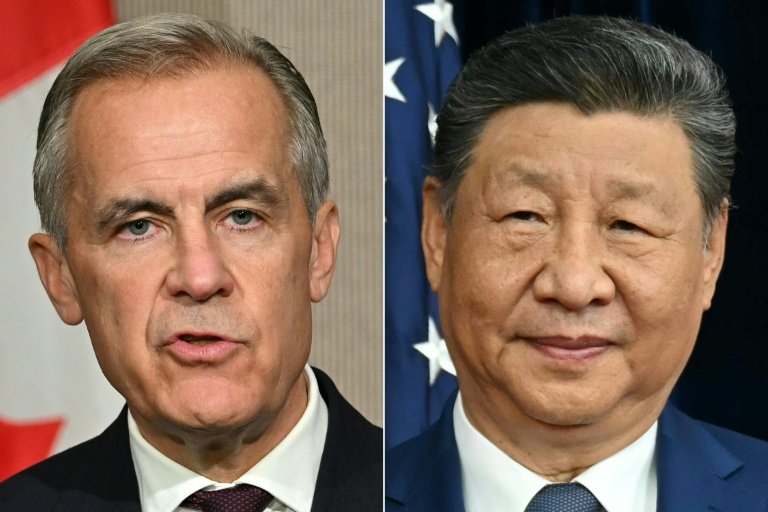
Canadian Prime Minister Mark Carney departed for Beijing on January 13, 2026, marking the first official visit by a Canadian leader to China since 2017. The four-day trip (January 14-17) comes after nearly a decade of strained bilateral relations, which deteriorated sharply following Canada’s 2018 arrest of Huawei executive Meng Wanzhou at the U.S.’s request. This triggered retaliatory detentions of Canadians and ongoing disputes. Carney, who met Chinese President Xi Jinping in South Korea in October 2025, described that encounter as a potential “turning point.” The visit builds on that momentum, with meetings planned with Xi and Premier Li Qiang at the Great Hall of the People. Chinese officials expressed optimism about “deepening mutual trust,” viewing the trip as part of a charm offensive to strengthen ties. Trade Focus and Geopolitical Pivot Amid escalating trade frictions with the United States—including tariffs and annexation threats under President Donald Trump—Canada aims to diversify exports away from its heavy reliance on the U.S. market. Key discussions center on energy (boosting crude oil exports to China), agriculture (addressing Chinese anti-dumping duties on Canadian canola imposed in 2024 after Canada’s 100% tariffs on Chinese electric vehicles), and broader sectors like critical minerals and AI. While full resolution of canola tariffs is unlikely during the visit, experts anticipate incremental progress and potential memoranda of understanding. Analysts note political risks, including U.S. backlash and security concerns over closer cooperation. Domestic voices urge caution on human rights and interference issues, but the trip underscores Carney’s strategy to build economic resilience through new global partnerships.

Pakistan Mauritius Preferential Trade Agreement Can Revive Bilateral Trade
Pakistan

Pakistan Mauritius Preferential Trade Agreement Can Revive Bilateral Trade

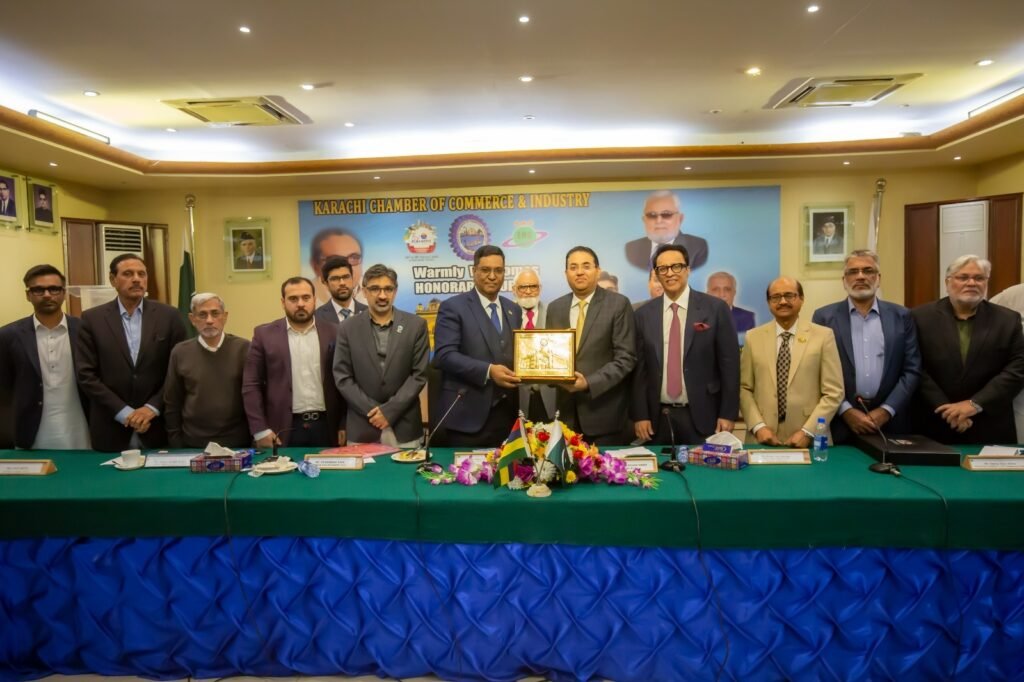
Pakistan Mauritius Preferential Trade Agreement revival has emerged as a key priority for strengthening economic ties between the two countries, as highlighted by the High Commissioner of the Republic of Mauritius, Mr. Munsoo Kurrimbaccus, during his recent visit to the Karachi Chamber of Commerce & Industry (KCCI). The agreement, which previously granted preferential market access to nearly 120 commodities, has remained inactive for years limiting the full potential of bilateral trade. Speaking to Karachi’s business leadership, the Mauritian envoy emphasized that restoring the Pakistan Mauritius Preferential Trade Agreement could significantly boost trade volumes, diversify exports, and correct existing trade imbalances between the two economies. Pakistan Mauritius Preferential Trade Agreement: A Strategic Economic Tool Diplomatic relations between Pakistan and Mauritius date back to 1970, with Pakistan being the first country to establish an embassy in Mauritius after its independence. Despite historically warm relations, bilateral trade has slowed in recent years, underscoring the urgency to reactivate the Pakistan Mauritius Preferential Trade Agreement. According to the High Commissioner, Mauritius currently imports substantially more from Pakistan than it exports, resulting in a noticeable trade imbalance. Pakistan’s major exports include Basmati rice, cement, textiles, towels, bedsheets, and other manufactured goods, while Mauritian exports to Pakistan remain limited. Trade Imbalance Highlights the Need to Restore PTA Under the earlier PTA framework, around 120 product categories enjoyed tariff concessions, making trade more competitive. Its suspension has reduced cost advantages and weakened supply chain linkages. Reviving the Pakistan Mauritius Preferential Trade Agreement would restore preferential access and improve price competitiveness for exporters on both sides. Mauritius previously exported premium pineapples to Pakistan, widely regarded among the finest globally, alongside lychees and mangoes. Mauritian lychees, in particular, command premium prices in European markets such as France—outperforming competitors from Thailand and Madagascar. Renewed PTA provisions could help reintroduce these high-value products into Pakistan’s market. Pakistan Mauritius Preferential Trade Agreement and Pharmaceutical Exports One of the most promising areas under the Pakistan Mauritius Preferential Trade Agreement is pharmaceuticals. Pakistan manufactures high-quality medicines at nearly half the cost of European alternatives. However, regulatory recognition, certifications, and compliance requirements have limited exports to Mauritius. The High Commissioner acknowledged Pakistan’s pharmaceutical potential and encouraged closer regulatory cooperation to unlock market access. Addressing these issues through PTA-linked frameworks could significantly expand Pakistan’s footprint in Mauritius’s healthcare sector. Halal Food and PTA-Driven Export Opportunities The Halal food sector presents another high-growth opportunity. Mauritius’s Muslim community maintains strict Halal standards and currently imports Halal meat primarily from Australia and India. There is strong demand for fresh Halal meat an area where Pakistani exporters could gain a competitive edge. The Pakistan Mauritius Preferential Trade Agreement could facilitate smoother certification recognition and market entry, enabling Karachi-based exporters to tap into this lucrative segment. Tourism, Blue Economy, and Green Growth Collaboration Beyond traditional trade, Mauritius is positioning itself as a premium tourism destination and investing heavily in the blue and green economy. With an Exclusive Economic Zone of nearly two million square kilometers, Mauritius is focusing on aquaculture, marine biotechnology, and ocean-based pharmaceutical research. The Mauritian High Commissioner expressed interest in collaborating with Pakistan on research, investment, and technology partnerships—areas that could be formalized through enhanced trade and investment cooperation mechanisms linked to PTA revival. KCCI’s Role in Strengthening Pakistan–Mauritius Trade KCCI President Muhammad Rehan Hanif reaffirmed Karachi’s business community’s readiness to work closely with the Mauritian High Commission. He highlighted Karachi’s strengths across textiles, ICT, pharmaceuticals, seafood, financial services, tourism, and joint ventures. Recalling earlier engagements, he noted that KCCI had already offered to facilitate inspections of Pakistani meat-processing facilities by Mauritian experts to address Halal certification concerns demonstrating private-sector commitment to resolving trade barriers. Why Pakistan Mauritius Preferential Trade Agreement Matters Now Reviving the Pakistan Mauritius Preferential Trade Agreement is not merely about restoring past concessions it is about future-proofing bilateral trade, unlocking new sectors, and converting diplomatic goodwill into measurable economic outcomes. With growing interest from both governments and active engagement from chambers of commerce, the PTA revival could mark a new chapter in Pakistan–Mauritius economic cooperation.

PSX Closing Bell: KSE-100 Index Extends Rally as Bulls Regain Control
Uncategorized

PSX Closing Bell: KSE-100 Index Extends Rally as Bulls Regain Control

PSX Closing Bell updates for January 13, 2026 reveal a strong recovery at the Pakistan Stock Exchange (PSX), with the benchmark KSE-100 Index closing sharply higher as investor sentiment improved across key sectors, particularly banking, cement, and oil & gas exploration. The KSE-100 Index ended Tuesday’s trading session at 183,951.50 points, marking a gain of 1,567.36 points or 0.86% compared to the previous close. The positive close reflects renewed buying interest amid selective sector rotation and institutional participation. PSX Closing Bell Market Summary During the trading session, the KSE-100 Index remained highly volatile, moving within a wide intraday range of 3,714.91 points. The index touched a day’s high of 184,304.86 points, while the lowest level recorded was 180,589.95 points, highlighting aggressive intraday trading activity. Total traded volume for the KSE-100 stood at 437.36 million shares, indicating sustained liquidity despite mixed stock-level performance. Out of the 100 index constituents, 48 stocks closed in positive territory, 50 declined, while 2 remained unchanged, suggesting a selective rather than broad-based rally. Top Gainers and Losers – PSX Closing Bell Insights Among the top gainers, Pakistan Telecommunication Company Limited (PTC) led the chart with an impressive 9.42% surge, followed by National Bank of Pakistan (NBP) gaining 5.24%. Other notable gainers included Atlas Honda Limited (ATLH), Askari Bank Limited (AKBL), and Ghandhara Nissan (GHNI), reflecting strength in banking and auto-related stocks. On the downside, Haleon Pakistan emerged as the biggest laggard, falling 3.58%, while IBFL, SAZEW, LOTTE Chemical Pakistan, and MUREB also faced selling pressure, largely due to sector-specific concerns. KSE-100 Index Movers by Point Contribution From an index-point perspective, United Bank Limited (UBL) played the most significant role in lifting the benchmark, contributing 286.61 points. This was followed by NBP, MCB Bank, Lucky Cement, and Meezan Bank, underscoring the dominant role of financial and cement stocks in driving the rally. Conversely, the index faced downward pressure from Fauji Fertilizer Company (FFC), which shaved off 107 points, along with declines in SAZEW, Haleon, THALL, and PSO. Sector Performance – PSX Closing Bell Analysis Sector-wise, the PSX Closing Bell reflected strong support from Commercial Banks, which collectively added over 1,068 points to the index. Oil & Gas Exploration Companies, Cement, Technology & Communication, and Investment Banks also contributed positively. However, losses in Fertilizer, Food & Personal Care Products, Pharmaceuticals, Chemicals, and Automobile Parts & Accessories partially offset overall gains, indicating cautious investor behavior in defensive and consumption-linked sectors. Broader Market & Volume Leaders In the broader market, the All-Share Index closed at 110,404.18 points, registering a net gain of 904.56 points or 0.83%. Total market volume reached 1.04 billion shares, while traded value surged to Rs62.7 billion, up by Rs14.47 billion, reflecting higher-value trades. Stocks such as Bank of Punjab (BOP), Modaraba Al-Mali, WorldCall Telecom, K-Electric, and PTC dominated trading volumes, indicating strong retail and speculative interest across banking, telecom, and energy stocks. PSX Closing Bell Outlook To put the rally into perspective, the KSE-100 Index has gained 58,324 points (46.43%) during the ongoing fiscal year, while it is up 9,897 points (5.69%) in calendar year 2026 so far. This performance highlights growing investor confidence amid macroeconomic stabilization expectations.

Pakistan Saudi Arabia Mining Cooperation Enters a New Strategic Phase
Pakistan

Pakistan Saudi Arabia Mining Cooperation Enters a New Strategic Phase

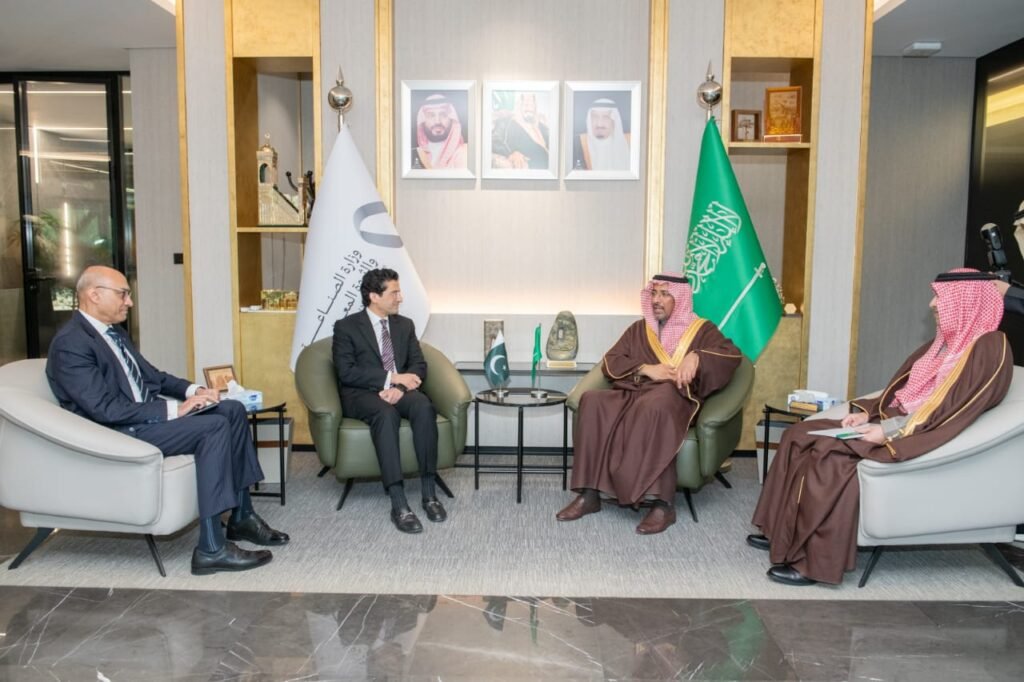
Pakistan Saudi Arabia mining cooperation has entered a decisive new phase as senior leadership from both countries held high-level discussions during the Future Minerals Forum (FMF) 2026 in Riyadh, signaling growing momentum for joint investment and collaboration in the global minerals sector. Federal Minister for Petroleum Ali Pervaiz Malik is leading a high-powered Pakistani delegation at FMF 2026, an international platform hosted by the Ministry of Industry and Mineral Resources of the Kingdom of Saudi Arabia, bringing together policymakers, investors, and mining leaders from around the world. Pakistan Saudi Arabia Mining Cooperation Highlighted in Ministerial Talks On the sidelines of FMF 2026, Federal Minister Ali Pervaiz Malik met with H.E. Bandar Ibrahim Al-Khorayef, Saudi Arabia’s Minister of Industry and Mineral Resources. The meeting focused on strengthening Pakistan Saudi Arabia mining cooperation by identifying new joint investment opportunities, expanding technical collaboration, and enhancing integration across the mineral value chain. The Saudi Minister emphasized that global attention is rapidly shifting toward mining and critical minerals, making bilateral cooperation more strategic than ever. He highlighted Pakistan’s geological diversity and affirmed Saudi Arabia’s willingness to share its technical expertise, knowledge resources, and institutional experience to support Pakistan’s mineral sector development. Pakistan’s Mineral Potential and Strategic Workforce Advantage During the discussions, Saudi officials recognized Pakistan’s young and dynamic workforce as a major competitive advantage, capable of supporting long-term mineral exploration, extraction, and processing projects. This demographic strength aligns with Saudi Arabia’s vision of building sustainable and diversified mineral supply chains across partner countries. Federal Minister Ali Pervaiz Malik reaffirmed Pakistan’s commitment to deepening Pakistan Saudi Arabia mining cooperation, describing the relationship as one built on long-standing brotherly ties and shared economic goals. Tethyan Belt and Reko Diq: Expanding the Scope of Pakistan Saudi Arabia Mining Cooperation Minister Malik highlighted the immense mineral wealth of Pakistan’s Tethyan Belt, noting that flagship projects like Reko Diq represent only a fraction of the country’s untapped potential. He also revealed ongoing efforts to establish collaboration between the Geological Survey of Pakistan and the Saudi Geological Survey, paving the way for joint exploration, data sharing, and advanced geological research. Beyond mining, the Minister identified fertilizer manufacturing and medical equipment production as high-potential sectors for joint ventures under the broader Pakistan Saudi Arabia mining cooperation framework. Strong Public–Private Representation Strengthens Pakistan’s Presence Pakistan’s delegation at FMF 2026 includes senior policymakers, heads of state-owned enterprises, private sector leaders, and prominent mining stakeholders. Key participants include Pakistan Petroleum Limited (PPL), OGDCL, Mari Energies, GHPL, FWO, PMDC, Saindak Metals, and mineral companies from Balochistan, alongside specialized mining service providers. This diverse representation reflects Pakistan’s integrated public–private approach to attracting foreign investment and developing a globally competitive minerals industry. Pakistan Pavilion Showcases Mineral Vision at FMF 2026 Pakistan’s participation at FMF 2026 is being organized by PPL in collaboration with the Ministry of Energy (Petroleum Division). Under the theme “Mineral Marvel – Unleashing Pakistan’s Mineral Revolution,” the Pakistan Pavilion highlights the country’s rich geology, flagship mining projects, and investor-friendly opportunities. Saudi Arabia’s Ambassador to Pakistan, H.E. Nawaf bin Saeed Ahmad Al-Malkiy, welcomed the delegation and reaffirmed full diplomatic support, praising the leadership of Prime Minister Muhammad Shehbaz Sharif and Federal Minister Ali Pervaiz Malik. During his visit, H.E. Bandar Ibrahim Al-Khorayef commended the Pavilion’s distinctive design and strong visual storytelling, calling it an effective representation of Pakistan’s mineral ambitions. Outlook: Pakistan Saudi Arabia Mining Cooperation Gains Global Relevance As global demand for critical minerals accelerates, Pakistan Saudi Arabia mining cooperation is emerging as a strategically important partnership with long-term economic and geopolitical significance. FMF 2026 has positioned both nations to move from dialogue to execution—unlocking investments, transferring knowledge, and jointly shaping the future of the regional minerals economy.

Gold Price in Pakistan Surges as Bullion Market Remains Volatile
Pakistan

Gold Price in Pakistan Surges as Bullion Market Remains Volatile

Gold price in Pakistan witnessed a fresh increase on Tuesday, reflecting continued volatility in the domestic bullion market amid global economic uncertainty and investor caution. According to the latest figures released by the All-Pakistan Gems and Jewelers Sarafa Association (APGJSA), the price of 24-karat gold rose by Rs900 per tola, highlighting strong underlying demand despite mixed global signals. Read More: https://theboardroompk.com/gold-price-in-pakistan-rallies-sharply-amid-global-economic-turmoil/ Gold Price in Pakistan Today – Latest Rates In the local market, 24-karat gold was sold at Rs481,862 per tola, compared to Rs480,962 in the previous session. On a per-gram basis, 10 grams of 24-karat gold increased by Rs771, reaching Rs413,118. Lower-purity gold also followed the upward trend. The price of 22-karat gold stood at Rs378,705 per 10 grams, making gold jewelry more expensive for retail buyers across Pakistan. This steady rise reinforces gold’s role as a preferred hedge against inflation, currency depreciation, and economic uncertainty in Pakistan. Silver Prices in Pakistan Follow Gold’s Uptrend Alongside gold, silver prices in Pakistan also moved higher. 24-karat silver per tola increased by Rs180, settling at Rs9,075, while 10 grams of silver gained Rs154, closing at Rs7,780. The synchronized movement in precious metals indicates sustained investor interest, particularly from those seeking safer asset classes during uncertain market conditions. Gold and Silver Performance – Key Market Snapshot A comparison of precious metal performance shows the strength of the ongoing uptrend: Over the day-on-day period, gold gained Rs900 per tola, while silver added Rs180. On a one-month basis, gold prices have increased by approximately Rs29,600 per tola, whereas silver has risen by Rs2,611. From the start of the fiscal year, gold has surged by over Rs131,000 per tola, underlining its exceptional performance. On a calendar year-to-date basis, gold remains up nearly Rs25,000, while silver has added more than Rs1,300. These figures highlight why gold price in Pakistan continues to attract investors, traders, and long-term savers alike. Global Gold Prices and Economic Impact In the international market, spot gold traded near $4,593 per ounce, slipping marginally by $5 or 0.11% from the previous session. The slight decline was attributed to profit-taking by investors and ongoing uncertainty surrounding the global economic outlook. Despite the mild correction, global gold prices remain historically elevated, providing strong support to domestic gold rates in Pakistan. Fluctuations in the US dollar, interest rate expectations, and geopolitical developments continue to influence bullion prices worldwide. What This Means for Investors and Consumers For investors, the rising gold price in Pakistan signals continued momentum in precious metals as a defensive investment. For consumers, particularly those planning weddings or jewelry purchases, higher prices may prompt cautious buying or delayed decisions. Market experts suggest that gold prices may remain volatile in the short term, with any major movement in global interest rates or currency markets likely to have a direct impact on local bullion prices. Outlook for Gold Price in Pakistan Looking ahead, analysts expect gold price in Pakistan to stay firm as long as inflationary pressures, currency risks, and global economic uncertainty persist. Any significant movement in international gold prices or the Pakistani rupee could further influence domestic rates. For now, gold continues to shine as one of the most closely watched commodities in Pakistan’s financial landscape.

Pakistan Cotton Arrivals 2025 Reflect Regional Divide in Output
Pakistan

Pakistan Cotton Arrivals 2025 Reflect Regional Divide in Output

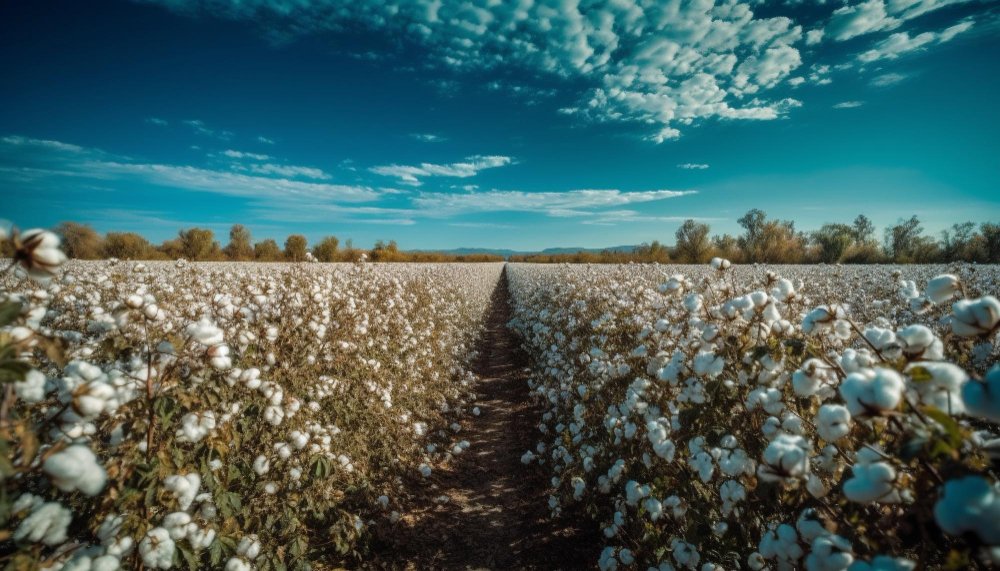
Pakistan cotton arrivals 2025 reached 5.43 million bales by December 31, marking a 0.33% year-on-year decline compared to the same period last year, according to the latest data released by the Pakistan Cotton Ginners Association (PCGA) and the Pakistan Cotton Corporation (PCC). Read More: https://theboardroompk.com/kse-100-index-performance-declines-amid-broad-based-selling-pressure/ While the overall decline appears marginal, a deeper look into provincial performance reveals a sharp divergence between Punjab and Sindh, highlighting structural imbalances within Pakistan’s cotton economy. Pakistan Cotton Arrivals 2025: National Overview As of the end of December 2025, cotton arrivals at ginning factories totaled 5.43 million bales, compared to 5.45 million bales in December 2024. On a month-on-month basis, arrivals increased by nearly 6%, indicating some seasonal recovery momentum as harvesting peaked across major cotton-growing belts. However, despite this short-term improvement, overall volumes remain well below historical averages, reinforcing concerns about Pakistan’s long-term cotton production capacity. Punjab’s Cotton Output Declines Sharply in 2025 Pakistan Cotton Arrivals 2025 Show Punjab Under Pressure Punjab, traditionally a major contributor to national cotton output, recorded 2.54 million bales by December 31, 2025. This represents a 4.44% year-on-year decline from 2.66 million bales in the same period last year. Month-on-month, Punjab did show an 8.17% increase, rising from approximately 2.35 million bales in November 2025. However, this recovery was insufficient to offset deeper seasonal losses caused by: • Reduced cotton acreage• Water availability challenges• Pest infestations• Farmers shifting to alternative, higher-margin crops Punjab’s declining contribution continues to weigh heavily on Pakistan cotton arrivals 2025, underscoring persistent vulnerabilities in the province’s cotton ecosystem. Sindh Leads Growth in Pakistan Cotton Arrivals 2025 Sindh Offsets National Decline In contrast, Sindh province emerged as the stabilizing force for Pakistan’s cotton sector this season. Cotton arrivals in Sindh reached 2.89 million bales by December 31, 2025, reflecting a 3.58% year-on-year increase compared to 2.79 million bales in December 2024. On a month-on-month basis, Sindh recorded a 3.92% rise, adding over 100,000 bales from November levels. The province’s performance allowed it to retain its position as Pakistan’s largest cotton-producing region, partially compensating for Punjab’s contraction. Improved crop management practices and relatively better water availability contributed to Sindh’s resilience during the 2025 cotton season. Historical Context Highlights Structural Weaknesses Pakistan Cotton Arrivals 2025 Far Below Peak Levels Historical trends underline the severity of the current slowdown. Pakistan recorded peak cotton arrivals of 8.17 million bales in December 2023, illustrating a significant gap between recent performance and prior production highs. The sharp contrast between peak output and Pakistan cotton arrivals 2025 reflects deeper, long-standing challenges that remain unresolved within the sector. Key Challenges Facing Pakistan’s Cotton Sector Despite modest gains in Sindh, Pakistan’s cotton industry continues to struggle with several structural constraints: • Chronic water shortages• Rising incidence of pest attacks• Inadequate support prices for farmers• Competition from alternative cash crops such as sugarcane and maize• Limited adoption of modern seed technology Without comprehensive policy intervention, these factors threaten to further erode Pakistan’s cotton production base and increase reliance on imported raw material for the textile industry. Outlook for Pakistan Cotton Arrivals 2025 While short-term seasonal gains are possible in the remaining months of the cotton year, overall Pakistan cotton arrivals 2025 are expected to remain under pressure unless systemic reforms are introduced. Strengthening farmer incentives, improving irrigation infrastructure, and investing in pest-resistant seed varieties will be critical to reversing the declining trend. For Pakistan’s textile-driven economy, the performance of the cotton sector remains a strategic priority, making policy clarity and sectoral support more urgent than ever.

Australia Student Visa Risk India: Canberra Flags India as High-Risk for Student Visas
World

Australia Student Visa Risk India: Canberra Flags India as High-Risk for Student Visas

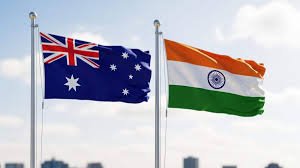
Australia student visa risk India has become a major concern for international education stakeholders after Australian authorities officially placed India in the highest-risk category for student visa applications. The move signals tighter scrutiny, longer processing times, and more rigorous documentation requirements for Indian students aspiring to study in Australia. The decision aligns India with Nepal, Bangladesh, and Bhutan countries now facing enhanced checks under Australia’s revised student visa risk assessment framework. This development marks a significant policy shift that could reshape student mobility trends, university enrollments, and bilateral education ties. Why Australia Student Visa Risk India Has Increased Under Australia’s updated migration risk framework, student visa applicants are assessed based on country-level risk indicators, visa compliance history, and post-study outcomes. The reclassification of India into the highest-risk tier reflects concerns raised by Australian authorities regarding: • Higher visa refusal rates• Non-genuine student applications• Increased cases of overstaying visas• Misuse of student visas for employment While Indian students remain one of the largest international cohorts in Australia, policymakers argue that stricter controls are needed to maintain the integrity of the education and migration system. Australia Student Visa Risk India: What Has Changed Previously, Indian students benefited from relatively streamlined visa processing due to strong education ties between both countries. However, under the new framework, applicants from high-risk countries face enhanced scrutiny at every stage of the application process. Instead of a simplified checklist, students must now demonstrate stronger financial capacity, clearer academic progression, and verifiable intent to return home after studies. Universities enrolling students from high-risk countries are also subject to greater compliance obligations. Countries Classified Under Highest Student Visa Risk Australia’s highest-risk student visa category now includes: • India• Nepal• Bangladesh• Bhutan Applicants from these countries are subject to additional background checks, higher evidence thresholds, and stricter assessment of Genuine Student (GS) criteria. Impact of Australia Student Visa Risk India on Education Sector The reclassification could have far-reaching consequences for Australia’s international education industry, which contributes billions of dollars annually to the economy. Indian students alone represent a substantial share of enrollments across Australian universities, vocational institutes, and English-language colleges. Education consultants expect: • A potential short-term decline in Indian student applications• Increased visa rejection rates• Longer processing timelines• Higher demand for alternative destinations such as the UK, Canada, and Germany Australian universities may also need to adjust recruitment strategies and provide stronger compliance support to maintain enrollment numbers. Business and Economic Implications From a broader business perspective, the Australia student visa risk India decision could influence workforce planning, especially in sectors reliant on international graduates such as IT, healthcare, and engineering. Australia has long depended on international students as a pipeline for skilled migration, making this policy shift particularly significant. Analysts suggest that while the policy aims to curb misuse, it must balance economic needs with migration controls to avoid unintended labor shortages. What Indian Students Should Do Now Despite the stricter environment, Australia remains a top study destination. Education experts advise Indian students to: • Prepare stronger financial documentation• Choose accredited and reputable institutions• Ensure clear academic progression• Demonstrate genuine intent to study• Seek professional visa guidance Well-prepared applications with transparent documentation still stand a strong chance of approval under the new system. Australia Student Visa Risk India Signals Policy Reset The Australia student visa risk India designation marks a clear policy reset by Canberra, reflecting tighter immigration controls amid growing global student mobility. While the move introduces new hurdles, it also underscores the importance of credibility, compliance, and transparency in international education. For students, institutions, and businesses alike, adapting to this evolving visa landscape will be critical in navigating the future of cross-border education.

Scroll to Top