Author name: Web Desk

Pakistan, Iran Vow to Hit $10bn Trade Target, Revive Gas Pipeline
Uncategorized

Pakistan, Iran Vow to Hit $10bn Trade Target, Revive Gas Pipeline

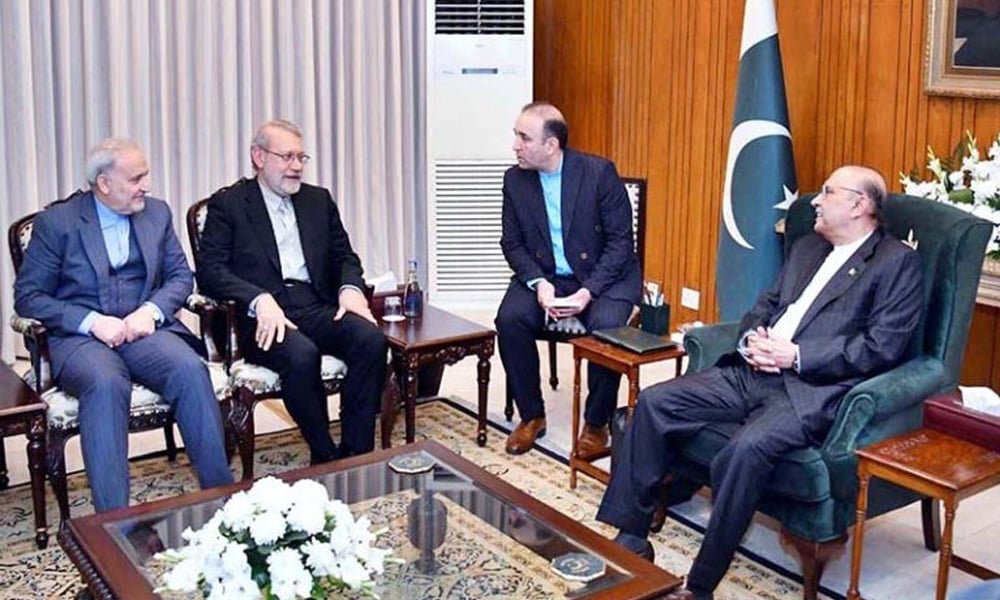
ISLAMABAD: Pakistan and Iran on Tuesday set an ambitious $10 billion bilateral trade target, pledging to fast-track economic ties and resolve long-stalled energy projects during a high-level meeting at Aiwan-e-Sadr.Iran’s Secretary of the Supreme National Security Council, Dr Ali Ardeshir Larijani, who called on President Asif Ali Zardari, conveyed warm greetings from Supreme Leader Ayatollah Ali Khamenei and President Masoud Pezeshkian. He thanked Pakistan for its “unwavering diplomatic and moral support” during Iran’s recent 12-day conflict, declaring that “Pakistan’s victory is our victory.”President Zardari reciprocated Iran’s solidarity after Pakistan’s floods and its consistent backing on Kashmir and Palestine, while praising Tehran’s resilience against “Israeli aggression.”Both sides agreed to grant Pakistani goods preferential market access in Iran and prioritise rail connectivity to boost trade and facilitate Zaireen pilgrimage. Reviving the delayed Iran-Pakistan Gas Pipeline featured prominently, with Zardari stressing a “mutually workable solution” amid Pakistan’s acute energy crunch. Recent technical talks in Islamabad were welcomed, with follow-up discussions slated for Tehran.The leaders described frequent high-level exchanges as evidence of deepening fraternal ties rooted in shared history, faith and culture, vowing enhanced cooperation in security, counter-terrorism and regional stability.

Pakistan’s Unemployment Hits 21-Year High of 7.1% in 2024-25
Pakistan

Pakistan’s Unemployment Hits 21-Year High of 7.1% in 2024-25

Islamabad: Pakistan’s unemployment rate climbed to 7.1% in fiscal year 2024-25, the highest since 2003-04, according to the long-delayed Labour Force Survey released Tuesday by the Pakistan Bureau of Statistics. The figure marks a sharp rise from 6.3% in 2020-21 and surpasses the previous peak of 6.9% recorded in 2018-19.Planning Minister Ahsan Iqbal blamed the surge on the IMF’s stringent $7 billion stabilisation programme, climate-induced disasters, and global price shocks that curbed economic growth to under 3% annually. “These factors severely constrained job creation,” he said, noting that 3.5 million new workers enter the market yearly.Khyber Pakhtunkhwa recorded the highest rate at 9.6%, followed by Punjab (7.3%). Sindh had the lowest at 5.3%. Of nearly 180 million working-age Pakistanis, a staggering 118 million—two-thirds—are unpaid, largely performing household chores, childcare, livestock rearing, or fetching water.The survey also revealed agriculture’s employment share dropped over 4% to 33.1%, while manufacturing fell marginally to 14.4%, hit by high interest rates and energy costs. Over 72% of non-agricultural jobs remain informal.Released under IMF conditions, the report underscores Pakistan’s struggle to absorb its growing labour force amid structural challenges and external pressures.

ADB Approves $48 Million Additional Loan for Balochistan Water Project
World

ADB Approves $48 Million Additional Loan for Balochistan Water Project

Manila, 26 November 2025 – The Asian Development Bank (ADB) has approved an additional $48 million loan to complete the delayed Balochistan Water Resources Development Sector Project in Pakistan, aimed at tackling severe water scarcity in the country’s largest province.The funding will finalize critical components including the Churi Infiltration Gallery subproject, development of the Siri Toi Dam command area, and watershed management initiatives previously stalled due to budget constraints. An innovative piped irrigation network will replace traditional open channels in the Siri Toi area, promising higher efficiency, reduced water losses, and better service delivery.Balochistan, home to 13 million people, relies on agriculture for nearly two-thirds of its economic output and 60% of employment. Yet frequent droughts, poor water management, and climate change have pushed poverty rates almost double the national average.“The project in the Zhob and Mula river basins supports livelihoods and creates economic opportunities, especially for women in agriculture,” said ADB Pakistan Country Director Emma Fan.Upon completion, Siri Toi Dam will store 36 million cubic meters of water, irrigating 16,592 hectares and bolstering climate-resilient farming. Watershed measures including afforestation and check dams will curb soil erosion and flood risks.Co-financed by Japan-funded trusts through ADB, the initiative seeks sustainable, equitable water management for long-term prosperity in one of Pakistan’s most vulnerable regions

Mashreq NEO Goes Live: Pakistan’s First Shariah-Compliant Digital-Only Bank
World

Mashreq NEO Goes Live: Pakistan’s First Shariah-Compliant Digital-Only Bank

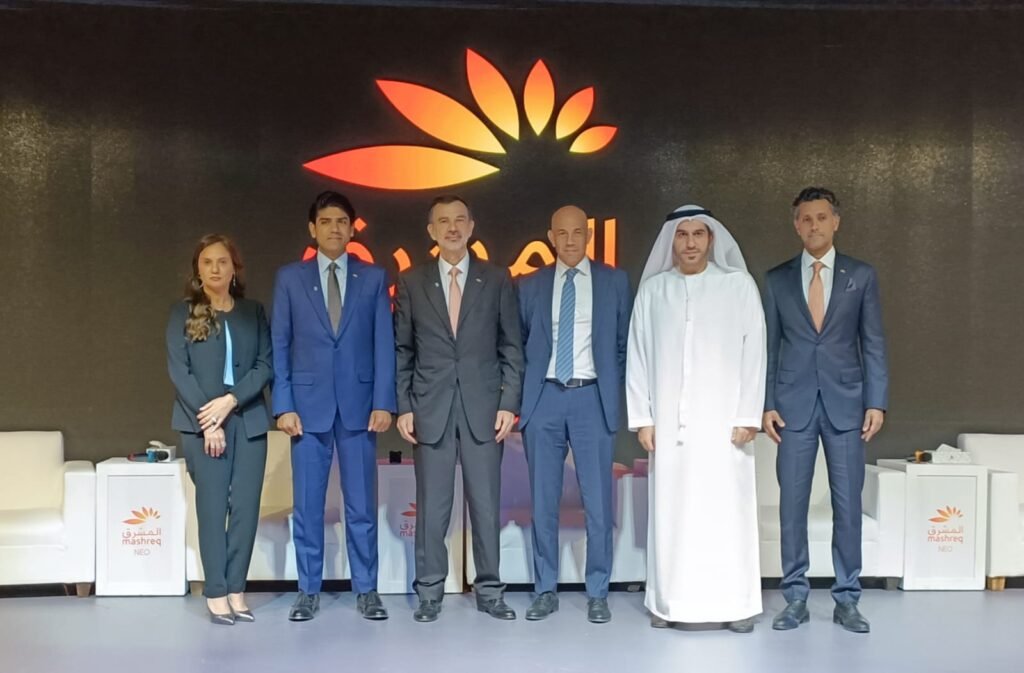
Karachi: In a major step toward accelerating Pakistan’s digital and financial inclusion landscape, Mashreq has officially launched Mashreq NEO, the country’s first Islamic-first digital banking platform. The launch is a significant milestone for the MENA-based financial institution as it expands its digital footprint into Pakistan. Fully operational nationwide, Mashreq NEO offers a seamless, paperless, and Shariah-compliant digital banking experience designed for both resident and non-resident Pakistanis. Customers can open accounts within minutes, access profit-bearing current and savings accounts, and enjoy free digital transactions along with nationwide ATM availability. A key highlight of the platform is its Shariah-compliant remunerative current account, offering a market-first profit rate of up to 5% per annum. Additionally, its Islamic savings account delivers competitive returns of up to 10%, further strengthening its appeal in a country where Islamic banking adoption continues to grow. “Mashreq’s mission has always been to advance how people bank, save, and grow,” said Fernando Morillo, Group Head of Retail Banking at Mashreq and Chairman of Mashreq Bank Pakistan. “The launch of Mashreq NEO underscores our long-term commitment to empowering individuals and businesses in one of the world’s most dynamic digital markets with our global innovation legacy.” Built on a cloud-based infrastructure aligned with State Bank of Pakistan regulations, Mashreq NEO integrates international-grade security, scalability, and transparency. The bank aims to onboard 10 million customers within the next five years, with a strong focus on salaried professionals, freelancers, women entrepreneurs, and overseas Pakistanis. The platform’s debit cards, powered by leading payment networks, provide access to exclusive discounts at more than 30,000 outlets nationwide. For Non-Resident Pakistanis based in the UAE, the bank will offer instant account opening and zero-fee remittances by leveraging Mashreq’s global systems. “Pakistanis have always found a way to adapt, innovate, and move forward. It’s time their banking did the same,” said Muhammad Hamayun Sajjad, CEO of Mashreq Bank Pakistan. “Our Islamic-first digital model is designed to make everyday banking simple, transparent, and inclusive.” Industry observers note that Mashreq NEO’s entry aligns with the country’s broader push toward a digitally enabled financial ecosystem, as highlighted in recent analyses calling for deeper integration of digital channels to expand financial inclusion. With its global expertise and localized approach, Mashreq NEO aims to serve as a bridge between technological innovation and Pakistan’s evolving financial needs offering secure, ethical, and accessible digital banking to millions across the country.

Pakistan-Bangladesh direct flights to start in December; trade and connectivity set to increase
World

Pakistan-Bangladesh direct flights to start in December; trade and connectivity set to increase

LAHORE: Bangladesh’s High Commissioner Iqbal Hussain Khan announced that Mahan Air is likely to start three weekly flights between Karachi and Dhaka from next month. This would be a major step for trade between the two brotherly nations and a significant leap in strengthening connectivity.Speaking at the Lahore Chamber of Commerce & Industry (LCCI), the High Commissioner added that the visa process has been simplified. He said visas are now being issued on the joint recommendation of LCCI and the Bangladesh Honorary Consulate in Lahore, adding that visas will be issued to members within three to four days, making travel between the two countries faster and easier.The High Commissioner was warmly received by LCCI President Faheem ur Rehman Saigol. Senior Vice President Tanveer Ahmed Sheikh, EC Member Shouban Akhtar, former EC Member Naeem Hanif, and diplomat Mahfujol Hassan from the Bangladesh High Commission were also present at the event.LCCI President Faheem ur Rehman Saigol emphasized the historical and cultural ties between Pakistan and Bangladesh, describing the two countries as sharing a common heritage. He said Pakistan can increase rice exports to Bangladesh and also seek guidance from Bangladesh in the garments sector. He noted that both nations have opportunities to collaborate in IT, automobiles, and other industries. Currently, bilateral trade stands at approximately 700 million dollars, but there is potential to increase it to 3 billion dollars over the next few years. President Saigol added that direct flights would further enhance trade relations, and LCCI is ready to provide full support to the Bangladesh High Commission in this regard.The High Commissioner invited the LCCI President to lead a delegation to Bangladesh, to which President Saigol responded positively, stating that a delegation would visit Bangladesh soon. Highlighting trade opportunities, High Commissioner Khan said Pakistan can export rice to Bangladesh, while Bangladesh can supply fresh pineapples to Pakistan. He also pointed out significant potential in textiles and ready-made garments.He further mentioned that a direct cargo shipping service will soon be launched. While a cargo service between the two countries has been operational since last December, rising trade demand now requires a dedicated direct cargo route.In the education sector, the High Commissioner encouraged both countries to collaborate. The Higher Education Commission of Pakistan will soon send a delegation to Bangladesh, comprising representatives from twelve universities, with the aim of attracting more Bangladeshi students to study in Pakistan.He also highlighted Pakistan’s tourism sector as an area with considerable potential. The High Commissioner stressed the shared culture, history, and values of the two nations, describing them as closely connected and united as one community.

After MNCs Exit, Govt Wakes Up to Reduce the Taxes– But Economists Say Investor Trust is Very Hard to Regain
Pakistan

After MNCs Exit, Govt Wakes Up to Reduce the Taxes– But Economists Say Investor Trust is Very Hard to Regain

ISLAMABAD: Leading economists have sharply criticised the government’s belated move to slash or abolish super tax rates, saying the decision comes only after irreparable damage to investment and exports, caused by a narrow “accountancy mindset” rather than an economic one. The backlash intensified on social media after value investor Abdul Rehman Najam revealed that super tax rates are expected to be significantly reduced, with complete removal likely for exporters in the next budget. “After exit of multinationals, Govt is realising such high tax rates are back-breaking,” he posted, highlighting how effective tax rates nearing 50% on profits drove companies away. Former PTI economic spokesperson Muzzammil Aslam echoed the sentiment, stating: “This is the dilemma — we apply policy on the basis of accounting approach and ignore the economic approach. By the time investor decides to quit, it’s not easy to resume.” Economists argue the FBR’s obsession with short-term revenue collection blinded policymakers to long-term consequences. “You cannot tax growth to death and then act surprised when factories close and multinationals leave,” said one senior analyst. The recent exits of global giants, including Unilever, are cited as direct fallout of the super tax regime introduced in 2022. While some welcome the reported rollback as a step forward, most experts warn the harm — lost FDI, shuttered plants, and eroded investor confidence — cannot be quickly reversed. “Policy made by accountants destroys economies,” a Lahore-based economist remarked, summing up the widespread frustration now dominating economic discourse.

PSX: Another Lackluster Day; -KSE-100 Index Closed at 161,693 Points, Down Around 300 points
Pakistan

PSX: Another Lackluster Day; -KSE-100 Index Closed at 161,693 Points, Down Around 300 points

KARACHI: PSX had another lackluster day as the KSE-100 Index closed at 161,693 points, down 292 points or 0.18%. Throughout the session, investors largely stayed on the sidelines amid the absence of meaningful positive triggers. The benchmark moved within a range of 1,543 points, recording an intra-day high of 162,820 (+836 points; 0.52%) and a low of 161,277 (-707 points; 0.44%), said Ali Najib, Deputy Head of Trading at Arif Habib Ltd. On the corporate front, OGDC notified the exchange that it has received the fifth instalment of Rs 7.725 billion as interest payment from Power Holding (Private) Limited (PHL), in line with the Government of Pakistan’s approved mechanism. Sector-wise, Fertilizer, E&P, Banks and Power bore most of the selling pressure, with ENGROH, PPL, NBP, BAHL and HUBC collectively eroding 304 points. Meanwhile, FFC, LUCK, BAFL, POL and SYS saw renewed buying interest, adding a combined 317 points to the index. Market activity remained moderate, with 589.2 million shares traded and a turnover of Rs 22.1 billion. WTL led the volume chart with over 59 million shares. Outlook: PSX experienced another range-bound day, with the benchmark fluctuating within a narrow band of 1,543 points. Looking ahead, the index is expected to consolidate within the 157k–164k zone for the remainder of the week. To preserve stability and build a base for any potential rebound, the market should ideally avoid posting a new low in the upcoming sessions.

Business Community Rejects OGRA’s Gas Price Hike, Terms Decision Devastating for Economy
Pakistan

Business Community Rejects OGRA’s Gas Price Hike, Terms Decision Devastating for Economy

Karachi: The Korangi Association of Trade and Industry (KATI) President, Ikram Rajput, has strongly rejected the Oil and Gas Regulatory Authority’s (OGRA) decision to increase gas tariffs for Sui Southern Gas Company, warning that the move will intensify economic hardships for both industries and the public.Rajput said the price hike is unjustified in the current economic environment and places an unfair burden on already struggling manufacturers and households. He stressed that the decision ignores key positive economic indicators, including a reduction in UFG (unaccounted-for gas) losses and declining interest rates, which should have supported stable or reduced gas tariffs.The KATI president called on Prime Minister Shehbaz Sharif to immediately intervene and direct the withdrawal of the revised gas tariff, noting that the increase will make Pakistani industries uncompetitive in global markets and undermine export performance.He reminded the government of its earlier commitments to support export-oriented industries, saying the tariff hike is contradictory to those promises. Rajput urged policymakers to prioritize pro-industry and pro-consumer measures that would help stabilize the economy and reduce unemployment.Rajput also criticized the tariff increase without first addressing gas theft and systemic inefficiencies, arguing that pushing the financial burden onto consumers is unjust. He cautioned that rising gas costs will particularly harm industries dependent on gas-fired plants, already grappling with high production costs and weakening international demand.He warned that escalating gas prices will further erode export competitiveness, deter investment, and heighten uncertainty among the business community. Rajput reiterated his appeal to the prime minister, urging him to place the welfare of citizens and industries at the center of national economic decision-making.“Pakistan’s economic recovery depends on sustainable industrial growth,” he said. “Raising gas prices at this stage risks undermining both industry and employment. The government must act swiftly in the national interest.”

COP30: Pakistan Tells World It's Rooftop Panels to Outstrip Daytime Grid Demand in 2026
Pakistan

COP30: Pakistan Tells World It’s Rooftop Panels to Outstrip Daytime Grid Demand in 2026

BELEM, Brazil: In a landmark shift for an emerging economy, Pakistan’s rooftop solar generation will exceed daytime grid demand in major industrial regions next year, according to Aisha Moriani, Secretary of the Ministry of Climate Change and Pakistan’s lead negotiator.She confirmed that cities like Lahore, Faisalabad, and Sialkot will experience “negative grid-linked demand” during peak sunshine hours in 2026 as behind-the-meter solar completely offsets consumption in large areas.Driven by frequent power outages and steep tariff hikes, Pakistan has become the world’s third-largest solar panel importer. Its solar adoption rate now surpasses even neighbouring China on a per-capita basis, slashing emissions and household bills but hammering the finances of debt-laden distribution companies.“Pakistan’s challenge is no longer whether renewables will grow, but how fast the grid, regulations, and market design can adapt,” Moriani said.To address revenue losses, the government plans new tariffs for large solar users and revised fixed charges to ensure fair contributions toward grid maintenance. The solar boom has also prompted Islamabad to renegotiate LNG contracts with Qatar, cancel Eni cargoes, and seek greater flexibility and lower prices.While grid demand is still projected to rise 3-4% this year, the rapid solar surge means traditional consumption growth will be increasingly suppressed during daylight hours, marking a turning point for South Asia’s energy landscape.

Pakistan and Malaysia agree on cadet exchange, port tech transfer & port collaboration framework
World

Pakistan and Malaysia agree on cadet exchange, port tech transfer & port collaboration framework

Islamabad: Pakistan and Malaysia have agreed to establish a new cooperation framework aimed at enhancing maritime training programs and deepening collaboration in the port sector. The breakthrough came during a bilateral meeting between Federal Minister for Maritime Affairs, Muhammad Junaid Anwar Chaudhry, and Malaysia’s Deputy Minister of Transport, Datuk Hasbi bin Habibollah, held on the sidelines of international maritime events in the United Kingdom on Tuesday. Both ministers reviewed existing cooperation under various MoUs and identified new areas for joint ventures, including faculty and cadet exchange programs, specialized training in port management, and technology transfer initiatives. Minister Chaudhry emphasized that the enhanced partnership will significantly boost Pakistan’s maritime human resource capabilities and modernize Gwadar and Karachi ports. An official statement from the Ministry termed the talks “highly productive,” adding that working groups will be formed soon to finalize actionable plans before the next Joint Ministerial Commission meeting.

Scroll to Top