Author name: Web Desk

Ghandhara to Assemble Chinese Luxury Buses Locally
Auto

Ghandhara to Assemble Chinese Luxury Buses Locally

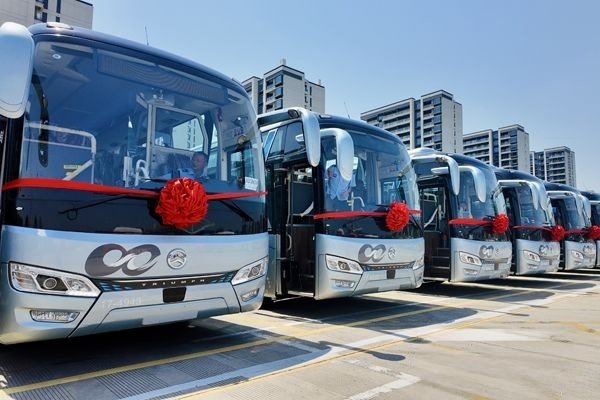
Pakistan’s automotive industry is poised for growth as Ghandhara Industries Limited announces a key alliance with China’s Zhongtong Bus Holding Co. Limited. The partnership, revealed through a filing to the Pakistan Stock Exchange on Friday, aims to roll out Zhongtong’s high-end buses in the local market. This move marks a major step in diversifying Ghandhara’s offerings, with plans to establish a dedicated assembly line alongside its current bus body production setup. Fully imported luxury models are slated for introduction in early 2026, while domestic manufacturing will kick off by mid-year, pending necessary approvals and facility upgrades. Zhongtong, established in 1958, specializes in eco-friendly and energy-efficient buses, serving international markets. Amid Pakistan’s auto sector—long led by Japanese brands like Suzuki, Honda, and Toyota—the deal intensifies rivalry from newcomers such as Hyundai, Kia, and Sazgar Engineering. Adding to the momentum, NexGen Auto, part of the Nishat Group, recently started electric vehicle output ahead of its timeline this month, signaling a shift toward innovative mobility solutions.

Competition Commission of Pakistan Cracks Down on Sugar Mills for Price-Fixing Cartel in Punjab
Pakistan

Competition Commission of Pakistan Cracks Down on Sugar Mills for Price-Fixing Cartel in Punjab

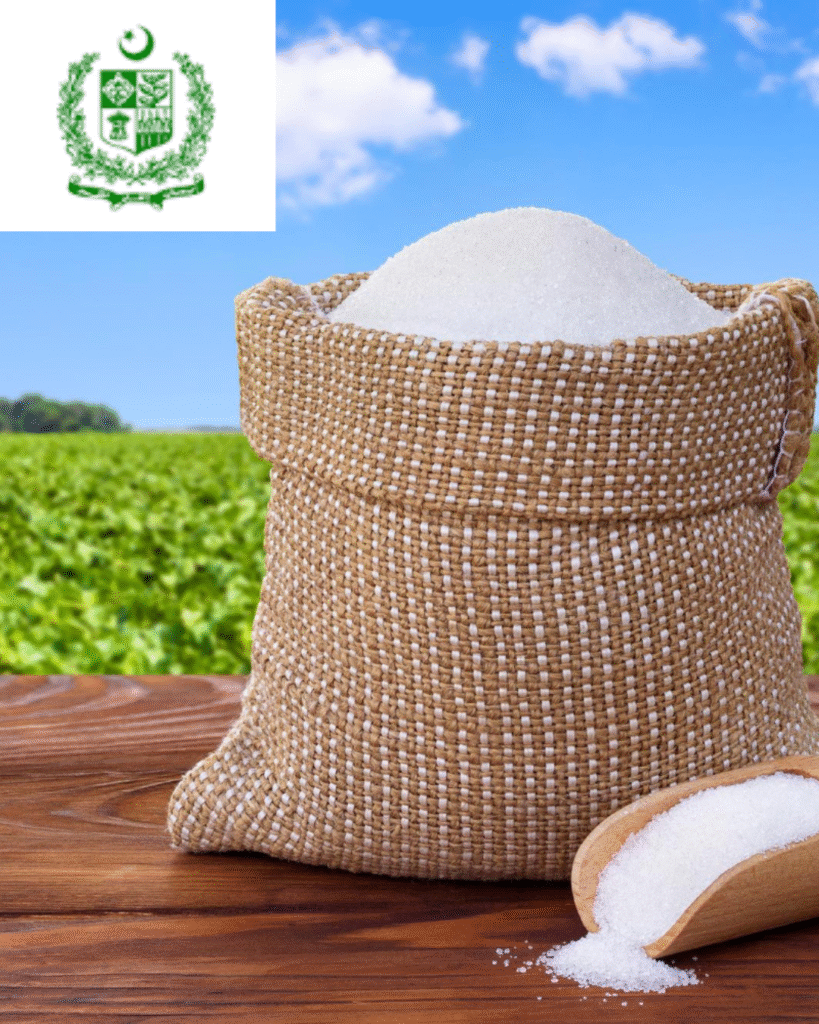
ISLAMABAD: The Competition Commission of Pakistan (CCP) has issued show cause notices to ten sugar mills in Punjab for colluding in relation to start of crushing season and fixing the sugarcane procurement price at Rs. 400 per maund.CCP’s review found that representatives of these mills held a meeting on November 10, 2025, hosted Fatima Sugar Mills, where they collectively decided to commence crushing on November 28, instead of the Punjab Sugarcane Commissioner’s officially notified date of November 15. The mills also jointly agreed to fix the cane purchase price at Rs. 400 per maund, an act that constitutes collusive decision-making.The meeting was chaired by Rana Jameel Ahmad Shahid, Resident Director of Fatima Sugar Mills. It was attended by representatives of Sheikhoo Sugar Mills, Thal Industries Corporation, Tandlianwala Sugar Mills (Rehman Hajra Unit), JK-1 Sugar Mills, Ashraf Sugar Mills, and Kashmir Sugar Mills, while Siraj Sugar Mills, Two Star Sugar Mills, and Haq Bahoo Sugar Mills joined online.Under Section 4 of the Competition Act, 2010, any agreement or arrangement between market players to fix prices or coordinate on business decisions is strictly prohibited and constitutes a violation of competition law.There is a significant imbalance in negotiation power between sugar mill owners and farmers. Ideally, the sugarcane price should be determined through individual negotiations between each mill and farmers, based on the natural interplay of demand and supply. However, instead of allowing market forces to operate, all mill owners collectively and unilaterally fixed the price at PKR 400 per 40 kg.Taking cognizance of this collusion, the CCP has directed all ten mills to submit a written response within 14 days, explaining why legal proceedings should not be initiated against them for entering into prohibited agreements, influencing the sugarcane market, and gaining undue commercial advantage through a coordinated delay in crushing. Such delay crushing at the start of the season can disrupt the supply of sugar in the market, potentially leading to artificial shortages and a rise in retail sugar prices. Chairman CCP, Dr. Kabir Ahmed Sidhu, has issued a strict warning to all business associations and industry groups, stating, “No association or group of competitors will be allowed to form cartels or make collective commercial decisions that harm consumers and distort markets. CCP will take firm action against any entity found engaging in such anti-competitive behaviour and penalize.”

Government Set to Slash Petrol & Diesel Prices from December 1
Pakistan

Government Set to Slash Petrol & Diesel Prices from December 1

Islamabad: Motorists and businesses are set for significant relief as the government is expected to reduce petroleum product prices effective December 1, 2025, following a sustained decline in international oil and refined product prices.Leading brokerage house Arif Habib Limited (AHL) estimates a cut of Rs4.15 per litre in petrol prices, bringing the new rate to approximately Rs261.30 per litre from the current Rs265.45. High-Speed Diesel (HSD), widely used in transport and agriculture, is projected to become cheaper by Rs6.50 per litre, dropping to around Rs271.94 from Rs278.44.The reduction is driven by weaker global oil markets. During the November 17–27 review period, Brent crude averaged $63.43 per barrel (down 2.5%), WTI fell 1.4% to $59.04, and Arab Light declined 2.2% to $65.61 per barrel. Refined product prices also softened, with petrol and diesel spreads contracting by 6% and 8%, respectively.AHL stated, “As per our estimates, price of HSD is expected to decrease by Rs6.50/ltr, while MS price is expected to decline by Rs4.15/ltr, effective 1st Dec’25.”The Oil and Gas Regulatory Authority (Ogra) will submit its working to the Finance Ministry by November 30, with the final notification widely expected to reflect these reductions, offering much-needed respite amid easing global energy prices.

Amid Increasing Russian Companies Intrest in Pakistan owing to digitalization, CCP Signs MoU with Russian Antitrust Authority
Pakistan

Amid Increasing Russian Companies Intrest in Pakistan owing to digitalization, CCP Signs MoU with Russian Antitrust Authority

ISLAMABAD: Amid Increasing Russian Companies Intrest in Pakistan owing to digitalization, the Competition Commission of Pakistan (CCP) and the Federal Antimonopoly Service (FAS) of the Russian Federation have signed a Memorandum of Understanding to enhance bilateral cooperation in the field of competition policy. The MoU was signed by Chairman CCP Dr. Kabir Ahmed Sidhu and FAS Deputy Head Mr. Andrey Tsyganov during the 10th session of the Russia–Pakistan Intergovernmental Commission on Trade, Investment, Scientific and Technical Cooperation. The signing marks a significant step toward deepening institutional coordination, promoting fair market practices, and strengthening economic ties between the two countries. The MoU provides a structured framework for collaboration, including the exchange of expertise, best practices, and regulatory experience in areas such as cartel investigations, abuse of dominance, merger control, deceptive marketing, and sectoral competition assessments. Under the agreement, both authorities will engage through regular meetings, consultations, workshops, expert exchanges, and joint research initiatives. FAS was established 35 years ago and operates with a significantly wider mandate compared to the CCP. It has nearly 1,000 employees at its headquarters, whereas the CCP has around 250 staff members in Islamabad. FAS also maintains independent regional offices that play a highly effective role in curbing cartelization and deceptive marketing practices. The CCP stands to learn a great deal from Russia’s extensive regulatory experience, and both sides will hold joint sessions in the near future to deepen cooperation and knowledge sharing.The cooperation is expected to pave the way for stronger regulatory coordination, enhanced enforcement capacity, and more competitive and consumer-friendly markets in both Pakistan and Russia.

Past IPP Deals “Not Transparent”, Admits Energy Minister
Politics

Past IPP Deals “Not Transparent”, Admits Energy Minister

Islamabad: Federal Minister for Energy Sardar Owais Ahmad Khan Leghari on Thursday revealed that Pakistan is fast emerging as one of the world’s quickest-growing solar markets, with nearly 19,000 MW of solar projects under development. Addressing a seminar organised by the Pakistan Business Council, he announced that renewable energy now constitutes 55% of the national power mix.For the first time, the government has rolled out 28 major structural reforms with a long-term vision, the minister said, adding that tangible results will soon be visible. He acknowledged that several previous agreements with Independent Power Producers (IPPs) “were not transparent” and confirmed ongoing renegotiations to ease the circular debt burden alongside phasing out inefficient plants.Leghari highlighted upcoming amendments to net-metering rules, performance improvement of distribution companies, DISCO privatisation, and the imminent launch of a competitive electricity market. “The government will no longer be the sole buyer; direct buyer-seller transactions will become the norm,” he stated, emphasising enhanced governance, transparency and financial stability in the sector.

Banks to Remain Open Till 5:00 PM on Saturday, Nov 29 for Tax & Duty Payments
Pakistan

Banks to Remain Open Till 5:00 PM on Saturday, Nov 29 for Tax & Duty Payments

To facilitate taxpayers in making over-the-counter (OTC) payment of Government duties and taxes, it has been decided that all Saturday opening branches of commercial banks (including NBP branches handling customs collection) shall observe extended working hours from 09:00 A.M. to 05:00 P.M. on Saturday, November 29, 2025. The NBP designated branches manually collecting Government receipts and payments shall settle their transactions with respective SBP-BSC field office / head office on the same day, immediately after completion of the same-day clearing process. To ensure same day settlement, all instruments related to Government receipts and payments presented at bank counters on November 29, 2025 shall be collected by NIFT through Special Clearing at 05:30 P.M. The NIFT shall also provide the clearing fate of these instruments by 11:30 P.M. on the same day.

Alibaba Unveils Quark AI Glasses: A Stylish Challenge to Meta's Wearables Empire
World

Alibaba Unveils Quark AI Glasses: A Stylish Challenge to Meta’s Wearables Empire

Alibaba Group has thrown its hat into the red-hot AI wearables ring, launching the Quark AI glasses in China today—a sleek bid to disrupt Meta’s dominance in the sector. Priced accessibly from 1,899 yuan ($268) for the base G1 model, the eyewear-like device is powered by Alibaba’s in-house Qwen large language model and companion app, blending everyday style with cutting-edge smarts.Unlike Meta’s bulkier Ray-Ban smart glasses or Oculus headsets, Quark’s black plastic frames mimic ordinary spectacles, prioritizing subtlety over spectacle. The premium S1 variant, starting at 3,799 yuan ($537), ups the ante with built-in micro-OLED displays that overlay contextual info—like real-time translations or product prices—directly into the user’s view. Both models boast swappable lenses for customization and deep ties to Alibaba’s ecosystem, enabling seamless Alipay payments, Taobao shopping scans, and on-the-go voice queries.First teased in July, the glasses hit major platforms like Tmall, JD.com, and Douyin immediately, with pre-orders already surging. Analysts hail the move as Alibaba’s rare consumer hardware push amid its AI pivot, potentially capturing a slice of the $50 billion wearables market where Meta holds sway. “This isn’t just tech—it’s lifestyle integration,” said Alibaba exec Wu Xiaoguang. Early buzz suggests strong holiday uptake, but privacy concerns and battery life will test its mettle against Silicon Valley giants.

Swiss Rolex Gift to Trump Faces Corruption Scrutiny
World

Swiss Rolex Gift to Trump Faces Corruption Scrutiny

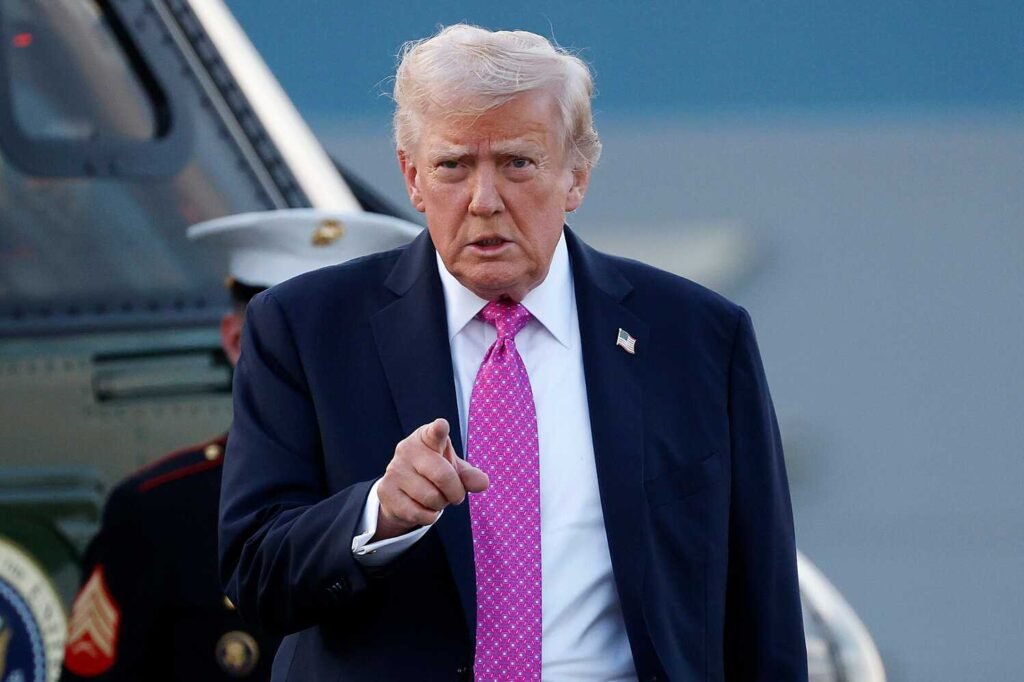
In a bold move shaking transatlantic ties, two Swiss lawmakers have petitioned prosecutors to investigate whether high-value gifts bestowed on U.S. President Donald Trump by Swiss business tycoons— including a custom Rolex desk clock worth $130,000 and a one-kilogram gold bar engraved with “45” and “47”—breach Switzerland’s stringent anti-bribery statutes.The probe request, filed by Green Party parliamentarian Franz Grüter and Social Democrat Priska Seiler Graf, stems from a November 15 delegation of Swiss industry leaders to Mar-a-Lago. Amid Trump’s aggressive 39% tariffs on Swiss exports like watches and pharmaceuticals, the group presented the opulent items in a bid to soften trade blows. Days later, tariffs plummeted, sparking whispers of quid pro quo.Grüter decried the gifts as “a blatant attempt to buy influence,” arguing they undermine Switzerland’s reputation for neutrality and ethical governance. The gold bar, from a Zurich refiner, and the Rolex timepiece— a gold-plated heirloom from the luxury firm’s CEO—were touted as “tokens of appreciation,” but critics liken them to scandals ensnaring figures like Sen. Bob Menendez.Swiss prosecutors must now assess if the presents, exceeding federal gift limits, constitute corruption under Article 322 of the penal code. White House spokespeople dismissed the inquiry as “baseless sour grapes,” insisting the tariff relief reflects fair negotiations. As U.S.-Swiss trade hinges on billions, this saga could chill future diplomacy, with EU allies watching closely for precedents in Trump’s dealmaking era.

Small US Retailers Grapple with Black Friday Supply Shortages Amid Trump Tariff Turmoil
World

Small US Retailers Grapple with Black Friday Supply Shortages Amid Trump Tariff Turmoil

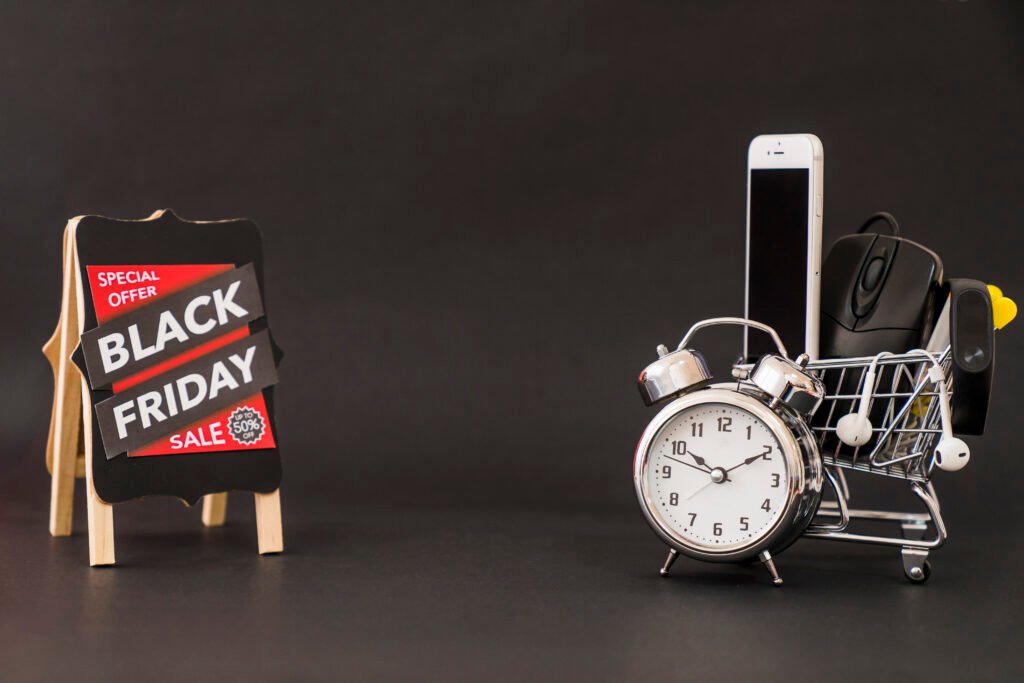
As Black Friday shoppers flood stores nationwide, small U.S. retailers are battling severe inventory shortages triggered by President Donald Trump’s escalating tariffs on Chinese imports. The policies, which spiked to 180% threats in April before settling at 20%, have upended supply chains, forcing mom-and-pop businesses to navigate delays, skyrocketing costs, and uncertain sourcing just as the holiday rush peaks.November and December typically generate a third of annual profits for these firms, but this year, chaos reigns. New York-based Loftie, a sleep wellness brand, sources sunrise lamps from China and now holds just 10% of needed stock. Founder Matt Hassett lamented, “It’s been very difficult to prepare. We could’ve made 50% more sales if we had enough inventory.” A late shipment arrives today, but shelves will remain sparse.Similarly, Brooklyn’s Lo & Sons, purveyors of travel bags, scouted factories in India and Cambodia but returned to China amid higher alternative costs. CEO Derek Lo said, “The uncertainty prevented us from placing purchase orders. Now we’re sitting on lower-than-ideal inventory.”Analytics firm RapidRatings reports small retailers (assets under $50 million) saw margins plummet to -20.7%, with 36% at bankruptcy risk—triple that of giants like Walmart. Executive Chairman James Gellert noted, “For the first time since the pandemic, average profit has dipped into negative territory, disproportionately impacting smaller companies.”Some, like jewelry brand Haus of Brilliance, shifted to Thailand and the U.S., but CEO Monil Kothari warns of lingering shortages into 2026. With early over-orders risking unsold stock and job cuts looming, experts urge policy clarity to avert a retail reckoning. Black Friday foot traffic surges, but for small sellers, the real bargain is survival.

Scroll to Top