Author name: Web Desk

Diversifying Debt: Pakistan Advances $1B Panda Bond Strategy
World

Diversifying Debt: Pakistan Advances $1B Panda Bond Strategy

Islamabad – Pakistan is making significant strides toward its inaugural Panda Bond issuance, targeting a launch in January 2026, as part of a broader $1 billion program, according to a high-level meeting chaired by Federal Minister for Finance and Revenue, Senator Muhammad Aurangzeb, on Friday, December 19, 2025. The Finance Division reviewed progress, signaling growing confidence in Pakistan’s economic stabilization efforts.The Debt Management Office briefed the minister on secured approvals from multilateral partners, including $285 million in guarantees from the Asian Development Bank (ADB) and Asian Infrastructure Investment Bank (AIIB) for the initial $250 million tranche. Engagement with Chinese institutional investors has been positive, with broad-based interest reflecting trust in Pakistan’s improved policy framework and medium-term outlook. Final regulatory approvals from Chinese authorities are expected by early January, paving the way for the debut issuance. Read More: https://theboardroompk.com/pakistan-records-current-account-surplus-100m-in-november-2025-amid-sharp-goods-export-decline-of-18-5/ Minister Aurangzeb emphasized that this move into China’s onshore bond market aligns with a prudent, structured financing strategy to diversify funding sources and enhance debt sustainability. The $1 billion Panda Bond program will unfold in phases, with the inaugural tranche set at $250 million and preparatory work for “Panda Series II” already underway. Prevailing market conditions remain supportive, with documentation and guarantees in place, and financial institutions engaged for future issuances.The meeting highlighted that pricing will be finalized closer to the launch, following regulatory clearance. Initial outreach for subsequent tranches is progressing, with proposals anticipated post-inaugural issuance. This development comes as Pakistan operates under a $7 billion IMF bailout, focusing on fiscal consolidation and structural reforms, though the minister clarified the bond is a strategic diversification step, not tied to the IMF calendar.The Finance Minister expressed satisfaction with the progress, reaffirming the government’s commitment to market-based financing. This landmark issuance could bolster Pakistan’s financial credibility and reduce reliance on traditional dollar markets, marking a new chapter in its economic strategy.

Pakistan's Industries Challenge Govt Claims: Manufacturing Contracts Amid Shutdowns, 50% Capacity Operations and High Costs
Breaking News, Pakistan

Pakistan’s Industries Challenge Govt Claims: Manufacturing Contracts Amid Shutdowns, 50% Capacity Operations and High Costs

Islamabad – Major manufacturing and export-oriented sectors in Pakistan have strongly disputed the government’s assertions of recovery in large-scale manufacturing (LSM), cautioning that industrial activities are still contracting due to skyrocketing energy costs, sluggish demand, and burdensome taxation.Industry representatives report that over 150 industrial units have shuttered in the past 18 months, with surviving factories running at merely 50% of capacity. The textile industry, Pakistan’s top export earner, is in severe distress. All Pakistan Textile Mills Association (APTMA) Chairman Kamran Arshad revealed that approximately 144-150 textile mills have closed, citing exorbitant gas and electricity rates, elevated interest rates, excessive taxes, and delayed refunds. These closures have slashed production, hampered exports, and led to widespread job losses. Read More: https://theboardroompk.com/nine-day-transporters-strike-cripples-pakistan-industries-billions-lost-daily/ The steel sector faces a similar downturn. Leaders highlight a drastic hike in per-ton taxation—from around Rs10,300 in 2019 to Rs37,000-42,000 in recent years—which has crushed demand, halved consumption, and paradoxically reduced government revenues by nearly 50%. Scrap imports have plummeted, lowering electricity usage and inflating capacity payments to Independent Power Producers (IPPs). Informal producers are flooding the market with low-quality steel, exacerbating issues.In contrast, Bangladesh, with comparable capacity, produces far more steel (6.5 million tons vs Pakistan’s 3.8 million) through supportive policies like lower VAT, higher import protections, reduced corporate taxes, and affordable energy. Pakistani steel experts urge policy alignment to revive the sector, potentially boosting electricity consumption to 7 billion kWh annually and saving Rs60-70 billion in IPP payments.Critics also condemn reduced tariff protections without tackling smuggling, tax evasion, and exemptions in former FATA/PATA regions, risking the collapse of local manufacturing.Agriculture shows weakness too, with cotton output estimated at 6.85 million bales (down 3.3%), rice declining 3.2%, and maize 6.7%. Cement dispatches in November 2025 fell 3.47% year-on-year to 4.14 million tons, despite a 11.54% rise in the first five months of FY2025-26.Without urgent reforms, industry warns of irreversible damage to jobs, revenues, and self-reliance.

KCCI urges federal intervention to waive demurrage, detention charges accrued during Transporters’ strike
Pakistan

KCCI urges federal intervention to waive demurrage, detention charges accrued during Transporters’ strike

KARACHI: The Karachi Chamber of Commerce and Industry (KCCI) has formally requested the Ministry of Maritime Affairs to urgently intervene and direct shipping lines, terminal operators, and port authorities to waive, suspend, or substantially reduce demurrage and detention charges for consignments that remained stuck at ports solely due to the nationwide goods transporters’ strike from 8th to 17th December 2025.In a letter sent to Federal Minister for Maritime Affairs Junaid Anwar Chaudhry, Chairman Businessmen Group Zubair Motiwala and President KCCI Rehan Hanif highlighted an extraordinary situation due to transporters strike that caused severe financial distress to the trading and industrial community. The strike resulted in a near-complete suspension of cargo movement to and from Karachi Port, Port Qasim, and associated terminals. During this period, import and export consignments remained immobilized at ports and terminals through no fault of the consignees or shippers, leading to the accumulation of heavy demurrage and container detention charges on a daily basis. They said that the prolonged disruption had a crippling impact on supply chains, production cycles, and export commitments. Exporters faced shipment delays, order cancellations, and loss of credibility with international buyers, while importers were unable to clear raw materials and essential inputs required for industrial operations. The demurrage and detention charges imposed during this forced stoppage have become an unbearable financial burden, particularly for small and medium enterprises, and threaten to erode already thin margins in an environment characterized by high energy costs, elevated interest rates, and overall cost pressures, they added.Chairman BMG and President KCCI mentioned that throughout the duration of the strike, KCCI, as the largest chamber of commerce in Pakistan, remained fully engaged in efforts to resolve the crisis. They actively mediated between goods transporters, port stakeholders, and relevant authorities, repeatedly cautioning that the continued paralysis of cargo movement amounted to economic sabotage and would inflict long-term damage on national trade and exports. KCCI’s consistent engagement and advocacy played an important role in facilitating dialogue and restoring normal operations; however, the financial consequences of the disruption continue to persist in the form of accrued demurrage and detention liabilities. They urged the Ministry of Maritime Affairs to intervene immediately and direct shipping lines, terminal operators, and port authorities to waive, suspend, or substantially reduce demurrage and detention charges for consignments that remained stuck at ports solely due to the transporters’ strike. They also requested that extraordinary facilitation measures be undertaken to ensure swift clearance of the backlog of containers so that trade flows may return to normal without additional financial strain on the business community. They firmly believe that timely intervention will not only mitigate the immediate losses suffered by the business community but will also reinforce confidence in the government’s commitment to safeguarding trade and industry during unforeseen crises.

Pakistan’s Foreign Exchange Reserves Surge on IMF Inflows
Pakistan

Pakistan’s Foreign Exchange Reserves Surge on IMF Inflows

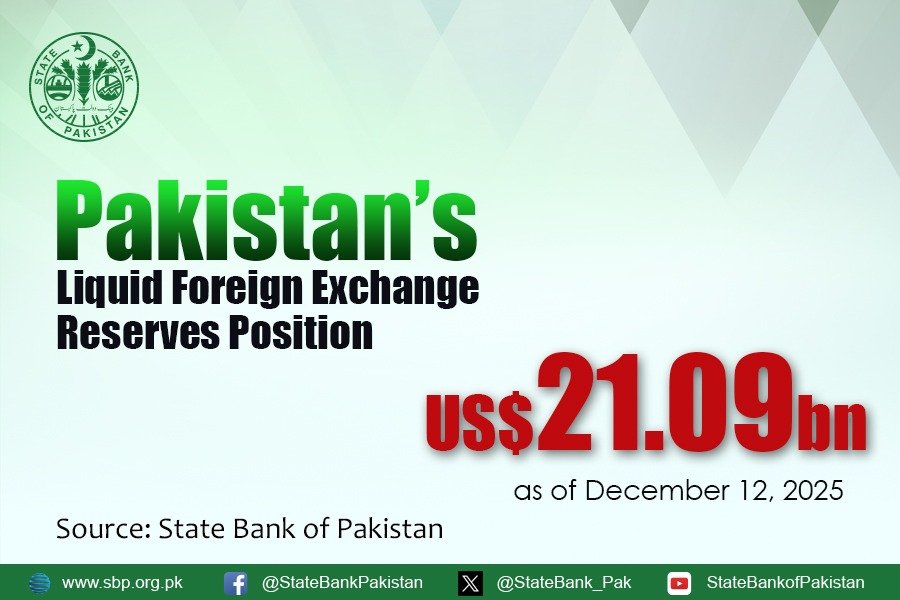
Pakistan’s liquid foreign exchange reserves recorded a strong weekly increase in December 2025, driven primarily by fresh inflows from the International Monetary Fund (IMF). The latest data released by the State Bank of Pakistan (SBP) highlights improving external liquidity conditions and renewed confidence in Pakistan’s macroeconomic stabilization efforts. This business blog breaks down the current foreign reserves position, compares it with the previous week, and explains why the IMF disbursement is significant for Pakistan’s economy. Pakistan’s Current Foreign Exchange Reserves Position (as of 12 December 2025) As of 12 December 2025, Pakistan’s total liquid foreign reserves stood at USD 21.09 billion, marking a notable week-on-week increase. In text form, the reserves position is as follows:• Foreign exchange reserves held by the State Bank of Pakistan (SBP): USD 15.89 billion• Net foreign reservesiled exchange reserves held by commercial banks: USD 5.20 billion• Total liquid foreign exchange reserves: USD 21.09 billion Weekly Increase in SBP Reserves During the week ended 12 December 2025, SBP’s foreign exchange reserves rose by USD 1.3 billion, increasing from USD 14.59 billion to USD 15.89 billion. According to SBP, this sharp rise was mainly due to the receipt of SDR 914 million (approximately USD 1.2 billion) from the IMF under: • The Extended Fund Facility (EFF), and• The Resilience and Sustainability Facility (RSF). This inflow significantly strengthened Pakistan’s reserve buffers and improved short-term external financing comfort. Foreign Exchange Reserves Position: Previous Week (as of 5 December 2025) For comparison, Pakistan’s liquid foreign reserves position one week earlier, on 5 December 2025, was as follows: • SBP-held foreign exchange reserves: USD 14.59 billion• Net foreign exchange reserves held by commercial banks: USD 5.03 billion• Total liquid foreign exchange reserves: USD 19.61 billion During that week, SBP’s reserves increased only marginally by USD 12 million, reflecting relatively stable inflows before the IMF tranche was formally accounted for. SBP had already confirmed that the SDR 914 million IMF disbursement was received during that period, with its impact scheduled to appear in the reserves data for the week ending 12 December 2025 which is now fully reflected in the latest figures. Why the IMF Inflow Matters for Pakistan’s Economy The IMF-linked increase in foreign exchange reserves carries several positive implications for Pakistan’s economy, including: • Improved external sector stability, reducing immediate balance-of-payments pressure• Greater confidence in the Pakistani rupee, supporting exchange rate stability• Enhanced investor sentiment, particularly among foreign portfolio and direct investors• Stronger import cover, improving Pakistan’s ability to finance essential imports The rise in reserves also signals continued policy alignment with IMF reform commitments, a key factor closely watched by global financial markets and rating agencies. Outlook: What to Watch Next Going forward, market participants will closely monitor:• Further IMF-related inflows or program reviews• Export performance and remittance trends• SBP’s monetary and exchange rate policy stance• External debt repayments and rollover plans Sustaining reserve accumulation will be critical for Pakistan as it navigates global economic uncertainty and domestic fiscal challenges in 2026.

PSX Hits Fresh Record, Nears 172,000 Milestone
Pakistan

PSX Hits Fresh Record, Nears 172,000 Milestone

KARACHI, Dec 18 — The Pakistan Stock Exchange (PSX) extended its record-breaking rally on Wednesday, nearing 172,000 milestone, with the benchmark KSE-100 Index closing at a new all-time high of 171,961 points after gaining 1,646 points, or 0.97%.The bullish momentum remained robust throughout the session, fueled primarily by better-than-expected current account figures for November, which boosted investor sentiment and triggered fresh buying across major sectors.Fertilizer, banking, and cement stocks led the advance, collectively contributing over 1,500 points to the index. Key performers included ENGRO Holdings, Fauji Fertilizer Company (FFC), United Bank Limited (UBL), Lucky Cement (LUCK), and Bank AL Habib (BAHL).Market participation stayed healthy, with total traded volume reaching 947.7 million shares and turnover hitting Rs 54 billion. TPL REIT Fund I (TPLRF1) topped the volume charts with around 75.8 million shares changing hands.Corporate developments added to the positive vibe. Maple Leaf Cement Factory (MLCF) announced a public offer to acquire an additional 11.72% stake in Pioneer Cement at Rs 478.43 per share, complementing an earlier share purchase agreement for 58.03%, taking its intended total holding to 69.75%.In another notable deal, the Nishat Group signed an SPA to acquire up to 75.69% of Rafhan Maize Products Limited (RMPL), a leading maize-based food processor with annual sales of approximately Rs 75 billion. DG Khan Cement (DGKC) is set to secure a significant 32.71% stake as part of the transaction, underscoring rising M&A activity in the market.Analysts noted that sustained foreign inflows and improving macroeconomic indicators continue to support the bullish trend.Outlook: The index may push toward further highs in Thursday’s session, the last of the week. However, a decisive weekly close above the psychological 170,000 level will be crucial to confirm the uptrend and maintain investor confidence.

Bank of England Cuts Interest Rate to 3.75% in Final Policy Move of 2025
World

Bank of England Cuts Interest Rate to 3.75% in Final Policy Move of 2025

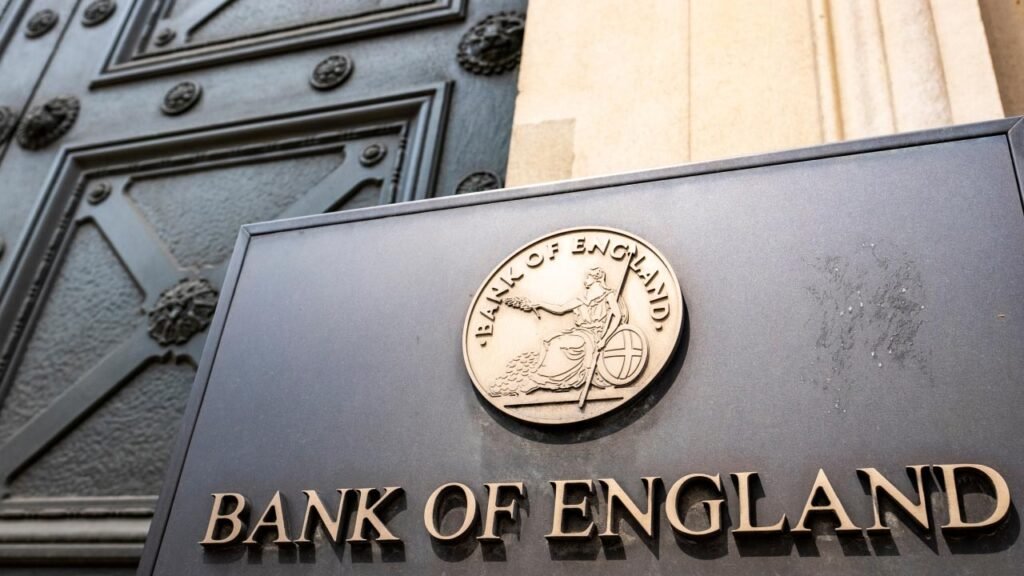
The Bank of England (BoE) has reduced its benchmark interest rate by 25 basis points to 3.75%, marking its final monetary policy decision of 2025 and the fourth rate cut this year. The move reflects growing concerns over a weakening UK economy, even as inflation remains above the central bank’s official target. The decision was reached after a narrowly split vote within the Bank’s nine-member Monetary Policy Committee (MPC). Five members supported the rate cut, while four voted to keep borrowing costs unchanged, highlighting deep divisions among policymakers over the pace of monetary easing. Economic Growth Slows as Inflation Cools Faster Than Expected The interest rate reduction comes amid lackluster economic growth, a softening labour market, and a sharper-than-anticipated decline in inflation. UK inflation stood at 3.2 percent in November, down significantly from earlier levels but still above the Bank of England’s 2 percent target. Governor Andrew Bailey aligned with more dovish policymakers, emphasizing the need to support economic activity as growth momentum fades. However, those opposing the cut warned that inflationary pressures have not been fully defeated, arguing that premature easing could reignite price instability. Impact on Households, Businesses, and Savers Lower interest rates are expected to provide modest relief for households and businesses, particularly through reduced mortgage and loan repayments. Companies facing higher operating costs may also benefit from cheaper financing condition. On the other hand, savers are likely to see lower returns on deposits and fixed-income products as interest rates continue to decline. Further Rate Cuts Likely in 2026 According to Allan Monks, Chief UK Economist at JPMorgan, the Bank of England is likely to continue cutting rates in 2026. JPMorgan’s base-case scenario anticipates two additional rate cuts in March and June, which could bring the benchmark rate down to 3.25 percent. However, policymakers remain cautious due to elevated wage expectations for next year. Persistent wage growth could keep inflation pressures alive, slowing the pace of monetary easing. Monks noted that any clear moderation in pay growth could allow the central bank to accelerate rate cuts, potentially opening the door for another reduction as early as February 2026. Lowest Interest Rate Since 2023 Thursday’s decision brings the UK interest rate to its lowest level since 2023, signaling a decisive shift in the Bank of England’s policy stance from aggressive inflation control toward supporting economic stability and growth. As inflation trends, wage dynamics, and economic data evolve in early 2026, markets will closely watch whether the central bank moves faster to ease financial conditions.

Shareholder Group Urges Amazon, Walmart, Alphabet to Disclose Trump Immigration Policy Impacts
World

Shareholder Group Urges Amazon, Walmart, Alphabet to Disclose Trump Immigration Policy Impacts

NEW YORK, Dec 18 — A union-aligned investment group has demanded that Amazon, Walmart, and Alphabet report on the financial and operational risks posed by President Donald Trump’s immigration policies, particularly proposed changes to the H-1B visa program for skilled foreign workers.SOC Investment Group, which holds less than 1% stakes in each company, sent letters to the boards on Wednesday calling for detailed assessments of how these policies could affect finances, supply chains, and workforce strategies, according to documents exclusively reviewed by Reuters.The companies are among the largest recipients of H-1B visa approvals, relying heavily on foreign talent in technology and engineering roles. SOC highlighted Trump’s campaign proposal for a $100,000 fee on new H-1B petitions, warning it could drive up costs, limit talent access, and prompt job relocations away from U.S. tech hubs like Silicon Valley and Seattle.“These policies threaten material risks to operations and competitiveness,” SOC wrote, urging the firms to disclose mitigation plans and potential exposure in upcoming proxy statements.The push comes amid broader industry anxiety over Trump’s immigration agenda, which emphasizes stricter enforcement and higher barriers for foreign workers. Tech giants have historically lobbied for expanded visa programs to fill skill gaps, but proposed fees and restrictions could force restructuring, including offshoring roles or intensified domestic recruitment.SOC, known for activist shareholder resolutions, has previously secured victories compelling companies to conduct racial-equity audits and increase lobbying transparency. While its small stakes limit direct influence, such proposals often gain traction from larger institutional investors.None of the companies immediately responded to requests for comment.

Maple Leaf Cement Set to Take Control of Pioneer Cement with Over 69% Shareholding
Pakistan

Maple Leaf Cement Set to Take Control of Pioneer Cement with Over 69% Shareholding

Maple Leaf Cement Factory Limited (PSX: MLCF) is moving decisively to strengthen its position in Pakistan’s cement sector, as it prepares to acquire majority control of Pioneer Cement Limited. Following a newly announced public offer, Maple Leaf Cement’s total shareholding in Pioneer Cement is expected to exceed 69%, marking a major consolidation move within the industry. Public Offer to Acquire Additional Shares Pioneer Cement has formally notified the Pakistan Stock Exchange (PSX) that it received a Public Announcement of Public Offer from Next Capital Limited, which is acting as the Manager to the Offer on behalf of Maple Leaf Cement. Under this public offer, Maple Leaf Cement intends to acquire up to 26.62 million ordinary shares, representing 11.72% of Pioneer Cement’s issued and paid-up share capital. The offer price has been set at Rs 478.43 per share, in line with regulatory requirements. Prior Share Purchase Agreement Already Secured This public offer comes in addition to a previously executed Share Purchase Agreement (SPA) signed on December 17, 2025. Under that agreement, Maple Leaf Cement has already agreed to acquire 131.82 million shares, which accounts for 58.03% of Pioneer Cement’s share capital, at the same price of Rs 478.43 per share. Aggregate Shareholding to Cross 69% Once both transactions are completed, Maple Leaf Cement’s aggregate ownership in Pioneer Cement will rise beyond 69%, effectively transferring management control of Pioneer Cement to Maple Leaf Cement. This level of ownership firmly establishes Maple Leaf as the controlling shareholder. Breakdown of the Acquisition • Through Share Purchase Agreement(s):Maple Leaf Cement is acquiring 131,820,554 shares, representing 58.03% of Pioneer Cement’s total share capital, at a price of Rs 478.43 per share.• Through Public Offer:The company is seeking to acquire 26,623,096 additional shares, equivalent to 11.72% of the issued share capital, also at Rs 478.43 per share. Regulatory Compliance and Market Transparency The acquisition process follows Maple Leaf Cement’s Public Announcement of Intention dated November 13, 2025, and is being conducted strictly in accordance with the Securities Act, 2015 and the Listed Companies (Substantial Acquisition of Voting Shares and Takeovers) Regulations, 2017. This structured approach ensures regulatory compliance, transparency, and protection of minority shareholders. Strategic Impact on Pakistan’s Cement Sector Industry analysts view this acquisition as a strategic consolidation move aimed at enhancing operational efficiencies, expanding production capacity, and strengthening market positioning amid evolving demand dynamics in Pakistan’s construction and infrastructure sectors. With Maple Leaf Cement already among the leading players in the industry, gaining control of Pioneer Cement could unlock synergies in production, distribution, and cost optimization, potentially reshaping competitive dynamics within the cement market. Maple Leaf Cement’s acquisition of a controlling stake in Pioneer Cement marks one of the most significant corporate developments in Pakistan’s cement industry in 2025. As the transaction progresses toward completion, market participants will closely monitor its impact on valuations, sector consolidation, and future investment trends.

US Crypto Industry Toasts 2025 Victories Under Trump, But 2026 Outlook Clouds Over
World

US Crypto Industry Toasts 2025 Victories Under Trump, But 2026 Outlook Clouds Over

WASHINGTON, Dec 18 — The U.S. cryptocurrency sector is ending 2025 on a high note, having secured significant regulatory relief and legislative progress under President Donald Trump’s second administration, which has prioritized easing oversight to foster innovation. The year began with exuberant celebrations: industry leaders marked Trump’s inauguration in January with lavish parties featuring cocktails and a performance by Snoop Dogg, signaling optimism for a crypto-friendly White House. Throughout 2025, the administration delivered on promises by rolling back stringent enforcement actions, streamlining approvals for digital assets, and promoting blockchain integration in financial systems. These moves fueled market rallies, boosted institutional adoption, and attracted billions in new investments, propelling Bitcoin and other cryptocurrencies to record highs. However, insiders warn the momentum may stall in 2026. Key market structure legislation—aimed at clarifying rules for digital asset exchanges, custody, and trading—remains bogged down in the Senate, creating persistent regulatory uncertainty that could deter long-term growth. Industry executives are pinning hopes on an anticipated “innovation exemption” from the Securities and Exchange Commission (SEC) expected in early 2026. This proposed carve-out would allow certain crypto projects to operate with reduced compliance burdens during development phases, potentially unlocking further expansion. Despite the optimism, challenges loom: bipartisan concerns over consumer protection, money laundering risks, and market volatility have slowed congressional action. Analysts note that without comprehensive legislation, the sector remains vulnerable to shifting political winds or future enforcement swings. As 2025 closes, crypto stakeholders acknowledge the year’s triumphs but brace for a more cautious 2026, where sustained gains will depend on bridging Capitol Hill divides and delivering on regulatory promises.

Pakistan’s Foreign Direct Investment Reduced in November
Pakistan

Pakistan’s Foreign Direct Investment Reduced in November

Pakistan’s foreign investment inflows faced renewed pressure in November, signaling cautious investor sentiment amid economic adjustments and global uncertainty. According to the latest data released by the State Bank of Pakistan (SBP), the country recorded foreign direct investment (FDI) of $179.7 million, marking a noticeable decline compared to $231.89 million in the same period last year (SPLY). The slowdown highlights the challenges Pakistan continues to face in attracting consistent foreign capital, despite ongoing reform efforts and policy recalibration. Month-on-Month Decline Signals Volatility A month-on-month comparison paints a sharper picture of volatility. In October, Pakistan attracted $385 million in foreign investment, meaning November’s figure represents a significant pullback in inflows. This fluctuation suggests that while short-term investment interest exists, confidence remains fragile and sensitive to macroeconomic and geopolitical developments. FDI Falls Sharply in First Five Months of FY26 Looking at cumulative performance, the trend remains subdued. During the first five months of FY26 (5MFY26), Pakistan attracted $927.43 million in FDI, down from $1.24 billion recorded during the same period last fiscal year. The year-on-year decline reflects ongoing structural challenges, including high financing costs, currency volatility, and cautious global capital flows toward emerging markets. Direct Investment Inflows Drop Nearly 44% Year-on-Year Breaking down November’s FDI composition: • Direct investment inflows stood at $270.44 million, reflecting a sharp 43.83% decline year-on-year.• Outflows fell to $90.74 million, down by over 63% YoY, offering some relief on the capital exit front. The decline in both inflows and outflows indicates reduced overall activity rather than aggressive divestment. Portfolio Investment Outflows Ease Portfolio investment under FDI also showed some improvement.In November, Pakistan recorded a portfolio outflow of $32.42 million through equity securities, compared to a much larger $59.14 million outflow in November 2024. While still negative, the narrowing gap suggests a slight stabilization in foreign investor confidence in Pakistan’s equity markets. Private vs Public Foreign Investment Trends Foreign private investment remained positive but moderated: • Private foreign investment totaled $150.53 million in November 2025, compared to $172.75 million in the same month last year. On the public side, however: • Foreign public investment recorded an outflow of $42.84 million, mainly through equity securities, further weighing on total inflows. Total Foreign Investment Declines Sharply Taking all components together, total foreign investment in November stood at $104.44 million, nearly half of the $194.87 million recorded in November 2024. On a cumulative basis, total foreign investment during 5MFY26 reached $313.66 million, a steep decline from $1.39 billion reported in the corresponding period last year. What This Means for Pakistan’s Economy The latest SBP data underscores a critical reality: Pakistan’s foreign investment recovery remains uneven. While reduced outflows and easing portfolio pressure offer modest positives, sustained FDI growth will depend on: • Policy consistency and regulatory clarity• Macroeconomic stability• Investor-friendly reforms• Improved energy and infrastructure outlook For Pakistan to regain momentum, long-term confidence not just short-term inflows must be rebuilt. November’s foreign investment figures highlight a period of recalibration rather than collapse. The coming months will be crucial in determining whether Pakistan can convert economic stabilization into renewed foreign investor confidence.

Scroll to Top