Author name: Web Desk

US Company Deploys AI to Combat $76.5 Billion Retail Return Fraud
World

US Company Deploys AI to Combat $76.5 Billion Retail Return Fraud

LOS ANGELES, Dec 18 — Nearly one in 10 U.S. retail returns is fraudulent, costing retailers an estimated $76.5 billion annually, according to Happy Returns, a UPS-owned reverse logistics company. To tackle this escalating issue during the holiday season, the company is piloting its AI-powered fraud detection tool, Return Vision, with major apparel brands including Everlane, Revolve, and Under Armour. CEO David Sobie revealed the initiative during a tour of Happy Returns’ Los Angeles-area hub. The AI system activates as soon as a customer initiates an online return, flagging suspicious patterns such as frequent high-value returns from the same account or unusual behavior. At processing centers, it scans package contents to detect anomalies, routing flagged items for human audit where refunds can be withheld if fraud is confirmed. Common return fraud tactics exploit lenient policies. “Wardrobing” involves purchasing clothing, wearing it once (often with tags hidden), and returning it as new. Scammers may switch items—returning counterfeit, damaged, or cheaper alternatives in original packaging—or send empty boxes. Organized groups buy or steal merchandise, return it for cash refunds, or use fake receipts. Bracketing, where multiple sizes are ordered and most returned, can cross into fraud when items are used. Everlane’s logistics director Jim Green called fraud a “double whammy,” noting lost revenue from unsellable fakes alongside processing costs. With 85% of Everlane’s domestic online returns handled by Happy Returns, the AI aims to protect profits amid surging holiday volumes. As fraudsters grow sophisticated, blending legitimate and abusive returns, AI offers real-time detection to preserve customer trust while curbing losses.
Affordability Crisis Deepens in US as Economists Predict Sharp Inflation Rebound
World

Affordability Crisis Deepens in US as Economists Predict Sharp Inflation Rebound

WASHINGTON, Dec 18 — U.S. consumer prices are expected to have increased 3.1% year-on-year in November, marking the largest annual rise in one-and-a-half years, economists forecast ahead of a delayed data release disrupted by the recent government shutdown. The anticipated acceleration underscores persistent affordability challenges for American households, with rising costs for goods and services partly attributed to tariffs on imports, which critics say have driven up prices across multiple sectors. The Labor Department’s Bureau of Labor Statistics (BLS) is scheduled to release the November Consumer Price Index (CPI) report on Tuesday. However, the 43-day government shutdown prevented field staff from collecting price data for October, making retroactive gathering impossible. As a result, the full October CPI report was canceled, and the BLS confirmed that no month-to-month inflation figures will be published for November. While some limited CPI component values for October may still become available through alternative sources, the absence of complete sequential data will leave economists without a key gauge of short-term price trends. Monthly changes are critical for assessing whether inflation is accelerating or cooling on a sequential basis. The year-on-year forecast of 3.1% — if confirmed — would represent a notable uptick from recent readings and the steepest since mid-2024. Analysts note that supply-chain pressures, energy costs, and tariff-related import expenses continue to contribute to inflationary momentum despite the Federal Reserve’s ongoing efforts to bring price growth closer to its 2% target. The data disruption highlights the broader economic fallout from prolonged government shutdowns, which not only delay vital indicators but also complicate monetary policy decisions. Markets and policymakers will scrutinize the limited November figures for signals on consumer spending power and potential Fed rate adjustments in the coming year.

Pakistan

Historical Milestone: Pakistan Targets Permanent IMF Exit with $63bn Export Goal by 2029

Islamabad: The government has initiated high-level discussions to formulate a credible strategy for permanently exiting International Monetary Fund (IMF) programmes after the current $7 billion Extended Fund Facility concludes in September 2027. Sources told The Express Tribune that a recent meeting assessed Pakistan’s ability to sustain its economy without IMF support. The Planning Commission warned that without urgent reforms—building foreign exchange reserves and developing complete industrial value chains—the country risks entering another bailout programme. Planning Minister Ahsan Iqbal emphasised that achieving $63 billion in exports by 2029 is essential to make the current programme Pakistan’s last. Failure to reach this target would create persistent external sector gaps. The Commission’s assessment projects temporary widening of the current account deficit to below 2% of GDP (over $10 billion annually) as the economy shifts from stabilisation to growth. Additional financing needs are estimated at $4 billion in 2027-28, $5.5 billion in 2028-29, and $3 billion in 2029-30. Cumulative gross financing requirements could exceed $12 billion from 2028-31. These gaps can be bridged through $4 billion higher exports, $4 billion additional remittances, $3 billion new foreign direct investment, and agriculture import substitution, the assessment states. Converting $14 billion in short-term bilateral loans into long-term financing is also proposed to reduce external pressures. The Commission outlined a three-phase reform plan: fiscal, energy, governance and export-aligned reforms until 2027; accelerated industrialisation and investment attraction from 2029-32; and a shift toward high-quality, technology-driven growth thereafter. Prime Minister Shehbaz Sharif has directed the Commission to develop a results-oriented strategy under the Uraan Pakistan 10-year plan to sustain growth above 6%, control inflation, and build external buffers. However, critics question the practicality of ambitious targets, including a $1 trillion economy by 2035, amid declining investment, rising unemployment, and regional disparities.

Magnum Separates from Unilever, and Begins Operations in Pakistan as an Independent Company
Pakistan

Magnum Separates from Unilever, and Begins Operations in Pakistan as an Independent Company

Magnum, the Netherlands–based global manufacturer of frozen desserts and ice cream, has begun operations in Pakistan as an independent company. The company has expressed its intention to invest in expanding manufacturing capacity, strengthening cold-chain infrastructure, and enhancing digital capabilities in the near future. Read More: https://theboardroompk.com/worlds-largest-standalone-ice-cream-business-magnum-ice-cream-valued-at-9-1-billion-in-amsterdam-listing/ The establishment of Magnum Ice Cream Company Pakistan Limited (Magnum Pakistan) took place earlier this year following the global separation of the ice cream business from the Unilever Group. Although the ice cream division has been serving Pakistani consumers for the past three decades, the separation from Unilever Pakistan will now allow greater focus and dedicated attention to this sector.Magnum Ice Cream Company Pakistan plans to invest in expanding manufacturing capacity, reinforcing cold-chain infrastructure, and developing digital capabilities. These investments in Pakistan are expected to create more employment opportunities in the coming years and further strengthen the company’s commitment to economic growth and sustainability.Magnum Pakistan’s Country General Manager, Kayhan Zenginoglu, said: “This moment is a milestone for Magnum Pakistan. We are here to lead the frozen desserts and ice cream sector through bold innovation, global standards, and a deep understanding of consumers.” The company currently produces millions of liters of ice cream annually and expects an increase in production in the coming months. Building on this strong foundation, Magnum Pakistan has developed comprehensive plans to accelerate growth by expanding its presence in the premium products market and enhancing consumer experiences.

Chinese Firm Proposes €2 Billion to Boost Shipbuilding and Steel Work at Port Qasim
Pakistan, World

Chinese Firm Proposes €2 Billion to Boost Shipbuilding and Steel Work at Port Qasim

ISLAMABAD: A delegation from China’s Shandong Xinxu Group, led by Chairman Hou Jianxin, has expressed strong interest in developing a multi-billion-euro Integrated Maritime Industrial Complex (IMIC) at Pakistan’s Port Qasim, potentially marking one of the largest foreign investments in the country’s maritime sector in recent years.The five-member Chinese team met Federal Minister for Maritime Affairs Muhammad Junaid Chaudhry on December 18, 2025, to discuss the ambitious project, estimated to cost between €1 billion and €2 billion. The IMIC aims to revitalize Pakistan’s maritime and heavy industrial capabilities through three core components: reviving the dormant Iron Ore and Coal Berth (IOCB) Jetty—also known as the steel jetty—establishing advanced shipbuilding and shipbreaking facilities, and integrating a modern steel mill directly with port operations. Read More: https://theboardroompk.com/china-japan-tension-us-b-52-bombers-fly-with-japanese-jets-in-direct-response-to-sino-russia-drills/ The IOCB Jetty, originally designed for bulk cargo handling of iron ore and coal to support Pakistan Steel Mills, features a dedicated conveyor system and can accommodate vessels up to 75,000 deadweight tons. The proposal builds on the “Steel-to-Green Sea” initiative unveiled by the minister in November 2025, emphasizing sustainable development, job creation, and reduced import dependency.Minister Chaudhry welcomed the interest and urged the group to submit a detailed unsolicited proposal, including technical, financial, and environmental feasibility studies. A joint committee, comprising officials from the Ministry of Maritime Affairs and Shandong Xinxu representatives led by Additional Secretary Umar Zafar Sheikh, will review the roadmap.If approved, the project could transform Port Qasim into a regional hub for heavy industry and logistics, aligning with Pakistan’s goals for economic growth and environmental responsibility. Shandong Xinxu, a high-tech enterprise specializing in renewable energy and industrial projects, has been actively engaging with Pakistani authorities on maritime investments.This development underscores deepening Pakistan-China economic ties, potentially injecting significant capital and technology into the nation’s blue economy.

Beaconhouse, City School, LGS, Roots, City School and Others Granted Extension by CCP Till Dec 30 to Respond to Uniform Monopoly Notices
Pakistan

Beaconhouse, City School, LGS, Roots, City School and Others Granted Extension by CCP Till Dec 30 to Respond to Uniform Monopoly Notices

ISLAMABAD, Dec 17: The Competition Commission of Pakistan (CCP) has received requests from major private school systems seeking additional time to submit their replies to the show-cause notices.The proceedings relate to alleged violations of Section 4 of the Competition Act, 2010 concerning abuse of dominant position, requiring parents to purchase branded uniforms, stationery, and other mandatory supplies exclusively from designated vendors.After considering these requests, and to ensure due process and a fair, transparent opportunity of hearing for all parties, the Commission has granted an extension of time until 30 December 2025 for submission of responses. Some school systems have already submitted their written replies.The school systems issued show-cause notices include Beaconhouse School System, The City School, Headstart, Lahore Grammar School (LGS), Froebel’s, Roots International, Roots Millennium, KIPS, Allied Schools, Super Nova, Dar-e-Arqam, STEP School, Westminster International, United Charter School, and The Smart School, among others.Upon receipt of replies, the CCP will fix hearings at which the concerned schools or their authorized counsel will be given an opportunity to present their case in accordance with the law.CCP Chairman Dr. Kabir Ahmed Sidhu reiterated that the education sector is a vital public interest sector with a direct impact on millions of households. He affirmed that the Commission remains committed to ensuring fair competition, safeguarding consumer welfare, and conducting proceedings in a transparent, impartial, and lawful manner.

Pakistan

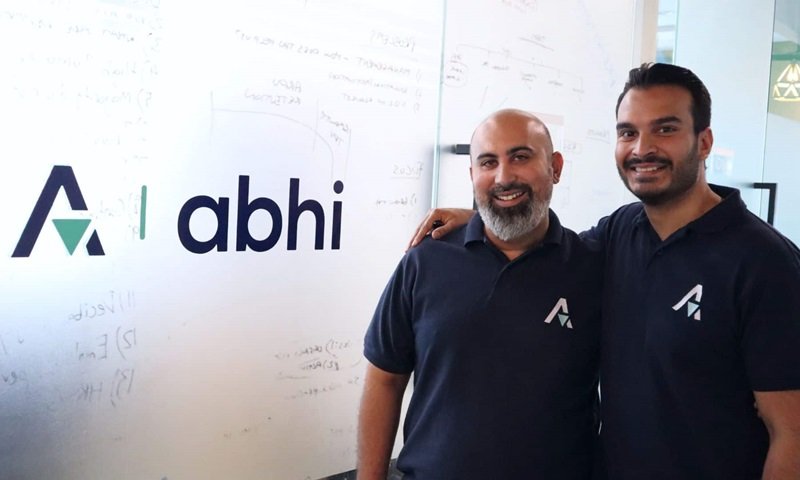
Pakistani Fintech ABHI Partners with Crypto Giant Zignaly to Launch First RWA Private Credit Product in UAE

KARACHI: December 17, 2025: Pakistani-origin fintech ABHI announced a partnership to introduce Zignaly’s first Real-World Asset (RWA) private credit offering in the UAE.This milestone enables global stablecoin investors to earn short-duration, asset-backed yield generated directly from ABHI’s SME receivables portfolio with minimum ticket sizes as low as $10, according to the press released issued by ABHI.The product creates a direct bridge between on-chain liquidity and real economic activity. Through this product, ABHI will finance short-term SME receivables using stablecoin capital sourced via Zignaly’s 650k+ users who will gain exposure to yield derived from the financing of real-world invoices and working capital requirements. This collaboration represents the first live execution of ZIGChain’s RWA vision: delivering real yield rooted in genuine business activity, accelerating institutional adoption of blockchain based credit infrastructure. By combining ABHI’s established SME-financing engine with Zignaly’s distribution layer and ZIGChain’s wealth generation infrastructure, the launch introduces a scalable new asset category for the crypto ecosystem and establishes the foundation for a broader portfolio of tokenized private credit solutions.“The future of finance will lie in tokenization, and we are starting now. Partnering with ZIGChain represents the next chapter in ABHI’s mission to democratize financial access across MENAP. With stablecoin-enabled debt financing, we are unlocking an entirely new liquidity pathway for businesses. This collaboration allows us to serve clients with even greater speed while ensuring sustainable, diversified capital sources. As the region embraces digital finance, ABHI is proud to stand at the forefront of innovation, building solutions that strengthen the financial resilience of both employers and their workforce.” – Omair Ansari, Co-Founder & CEO, ABHI Middle East Limited.“This is a milestone for the entire RWA ecosystem and a clear validation of the ZIGChain vision. By connecting proven originators like ABHI with global on-chain liquidity, we demonstrate how real-world assets can move transparently and compliantly. ZIGChain’s infrastructure now enables stable, institution-grade yield to reach investors worldwide, and private credit is only the beginning. This integration marks the start of a scalable pipeline for tokenized credit, private debt, and a full spectrum of real-world yield products.” – Abdul Rafay Gadit, Co-Founder, ZIGChain.

Pakistan

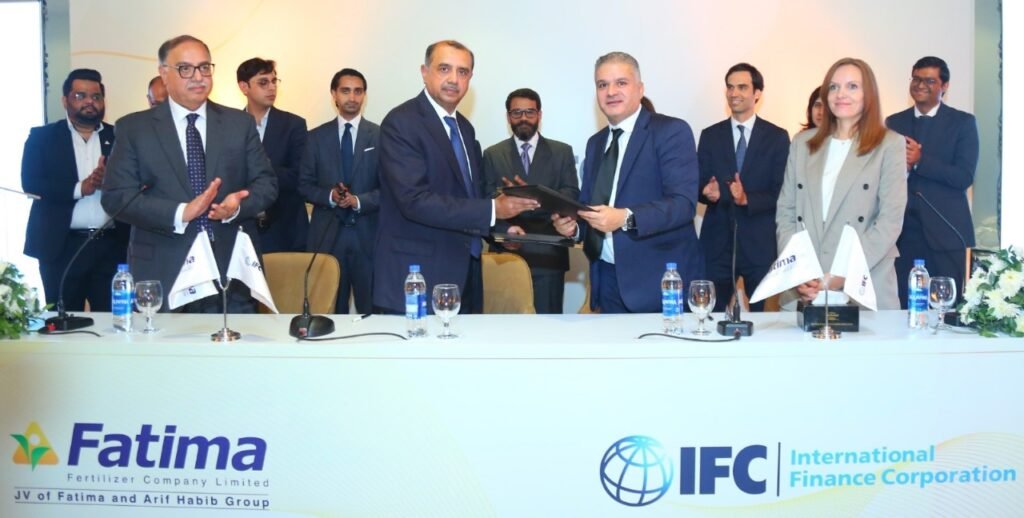
World Bank Group’s IFC Provides $60M Yearly Liquidity to Fatima Fertilizer to Ensure Steady Fertilizer Supply for Pakistani Farmers Amid FX Challenges

Karachi, December 17, 2025 — Fatima Fertilizer Company Limited and IFC, a member of the World Bank Group, announced a renewable liquidity facility of US$60 million per year to help maintain uninterrupted domestic fertilizer production by enabling Fatima Fertilizer to import essential raw materials, machinery, and technical services.Pakistan has faced shortages of foreign exchange and delays in clearing imports, which can disrupt access to key inputs and risk fertilizer shortages. The new Fatima Fertilizer facility addresses a critical market gap by providing hard currency liquidity when access to USD financing is limited. The new facility also enables the company to import essential materials and run at full capacity. By sustaining about 1.46 million tons of annual output of fertilizer and preserving more than 850 direct jobs at the company’s Sadiqabad complex, the facility will help maintain a steady fertilizer supply, support thousands of small businesses across the distribution network, and protect yields for staple crops like wheat and rice.“This partnership represents an important milestone not only for Fatima Fertilizer but also for Pakistan’s agriculture sector,” said CEO Fatima Fertilizer, Mr. Fawad Ahmed Mukhtar. “Access to dependable liquidity allows us to maintain operational resilience, ensure stable delivery of essential nutrients to farmers, and contribute to a more food-secure future. We value IFC’s confidence in our vision and look forward to expanding our collaboration.”“A partnership like this helps unlock the liquidity needed to keep essential inputs flowing to Pakistan’s farmers,” said Ashruf Megahed, Regional Industry Head, Manufacturing, Agribusiness & Services, Middle East, Central Asia & Turkey at IFC – International Finance Corporation. “By providing USD financing for vital imports, we aim to support food security, preserve jobs, and strengthen the resilience of the agribusiness value chain across Pakistan.”By strengthening the Company’s operational resilience, the financing contributes to stabilizing fertilizer prices for Pakistani farmers and reducing dependency on imports of fertilizers, whilst fostering national food security in alignment with Pakistan’s agricultural priorities. About IFCIFC — a member of the World Bank Group — is the largest global development institution focused on the private sector in emerging markets. We work in more than 100 countries, using our capital, expertise, and influence to create markets and opportunities in developing countries. In fiscal year 2025, IFC committed a record $71.7 billion to private companies and financial institutions in developing countries, leveraging private sector solutions, and mobilizing private capital to create a world free of poverty on a livable planet. For more information, visit www.ifc.org.Stay Connected with IFC on social media.About Fatima Fertilizer Company LimitedFatima Fertilizer is one of Pakistan’s leading fertilizer manufacturers, committed to delivering innovative, efficient, and reliable crop nutrition solutions. Through its nationwide network and farmer-centric initiatives, the Company plays a vital role in supporting agricultural productivity, rural livelihoods, and food security across the country. Fatima Fertilizer is the first private sector company in Pakistan to partner with UNDP to adopt the UN Sustainable Development Goals Impact Framework Program.

Pakistan's Economic Paradox: Stock Market Soars to Record Highs While Factories Face Shutdown Crisis
Pakistan

Pakistan’s Economic Paradox: Stock Market Soars to Record Highs While Factories Face Shutdown Crisis

Karachi, December 17, 2025 – Pakistan’s economy presents a stark dichotomy as the Pakistan Stock Exchange (PSX) continues its bullish run, with the benchmark KSE-100 index surging nearly 40% in 2025 and recently hitting all-time highs around 171,000 points. This liquidity-driven rally, fueled by local investors fleeing low-yield bank deposits and real estate, has been bolstered by macroeconomic stabilization under a $7 billion IMF Extended Fund Facility, fiscal surpluses, a stable currency, and inflation dipping below 5%.In sharp contrast, the real sector—particularly large-scale manufacturing (LSM) and the vital textile industry—is in deep distress. Over 100 major textile mills and nearly 400 cotton ginning factories have shuttered by November 2025, leaving industrial hubs like Faisalabad and Gujranwala eerily silent with idle looms and reduced capacity. High electricity tariffs at 12-14 cents per kWh—double those in competitors like Bangladesh and Vietnam—stem from a Rs2.4 trillion circular debt and IMF-mandated subsidy removals. Aggressive taxation on industry and SMEs, while sparing retailers and elites, has further squeezed operations. Read More: https://theboardroompk.com/pakistan-stock-exchange-hits-historic-high-kse-100-breaks-169800-points-as-investor-confidence-surges/ This disparity has triggered massive brain drain, with over 720,000 skilled workers emigrating in 2024 and nearly 700,000 more by November 2025, boosting remittances but eroding domestic human capital. Experts warn of creeping de-industrialisation, where financial stability benefits asset holders but fails to revive production and jobs.Economist Ahmad Mukhtar highlights the unsustainability: “A recovery that enriches asset holders while shuttering factories is unsustainable.” Without urgent reforms to slash energy costs and incentivize manufacturing, Pakistan risks a fragile economy reliant on informal sectors and exported labor rather than goods.As 2025 ends, policymakers face pressure to pivot toward real-sector revival to ensure inclusive growth.

Pakistan's 5G Push Hits Pricing Roadblock: Govt Caught in Revenue vs Rollout Dilemma
Pakistan

Pakistan’s 5G Push Hits Pricing Roadblock: Govt Caught in Revenue vs Rollout Dilemma

Islamabad, December 17, 2025 – The Pakistani government is grappling with a classic Catch-22 situation as it prepares for the country’s first 5G spectrum auction targeted for the first quarter of 2026. Amid widespread public complaints about poor mobile services – including frequent call drops, slow internet speeds, and network congestion – officials are torn between setting high reserve prices to maximize short-term revenue and lowering them to encourage telecom operator participation and faster rollout.A recent Spectrum Advisory Committee (SAC) meeting, chaired by Finance Minister Muhammad Aurangzeb, remained inconclusive on key issues like reserve prices and auction timelines. US-based consultant NERA Economic Consulting presented findings warning that excessively high prices could deter bidders, leading to unsold spectrum, reduced competition, lower innovation, and higher costs for consumers. Conversely, NERA argued that moderate pricing, combined with extended payment terms, could yield greater long-term government revenues through increased tax collections and economic growth.Pakistan currently has only 274 MHz of spectrum allocated for mobile services serving nearly 200 million subscribers, with 600 MHz lying idle – far below regional peers like Bangladesh, which has allocated around 700 MHz for fewer users. Past auctions have seen significant unsold spectrum due to high base prices, dollar-pegged valuations (exacerbated by 70% rupee devaluation since 2021), and unfavorable terms.The GSMA estimates that delays in spectrum release could cost Pakistan’s GDP up to $1.8 billion (Rs500 billion) over 2025-2030 for a two-year holdup, rising to $4.3 billion for five years, while foregone benefits from previous unsold spectrum amount to $300 million.Briefings to the Prime Minister and Deputy Prime Minister are imminent, with decisions pending on unlocking idle spectrum and incentives for the 3.5 GHz band to boost 5G fixed wireless access. Telecom operators and experts urge reforms to prioritize service quality and digital economy growth over immediate fiscal gains.

Scroll to Top