Author name: Web Desk

Mobilink Bank Posts PKR 3.62 Billion, Jump of 217%, Profit Before Tax
Business

Mobilink Bank Posts PKR 3.62 Billion, Jump of 217%, Profit Before Tax

Karachi, February 17, 2026: Pakistan’s leading digital microfinance bank, Mobilink Bank has announced its financial results for the year ended December 31, 2025. The bank delivered strong growth across key financial and operational indicators while reinforcing its leadership position in Pakistan’s microfinance banking sector. Read More: https://theboardroompk.com/gold-prices-in-pakistan-witness-major-decline-but-is-there-a-bigger-story/ Mobilink Bank delivered a strong financial turnaround in 2025, with Profit Before Tax reaching PKR 3.62 billion, reflecting a 217% YoY growth, while total revenue rose 33% to PKR 89.5 billion. Deposits grew 38% to PKR 214 billion, the highest in the microfinance industry, highlighting strong customer confidence. The Gross Loan Portfolio expanded to PKR 103 billion, up 38%. The Bank also maintained a healthy Capital Adequacy Ratio (CAR) of 19.53% at the year end, underscoring its solid capital position and prudent risk management.In line with its sustainability priorities, the Bank recorded a 55.5% YoY incremental increase in green financing, supporting individuals, households and small businesses in adopting sustainable products/resources. It also continued to advance financial inclusion, with women representing 24.6% of the loan portfolio base, supported through targeted loan offerings and greater digital access. A major highlight of 2025 was the launch of Islamic Banking, which marked a strategic milestone in the Bank’s evolution to be able to cater to diverse social segments. By introducing Shariah-compliant financial solutions, Mobilink Bank broadened access to faith-aligned banking products while reinforcing its position as a responsible and forward-looking microfinance institution. The Bank’s performance reflects its firm commitment to responsible lending, ensuring that all credit decisions are grounded in prudent affordability assessments, transparent pricing, fair collection practices, and full compliance with applicable SBP regulations. It continues to strengthen internal controls to prevent customer over-indebtedness and support sustainable financial inclusion. The Bank’s growth trajectory has been further strengthened by continued shareholder confidence, reinforcing its capital position and supporting its long-term expansion and digital transformation strategy. Commenting on the financials, Haaris Mahmood Chaudhary, President & CEO Mobilink Bank said, “Behind these numbers is a deeper purpose of expanding access to finance for the underserved. As the country’s largest microfinance bank, we are grateful to our customers, regulators, shareholders, and teams whose trust and dedication continue to drive our progress. Our growth reflects the confidence of millions who rely on us to support their livelihoods. We remain focused on empowering small businesses and entrepreneurs through responsible, faith-aligned digital banking that creates lasting opportunity and inclusion across Pakistan.” Commenting on the financials, Adil Ali Abbasi, Chief Financial Officer Mobilink Bank said, “Our 2025 performance reflects a strong focus on financial discipline, improved asset quality, and efficient balance sheet management. The growth in profitability, deposits, and portfolio scale highlights the strength of our core business and our ability to build momentum while maintaining prudent risk and capital positions. As we move forward, we will continue to strengthen our financial foundations, drive operational efficiency, and support the Bank’s long-term growth through sustained investment in digital transformation and innovation.” Moving into 2026, Mobilink Bank remains committed to becoming the number one bank for small businesses powered by digital Islamic Banking Solutions.

Gold Prices in Pakistan Witness Major Decline, But Is There a Bigger Story?
Business

Gold Prices in Pakistan Witness Major Decline, But Is There a Bigger Story?

Gold Prices in Pakistan have taken a dramatic turn, surprising investors, traders, and everyday buyers alike. After weeks of volatility, the global bullion market experienced a sharp correction and the impact was immediately felt in local markets across the country. But while prices are falling in the short term, a deeper look at Pakistan’s gold reserves reveals a far more interesting financial narrative. Let’s break it down. Global Market Shock Sends Gold Prices in Pakistan Lower The international gold market recorded a significant drop, with gold falling by $90 per ounce, bringing the new global price to $4,920 per ounce. This sudden decline did not occur in isolation. Market analysts attribute the fall to:• Reduced gold and silver purchases by major economies including China and Russia• Profit-taking by global investors after recent record highs As international traders locked in gains, the ripple effect pushed Gold Prices in Pakistan downward almost immediately. Latest Gold Prices in Pakistan – Updated Rates Following the global downturn, local bullion markets across Pakistan reported substantial reductions:• Gold per tola dropped by Rs. 9,000, settling at Rs. 514,762• Gold per 10 grams declined by Rs. 7,716, reaching Rs. 441,325 This marks one of the most noticeable single-session corrections in recent months. For jewelry buyers, this may present a temporary opportunity. However, for investors who entered at peak levels, the correction raises important strategic questions. Silver Prices Also Follow the Downtrend The silver market mirrored gold’s movement. Global Silver Rates: • Silver fell by $1.5 per ounce, now priced at $75.30 per ounce Silver Prices in Pakistan:• Per tola silver decreased by Rs. 150, settling at Rs. 8,014• Per 10 grams silver dropped by Rs. 129, reaching Rs. 6,870 The synchronized drop suggests broader commodity market repositioning rather than isolated weakness. Pakistan’s Gold Reserves Tell a Different Story While Gold Prices in Pakistan have temporarily declined, official data reveals that the country’s gold reserves have strengthened significantly. According to recent figures: Pakistan currently holds 64.76 tons of gold reserves.The total value of these reserves stands at approximately $10.374 billion. What’s even more compelling: • In January 2026 alone, the value of gold reserves increased by $1.279 billion• During the first seven months of the fiscal year, reserves grew by $3.5 billion• In June 2025, the total valuation was only $6.84 billion This means Pakistan’s gold reserve value has increased by billions within months — despite recent price corrections. What Does This Mean for Investors? The current dip in Gold Prices in Pakistan appears to be driven by international profit-taking and reduced large-scale purchases by global economies. However, structurally, gold remains a strategic asset for central banks including Pakistan. Short-term volatility often creates long-term positioning opportunities. For: • Retail buyers – It may be a favorable entry point.• Long-term investors – The broader upward reserve trend suggests confidence in gold as a hedge.• Policy watchers – Rising reserve value strengthens macroeconomic stability signals. Is This a Temporary Correction or a Trend Reversal? Market experts believe this decline reflects short-term global adjustments rather than a fundamental shift in gold’s long-term outlook. If geopolitical uncertainty or inflationary pressures rise again, demand could quickly rebound. For now, Gold Prices in Pakistan remain under pressure but the underlying fundamentals paint a far more resilient picture. One thing is certain: the bullion market is once again at the center of economic attention.

Net-Metering Protection for Existing Solar Consumers Brings Relief to 466,000 Solar Users
Business

Net-Metering Protection for Existing Solar Consumers Brings Relief to 466,000 Solar Users

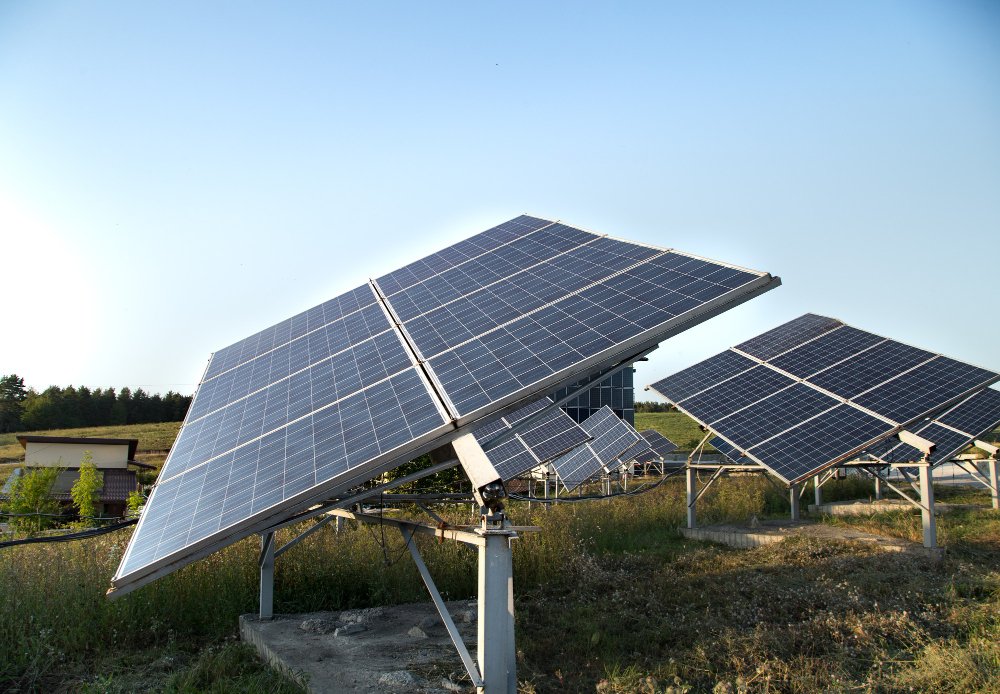
Net-Metering Protection for Existing Solar Consumers has emerged as a major policy decision that could reshape Pakistan’s evolving solar energy landscape. In a move that offers clarity and confidence to thousands of households and businesses, the National Electric Power Regulatory Authority (Nepra) has decided to protect existing electricity prosumers by allowing them to retain benefits under their original seven-year net-metering agreements. The decision comes after formal communication from Pakistan’s Power Division, acting on the instructions of Prime Minister Shehbaz Sharif, urging a review of the newly notified Prosumer Regulations 2026. Why Net-Metering Protection for Existing Solar Consumers Matters Pakistan’s solar revolution has accelerated rapidly. An estimated 466,000 consumers have adopted rooftop solar systems under net-metering arrangements. In contrast, over 38 million consumers remain dependent on the national grid. The rapid expansion of solar adoption has triggered concerns about cost redistribution. Policymakers fear that without careful planning, financial pressures from incentives could shift disproportionately onto conventional grid users. To address this imbalance, the government has adopted a two-pronged strategy: • Protect existing solar consumers and their signed agreements• Apply revised rules only to new applicants under the Prosumer Regulations 2026 This approach ensures contractual stability while allowing policymakers to redesign the framework for future sustainability. Nepra’s Legal Framework Behind the Protection Invoking its authority under Section 47 of the Regulation of Generation, Transmission and Distribution of Electric Power Act, 1997, Nepra has circulated draft amendments clarifying that: • Approvals, licences, and agreements executed under repealed regulations will remain valid.• Billing will continue under the earlier rate structure.• The protection applies to consumers holding valid licences as of February 9, 2026.• The amendment will be treated as effective from that same date. Importantly, this protection also extends to consumers served by K-Electric, Karachi’s primary electricity distributor. In simple terms, if you signed a net-metering contract before the regulatory shift, your agreement remains intact until its seven-year term expires. A Balancing Act: Solar Growth vs Grid Sustainability The Net-Metering Protection for Existing Solar Consumers aims to strike a delicate balance. On one side stands Pakistan’s growing solar community, homeowners and businesses that invested heavily in renewable energy systems based on earlier regulatory incentives. On the other side are millions of grid-dependent consumers, many from middle- and lower-income households, who could bear unintended financial consequences if cost-sharing mechanisms are not recalibrated. The government’s intervention signals a clear message: policy shifts will not retroactively penalize early adopters. IMF Scrutiny and Tariff Reform Implications The decision also unfolds under international financial scrutiny. The International Monetary Fund (IMF) is reviewing Pakistan’s proposed electricity tariff revisions as part of its $7 billion Extended Fund Facility. The IMF has emphasized that reforms must protect middle- and lower-income households while addressing structural inefficiencies, particularly the persistent issue of circular debt in the power sector. Any adjustment in net-metering structures must therefore align with broader macroeconomic stabilization goals and inflation management. What Happens Next? Nepra has invited public feedback on the draft amendments to the Prosumer Regulations 2026. Stakeholders including solar installers, consumers, distribution companies, and energy economists are expected to weigh in. The likely outcome? • Short-term certainty for existing solar investors• Recalibrated incentives for future applicants• Closer oversight from international financial institutions• Gradual reform to manage circular debt pressures Final Thoughts: Policy Certainty as a Confidence Booster The Net-Metering Protection for Existing Solar Consumers reinforces a crucial principle in energy policy contract sanctity. In a country striving to expand renewable adoption while managing fiscal pressures, predictability matters. By honoring existing agreements, Pakistan sends a reassuring signal to investors and households: clean energy investments will not be undermined by abrupt regulatory reversals. Yet, the broader debate continues. How can Pakistan expand solar adoption without straining grid finances? And can future regulations strike a balance between sustainability and affordability? As the public consultation unfolds, one thing is clear Pakistan’s energy transition has entered a decisive phase.

PSO Posts 8% Profit Increase to PKR 12.1bn Amid Energy Sector Challenges
Business

PSO Posts 8% Profit Increase to PKR 12.1bn Amid Energy Sector Challenges

February 17, 2026 – Pakistan State Oil (PSO), the nation’s energy flagship, announced its financial results for the first half of fiscal year (1HFY26) ended December 31, 2025, demonstrating strong resilience and a continued growth trajectory. The Board of Management reviewed the group’s performance for the period at its meeting held on February 17, 2026. Read More: https://theboardroompk.com/pvc-prices-jump-50-to-740-margin-hits-decade-high-on-china-rebate-removal-anticipation/ During the period under review, PSO recorded a profit after tax of PKR 12.1 billion for 1HFY26, (PKR 11.2 billion 1HFY25). This translates into earnings per share of PKR 25.82, with gross sales reaching PKR 1.6 trillion. On a consolidated basis, the group posted a profit after tax of PKR 14.7 billion with earnings per share of PKR 31.34. PSO, maintaining its leadership in the white oil segment with a 42.2% market share and total sales of 3,418 KMT while black oil sales declined due to reduced power sector offtake. Notably, the company reinforced its near-total dominance in the aviation sector, maintaining a 99% market share in the jet fuel segment. Also, delivered its highest-ever LPG performance, with record sales of 28.5 KMT, representing a 3.6% increase over the same period last year. Significant progress was made in strengthening the nation’s energy infrastructure. The company successfully rehabilitated 39 KMT of storage capacity across key locations including Mehmoodkot, Keamari, Zulfiqarabad, and Habibabad. Furthermore, the White Oil Pipeline Project reached a major milestone with the federal cabinet’s ratification of the project summary and provisional tariff, moving it toward full implementation. PSO also expanded its physical footprint to 3,638 retail outlets and enhanced its convenience ecosystem through the growth of VIBE stores and the launch of the in-house VIBE Café. Embracing the future of energy, PSO is leading the way in sustainability through PSO Renewable Energy (PSORE). The company has solarized several operational terminals and is on track to add an additional 2.2 MWp of solar capacity by mid-2026. Simultaneously, PSO has established Pakistan’s largest electric vehicle (EV) infrastructure with nine charging stations across major highways and cities. Digital innovation remained a priority, highlighted by the successful launch of the Payvay mobile application and the integration of Raast digital payments through its fintech subsidiary, Cerisma (Pvt.) Limited. Beyond operations, PSO remains committed to social impact, investing PKR 196 million in healthcare, education, and community development, including the PSO Model Village for flood-affected families. While circular debt remains a persistent challenge with receivables at PKR 412 billion, the company continues to engage proactively with the Government for a sustainable solution. PSO remains committed to driving Pakistan’s energy future through innovation and sustainable growth, ensuring long-term value for both shareholders and the nation.

KSE-100 Index Slides 1,303 Points in Volatile Session
Business

KSE-100 Index Slides 1,303 Points in Volatile Session

The KSE-100 Index faced sharp selling pressure on Tuesday, closing at 173,150.41 after shedding 1,303.52 points, or 0.75%. The session unfolded like a rollercoaster offering early optimism before giving way to broad-based profit-taking that rattled investor sentiment across the Pakistan Stock Exchange (PSX). But is this just a healthy correction, or the beginning of a deeper pullback? KSE-100 Index Swings Over 4,400 Points The trading day was marked by extraordinary volatility. The KSE-100 Index moved within a massive intraday range of 4,437.96 points. It touched a high of 176,131.35 up 1,677 points at one stage before plunging to a low of 171,693.39, down 2,760 points from the peak. Such wide fluctuations highlight nervous trading behavior as investors balance profit-taking with long-term positioning. Total volume for the index stood at 424.96 million shares, signaling active participation despite the bearish close. Out of 100 index constituents: • 31 stocks closed in the green• 68 stocks ended in the red• 1 stock remained unchanged The market breadth clearly favored the bears. Heavyweights That Dragged the KSE-100 Index Lower The decline was largely driven by major blue-chip stocks. Among the top laggards were: • Pakistan State Oil (PSO), down 6.05%, contributing a hefty 209.89 negative points to the index.• Habib Bank Limited (HBL), which shaved off 174.81 points.• Engro Holdings (ENGROH), reducing the index by 148.90 points.• United Bank Limited (UBL) and• National Bank of Pakistan (NBP) also exerted strong downward pressure. Sector-wise, Commercial Banks emerged as the biggest drag, pulling the index down by over 608 points. Oil & Gas Marketing Companies and Fertilizer stocks further deepened losses. This concentrated selling in heavyweight sectors amplified the market’s downward momentum. Energy Stocks Provide Cushion to the KSE-100 Index Despite the sharp decline, certain sectors provided much-needed support. Oil & Gas Exploration Companies collectively added 286.11 points to the index. Key contributors included: • Oil and Gas Development Company (OGDC), which added 179.09 points.• Pakistan Petroleum Limited (PPL), contributing 87.35 points.• Mari Petroleum Company (MARI) also supported the index. The resilience in exploration stocks suggests investors are selectively accumulating energy plays, possibly anticipating stronger global oil price trends. Broader Market Reflects Cautious Sentiment The broader All-Share Index mirrored the weakness, closing at 104,363.56 down 607.69 points or 0.58%. Market activity showed signs of cooling: • Total volume dropped to 716.04 million shares (from 773.29 million previously).• Traded value declined by Rs5.77 billion to Rs40.47 billion.• A total of 411,431 trades were recorded across 477 companies. Of these: • 128 advanced• 293 declined• 56 remained unchanged The statistics underscore a session dominated by sellers. High-Volume Stocks Signal Retail Activity Among the most actively traded stocks were KEL, BOP, WTL, CNERGY, and PIBTL, indicating strong retail participation despite broader market weakness. Banking and energy stocks continued to attract attention, suggesting investors are positioning strategically rather than exiting entirely. Bigger Picture: Is the KSE-100 Index Rally Still Intact? Zooming out, the KSE-100 Index has gained an impressive 47,523 points, or 37.83%, during the current fiscal year. However, on a calendar-year basis, it remains marginally down by 904 points, or 0.52%. This raises a crucial question: Is Tuesday’s decline a temporary correction within a strong uptrend, or the start of consolidation after a stellar fiscal rally? For now, market fundamentals remain intact, but volatility signals caution. Investors may watch banking and oil sectors closely in upcoming sessions to gauge directional momentum. Conclusion: Correction or Turning Point? The sharp drop in the KSE-100 Index serves as a reminder that markets rarely move in straight lines. While fiscal-year gains remain robust, sector-specific selling pressure particularly in banking and oil marketing suggests investors are recalibrating expectations. With earnings season and macroeconomic signals ahead, the coming sessions could determine whether this dip becomes a buying opportunity or evolves into a broader correction.

CNIC-Based Vehicle Number Plates Sindh: A Revolutionary Shift in Vehicle Ownership Laws
Pakistan

CNIC-Based Vehicle Number Plates Sindh: A Revolutionary Shift in Vehicle Ownership Laws

CNIC-Based Vehicle Number Plates Sindh have officially been rolled out across the province following the enforcement of the Provincial Motor Vehicles (Amendment) Act 2024 by the Sindh Excise, Taxation and Narcotics Control Department. This landmark reform is more than just a procedural update it represents a structural transformation in how vehicle ownership is recorded, retained, and transferred in Sindh. Under the new system, vehicle number plates are now directly linked to the owner’s Computerised National Identity Card (CNIC), meaning citizens will retain ownership of their number plate even after selling their vehicle. Yes, you read that right. Your number plate now belongs to you not the car. What CNIC-Based Vehicle Number Plates Sindh Mean for Owners Previously, number plates were tied to vehicles. With the introduction of CNIC-Based Vehicle Number Plates Sindh, ownership dynamics have changed dramatically. Here’s what vehicle owners need to know: • Number plates are now considered Personalised Registration Marks (PRMs).• Owners can transfer their existing number plate to a newly purchased vehicle.• Separate PRMs will be issued for individuals owning multiple vehicles.• Deactivated number plates can be retained for up to one year.• No additional fee will be charged for transferring number plates.• CNIC records will be updated in real time. This reform enhances transparency, strengthens regulatory oversight, and ensures cleaner registration records across the province. New Vehicle Categories Introduced The amendment also restructures vehicle classifications. Instead of the traditional “commercial” and “private” categories, the Sindh Excise Department has simplified classifications into two groups: This streamlined categorization aims to simplify administrative processes and improve efficiency within the registration system. Understanding the Legal Amendments The amendment introduces key definitions and structural changes: Registration Mark (PRM) A “registration mark” now includes: • Personalized Registration Marks (PRM)• Number plates• Any assigned alphanumeric vehicle identification issued by the registering authority Importantly, all previously issued number plates automatically become PRMs under the current owner’s name. Vehicle Identification Number (VIN) The law formally recognizes the Vehicle Identification Number (VIN) as the primary identifying code for vehicles. The chassis number will now serve as the VIN for all regulatory purposes. Key Provisions of the CNIC-Based Vehicle Number Plates Sindh System The updated Rule 32 outlines several critical provisions: • PRMs are assigned during registration and remain with the owner after sale.• Number plates may be retained or changed with mutual consent of buyer and seller.• No separate fees are charged for transferring number plates.• The existing fee structure for ownership transfer still applies.• The system only applies to vehicles registered under an individual owner’s name. Additionally, the popular Ajrak-themed number plates will continue, with their fee treated as a transfer cost under the new system. Why This Reform Matters for Sindh’s Economy The enforcement of CNIC-Based Vehicle Number Plates Sindh is not merely an administrative change it reflects a broader modernization strategy. By linking number plates directly to CNIC data: • Fraud and duplication risks are reduced.• Record-keeping becomes centralized and digitized.• Ownership disputes can be minimized.• Regulatory oversight becomes more efficient. Last year, the Sindh cabinet approved this proposal as part of a wider vehicle registration reform strategy. Its implementation now signals a clear move toward digitized governance and improved transparency in Pakistan’s automotive sector. A New Era of Personalized Vehicle Identity For many citizens, vehicle number plates carry personal or symbolic value. With PRMs becoming legally recognized assets, Sindh residents now have the flexibility to carry their vehicle identity forward regardless of how many times they upgrade or change cars. In a province where automotive transactions number in the thousands each month, CNIC-Based Vehicle Number Plates Sindh could redefine how people perceive vehicle ownership altogether. The plate is no longer just metal it’s personal property. And that changes everything.

Pakistan International Bulk Terminal Profit Surges Nearly 5x in H1 FY2026
Business

Pakistan International Bulk Terminal Profit Surges Nearly 5x in H1 FY2026

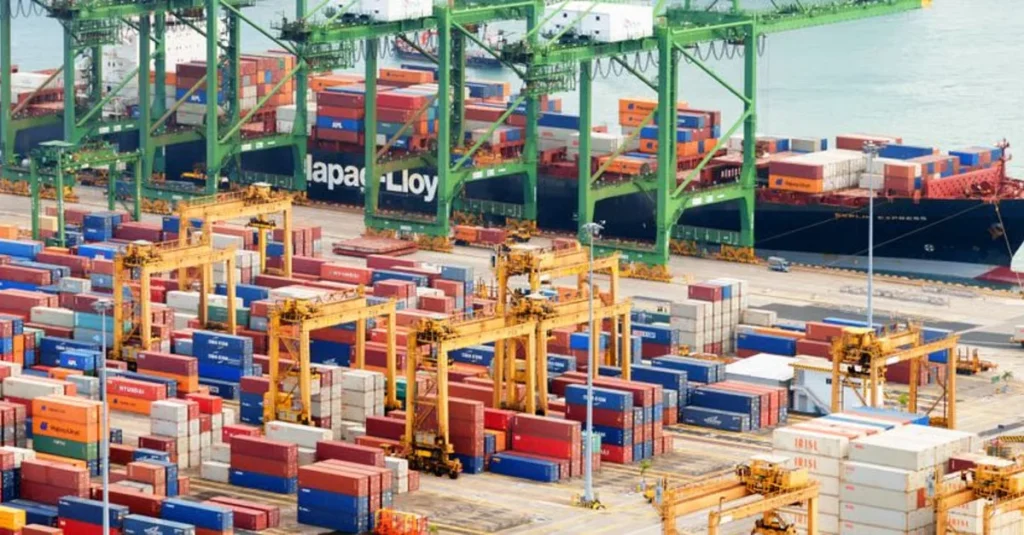
Pakistan International Bulk Terminal profit has stunned the market, rising nearly fivefold in the first half of FY2026 and signaling a powerful turnaround story at one of Pakistan’s key port operators. For the half year ended December 31, 2025, Pakistan International Bulk Terminal Limited (PSX: PIBTL) posted a net profit of Rs1.51 billion, compared to Rs319 million in the same period last year. That’s an eye-catching 4.7x increase a performance that is turning heads across Pakistan’s capital markets. But what’s really driving this explosive growth? Pakistan International Bulk Terminal Profit Driven by 46% Revenue Growth The biggest catalyst behind the surge in Pakistan International Bulk Terminal profit was strong top-line growth. Revenue from contracts with customers jumped 46% year-on-year, reaching Rs8.19 billion compared to Rs5.59 billion in H1 FY2025. This sharp increase reflects: • Higher cargo handling volumes• Improved throughput efficiency• Strong demand for bulk terminal services This isn’t just incremental growth it signals a structural strengthening of port operations and increasing reliance on bulk logistics infrastructure. Margin Expansion Signals Operational Efficiency Revenue growth alone doesn’t tell the full story. The real breakthrough lies in profitability margins. While cost of services rose 31% to Rs5.44 billion, the increase was significantly lower than revenue growth. As a result: • Gross profit surged 89% to Rs2.74 billion• Gross profit margin improved from 25.9% to 33.5%• Net profit margin expanded dramatically from 5.7% to 18.4% This widening gap shows improved cost management and stronger pricing power key indicators of operational discipline. In simple terms: the company is not just earning more it is earning smarter. Finance Costs Halved – A Major Boost to Pakistan International Bulk Terminal Profit Another major contributor to the jump in Pakistan International Bulk Terminal profit was a sharp reduction in finance costs. Finance expenses declined 48% to Rs433.8 million from Rs834.8 million last year. This reflects: • Lower borrowing costs• Reduced debt levels• Improved financial management With less money flowing toward interest payments, more earnings translated directly into bottom-line profit. Additionally, the company recorded an exchange gain of Rs23.5 million compared to a loss of Rs7.3 million last year adding further support to profitability. Profit Before Tax Nearly Quadruples The company’s operational strength becomes even clearer when looking at pre-tax numbers. • Profit before revenue and income taxes reached Rs1.69 billion, up 2.9 times• Profit before income taxes surged 3.7 times year-on-year Although taxation expense increased to Rs180.3 million, the higher tax bill merely reflects stronger profitability rather than pressure on earnings. Earnings per share (EPS) climbed to Rs0.84, up from Rs0.18 a 367% jump. What This Means for Investors and the Port Sector The surge in Pakistan International Bulk Terminal profit signals more than just a strong half-year performance. It highlights: • Robust demand in Pakistan’s bulk cargo ecosystem• Improved operational scalability• Enhanced financial discipline• Strengthened margin profile The near 5x profit growth demonstrates that PIBTL has successfully optimized its cost structure while capitalizing on favorable operating conditions. For investors tracking infrastructure and logistics plays, this performance suggests the company may be entering a new earnings cycle. Is This Momentum Sustainable? The big question now: Can this momentum continue? If cargo volumes remain strong and finance costs stay controlled, PIBTL could maintain elevated profitability levels. However, port operations remain sensitive to: • Import/export activity• Commodity flows• Macroeconomic conditions• Exchange rate fluctuations Still, the dramatic turnaround in Pakistan International Bulk Terminal profit places the company firmly back on the radar of market participants. Final Thoughts In a market often dominated by banking and energy giants, Pakistan International Bulk Terminal has delivered one of the most striking earnings surprises of the season. A 46% revenue surge.Margins expanding sharply.Finance costs slashed nearly in half.Net profit multiplying 4.7 times. The numbers tell a compelling story and the market is watching closely.

Fertilizer Consumption in Pakistan Plunges 48% in January 2026
Business

Fertilizer Consumption in Pakistan Plunges 48% in January 2026

Fertilizer Consumption in Pakistan has taken a dramatic turn in January 2026, raising serious questions about farm economics, crop planning, and the broader agricultural outlook. According to the latest Monthly Fertilizer Review issued by the National Fertilizer Development Centre (NFDC), total nutrient offtake fell by a staggering 48% year-on-year to 151,000 tonnes. Read More: https://theboardroompk.com/pvc-prices-jump-50-to-740-margin-hits-decade-high-on-china-rebate-removal-anticipation/ What’s driving this sharp contraction and what could it mean for Pakistan’s Rabi crops? Fertilizer Consumption in Pakistan: Product-Wise Breakdown The numbers paint a concerning picture. In January 2025, farmers lifted 446,000 tonnes of urea. This January, that number dropped to just 218,000 tonnes a massive 51% decline. Similarly, DAP consumption slid from 61,000 tonnes to 39,000 tonnes, reflecting a 35.8% decrease. Nutrient-wise trends show: • Nitrogen usage fell from 246,000 tonnes to 121,000 tonnes (down 50.8%)• Phosphate declined from 38,000 tonnes to 25,000 tonnes (down 34.2%)• Potash eased from 6,400 tonnes to 5,200 tonnes (down 18.7%)• Total nutrient offtake shrank from 290,000 tonnes to 151,000 tonnes This steep drop in fertilizer consumption in Pakistan suggests either delayed purchasing, financial pressure on farmers, or reduced sowing intensity. Rabi Season Tells a Different Story Interestingly, cumulative figures for the Rabi 2025–26 season (October to January) show a more balanced outlook. Total nutrient offtake during this period reached 1.909 million tonnes a modest 1.9% increase compared to last year’s 1.873 million tonnes. Here’s how the Rabi trend unfolded: • Urea offtake rose 12%, from 2.449 million tonnes to 2.744 million tonnes• Nitrogen usage climbed 8.6%• Potash demand increased 14.1%• However, DAP fell sharply by 23.1%• Phosphate declined 20.5% This indicates that while January was weak, earlier months helped cushion the overall seasonal performance. Domestic Production: Strong Supply, Weak Demand? Total domestic fertilizer production in January 2026 stood at 744,000 tonnes. Urea dominated output with 541,000 tonnes, accounting for nearly 73% of total production. Other key products included: • NP at 79,000 tonnes• CAN at 72,000 tonnes• DAP at 29,000 tonnes• Smaller volumes of SSP, SOP, and NPK blends The contrast between strong production and weak offtake raises concerns about inventory buildup and cash flow pressure across the fertilizer value chain. Provincial Trends: Punjab and Sindh Hit Hard Provincial data reveals uneven impact. Punjab’s urea offtake fell 50.5% to 141,000 tonnes, while Sindh recorded an even steeper 61.5% decline to 44,000 tonnes. KP showed a relatively modest 11.6% decrease, while Balochistan dropped 35%. DAP demand also contracted across provinces, with Balochistan seeing the steepest fall of 70%, followed by KP at 56.1%. These regional disparities could influence crop yields differently across provinces. Fertilizer Prices: Mixed Signals On the pricing front, domestic fertilizer rates showed a mixed trend: • Urea (Sona) rose 1.3% to Rs. 4,357 per 50kg bag• DAP declined 1.6% to Rs. 14,360• NP dropped 2.2%• SSP, CAN, and SOP registered marginal decreases Globally, however, urea prices strengthened in key markets like China and the Middle East, suggesting possible future pressure on local prices. What’s Next for Fertilizer Consumption in Pakistan? The steep January contraction in fertilizer consumption in Pakistan could signal short-term demand disruption rather than structural weakness. However, if lower phosphate usage persists, it may impact crop yields and soil health in the coming months. For policymakers, agri-input suppliers, and investors, the coming weeks will be critical. Will farmers step back into the market ahead of peak crop growth stages? Or is this the beginning of a more cautious planting cycle? One thing is clear: fertilizer consumption trends remain a powerful leading indicator of Pakistan’s agricultural and economic momentum. Stay tuned the fields may reveal the real story soon.

SBP Issues Circular of Zakat Deduction on Savings Accounts: Nisab Set at Rs503,529
Pakistan

SBP Issues Circular of Zakat Deduction on Savings Accounts: Nisab Set at Rs503,529

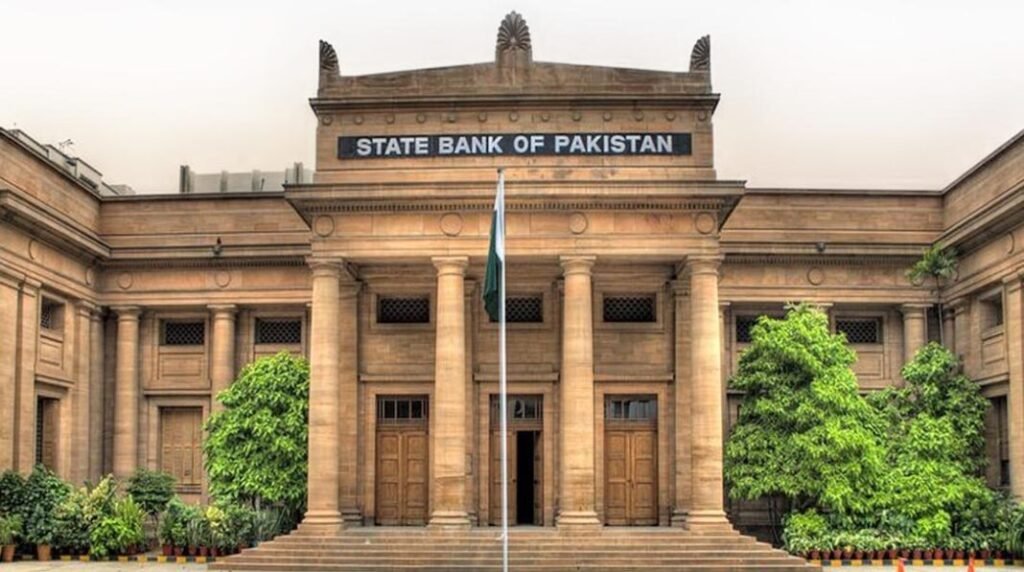
The State Bank of Pakistan (SBP) has issued BPRD Circular Letter No. 03 of 2026 on February 17, 2026. Read More: https://theboardroompk.com/pvc-prices-jump-50-to-740-margin-hits-decade-high-on-china-rebate-removal-anticipation/ It directs all banks, Development Finance Institutions (DFIs), and Microfinance Banks (MFBs) to deduct Zakat at source from eligible saving accounts. Zakat Deduction Guidelines Issued The circular references a Ministry of Poverty Alleviation & Social Safety notification dated February 16, 2026. It applies specifically to saving banks, profit & loss sharing, and similar accounts under Asset Code No. 101. Banks must deposit the deducted Zakat immediately after the deduction date to ensure timely compliance. Compliance Urged for Shariah-Compliant Accounts All relevant financial institutions have been instructed to take necessary actions without delay. This move supports the annual Zakat collection process in line with government rules for Nisab and deductions.

CDF Munir Vows Deeper Security Partnership with UAE
World

CDF Munir Vows Deeper Security Partnership with UAE

Field Marshal Syed Asim Munir, Pakistan’s COAS and CDF, held crucial discussions in Abu Dhabi. He met His Highness Sheikh Tahnoon bin Zayed Al Nahyan, Deputy Ruler and National Security Advisor of the UAE. Read More: https://theboardroompk.com/chinese-firm-offers-help-to-end-gwadars-power-crisis/ The talks centred on boosting bilateral ties. Both sides focused on economic collaboration, investments, and security cooperation. Munir highlighted the deep historical connections. He praised the UAE’s long-standing support to Pakistan’s economy and security. Pakistan appreciates UAE investments over decades. This reflects strong brotherly relations between the nations. Munir stated clearly that UAE security matters deeply. He said it forms an integral part of Pakistan’s own security. This underscores mutual dependence in defense matters. The statement shows Pakistan’s firm commitment to the alliance. Both leaders exchanged views on regional issues. They stressed sustained coordination for peace and stability. Enhanced cooperation benefits both countries. It also aids lasting regional prosperity. Munir reaffirmed Islamabad’s dedication. Pakistan remains fully committed to joint efforts across domains. The meeting signals stronger strategic partnership. It builds on enduring historical and fraternal ties. Such high-level engagements strengthen trust. They pave the way for expanded collaboration in key sectors. Pakistan values UAE’s consistent role. This includes contributions to economic and social development. The discussions promote shared interests. They aim at peace, stability, and mutual growth in the region.

Scroll to Top