Author name: Bussiness

Education

Canada Eases Study Permit Rules for International MS and PhD Students

Faster Visa Processing for PhD Students Alongside the cap exemption, PhD applicants from outside Canada will benefit from a 14-day fast-track study permit process, which also applies to accompanying family members. The Immigration, Refugees and Citizenship Canada (IRCC) has launched a dedicated webpage for graduate students, providing details on study programs, scholarships, and post-graduation work opportunities. “Graduate students play a crucial role in Canada’s research and innovation ecosystem and are more likely to contribute long-term to the country’s economy,” said a government official. Why the Change Matters While Canada is reducing the number of international undergraduate and college-level permits, graduate students are largely exempt from these caps. This ensures that the country continues to attract high-skilled researchers and innovators who can contribute to economic growth, scientific advancement, and innovation. The new policy reflects a strategic approach to balancing international student growth with sustainability. By 2027, Canada aims to reduce the overall temporary resident population — including students, temporary workers, and short-term visitors — to under 5% of the total population, addressing pressures on housing, healthcare, and infrastructure. What This Means for Future Students While Canada tightens rules for most international students, master’s and PhD candidates remain prioritized, ensuring continued access to one of the world’s most research-friendly study destinations. The policy underscores Canada’s commitment to attracting highly skilled international talent and reinforces its position as a leading country for advanced education and innovation.   

Health

A lesson for Pakistan in Indian sweet syrup death

When 23 children died in India’s Madhya Pradesh after consuming contaminated cough syrup in early September, the news barely registered across the border. In Pakistan — where self-medication is rampant and syrup bottles are household staples — the tragedy strikes dangerously close to home. Many in Pakistan remain unaware that those sweet, over-the-counter syrups can be fatal. In the recent Indian case, the children — all under six — died of kidney failure after consuming syrup laced with diethylene glycol (DEG), a toxic solvent found at 500 times the permissible limit. Investigations revealed the manufacturer, Sresan, had sourced industrial-grade propylene glycol from local chemical and paint dealers instead of certified pharmaceutical suppliers. With no qualified chemist overseeing production, the syrup went untested — and deadly. This isn’t the first such incident. In 2022, Indian-made syrups caused the deaths of at least 70 children in The Gambia and 18 in Uzbekistan. Between December 2019 and January 2020, at least 12 children died in Indian Illegally Occupied Jammu and Kashmir (IIOJK) after taking similarly contaminated syrup. The prescribing doctor in India was the first to be arrested, followed by the suspension of the drug inspector and deputy director. The manufacturer, who had been absconding since September, has now been caught. “It shows that even doctors can get caught in legal and ethical trouble, even when unaware of a drug’s quality issues,” said Professor Mishal Khan of the London School of Hygiene & Tropical Medicine. “The tragedy is a warning for Pakistan — weak regulation hurts everyone: doctors, pharma companies, and patients alike.” A 2024 study by Khan found that approximately 40% of Karachi doctors accepted incentives in return for prescribing medicines from a fake pharmaceutical company without any checks on the company’s manufacturing standards or medicine quality. Antibiotics and cough syrups were among the medicines they agreed to promote. As Pakistan enters its flu season, Karachi’s hospitals are filling up. “Between 50 to 70% of children who visit our clinics have respiratory tract infections,” said Dr Wasim Jamalvi of Dr Ruth K M Pfau, Civil Hospital Karachi. And with the flu comes a predictable companion: cough syrup. “If a child is brought for consultation for fever, cough and cold, parents feel a prescription is incomplete without a cough syrup,” said Dr. D.S. Akram, a senior pediatrician, who stopped prescribing them two decades ago. “Cough syrups don’t work — they just make the children drowsy or irritable,” she said. Jamalvi agrees, “We don’t recommend syrups for under-fives, but parents still give them — they’re easily available over the counter.” Self-medication culture In Pakistan, cough syrups — often called sherbet — are viewed as harmless cures. “I swear by this syrup a doctor gave me years ago,” said Mohammad Yusuf, a 31-year-old houseboy. “One spoon at night and I sleep better.” Two weeks ago, when Rakhi Matan’s children, aged 10 and 13, came down with the flu, she reached for a bottle of leftover cough syrup from last year. “It saved me the doctor’s fee — he’d have prescribed the same thing,” she said. Such casual self-medication is common — and hard to control. Dr Qaiser Sajjad, former secretary general of the Pakistan Medical Association, said regulating cough syrup sales is nearly impossible with thousands of quacks operating in the city. Medical store worker Majid Yusufzai agreed, admitting syrups are sold freely without prescriptions and “entire families share the same bottle”. Health experts say Pakistan’s culture of self-prescription — reinforced by weak enforcement and cheap access to medicines — makes the system vulnerable to similar disasters. Dr Obaidullah Malik, heading the Drug Regulatory Authority of Pakistan (Drap), told IPS that Pakistan imported the majority of the raw materials (for several drugs, including cough syrups) from India and China. With over 100,000 drug manufacturing companies, India, referred to as the ‘pharmacy of the world’, is known for affordable generic drugs. But recent deaths have cast a long shadow on its safety standards. Tighter drug oversight “It is of great concern,” said Malik, adding that scrutiny of domestic quality control was enhanced after it received a global alert from the WHO on October 13, of three substandard cough syrups manufactured in India. “Thankfully, the contaminated syrups were never exported to Pakistan,” confirmed Malik. “There’s no evidence of illegal shipments either — but we’re staying vigilant to ensure a tragedy like India’s doesn’t happen here.” “Drap has made it mandatory for all pharmaceuticals, including herbal and nutraceutical manufacturers as well as importers, to pre-test additives such as glycerin, propylene glycol, and sorbitol — either in their own laboratories or through public sector facilities like the Central Drugs Laboratory (CDL) in Karachi or the 12 provincial drug testing,” said Malik. The authority is double-checking vendor credentials and certifications and instructed field teams to step up sampling and testing — both of raw materials coming in and the finished syrups. Recently, it trained pharma company reps from Nepal, Gambia, Sierra Leone, Maldives, and Sri Lanka on a quick detection method called Thin Layer Chromatography (TLC), which helps spot contamination early — saving time, cutting costs, and improving safety checks nationwide. There are between 700 and 800 pharmaceutical companies across Pakistan, but only about 300 are members of the Pakistan Pharmaceutical Manufacturers Association — leaving much of the industry operating with little oversight. Yet, despite its fledgling state compared to India’s, Pakistan’s pharma sector is eager to expand into global markets. Khan cautioned that the recent scandal over unsafe medicines could jeopardise those ambitions before they even take off. To avoid a similar crisis and protect its reputation abroad, Pakistan’s regulator has stepped up oversight at home. “Since November 2023, Drap has recalled 63 finished products contaminated with diethylene glycol (DEG) and ethylene glycol (EG), identified 44 impurities, and issued 13 alerts about contaminated raw materials,” said Drap’s CEO. As Karachi’s clinics continue to fill up this flu season, syrup bottles are flying off shelves — often with no pharmacist in sight. “It’s just a syrup,” said Yusuf. He does not

PayPal re-launches in the UK after nearly 2 years with loyalty perks
World

PayPal re-launches in the UK after nearly 2 years with loyalty perks

London: PayPal announced its relaunch in the United Kingdom on Wednesday, two years after Brexit-induced restructuring scaled back operations, aiming to reclaim its foothold in the competitive digital payments arena with enhanced consumer tools.The platform, a staple for online and in-store transactions, will now offer UK customers seamless access to worldwide debit cards sans foreign transaction fees, alongside credit card options and the PayPal+ loyalty program. This rewards ecosystem allows users to earn points on purchases redeemable across partner merchants, fostering repeat engagement in a post-pandemic e-commerce surge.“Post-Brexit, we’ve realigned to deliver value tailored for British shoppers,” said PayPal UK head Alex Clavell. The move coincides with rising fintech adoption—UK digital wallet usage hit 65% this year—positioning PayPal against rivals like Apple Pay and Revolut.Integration with major retailers like Tesco and ASOS is underway, promising frictionless checkouts. Analysts forecast a 15% uptick in UK market share within quarters, bolstered by regulatory nods. For consumers weary of hidden fees, this relaunch injects affordability and rewards into everyday spending, potentially injecting £500 million in transaction volume annually. As economic pressures linger, PayPal’s bet on loyalty could redefine wallet wars.

Government pushes cheaper electricity for factories, but businesses aren't buying it
Business

Government pushes cheaper electricity for factories, but businesses aren’t buying it

Islamabad Skepticism abounded at the National Electric Power Regulatory Authority’s (Nepra) public hearing Tuesday, where business leaders lambasted the government’s incremental consumption package for industrial and agricultural users as convoluted, inequitable, and ineffective in reviving demand plagued by high costs and solar proliferation.The scheme, offering electricity at Rs22.98 per unit for excess usage beyond a December 2023-November 2024 baseline across time-of-use and non-ToU categories in DISCOs and K-Electric, is pitched as a three-year subsidy-neutral fix. Power Division officials hailed it as “wisdom from past lessons,” projecting a Rs1.16 trillion GDP infusion by spurring extra shifts and alleviating Rs1.7 trillion in capacity payments to idle plants—equivalent to Rs17 per unit.Yet, stakeholders like the Federation of Pakistan Chambers of Commerce and Industry (FPCCI) and All Pakistan Textile Mills Association (APTMA) dismissed it outright. FPCCI’s Rehan Jawed decried the one-year reference period as too rigid, urging a three-year extension, simplification of eligibility, and a slash to Rs16/unit to offset cross-subsidies. APTMA’s Syed Absar Ali forecasted paltry 15% uptake, excluding captive and wheeling consumers due to a steep 60% load factor, while textile rep Amir Sheikh demanded a flat 9 cents/unit and 40% threshold for export viability. Tanveer Barry warned of inevitable confusion and early demise.Amid solarisation’s ripple—6,000 MW net metering plus 12,000-13,000 MW off-grid shifts flattening daytime loads, slashing agricultural demand 40-50%, and extending peaks to mornings—officials refuted absolute declines, attributing them to shutdowns and tariffs. They stressed the package’s grid-stabilizing intent, with built-in reviews if marginal costs climb, though low-risk assurances rang hollow. Nepra’s technical member grilled on stakeholder buy-in, highlighting tariff uncertainty.As industries grapple with shutdowns, the hearing exposed a chasm: government’s optimism versus sector pleas for equitable revival. Revisions loom essential to avert deeper economic drag in Pakistan’s power-starved landscape.

Saudi Arabia Opens Doors for Pakistani Female Nurses: Lucrative Roles with Full Benefits Announced
External Sector

Saudi Arabia Opens Doors for Pakistani Female Nurses: Lucrative Roles with Full Benefits Announced

Islamabad The Kingdom of Saudi Arabia has unveiled fresh employment prospects for qualified Pakistani female nurses, targeting its burgeoning healthcare sector through a partnership with a leading Saudi medical group. The Overseas Employment Corporation (OEC) is spearheading recruitment for “special nurse” positions, emphasizing skilled professionals under 40 years old with a four-year BScN degree (16 years of education) or equivalent from accredited institutions.Priority goes to candidates who have cleared the Prometric licensing exam, fast-tracking them to direct interviews. The role entails a seven-day, 12-hour shift schedule—five to six hours of hands-on patient care plus on-call standby—with a base salary of SAR 4,500 monthly. Opting for a six-day week deducts SAR 500.Perks include complimentary shared housing (furnished, AC-equipped with en-suite baths), round-trip economy flights from Pakistan to Jeddah, and workplace transport. Annual leave stands at 21 days, with biennial return tickets for contract renewals. Applicants must register via the OEC portal at https://oec.gov.pk/, uploading a Rs1,000 bank challan alongside their form. Deadline: November 17, 2025. This initiative aligns with Saudi Vision 2030’s healthcare expansion, offering Pakistani nurses stable, high-earning opportunities amid domestic job scarcity. OEC officials urge swift applications to capitalize on the demand, projecting hundreds of hires to boost remittances and female workforce participation.

Ex-CJP Khawaja Files SC Petition Against 27th Amendment, Warns of Judicial Eclipse
Pakistan

Ex-CJP Khawaja Files SC Petition Against 27th Amendment, Warns of Judicial Eclipse

Islamabad Former Chief Justice of Pakistan Jawwad S. Khawaja has petitioned the Supreme Court to strike down the proposed 27th Constitutional Amendment, decrying it as a mortal threat to judicial independence and the separation of powers doctrine. Filed under Article 184(3) through counsel Khawaja Ahmed Hosain, the plea urges suspension of any provisions curbing the apex court’s jurisdiction or shifting it to alternative forums, amid parliamentary pushes to enact the bill.Khawaja, in a stark admonition, argues the tweaks erode the hard-won consensus of the 1973 Constitution, setting a “haunting precedent” that undermines the social contract and invites historical repetition. “A nation whose foundational document is fundamentally controversial cannot prosper,” the petition states, invoking the Rule of Law: “Do we want to be governed by Laws or Men?” It contends Parliament lacks authority to diminish SC powers, rendering such changes “patently unconstitutional” and akin to abolishing the court itself.The move resonates amid judicial disquiet, with sitting judges and retirees urging CJ Yahya Afridi to convene a full court, yet no such meeting has materialized. Ex-Additional AG Tariq Mahmood Khokhar lambasted the inertia: “The CJP presides over the liquidation of the Supreme Court,” warning of executive-legislative overreach echoing past dictators like Ayub, Yahya, and Musharraf. He highlighted ironic self-sabotage: empowering a “constitutional court” via SC disempowerment, dooming democracy.Khawaja seeks declarations barring jurisdiction transfers, including high court judges, and SC intervention to avert “irreparable harm.” Lawyers decry the bill’s oath-violating essence, as opposition critiques its legitimacy in a polarized assembly. With the amendment nearing passage, the petition spotlights an existential judicial brink, demanding the SC uphold its oath to defend the Constitution or risk irrelevance. “The death of the Supreme Court will be the death of an independent judiciary,” it concludes, rallying for urgent hearings to salvage institutional sanctity.

IMF Deploys Technical Team to Overhaul Pakistan's Budget Practices Amid Rs448bn Discrepancy Crisis
Pakistan

IMF Deploys Technical Team to Overhaul Pakistan’s Budget Practices Amid Rs448bn Discrepancy Crisis

Islamabad The International Monetary Fund (IMF) has initiated a two-week technical assistance mission in Pakistan, responding to Islamabad’s plea for reforms to enhance budget management and eradicate a staggering Rs448 billion statistical discrepancy recorded in the first quarter of the current fiscal year.Led by Nino Tchelishvili from the IMF’s Fiscal Affairs Department, the four-member delegation commenced consultations on Monday with federal and provincial officials, set to conclude on November 21. The mission will dissect Pakistan’s fiscal laws, regulations, and operational norms to pinpoint vulnerabilities, culminating in a comprehensive report aimed at bolstering data integrity.Government sources revealed the exercise targets fiscal data governance, leveraging the IMF’s framework spanning six pillars: legal structures, data strategies, architecture, storage/privacy protocols, digital tools, organizational setups, and internal controls. Emphasis will be on interoperability to support the rollout of the Government Integrated Financial Management Information System (GIFMIS), fostering data-driven fiscal decisions.This comes as Pakistan grapples with opaque accounting—federal expenses lacked visibility for Rs93 billion, while provinces showed Rs354 billion in revenue gaps, per the Finance Ministry’s July-September summary. Discrepancies stem from reporting lags between the State Bank of Pakistan (SBP), Federal Board of Revenue (FBR), and Economic Affairs Division, alongside provincial issues like delayed cheque clearances and bank deposit fluctuations (Punjab: Rs209bn; Sindh: Rs47bn; KP: Rs33bn; Balochistan: Rs66bn).The probe extends to treasury/cash management, tax/non-tax revenue booking (with monthly variances of Rs10-15bn), budget ceilings, procurement systems, and central bank payments. Debt management—criticized for excluding circular debt and pensions—will also face scrutiny, amid debates over reporting standards.Distinct from program reviews, this advisory could morph into bailout benchmarks, especially with the impending release of the Governance and Corruption Diagnostic Assessment report, a precondition for $1.2 billion in December tranches. Sponsors like the EU, UK, Germany, France, Saudi Arabia, Belgium, and Denmark will review findings.Experts like former Debt Management DG Abdul Rahman Warriach decry Pakistan’s debt transparency deficits, though current DG Mohsin Chandna defends compliance. The mission underscores persistent World Bank/IMF nudges for systemic upgrades, vital for Pakistan’s $7 billion EFF revival and economic stabilization.

Samsung Overhauls Galaxy S26 Lineup: Ditches Edge Model, Revives Plus in Major Pivot
Tech

Samsung Overhauls Galaxy S26 Lineup: Ditches Edge Model, Revives Plus in Major Pivot

Seoul Samsung Electronics has executed a bold redesign of its forthcoming Galaxy S26 flagship series, scrapping the anticipated slim Galaxy S26 Edge due to tepid sales of previous thin-profile devices like the Galaxy S25 Edge and iPhone Air, while resurrecting the Galaxy S26 Plus and simplifying the base model to plain Galaxy S26.Firmware leaks and industry filings reveal a streamlined trio: the S26, S26 Plus, and S26 Ultra, potentially launching late January 2026. The shift signals Samsung’s retreat from the “thin phone” fad pioneered by its original Edge line, opting for balanced ergonomics—the S26 at 7.24mm thick and S26 Plus at 7.35mm.Camera upgrades unify the base and Plus models with a 50MP main (ISOCELL S5KGNG), a refreshed 12MP telephoto (S5K3LD, up from 10MP), and retained 12MP ultrawide (Sony IMX564), plus a 12MP front shooter (S5K3LU). This standardization avoids “low-res” stigma but skips a rumored 50MP ultrawide leap. Video prowess shines with Advanced Professional Video (APV) codec support for 4K 60FPS front/rear recording.Powering global units is the Exynos 2600 SoC (S5E9965), with Snapdragon 8 Elite Gen 5 for US variants, paired with hefty batteries: 4,300mAh for S26 and 4,900mAh for Plus.The S26 Ultra refines with a flat 163.4 x 77.9 x 7.9mm frame, 24MP default shots (via Camera Assistant app), a focus speed slider, and HDR toggles. Its 12MP 3x telephoto upgrades from 10MP, with wider apertures on main/periscope lenses. Battery stays at 5,000mAh with 60W charging, and it’s Snapdragon-exclusive worldwide for uniform performance.Analysts view this as Samsung doubling down on reliability over gimmicks, amid fierce rivalry with Apple. “It’s a pragmatic evolution, prioritizing user demands like detail-rich photos,” said tech forecaster Ming-Chi Kuo. As leaks mount, excitement builds for Samsung’s AI-infused ecosystem push.

Pakistan Mandates Digital Registration for Overseas Job Seekers Starting November 19
External Sector

Pakistan Mandates Digital Registration for Overseas Job Seekers Starting November 19

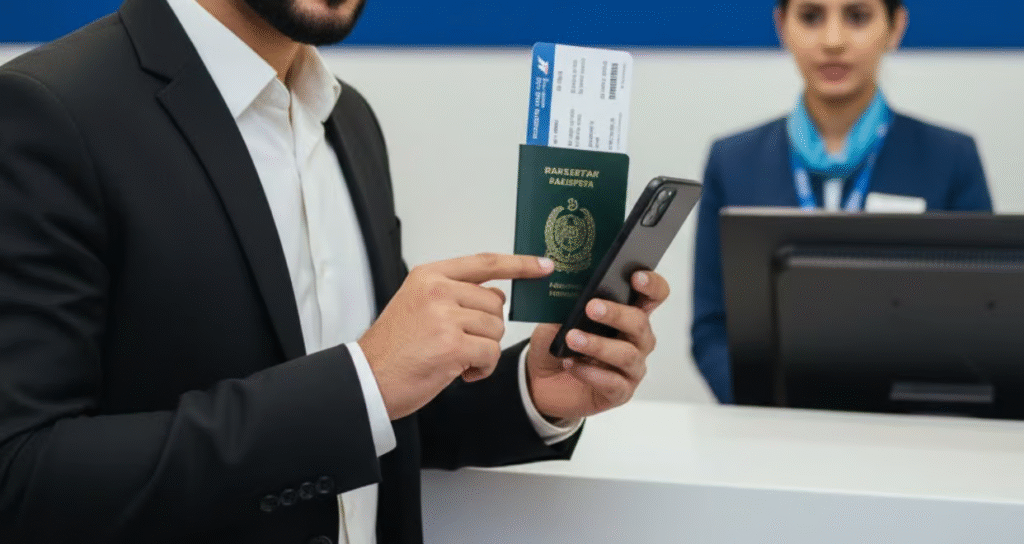
Islamabad In a bid to safeguard migrant workers from exploitation, the Pakistani government has unveiled a compulsory digital registration system for citizens pursuing employment abroad, effective November 19. The policy, spearheaded by the Ministry of Overseas Pakistanis and Human Resource Development, ties all foreign work permits to a centralized online platform, ensuring no approvals are granted without prior enrolment.Under the rule, applicants must submit personal identification, travel itineraries, educational credentials, and prospective job details before departing. This primarily impacts remittances-dependent workers heading to Gulf nations like the UAE, Saudi Arabia, Qatar, and Oman, where thousands seek better prospects annually.Officials emphasise the measure’s role in curbing illegal migration, bogus job schemes, and human trafficking. “By pre-verifying information, we foster transparency and protection, not barriers,” a ministry spokesperson stated. The initiative is projected to affect over a million Pakistanis yearly, many young family providers.While lauded for enhancing traceability, critics worry about digital access hurdles in rural areas. Authorities advise early registration via the portal to sidestep visa delays, underscoring a commitment to ethical labor migration amid economic pressures.Disclaimer: This post is for informational purposes only and based on available reports. The image is used for reference. The incident shown in the image is not real and is Ai generated

Food Delivery Rider Fatally Crushed in Karachi Hit-and-Run: Truck Driver Arrested
Pakistan

Food Delivery Rider Fatally Crushed in Karachi Hit-and-Run: Truck Driver Arrested

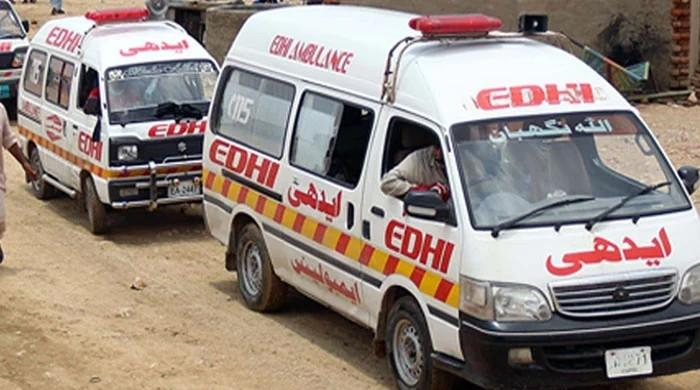
Karachi A 20-year-old food delivery rider met a horrific end near Landi Kotal roundabout in North Nazimabad on Tuesday, when he was struck by a speeding car and subsequently crushed under the wheels of a truck, authorities confirmed. The victim, identified as Baber, succumbed to his injuries at the scene, amplifying concerns over Karachi’s escalating road safety woes. Eyewitnesses described the sequence of events: Baber, navigating his motorcycle amid rush-hour traffic, was first rammed by an unidentified sedan that fled immediately. Moments later, a cement-laden truck barreled over him, inflicting fatal trauma. Rescue 1122 teams arrived promptly, extricating the body and rushing two bystanders with minor injuries to Abbasi Shaheed Hospital. This tragedy marks the third delivery worker fatality in Karachi this month, spotlighting the city’s dire traffic crisis—over 1,200 road deaths reported in 2025 alone, per Sindh traffic police data. Activists demand stricter enforcement, helmet mandates for riders, and dedicated lanes for two-wheelers. Baber’s family, mourning the loss of their sole breadwinner, called for justice. “He was just trying to make ends meet,” a relative lamented. Authorities vow a thorough probe to prevent further needless losses. Disclaimer: This post is for informational purposes only and based on available reports. The image is used for reference. The incident shown in the image is not real and is Ai generated

Scroll to Top