World

Bitcoin Suffers Worst Day in a Month, Drops over 5% Amid Stock Selloff and ETF Outflows
World

Bitcoin Suffers Worst Day in a Month, Drops over 5% Amid Stock Selloff and ETF Outflows

LONDON: Bitcoin crashed below the psychologically important $90,000 level on Monday, extending its sharpest monthly decline since the 2021 crypto crash, as broader risk aversion swept global markets.The world’s largest cryptocurrency plunged as much as 6.1% during the session, hitting an intraday low near $85,000 before recovering slightly. By 09:42 GMT, Bitcoin was trading down almost 5% at $86,754 – marking its largest single-day drop in over a month and hovering dangerously close to November’s eight-month low of $80,553.Analysts at Jefferies led by Christopher Kumar pointed to a cocktail of crypto-negative factors weighing on sentiment, including Bitcoin’s rising correlation with equities and renewed macro risk aversion. U.S.-listed spot Bitcoin ETFs suffered record outflows in November, with LSEG data showing the worst monthly redemptions on record as investors fled risk assets.The selloff mirrored sharp declines in global stock markets, underscoring Bitcoin’s evolution from “digital gold” to just another high-beta risk asset. Traders now eye the $80,000 support level, with a break of which could trigger another leg lower in the ongoing correction.

China Cracks Down on Crypto Currencies: Chinese Central Bank Targets Stablecoins Amid Speculation Revival
World

China Cracks Down on Crypto Currencies: Chinese Central Bank Targets Stablecoins Amid Speculation Revival

BEIJING: China’s People’s Bank of China (PBOC) doubled down on its stringent anti-crypto policy Saturday, cautioning against a recent uptick in virtual currency speculation and pledging a robust crackdown on stablecoin-related illegalities. In a statement following Friday’s virtual currency regulation coordination meeting, the PBOC emphasized that cryptocurrencies lack legal tender status and deem related business activities as illegal financial operations. Stablecoins, in particular, were flagged for inadequate customer identification and anti-money laundering safeguards, heightening risks of money laundering, fraud, and illicit cross-border transfers. “We will intensify efforts to combat these illegal activities and safeguard economic and financial stability,” the central bank declared. This echoes October remarks by Governor Pan Gongsheng, who vowed ongoing suppression of domestic crypto operations while monitoring overseas stablecoin developments. China has prohibited crypto trading since 2021, though Bitcoin mining is quietly rebounding in energy-abundant provinces via cheap power and data centers. Meanwhile, Hong Kong’s stablecoin framework remains license-free.

AI Memory Chip Race: US Chip Maker Micron to Invest $1.5 trillion yen in Japan to Set up New Plant
Uncategorized, World

AI Memory Chip Race: US Chip Maker Micron to Invest $1.5 trillion yen in Japan to Set up New Plant

TOKYO: U.S. semiconductor giant Micron Technology is set to pour 1.5 trillion yen ($9.6 billion) into a cutting-edge facility in Hiroshima, western Japan, to manufacture advanced memory chips tailored for artificial intelligence applications, the Nikkei reported Saturday. The massive investment underscores Tokyo’s aggressive push to reclaim semiconductor supremacy as AI demand skyrockets worldwide. The new plant will focus on next-generation dynamic random-access memory (DRAM) and high-bandwidth memory (HBM) chips, critical for powering data centers and AI training models from firms like Nvidia and OpenAI. Construction is slated to begin soon, with production ramping up by late 2027, enabling Japan to produce these components domestically and reduce reliance on volatile global supply chains strained by U.S.-China trade frictions. Micron, already a fixture in Hiroshima with its existing plant operational since 1979, will leverage local expertise and government incentives. Japan’s industry ministry has pledged subsidies under its $13 billion Rapidus initiative, aiming to foster a “virtuous cycle” of innovation. “This bolsters our resilience in the AI era,” a ministry official noted, highlighting partnerships with domestic players like Kioxia. The move aligns with broader U.S.-Japan alliances to counter Beijing’s dominance—China controls over 50% of global memory production. Analysts predict the facility could add 1,000 high-tech jobs and boost Micron’s revenue by 20% annually post-launch. As AI chips evolve, Hiroshima’s revival signals Asia’s pivot toward self-sufficient tech ecosystems, potentially reshaping the $500 billion industry by 2030.

Putin Set for Key India Visit Amid Shifting Oil Dynamics
World

Putin Set for Key India Visit Amid Shifting Oil Dynamics

Moscow/New Delhi: Russian President Vladimir Putin is scheduled to visit India on December 4-5, invited by Prime Minister Narendra Modi, to strengthen bilateral ties and address global issues, according to statements from the Kremlin and India’s Foreign Ministry. This marks Putin’s first trip to India since December 2021, shortly before Russia’s military actions in Ukraine began in February 2022. During the two-day state visit, Putin will engage in talks with Modi and meet President Droupadi Murmu separately. The agenda includes signing various intergovernmental and commercial agreements, emphasizing the “particularly privileged strategic partnership” between the nations. The Kremlin highlighted cooperation in political, trade, economic, scientific, technological, cultural, and humanitarian areas. The visit comes amid U.S. pressure, with President Donald Trump urging Modi to halt Russian oil purchases. India, a major buyer of Russian crude, is expected to see imports drop to a three-year low in December, down from November highs, as refiners seek alternatives to comply with Western sanctions, per trade sources. This diplomatic engagement underscores Russia’s efforts to bolster alliances amid geopolitical tensions, while India navigates energy security and international relations.

Vietnam-Pakistan trade poised to cross US$1 Billion, says Head of Vietnam’s Trade Mission
World

Vietnam-Pakistan trade poised to cross US$1 Billion, says Head of Vietnam’s Trade Mission

KARACHI: Head of Vietnam’s Trade Mission in Karachi, Ms. Nguyen Thi Diep, while expressing satisfaction over the upward trajectory of bilateral trade, said she was optimistic that trade between Vietnam and Pakistan would soon surpass the US$1 billion mark. “Vietnam and Pakistan have consistently maintained strong and friendly relations, particularly in the fields of business and trade. Bilateral trade has risen from just US$54 million in 2006 to US$905 million in 2022, while in 2024 it stood at US$850 million”, she noted during a meeting held at the Karachi Chamber of Commerce & Industry (KCCI) with the visiting Vietnamese delegation.The meeting was attended by President KCCI Muhammad Rehan Hanif, Senior Vice President Muhammad Raza, Chairman Diplomatic Missions & Embassies Liaison Subcommittee Ahsan Arshad Sheikh, Former Vice President Haris Agar, and members of the KCCI Executive Committee.Ms. Nguyen Thi Diep highly appreciated KCCI for hosting the delegation, adding that the Vietnam Trade Mission in Karachi remained grateful for the Chamber’s continuous support and cooperation in promoting bilateral business relations. “We greatly value KCCI’s facilitation and look forward to further strengthening our collaboration”, she said.She informed that Vietnam’s major exports to Pakistan include black and green tea, black pepper, cashew nuts, fish products, synthetic yarn & fiber, iron & steel, machinery & equipment, natural rubber, and chemicals. Pakistan, she noted, is the largest importer of Vietnamese tea, while Vietnamese black pepper ranks No. 1 in Pakistan. Conversely, Pakistan exports cotton and cotton-based products, including yarn, fabrics, denim, along with leather, pharmaceutical products, surgical & dental instruments, and sports goods including Sialkot-made footballs. Highlighting the vast potential for Pakistani exporters, she pointed out that Pakistan’s exports currently account for less than 2 percent of Vietnam’s total imports, despite the fact that many major Pakistani export products enjoy strong demand in the Vietnamese market.To capitalize on these opportunities, she proposed that KCCI should send a high-level business delegation to Vietnam to meet leading business chambers and industry groups. She also recommended that KCCI facilitate seller–buyer delegations to participate in trade fairs and exhibitions in Vietnam to deepen commercial engagement.Responding to KCCI’s invitation for the upcoming My Karachi Exhibition, she assured that all relevant details would be circulated among Vietnamese businesses and importers, who will be encouraged to visit Pakistan and actively participate in the event.President KCCI Rehan Hanif, while warmly welcoming the Vietnamese delegation, stated that Vietnam is globally admired for its remarkable agricultural excellence, particularly in rice, seafood, coffee, spices, fruits, and processed foods. He said that Pakistan greatly values the opportunity to learn from Vietnam’s experience, exchange best practices, and explore partnerships that can enhance productivity, innovation, and value addition across Pakistan’s agrifood sector. He noted that Vietnam’s transformation, from a modest economy in 2000 to a dynamic economy exceeding US$485 billion in 2025, stands as an inspiring example of resilience, discipline, and strategic reforms. “Pakistan, with its vast industrial base, fertile resources, and youthful population, sees Vietnam not only as a valuable partner but also as a model for export-led growth”, he remarked. He further highlighted that Karachi, being the country’s premier port city, offers an exceptionally conducive environment for trade and investment. As the gateway to Central Asia, the Middle East, and Africa, and with regional connectivity rapidly expanding through CPEC and the Gwadar Port, new opportunities are emerging for joint ventures, logistics partnerships, and regional distribution networks benefiting both Pakistan and Vietnam.He emphasized that Pakistan’s competitive strength as one of the world’s largest Halal food markets, providing foreign investors, including Vietnamese exporters, access to a massive global Halal consumer base. Collaboration in Halal-certified meat, processed foods, and value-added agri-products, he noted, can generate substantial business potential.Highlighting the vast untapped opportunities in bilateral trade, investment, and technology transfer, he identified promising avenues of cooperation including food technology and processing, agricultural machinery and automation, biotechnology and seed development, cold-chain logistics, advanced packaging solutions, renewable energy for agro-industries, and IT solutions for agriculture and supply chains. “Vietnamese delegation’s visit to KCCI serves as an excellent platform for meaningful B2B engagement and for building partnerships that are sustainable, mutually beneficial, and future-oriented”, he added while inviting the delegates to participate in the upcoming My Karachi Exhibition scheduled for February next year.

Alibaba Unveils Quark AI Glasses: A Stylish Challenge to Meta's Wearables Empire
World

Alibaba Unveils Quark AI Glasses: A Stylish Challenge to Meta’s Wearables Empire

Alibaba Group has thrown its hat into the red-hot AI wearables ring, launching the Quark AI glasses in China today—a sleek bid to disrupt Meta’s dominance in the sector. Priced accessibly from 1,899 yuan ($268) for the base G1 model, the eyewear-like device is powered by Alibaba’s in-house Qwen large language model and companion app, blending everyday style with cutting-edge smarts.Unlike Meta’s bulkier Ray-Ban smart glasses or Oculus headsets, Quark’s black plastic frames mimic ordinary spectacles, prioritizing subtlety over spectacle. The premium S1 variant, starting at 3,799 yuan ($537), ups the ante with built-in micro-OLED displays that overlay contextual info—like real-time translations or product prices—directly into the user’s view. Both models boast swappable lenses for customization and deep ties to Alibaba’s ecosystem, enabling seamless Alipay payments, Taobao shopping scans, and on-the-go voice queries.First teased in July, the glasses hit major platforms like Tmall, JD.com, and Douyin immediately, with pre-orders already surging. Analysts hail the move as Alibaba’s rare consumer hardware push amid its AI pivot, potentially capturing a slice of the $50 billion wearables market where Meta holds sway. “This isn’t just tech—it’s lifestyle integration,” said Alibaba exec Wu Xiaoguang. Early buzz suggests strong holiday uptake, but privacy concerns and battery life will test its mettle against Silicon Valley giants.

Swiss Rolex Gift to Trump Faces Corruption Scrutiny
World

Swiss Rolex Gift to Trump Faces Corruption Scrutiny

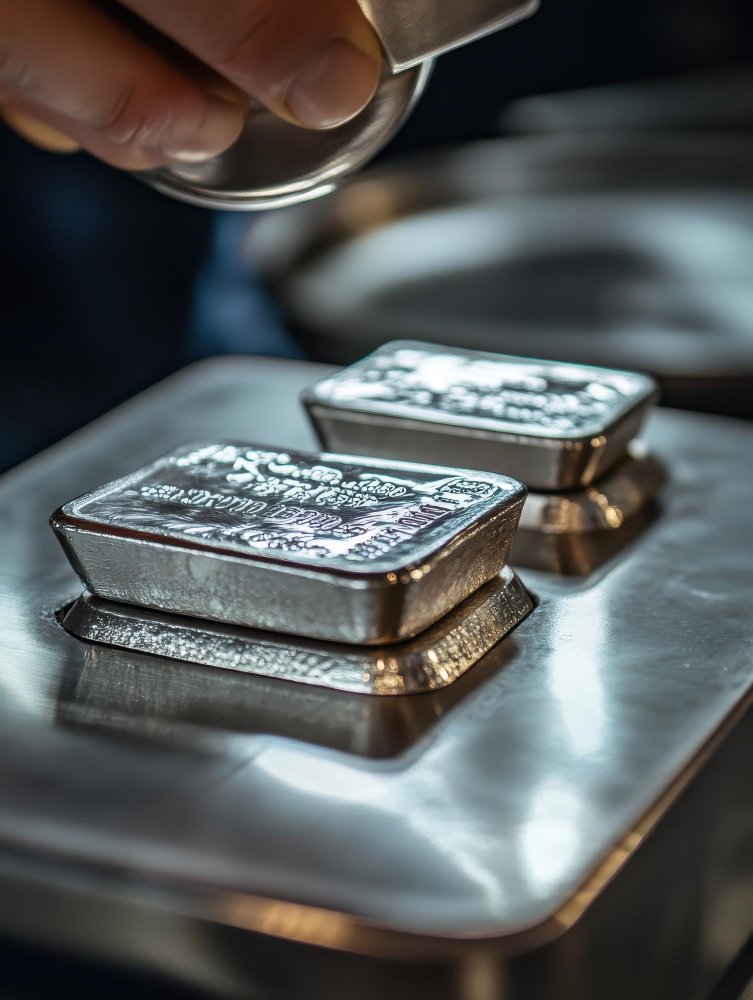
In a bold move shaking transatlantic ties, two Swiss lawmakers have petitioned prosecutors to investigate whether high-value gifts bestowed on U.S. President Donald Trump by Swiss business tycoons— including a custom Rolex desk clock worth $130,000 and a one-kilogram gold bar engraved with “45” and “47”—breach Switzerland’s stringent anti-bribery statutes.The probe request, filed by Green Party parliamentarian Franz GrĂĽter and Social Democrat Priska Seiler Graf, stems from a November 15 delegation of Swiss industry leaders to Mar-a-Lago. Amid Trump’s aggressive 39% tariffs on Swiss exports like watches and pharmaceuticals, the group presented the opulent items in a bid to soften trade blows. Days later, tariffs plummeted, sparking whispers of quid pro quo.GrĂĽter decried the gifts as “a blatant attempt to buy influence,” arguing they undermine Switzerland’s reputation for neutrality and ethical governance. The gold bar, from a Zurich refiner, and the Rolex timepiece— a gold-plated heirloom from the luxury firm’s CEO—were touted as “tokens of appreciation,” but critics liken them to scandals ensnaring figures like Sen. Bob Menendez.Swiss prosecutors must now assess if the presents, exceeding federal gift limits, constitute corruption under Article 322 of the penal code. White House spokespeople dismissed the inquiry as “baseless sour grapes,” insisting the tariff relief reflects fair negotiations. As U.S.-Swiss trade hinges on billions, this saga could chill future diplomacy, with EU allies watching closely for precedents in Trump’s dealmaking era.

Small US Retailers Grapple with Black Friday Supply Shortages Amid Trump Tariff Turmoil
World

Small US Retailers Grapple with Black Friday Supply Shortages Amid Trump Tariff Turmoil

As Black Friday shoppers flood stores nationwide, small U.S. retailers are battling severe inventory shortages triggered by President Donald Trump’s escalating tariffs on Chinese imports. The policies, which spiked to 180% threats in April before settling at 20%, have upended supply chains, forcing mom-and-pop businesses to navigate delays, skyrocketing costs, and uncertain sourcing just as the holiday rush peaks.November and December typically generate a third of annual profits for these firms, but this year, chaos reigns. New York-based Loftie, a sleep wellness brand, sources sunrise lamps from China and now holds just 10% of needed stock. Founder Matt Hassett lamented, “It’s been very difficult to prepare. We could’ve made 50% more sales if we had enough inventory.” A late shipment arrives today, but shelves will remain sparse.Similarly, Brooklyn’s Lo & Sons, purveyors of travel bags, scouted factories in India and Cambodia but returned to China amid higher alternative costs. CEO Derek Lo said, “The uncertainty prevented us from placing purchase orders. Now we’re sitting on lower-than-ideal inventory.”Analytics firm RapidRatings reports small retailers (assets under $50 million) saw margins plummet to -20.7%, with 36% at bankruptcy risk—triple that of giants like Walmart. Executive Chairman James Gellert noted, “For the first time since the pandemic, average profit has dipped into negative territory, disproportionately impacting smaller companies.”Some, like jewelry brand Haus of Brilliance, shifted to Thailand and the U.S., but CEO Monil Kothari warns of lingering shortages into 2026. With early over-orders risking unsold stock and job cuts looming, experts urge policy clarity to avert a retail reckoning. Black Friday foot traffic surges, but for small sellers, the real bargain is survival.

Devastating Hong Kong Blaze Claims 44 Lives, Leaves Hundreds Missing
World

Devastating Hong Kong Blaze Claims 44 Lives, Leaves Hundreds Missing

Tai Po, Hong Kong: A ferocious fire that erupted yesterday in a densely packed residential complex has claimed at least 44 lives, including a firefighter, and left 279 people unaccounted for, marking the city’s deadliest inferno in nearly three decades.The blaze tore through seven of eight 32-storey towers at Wang Fuk Court in the northern Tai Po district, starting around 2:50 p.m. local time. Flames, fueled by flammable bamboo scaffolding and substandard polystyrene foam used in renovations, spread rapidly, billowing thick black smoke across the skyline and trapping residents on upper floors.cc84bf0afb87Hong Kong Chief Executive John Lee called it a “massive catastrophe,” declaring a No. 5 alarm—the highest level. Over 900 residents were evacuated, with 45 hospitalized in serious condition. Rescue teams, battling falling debris and intense heat, began searching lower floors today, aided by 26 units and drones.Police arrested three construction firm executives on manslaughter charges, citing “gross negligence” in using non-fireproof materials.01511b Chinese President Xi Jinping offered condolences and 2 million yuan ($282,000) in aid.As searches continue amid smoldering ruins, questions swirl over building safety regulations. Officials vow spot checks on similar sites. Families cling to hope, but the toll rises.

🌍 Where Are the World’s Rare Earth Minerals? (Jan 2025)
World

🌍 Where Are the World’s Rare Earth Minerals? (Jan 2025)

Where Are the World’s Rare Earth Minerals? (Jan 2025)One country dominates: China controls 44 million metric tons of reserves and ~70% of global production. That single red slice is bigger than the rest of the planet combined.Second place? Brazil with 21M tons… yet it produces less than 1% of world supply.The rest is scattered: India 6.9M, Australia 5.7M, Russia 3.8M, Vietnam 3.5M, USA 1.9M, and tiny Greenland 1.5M. Everyone else is a rounding error.Reality check: your smartphone, EV battery, wind turbine, and missile guidance system all depend on 17 obscure elements that mostly come from one geopolitical rival.Diversifying supply is now a national security issue for the West. Mines take 10–15 years to open. We’re late.Source: USGS 2025

Scroll to Top