World

Gul Ahmed, Al-Karam and 282 Other Pakistan’s Textile Companies to Exhibit in Frankfurt' Heimtextil
World

Gul Ahmed, Al-Karam and 282 Other Pakistan’s Textile Companies to Exhibit in Frankfurt’ Heimtextil

Karachi: Heimtextil, the world’s leading annual trade fair for home and contract textiles, will be held from 13–16 January 2026 at Messe Frankfurt, Germany. As the first major textile event of the year, the fair sets the tone for upcoming trends in design, color and textile innovation. Heimtextil presents a full range of home and household textiles, including wallpaper, carpets, bedding, bath textiles, furnishing fabrics and sun-protection solutions, and highlights advances such as AI-assisted design and sustainable production methods. Pakistan remains a strong player in the global textile market, and participation at Heimtextil gives its exporters direct access to European buyers, new customers and international trend insights. In 2026, Pakistan will be represented by 284 exhibitors, including notable names such as Al‑Karam Textile Mills, Al‑Rahim Textile Industries, and Gul Ahmed Textile Mills, as well as 58 companies supported by TDAP, including Acme Mills, Adil Hassan Textiles, and Aksa Tex Style Industries. This year, TDAP is introducing a carpet section. Featuring Everest Export Corporation, EWC Interiors, Inter Textile & Leather Solution, Joonaid Carpets, Salman Traders, SBR Enterprises, Sheikh Carpet Industries, Tak Ozer Carpets, Thal Packaging – HOH and Ziyan Textiles, while Khyber Weavers International will attend independently. Heimtextil 2026 will serve as a key platform for networking, creativity and business growth, helping to strengthen Pakistan’s profile and reputation in the international textile industry.

India Considers Mandating Constant Smartphone Location Surveillance Amid Backlash from Apple, Samsung, and Google
World

India Considers Mandating Constant Smartphone Location Surveillance Amid Backlash from Apple, Samsung, and Google

New Delhi, December 5, 2025 – India’s government is examining a controversial proposal from the telecom sector to mandate always-activated satellite-based location tracking on smartphones, enabling precise surveillance down to a meter. The plan, pushed by the Cellular Operators Association of India (COAI) representing giants like Reliance Jio and Bharti Airtel, aims to address limitations in current cellular tower data, which often errs by several meters during investigations. This comes just days after Prime Minister Narendra Modi’s administration retracted a directive requiring pre-installation of the state-run Sanchar Saathi app on all devices, following outcry over potential mass snooping from activists, politicians, and tech firms. Apple, Google, and Samsung have vehemently opposed the new measure, citing unprecedented privacy invasions, security risks, and regulatory overreach. In a confidential letter, the India Cellular & Electronics Association (ICEA), representing these companies, warned of “legal, privacy, and national security concerns,” arguing it could endanger sensitive users like military personnel and journalists. Experts label the idea “horrifying” and without global precedent, turning phones into dedicated surveillance tools. No final decision has been made by India’s IT or home ministries, but a planned industry meeting was postponed. The debate highlights tensions in the world’s second-largest smartphone market, with over 735 million devices, where Android dominates and privacy battles intensify.

Global Gold & Silver Prices Surge: Strong Bullish Momentum in International Market
World

Global Gold & Silver Prices Surge: Strong Bullish Momentum in International Market

Gold and silver prices continue their upward trend in the international market, with strong bullish momentum driving investor interest across global trading sessions. As of today, international gold is trading around $4,225 to $4,227, while silver stands near $58.18 to $58.32 per ounce. Market analysts anticipate further price movement, projecting that today’s gold rate in Pakistan may reach close to PKR 451,000, whereas silver may hover around PKR 6,650.Confirmed closing rates will be available after 4:30 PM, subject to international market volatility. Latest Gold & Silver Rates – Updated (5 December 2025, 02:00 PM): International Market• Gold: $4,227• Silver: $58.18Pakistan Local Market• Gold 24K: PKR 450,500• Gold 22K: PKR 411,767• Gold 21K: PKR 393,050• Silver (Chandi): PKR 6,650Note:These gold and silver prices are for information only. For buying or selling, always call to confirm live rates. Gold Market Analysis: Bullish Momentum Strengthens After London Open: Today’s market action shows a strong bullish breakout in international gold. After consolidating during the Tokyo session, sellers weakened, and buyers took full control as soon as London opened. What’s Happening in the Market?• Tokyo Session: Market remained in a tight range; sellers failed to dominate.• London Session: Range broke to the upside, triggering aggressive buying.• Gold pushed directly to create a $4,230 intraday high, indicating strong institutional activity. • Gold is now trying to hold above the 4,220–4,230 zone, a critical level that may determine the next trend direction. Key Technical Levels to Watch: Resistance Zone• $4,230:o A breakout above this level could trigger a smooth upward move toward $4,245. Support Zone• $4,210:o A drop below this level may return the market to a range-bound structure, increasing bearish pressure. Market Sentiment: Strongly Bullish: Current sentiment is clearly bullish, with buyers maintaining strong control.• If gold holds above $4,230, upper targets may activate and the bullish trend could extend.• If the price faces rejection, a retest of $4,210 is expected.

Dubai Chocolate Sparks Argentina's $12K-Acre Pistachio Revolution
World

Dubai Chocolate Sparks Argentina’s $12K-Acre Pistachio Revolution

San Juan, Argentina – Imagine vast, sun-baked fields in the shadow of snow-capped mountains, where rows of sturdy pistachio trees are turning arid land into a treasure trove. In Pakistan, we know the joy of harvesting almonds and walnuts from Balochistan’s orchards, but Argentina is now racing to join the global nut boom with pistachios – those crunchy, green delights that pack our Diwali mixes and festive sweets. Over the past five years, Argentina’s pistachio farms have exploded fivefold to 25,000 acres, mostly in San Juan province, a farming heartland hugging the Andes. Why? The climate is perfect: scorching summers and frosty winters mimic California’s groves, the world’s top producer. Trees take seven years to fruit, but investors like SolFrut are planting thousands of acres using U.S. seeds, eyeing harvests by 2027. Fueled by TikTok-famous “Dubai chocolate” – creamy bars stuffed with pistachio paste – demand is skyrocketing worldwide. In Argentina, locals are innovating: pistachio dulce de leche spreads, YPF oil company’s nutty alfajores cookies, and even vineyard owners switching to these “healthy” nuts amid slumping wine sales. Pioneer Marcelo Ighani, an Iranian immigrant, faced ridicule in the 1980s for his bold bet. Today, his nursery churns out 400,000 saplings yearly, with exports to Italy and Russia booming. Experts see 16 million acres of untapped potential across provinces, potentially making Argentina South America’s pistachio powerhouse – off-season supplier to northern giants like Iran and Turkey. For Pakistan’s farmers eyeing diversification, Argentina’s story whispers hope: with right soil, water smarts, and global trends, nuts can be economic lifelines. As one grower says, “We’ve got the land and climate – now let’s seize the snack revolution!”

Ukraine Faces Worst Population Collapse: Will Need Workers from Other Countries
World

Ukraine Faces Worst Population Collapse: Will Need Workers from Other Countries

Kyiv: Ukraine is experiencing the fastest population decline of any country in the world not affected by famine or genocide, with new data showing the nation lost almost one-quarter of its people in just four years of war.The State Statistics Service and the Ptoukha Institute for Demography and Social Studies released figures Wednesday confirming that Ukraine’s population has fallen to 31 million, down from 41–42 million on the eve of Russia’s full-scale invasion in February 2022. In government-controlled territory alone, only 28.8 million people remain.For the first time since records began, deaths in 2024 outnumbered births by nearly three to one: 495,000 deaths against just 176,600 births. In the hardest-hit frontline regions of Kherson, Zaporizhzhia and Donetsk, the ratio reached ten deaths for every birth.“Ukraine is living through a demographic catastrophe,” said Ella Libanova, director of the Ptoukha Institute. “We have the lowest fertility rate on the planet – around 0.9 children per woman – combined with the highest death rate in Europe. No country can survive this trajectory without radical change.” The war has compounded decades of decline. Since independence in 1991, Ukraine has already lost more than 20 million people through emigration and low birth rates. The 2022 invasion has accelerated the collapse through four lethal channels:Battlefield and civilian casualties (official figures remain classified, but independent estimates exceed 100,000 military deaths alone)Mass exodus of more than 6.5 million refugees, mostly women and children, to the European UnionInternal displacement of another 5 millionOccupation of roughly 20 % of Ukrainian territory, including Crimea and parts of four eastern oblastsDemographers now project that, even if the war ended tomorrow, Ukraine’s population will fall below 25 million by 2050 and could shrink to as little as 15 million by the end of the century.President Volodymyr Zelenskyy acknowledged the crisis in a televised address Wednesday evening:“We are fighting not only for territory but for the very future of the Ukrainian people. A nation cannot exist without children, without families, without hope.” The government has increased monthly child benefits to the equivalent of $1,220 – one of the highest rates in Europe – and is drafting legislation to encourage refugee returns and attract immigrant workers. Officials admit, however, that no financial incentive can fully offset the trauma of war.In the eastern city of Kramatorsk, obstetrician Olena Marchenko told reporters her maternity ward delivered only 180 babies this year, compared with 1,200 before the invasion. “Women say they are afraid to bring children into a world with air-raid sirens and blackouts,” she said.International organisations are sounding the alarm. The United Nations Population Fund (UNFPA) warned last month that Ukraine risks becoming “a country of the old and the absent” unless birth rates recover and refugees return in large numbers.As winter deepens and the war grinds into its fourth year, the human cost is no longer measured only in territory lost, but in an entire generation that may never be born.

Trump Clears Path for Kei Cars in the U.S., Signaling Major Shift in Auto Regulations and Trade Policy
World

Trump Clears Path for Kei Cars in the U.S., Signaling Major Shift in Auto Regulations and Trade Policy

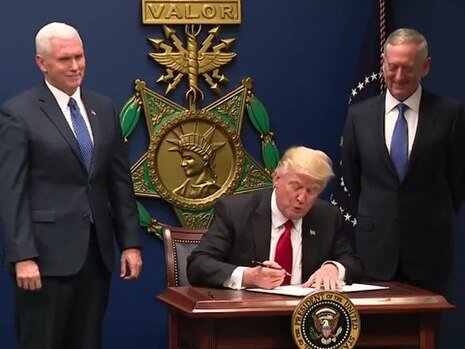
Ultra-compact Japanese vehicles may soon hit American roads as safety rules and fuel standards face sweeping changes. President Donald Trump has taken a major step toward allowing kei cars, Japan’s ultra-compact, fuel-efficient vehicles to be manufactured and sold in the United States. The move could reshape the American small-car market, lower fuel costs for consumers, and open a new chapter in U.S, Japan automotive trade relations. Speaking at the White House this week, Trump said he was inspired after seeing the tiny vehicles during a recent visit to Japan. “They’re very small, they’re really cute, and I said, ‘How would that do in this country?’” he told reporters while outlining plans to roll back Biden-era fuel efficiency standards. He confirmed that he has authorized Transportation Secretary Sean Duffy to approve the production of kei cars in the U.S, a directive that could fast-track regulatory changes that have long blocked these vehicles from American roads. Why Kei Cars Have Been Banned in the U.S: Kei cars are limited by strict size and engine regulations in Japan and are designed for narrow urban streets, low fuel consumption, and affordability. Although they account for nearly one-third of all new vehicle sales in Japan, they currently do not meet U.S. federal safety and emissions standards for new vehicles. As a result, most kei cars in the U.S. today arrive under the 25-year import rule, which allows older vehicles to be imported even if they don’t meet modern crash-safety standards. Even then, many states restrict their use to private property or low-speed roads due to concerns that they are too small and slow to safely share highways with large trucks and SUVs. Safety experts and state regulators have long argued that kei cars lack the structural protection required for American traffic conditions. Transportation Department “Clears the Deck”: Following Trump’s directive, Duffy said the Department of Transportation has now “cleared the deck” for automakers such as Toyota Motor Corp. to begin building and selling smaller, more fuel-efficient vehicles in the U.S. This marks a significant shift in federal policy and could open the door for a new category of ultra-compact vehicles tailored for city driving and fuel savings. Toyota declined to comment on the announcement, but industry analysts say the decision could pressure multiple automakers to rethink U.S. product strategies. Business Reality vs. Market Demand: Despite their popularity overseas, analysts remain cautious about the commercial success of kei cars in the U.S. “The reason Japanese carmakers don’t make or sell kei cars in the U.S. is business feasibility,” one auto analyst explained. “The market exists but remains niche. Pricing and production costs don’t always match American expectations.” Even with regulatory approval, automakers would need to redesign kei cars to meet U.S. crash standards, which could significantly increase costs and reduce their low-price advantage. Kei Cars and U.S, Japan Trade Politics: Trump’s embrace of kei cars also highlights how automobiles continue to be used as a geopolitical bargaining chip between the United States and Japan. Passenger vehicles were a central issue during recent U.S., Japan trade negotiations. The talks gained momentum when Japan floated the idea of increasing imports of American-made vehicles. While selling large U.S. pickup trucks in densely populated Japanese cities seemed far-fetched, the concept appealed to Trump, along with proposals for Toyota Motor Corp. and Honda Motor Co. to export more U.S.-assembled vehicles back to Japan. Kei cars now appear to be the latest leverage point in this ongoing automotive trade dynamic. What This Means for American Drivers: If the policy shift is finalized, American consumers could soon see:• Lower-cost city cars• Improved fuel economy• More compact options for urban commuting• Greater competition in the small-car segment However, key questions remain around safety compliance, pricing, insurance rules, and state-level regulations. Trump’s decision to fast-track approval for kei cars marks a major change in U.S. auto policy, blending fuel-efficiency reform, consumer choice, and international trade strategy. While significant regulatory and safety hurdles still remain, the move signals serious momentum toward bringing Japan’s iconic micro-cars to American streets for the first time as mainstream new vehicles. If approved, kei cars could transform urban transportation in the U.S, but whether they succeed commercially will depend on safety updates, pricing, and how willing American drivers are to go small.

Privacy Win in India: Controversial Cyber Safety App Mandate Revoked Following Uproar
Tech, World

Privacy Win in India: Controversial Cyber Safety App Mandate Revoked Following Uproar

New Delhi: In a swift reversal, India’s Department of Telecommunications (DoT) has withdrawn its mandate requiring smartphone manufacturers to pre-install the government-run Sanchar Saathi app, just days after issuing the directive amid widespread backlash over privacy and surveillance concerns. The original order, dated November 28 under the Telecom Cyber Security Rules 2024, compelled companies like Apple and Samsung to preload the app on new devices by March 2026, make it non-deletable, and push it via updates to existing phones. Opposition leaders and privacy advocates decried it as a potential tool for government snooping, sparking social media outrage and resistance from global handset makers. Launched in January 2025, Sanchar Saathi aims to combat telecom fraud by disconnecting fake connections, tracing stolen devices, and aiding recoveries. It has already facilitated 1.5 crore fraudulent disconnections, traced 26 lakh stolen phones, and recovered 7 lakh. Downloads surged 10-fold post-directive, with 6 lakh registrations in a day, prompting DoT to deem the mandate unnecessary due to “increasing acceptance.” Telecom Minister Jyotiraditya Scindia assured Parliament no snooping would occur, emphasizing empowerment for public safety. The Indian Cellular and Electronics Association (ICEA) welcomed the move, advocating for voluntary measures and consultations. Experts like Mishi Choudhary from SFLC.in called it a positive step but urged evidence-based anti-fraud strategies beyond apps. The government will issue a circular confirming the voluntary approach, shifting focus to organic adoption amid rising cyber threats.

Australia Becomes First Country to Enforce Under-16 Social Media Ban Starting December 10 Amid Global Debate
World

Australia Becomes First Country to Enforce Under-16 Social Media Ban Starting December 10 Amid Global Debate

Sydney: Australia is set to implement a world-first ban on social media for children under 16, effective from December 10, as part of the Social Media Minimum Age Act. The legislation targets major platforms including TikTok, Instagram, Facebook, X (formerly Twitter), Snapchat, YouTube, Reddit, and Twitch, requiring companies to enforce age restrictions through “reasonable steps” like age verification. Tech giants are scrambling to comply. Google announced that YouTube users under 16 will be automatically signed out, losing access to subscriptions, comments, and personalized features, while emphasizing the removal of parental controls as a consequence. No penalties apply to minors or parents who circumvent the ban; enforcement falls solely on platforms. Prime Minister Anthony Albanese hailed the move as a vital step to safeguard young Australians from online harms like bullying and misinformation. However, critics argue it could drive teens to unregulated spaces or hinder digital literacy. The eSafety Commissioner has released FAQs to guide families, amid concerns over privacy in age checks. With an estimated 2-3 million affected users, the ban has sparked international interest, potentially influencing policies in the EU and US. Trials for age verification tech begin next year, but immediate impacts on youth mental health remain under scrutiny.

Islamabad: President of the Kyrgyz Republic Sadyr Nurgozhoevich Zhaparov will undertake a two-day official visit to Pakistan beginning Wednesday at the invitation of Prime Minister Shehbaz Sharif, the Foreign Office announced on Tuesday. This will be the first presidential visit from Kyrgyzstan in two decades, the last having taken place in January 2005. The FO described the visit as a reflection of the brotherly relations between the two countries, based on shared history, faith, and common aspirations for peace and prosperity in Central and South Asia. President Zhaparov, accompanied by a high-level delegation including cabinet ministers, senior officials, and business leaders, will hold meetings with President Asif Ali Zardari and Prime Minister Shehbaz Sharif. Delegation-level talks will cover trade, energy, defence, education, people-to-people contacts, and regional connectivity. The Kyrgyz leader will also address the Pakistan-Kyrgyzstan Business Forum. A key highlight will be the signing of a Memorandum of Understanding (MoU) on energy cooperation between the two ministries of energy, already approved by Pakistan’s federal cabinet on November 29, 2025. The visit is expected to inject fresh momentum into bilateral ties and strengthen collaboration at regional and multilateral forums
World

Pakistan, Kyrgyzstan Set to Sign Energy Cooperation, Regional Connectivity MoUs During Presidential Visit

Islamabad: President of the Kyrgyz Republic Sadyr Nurgozhoevich Zhaparov will undertake a two-day official visit to Pakistan beginning Wednesday at the invitation of Prime Minister Shehbaz Sharif, the Foreign Office announced on Tuesday.This will be the first presidential visit from Kyrgyzstan in two decades, the last having taken place in January 2005.The FO described the visit as a reflection of the brotherly relations between the two countries, based on shared history, faith, and common aspirations for peace and prosperity in Central and South Asia.President Zhaparov, accompanied by a high-level delegation including cabinet ministers, senior officials, and business leaders, will hold meetings with President Asif Ali Zardari and Prime Minister Shehbaz Sharif. Delegation-level talks will cover trade, energy, defence, education, people-to-people contacts, and regional connectivity.The Kyrgyz leader will also address the Pakistan-Kyrgyzstan Business Forum.A key highlight will be the signing of a Memorandum of Understanding (MoU) on energy cooperation between the two ministries of energy, already approved by Pakistan’s federal cabinet on November 29, 2025.The visit is expected to inject fresh momentum into bilateral ties and strengthen collaboration at regional and multilateral forums

Post-Attack Freeze: Trump Halts Immigrant Applications from 19 'High-Risk' Countries
World

Post-Attack Freeze: Trump Halts Immigrant Applications from 19 ‘High-Risk’ Countries

WASHINGTON: In a sweeping escalation of his hardline stance, the Trump administration announced Tuesday a temporary halt to all immigration applications, including green cards and U.S. citizenship processes, from 19 non-European countries flagged for national security risks. The move builds on June’s partial travel ban, imposing a “thorough re-review” on pending cases, potentially including mandatory interviews to probe public safety threats.The policy, detailed in an official memorandum, directly references last week’s deadly attack on U.S. National Guard members in Washington, where an Afghan suspect was arrested. One soldier was killed, another critically wounded in the shooting, fueling Trump’s recent inflammatory rhetoric against Somalis, whom he branded “garbage” unfit for America. Read More: https://theboardroompk.com/swiss-rolex-gift-to-trump-faces-corruption-scrutiny/ Targeted nations include severely restricted ones like Afghanistan, Iran, Somalia, and Yemen, alongside partially banned countries such as Cuba, Haiti, and Venezuela. Exceptions are narrow, focusing on verifiable low-risk entries.Immigration advocates decried the freeze. Sharvari Dalal-Dheini, senior director at the American Immigration Lawyers Association, reported widespread cancellations of oath ceremonies, naturalization interviews, and status adjustments for affected applicants, calling it a “devastating blow to families.”Since reclaiming the White House in January, Trump has ramped up deportations and border enforcements, but this shift spotlights legal pathways. Critics, including Democrats, blame the administration for scapegoating immigrants while overlooking Biden-era vetting lapses. Supporters hail it as vital protection. The pause’s duration remains unspecified, pending re-assessments

Scroll to Top