Uncategorized

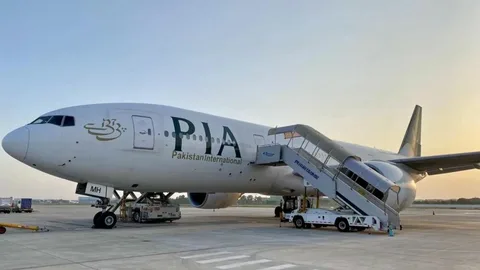
Pakistan Govt Plans to Sell Remaining 25% PIA Stake Worth Rs45bn
Uncategorized

Pakistan Govt Plans to Sell Remaining 25% PIA Stake Worth Rs45bn

Pakistan’s government is considering divesting its remaining 25% stake in Pakistan International Airlines (PIA), valued at approximately Rs45 billion, within three months after handing over management control to a private consortium led by the Arif Habib Group. Read more: https://theboardroompk.com/mashreq-bank-pakistan-credit-rating-signals-a-new-era-for-digital-banking/ This move follows the successful transfer of 75% operational authority, marking a significant step in the airline’s privatization. Operational Restructuring and Fleet Status PIA now operates with a fleet of 18 aircraft, including 12 leased and 6 owned ones under maintenance. Officials highlight that this size is inadequate for expansion, urging the acquisition of more planes to enhance services. Legacy assets and liabilities have been shifted to the PIA Holding Company, leaving the airline with clean, commercially focused books. This restructuring has boosted profitability, with PIA reporting Rs26 billion in profits for 2024 and Rs6.8 billion in the first half of 2025. Service Restoration and Future Prospects Flights to London are set to resume on March 29, with Paris services twice weekly and Manchester at three flights per week. Operations to Malaysia continue, while Saudi Arabia routes focus on Hajj and Umrah traffic. The Roosevelt Hotel in New York and Scribe Hotel in Paris were excluded from the deal, remaining under government control for separate commercial strategies. Officials emphasize that privatization signals confidence to global investors, positioning PIA for competitive growth. A minimum fleet of 25-30 aircraft is needed for sustainability, depending on the new owners’ plans. This divestment option aims to fully privatize PIA, fostering efficiency and market expansion.

Uncategorized

Daraz Pakistan Brings the Spirit of Ramadan to Life with Grand Ramadan Bazaar

As families across Pakistan begin preparing for Ramadan, a month rooted in reflection, generosity, and togetherness, Daraz Pakistan has announced the launch of its Grand Ramadan Bazaar, a nationwide shopping campaign designed to help customers get ready for the month with greater convenience and affordability. Running from 1 February (8:00 PM onwards) to 2 March, the campaign brings together significant savings across everyday essentials and household needs so customers can spend less time worrying about errands and more time focusing on what Ramadan truly represents. Through the Grand Ramadan Bazaar, customers will be able to access vouchers up to PKR 12,000 off, Free Delivery, and Flash Sale up to 80% off, along with a wide selection of Ramadan-relevant products across groceries and pantry staples, kitchen and home appliances, personal care, home and living, and other daily essentials. The campaign will feature offers across a strong lineup of participating brands, including Nestle, Olper’s, Reckitt, Haier, Abbott, Samsung, Zero Healthcare, Jenpharm, J., Meclay, Lipton, Levi’s, Ezviz Pakistan, Scents N Stories, and TCL, helping customers find trusted products for Suhoor, Iftar, Eid preparation, and the month’s day-to-day needs. There will also be dedicated brand days for Pakistanis to buy their favourite products at special discounts. “Ramadan is a deeply personal time for families across Pakistan. It is a month where small routines become more meaningful, where we gather more often around the table, and where giving takes on a special significance,” stated a Daraz Pakistan spokesperson “With the Grand Ramadan Bazaar, our aim is to make preparation easier and more affordable by bringing genuine savings on essentials, while ensuring a reliable shopping experience that customers can count on throughout the month. Just as importantly, Ramadan is a vital season for many of our local sellers and small businesses, and we want to help them benefit from the increased demand by connecting them with customers across the country. This year, we are also placing special emphasis on our refreshed Daraz Choice channel as the Everyday Low Price offering, because customers should not have to wait for a campaign day to access reliable value on the items they buy most often.” Daraz Pakistan noted that the campaign also shines a spotlight on the Daraz Choice channel, now refreshed with Everyday Low Price, ensuring that daily essentials remain consistently affordable all year round. Designed for frequently purchased items across categories such as Health & Beauty and Groceries, EDLP removes the need to wait for major sales by offering reliable value alongside fast 1 to 3 days delivery. Customers can also enjoy Buy 3 for Free Shipping offers and receive free gifts on purchases of four or more items, making it easier to stock up on essentials with added value. To make the shopping experience more engaging throughout the month, Daraz Pakistan said customers will also be able to access a mix of interactive and time-specific campaign mechanics, including Brand Rush Hour, Shop & Win, Coins Treasure Chest, Bachat Bazaar, Mega Deals, alongside Hot Deals, Flash Sale offers, and a range of vouchers, giving customers multiple ways to maximise savings based on their needs and shopping habits. Customers will be able to shop through the Daraz app and at www.daraz.pk, with campaign highlights and flash sales updated regularly during the campaign period. Daraz Pakistan will also work closely with its payment ecosystem to enable smoother checkouts and value-added payment offers with banking partners, including Al Baraka, Allied Bank, HBL, Soneri Bank, and MCB, with partner offers providing savings of up to 40% off*.

OGDC, PPL, MARI, POL Get Billions of Rupees Tax Relief from Constitution Court
Uncategorized

OGDC, PPL, MARI, POL Get Billions of Rupees Tax Relief from Constitution Court

IslamabadIn a landmark decision with major implications for Pakistan’s fiscal landscape and energy sector, the Federal Constitutional Court (FCC) on January 27, 2026, upheld the constitutional validity of the super tax imposed under Section 4C of the Income Tax Ordinance. The ruling, delivered by Chief Justice Aminuddin Khan, dismissed the majority of petitions challenging the tax, securing an estimated Rs300-310 billion in revenue for the national exchequer. The super tax, originally introduced in 2015 and later expanded, applies additional levies on high-income entities, particularly those earning above specified thresholds. The FCC’s verdict confirmed its retrospective application for tax year 2022 and upheld rates up to 15% for certain sectors. The court also clarified exemptions for entities like Modarabas, mutual funds, and benevolent funds, while rejecting broad challenges to the tax’s legality. However, the decision delivered targeted relief to Pakistan’s Exploration and Production (E&P) companies in the oil and gas sector. The court ruled that super tax charges for these firms must align strictly with the limits set in their respective Petroleum Concession Agreements (PCAs) under the Fifth Schedule of the Income Tax Ordinance. It directed tax commissioners to re-evaluate each company’s liability on a case-by-case basis, ensuring no super tax is imposed beyond the ceilings stipulated in Rule 4 of the Fifth Schedule and applicable concession terms from 1948 onward. This carve-out is seen as a significant win for major listed E&P players, including Oil and Gas Development Company Limited (OGDC), Pakistan Petroleum Limited (PPL), Mari Petroleum Company Limited (MARI), and Pakistan Oilfields Limited (POL). Brokerage firm Topline Securities, in a research note released shortly after the verdict, highlighted potential reversals of prior provisions totaling around Rs194 billion across listed companies. Analysts estimate per-share earnings boosts ranging from Rs22-28, with recurring annual earnings improvements of 6-14% depending on individual PCA headroom and final commissioner assessments. The ruling arrives amid ongoing fiscal pressures, including IMF recommendations to maximize super tax recoveries to bridge revenue shortfalls. The Federal Board of Revenue (FBR) has indicated expectations of Rs150-200 billion in collections in the current quarter alone, bolstering public finances without broad new impositions.Industry observers note that while the overall super tax framework remains intact—providing long-sought clarity after years of litigation—the E&P exemption safeguards contractual stability in Pakistan’s upstream energy sector. This could ease investor concerns over retrospective tax burdens, potentially supporting exploration activities and foreign investment inflows at a time when the government seeks to enhance domestic hydrocarbon production.The decision also partially set aside certain high court rulings on the matter, reinforcing parliamentary authority to enact such fiscal measures. Detailed judgment is awaited, but the short order has already triggered positive sentiment in energy stocks on the Pakistan Stock Exchange.The verdict balances revenue imperatives with sector-specific protections, marking a pragmatic resolution to prolonged tax disputes in one of Pakistan’s most strategic industries.

EU– India Trade Deal a Major challenge to Pakistan’s Exports, Says Saquib Magoon
Uncategorized

EU– India Trade Deal a Major challenge to Pakistan’s Exports, Says Saquib Magoon

KARACHI: Businessmen Panel Progressive (BMPP) Chairman and Federation of Pakistan Chambers of Commerce & Industry (FPCCI) Senior Vice President Saquib Fayyaz Magoon has termed the recently finalized free trade agreement between India and the European Union a “serious challenge” to Pakistan’s export base. In a statement, Saquib Fayyaz Magoon said that after facing defeat on the battlefield, India has now “opened an economic front” by signing trade deals with multiple countries, including the EU. He cautioned that the agreement could erode Pakistan’s competitive edge in European markets. Despite Pakistan’s GSP Plus status, which allows duty-free access for nearly 80 percent of its exports to the EU, the country’s textile exports stand at $6.2 billion, only marginally ahead of India’s $5.6 billion exports despite India facing a 12 percent tariff. “Once India secures zero-rated access under the EU deal, Pakistan’s advantage will vanish, and our exports could suffer a severe blow,” he warned. Mr. Magoon stressed that Pakistan risks losing its foothold in the European market if urgent corrective measures are not taken. “Once a market is lost, regaining entry is extremely difficult,” he said, urging the government to act decisively. He called for immediate steps including reducing electricity tariffs to 9 cents per unit, simplifying the tax regime, and offering incentives to exporters. “The government must declare an export emergency and adopt industry-friendly policies to safeguard Pakistan’s economic interests,” he emphasized. Drawing a parallel with military success, Mr. Magoon remarked: “Just as the armed forces secured victory on the battlefield, the business community now needs government support to win this economic war.”

People-Driven Platforms: The Future of Pakistan’s Super Apps — Nurken Rzaliyev, Head of Q-Commerce Services, inDrive
Uncategorized

People-Driven Platforms: The Future of Pakistan’s Super Apps — Nurken Rzaliyev, Head of Q-Commerce Services, inDrive

Nurken Rzaliyev, Head of Q-Commerce Services, inDrive said Super apps have long been portrayed as the inevitable next stage of digital evolution — a single platform that brings mobility, groceries, payments, logistics, and daily services into one seamless ecosystem. In Pakistan, however, repeated attempts have failed to gain meaningful traction. Not because the market lacks potential, but because the model has consistently been implemented the wrong way. Read More: https://theboardroompk.com/gulf-investors-file-2bn-arbitration-suit-against-pakistan-over-ke-dispute/ The failure of earlier super app experiments was not technological. It was structural. Platforms tried to do too many things at once, expanded without a strong core business, and overestimated the market’s readiness for bundled digital ecosystems. Growth was engineered from the top down, driven by ambition rather than behaviour. Sustainable platforms are not built that way. A real super app is not a product strategy — it is a trust architecture. It grows out of daily habits, fairness, and reliability. It starts with one service people use frequently, trust instinctively, and depend on daily. Without that foundation, integration becomes noise rather than value. Pakistan’s digital economy today is far more mature than it was during earlier failed attempts. Smartphone adoption has surged, digital payments have normalized, and users are more comfortable with app-based services. Systems like Raast have helped build confidence in digital transactions, while everyday services like ride-hailing and deliveries have become routine. But readiness alone is not enough. Platforms must align with local behaviour and culture. Pakistan is a price-sensitive, trust-driven society. Transparency matters. Fairness matters. Negotiation is not a feature — it is a social norm. Digital platforms that ignore this reality struggle to integrate. Those that respect it build loyalty. inDrive’s model is anchored in this principle. It is not algorithm-first — it is people-first. It gives users fair choice instead of automated price imposition. This is not just a pricing model; it is a philosophy that reflects how real markets function in emerging economies. Every successful super app begins with a dominant core utility. For inDrive, that core is ride-hailing — a high-frequency service that builds daily engagement and trust. Once that trust is established, expansion becomes organic rather than forced. Diversification must be sequenced, not rushed. Services like courier, freight, and groceries are not parallel experiments; they are extensions of daily behaviour. Each vertical must integrate naturally into existing user routines. This creates platform coherence instead of fragmentation. Groceries, in particular, represent one of the most strategic high-frequency categories in digital commerce. Food and household essentials define daily consumption. But quick commerce is not a convenience play — it is an operational discipline. Logistics density, quality control, last-mile reliability, and pricing stability determine long-term success. Speed alone does not create loyalty — consistency does. True platform advantage is not fast delivery. It is predictability, trust, and fairness. Long-term digital platforms in emerging markets must also reject unsustainable growth models. Burning capital without building loyalty creates inflated scale without real value. User trust, engagement depth, and community impact matter more than short-term financial optics. Super apps are not built by stacking services. They are built by stacking trust. Pakistan’s future super app ecosystem will not be defined by feature volume, aggressive expansion, or platform dominance. It will be defined by reliability, fairness, and daily usefulness. Platforms that grow from people’s needs — not from boardroom ambition — will endure. The next generation of digital platforms in Pakistan must be people-driven, community-rooted, and behaviour-led. That is how ecosystems are built. And that is how super apps will finally succeed in Pakistan.

Chinese Anta Sports Becomes Top Puma Shareholder with Landmark $1.8 Billion Stake
Uncategorized

Chinese Anta Sports Becomes Top Puma Shareholder with Landmark $1.8 Billion Stake

China’s leading sportswear giant, Anta Sports Products, announced on Tuesday that it has reached an agreement to acquire a 29.06% stake in German athletic brand Puma for €1.51 billion ($1.8 billion). Read More: https://theboardroompk.com/facebook-parent-company-meta-inks-nuclear-deals-for-6-6-gw-to-power-ai-ambitions/ The deal, struck with the Pinault family’s investment vehicle Artemis, makes Anta the largest shareholder in the historic Herzogenaurach-based company. Anta is paying 35 euros per share in cash—a massive 62% premium over Puma’s closing price on Monday. While the acquisition cements Anta’s position as a global powerhouse, the company was quick to clarify that it currently rules out a full takeover of the German firm. A Strategic Entry into the ‘Big Three’ The acquisition is a calculated move by Anta to bridge the gap between its domestic dominance and its global ambitions. By securing a near-controlling interest in Puma, Anta now has a seat at the table with one of the world’s most recognizable sports brands, alongside Nike and Adidas. Industry analysts suggest that Anta intends to leverage its deep understanding of the Chinese retail landscape to revitalize Puma, which has seen its market share in mainland China stagnate at just 7% of its global revenue. Anta’s leadership believes that with the right operational “empowerment,” Puma’s brand heat can be restored to its former glory. Revitalizing a Struggling Icon Puma has faced a challenging 2025, marked by sluggish sales and the announcement of 900 administrative job cuts. Investors have been sceptical of recent product launches, including the Speedcat sneaker, which failed to ignite the expected consumer fervor. Anta’s investment is seen as a lifeline and a vote of confidence in Puma’s new CEO, Arthur Hoeld, and his turnaround strategy focused on “brand heat” and cost discipline. Following the news, Puma shares surged as much as 17% in Frankfurt, as the market reacted to the prospect of Anta’s proven track record in turning around Western labels like Fila and Salomon.

PSX Experienced a Largely Uneventful Session Closing at 188,203
Uncategorized

PSX Experienced a Largely Uneventful Session Closing at 188,203

PSX experienced a largely uneventful session as the KSE-100 Index moved sideways and closed at 188,203, down 385 points (-0.20%). The market lacked clear direction as investors continued to digest SBP’s surprise “No-Change” policy decision announced a day earlier, leading to cautious trading behavior across most sectors. On the policy and legal front, sentiment was influenced (on a temporary basis) by the Constitutional Court’s ruling, which upheld Section 4B of the Income Tax law, reaffirming Parliament’s authority to levy income tax, declaring earlier High Court decisions related to the super tax were partially invalid, adding a layer of uncertainty for select corporates. From a macroeconomic perspective, SBP’s active presence in the foreign exchange market remained in focus. The central bank conducted net FX interventions amounting to USD 10.8bn between Jun’24 and Oct’25, with USD 1.03bn recorded in Oct’25 alone, underscoring efforts to manage external stability. On the corporate side, SAZEW announced its 2QFY26 results, posting EPS of Rs. 66.56 (up 67% YoY but down 9% QoQ), falling short of street expectations of Rs. 73–78. The company also declared a dividend of Rs. 15 per share alongside the results. Index-wise, ENGROH, EFERT, HUBC, LUCK, and MCB acted as key laggards, collectively dragging the index by 857 points. In contrast, today’s momentum saviors were FFC, MEBL, PPL, SYS, and BAFL added 952 points, helping offset downside pressure. Overall market participation remained moderate, with total volumes of 745.4mn shares and a turnover of PKR 52.9bn, while KEL led the volume chart with 90.1mn shares traded. Going forward, the market is expected to consolidate within the 185k–190k range, with 185k likely to serve as the first key support level.

China Keeps Low-Profile at Davos to Seek Western Investment Amid Slowdown
Uncategorized, World

China Keeps Low-Profile at Davos to Seek Western Investment Amid Slowdown

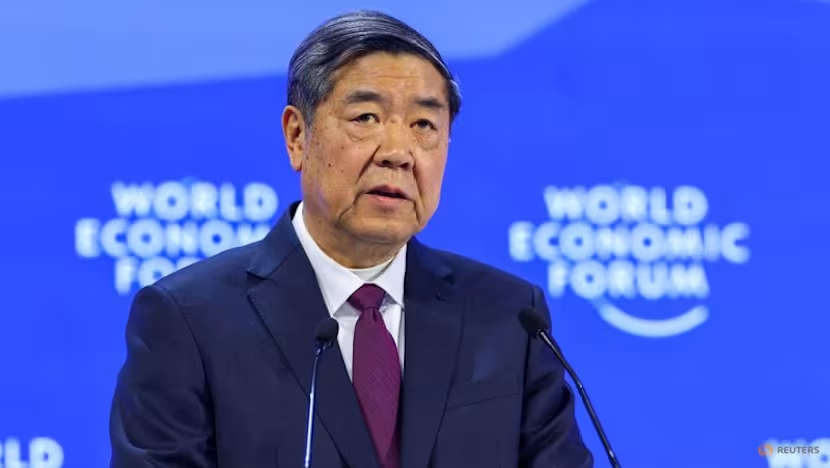
China adopted a notably low-key presence at the World Economic Forum’s Annual Meeting in Davos, Switzerland, held from January 19-23, 2026, as it sought to attract Western investment amid economic headwinds and geopolitical tensions. Read More: https://theboardroompk.com/trump-revokes-canadas-invitation-to-join-board-of-peace-after-carneys-davos-speech/ Unlike previous years with high-profile delegations and prominent pavilions, China’s footprint was subdued, reflecting a strategic shift focused on quiet diplomacy and targeted outreach. Subdued Visibility and Contrast with Others China’s delegation maintained a minimal public profile, with fewer events, smaller promotional setups, and limited visibility on Davos’ main street compared to past gatherings. This approach stood in stark contrast to the United States, which featured a more assertive and visible participation, including prominent business leaders and policy messaging. Chinese officials avoided large-scale media spectacles, opting instead for behind-the-scenes meetings and bilateral discussions to court foreign capital. Key Participation and Messaging Vice Premier He Lifeng delivered a special address at the forum on January 20, 2026, emphasizing China’s commitment to openness, multilateralism, and global cooperation. He stated that China never deliberately pursued trade surpluses and is willing to serve as “the world’s market.” He Lifeng highlighted efforts to boost investment in physical assets and human capital, expand consumption in priority sectors, and promote high-standard opening-up. He called for joint responses to challenges like fragmentation and protectionism, positioning China as a reliable partner for sustainable global growth. Economic Context and Strategic Goals The low-profile strategy coincided with China’s economic growth hitting a three-year low, prompting Beijing to prioritize attracting foreign direct investment to support recovery and technological advancement. Business leaders at Davos noted potential opportunities for China to benefit from U.S.-Europe tensions, though challenges remain in building trust with Western partners. The restrained approach allowed focused engagement without drawing excessive scrutiny amid ongoing trade and tech frictions.

PSX Hits Record High of 187,000 Amid FFC Stock Split Buzz
Uncategorized

PSX Hits Record High of 187,000 Amid FFC Stock Split Buzz

Pakistan’s stock market achieved a remarkable milestone on January 23, 2026, as the KSE-100 Index closed at an all-time high of 189,167, marking a gain of 1,479 points or 0.79%. Read More: https://theboardroompk.com/afghanistan-limits-players-to-three-foreign-t20-leagues-annually-mandates-apl-participation/ The session began sluggishly, with the index oscillating between 187,000 and 188,000 in the morning. However, afternoon trading ignited due to swirling rumors of a potential stock split by Fauji Fertilizer Company (FFC), drawing intense buying interest and propelling the benchmark past the 189,000 threshold. FFC’s Dominant Role and Key Contributors FFC emerged as the star performer, single-handedly contributing 1,514 points to the index’s rise. This surge was fueled by speculation around the stock split, which investors viewed as a catalyst for enhanced liquidity and broader retail participation. Supporting the upward momentum, companies like EFERT, POL, HUBC, and ENGROH added a combined 690 points. Their gains reflected broader optimism in the fertilizer and energy sectors, amid stable commodity prices and improving economic indicators. On the flip side, some counters faced profit-taking. PIOC, OGDC, UBL, NBP, and PPL collectively dragged the index down by 478 points, highlighting selective selling in banking and cement stocks. Macro Indicators and Market Activity Inflation data provided a positive backdrop, with the Sensitive Price Index (SPI) for the week ending January 22, 2026, showing a 4.18% year-on-year increase but a 0.48% week-on-week decline. This suggested easing short-term pressures, bolstering investor confidence. Trading volumes remained robust, with 875.49 million shares exchanged and a total turnover of PKR 58.5 billion. K-Electric (KEL) led the volume leaders, with 141.4 million shares traded, underscoring strong retail interest in utility stocks. The day’s performance underscores the market’s resilience, setting a bullish tone as participants await key policy developments.

Pakistan Cement Exports Rise 3.40% to $173.169M in 1HFY26 Despite Volume Dip
Uncategorized

Pakistan Cement Exports Rise 3.40% to $173.169M in 1HFY26 Despite Volume Dip

Pakistan’s cement exports posted a modest value increase in the first half of fiscal year 2025-26 (July-December 2025), despite a decline in export volumes, according to data from the Pakistan Bureau of Statistics (PBS). Read More: https://theboardroompk.com/growing-stablecoin-use-challenges-global-monetary-order-warns-imf/ Overall Export Performance Cement exports reached US$173.169 million during July-December 2025-26, up 3.40% from US$167.472 million in the same period of 2024-25. In local currency, revenues grew 4.92% to PKR48.85 billion. Quantity Decline Export volumes fell 5.84% year-on-year to 4,417,399 metric tons from 4,691,454 metric tons. This divergence between value and volume suggests higher average export prices or shifts in product mix/markets. December 2025 Trends In December 2025, exports totaled US$22.035 million, down sharply by 30.92% from US$31.898 million in December 2024. However, on a month-on-month basis, December showed a strong rebound of 32.61% from US$16.617 million in November 2025. Broader Sector Context The modest export growth contrasts with stronger domestic demand trends in the period. Cement dispatches (domestic + exports) rose in various reports, driven by local sales growth in northern and southern regions. Northern exports declined notably (around 18.53% in some data to 808,506 tons), while southern exports remained nearly flat. The export slowdown has contributed to tighter local supply in some areas, with reports of price increases in northern Pakistan. Implications The value uptick reflects resilience in Pakistan’s cement sector amid global competition and domestic recovery signals. Higher export realizations helped offset volume softness. No specific reasons for the changes were detailed in the report, but sector observers note ongoing efforts to target markets in Asia, Africa, and beyond. This performance aligns with earlier FY26 trends showing export fluctuations but overall sector momentum from infrastructure and construction activity.

Scroll to Top