Pakistan

Reko Diq Project Under Strategic Review: Why Barrick Mining’s Next Move Matters
Pakistan

Reko Diq Project Under Strategic Review: Why Barrick Mining’s Next Move Matters

The Reko Diq Project, one of the world’s most talked-about gold and copper developments, has once again stepped into the global spotlight. Barrick Mining, the project’s largest stakeholder, has confirmed that its board is conducting a comprehensive review of all major aspects of the Reko Diq Project a move that could redefine the future of Pakistan’s mining landscape. Speaking during a post-earnings call, Barrick Mining CEO Mark Hill revealed that the review will examine capital allocation, security arrangements, and the overall development timeline of the Reko Diq Project. The process has already begun, and an official update is expected once the assessment concludes. For investors, policymakers, and industry watchers, this review is more than routine governance it is a strategic pause that could unlock long-term value or recalibrate expectations. Why the Reko Diq Project Is a Global Mining Prize Located in Pakistan’s mineral-rich Balochistan region, the Reko Diq Project is regarded as one of the world’s largest undeveloped gold and copper reserves. Its scale places it firmly on the radar of global commodity markets, especially at a time when copper demand is surging due to electric vehicles, renewable energy infrastructure, and global electrification. Gold, meanwhile, continues to act as a hedge against inflation and geopolitical uncertainty making the Reko Diq Project strategically attractive in today’s volatile economic environment. What Barrick Mining Is Reviewing in the Reko Diq Project Barrick Mining has clarified that the review will focus on three core pillars of the Reko Diq Project. First is capital allocation. Large-scale mining projects require multi-billion-dollar investments spread over decades. With global interest rates, commodity prices, and geopolitical risks constantly shifting, Barrick’s board is reassessing how and when capital should be deployed to maximize returns. Second is security arrangements. Operating in Balochistan requires robust, long-term security planning. By placing security under review, Barrick signals its intent to ensure sustainable operations while aligning with local and federal stakeholders. Third is the development timetable. Timelines directly affect project valuation, financing costs, and investor confidence. A refined schedule could help balance speed with risk mitigation. Ownership Structure of the Reko Diq Project Explained The Reko Diq Project’s ownership reflects a rare public-private partnership model in Pakistan’s mining sector. Barrick Mining holds a 50 percent stake, positioning it as the project’s technical and operational leader. Three federal state-owned enterprises collectively own 25 percent, ensuring alignment with national economic objectives. The Government of Balochistan holds the remaining 25 percent, giving the resource-rich province a direct stake in future revenues, employment, and regional development. This structure is designed to distribute risk, reward, and responsibility a crucial factor for a project of this magnitude. Why This Reko Diq Project Review Could Be a Game Changer The timing of this review is critical. Global mining companies are under increasing pressure to balance profitability with sustainability, security, and political stability. By reassessing the Reko Diq Project now, Barrick Mining may be positioning itself to future-proof the project against global economic shocks. For Pakistan, a successful and well-executed Reko Diq Project could mean billions in foreign investment, export earnings, job creation, and technology transfer. For Balochistan, it represents a rare opportunity for long-term economic transformation. What Happens Next for the Reko Diq Project Barrick Mining has stated that the review process has begun immediately, with a detailed update to follow upon completion. Markets and policymakers will be watching closely for signals related to revised budgets, timelines, or enhanced security frameworks. One thing is clear: the Reko Diq Project is no longer just a mining venture it is a strategic asset at the intersection of global commodities, national development, and regional stability.

PIA Sale Leaves PSO Exposed: A Costly Aftershock of Privatization
Pakistan

PIA Sale Leaves PSO Exposed: A Costly Aftershock of Privatization

PIA Sale Leaves PSO Exposed to one of the most significant financial shocks in recent memory, as Pakistan State Oil (PSO) grapples with Rs. 30 billion in unpaid fuel dues following the sale of Pakistan International Airlines (PIA). While the privatization of the national flag carrier was pitched as a long-awaited reform, the fallout is now raising uncomfortable questions about risk management, accountability, and the hidden costs of state divestment. At the center of this unfolding situation is PSO Pakistan’s largest fuel supplier which provided aviation fuel to PIA for years, often amid delayed payments and mounting receivables. With PIA now sold, PSO finds itself exposed to billions in unsettled payments, turning a strategic reform into a financial headache. How the PIA Sale Leaves PSO Exposed to Financial Risk The core issue is simple but alarming: PIA’s outstanding fuel bills were not fully cleared before the sale. As a result, PSO is left chasing payments that may now fall into a grey area of responsibility. In explanatory terms, the situation looks like this: • PSO supplied jet fuel to PIA over an extended period• Payments were deferred, accumulating into massive receivables• PIA’s sale transferred ownership but not necessarily liabilities• PSO’s Rs. 30 billion remains unpaid and uncertain This exposure directly affects PSO’s cash flow, balance sheet strength, and working capital, especially at a time when global energy prices remain volatile. Why Rs. 30 Billion Matters More Than It Sounds To put things into perspective, Rs. 30 billion is not just a bookkeeping concern it represents: • Fuel procurement costs already incurred• Pressure on PSO’s liquidity and borrowing needs• Potential delays in payments to refineries and suppliers• Increased financing costs passed down the energy chain For a company that plays a critical role in Pakistan’s energy security, prolonged non-payment could ripple across multiple sectors. PIA Sale Leaves PSO Exposed Amid Governance Gaps The situation highlights a deeper structural issue: lack of clear financial safeguards during privatization. Industry experts argue that receivables of this scale should have been ring-fenced or settled before ownership changed hands. Instead, PSO now faces uncertainty over: • Who bears responsibility for legacy dues• Whether recovery will come from the government or the new owners• How long the dispute resolution process may take This ambiguity undermines confidence in future privatization efforts, especially for companies that do business with state-owned enterprises. Market Reaction and Investor Concerns Financial markets are watching closely. The fact that PIA Sale Leaves PSO Exposed has already raised concerns among investors and analysts who fear: • Earnings pressure if dues remain unpaid• Potential provisioning against receivables• Negative impact on dividend capacity Energy sector investors, in particular, are wary of policy-driven risks that can suddenly surface without warning. What Happens Next for PSO? PSO is reportedly engaging with relevant stakeholders to seek a resolution. Possible outcomes include: • Government-backed settlement of dues• Structured repayment plans• Legal or arbitration channels if disputes escalate However, until clarity emerges, the unpaid amount remains a shadow over PSO’s financial outlook. A Bigger Lesson for Pakistan’s Privatization Drive The controversy offers a crucial takeaway: privatization without financial cleanup creates new risks instead of solving old ones. If future sales follow a similar path, suppliers, lenders, and partners may demand stronger guarantees or avoid exposure altogether. As Pakistan pushes forward with economic reforms, ensuring transparency and accountability will be key to restoring trust. Final Thoughts The headline says it all PIA Sale Leaves PSO Exposed but the real story goes deeper. This is not just about unpaid dues; it’s about how reforms are executed and who ultimately bears the cost. For PSO, the next few months will be critical. For policymakers, this episode may serve as a cautionary tale they can’t afford to ignore.

Air India Express Set for Turnaround Profit in Second Half of Fiscal 2026
Pakistan

Air India Express Set for Turnaround Profit in Second Half of Fiscal 2026

Air India Express anticipates recording its inaugural operating profit under Tata Group ownership during the second half of FY26 (ending March 2026), according to internal town hall insights reported by Reuters on February 5, 2026. This development highlights progress in the airline’s post-privatization recovery phase. Read More: https://theboardroompk.com/jf-17-export-boom-puts-pakistans-production-lines-under-pressure/ Key Drivers of Profitability Management attributes the forecast to enhanced capacity deployment, expanded market presence, better unit economics, disciplined cost management, and superior execution. These elements have helped offset sector-wide headwinds and supported a path toward financial stability. Strategic Investments and Growth Roadmap With a current fleet surpassing 100 narrowbody jets, Air India Express plans aggressive scaling, including more than doubling capacity in four to five years and aiming for over 200 aircraft. A recent order for 30 Boeing 737 MAX additions bolsters this ambition, though jet delivery delays pose constraints. Additionally, over $70 million is earmarked for cabin refurbishments to elevate service quality. Broader Implications for Tata Aviation The low-cost arm’s anticipated profitability offers encouragement amid ongoing challenges at flagship Air India, including external factors like airspace bans affecting operations. It reflects Tata’s multi-billion-dollar revival strategy for its aviation portfolio, emphasizing efficiency, network growth, and customer focus in a high-demand domestic market. This forecast positions Air India Express as a strengthening contributor to the group’s aviation ecosystem, with emphasis on consistent performance and margin improvement moving forward

AI Emerges as Key Tool to Strengthen Pakistan-China Media Ties
Pakistan

AI Emerges as Key Tool to Strengthen Pakistan-China Media Ties

Artificial Intelligence (AI) is emerging as a powerful strategic instrument to strengthen media integration and deepen the longstanding bilateral ties between Pakistan and China. In a recent seminar held in Islamabad, Muhammad Zameer Asadi, a media fellow at the China International Press and Communication Center, highlighted AI’s transformative potential in reshaping global media landscapes and fostering closer cooperation between the two nations. Read More: https://theboardroompk.com/imc-toyota-pakistan-brought-735m-fdi-6-5b-localization-savings-in-35-year-ceo/ AI’s Role in Overcoming Barriers Asadi emphasized that AI technologies, including advanced translation, speech recognition, and real-time subtitling, effectively eliminate linguistic and communication obstacles. This enables seamless sharing of journalistic content, documentaries, interviews, and breaking news across languages, allowing Pakistani and Chinese media professionals to collaborate more efficiently. Enhancing Journalism and Trust Through intelligent data analysis, AI facilitates joint reporting on critical issues such as economic development, climate change, public health, and regional connectivity. Such efforts can boost public trust, knowledge exchange, and mutual understanding. Asadi noted that AI-driven media integration aligns with both countries’ ongoing digital transformations, serving as a key pillar for broader engagement. Economic and Security Applications AI supports economic diplomacy by delivering tailored business news, investment opportunities, and policy updates via smart recommendation systems. In combating misinformation—particularly around flagship projects like the China-Pakistan Economic Corridor (CPEC)—joint AI tools for fact-checking, sentiment analysis, and content verification were proposed as essential measures. Cultural Exchange and Future Collaboration For cultural connectivity, AI enables intelligent content curation, virtual exhibitions, and interactive documentaries that present traditions innovatively to younger audiences. Asadi advocated for joint AI training programs, virtual newsrooms, and digital journalism platforms to build journalists’ skills and ensure long-term sustainable media cooperation. He concluded that AI is not merely a technological tool but a strategic facilitator for intensive media interdependence, ultimately deepening trust and partnership. This vision supports shared goals of responsible technology use, ethical reporting, and inclusive digital development amid the ironclad Pakistan-China friendship.

K-Electric CEO Monis Alvi Resigns, Sending Shockwaves Across the Energy Sector
Pakistan

K-Electric CEO Monis Alvi Resigns, Sending Shockwaves Across the Energy Sector

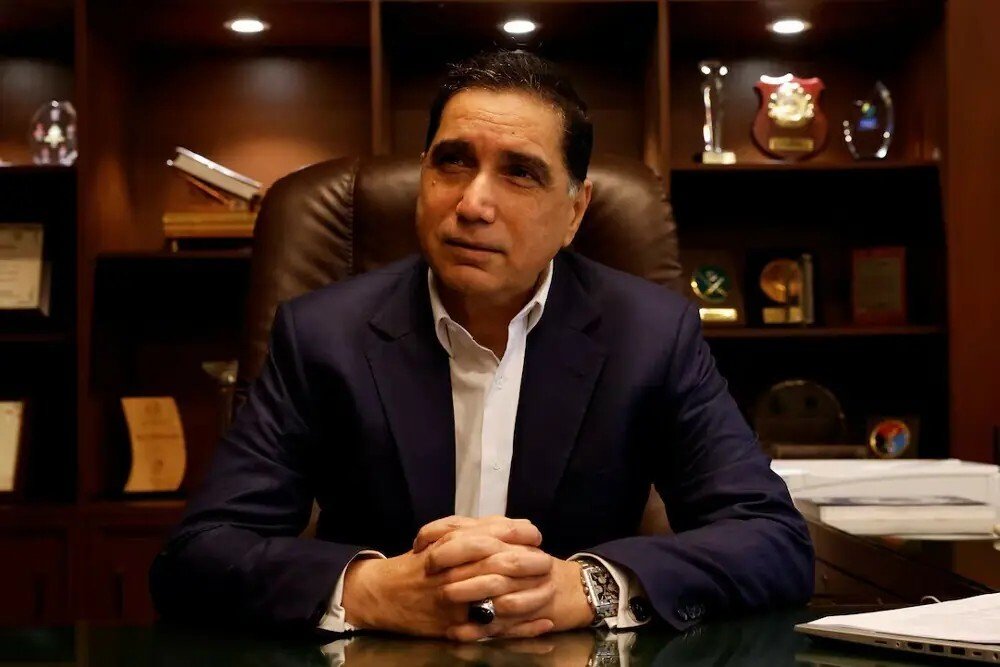
K-Electric CEO Monis Alvi resigns a development that has quietly but decisively unsettled Pakistan’s energy landscape. The resignation, confirmed by reliable sources, marks the end of a significant chapter for Karachi’s sole power utility and raises urgent questions about leadership continuity, governance, and the company’s strategic direction. The resignation has been formally accepted by Mark Skelton, Chairman of K-Electric’s Board of Directors, setting off a series of critical board-level decisions at a time when the utility is already navigating regulatory pressure, financial restructuring, and public scrutiny. Why the Resignation of K-Electric CEO Monis Alvi Matters The moment K-Electric CEO Monis Alvi resigns, it becomes more than just a corporate exit it becomes a signal. Monis Alvi has been one of the most visible faces of K-Electric during a period defined by tariff debates, infrastructure investment, and consumer trust challenges. His departure has reportedly created unease within K-Electric’s head office, where senior executives are said to be grappling with uncertainty over the company’s immediate and long-term direction. For a utility that powers Pakistan’s financial capital, leadership stability is not optional it is essential. K-Electric Board Dynamics After Monis Alvi’s Exit Currently, the K-Electric Board of Directors is operating below full strength. Out of a total of 13 seats, three have remained vacant for an extended period. Following the resignation of Monis Alvi, the number of serving board members has effectively dropped to nine, further complicating governance matters. This reduced board capacity arrives at a sensitive time, as key decisions regarding executive leadership and strategic priorities loom large. Shortlisted Candidates: Who Could Be the Next CEO of K-Electric? Sources reveal that the board has already shortlisted three candidates for the CEO position. All shortlisted individuals share several notable characteristics: • They are based in Karachi• They bring extensive experience in energy and finance• They possess deep familiarity with Pakistan’s regulatory and economic environment Rather than naming individuals prematurely, the board appears to be prioritizing competence, continuity, and local market understanding qualities seen as crucial following the moment K-Electric CEO Monis Alvi resigns. Upcoming Board Elections During Ramadan: A Critical Turning Point A Board of Directors meeting is scheduled for next week, where interviews of the shortlisted CEO candidates are expected to take place. However, the final decision will not rest with the current board alone. Board elections are anticipated during the holy month of Ramadan, after which the newly elected board will formally appoint the next Chief Executive Officer. In effect, the current board’s role will be advisory conducting interviews and forwarding recommendations to the incoming leadership. This two-step process underscores how pivotal governance reforms have become at K-Electric. What This Leadership Transition Means for K-Electric’s Future When K-Electric CEO Monis Alvi resigns, the implications extend beyond the boardroom. Investors, regulators, and consumers alike are watching closely for signs of continuity—or disruption. Key questions now dominate the conversation: • Will the new CEO accelerate reforms or maintain the status quo?• How will leadership uncertainty affect operational efficiency?• Can K-Electric regain public confidence amid rising energy costs? Until these questions are answered, uncertainty will remain a defining feature of K-Electric’s near-term outlook. A Defining Moment for Pakistan’s Power Utility Leadership transitions are rarely smooth, but for K-Electric, this moment is especially consequential. As K-Electric CEO Monis Alvi resigns, the company stands at a crossroads between stability and reform, continuity and change. The coming weeks, shaped by board decisions and elections, will determine whether K-Electric emerges stronger or more fragmented. One thing is clear: the power sector and Karachi’s millions of consumers will be watching every move.

Pakistan's Finance Minister Muhammad Aurangzeb has announced that an International Monetary Fund (IMF) mission will arrive in the country later this month for the third review of the ongoing IMF programme. Speaking to media after a meeting of the Senate Standing Committee on Finance and Revenue in Islamabad on Wednesday, Aurangzeb emphasized the government's confidence in economic stability. No External Financing Gap The minister firmly stated there is no shortfall in external financing. Pakistan has shared its economic framework with the IMF, which shows no financing gap. This comes amid ongoing rollover discussions with the UAE, which remain on track according to officials. The government denied any issues with short-term rollovers, clarifying that talks are progressing as planned. Third Review Under Current Programme The upcoming IMF visit focuses on the third review of the existing Fund programme, likely the $7 billion Extended Fund Facility (EFF) arrangement. Aurangzeb expressed optimism about reaching a staff-level agreement soon. The review will assess performance on reforms, including fiscal measures and structural benchmarks, to unlock potential disbursements and support continued economic stabilization. Broader Economic Updates Aurangzeb highlighted plans to issue Panda bonds in the first quarter of 2026, with discussions ongoing. Negotiations on the National Finance Commission (NFC) Award are advancing, with a possible meeting after additional technical committee sessions. He stressed the importance of sustainable tax-to-GDP growth for national progress. Other points included budgetary spending progress, disbursements for women's financial inclusion via microfinance exceeding Rs20 billion, and no plans to discontinue the Rs5,000 currency note, though new designs with enhanced security are under review. The announcement reinforces Pakistan's commitment to IMF-supported reforms while addressing external financing needs through friendly countries and market instruments.
Pakistan

IMF Mission to Visit Pakistan Later This Month for Third Programme Review

Pakistan’s Finance Minister Muhammad Aurangzeb has announced that an International Monetary Fund (IMF) mission will arrive in the country later this month for the third review of the ongoing IMF programme. Speaking to media after a meeting of the Senate Standing Committee on Finance and Revenue in Islamabad on Wednesday, Aurangzeb emphasized the government’s confidence in economic stability. No External Financing Gap The minister firmly stated there is no shortfall in external financing. Pakistan has shared its economic framework with the IMF, which shows no financing gap. This comes amid ongoing rollover discussions with the UAE, which remain on track according to officials. The government denied any issues with short-term rollovers, clarifying that talks are progressing as planned. Third Review Under Current Programme The upcoming IMF visit focuses on the third review of the existing Fund programme, likely the $7 billion Extended Fund Facility (EFF) arrangement. Aurangzeb expressed optimism about reaching a staff-level agreement soon. The review will assess performance on reforms, including fiscal measures and structural benchmarks, to unlock potential disbursements and support continued economic stabilization. Broader Economic Updates Aurangzeb highlighted plans to issue Panda bonds in the first quarter of 2026, with discussions ongoing. Negotiations on the National Finance Commission (NFC) Award are advancing, with a possible meeting after additional technical committee sessions. He stressed the importance of sustainable tax-to-GDP growth for national progress. Other points included budgetary spending progress, disbursements for women’s financial inclusion via microfinance exceeding Rs20 billion, and no plans to discontinue the Rs5,000 currency note, though new designs with enhanced security are under review. The announcement reinforces Pakistan’s commitment to IMF-supported reforms while addressing external financing needs through friendly countries and market instruments.

KSE-100 Index Extends Its Winning Streak as Bulls Tighten Their Grip
Pakistan

KSE-100 Index Extends Its Winning Streak as Bulls Tighten Their Grip

The KSE-100 Index continued its upward march on Wednesday, closing at 187,832.08 points, marking a solid gain of 931.35 points or 0.50%. What made the session particularly noteworthy was the index’s ability to remain in positive territory throughout the day an encouraging sign that investor confidence is not just intact, but strengthening. Read More: https://theboardroompk.com/pakistan-omc-sales-january-2026-signal-a-strong-comeback-for-fuel-demand/ At its peak, the KSE-100 Index touched an intraday high of 188,312.20 points, while the day’s low of 187,018.69 points still reflected a positive bias. This resilience suggests that market participants are increasingly comfortable buying into dips, a classic hallmark of bullish momentum. What Fueled the KSE-100 Index Rally? The market’s strength was driven by a powerful combination of banking stocks, power generation companies, and select blue-chip names. Total traded volume for the KSE-100 clocked in at 767.5 million shares, highlighting strong participation despite selective profit-taking in certain sectors. Out of the 100 index constituents, 49 stocks closed higher, 49 declined, and 2 remained unchanged, underscoring a session defined more by sector rotation than broad-based selling. Top Gainers and Losers Shaping the KSE-100 Index Market leadership came from a mix of financials and energy-linked stocks. K-Electric (KEL) dominated the leaderboard with a striking 13.06% surge, driven by heavy volumes and renewed speculative interest. Other notable gainers included Habib Metropolitan Bank (HMB), Searle Pakistan (SRVI), Meezan Bank (MEBL), and National Bank of Pakistan (NBP) all reinforcing the dominance of banking stocks in the current rally. On the flip side, selective pressure was observed in technology and textile-related stocks. Interloop Limited (ILP) led the decliners, followed by Nishat Mills (NML) and TRG Pakistan, reflecting cautious sentiment in export-oriented and tech-heavy names. Index Movers: Who Pushed the KSE-100 Index Higher? In terms of sheer index-point contribution, Meezan Bank alone added over 246 points, making it the single biggest driver of the day’s gains. ENGRO Holdings, NBP, UBL, and HMB collectively added hundreds of points, reinforcing the narrative that institutional buying remains concentrated in fundamentally strong, high-liquidity stocks. However, the rally was not without resistance. Systems Limited, Engro Fertilizers, PPL, and ILP collectively trimmed gains, preventing a more aggressive upside breakout. Sector Spotlight: Banks Lead, Tech Lags From a sectoral perspective, the KSE-100 Index was overwhelmingly supported by Commercial Banks, which contributed an impressive 837 index points by far the largest sectoral boost of the session. Investment banks, power generation companies, cement, and leather sectors also played supportive roles. In contrast, Technology & Communication, Oil & Gas Exploration, and Textile Composite sectors acted as modest drags, signaling a shift of capital toward more defensive and dividend-yielding sectors amid evolving macro expectations. Broader Market Signals Confidence Beyond the KSE-100 Index The bullish tone was not limited to large-cap stocks. The All-Share Index rose by 697 points or 0.62%, closing at 112,851.69. Market-wide traded volume jumped to 1.19 billion shares, even as total traded value eased slightly to Rs44.1 billion a sign of active participation across price segments. Trading activity remained robust with over 413,000 trades across 481 companies, where advancing stocks clearly outnumbered decliners, reflecting improving market breadth. A Historic Run for the KSE-100 Index Perhaps the most compelling statistic lies in the bigger picture. The KSE-100 Index has gained over 62,200 points or nearly 50% during the current fiscal year, while calendar-year gains now stand close to 8%. This sustained performance underscores Pakistan’s equity market as one of the region’s strongest performers, despite global volatility. What This Means for Investors The message from the KSE-100 Index is becoming increasingly clear: smart money is rotating, not retreating. As long as banking and energy stocks continue to anchor the market, dips may remain buying opportunities rather than warning signals. For investors, the focus now shifts to whether this momentum can translate into a decisive breakout above the psychological 188,000–190,000 range a move that could redefine near-term market sentiment.

JazzWorld Drives AI & Software Exports Through Landmark Pakistan–Kazakhstan Partnership
Pakistan

JazzWorld Drives AI & Software Exports Through Landmark Pakistan–Kazakhstan Partnership

KARACHI – February 04, 2026:_ JazzWorld today announced a landmark cross-border partnership with QazCode LLP to accelerate artificial intelligence (AI) and software exports and strengthen digital trade between Pakistan and Kazakhstan. Read More: https://theboardroompk.com/safety-isnt-a-burden-its-survival-why-gul-plaza-baldia-remind-us-of-the-real-cost-of-cutting-corners/ The Memorandum of Understanding (MoU) positions JazzWorld and its software and technology arm, Teknosys, alongside fellow VEON group company Beeline Kazakhstan and QazCode LLP at the center of a new regional collaboration model focused on joint innovation, product development, and market expansion. The partnership is designed to enable Pakistani technology solutions to scale into Central Asia and other international markets, reinforcing Pakistan’s emergence as a competitive digital exporter. Under the agreement, the partners will jointly develop and commercialize AI-driven products, exchange advanced engineering and delivery best practices, and establish structured innovation pipelines spanning telecom, enterprise, and public-sector use cases. A strong emphasis will be placed on building export-ready digital platforms that combine local innovation with regional market access. Talent development and capability-building form a core pillar of the collaboration. The partners will launch joint training programs, research initiatives, staff exchanges, and pilot projects to strengthen expertise in AI engineering, data science, and product management, ensuring rapid translation of innovation into commercial outcomes. The partnership will also explore advanced collaborations in cloud infrastructure, high-performance computing, cybersecurity, and responsible AI, supported by joint R&D labs, testbeds, and proof-of-concept deployments. To ensure strong execution, the partners will establish a Joint Steering Committee to set strategic priorities, monitor progress, and identify new growth opportunities. The committee will meet at least quarterly to drive delivery, accountability, and measurable impact. All collaborative projects under the MoU will be governed by separate agreements and implemented in full compliance with applicable data protection, cybersecurity, and regulatory frameworks in both countries. The MoU will remain in effect for an initial period of three years, with scope for expansion through project-specific agreements. Commenting on the partnership, Aamir Ibrahim, Chief Executive Officer of JazzWorld, said: “This partnership reflects our ambition to move Pakistan up the global digital value chain. By combining JazzWorld’s scale and market access with deep engineering and AI capabilities, we are building export-ready platforms that deliver real economic value. Our focus is clear: turning innovation into sustainable growth, skilled jobs, and stronger digital competitiveness for Pakistan.” Oleksii Sharavar, Chief Executive Officer of QazCode LLP, added: “JazzWorld and QazCode share a common vision: transforming artificial intelligence into measurable business and societal impact. By aligning our engineering strength with JazzWorld’s regional footprint, this partnership is designed to move quickly from development to deployment across multiple markets.” Industry analysts view the agreement as a major milestone in JazzWorld’s evolution from a digital operator into a regional technology and innovation leader. The partnership reflects the growing maturity of Pakistan’s software and AI ecosystem and highlights the role of cross-border collaboration in scaling digital exports responsibly and at speed.

KICT Cargo Backlog Exposes Cracks in Pakistan’s Trade Lifeline
Pakistan

KICT Cargo Backlog Exposes Cracks in Pakistan’s Trade Lifeline

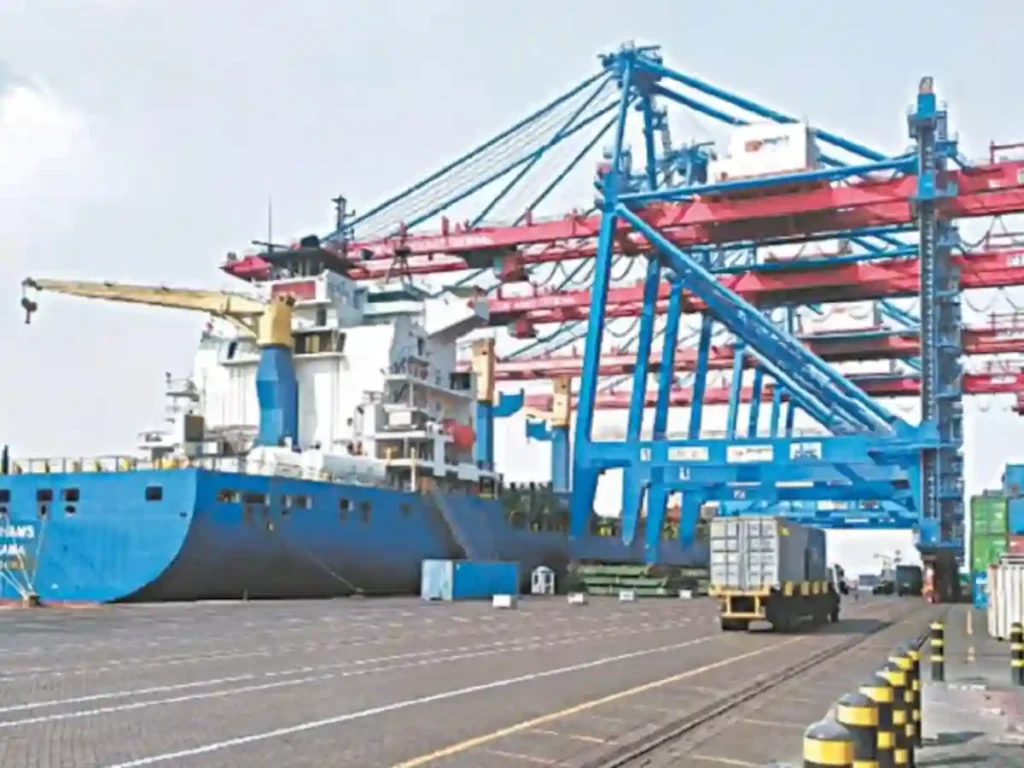
The KICT cargo backlog has quietly turned into one of the most disruptive challenges facing Pakistan’s trade and industrial ecosystem. With nearly half of all containers stuck daily at Karachi International Container Terminal (KICT), supply chains are buckling under pressure, costs are rising, and confidence among importers and manufacturers is rapidly eroding. Read More: https://theboardroompk.com/japan-tire-industry-outlook-enters-a-cautious-phase/ The alarm has now been formally raised by Karachi Chamber of Commerce & Industry (KCCI) President Rehan Hanif, who warns that prolonged congestion at KICT is no longer a logistical inconvenience it is a direct threat to ease of doing business in Pakistan. Why the KICT Cargo Backlog Persists Despite Modern Infrastructure At the heart of the KICT cargo backlog lies a paradox: world-class infrastructure undermined by operational bottlenecks. KCCI points to an acute shortage of Customs examination staff as the primary reason containers pile up daily. Consignments flagged for examination require a minimum team of 25 customs officers supervised by senior officials, yet current staffing levels fall well short of this requirement. Frequent staff rotations further disrupt continuity, slowing down an already sluggish clearance process. In practical terms, this means containers that should clear within hours remain stuck for days sometimes longer adding demurrage costs and production delays. Afghan Transit Cargo Adds Pressure to KICT Cargo Backlog Another major contributor to the KICT cargo backlog is the accumulation of over 2,000 containers imported under Afghan Transit Trade, which remain stranded at the terminal. These containers occupy valuable terminal space, limiting capacity for regular imports meant for Pakistan’s domestic industry. The result is a compounding congestion effect that slows down the entire port ecosystem. High-Tech Scanners, Low-Speed Clearance Ironically, KICT is equipped with state-of-the-art container scanners worth millions of dollars, capable of scanning a container in under a minute. Yet clearance times tell a very different story. According to KCCI, the scanners are grossly underutilized due to: • Inadequate technical training• Poor understanding of scanner capabilities• Lack of live-stream monitoring• Insufficient supervisory staff This disconnect between technology and execution is turning a powerful efficiency tool into a missed opportunity further deepening the KICT cargo backlog. Industrial Raw Materials Still Waiting Despite Official Assurances During a meeting with the Chief Collector of Customs, KCCI was assured that containers carrying single-item consignments or industrial raw materials would be cleared on priority. In reality, these instructions remain largely unimplemented. Even straightforward industrial inputs critical for keeping factories running face unexplained delays. For manufacturers operating on tight production schedules, such delays translate into shutdown risks and lost export orders. Truck Tracking System Emerges as a New Bottleneck The mandatory installation of tracking devices on trucks, intended to improve security, has ironically added another layer to the KICT cargo backlog. Installing a tracker on a single vehicle takes four to five hours, leading to long queues, delayed cargo evacuation, and escalating logistics costs. Instead of facilitating smooth movement, the system has become a choke point demanding urgent review and streamlining. Miscellaneous Cargo and Structural Congestion at KICT KICT also handles a high volume of miscellaneous cargo, which requires unpacking, physical examination, and repacking a labor-intensive and time-consuming process. This structural reality, combined with staffing shortages, ensures that congestion remains a persistent feature rather than a temporary disruption. February 2026 Surge Could Worsen the KICT Cargo Backlog The situation is poised to worsen dramatically between 5th and 15th February 2026. Due to extended factory shutdowns in China for the Chinese New Year, importers have front-loaded shipments, resulting in a surge of consignments heading toward Karachi. At the same time, the Eid season traditionally brings an influx of consumer goods. Without immediate corrective measures, the KICT cargo backlog could spiral into: • Severe port congestion• Shortages of goods in local markets• Sharp price hikes• Financial losses for importers and terminal operators Urgent Call for Intervention to Resolve KICT Cargo Backlog KCCI President Rehan Hanif has urged the Federal Minister for Finance, Chairman FBR, and Member Customs Operations to step in immediately. Key demands include: • Adequate deployment of customs staff• Full utilization of scanning technology• Priority clearance for industrial raw materials• Rationalization of the truck tracking system Timely action, he stresses, is essential not just to protect trade and industry but to stabilize markets and shield consumers from artificial shortages and inflationary pressures.

PMEX Wheat and Rice Trading Ushers in a New Era of Transparent Agri-Markets in Pakistan
Pakistan

PMEX Wheat and Rice Trading Ushers in a New Era of Transparent Agri-Markets in Pakistan

PMEX Wheat and Rice Trading is set to redefine how Pakistan buys, sells, and prices its most essential food commodities. In a landmark agreement signed in Karachi on February 04, 2026, Pakistan Mercantile Exchange Limited (PMEX) has partnered with Meskay & Femtee Trading Company, one of the country’s most influential agri-commodity traders and exporters. Read More: https://theboardroompk.com/pakistan-potato-exports-face-shock-after-afghanistan-border-closure/ For the first time in Pakistan’s history, wheat and rice will be traded on a regulated, transparent, and fully documented exchange platform, replacing opaque negotiations with credible price discovery and structured risk management. This single move has the potential to reshape the agricultural economy from farm to export terminal. Why PMEX Wheat and Rice Trading Matters for Pakistan’s Economy Pakistan’s agricultural markets have long depended on fragmented pricing mechanisms, informal trading practices, and inconsistent benchmarks. PMEX Wheat and Rice Trading changes that narrative by introducing futures contracts that allow market participants to see real-time prices driven by demand and supply dynamics. Under this agreement, trading in deliverable wheat and rice futures contracts is expected to commence later this month. This signals a decisive shift toward free-market operations, where prices are no longer guesswork but data-driven indicators trusted by farmers, traders, and investors alike. How PMEX Wheat and Rice Trading Benefits the Entire Value Chain The introduction of PMEX Wheat and Rice Trading delivers benefits across Pakistan’s agricultural ecosystem in a deeply interconnected way. Farmers gain access to transparent price signals, helping them make informed decisions about planting, harvesting, and selling. Traders and exporters benefit from standardized contracts and effective hedging tools, reducing exposure to price volatility. Importers, processors, and institutional investors receive reliable benchmarks and documented transactions backed by a regulated exchange. Instead of isolated negotiations, the entire market begins to operate on a shared, verifiable reference point a cornerstone of mature commodity economies worldwide. Meskay & Femtee’s Role as Agri Market Maker on PMEX A defining element of PMEX Wheat and Rice Trading is the appointment of Meskay & Femtee Trading Company as an Agri Market Maker on the exchange. Market makers play a critical role in ensuring liquidity by providing continuous two-way buy and sell quotes, ensuring smooth price discovery even during volatile market conditions. By committing substantial agri-commodity volumes to PMEX, Meskay & Femtee is expected to deepen market liquidity, improve trading confidence, and reduce price shocks a long-standing challenge in Pakistan’s agri markets. A Strategic Partner with Deep Roots in Agriculture Founded in 2006, Meskay & Femtee Trading Company has grown into one of Pakistan’s most powerful agri-commodity exporters. With a strong focus on rice alongside wheat, corn, and sesame the company ranks among the top two largest millers in Pakistan. Beyond trading, Meskay & Femtee operates as the country’s largest farm mechanization company, managing procurement, processing, warehousing, logistics, and exports through an extensive nationwide infrastructure. This deep integration makes the company uniquely positioned to bridge physical supply chains with exchange-traded products under PMEX Wheat and Rice Trading. PMEX Wheat and Rice Trading Connects Physical Markets with Futures At the signing ceremony, leadership from both organizations emphasized that the agreement reflects a shared vision: to connect Pakistan’s physical agri-commodity supply chains with modern exchange-based trading instruments. By aligning real-world production and storage with futures contracts, PMEX Wheat and Rice Trading introduces a system where price expectations, risk management, and investment planning coexist under a single transparent framework. A Turning Point for Pakistan’s Agricultural Future PMEX Wheat and Rice Trading is more than a new contract listing it is a structural reform. It represents Pakistan’s entry into a global standard of agricultural commerce where transparency, regulation, and efficiency drive growth. As wheat and rice trading moves onto a formal exchange for the first time, the ripple effects are expected to extend far beyond PMEX’s trading screens influencing farm incomes, export competitiveness, food security planning, and investor confidence for years to come.

Scroll to Top