Pakistan

K-Electric CEO Resignation Officially Confirmed to Stock Market
Pakistan

K-Electric CEO Resignation Officially Confirmed to Stock Market

The K-Electric CEO Resignation disclosure has now been formally confirmed, putting an end to speculation surrounding leadership changes at Pakistan’s largest power utility. In a notification submitted to the Pakistan Stock Exchange (PSX), K-Electric informed investors that its Board of Directors has accepted the resignation of Chief Executive Officer Syed Monis Abdullah Alvi, marking a pivotal transition moment for the company. The announcement, released as a mandatory material disclosure, confirms that the utility’s board will appoint a new Chief Executive Officer on February 10, signaling a structured and time-bound leadership handover designed to ensure operational continuity. What the K-Electric CEO Resignation PSX Filing Reveals According to the PSX filing, the resignation was formally approved by the board following Monis Alvi’s decision to step down earlier. The confirmation aligns with regulatory transparency requirements and reflects K-Electric’s obligation to keep shareholders fully informed of major management developments. From an investor perspective, the filing clarifies three critical points: First, the resignation has been formally accepted, removing uncertainty around leadership authority. Second, the board has already set a defined timeline for appointing a successor. Third, the transition will follow a structured and orderly process, minimizing operational disruption.This clarity is particularly important for a utility that plays a central role in Karachi’s power supply and Pakistan’s broader energy ecosystem. Monis Alvi’s Journey at K-Electric Monis Alvi’s association with K-Electric spans nearly two decades, making his departure one of the most significant leadership changes in the company’s recent history. He joined the organisation in 2008, initially serving in key financial and governance roles, including Chief Financial Officer, Company Secretary, and Head of Treasury. In 2018, he was elevated to the position of Chief Executive Officer, leading the company through periods of regulatory reform, financial restructuring, and evolving energy sector dynamics. In a farewell video message issued after his resignation, Alvi emphasized that the decision was made after careful consideration and with the company’s long-term interests in mind. He stated that K-Electric now requires “new vision and fresh thinking” to navigate its next phase of growth. Why the K-Electric CEO Resignation PSX Matters to Investors The K-Electric CEO Resignation PSX disclosure is more than a routine corporate update. For market participants, it represents a moment that could shape the company’s strategic direction, regulatory engagement, and operational priorities. Leadership transitions at utilities are closely watched because they influence: By promptly notifying PSX, K-Electric has reinforced its commitment to transparency and corporate governance, a factor that often weighs heavily in investor sentiment. Transition Plan and New CEO Appointment K-Electric has confirmed that the appointment of the new CEO will be finalized on February 10, ensuring minimal leadership vacuum. Monis Alvi has also committed to a smooth onboarding process, stating that he will formally step aside only after authority is transferred in an orderly manner. He highlighted that K-Electric’s real strength lies in its human capital, noting that the organisation’s institutional framework and professional workforce remain intact despite leadership changes. This reassurance is aimed at stabilizing internal operations and maintaining confidence among stakeholders during the transition. What Comes Next for K-Electric? As the company prepares to unveil its next chief executive, attention will shift toward the strategic priorities the new leadership will bring. Analysts expect focus areas to include operational efficiency, customer service improvement, regulatory alignment, and long-term energy sustainability. While leadership changes often introduce uncertainty, they can also open the door to renewed strategic momentum especially for a utility navigating complex economic and regulatory conditions. The K-Electric CEO Resignation PSX confirmation marks a defining chapter in the company’s corporate history. With a clear transition timeline, regulatory compliance, and assurances of continuity, K-Electric appears focused on stability rather than disruption. For investors, policymakers, and consumers alike, February 10 will be a closely watched date as the utility prepares to turn the page on its leadership and chart a new course forward.

Pakistan Foreign Exchange Reserves Signal Quiet Strength in Early 2026
Pakistan

Pakistan Foreign Exchange Reserves Signal Quiet Strength in Early 2026

Pakistan foreign exchange reserves are once again in the spotlight as fresh data from the State Bank of Pakistan (SBP) reveals a steady and confidence-boosting uptick at the end of January 2026. While the increase may appear modest on the surface, the underlying trend tells a far more compelling story about Pakistan’s evolving external position and its growing resilience amid global financial uncertainty. According to official SBP data released on Thursday, the country’s foreign exchange buffers continued to build, reinforcing optimism around currency stability, import cover, and macroeconomic management. Pakistan Foreign Exchange Reserves: SBP Takes the Lead During the week ended January 30, 2026, Pakistan foreign exchange reserves held by the State Bank of Pakistan rose by $56.1 million, marking a 0.35% week-on-week increase. This pushed SBP-held reserves to $16.16 billion, a level that reflects consistent inflows and disciplined reserve management. What makes this rise particularly notable is its timing. Global markets remain volatile, capital flows are selective, and emerging economies are under pressure. Yet Pakistan’s central bank has managed to quietly add to its reserve stockpile an achievement that strengthens market sentiment and reinforces policy credibility. Total Pakistan Foreign Exchange Reserves Continue Upward Trend Beyond the central bank, Pakistan’s total liquid foreign exchange reserves also showed improvement. Combined reserves held by SBP and commercial banks rose by $45.4 million, or 0.21% week-on-week, reaching $21.34 billion. This overall increase signals that despite fluctuations in private sector holdings, the country’s net external position remains on a cautiously positive trajectory. However, the composition of reserves tells a more nuanced story. Commercial Banks See Marginal Decline in Foreign Holdings While SBP strengthened its position, foreign exchange reserves held by commercial banks edged down slightly. Bank-held reserves fell by $10.7 million, or 0.21%, settling at $5.18 billion. Such week-to-week variations are common and often linked to routine trade payments, corporate dollar demand, or short-term liquidity adjustments. Importantly, the decline was modest and did not offset the overall growth in Pakistan foreign exchange reserves. A Bigger Picture: Strong Growth in FY2026 Zooming out reveals a far more powerful trend. Since the start of the current fiscal year, SBP-held Pakistan foreign exchange reserves have surged by $7.09 billion, representing a remarkable 78.25% increase. This sharp rise reflects improved external inflows, better current account management, and continued engagement with international financial partners. It also strengthens Pakistan’s ability to manage external shocks, stabilize the rupee, and meet future debt obligations. Calendar Year Momentum Remains Intact Even within the shorter time frame of the current calendar year, Pakistan foreign exchange reserves have already increased by $242.1 million, or 1.52%. While incremental, this growth underscores consistency an attribute markets value more than sudden spikes. Steady accumulation sends a clear message: Pakistan’s reserve rebuilding phase is not a one-off event but part of a broader stabilization cycle. Breaking Down the Numbers in Simple Terms As of January 30, 2026, Pakistan’s foreign reserve position can be summarized as follows: The State Bank of Pakistan holds $16.16 billion, reflecting a weekly gain of $56.1 million. Commercial banks collectively hold $5.18 billion, slightly lower than the previous week. Together, total liquid foreign exchange reserves stand at $21.34 billion, up $45.4 million from the prior week. Each of these figures contributes to a clearer narrative of cautious optimism. Why Pakistan Foreign Exchange Reserves Matter Right Now Foreign exchange reserves are more than just headline numbers. They act as a financial safety net supporting imports, cushioning external debt repayments, stabilizing the currency, and strengthening investor confidence. For Pakistan, rising reserves improve negotiating power with lenders, reassure rating agencies, and provide policymakers with breathing room to focus on growth-oriented reforms rather than crisis management. Pakistan foreign exchange reserves may not be grabbing global headlines yet but their steady rise is quietly reshaping the country’s economic outlook. As SBP continues to rebuild buffers and manage volatility, these gains could play a pivotal role in restoring long-term stability and market trust. The real question now is not whether reserves are rising but how sustainably Pakistan can maintain this momentum in the months ahead.

PM Shehbaz Lauds NBP's Contributions to Economic Development at Exporters' Ceremony
Pakistan

PM Shehbaz Lauds NBP’s Contributions to Economic Development at Exporters’ Ceremony

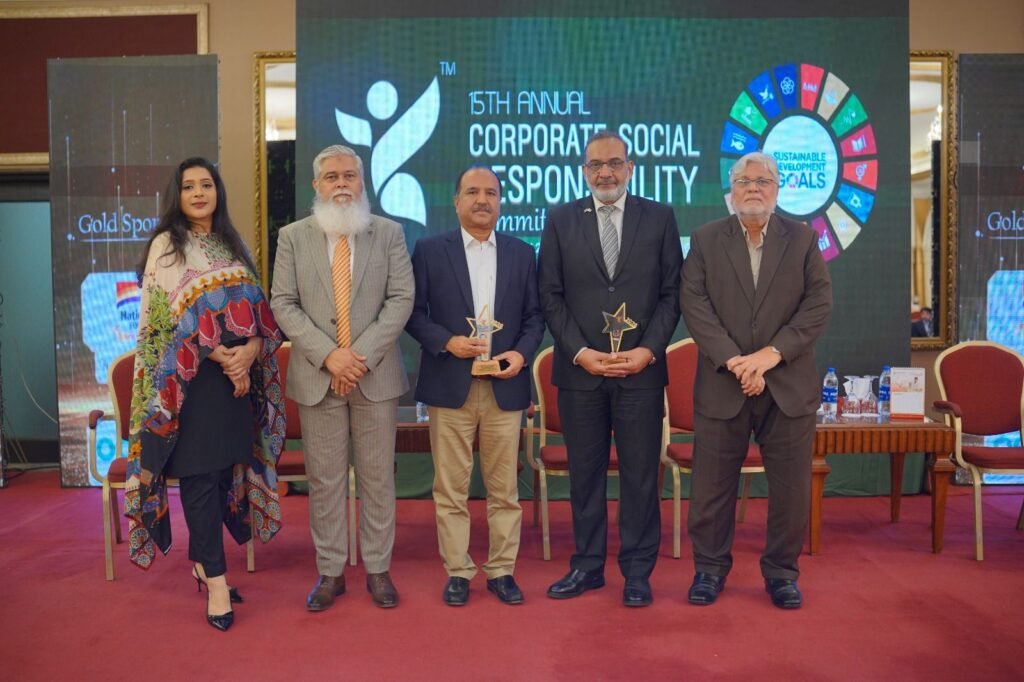
Karachi, February 6, 2026: Prime Minister of Pakistan Shehbaz Sharif has recognized National Bank of Pakistan (NBP) for its significant contributions to the national economy. During a ceremony held in Islamabad recently, PM Shehbaz Sharif presented the award to Rehmat Ali Hasnie, President and CEO, NBP. The event honored leading exporters and bankers for the year 2024-25. The recognition highlights NBP’s strong support for export growth and its continued role in strengthening Pakistan’s financial sector. Through its services and partnerships, the bank has played an important role in promoting trade, supporting businesses, and contributing to overall economic development. Senior government officials, top bankers, business leaders, and exporters from across the country were present on the occasion. NBP remains firmly committed to driving sustainable and inclusive growth by supporting the business community, strengthening financial intermediation, fostering innovation, and actively contributing to Pakistan’s long-term economic stability, resilience, and overall national development.

K-Electric Tariff Dispute Escalates as KE Leadership Warns Power Division of Legal Breach
Pakistan

K-Electric Tariff Dispute Escalates as KE Leadership Warns Power Division of Legal Breach

The K-Electric tariff dispute has entered a critical phase, intensifying tensions between Pakistan’s largest power utility and the federal Power Division. In a strongly worded legal communication, KE leadership has formally warned the Power Division and its attached entities to immediately cease and desist from all actions linked to review tariff determinations that are currently sub-judice before the Sindh High Court. At the heart of the matter lies a clash between contractual obligations, judicial authority, and regulatory interpretation raising serious questions about governance, compliance, and the rule of law in Pakistan’s power sector. Why the K-Electric Tariff Dispute Matters The K-Electric tariff dispute is not merely a corporate disagreement; it has wide-ranging implications for electricity pricing, investor confidence, and institutional credibility. KE leadership has reiterated that any attempt to act upon tariff determinations currently restrained by interim court orders could expose involved parties to contempt of court proceedings. According to KE, recent correspondence issued by the Power Division fails to address or even acknowledge KE’s earlier detailed responses submitted in December 2025 and January 2026. Those responses, KE maintains, already rejected and comprehensively answered the government’s position. Legal Fault Lines in the K-Electric Tariff Dispute At the core of the K-Electric tariff dispute is the interpretation of the Tariff Differential Subsidy (TDS) Agreement, particularly Clause 2.1(b). KE leadership has categorically rejected the Power Division’s stance that this clause does not apply once a tariff has been “determined.” KE argues that this interpretation is legally flawed for a simple but crucial reason: the tariffs in question have not been notified and remain under judicial review.In plain terms, KE’s position is that a tariff cannot be treated as final or enforceable while interim orders of a competent court remain in force. Clause 2.1(b) explicitly provides that when a court issues restraining orders, the preceding tariff must be used for subsidy claims a condition KE states it has fully complied with. Court Orders vs Administrative Actions The K-Electric tariff dispute further escalates due to unilateral revisions made by the Power Division to the TDS balance report. KE leadership maintains that such revisions: • Deviate from the express terms of the TDS Agreement• Are based on tariffs that are sub-judice• Constitute a clear violation of Sindh High Court interim orders Under Clause 2.6 of the agreement, the balance report cannot be revised, amended, or prepared unilaterally by the government. KE asserts that the balance reports it submitted should therefore be considered “deemed signed and acknowledged” by the Power Division. Dispute Resolution Ignored? Another critical dimension of the K-Electric tariff dispute is the handling of reconciliation and disagreements. KE leadership emphasizes that the TDS Agreement already includes a built-in reconciliation mechanism. If the government disputes the submitted figures, the matter must be routed strictly through the formal dispute resolution process, not through administrative returns or revised reports. KE has rejected the claim that it must prepare a separate reconciliation before submitting the balance report, calling the demand contractually invalid. What Happens Next in the K-Electric Tariff Dispute? By formally calling on the Power Division to halt all actions linked to review tariff determinations, KE leadership has drawn a clear legal line. The utility has also reserved the right to pursue appropriate judicial remedies without further notice. For Pakistan’s power sector, the K-Electric tariff dispute underscores a deeper issue: the fragile balance between regulatory authority, contractual sanctity, and judicial oversight. How this standoff unfolds could set a precedent for future public-private energy agreements and regulatory enforcement.

PSO AAA Credit Rating Marks a Defining Moment for Pakistan’s Energy Sector
Pakistan

PSO AAA Credit Rating Marks a Defining Moment for Pakistan’s Energy Sector

PSO AAA Credit Rating has officially placed Pakistan State Oil Company Limited (PSO) in the country’s most elite financial bracket. In a major development for Pakistan’s energy and capital markets, VIS Credit Rating Company Ltd. has upgraded PSO’s medium- to long-term entity rating from ‘AA+’ to the highest possible ‘AAA’, while affirming its short-term rating at ‘A1+’ with a Stable outlook. This milestone is more than just a rating change—it signals confidence, resilience, and renewed trust in Pakistan’s largest oil marketing company at a time when the energy sector faces intense structural challenges. What the PSO AAA Credit Rating Really Means A AAA credit rating represents negligible credit risk, indicating the strongest capacity to meet financial obligations—even under economic stress. VIS’s decision underscores PSO’s exceptional credit quality, supported by a combination of strong financial performance, strategic importance, and implicit government backing. In practical terms, this upgrade strengthens PSO’s credibility with lenders, investors, and international partners, potentially lowering borrowing costs and improving access to capital. Why VIS Upgraded PSO’s Credit Rating VIS cited several interconnected factors behind the PSO AAA Credit Rating, all pointing toward a company that has successfully reinforced its financial foundations. First, PSO’s position as Pakistan’s largest oil marketing company gives it unmatched scale and strategic relevance. Its nationwide fuel distribution network makes it indispensable to the economy, especially during periods of volatility. Second, implicit government support played a critical role. VIS highlighted the government’s ongoing efforts to resolve inter-corporate circular debt in the energy sector, a long-standing issue that has historically strained PSO’s liquidity. Improved receivable recoveries have directly strengthened PSO’s balance sheet. Third, PSO’s financial metrics have shown clear improvement, driven by cost efficiencies, reduced financial charges, and stronger cash flows. These gains have enhanced debt coverage and capitalization key indicators closely watched by rating agencies. Market Leadership Despite Sector Headwinds The fuel distribution sector in Pakistan remains highly competitive, with shrinking margins and increasing private-sector participation. Yet, PSO continues to maintain market leadership, benefiting from its scale, brand trust, and supply-chain control. Instead of relying solely on retail fuel sales, PSO has strategically diversified. The company leverages its stakes in Pakistan Refinery Limited (PRL) and Pak-Arab Pipeline Company, which help stabilize fuel supply, manage procurement risks, and reduce operational disruptions. Rather than listing numbers in a table, VIS explained that PSO’s ownership stakes act as structural buffers, ensuring supply continuity while improving cost predictability an increasingly valuable advantage in volatile energy markets. PSO AAA Credit Rating Strengthened by Future-Focused Strategy Beyond traditional fuels, PSO is actively positioning itself for Pakistan’s energy transition. The company has expanded its retail footprint while investing in EV charging infrastructure, signaling readiness for long-term shifts in consumer behavior. This forward-looking approach reduces reliance on conventional fuel margins and enhances PSO’s relevance in a changing energy landscape another factor supporting the PSO AAA Credit Rating. What Could Impact the Rating Going Forward VIS made it clear that sustaining the PSO AAA Credit Rating will depend on several ongoing factors. Continued government support, further improvements in debt coverage, and strong capitalization remain essential. Equally important is the government’s progress on circular debt resolution. Any reversal could pressure liquidity, while sustained reform would further solidify PSO’s financial standing. In essence, VIS sees PSO not just as a strong company today but as a systemically important institution whose stability directly impacts Pakistan’s broader energy ecosystem. Why This Upgrade Matters Beyond PSO The PSO AAA Credit Rating sends a powerful signal to markets: even in challenging economic conditions, well-managed, strategically important Pakistani companies can achieve top-tier credit status. For investors, it enhances confidence. For the energy sector, it reflects improving governance and reform momentum. And for the broader economy, it reinforces PSO’s role as a financial and operational anchor. As Pakistan navigates energy reforms and economic stabilization, PSO’s latest rating upgrade may well be remembered as a benchmark moment when credibility met confidence.

Public Sentiment in Pakistan 2025 Signals a Surprising Shift
Pakistan

Public Sentiment in Pakistan 2025 Signals a Surprising Shift

Public Sentiment in Pakistan 2025 is telling a story few expected just two years ago. After enduring record inflation, political turbulence, and climate-driven disasters, Pakistanis are showing cautious but meaningful optimism about their future. New data highlights a slow yet steady recovery in public confidence, economic outlook, and overall wellbeing. While challenges remain deeply rooted, the national mood appears to be turning a corner raising an important question: Is Pakistan finally entering a phase of stabilization after years of crisis? Living Standards: A Key Indicator of Public Sentiment in Pakistan 2025 One of the most striking developments shaping Public Sentiment in Pakistan 2025 is the perception of improving living standards. In 2025, nearly one-third of Pakistanis about 31 percent reported that their living conditions were improving. This marks a dramatic rise from just 15 percent in 2023, when economic pressures were at their peak. This shift matters because living standards often serve as the most personal and immediate measure of economic health. When households feel relief in daily expenses, food prices, and utilities, public morale naturally follows. Economic Optimism Returns as Inflation Collapses Economic confidence has followed a similar upward trajectory. In 2025, 25 percent of respondents said the local economy had improved more than double the 12 percent recorded in 2024. This change in Public Sentiment in Pakistan 2025 is closely linked to macroeconomic stabilization. Inflation, which stood at an alarming 40 percent in May 2023, has dropped sharply to below 6 percent. The Pakistani rupee has stabilized, and foreign exchange reserves have shown consistent improvement. Together, these indicators have eased fears of economic collapse and restored a degree of trust in fiscal management something that had been missing for years. Leadership Approval and Corruption Perceptions Another notable trend influencing Public Sentiment in Pakistan 2025 is the rebound in leadership approval. Public approval reached 36 percent, its highest level since 2020. While corruption remains a serious concern, perceptions have softened compared to the record-high dissatisfaction levels of 2023. Many Pakistanis still believe corruption is widespread across government and business sectors, but the intensity of public frustration has eased slightly. This decline does not signal complacency it reflects a public that is cautiously reassessing institutions rather than outright rejecting them. Wellbeing Improves Across All Demographics Perhaps the most telling signal of changing Public Sentiment in Pakistan 2025 lies in overall wellbeing. In 2025, 25 percent of Pakistanis were classified as “thriving,” compared to 19 percent who fell into the “suffering” category. This is a complete reversal of the record-low wellbeing levels observed in 2024. What makes this shift especially significant is its breadth. Improvements were observed across gender, age groups, income levels, and both urban and rural populations. Such consistency suggests that the recovery in public morale is not limited to elite or urban segments but reflects a broader societal change. Why the Momentum Still Remains Fragile Despite these encouraging signs, experts warn that Public Sentiment in Pakistan 2025 remains fragile. Sustaining this recovery will require continued economic stability, strong governance, and inclusive growth policies that translate macro-level gains into everyday relief. Khurram Schehzad notes that the public mood is “cautiously improving” after years marked by economic shocks, political uncertainty, and repeated natural disasters. The optimism is real but it is also conditional. Any sharp policy misstep, resurgence of inflation, or political instability could quickly reverse these gains. The Bigger Picture: What Public Sentiment in Pakistan 2025 Really Means The evolving Public Sentiment in Pakistan 2025 does not suggest that Pakistan’s challenges are over. Instead, it reflects something equally important: resilience. After years of economic pain, Pakistanis are responding positively to signs of stability even modest ones. The data suggests a population willing to believe again, provided progress continues. For policymakers, investors, and businesses, this shift in sentiment may be the most valuable asset of all.

Dr. Shamshad Akhtar SBP Legacy: A Farewell That Echoes Through Pakistan’s Financial History
Pakistan

Dr. Shamshad Akhtar SBP Legacy: A Farewell That Echoes Through Pakistan’s Financial History

The Dr. Shamshad Akhtar SBP legacy was remembered with deep reverence as the State Bank of Pakistan (SBP) held a condolence reference to honor one of the most influential figures in the country’s economic history. More than a farewell, the gathering served as a powerful reminder of how visionary leadership can reshape institutions, strengthen governance, and leave an imprint that lasts generations. Presided over by SBP Governor Jameel Ahmad, the reference brought together former SBP governors, banking leaders, policymakers, and senior officials many of whom had worked closely with Dr. Akhtar during defining moments in Pakistan’s financial evolution. Dr. Shamshad Akhtar SBP: The First Woman Governor Who Changed the Rules When Dr. Shamshad Akhtar SBP assumed office as the 14th Governor of the State Bank of Pakistan in January 2006, history was made. She became the first woman to lead the central bank, but her significance went far beyond symbolism. Her tenure marked a decisive shift from conventional oversight to modern, independent, and globally aligned central banking. Governor Jameel Ahmad highlighted that she not only preserved institutional reforms but expanded them fortifying SBP’s autonomy, governance structures, and policy credibility at a critical time for Pakistan’s economy. Strategic Vision That Modernized the State Bank of Pakistan Dr. Shamshad Akhtar SBP and the First Strategic Plan (2005–2010) One of the most transformative chapters of the Dr. Shamshad Akhtar SBP era was the implementation of SBP’s first-ever Strategic Plan (2005–2010). This roadmap fundamentally modernized the central bank by: • Enhancing regulatory and supervisory capacity• Strengthening risk surveillance frameworks• Aligning Pakistan’s banking regulations with international best practices Under her leadership, SBP transitioned into a more agile, data-driven, and resilient institution capable of responding to domestic and global financial challenges. Building a Resilient Banking System for the Future Dr. Shamshad Akhtar SBP Reforms That Redefined Stability During her tenure, Pakistan witnessed landmark reforms that still underpin the banking system today. These included the introduction of the Real Time Gross Settlement (RTGS) system, enabling secure and instant interbank transactions, and the implementation of Basel II standards, which significantly strengthened capital adequacy and risk management. In simple terms, these reforms made Pakistan’s banking system safer, faster, and more globally credible a legacy that continues to protect financial stability. Championing Financial Innovation and Inclusion The Dr. Shamshad Akhtar SBP legacy is equally defined by her commitment to financial inclusion and innovation. Key initiatives launched under her leadership included: • Establishment of the Electronic Credit Information Bureau to improve lending transparency• Structured promotion of Islamic banking through dedicated task forces• Strengthening consumer protection and secured transactions frameworks• Expansion of branchless banking regulations, laying the groundwork for today’s digital finance ecosystem She also introduced enhanced and more secure banknote designs, including Pakistan’s first Rs. 5,000 currency note, reinforcing public trust in the monetary system. A Global Leader with National Impact Beyond SBP, Dr. Shamshad Akhtar earned immense respect on the global stage. She held senior leadership roles at the World Bank, Asian Development Bank, and the United Nations, and served twice as Federal Minister for Finance (Caretaker). Her contributions were recognized internationally being named Asia’s Best Central Bank Governor and nationally with one of Pakistan’s highest civilian honors, the Nishan-e-Imtiaz. Tributes That Reflected a Lifetime of Institution Building At the condolence reference, heartfelt tributes were paid by her sister Ms. Noshaba Rehman, former SBP governors including Dr. Ishrat Husain, Syed Salim Raza, Mr. Yaseen Anwar, and Dr. Reza Baqir, along with leaders from NIBAF, Karandaz, PBA, and the Pakistan Stock Exchange. A documentary showcasing key milestones of her life and career was also screened capturing the extraordinary journey of a woman who quietly but firmly reshaped Pakistan’s financial foundations. Why the Dr. Shamshad Akhtar SBP Legacy Still Matters As Governor Jameel Ahmad concluded, Dr. Shamshad Akhtar SBP may no longer be with us, but her legacy as an institution builder, reformer, and public servant will continue to guide policymakers, bankers, and economists for decades to come. In an era searching for credible leadership, her life offers a powerful lesson: lasting reform is built on vision, integrity, and courage.

Pakistan Customs Introduces Pre-Arrival Filing and Post-Payment Facility
Pakistan

Pakistan Customs Introduces Pre-Arrival Filing and Post-Payment Facility

Karachi: The introduction of pre-arrival filing with post-payment of Import Goods Declarations (GD) could prove to be a major step towards faster and more efficient import clearance in Pakistan, said Chairman of the All Pakistan Customs Agents Association (APCAA) Arshad Khurshid. Speaking at an awareness session held at the Customs Academy of Pakistan, Mr Khurshid described the new mechanism as a “game changer” for the country’s import clearance system. The session was attended by senior customs officials, representatives of the Pakistan Single Window (PSW) and a large number of customs agents. Under the new facility, importers can file goods declarations before the arrival of vessels, while payment of customs duties, taxes and even provincial cess can be deferred, significantly reducing cargo dwell time and easing cash-flow pressures on businesses. Mr Khurshid said the initiative would improve ease of doing business by expediting clearance processes and providing much-needed relief to the trade and industrial sectors. The session was also addressed by Chief Collector of Customs (Appraisement) South Wajid Ali, who stressed the need for adopting modern, technology-driven clearance systems to enhance transparency and trade facilitation. He urged traders and customs agents to make full use of pre-arrival and post-payment GD filing to ensure faster cargo clearance. Director Pakistan Single Window Khurram Ejaz outlined the operational framework of the system, while Additional Director Reforms and Automation Ghulam Nabi Kombo highlighted the role of automation-led reforms in improving efficiency. Deputy Collector Reforms and Automation Abeer Javeed elaborated on procedural aspects and responded to queries raised by participants. Vice Chairman APCAA Qamar Ul Islam reaffirmed the association’s support for reforms aimed at reducing clearance delays and facilitating trade. Technical presentations were delivered by PSW officials Salman Chaudhary and Arshad Hussain, who provided step-by-step guidance on the filing process and addressed practical issues faced by traders and customs agents. Concluding the session, Mr Khurshid said the initiative would not only streamline import clearance but also help build trust and strengthen coordination between customs authorities and the trade community. He added that APCAA would continue to play its role in promoting awareness and encouraging wider adoption of the facility across the country.

Immediate Recovery of Rs217bn Super Tax Alarms Exporters, Industries on Brink of Collapse, Muhammad Ikram Rajput
Pakistan

Immediate Recovery of Rs217bn Super Tax Alarms Exporters, Industries on Brink of Collapse, Muhammad Ikram Rajput

Business Unviable With Over 50pc Tax Burden; Consultative Installment Plan and Adjustment Against Export Refunds is Demanded, KATI President KARACHI: President of the Korangi Association of Trade and Industry (KATI), Muhammad Ikram Rajput, has expressed serious concern over the federal government’s decision to immediately recover Rs217 billion from exporters in the form of super tax for the period from 2022 to 2026, warning that the move could push already distressed industries towards collapse. Ikram Rajput said the industrial sector is already under severe pressure, and the sudden recovery of such a massive amount would further exacerbate the crisis. He termed the government’s decision alarming, stating that it would not only damage local industry but also pose serious risks to investment in the country. The KATI president pointed out that since the imposition of the super tax, the effective tax burden on industries has exceeded 50 percent, making it virtually impossible to conduct business. He added that high electricity and gas tariffs have already pushed production costs to the highest levels in the region, further eroding the competitiveness of Pakistani exports. Urging the federal government to reconsider its decision, Ikram Rajput called for immediate relief for the industrial and commercial sectors. He stressed the need for urgent and meaningful consultations between the government and trade and industry bodies across the country to develop a practical and industry-friendly mechanism. He proposed that instead of demanding lump-sum payment of four years’ dues, the outstanding super tax should be recovered through easy installments over a period of three to four years. Alternatively, he suggested offering special concessions on payment of 25 percent upfront, along with allowing adjustment against pending export refunds, to provide much-needed relief to cash-strapped exporters. Ikram Rajput said that failure to take immediate corrective measures could accelerate large-scale industrial closures, leading to job losses and causing irreparable damage to the national economy. He noted that local industry is already facing intense competition in the global market, and the imposition of super tax would further weaken exports and negatively impact industrial activity. The KATI president also highlighted that under the fixed tax regime in the past, taxes imposed on exporters were considered full and final settlement. As a result, exporters did not factor super tax into their cost structures. In this context, he said, holding exporters liable for retrospective super tax payments was unjustified. Ikram Rajput appealed to the government to initiate emergency consultations to support industry and trade, formulate a long-term and sustainable policy framework, and take decisions that ensure continuity of industrial operations and promote exports. He strongly urged the government to introduce policies that support export growth, stabilize investment, and contribute to overall economic development, emphasizing that sustainable economic recovery is not possible without facilitating the export sector.

21st My Karachi Exhibition: CM Assures Release of Compensation to Gul Plaza Shopkeepers Within 2 Months
Pakistan

21st My Karachi Exhibition: CM Assures Release of Compensation to Gul Plaza Shopkeepers Within 2 Months

KARACHI: Chief Minister Sindh Syed Murad Ali Shah has stated that the government in collaboration with the Karachi Chamber is actively working to help shopkeepers restart their businesses and aims to ensure that compensation is provided within two months so that the shopkeepers can buy inventories to restart their businesses. While addressing the inaugural ceremony of 21st My Karachi – Oasis of Harmony Exhibition on Friday, the Chief Minister informed that several locations have been identified where affected shopkeepers will be facilitated to resume their businesses until the complete reconstruction of Gul Plaza. He clarified that no rent will be charged for these temporary shops, and the shopkeepers will only be required to bear the basic maintenance expenses. Sindh Minister for Industries Ikramullah Khan Dharejo, Sindh Minister FOR Culture and Tourism Zulfiqar Ali Shah, Chairman Businessmen Group Zubair Motiwala, Vice Chairmen BMG Anjum Nisar, Jawed Bilwani, Mian Abrar Ahmed, Tariq Yousuf, President KCCI Rehan Hanif, Vice President KCCI Muhammad Arif Lakhani, Chairman KCCI’s Special Committee for My Karachi Exhibition Muhammad Idrees, prominent businessman Arif Habib along with a large number of diplomats from friendly countries, businessmen, industrialists, KCCI Executive Committee Members were present on the occasion. Murad Ali Shah further stated that that the Sindh Government is providing compensation of Rs. 10 million each to the families of those who lost their lives in the Gul Plaza incident. As an immediate relief measure, Rs. 500,000 each is also being provided to the shopkeepers of Gul Plaza. Chief Minister further announced that the Gul Plaza building will be reconstructed in the same manner and with the same number of shops, while ensuring improved standards. He stated that the new building without a single square inch extra will be constructed in a better and safer manner within two years. Commenting on My Karachi Exhibition, he paid rich tribute to the Karachi Chamber for initiating the exhibition 22 years ago at a time when the city was facing difficult circumstances. He stated that the exhibition was launched to revive confidence, project a positive image of Karachi, and promote economic activity, adding that today people across the country eagerly wait for the My Karachi Exhibition every year. He further stated that the Sindh Government is working wholeheartedly for the overall improvement of Karachi. He recalled that during 2017–18, funds were provided to industrial town associations for the improvement of industrial estates, adding that the government continues to work in the same manner to improve the infrastructure in industrial areas. In this regard, a sum of almost Rs10 billion has been provided to all industrial associations this year with an advice to fully utilize the same by the end of June 2026. The Sindh government will only monitor whereas the business community will carry out the execution for improving infrastructure in industrial zones, he added. Syed Murad Ali Shah disclosed that more than Rs. 13 billion have also been provided to Mayor Karachi for improving drainage systems and roads. The law and order situation in Karachi has improved significantly, and traffic flow has also improved with the introduction of e-challan systems, he noted, while urging citizens to strictly follow safety measures while driving. On future plans, the Chief Minister said the Sindh Government is determined to accelerate development work in Karachi. He highlighted that the provincial government is working with the World Bank on the K-IV water project and aims to provide an additional 260 million gallons per day of water to the city. He added that work is also underway on desalination projects to address long-term water needs. Sharing details of his discussion with President World Bank, he said that President World Bank emphasized that while governments and institutions can allocate funds, meaningful participation of the private sector is essential for the success of major projects. Expressing his vision, he said it is his desire that the private sector works closely with the government, stressing that foreign investors will not come unless local investment takes place first. Chairman BMG Zubair Motiwala, while highly appreciating the presence of a large number of diplomats at the My Karachi Exhibition, urged the diplomatic community to project Karachi positively as a peaceful, progressive, and productive city where business activities are being conducted smoothly and confidently. He stated that the Karachi Chamber’s My Karachi Exhibition has become a landmark and a distinct identity of the Chamber, attracting not only local participants but also foreign exhibitors. He added that the core objective of the exhibition is to portray the soft and positive image of Karachi while providing the public an opportunity to purchase quality products at discounted rates ahead of Ramadan, thereby offering relief to consumers amid the prevailing inflationary pressures. Zubair Motiwala also appreciated the Sindh Government for undertaking numerous initiatives, particularly those aimed at improving infrastructure and strengthening healthcare services across the province. He pointed out that the Sindh Government has provided Rs. 9.46 billion to the industrial zones of Karachi for infrastructure development, expressing optimism that these funds will be utilized prudently and that the positive impact will soon be visible to the citizens of Karachi. Commending the Sindh Government’s support and cooperation in the rehabilitation of the Gul Plaza affectees, Chairman BMG stressed that the business community must also recognize its own responsibilities. He emphasized the need to address serious shortcomings at business premises, particularly the widespread presence of loose and unorganized wiring in markets, which often becomes a major cause of fire incidents. He urged traders to adopt precautionary measures and ensure that comprehensive fire safety arrangements are in place at commercial markets across Karachi. He observed that while the government’s timely intervention during such incidents is commendable and appreciated, it is equally important for stakeholders to proactively minimize the risk of such tragedies in the future through improved safety practices. Referring to various development projects currently underway in Karachi, Zubair Motiwala urged the Sindh Government to expedite their completion to reduce the hardships being faced by the public on the city’s roads. He

Scroll to Top