Pakistan

Pakistan

World Bank Group’s IFC Provides $60M Yearly Liquidity to Fatima Fertilizer to Ensure Steady Fertilizer Supply for Pakistani Farmers Amid FX Challenges

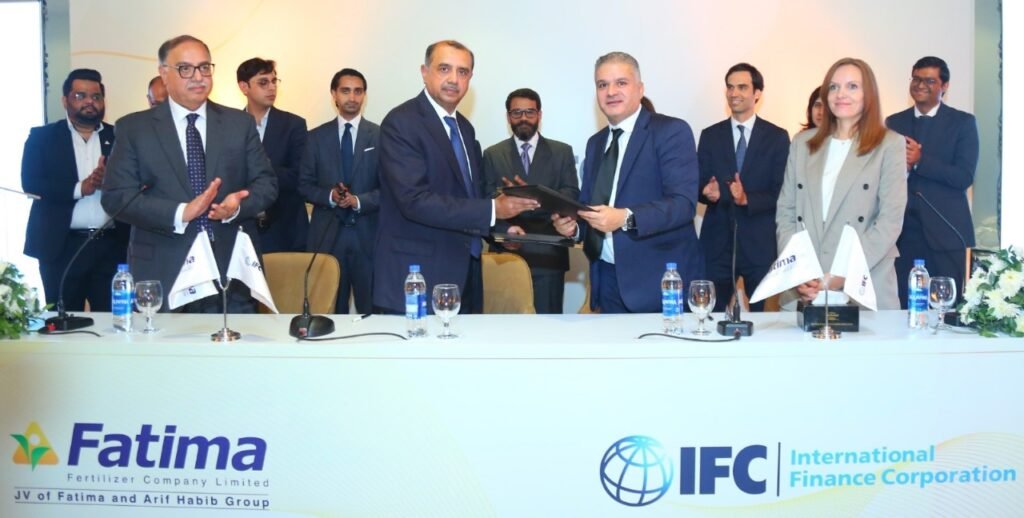
Karachi, December 17, 2025 — Fatima Fertilizer Company Limited and IFC, a member of the World Bank Group, announced a renewable liquidity facility of US$60 million per year to help maintain uninterrupted domestic fertilizer production by enabling Fatima Fertilizer to import essential raw materials, machinery, and technical services.Pakistan has faced shortages of foreign exchange and delays in clearing imports, which can disrupt access to key inputs and risk fertilizer shortages. The new Fatima Fertilizer facility addresses a critical market gap by providing hard currency liquidity when access to USD financing is limited. The new facility also enables the company to import essential materials and run at full capacity. By sustaining about 1.46 million tons of annual output of fertilizer and preserving more than 850 direct jobs at the company’s Sadiqabad complex, the facility will help maintain a steady fertilizer supply, support thousands of small businesses across the distribution network, and protect yields for staple crops like wheat and rice.“This partnership represents an important milestone not only for Fatima Fertilizer but also for Pakistan’s agriculture sector,” said CEO Fatima Fertilizer, Mr. Fawad Ahmed Mukhtar. “Access to dependable liquidity allows us to maintain operational resilience, ensure stable delivery of essential nutrients to farmers, and contribute to a more food-secure future. We value IFC’s confidence in our vision and look forward to expanding our collaboration.”“A partnership like this helps unlock the liquidity needed to keep essential inputs flowing to Pakistan’s farmers,” said Ashruf Megahed, Regional Industry Head, Manufacturing, Agribusiness & Services, Middle East, Central Asia & Turkey at IFC – International Finance Corporation. “By providing USD financing for vital imports, we aim to support food security, preserve jobs, and strengthen the resilience of the agribusiness value chain across Pakistan.”By strengthening the Company’s operational resilience, the financing contributes to stabilizing fertilizer prices for Pakistani farmers and reducing dependency on imports of fertilizers, whilst fostering national food security in alignment with Pakistan’s agricultural priorities. About IFCIFC — a member of the World Bank Group — is the largest global development institution focused on the private sector in emerging markets. We work in more than 100 countries, using our capital, expertise, and influence to create markets and opportunities in developing countries. In fiscal year 2025, IFC committed a record $71.7 billion to private companies and financial institutions in developing countries, leveraging private sector solutions, and mobilizing private capital to create a world free of poverty on a livable planet. For more information, visit www.ifc.org.Stay Connected with IFC on social media.About Fatima Fertilizer Company LimitedFatima Fertilizer is one of Pakistan’s leading fertilizer manufacturers, committed to delivering innovative, efficient, and reliable crop nutrition solutions. Through its nationwide network and farmer-centric initiatives, the Company plays a vital role in supporting agricultural productivity, rural livelihoods, and food security across the country. Fatima Fertilizer is the first private sector company in Pakistan to partner with UNDP to adopt the UN Sustainable Development Goals Impact Framework Program.


Pakistan's Economic Paradox: Stock Market Soars to Record Highs While Factories Face Shutdown Crisis
Pakistan

Pakistan’s Economic Paradox: Stock Market Soars to Record Highs While Factories Face Shutdown Crisis

Karachi, December 17, 2025 – Pakistan’s economy presents a stark dichotomy as the Pakistan Stock Exchange (PSX) continues its bullish run, with the benchmark KSE-100 index surging nearly 40% in 2025 and recently hitting all-time highs around 171,000 points. This liquidity-driven rally, fueled by local investors fleeing low-yield bank deposits and real estate, has been bolstered by macroeconomic stabilization under a $7 billion IMF Extended Fund Facility, fiscal surpluses, a stable currency, and inflation dipping below 5%.In sharp contrast, the real sector—particularly large-scale manufacturing (LSM) and the vital textile industry—is in deep distress. Over 100 major textile mills and nearly 400 cotton ginning factories have shuttered by November 2025, leaving industrial hubs like Faisalabad and Gujranwala eerily silent with idle looms and reduced capacity. High electricity tariffs at 12-14 cents per kWh—double those in competitors like Bangladesh and Vietnam—stem from a Rs2.4 trillion circular debt and IMF-mandated subsidy removals. Aggressive taxation on industry and SMEs, while sparing retailers and elites, has further squeezed operations. Read More: https://theboardroompk.com/pakistan-stock-exchange-hits-historic-high-kse-100-breaks-169800-points-as-investor-confidence-surges/ This disparity has triggered massive brain drain, with over 720,000 skilled workers emigrating in 2024 and nearly 700,000 more by November 2025, boosting remittances but eroding domestic human capital. Experts warn of creeping de-industrialisation, where financial stability benefits asset holders but fails to revive production and jobs.Economist Ahmad Mukhtar highlights the unsustainability: “A recovery that enriches asset holders while shuttering factories is unsustainable.” Without urgent reforms to slash energy costs and incentivize manufacturing, Pakistan risks a fragile economy reliant on informal sectors and exported labor rather than goods.As 2025 ends, policymakers face pressure to pivot toward real-sector revival to ensure inclusive growth.

Pakistan's 5G Push Hits Pricing Roadblock: Govt Caught in Revenue vs Rollout Dilemma
Pakistan

Pakistan’s 5G Push Hits Pricing Roadblock: Govt Caught in Revenue vs Rollout Dilemma

Islamabad, December 17, 2025 – The Pakistani government is grappling with a classic Catch-22 situation as it prepares for the country’s first 5G spectrum auction targeted for the first quarter of 2026. Amid widespread public complaints about poor mobile services – including frequent call drops, slow internet speeds, and network congestion – officials are torn between setting high reserve prices to maximize short-term revenue and lowering them to encourage telecom operator participation and faster rollout.A recent Spectrum Advisory Committee (SAC) meeting, chaired by Finance Minister Muhammad Aurangzeb, remained inconclusive on key issues like reserve prices and auction timelines. US-based consultant NERA Economic Consulting presented findings warning that excessively high prices could deter bidders, leading to unsold spectrum, reduced competition, lower innovation, and higher costs for consumers. Conversely, NERA argued that moderate pricing, combined with extended payment terms, could yield greater long-term government revenues through increased tax collections and economic growth.Pakistan currently has only 274 MHz of spectrum allocated for mobile services serving nearly 200 million subscribers, with 600 MHz lying idle – far below regional peers like Bangladesh, which has allocated around 700 MHz for fewer users. Past auctions have seen significant unsold spectrum due to high base prices, dollar-pegged valuations (exacerbated by 70% rupee devaluation since 2021), and unfavorable terms.The GSMA estimates that delays in spectrum release could cost Pakistan’s GDP up to $1.8 billion (Rs500 billion) over 2025-2030 for a two-year holdup, rising to $4.3 billion for five years, while foregone benefits from previous unsold spectrum amount to $300 million.Briefings to the Prime Minister and Deputy Prime Minister are imminent, with decisions pending on unlocking idle spectrum and incentives for the 3.5 GHz band to boost 5G fixed wireless access. Telecom operators and experts urge reforms to prioritize service quality and digital economy growth over immediate fiscal gains.

Gold Price in Pakistan Surges by Rs2,700 per Tola as Global Bullion Rally Continues
Pakistan

Gold Price in Pakistan Surges by Rs2,700 per Tola as Global Bullion Rally Continues

Gold prices in Pakistan moved sharply higher on Wednesday, December 17, 2025, extending the ongoing bullish trend in the precious metals market. The price of 24-karat gold jumped by Rs2,700 per tola, reflecting strong global momentum and sustained local demand. According to the All-Pakistan Gems and Jewelers Sarafa Association (APGJSA), 24-karat gold is now being sold at Rs453,562 per tola, compared to Rs450,862 in the previous session. Latest Gold Rates in Pakistan (17 December 2025) The upward movement was also seen in gram-based pricing: • 24-karat gold (10 grams): Rs388,856 (up Rs2,315)• 22-karat gold (10 grams): Rs356,464•This marks one of the strongest single-day gains in recent weeks, pushing gold closer to new historic highs in the domestic market. Silver Prices Hit Record High in Local Market Silver followed gold’s rally, posting notable gains across the board: • 24-karat silver (per tola): Rs6,822 (up Rs290)• 24-karat silver (10 grams): Rs5,848 (up Rs248) Market participants note that silver is currently trading at record-high levels, both locally and internationally, driven by investment demand and global supply constraints. One-Month Performance Highlights Short-Term Upside Over the past one month, gold prices in Pakistan have surged by Rs29,900 per tola, delivering attractive short-term returns for investors seeking protection against inflation and PKR depreciation. Silver also recorded a solid monthly increase of Rs1,577 per tola, benefiting from both industrial demand and safe-haven investment flows. Fiscal Year-to-Date: Gold Remains a Strong Hedge From a financial year-to-date (FYTD) perspective, gold has appreciated by Rs103,362 per tola, underlining its effectiveness as a long-term store of value. Silver has also performed well, gaining Rs3,040 per tola during the ongoing fiscal year. This performance highlights why gold and silver remain preferred assets for portfolio diversification in Pakistan’s volatile macroeconomic environment. Calendar Year-to-Date Returns Reflect a Powerful Bull Market The calendar year-to-date (CYTD) data shows a pronounced bull run. Gold prices have climbed by Rs180,962 per tola since the start of 2025, while silver has advanced Rs3,472 per tola. These gains position precious metals among the top-performing asset classes of 2025, outperforming many traditional investment options. Investment Outlook: Why Precious Metals Remain Attractive With global gold prices trading near record levels and silver touching historic highs, market sentiment remains decidedly bullish. Factors supporting continued strength include: • Persistent global economic uncertainty• Expectations of accommodative monetary policies• Rising geopolitical risks• Local currency depreciation pressures For investors, gold and silver continue to offer capital preservation, inflation protection, and portfolio stability, making them critical components of a balanced investment strategy. Global Gold Market Update In the international market, spot gold was trading near $4,323 per ounce, gaining $15.1 or 0.35% from the previous session. Analysts attribute the global rally to: • Persistent geopolitical tensions• Expectations of easier monetary policy• Continued investor appetite for safe-haven assets The international surge continues to directly influence local bullion prices in Pakistan. Outlook: Will Gold Prices Rise Further? With silver touching historic highs and gold maintaining strong upward momentum, market sentiment remains bullish. Traders expect prices to stay volatile in the short term, closely tracking global trends, currency movements, and upcoming economic data. For investors, gold and silver continue to serve as key hedges against inflation and currency depreciation, keeping demand firm in Pakistan’s bullion market.

Pakistan’s Services Trade Deficit Narrows Sharply in November
Pakistan

Pakistan’s Services Trade Deficit Narrows Sharply in November

Pakistan’s services sector delivered a positive signal for the external account in November, as the country’s trade deficit in services narrowed significantly, supported by strong export growth and easing import pressure. According to the latest data released by the State Bank of Pakistan (SBP), the services trade deficit stood at $140 million in November, marking a 41.18% month-on-month (MoM) decline compared to a deficit of $238 million in October. On a year-on-year basis, the deficit also improved slightly, compared to $150 million recorded in the same period last year, highlighting gradual stabilization in Pakistan’s services trade balance. Services Exports Rise on Strong IT and Business Services Performance The improvement in the trade gap was largely driven by robust growth in services exports. SBP data shows that services exports reached $813 million in November, posting a 21.89% year-on-year (YoY) increase compared to $667 million in November 2024. On a monthly basis, exports edged up 0.25% MoM, reflecting steady demand despite global economic uncertainty. During the first five months of FY26 (5MFY26), cumulative services exports climbed to $3.832 billion, registering a 16.69% YoY increase from $3.284 billion in the same period of FY25. IT, Telecom and Business Services Lead Export Growth A closer look at the data highlights the dominance of IT-related services in Pakistan’s export basket. • Telecommunications, Computer and Information Services emerged as the largest contributor, generating $356 million in November, up 14.47% YoY.• Other Business Services ranked second, bringing in $173 million, while recording a strong 37.3% YoY growth compared to $126 million in the same period last year.• On a monthly basis, exports of other business services also rose 2.37% MoM, underlining consistent momentum. Meanwhile, transport services exports contributed $88 million, while travel services added $80 million during the review month. Services Imports Ease on a Monthly Basis On the import side, Pakistan’s services imports totaled $953 million in November, reflecting a 16.65% YoY increase compared to $817 million in the same period last year. However, on a month-on-month basis, imports declined sharply from $1.049 billion in October, helping reduce the overall services trade deficit. Cumulatively, services imports during 5MFY26 stood at $5.148 billion, up 12.8% YoY compared to the same period of FY25. Transport and Travel Remain Key Import Drivers Among services imports, transport services accounted for the largest share, costing the country $374 million in November, up 11.39% YoY and 6.02% MoM. Travel services imports followed at $264 million, recording a 15.94% YoY increase, although they declined 6.98% MoM, indicating some seasonal or demand-side easing. What This Means for Pakistan’s Economy The sharp reduction in the services trade deficit signals growing strength in Pakistan’s IT, telecom and business services sectors, which continue to play a critical role in supporting foreign exchange inflows. If export momentum is sustained and import growth remains controlled, the services sector could become a key stabilizer for Pakistan’s external account, especially amid pressures from goods trade and global economic headwinds.

Jazz Confirms Acquisition of TPL Insurance as TPL Corp Grants Final Approval
Pakistan

Jazz Confirms Acquisition of TPL Insurance as TPL Corp Grants Final Approval

In a major development for Pakistan’s corporate and insurance landscape, TPL Corp Limited (PSX: TPL) has granted final board approval for Jazz International Holding Limited to acquire a controlling stake in TPL Insurance Limited, its insurance subsidiary. The approval was issued during a Board of Directors meeting held at 11:00 a.m. on December 17, 2025, marking a decisive step forward in a transaction that has been unfolding over several months. From In-Principle Approval to Final Sign-Off The transaction traces back to September 2025, when TPL Corp had granted in-principle approval for the sale and disclosed the development to the Pakistan Stock Exchange (PSX). With the latest decision, the board has now formally approved the Share Purchase Agreement with Jazz International Holding Limited, moving the deal into its execution phase. According to the company’s latest filing with the PSX, Jazz International Holding Limited has now emerged as the confirmed acquiring entity, following a formal amendment to the transaction structure. Jazz Replaces VEON as Final Acquirer A key shift in the deal structure took place this week. Arif Habib Limited, acting as Manager to the Offer, submitted an official addendum on behalf of Jazz International Holding Limited, replacing VEON Group Holding Company Ltd and its affiliates as the acquiring party. Under the revised arrangement, the acquisition will be carried out by Jazz International Holding Limited in concert with Pakistan Mobile Communications Limited, further strengthening Jazz’s position as a diversified digital and financial services player in Pakistan. The addendum was scheduled to be published in leading newspapers in line with regulatory disclosure requirements. Regulatory Disclosures Completed While VEON Group Holding Company Ltd was initially named as the prospective buyer in September, Arif Habib Limited issued the final acquirer declaration on December 16, 2025, confirming Jazz International Holding Limited as the definitive purchaser. TPL Corp has assured shareholders that further disclosures will be made as the transaction progresses toward completion, ensuring transparency throughout the regulatory and execution process. Market Reaction: TPL Shares Edge Higher Following the announcement, TPL Corp’s share price reflected a positive market response. At the time of reporting, TPL shares were trading at Rs. 11.94, up Rs. 0.19 or 1.62% on the Pakistan Stock Exchange. The acquisition is widely seen as a strategic move that could accelerate digital insurance innovation, leveraging Jazz’s scale and ecosystem alongside TPL Insurance’s existing footprint. Why This Deal Matters The Jazz-TPL Insurance transaction highlights: • Growing convergence of telecom, fintech, and insurance in Pakistan• Rising interest of large digital platforms in insurance and financial services• Continued M&A activity in Pakistan’s corporate sector despite macroeconomic challenges As Jazz deepens its presence beyond telecom into financial services, this acquisition could redefine how insurance products are distributed and consumed in Pakistan.

Power Generation Slows in November as Energy Mix Shifts To Cheaper Sources
Pakistan

Power Generation Slows in November as Energy Mix Shifts To Cheaper Sources

Pakistan’s energy sector sent mixed signals in November 2025. While overall power generation declined sharply on a month-on-month basis, the underlying story is far more nuanced one of improving efficiency, falling fuel costs, and a gradual transition toward nuclear and renewable energy. According to data compiled by Arif Habib Limited, total electricity generation stood at 8,050 GWh in November, reflecting a 19% decline compared to October. However, on a year-on-year basis, output remained broadly stable, highlighting seasonal demand patterns rather than structural weakness. Fuel Costs Drop Sharply, Offering Relief to the Power Sector One of the most significant developments was the 15% year-on-year reduction in average fuel costs, which fell to Rs6.22 per unit, compared to Rs7.28 per unit in November 2024. Even more striking was the 27% decline month-on-month, driven by lower reliance on expensive fuel sources and a better generation mix. This decline in fuel cost reflects: • Increased contribution from hydel and nuclear power• Reduced dependence on RLNG and furnace oil• Improved operational efficiency across the grid For consumers and policymakers alike, this trend provides much-needed relief amid inflationary pressures and fiscal constraints. Nuclear and Hydel Power Lead the Generation Mix Nuclear Power Gains Momentum: Nuclear energy emerged as a standout performer. In November: • Nuclear generation surged 23% YoY to 2,031 GWh• Its share in the total energy mix rose to 25.2%, up from 20.6% last year For the first five months of FY26, nuclear power has generated 9,996 GWh, marking a 13% increase year-on-year and now accounting for 17% of total power generation. This reinforces nuclear energy’s growing role as a stable and cost-efficient base-load source. Hydel Power Makes a Seasonal Comeback: Hydroelectric power also showed strong recovery: • 3,153 GWh generated in November, up 10% YoY• Share of the energy mix increased to 39.2%, compared to 35.6% last year After seasonal constraints in October, hydel output rebounded, strengthening Pakistan’s reliance on indigenous and low-cost energy. Thermal Power Continues to Lose Ground RLNG and Gas Under Pressure: High fuel prices and supply constraints weighed on thermal generation: • RLNG-based generation dropped 23% YoY to 696 GWh• Natural gas generation fell 21% YoY to 680 GWh As a result, RLNG’s share in the generation mix declined to 8.6%, while gas fell to 8.4%, underscoring a structural shift away from imported fuels. Coal Generation Declines: Coal-based power also lost momentum: • Local coal generation declined 26% YoY• Imported coal output dropped 15% YoY Coal’s overall share fell to 14.4%, down sharply from 18.6% a year ago. On a fiscal year-to-date basis, both local and imported coal generation remained lower than last year. Renewables Show Strong Growth, Despite Small Base While still a small contributor, renewable energy continues to gain traction: • Solar power generation increased 25% YoY to 86 GWh• Wind power surged 39% YoY to 136 GWh Cumulatively, wind generation for 5MFY26 rose 16%, while solar output increased 4%, signaling steady progress toward diversification and sustainability. What This Means for Pakistan’s Energy Outlook November’s data highlights a critical transition phase for Pakistan’s power sector:• Lower generation volumes, but• Better fuel efficiency• Higher share of clean and indigenous energy• Reduced exposure to imported fuels If current trends continue, Pakistan could achieve greater cost stability and energy security, especially through nuclear, hydel, wind, and solar expansion. The challenge ahead lies in sustaining this momentum while managing seasonal demand fluctuations and ensuring long-term investment in clean infrastructure.

Pakistan Records Current Account Surplus, $100m, in November 2025 Amid Sharp Goods Export Decline of 18.5%.
Pakistan

Pakistan Records Current Account Surplus, $100m, in November 2025 Amid Sharp Goods Export Decline of 18.5%.

Pakistan’s balance of payments for November 2025 shows a small current account surplus of $100 million, a notable improvement from the $291 million deficit in October 2025 and marking the first monthly surplus in the early months of FY26. This brings the July-November FY26 current account deficit to -$812 million, significantly narrower than the $503 million surplus recorded in the same period of FY25.The turnaround in November was driven primarily by strong secondary income inflows, particularly workers’ remittances, which reached $3.189 billion for the month. Cumulative remittances for Jul-Nov FY26 stand at $16.145 billion, up solidly from $14.767 billion in the corresponding period last year.However, this positive headline masks deepening concerns on the trade front: Read More: https://theboardroompk.com/china-exports-smash-forecasts-despite-trumps-60-tariffs-non-us-shipments-surge-18-beijings-trade-rerouting-pays-off-in-november/ Goods exports plunged 18.5% YoY in November to $2.273 billion, dragging Jul-Nov FY26 exports down 3.2% to $12.790 billion. Goods imports rose 15.0% YoY in November, pushing cumulative imports up 11.1% to $25.559 billion. The trade deficit in goods widened sharply to $2.454 billion in November, contributing to a Jul-Nov trade deficit of $12.769 billion (versus $9.799 billion last year).Services trade also remained in deficit, though marginally improved. Foreign direct investment continued to disappoint, with net FDI inflow of only $180 million in November, bringing Jul-Nov total to $928 million (down from $1.242 billion last year).Reserve position strengthened slightly, with SBP gross reserves (incl. CFC less RBI claims) reaching $15.862 billion by end-November, supported by the monthly overall balance near zero.Overall, while remittances continue to provide crucial support and enabled a rare monthly surplus, the sharp deterioration in goods exports signals weakening external competitiveness and raises risks to the current account outlook for the remainder of FY26 if export trends do not reverse.

Pakistan Crypto Regulator: Binance, HTX NOCs Are Just the 'First Step,' Not Full Approval
Pakistan

Pakistan Crypto Regulator: Binance, HTX NOCs Are Just the ‘First Step,’ Not Full Approval

In a significant development for Pakistan’s burgeoning cryptocurrency sector, Chairman of the Pakistan Virtual Assets Regulatory Authority (PVARA), Bilal Bin Saqib, has issued a clarification regarding the no-objection certificates (NOCs) granted to major global crypto exchanges Binance and HTX (formerly Huobi). During a televised statement on Sunday, Saqib emphasized that these NOCs do not constitute blanket approvals or full operational licenses for the platforms in Pakistan. Instead, they represent merely the “first step” in a carefully structured, risk-mitigated, phased, and supervised entry framework designed to allow foreign cryptocurrency operators to engage with the Pakistani market under strict regulatory oversight. Read More: https://theboardroompk.com/pakistan-and-binance-ink-mou-to-tokenize-2b-assets-amid-cryptos-unregulated-boom/ This announcement comes amid growing interest in digital assets within Pakistan, where authorities are balancing innovation with consumer protection and financial stability concerns. The PVARA’s approach aims to prevent risks associated with unregulated crypto activities, such as money laundering, fraud, and volatility exposure, while gradually integrating reputable international players. Saqib’s remarks are intended to manage public expectations and prevent misconceptions that the NOCs equate to unrestricted access. The phased framework will likely involve additional compliance requirements, monitoring, and potential pilot programs before any broader approvals are considered. The clarification has sparked discussions among crypto enthusiasts and investors in Pakistan, many of whom have been eagerly awaiting clearer regulations. Binance and HTX, two of the world’s largest exchanges, had previously received these preliminary NOCs, raising hopes for formalized operations. As Pakistan continues to develop its virtual assets policy, this supervised entry model could serve as a blueprint for other emerging markets navigating the complex crypto landscape. Stakeholders are now awaiting further details on subsequent phases and specific guidelines from PVARA.

KSE-100 Index Closes Lower Amid High Volatility
Pakistan

KSE-100 Index Closes Lower Amid High Volatility

Pakistan Stock Exchange (PSX) closed Tuesday’s trading session in negative territory as investors resorted to profit-taking following recent record highs, dragging the benchmark KSE-100 Index lower despite strong participation from select banking and power stocks. The KSE-100 Index settled at 170,447.30 points, registering a decline of 294.05 points (-0.17%). Trading remained highly volatile throughout the session, with the index moving within a wide range of 1,730 points. It touched an intraday high of 171,922.60 points before slipping to a low of 170,191.98 points. Total trading volume in the benchmark index stood at 475.39 million shares, reflecting sustained investor activity despite the downward close. Out of the 100 index constituents, 43 stocks closed higher, 56 ended lower, while one stock remained unchanged, highlighting broad-based selling pressure. Top Losers and Gainers of the Day Major losers on the KSE-100 included:• DHPL (-9.99%)• PIOC (-4.23%)• HUMNL (-3.31%)• MLCF (-3.05%)• NML (-2.77%) Top gainers providing limited upside support were:• KAPCO (+8.11%)• KTML (+7.13%)• BOP (+4.86%)• AICL (+4.67%)• PIBTL (+3.26%) Index Movers: Stocks That Drove the Market On a point basis, the largest drag on the KSE-100 Index came from:• FFC (-180.02 points)• Systems Limited (-111.11 points)• PPL (-110.10 points)• DHPL (-70.11 points)• OGDC (-67.46 points) Meanwhile, stocks supporting the index included:• UBL (+251.96 points)• BOP (+80.95 points)• NBP (+47.05 points)• KAPCO (+45.87 points)• KTML (+44.85 points) Sector Performance: Energy and Fertilizers Weigh Heavily Sector-wise, the market downturn was primarily driven by losses in: • Oil & Gas Exploration Companies (-207.64 points)• Fertilizer (-188.69 points)• Cement (-154.91 points)• Technology & Communication (-113.13 points)• Oil & Gas Marketing Companies (-55.56 points) On the positive side, Commercial Banks provided strong support, contributing +383.12 points, followed by gains in: • Power Generation & Distribution (+38.45 points)• Automobile Assemblers (+36.81 points)• Insurance (+36.24 points)• Pharmaceuticals (+14.89 points) Broader Market Summary The All-Share Index closed at 102,982.88 points, down 193.32 points (-0.19%). Overall market activity improved notably, with total volume rising to 1.18 billion shares, compared to 905.68 million shares in the previous session. The total traded value increased to Rs53.47 billion, up by Rs5.75 billion, indicating continued liquidity in selected stocks. A total of 520,993 trades were recorded across 482 companies, of which: • 161 stocks advanced• 290 declined• 31 remained unchanged Most Active Stocks by Volume The most actively traded stocks during the session were: • PIBTL (101.8 million shares)• BOP (88.7 million shares)• TPLP (80.4 million shares)• TPL (52.7 million shares)• WTL (52.1 million shares) Market Outlook: Strong Year-to-Date Gains Remain Intact Despite the day’s decline, the broader trend remains bullish. The KSE-100 Index has gained 44,820 points (35.68%) during the ongoing fiscal year, while it is up 55,320 points (48.05%) in calendar year 2025, underscoring strong investor confidence and sustained momentum in Pakistan’s equity market. Analysts believe short-term corrections are healthy and may provide fresh entry opportunities, particularly in fundamentally strong banking, energy, and power sector stocks as market participants recalibrate positions ahead of upcoming economic and corporate developments.

Scroll to Top