Business

KSE-100 Index Rally Sparks Investor Optimism as Market Surges Past 154,000 Points
Business

KSE-100 Index Rally Sparks Investor Optimism as Market Surges Past 154,000 Points

The latest KSE-100 Index Rally has once again placed the spotlight on Pakistan’s equity market, as bullish momentum at the Pakistan Stock Exchange lifted investor confidence and sparked widespread interest across financial circles. Read More: https://theboardroompk.com/rising-fuel-prices-ev-demand-global-oil-tensions-are-changing-car-buying-trends/ On Wednesday, the benchmark KSE-100 Index climbed sharply to close at 154,292 points, gaining an impressive 4,276 points (2.85%). This surge reflects improving sentiment driven by easing global oil prices and renewed institutional participation a combination that has historically fuelled strong market cycles in Pakistan. How the KSE-100 Index Rally Unfolded During the Session The trading session remained firmly in positive territory throughout the day. The index touched an intraday high near 154,684 points, demonstrating sustained buying pressure, while the lowest level of the day still reflected a modest gain a sign of resilient market confidence. The total traded volume for the benchmark index exceeded 213 million shares, highlighting strong investor participation and heightened activity across multiple sectors. Market breadth also painted an optimistic picture. A large majority of listed companies closed in green territory, with only a handful declining. Such broad-based gains typically signal improving risk appetite among both retail and institutional investors. Sectoral Strength Driving the KSE-100 Index Rally The ongoing KSE-100 Index Rally was largely powered by heavy buying in key economic sectors. Banking stocks led the advance, reflecting confidence in financial sector profitability and interest-rate outlook expectations. Energy exploration companies also played a vital role as easing international oil prices improved the cost outlook for the economy. Cement and fertilizer sectors added further strength, suggesting expectations of increased construction activity and agricultural demand in the coming months. Meanwhile, the power generation segment contributed modest gains, underlining its defensive appeal for investors seeking stability in volatile market conditions. Some smaller sectors, including textiles and leasing companies, remained relatively unchanged indicating selective buying trends rather than speculative market-wide movements. Top Performers and Stocks That Supported the Market Upswing Several companies emerged as major contributors to the index’s upward momentum. Leading banks such as United Bank Limited and Meezan Bank added significant index points. In the energy sector, exploration giants like Oil and Gas Development Company and Pakistan Petroleum Limited supported the rally, while fertilizer heavyweight Fauji Fertilizer Company further strengthened market performance. On the downside, limited pressure was observed from a few banking and consumer stocks, but their impact remained minor compared to the overall bullish trend. Broad Market Activity Signals Renewed Investor Confidence Beyond the benchmark index, the broader market also displayed strong momentum. The All-Share Index posted a notable increase, while overall trading volume rose significantly compared to the previous session. This surge in activity indicates that investors are gradually returning to equities amid expectations of economic stabilization, easing inflationary pressures, and improved corporate earnings outlook. High-volume stocks included financial institutions, energy firms, and telecom-related companies, reflecting diversified investor interest rather than concentration in a single sector. What the KSE-100 Index Rally Means for Pakistan’s Market Outlook The latest KSE-100 Index Rally highlights the dynamic nature of Pakistan’s capital market and its sensitivity to both global and domestic developments. Despite strong fiscal-year gains, the index has also experienced volatility during the calendar year reminding investors that market sentiment can shift rapidly. Analysts believe sustained policy stability, consistent foreign inflows, and continued sectoral earnings growth will be key to maintaining bullish momentum. For retail investors, the rally offers renewed optimism but also underscores the importance of informed decision-making and long-term investment strategies. A Turning Point or Short-Term Surge? The sharp rise in the benchmark index has generated excitement across Pakistan’s financial community. Whether this KSE-100 Index Rally marks the beginning of a longer bullish cycle or remains a short-term surge will depend on economic indicators, global commodity trends, and investor confidence in the months ahead. For now, the market’s strong performance reflects a clear message optimism is returning, and Pakistan’s stock market continues to offer compelling opportunities for those willing to navigate its risks.

Pakistan Mutual Fund Industry Sees Shift Toward Safer Investments in February
Business

Pakistan Mutual Fund Industry Sees Shift Toward Safer Investments in February

The Pakistan Mutual Fund Industry experienced a significant shift in February, reflecting changing investor sentiment and a cautious approach toward market volatility. Total equity Assets Under Management (AUMs) declined by nearly 9% on a month-on-month basis, settling at approximately Rs678 billion. Read More: https://theboardroompk.com/pakistan-power-generation-february-2026-demand-surges-as-coal-and-renewables-reshape-energy-mix/ While the broader mutual fund sector saw a slight dip in total AUMs now standing at around Rs4.3 trillion the underlying trend tells a deeper story. Investors and fund managers increasingly rotated their allocations toward safer fixed-income instruments, pushing debt-based AUMs up by 2% to Rs3.6 trillion. This change highlights a growing preference for capital preservation amid uncertain economic conditions, a development that is shaping the current trajectory of the Pakistan Mutual Fund Industry. Why Safer Assets Are Attracting Attention A key takeaway from February’s data is the declining share of equities within overall portfolios. By the end of the month, equities accounted for just 16% of the total mutual fund industry exposure lower than the previous month. Market observers believe this cautious stance stems from persistent inflation concerns, policy uncertainty, and fluctuating stock market performance. For everyday investors in Pakistan, this shift signals a broader trend: wealth managers are prioritizing stability over aggressive growth strategies. Despite this defensive positioning, professional fund managers still demonstrated strong conviction in high-quality, blue-chip companies. These stocks continue to form the backbone of equity portfolios across the Pakistan Mutual Fund Industry. Islamic vs Conventional Funds: Who Is Leading the Market? Industry insights compiled by research houses indicate that Al Meezan Investment Management maintained its dominance in the Shariah-compliant segment. With equity AUMs of roughly Rs103 billion, the firm commands about 32% of the Islamic equity market share. On the conventional side, National Investment Trust Limited emerged as the leading player, holding around Rs91 billion in equity assets equivalent to nearly 13% of the total equity AUM in the sector. This competitive landscape underscores how both Islamic and conventional investment avenues continue to evolve within the Pakistan Mutual Fund Industry, offering diverse options to investors with varying risk appetites. Blue-Chip Stocks Still Dominate Mutual Fund Portfolios Even as equity allocations declined, fund managers concentrated their holdings in well-established companies listed on the Pakistan Stock Exchange. The top 30 stocks alone accounted for more than 63% of the total equity exposure highlighting the industry’s strong reliance on market leaders. Among these, Pakistan State Oil stood out with mutual funds collectively owning nearly 43% of its available free-float shares. Other companies attracting significant institutional interest included Oil and Gas Development Company Limited, Pakistan Petroleum Limited, Kohat Cement Company Limited, and Kohinoor Textile Mills Limited. Such concentrated ownership suggests that mutual funds continue to favor sectors like energy, cement, banking, and textiles industries often viewed as core drivers of Pakistan’s economic growth. 🇵🇰 Popular Stocks by Fund Participation Interestingly, when measured by the number of funds holding a particular stock rather than ownership size, Oil and Gas Development Company Limited topped the rankings, appearing in nearly 89 mutual fund portfolios. Close behind were Lucky Cement Limited and Fauji Fertilizer Company Limited, reflecting strong institutional confidence in diversified industrial leaders. Financial sector names also gained traction, with Meezan Bank Limited and United Bank Limited recording notable increases in fund holdings during the month. What This Means for Investors and the Economy The February trend offers a valuable snapshot of evolving investment strategies in Pakistan. The shift toward debt instruments suggests heightened caution, yet continued interest in blue-chip equities indicates optimism about long-term economic recovery. For retail investors, this dual trend presents both opportunities and lessons. Diversification remains essential, and understanding how institutional investors navigate market cycles can help individuals make more informed decisions. As macroeconomic indicators stabilize and market confidence improves, the Pakistan Mutual Fund Industry may once again witness stronger equity inflows. Until then, prudent risk management is likely to remain the guiding principle across fund portfolios.

Pakistan-Iran Trade Flows Smoothly Amid Middle East Turmoil: Envoy
Business

Pakistan-Iran Trade Flows Smoothly Amid Middle East Turmoil: Envoy

Pakistan and Iran continue to maintain robust trade relations even as regional tensions escalate in the Middle East. According to Pakistan’s Ambassador to Iran, Muhammad Mudassir Tipu, bilateral trade and transit activities remain fully operational. Read More: https://theboardroompk.com/israel-claims-killing-irans-security-chief-ali-larijani/ The ambassador expressed deep appreciation for the Government of Iran’s support in facilitating Pakistan’s trade during these difficult times. Envoy Highlights Border Efficiency Tipu noted that land borders between the two countries are functioning optimally. Green channels have been established at multiple crossing points to enable swift movement of goods. This setup helps reduce delays and ensures essential commodities flow without major hindrances. The embassy remains in constant contact with stakeholders on both sides. Mutual Efforts to Tackle Challenges Pakistan is also providing maximum cooperation to Iran to keep trade unaffected. Issues like congestion at borders are being resolved through collaborative measures. The ambassador emphasized ongoing engagement between officials and private sector players. This proactive approach safeguards economic ties amid external pressures. The statement comes against the backdrop of wider regional developments. Conflicts have affected maritime routes, including the Strait of Hormuz, a critical passage for global energy supplies. A Pakistan-bound oil tanker successfully transited the strait recently, underscoring negotiated arrangements for safe passage. Pakistan relies heavily on Gulf imports via this route, balancing diplomatic relations carefully. Despite these complexities, land-based trade with Iran shows stability. Border markets and transit routes continue to support local economies in both nations. Analysts view this resilience as a positive sign for bilateral relations. Religious, cultural, and historical bonds further strengthen economic cooperation. The ambassador’s remarks reaffirm commitment to uninterrupted commerce. Both countries appear focused on minimizing disruptions from external conflicts. This development highlights the importance of diplomacy in maintaining trade flows. As regional situations evolve, sustained coordination will be key. Overall, Pakistan-Iran trade stands as an example of pragmatic partnership. It benefits border communities and contributes to regional stability.

Pakistan Stock Exchange Decline Sparks Market Jitters as KSE-100 Slides Sharply
Business

Pakistan Stock Exchange Decline Sparks Market Jitters as KSE-100 Slides Sharply

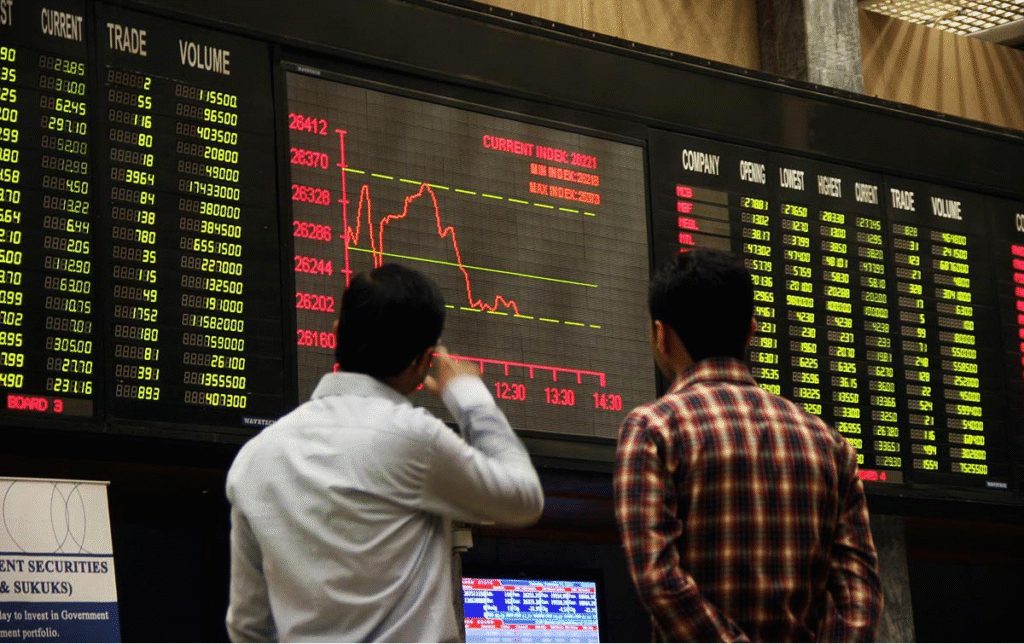
The Pakistan Stock Exchange decline dominated market headlines on Monday as intense selling pressure swept across major sectors, sending the benchmark Pakistan Stock Exchange into a steep downturn. Investors were left grappling with uncertainty as geopolitical tensions and fluctuating global energy prices rattled confidence, pushing equities into negative territory. Read More: https://theboardroompk.com/current-account-surplus-pakistan-reaches-427-million-in-february-raising-hopes-for-economic-stability/ By the end of the trading session, the benchmark KSE-100 Index closed at 149,178.66, down 4,687.50 points or 3.05%. The dramatic slide underscored mounting fears about economic stability and rising inflationary risks tied to global developments. Volatile Trading Reflects Pakistan Stock Exchange Decline Market activity throughout the day remained highly volatile. The index recorded an intraday high of 153,943.69 before plunging to a low of 148,747.72, highlighting a massive trading range of over 5,000 points. This sharp fluctuation mirrored investor nervousness and aggressive profit-taking. Total trading volume for the KSE-100 Index reached 153.18 million shares, indicating that despite bearish sentiment, market participation remained robust. However, overall market breadth painted a gloomy picture. Only 10 companies managed gains, while 85 declined, signaling broad-based weakness across sectors. A handful of stocks remained unchanged or untraded, reflecting limited optimism among traders. Key Sector Losses Drive Pakistan Stock Exchange Decline The Pakistan Stock Exchange decline was largely driven by heavy losses in critical economic sectors. Commercial banks led the downturn, dragging the index significantly lower. Fertilizer companies, oil and gas exploration firms, cement producers, and power generation companies also contributed to the steep fall. These sectors hold substantial weight in the benchmark index, meaning their collective weakness amplified the market’s downward momentum. In contrast, only minor support emerged from real estate investment trusts, technology and communication stocks, and select textile spinning companies far from enough to offset the widespread losses. Major Gainers and Losers Shape Market Sentiment Among the worst-performing stocks were leading names in cement, banking, and industrial segments, each registering losses exceeding 5%. Conversely, a few defensive and technology-linked stocks provided limited relief by posting modest gains. Despite these isolated pockets of strength, the overall sentiment remained fragile. Investors continued to shift toward safer positions, reflecting growing caution in the face of macroeconomic uncertainty. Broader Market Performance Amid Pakistan Stock Exchange Decline The downturn was not confined to blue-chip stocks. The broader All-Share Index also fell sharply, closing at 89,754.00, down 2,568.40 points or 2.78%. Total market volume across all listed companies stood at nearly 298 million shares, slightly lower than the previous session. However, the traded value increased to Rs20.19 billion, suggesting larger institutional trades and strategic repositioning by investors. Across 474 listed companies, only 90 recorded gains, while a staggering 324 closed lower, reinforcing the bearish tone. Geopolitical Tensions and Oil Price Volatility Weigh on PSX A key factor behind the Pakistan Stock Exchange decline was escalating geopolitical tension in the Middle East. Concerns over potential disruptions in global oil supply pushed energy prices into volatile territory. For an import-dependent economy like Pakistan, rising oil prices translate into higher inflation risks and increased fiscal pressure. As a result, investors fear tighter monetary conditions and slower economic growth factors that typically dampen equity market performance. Fiscal Year Gains vs Calendar Year Losses Interestingly, despite the recent downturn, the KSE-100 Index has still delivered a gain of over 23,500 points (18.75%) during the ongoing fiscal year. However, the calendar year tells a different story, with the market declining by nearly 24,900 points (14.29%) so far. This divergence reflects the complex interplay of domestic economic reforms, global uncertainties, and investor expectations. Outlook: Will the Pakistan Stock Exchange Decline Continue? Market analysts believe the near-term outlook remains uncertain. Much will depend on geopolitical developments, oil price trends, and upcoming economic policy signals. If external pressures ease and macroeconomic indicators stabilize, investor confidence could return potentially paving the way for a rebound. Until then, volatility is likely to remain a defining feature of the market.

KSE-100 Index Recomposition Sparks Market Buzz as New Corporate Entrants Reshape Benchmark
Business

KSE-100 Index Recomposition Sparks Market Buzz as New Corporate Entrants Reshape Benchmark

The latest KSE-100 Index Recomposition has captured the attention of investors, analysts, and market watchers alike, signaling fresh momentum in Pakistan’s evolving equity landscape. Conducted by the Pakistan Stock Exchange, the periodic review aims to ensure that the benchmark index continues to reflect the country’s most prominent and liquid listed companies. This time, the recalibration has introduced two new corporate players into the spotlight while phasing out two existing constituents. Set to take effect from April 1, 2026, the changes are expected to influence trading patterns, sectoral sentiment, and investor confidence in the months ahead. Why the KSE-100 Index Recomposition Matters for Investors The KSE-100 Index Recomposition is not merely a technical reshuffle it is a critical barometer of economic activity and corporate performance. The index serves as a key benchmark for institutional and retail investors tracking Pakistan’s stock market performance. During the review period from September 2025 to February 2026, companies were assessed primarily on the basis of market capitalization, a fundamental metric used to determine their relative weight and representation within the index. By aligning with this rule-based mechanism, the exchange reinforces transparency and ensures the benchmark remains reflective of real-time market dynamics. Incoming Companies in the KSE-100 Index Recomposition Two companies have secured entry into the benchmark following the latest review. Their inclusion underscores improved market valuation and investor confidence. • Arif Habib Corporation Limited has earned its place through strong capitalization metrics, highlighting its expanding footprint in Pakistan’s financial and investment ecosystem.• Power Cement Limited also joins the index, signaling renewed optimism in the construction and industrial materials sector. These additions are likely to draw increased institutional attention and potentially higher trading volumes, as index-linked funds and portfolios adjust their allocations accordingly. Outgoing Companies in the KSE-100 Index Recomposition While new entrants often create excitement, the KSE-100 Index Recomposition also involves the exit of companies that no longer meet the benchmark’s capitalization thresholds. • Unity Foods Limited will be removed from the index after experiencing relative changes in market valuation.• Pakgen Power Limited also exits the benchmark, reflecting the competitive shifts and evolving performance dynamics within Pakistan’s energy sector. Such transitions highlight the fluid nature of equity markets, where corporate standings can change rapidly based on financial performance, investor sentiment, and macroeconomic trends. How Index Reviews Strengthen Market Credibility Regular reviews like the KSE-100 Index Recomposition play a pivotal role in maintaining the credibility of Pakistan’s primary stock benchmark. By ensuring that only the largest and most liquid companies remain part of the index, the exchange strengthens its relevance for both local and foreign investors. Moreover, the timely release of updated constituent lists allows market participants to make informed investment decisions, fostering transparency and confidence. Analysts believe that such recalibrations also encourage companies to improve governance standards, profitability, and market engagement in order to secure or retain index inclusion. Market Outlook After the KSE-100 Index Recomposition With implementation scheduled for early April 2026, the reshuffle could trigger short-term volatility as portfolio managers rebalance holdings. However, in the long run, the KSE-100 Index Recomposition is expected to support market efficiency and investor trust. As Pakistan’s capital markets continue to mature, periodic adjustments to the benchmark index will remain essential for capturing the economy’s structural shifts from industrial expansion to financial sector innovation. For investors, staying updated on such developments is key to identifying emerging opportunities and managing risk in an increasingly dynamic investment environment.

PSX Down 19% from Peak — Brokerage Houses See Buying Opportunity Ahead with Caution
Business

PSX Down 19% from Peak — Brokerage Houses See Buying Opportunity Ahead with Caution

Karachi: JS Research has advised investors to adopt a strategy of cautious positioning and gradual accumulation in fundamentally strong stocks, viewing the current market downturn as a potential long-term opportunity. The Pakistan Stock Exchange (PSX) has corrected 19% from its January 2026 peak amid heightened risk-off sentiment driven by geopolitical tensions. The benchmark KSE-100 index has faced sharp volatility, recently trading around the 153,000–154,000 level after significant swings earlier in March. Analysts at JS Research, led by Muhammad Waqas Ghani, CFA, highlight that historical patterns indicate strong recoveries once geopolitical uncertainties ease. However, escalating Middle East tensions have propelled crude oil prices above US$100/bbl (up 63% in CY26 to date), with Pakistan’s imports linked to Dubai crude and refined products benchmarked around US$122/bbl for motor spirit (MS) and US$165/bbl for diesel. This surge threatens to inflate the country’s import bill and reignite inflationary pressures due to heavy reliance on imported energy. In the near term, energy-linked sectors—including Exploration & Production (E&Ps), Oil Marketing Companies (OMCs), and Refineries—are expected to outperform relatively. Meanwhile, high dividend-yielding segments such as Banks and Fertilizers may offer downside protection amid uncertainty. The report cautions that a prolonged crisis could materially alter the outlook but emphasizes that such volatile periods historically create attractive entry points for multi-year investors focused on quality companies.

Bank Alfalah's 18% of Accounts Now Held by Women, Deposits Hit PKR 237 Billion
Business

Bank Alfalah’s 18% of Accounts Now Held by Women, Deposits Hit PKR 237 Billion

Karachi, Pakistan, March 13, 2026: Bank Alfalah has released updated data highlighting its progress in advancing women’s financial inclusion across Pakistan, with growth in women customers, increased financing for women-led businesses, and broader representation of women across its workforce and leadership structures. Read More: https://theboardroompk.com/pakistan-external-financing-january-2026-inflows-raise-economic-eyebrows/ Women now hold 18% of the bank’s total accounts, representing approximately 650,000 customers. In 2025, the bank recorded a 12% increase in women account holders, while female customers contributed 11% of total deposits, amounting to PKR 237 billion. The bank also reported growth in lending to women across key economic sectors. In the SME segment, the number of women borrowers increased by 20% in 2025, with 117 women-led businesses financed, mainly in manufacturing and trading. Total SME financing for these businesses amounted to PKR 521 million. In agriculture, 857 women-led businesses received PKR 1.32 billion in financing in 2025, supporting dairy, livestock, and crop production. The bank also disbursed PKR 264 million in interest-free financing to 127 small-scale farmers under its Revive and Rise scheme. Bank Alfalah continues to support the Benazir Income Support Programme through digital disbursements across Pakistan. Since 2022, the number of women beneficiaries served through the bank has increased by 150%, reaching approximately 4.5 million women. Within its workforce, women currently represent 21% of employees. As of 31 December 2025, women also represented 16% of members across board committees, management committees, and their subcommittees, reflecting early progress in the bank’s broader efforts to strengthen women’s representation across leadership structures. The bank also continues to support women through community programs focused on entrepreneurship, education, and healthcare. Women now account for 18% of total accounts, with female deposits reaching PKR 237 billionWomen-led borrowing increased across the SME and agriculture segments, while BISP disbursements now reach around 4.5 million women through the bank. Women represent 21% of the workforce, with further progress reported across leadership and community programs.

Fertilizer Sector Profits Climb 10% to Rs141bn in 2025 on Strong Urea Sales
Business

Fertilizer Sector Profits Climb 10% to Rs141bn in 2025 on Strong Urea Sales

Pakistan’s listed fertilizer companies delivered a resilient performance in 2025, with aggregate after-tax profits rising 10% YoY to Rs141.1 billion, up from Rs129.0 billion in 2024, according to a sector update by Topline Securities. Read More: https://theboardroompk.com/honda-faces-first-annual-loss-of-15-7-billion-in-70-years-with-massive-ev-restructuring-charge/ The improvement was mainly driven by a strong 26% YoY increase in urea offtakes, which reached 6.7 million tons for the year, reflecting robust agricultural demand. Additionally, other charges dropped sharply by 32% YoY to Rs21.7 billion, providing significant relief to bottom-line figures. Key players led the charge: Fauji Fertilizer Company (FFC) recorded 16% sales growth to Rs432.4 billion and a 14% rise in profits to Rs73.5 billion. Engro Fertilizers (EFERT) and Fatima Fertilizer (FATIMA) also contributed strongly to the sector’s overall sales, which climbed 8% YoY to Rs981 billion. Gross margins for the sector expanded notably, supported in part by periodic discounts of Rs300–400 per bag on urea and DAP products. Over the longer term, the sector has shown impressive growth, with revenues more than doubling from Rs192 billion in 2016 to Rs981 billion in 2025, while EBITDA reached Rs238 billion. However, higher borrowing costs pushed finance charges up 69% YoY to Rs24.8 billion, partially offsetting operational gains. Analysts view the results as a sign of underlying strength in agricultural input demand despite periodic quarterly volatility seen earlier in 2025.

Wahdat Poultry Farm Eyes Rs637mn IPO on PSX to Boost Expansion and Value-Added Products
Business

Wahdat Poultry Farm Eyes Rs637mn IPO on PSX to Boost Expansion and Value-Added Products

Wahdat Poultry Farm Limited, a major Pakistani egg producer, has announced plans to list on the Pakistan Stock Exchange (PSX) through an initial public offering (IPO). Read More: https://theboardroompk.com/honda-faces-first-annual-loss-of-15-7-billion-in-70-years-with-massive-ev-restructuring-charge/ The company aims to raise approximately Rs637 million (around USD 2.3 million) to fuel expansion and diversification into value-added products. The IPO involves offering 53.1 million ordinary shares, equivalent to 15.84% of the post-IPO paid-up capital. It features a floor price of Rs12 per share, including a Rs10 premium. Of the total proceeds, Rs600 million represents fresh capital injection into the company for growth initiatives, while Rs37.228 million comes from the sale of existing shares by sponsor shareholder Naved Ali Khan. IPO Structure and Allocation The offering will use a book-building mechanism. Seventy percent of shares target institutional investors and high-net-worth individuals, with the remaining 30% allocated to the general public. The retail portion is fully underwritten. Topline Securities Limited serves as the lead manager and book runner. The prospectus was submitted to the PSX on Friday, March 13, 2026. Company Background and Operations Founded in 2006 and later incorporated as a public limited company, Wahdat Poultry operates as a vertically integrated poultry business. It focuses on egg production, grading, packaging, and distribution under the “Farm Fresh Eggs” brand. The company runs four automated layer farms with a capacity of around 430,000 birds, yielding up to 400,000 eggs daily. Products reach about 1,500 retail outlets in major cities like Karachi, Lahore, and Islamabad. It also supplies multinational food chains and exports to select international markets. Financial Performance and Growth Trajectory Revenue has grown steadily from Rs1.23 billion in FY21 to Rs2.79 billion in FY25. Profit after tax stood at Rs241.9 million in FY25, reflecting solid operational performance. Management views the IPO as a step to transition Wahdat into a high-value food-tech enterprise. The strategy prioritizes capital-efficient expansion to meet unmet market demand, enhance resilience, and drive sustainable growth. Use of Proceeds and Expansion Plans Rs270 million will fund a new liquid egg pasteurisation plant to enable value-added products. Another Rs180 million targets expanding poultry capacity by adding roughly 100,000 birds. The remaining Rs150 million supports working capital and development of a farm licensing model. This move aims to diversify beyond traditional table eggs into processed offerings, capitalizing on rising demand for hygienic, value-added egg products in Pakistan.

PSX Find Relief From Geopolitical Front, Jumps 9,697 points
Business

PSX Find Relief From Geopolitical Front, Jumps 9,697 points

PSX staged a remarkable rebound, with the benchmark KSE-100 Index surging by 9,697 points (+6.62%) to close at 156,177, marking the second-highest point gain in the history of the exchange. Read More: https://theboardroompk.com/saudi-aramco-turns-to-rare-spot-tenders-immediate-sales-bypass-hormuz-blockade/ “Trading commenced on a jubilant note as investor sentiment improved sharply following an early morning statement by Donald Trump indicating that the Middle East conflict may be nearing its end,” said Ali Najib, Deputy Head of Trading at Arif Habib Ltd. The optimistic development triggered aggressive buying at the open, pushing the market up by more than 5% within minutes, which led to a temporary trading halt in accordance with PSX circuit breaker regulations, he added. Once trading resumed after an hour, broad-based buying momentum continued across major sectors, driving the benchmark index to an intraday high of 158,354. However, some profit-taking in the final hour of trading trimmed earlier gains, leading the index to settle at 156,177 by the close. On the sectoral front, progress on Pakistan’s 5G spectrum auction remained in focus. The auction process is being conducted in two stages through electronic bidding, with six spectrum bands on offer. The first phase comprises five bidding rounds, while the second stage will commence following a one-day break. All three telecom operators—local subsidiaries of VEON, e&, and China Mobile—are participating in the auction. FFC, ENGROH, UBL, HUBC, MEBL, HBL, LUCK, PPL, OGDC, and SYS collectively contributed 5,692 points to the day’s rally. Despite the strong market performance, overall participation remained relatively modest, with total traded volume recorded at 484 million shares, while turnover stood at PKR 31.1 billion. K-Electric (KEL) led the volume chart, with 53.2 million shares traded during the session. Outlook: Yesterday’s expectation that markets were approaching a “peak fear” phase appears to have played out, as constructive developments on the Middle East front helped restore investor confidence and triggered a strong relief rally, resulting in the second-largest bull run in PSX history today. Going forward, if geopolitical conditions remain stable, the positive momentum may extend into the next session; however, investors are likely to remain cautious as markets continue to monitor external developments closely.

Scroll to Top