Business

Ample Stocks of Ghee and Edible Oil Available Despite Geopolitical Tensions, Says Pakistan Vanaspati Manufacturers Association
Business

Ample Stocks of Ghee and Edible Oil Available Despite Geopolitical Tensions, Says Pakistan Vanaspati Manufacturers Association

KARACHI: Chairman of the Pakistan Vanaspati Manufacturers Association Sheikh Umer Rehan has assured that Pakistan currently holds sufficient stocks of ghee and edible oil to meet domestic demand for at least the next two months, dismissing concerns about any potential shortage in the country. Read More: https://theboardroompk.com/brent-tops-108-as-iran-conflict-disrupts-global-supply-routes/ He addressed the prevailing situation amid rising geopolitical tensions in the region, particularly the escalating strain involving Israel, the United States, and Iran. He clarified that despite the uncertain regional environment, Pakistan’s supply of ghee and edible oil remains stable and secure. Sheikh Umer Rehan stated that the country possesses adequate reserves of both ghee and edible oil, which are sufficient to cater to national consumption requirements. “Pakistan will not face any shortage of ghee or edible oil,” he said, emphasizing that the industry is fully prepared to maintain smooth supply in the market. He further noted that local manufacturers currently have sufficient quantities of raw materials as well as finished products available. In addition, several import consignments are continuously arriving in Pakistan, further strengthening the supply position. According to the PVMA chairman, multiple shipments of edible oil and oilseeds are presently en route to Pakistan through maritime routes. These consignments are expected to reach various ports in the country according to their scheduled timelines, after which they will be promptly supplied to local industries and distributed in the market. Sheikh Umer Rehan highlighted that the country’s ghee and edible oil industry is operating at full capacity, with production activities continuing as normal. He said industry stakeholders remain in close coordination with the government and relevant authorities to ensure that the supply chain remains uninterrupted and that consumers continue to receive edible oil products without disruption. He added that the Pakistan Vanaspati Manufacturers Association is closely monitoring the overall situation and working in collaboration with the government to further strengthen market supply so that the availability of ghee and edible oil remains stable across the country. Reassuring consumers, the PVMA chairman said that despite the prevailing regional tensions, the availability of ghee and edible oil in Pakistan is fully secure. He added that supplies of these essential commodities are expected to continue normally in the coming weeks as well.

Pakistan Stock Market Crash: KSE-100 Index Suffers Sharp Weekly Decline
Business

Pakistan Stock Market Crash: KSE-100 Index Suffers Sharp Weekly Decline

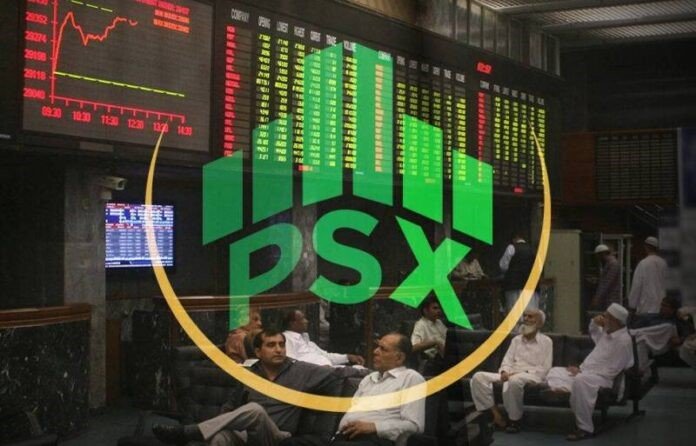
Pakistan Stock Market Crash dominated financial headlines this week as the benchmark KSE-100 Index witnessed one of its steepest weekly declines in recent months. Investor sentiment weakened considerably, pushing the index down to 157,496.10 points, compared to 168,062.17 points recorded on February 27, 2026. The benchmark index shed 10,566.07 points, translating into a 6.29% week-on-week decline, as aggressive selling across major sectors including banking, cement, fertilizer, and technology triggered widespread losses in the equity market. Heightened global uncertainty and geopolitical tensions in the Middle East amplified investor caution, leading many market participants to lock in profits and reduce exposure to riskier assets. Pakistan Stock Market Crash Impact on Market Capitalization The Pakistan Stock Market Crash also significantly eroded overall market value at the Pakistan Stock Exchange. Total market capitalization dropped sharply to Rs4.62 trillion as of March 6, 2026, compared with Rs4.96 trillion recorded a week earlier. This represents a contraction of Rs333.75 billion, reflecting a 6.73% weekly decline in the value of listed companies. In dollar terms, the equity market lost approximately $1.19 billion in value during the week, which was more than double the $538.64 million decline recorded in the previous week. The steep drop signals the intensity of selling pressure currently dominating the market. Dollar-adjusted returns remained negative at 6.26%, compared with negative 2.92% in the prior week, indicating that the majority of the losses were driven by falling stock prices rather than fluctuations in the exchange rate. Pakistan Stock Market Crash Linked to Economic Indicators Several macroeconomic developments also weighed heavily on investor sentiment during the week. Government savings data revealed that National Savings Schemes mobilization rebounded strongly in January, reaching Rs27.01 billion, representing a massive 545% month-on-month recovery from December’s slowdown. However, despite the monthly rebound, mobilization remained 28.8% lower year-on-year for FY2025-26, reflecting subdued household savings momentum. Meanwhile, Pakistan’s central government debt rose to Rs79.32 trillion in January 2026, marking a 9.98% increase year-on-year. The rise reflects increased domestic and external borrowing required to finance the country’s fiscal deficit. In the latest treasury auction conducted by the State Bank of Pakistan, the central bank successfully raised Rs581.7 billion through Market Treasury Bills (MTBs). However, authorities rejected all bids for 10-year floating-rate Pakistan Investment Bonds (PIBs) as cut-off yields increased by up to 39 basis points across tenors, signaling expectations of higher interest rates in the market. Adding to the economic pressure, Pakistan’s trade deficit widened by 8.4% month-on-month to $2.98 billion in February 2026. This occurred as exports plunged 25.6%, outweighing the decline in imports and intensifying concerns about the country’s external balance. Inflation also accelerated during the month. Pakistan’s Consumer Price Index (CPI) inflation rose to 7% year-on-year in February 2026, the highest reading since October 2024, compared with 5.8% in January. Rising price pressures further dampened investor confidence. Sectoral Drivers Behind the Pakistan Stock Market Crash Sector-wise performance clearly highlighted the broad-based nature of the Pakistan Stock Market Crash, with most major industries contributing to the benchmark’s decline. Commercial banks emerged as the largest drag on the index, erasing approximately 3,916 points. The banking sector’s heavy weighting in the index meant that declines in major banking stocks significantly amplified the overall market downturn. The cement sector followed, shaving over 1,500 points from the index as construction-related stocks faced heavy selling pressure. Meanwhile, fertilizer companies reduced the index by more than 959 points, reflecting profit-taking in previously strong performers. Other sectors that contributed significantly to the decline included: • Technology and communication companies• Investment banks and securities firms• Pharmaceutical companies• Textile composite manufacturers• Automobile assemblers• Power generation companies• Food and personal care producers• Oil marketing companies• Engineering and chemical firms Together, these sectors reinforced the widespread nature of the sell-off across Pakistan’s equity market. On the positive side, only a handful of sectors recorded modest gains. Refineries contributed 33.63 points, while oil and gas exploration companies added 5.91 points. Sugar sector stocks also provided a marginal positive impact of 2.03 points. Company-Level Winners and Losers At the individual company level, gains were limited. Among the top positive contributors: • Mari Petroleum Company Limited added 97.82 points• Attock Refinery Limited contributed 52.30 points• Pakistan Oilfields Limited added 28.81 points• K-Electric supported the index with 14.01 points Despite these gains, sharp declines in several heavyweight stocks kept the benchmark under pressure. Major laggards included: • United Bank Limited, which wiped out 1,140.50 points• Habib Bank Limited, which erased 637.55 points• Fauji Fertilizer Company, which reduced the index by 632.26 points Other major decliners included Lucky Cement, Engro Holdings, Systems Limited, MCB Bank, Bank Alfalah, Allied Bank, The Hub Power Company, Fatima Fertilizer, Meezan Bank, Fauji Cement, and DG Khan Cement, highlighting the intense selling pressure in large-cap stocks. Foreign Investors Continue Selling Pakistani Equities Foreign investment flows also played a key role in the market’s decline. Under Foreign Portfolio Investment (FIPI), overseas investors remained net sellers with an outflow of $22.11 million during the week. The bulk of the selling came from foreign corporates, which offloaded $29.69 million worth of equities. However, overseas Pakistanis provided partial support by purchasing $7.56 million, while foreign individual investors recorded marginal net buying. Interestingly, local investors absorbed the entire foreign outflow through Local Portfolio Investment (LIPI). Major local buyers included: • Banks and DFIs: $34.51 million• Insurance companies: $14.12 million• Corporate investors: $14.95 million• Other organizations: $10.25 million• Individual investors: $6.75 million On the selling side, mutual funds led the outflows with $55.97 million, followed by broker proprietary desks and Non-Banking Finance Companies (NBFCs). Outlook for the Pakistan Stock Market While the recent Pakistan Stock Market Crash has raised concerns among investors, analysts believe that future market direction will depend largely on: • Global geopolitical developments• Inflation trajectory and monetary policy expectations• Foreign investment trends• Pakistan’s macroeconomic stability If inflation continues rising or interest rate expectations strengthen, market volatility may persist in the coming weeks. However, long-term investors often view such corrections as opportunities to accumulate fundamentally strong stocks at lower valuations.

UBL Becomes Pakistan's Largest Branch Network Bank with Over 2,000 Outlets
Business

UBL Becomes Pakistan’s Largest Branch Network Bank with Over 2,000 Outlets

Karachi: United Bank Limited (UBL) has solidified its position as Pakistan’s leading bank by branch network, crossing the 2,000-branch milestone with a total of 2,009 domestic branches by the end of 2025, according to a latest report by Topline Securities. Read More: https://theboardroompk.com/china-presses-iran-for-safe-passage-of-oil-and-gas-through-strait-of-hormuz/ The bank added a massive 535 branches during the period, including 105 branches integrated through the successful amalgamation with Silkbank (effective March 2025) and an impressive 430 new branches opened via organic expansion. This aggressive growth strategy has given UBL the country’s most extensive physical presence, enhancing accessibility for retail and commercial customers across urban and rural areas. Analysts attribute UBL’s rapid network expansion to its focus on deposit mobilization, superior customer experience, competitive incentives, and digital-retail synergy, which also drove exceptional deposit growth and helped the bank post record profits of Rs130 billion in 2025 — the highest among listed banks. “This milestone reflects UBL’s commitment to deeper market penetration and financial inclusion,” a Topline Securities note highlighted, adding that the enlarged footprint positions UBL favorably against peers in a consolidating banking sector.

Pakistan Foreign Exchange Reserves Rise to $21.43 Billion
Business

Pakistan Foreign Exchange Reserves Rise to $21.43 Billion

Pakistan foreign exchange reserves recorded a modest but encouraging increase in the latest weekly update released by the State Bank of Pakistan (SBP). According to the central bank, reserves held by the SBP rose to $16.3 billion during the week ending February 27, 2026, reflecting a $87.1 million week-on-week increase, equivalent to 0.54% growth. Read More: https://theboardroompk.com/operation-ghazab-lil-haq-pakistan-army-intensifies-cross-border-security-offensive/ While the increase may appear small at first glance, it signals continued stability in Pakistan’s external accounts and highlights steady progress in strengthening the country’s foreign currency buffer. At a time when emerging economies are closely watching global capital flows and exchange rate volatility, even incremental improvements in Pakistan foreign exchange reserves carry significant economic implications. Total Pakistan Foreign Exchange Reserves Cross $21.4 Billion The latest data shows that Pakistan’s total liquid foreign reserves combining holdings of the central bank and commercial banks climbed to $21.43 billion, up $26.2 million or 0.12% week-on-week. This increase was primarily driven by the improvement in SBP-held reserves, which offset a decline in reserves held by commercial banks. Breaking the figures down into context: • SBP reserves: $16.3 billion• Commercial bank reserves: $5.13 billion• Total reserves: $21.43 billion•While commercial banks saw their reserves decline by $60.9 million (1.17%), the central bank’s growth helped maintain overall upward momentum. This trend highlights the critical role the SBP plays in managing Pakistan’s external liquidity and maintaining stability in foreign exchange markets. Pakistan Foreign Exchange Reserves Show Strong Growth in FY2026 Looking beyond the weekly movement, the broader trend in Pakistan foreign exchange reserves is even more notable. Since the beginning of the current fiscal year, reserves held by the State Bank of Pakistan have increased by $7.24 billion, representing a 79.82% surge. This dramatic growth reflects a combination of factors, including: • Improved inflows from exports and remittances• External financing and multilateral support• Stabilization measures implemented by policymakers• Controlled import demand Such a significant rise in reserves is widely viewed as a positive indicator for Pakistan’s macroeconomic outlook, particularly after periods of pressure on the country’s balance of payments. A Positive Trend in 2026 So Far The calendar year 2026 has also started on a positive note for Pakistan foreign exchange reserves. Since January, reserves have increased by approximately $384.9 million, representing 2.42% growth. While modest, the increase indicates a gradual strengthening of the country’s external position. Economists note that maintaining steady reserve growth is crucial for: • Supporting the Pakistani rupee• Managing external debt obligations• Boosting investor confidence• Ensuring import coverage for essential goods For emerging economies like Pakistan, a strong reserve position is often seen as the first line of defense against global financial volatility. Why Pakistan Foreign Exchange Reserves Matter Foreign exchange reserves serve as a financial safety net for any economy. For Pakistan, maintaining healthy reserves helps: • Stabilize the currency market• Ensure payments for imports such as oil, machinery, and food• Strengthen credibility with international lenders and investors• Reduce vulnerability to external shocks With reserves now standing above $21 billion, Pakistan has a stronger cushion compared to previous years when reserves fell to critically low levels. However, economists caution that sustained improvements depend on continued export growth, remittance inflows, and disciplined economic management. Outlook: Can Pakistan Maintain Reserve Growth? The steady rise in Pakistan foreign exchange reserves offers cautious optimism for the country’s economic trajectory. Yet, maintaining this momentum will require continued reforms, stable macroeconomic policies, and strong external inflows. As global economic conditions remain uncertain, Pakistan’s reserve position will remain a key indicator closely watched by investors, policymakers, and international financial institutions. For now, the latest SBP data suggests a gradual but meaningful strengthening of Pakistan’s financial buffer.

Pakistan Stock Exchange Rally: KSE-100 Surges Over 5,400 Points as Investor Confidence Returns
Business

Pakistan Stock Exchange Rally: KSE-100 Surges Over 5,400 Points as Investor Confidence Returns

The Pakistan Stock Exchange rally dominated Thursday’s trading session as the benchmark KSE-100 Index surged dramatically, recovering losses from the previous day and restoring investor confidence. Read More: https://theboardroompk.com/iran-vows-us-will-bitterly-regret-warship-sinking-as-conflict-enters-sixth-day/ By the end of trading, the index closed at 161,210.67 points, marking an impressive gain of 5,433 points or 3.49%. The strong rebound signaled a renewed appetite for equities as investors returned to the market with aggressive buying across multiple sectors. Throughout the day, the market remained firmly in positive territory. The index touched an intraday high of 161,476.84 points, while the lowest level recorded during the session was 156,250.28 points, still significantly above the previous close. Trading activity also reflected growing optimism. The KSE-100 Index recorded a total volume of more than 402 million shares, indicating that investors actively participated in the rally following cautious trading earlier in the week. Market Breadth Highlights Strength of the Pakistan Stock Exchange Rally One of the most striking indicators of the Pakistan Stock Exchange rally was the overwhelmingly positive market breadth. Out of the companies listed on the index: • 85 companies closed higher• 14 declined• 1 remained unchanged This broad-based upward movement demonstrated that the rally was not confined to a handful of stocks but spread across multiple sectors of the market. Among the strongest performers were DHPL and ATRL, both surging by the maximum 10 percent, followed closely by SSGC, PTC, and HUMNL, each posting strong gains of nearly 10 percent. However, a few stocks experienced minor declines. ABOT led the losses with a fall of about 3.5 percent, while HINOON, HALEON, CHCC, and SRVI posted smaller drops. Key Companies Driving the Pakistan Stock Exchange Rally The upward momentum in the Pakistan Stock Exchange rally was largely powered by heavyweight companies that significantly boosted the index. The biggest positive contributors included: • Hub Power Company adding over 482 points to the index• Oil and Gas Development Company contributing 475 points• Fauji Fertilizer Company contributing 445 points• Engro Holdings adding 429 points• Meezan Bank contributing 365 points These large-cap stocks played a decisive role in pushing the benchmark index sharply higher during the session. On the downside, only minor pressure came from a handful of stocks such as ABOT, HINOON, FATIMA, SRVI, and CHCC, but their impact was minimal compared to the gains generated by the market leaders. Sector Performance Fuels the Pakistan Stock Exchange Rally Several key sectors powered the Pakistan Stock Exchange rally, reflecting strong investor confidence in Pakistan’s core industries. The commercial banking sector led the surge, adding nearly 1,195 points to the index. Banks often act as a barometer of economic sentiment, and their strong performance suggested improved expectations for financial sector profitability. The oil and gas exploration sector followed closely, contributing more than 1,112 points, supported by rising global energy prices and renewed investor interest in energy companies. Other sectors that strengthened the market included: • Power generation and distribution, contributing over 559 points• Fertilizer companies, adding more than 504 points• Investment banks and securities firms, contributing around 451 points Only limited downward pressure was seen in leather and tannery companies, while sectors such as synthetic textiles, leasing companies, and vanaspati industries recorded only marginal movements. Broader Market Activity Shows Strong Investor Participation Beyond the benchmark index, the broader market also reflected the strength of the Pakistan Stock Exchange rally. The All-Share Index climbed to 96,097 points, gaining more than 3,100 points or 3.34 percent during the session. Trading volumes also increased significantly. The market recorded over 723 million shares traded, compared with 622 million shares in the previous session. Meanwhile, the total traded value rose to Rs35.18 billion, an increase of more than Rs5 billion, highlighting growing investor activity. In total, 478 companies were traded, with 350 closing higher, 78 declining, and 50 remaining unchanged another sign of the widespread nature of the rally. Why the Pakistan Stock Exchange Rally Happened The strong rebound came a day after cautious trading triggered by geopolitical uncertainty in the Middle East. However, improving global market sentiment helped restore investor confidence. International equity markets recorded gains, while gold and oil prices also moved higher, reflecting shifting global risk dynamics. This improvement in external conditions encouraged investors to re-enter the equity market. PSX Performance in the Current Fiscal Year Despite recent volatility, the KSE-100 Index has delivered notable gains during the fiscal year. The benchmark index has risen by more than 35,500 points, or about 28 percent, since the start of the fiscal year. However, on a calendar-year basis, the market remains down roughly 7 percent, highlighting the volatility investors have experienced in recent months. Outlook: Can the Pakistan Stock Exchange Rally Continue? Market analysts believe that if global sentiment remains stable and domestic economic indicators continue to improve, the Pakistan Stock Exchange rally could gain further momentum in the coming weeks. However, investors are expected to remain cautious, closely watching geopolitical developments, energy prices, and economic policy signals that could influence market direction. For now, Thursday’s powerful rebound has sent a clear message: investor confidence in Pakistan’s equity market is far from fading.

Gold Price in Pakistan Declines Amid Shifting Market Dynamics
Business

Gold Price in Pakistan Declines Amid Shifting Market Dynamics

The gold price in Pakistan recorded a noticeable decline on Thursday, offering a moment of relief to buyers after weeks of strong upward momentum in the bullion market. According to the All-Pakistan Gems and Jewelers Sarafa Association, the price of 24-karat gold dropped by Rs2,800 per tola, bringing the new rate to Rs537,162 per tola in local markets. Read More: https://theboardroompk.com/iran-vows-us-will-bitterly-regret-warship-sinking-as-conflict-enters-sixth-day/ The latest adjustment highlights the volatile nature of Pakistan’s gold market, which is heavily influenced by global bullion trends, currency fluctuations, and investor sentiment. Despite the daily drop, gold continues to maintain historically high levels, reflecting its role as a preferred safe-haven asset for investors and households alike. For many Pakistanis, gold is not only a precious metal but also a traditional store of value and a key part of savings and wedding investments. Gold Price in Pakistan: Updated Local Rates The downward trend was also visible across other gold measurements in the domestic market. The 24-karat gold price per 10 grams fell by Rs2,401, settling at Rs460,529. Meanwhile, 22-karat gold, commonly used for jewelry in Pakistan, was quoted at Rs422,166 per 10 grams. In simple terms, while today’s drop offers short-term relief for buyers, the overall trend remains strong, particularly when compared to prices recorded earlier in the year. Market analysts note that such fluctuations are typical in commodity markets, especially when global economic signals remain uncertain. Silver Prices Also Slide in the Domestic Market Alongside the gold price in Pakistan, silver prices also moved downward in the local bullion market. The price of 24-karat silver declined by Rs194 per tola, reaching Rs8,810, while the 10-gram silver rate dropped by Rs166 to Rs7,553. Although silver is often overshadowed by gold in Pakistan’s investment landscape, it remains an important industrial metal and an accessible alternative for small investors looking to hedge against inflation. Global Gold Market Trends Driving the Gold Price in Pakistan The gold price in Pakistan is closely tied to international bullion markets. Globally, spot gold traded near $5,179 per ounce, showing a modest increase of $14.6 or 0.28% during the latest trading session. Several global factors are supporting gold demand: • Geopolitical tensions in the Middle East, which traditionally push investors toward safe-haven assets like gold• A weaker U.S. dollar, making gold more attractive for global buyers• Ongoing economic uncertainty in major markets These factors collectively help sustain strong demand for gold worldwide, which in turn impacts domestic prices in Pakistan. Why Pakistanis Closely Watch the Gold Price in Pakistan For consumers and investors alike, the gold price in Pakistan remains one of the most closely monitored financial indicators in the country. Gold plays multiple roles in the local economy: • Household savings and wealth preservation• Jewelry purchases for weddings and cultural events• A hedge against inflation and currency depreciation Because Pakistan imports most of its gold, the local price is directly influenced by the international bullion rate and the rupee-dollar exchange rate. Market Outlook: What’s Next for Gold? While today’s decline may signal short-term cooling, analysts suggest that the broader trend for gold remains bullish due to global uncertainty and persistent demand for safe-haven assets. If geopolitical tensions escalate or the U.S. dollar continues to weaken, the gold price in Pakistan could once again move upward in the coming weeks. For investors, the current dip may present a strategic entry point, especially for those looking to diversify their portfolios with precious metals.

JazzCash Processes 13% of Pakistan’s GDP as Cashless Initiative Scales
Business

JazzCash Processes 13% of Pakistan’s GDP as Cashless Initiative Scales

Karachi: Pakistan’s digital payments ecosystem is evolving from innovation to infrastructure, with Prime Minister Shehbaz Sharif’s Cashless Economy Initiative, supported by the State Bank of Pakistan’s enabling policies, driving momentum at national scale. Read More: https://theboardroompk.com/eu-capitals-resist-ukraines-bid-for-fast-track-membership/ These views were shared by Aamir Ibrahim, Chairman of Mobilink Bank and JazzCash, during a fireside chat with GSMA Fintech Lead Brian Gorman at the Fintech and Commerce Summit, where he outlined how the government’s push to accelerate digital payments is gaining measurable traction. The Prime Minister’s initiative focuses on expanding digital payment adoption, strengthening public digital infrastructure, and digitising government to person and person to government transactions. At its core is the objective of reducing reliance on cash, broadening documentation of economic activity, and expanding access to formal financial services. Ibrahim noted that Pakistan’s digital financial transition is built on strong institutional foundations led by the State Bank of Pakistan. The launch of Raast, Pakistan’s instant payment system, has enabled an interoperable payments framework that connects banks and wallets across the country, allowing customers and merchants to transact seamlessly. Within this national framework, JazzCash has emerged as one of the largest contributors to digital transaction volumes. The platform now serves nearly 58 million customers and supports more than one million Raast QR enabled merchants nationwide. In 2025, JazzCash processed PKR 15 trillion in gross transaction value, equivalent to roughly 13 percent of national GDP. The shift is visible across the economy. Small retailers are accepting QR payments in place of cash. Salaried employees are paying bills and school fees digitally. Freelancers are receiving cross border income directly into mobile wallets. Government welfare disbursements are increasingly delivered through digital channels, reducing leakages and improving transparency. In 2025 alone, JazzCash disbursed over PKR 100 billion in government to person payments, supporting the state’s objective of efficient and direct benefit transfers. The platform also issues more than 200,000 digital loans daily, extending regulated financial tools to micro entrepreneurs and small businesses that previously operated outside the formal banking system. Merchant digitisation remains central to the cashless agenda. With over one million Raast QR enabled merchants and tap on phone capabilities that convert smartphones into acceptance devices, JazzCash has expanded digital payment acceptance into urban centres and smaller towns alike. Documented transaction histories are enabling merchants to formalise revenues and access working capital through regulated channels. International flows are also reinforcing the digital shift. Pakistan recorded USD 38 billion in remittance inflows during FY25, underscoring the importance of cross border financial flows to the national economy. JazzCash processed PKR 138 billion in international remittances in 2025, enabling funds to settle directly into digital wallets, where they can be used for payments, savings, and credit. Ibrahim emphasised that financial inclusion is not only about convenience. “Digital transactions create documentation,” he said. “Documentation strengthens transparency, improves credit access, and supports broader economic participation.” As Pakistan advances its cashless framework, the combination of government policy, regulatory leadership from the State Bank, and private sector scale is accelerating adoption.

Gold Price Globally Surge: Safe-Haven Demand Skyrockets Amid Middle East Crisis
Business

Gold Price Globally Surge: Safe-Haven Demand Skyrockets Amid Middle East Crisis

The Gold Price Surge 2026 has captured global attention as prices climbed sharply on Monday, fueled by escalating geopolitical tensions in the Middle East. Investors rushed toward gold, reinforcing its long-standing reputation as the ultimate safe-haven asset during times of crisis. The latest spike follows a dramatic escalation involving military strikes reportedly carried out by the United States and Israel on Iran, with reports indicating the death of Ayatollah Ali Khamenei. These developments have significantly heightened geopolitical risks, sending shockwaves through global financial markets. As of 9:18 AM PST, spot gold surged 1.57% to $5,358.69 per ounce, according to Reports. This sharp increase reflects a broader trend of investors seeking stability amid rising uncertainty. Why the Gold Price Surge 2026 Is Gaining Momentum Gold’s rally is not an isolated event it is the continuation of a powerful upward trend. In 2025 alone, gold prices surged an extraordinary 64%, driven by multiple reinforcing factors. Central banks around the world have been aggressively increasing their gold reserves, signaling strong institutional confidence. At the same time, exchange-traded funds (ETFs) have seen sustained inflows, indicating robust investor demand. Expectations around monetary policy have also played a key role. Analysts anticipate that the Federal Reserve may shift toward easing interest rates, a move that typically supports gold prices by reducing the opportunity cost of holding non-yielding assets. Financial media outlet CNBC reports that gold has already surged more than 2% recently, reaching its highest level in over four weeks further evidence of bullish momentum. Gold Price Surge 2026 Forecast: Can Prices Hit $6,000? Major global financial institutions remain highly optimistic about gold’s future trajectory. Analysts at J.P. Morgan and Bank of America have reiterated projections that gold could approach, or even exceed, the $6,000 mark. J.P. Morgan has gone a step further, forecasting that sustained demand from central banks and institutional investors could push prices to $6,300 per ounce by the end of 2026. This bullish outlook is grounded in a combination of structural demand and macroeconomic uncertainty. Rising geopolitical risks, inflation concerns, and shifting monetary policies all point toward continued strength in gold markets. Economic Signals Adding Fuel to the Gold Price Surge 2026 Recent economic data from the United States has added another layer of complexity to the global outlook. Producer prices rose more than expected in January, signaling that inflationary pressures may persist longer than anticipated. This has placed renewed focus on upcoming labor market data, including employment reports and nonfarm payroll figures. These indicators will be closely watched for clues about the direction of monetary policy and overall economic health. If inflation remains elevated while economic growth slows, gold could benefit further as investors hedge against stagflation risks. Performance of Other Precious Metals While gold shines, other precious metals have shown mixed performance, reflecting shifting investor sentiment. Silver experienced a slight pullback after a strong February, declining by 1.2% to $92.72 per ounce. Platinum also dipped nearly 1% to $2,343.50, while palladium managed a modest gain of 0.5%, reaching $1,795.11 per ounce. These movements highlight gold’s dominant position as the preferred safe-haven asset during periods of geopolitical and economic uncertainty. What the Gold Price Surge 2026 Means for Investors The Gold Price Surge 2026 underscores a critical shift in investor behavior. In times of heightened uncertainty, capital flows toward assets perceived as stable and reliable. For investors, this presents both opportunity and caution. While gold’s upward trajectory offers potential gains, its rapid rise also raises questions about sustainability and market corrections. The interplay between geopolitical developments, central bank policies, and economic data will ultimately determine whether gold continues its ascent or stabilizes in the months ahead.

Pakistan Stock Market Decline Deepens as KSE-100 Slides Below 168,100 Ahead of IMF Review
Business

Pakistan Stock Market Decline Deepens as KSE-100 Slides Below 168,100 Ahead of IMF Review

Pakistan Stock Market Decline dominated headlines this week as the benchmark KSE-100 Index extended its losing streak, closing at 168,062.17 down sharply from 173,169.71 recorded on February 20, 2026. The index lost 5,107.54 points over the week, reflecting a 2.95% week-on-week contraction and signaling persistent bearish momentum across key sectors. Read More: https://theboardroompk.com/insurance-reforms-pakistan-adb-secp-drive-future-ready-insurance-sector/ With the International Monetary Fund (IMF) review approaching, investors chose caution over conviction. Institutional repositioning, foreign outflows, and broad-based sectoral weakness combined to keep trading activity defensive and sentiment fragile. Pakistan Stock Market Decline Mirrors Shrinking Market Capitalization The Pakistan Stock Market Decline was not limited to index points alone it also eroded billions in investor wealth. Total listed market capitalization fell from Rs5.11 trillion to Rs4.96 trillion within a week. This represents a contraction of approximately Rs152.2 billion, equivalent to a 2.98% decline. In dollar terms, market capitalization declined from $18.27 billion to $17.73 billion, a weekly drop of 2.95%. Dollar-adjusted returns stood at negative 2.92%, compared to negative 3.56% in the previous week. While the pace of decline moderated slightly in foreign currency terms, equity prices remained under heavy pressure suggesting that weakness was driven more by valuation compression than currency volatility. The erosion in value was widespread, indicating systemic selling rather than isolated sector weakness. IMF Review Keeps Pakistan Stock Market Decline in Focus The upcoming IMF review has become the single most important short-term catalyst for Pakistan’s financial markets. Investors are wary of potential fiscal adjustments, taxation measures, and policy tightening that could affect corporate profitability. Market participants are trimming positions ahead of the review, preferring liquidity over risk exposure. This cautious stance has significantly reduced buying momentum, allowing sellers to dominate trading sessions. The IMF milestone is widely seen as critical for macroeconomic stability. Any clarity on fiscal targets and structural reforms could either restore confidence or intensify volatility. Sector-Wise Breakdown: Heavyweights Drive the Pakistan Stock Market Decline The week’s performance confirms that the Pakistan Stock Market Decline was broad-based and led by large-cap sectors. Major Negative Contributors: • Commercial Banks erased 1,782.63 index points• Oil & Gas Exploration companies shaved off 728.63 points• Cement sector removed 648.63 points• Technology & Communication reduced 333.54 points• Pharmaceuticals cut 310.75 points• Investment Banks & Securities Companies trimmed 258.78 points Additional pressure came from oil marketing companies, food and personal care producers, automobile assemblers, power generation firms, engineering, and transport sectors. Limited Positive Pockets: • Textile composite stocks added 55.36 points• Automobile parts contributed 48.69 points• Fertilizer added 40.70 points• Refineries and vanaspati producers offered marginal support However, these gains were insufficient to offset heavy losses in banking, exploration, cement, and technology heavyweights. Company-Level Impact: Institutional Repositioning Evident At the stock level, losses were concentrated in major index constituents, signaling institutional-level adjustments rather than retail-driven panic. Significant negative contributors included: • UBL, which alone erased 1,193.90 points• MARI, shedding 484.81 points• MEBL, losing 331.09 points• SYS, down 236.65 points• PPL and OGDC, dragging the exploration segment• HBL, declining by 230.09 points• Cement majors LUCK and MLCF posting substantial losses On the positive side, selective support emerged from BAFL, POL, AKBL, FATIMA, EFERT, THALL, and certain textile composite stocks. Yet their contribution was limited relative to the scale of declines in heavyweight counters. Foreign Outflows Amplify Pakistan Stock Market Decline Foreign Portfolio Investment (FIPI) remained negative, with net outflows of $17.28 million during the week. Foreign corporates were the primary sellers, offloading $18.29 million worth of equities. Overseas Pakistanis and foreign individuals provided only marginal buying support. Local Portfolio Investment (LIPI) fully absorbed the outflow, recording matching net inflows of $17.28 million. Major Domestic Buyers: • Banks and DFIs purchased $33.88 million• Companies and other organizations also added exposure Major Sellers: • Individuals• Mutual funds• Insurance companies• Broker proprietary desks The flow pattern indicates that domestic institutional liquidity prevented a sharper market slide, cushioning the impact of sustained foreign selling. Macroeconomic Signals Add to Market Complexity Recent macroeconomic indicators paint a mixed picture: • Broad money supply stands at Rs46.19 trillion (January 2026), down 0.73% month-on-month but up 15.08% year-on-year.• The State Bank of Pakistan purchased $620 million from the interbank market in November 2025, bringing FY26 (Jul–Nov) net FX buying to $3.12 billion.• Weekly SPI inflation declined 0.54% week-on-week but rose 4.23% year-on-year. While inflation shows signs of short-term easing, growth liquidity remains elevated on an annual basis. These dynamics complicate monetary policy expectations and investor positioning. What Lies Ahead for the Pakistan Stock Market Decline? The trajectory of the Pakistan Stock Market Decline now hinges on IMF review outcomes, foreign investment flows, and institutional confidence. If policy clarity emerges and macro stability strengthens, the market could witness a technical rebound. However, continued foreign outflows or fiscal tightening may prolong bearish conditions. For now, the equity market remains in consolidation mode balancing domestic liquidity support against external uncertainties. Investors are watching closely. The next few weeks may determine whether this correction evolves into a deeper structural downturn or becomes a foundation for recovery.

Pakistan Short-Term Inflation Trends 2026: A Surprising Weekly Dip
Business

Pakistan Short-Term Inflation Trends 2026: A Surprising Weekly Dip

Pakistan short-term inflation trends have taken an unexpected turn as the latest data reveals a decline in weekly inflation, offering temporary relief to consumers grappling with persistent price pressures. Read More: https://theboardroompk.com/february-bloodbath-at-psx-kse-100-tumbles-16112-points-8-7-ends-month-at-168062/ According to the Pakistan Bureau of Statistics (PBS), the Sensitive Price Indicator (SPI) dropped by 0.54% for the week ending February 26, 2026. This decline signals a short-term easing in the cost of essential commodities something both households and policymakers have been closely watching. What’s Driving Pakistan Short-Term Inflation Trends This Week? The most notable factor behind the decline in Pakistan short-term inflation trends is the sharp fall in food prices particularly perishable items. Tomatoes led the drop, followed by other staples like potatoes and chicken. The downward trend in these high-consumption items has had an immediate impact on weekly inflation. In practical terms, this means kitchen budgets may have experienced slight relief during the week, especially for lower- and middle-income households. Food Prices Fall: A Temporary Relief? Several essential food items recorded significant price reductions. Tomatoes alone saw a dramatic decline of nearly 30%, while potatoes and chicken also posted notable drops. These decreases are important because food items carry a heavy weight in SPI calculations and directly influence Pakistan short-term inflation trends. However, the relief may be temporary. Price volatility in perishables often depends on supply chain conditions, weather, and market dynamics. Not All Prices Are Falling Despite the overall weekly decline, some categories moved in the opposite direction. Fruits like bananas, clothing materials, and energy sources such as LPG recorded price increases. This mixed trend highlights a critical insight: while Pakistan short-term inflation trends show short-term easing, underlying inflationary pressures remain present across various sectors. Pakistan Short-Term Inflation Trends on a Yearly Basis Looking beyond the weekly movement, the bigger picture tells a different story. On a year-on-year (YoY) basis, SPI increased by 4.23%, indicating that inflationary pressures are still embedded in the economy. Energy costs particularly gas and electricity charges have surged significantly, along with staples like wheat flour and meat products. This suggests that while short-term fluctuations offer relief, long-term inflation challenges continue to shape economic realities in Pakistan. Why SPI Matters for Pakistan’s Economy The Sensitive Price Indicator is more than just a weekly statistic it is a real-time economic pulse check. Covering 51 essential commodities across 50 markets in 17 cities, SPI provides policymakers with immediate insights into price movements. For decision-makers, these Pakistan short-term inflation trends help guide monetary policy, subsidy decisions, and market interventions. For businesses, SPI data influences pricing strategies, inventory planning, and consumer demand forecasting. What This Means for Consumers and Businesses For consumers, the recent dip in Pakistan short-term inflation trends may bring short-lived relief, particularly in food expenses. However, rising utility and energy costs continue to strain household budgets. For businesses, especially in retail and FMCG sectors, fluctuating SPI data underscores the importance of agile pricing and supply chain strategies. Final Thoughts: A Pause, Not a Pivot While the latest SPI figures suggest easing inflation, it is too early to declare a sustained downward trend. The mixed price movements and persistent YoY increase indicate that inflation remains a structural challenge. The current dip in Pakistan short-term inflation trends may be best understood as a temporary pause rather than a long-term shift.

Scroll to Top