Business

Lotte Chemical Sells 75% Stake in Pakistan Unit Amid Restructuring Push
Business

Lotte Chemical Sells 75% Stake in Pakistan Unit Amid Restructuring Push

Karachi: South Korea’s Lotte Chemical announced Thursday the sale of a 75% stake in its Pakistani subsidiary to Dubai-based PTA Global Holding for 98 billion won ($68.94 million), marking a pivotal move in its portfolio overhaul. The transaction, detailed in a company filing, aligns with a government-backed initiative to rescue struggling petrochemical firms battered by weak global demand and oversupply pressures.Lotte Chemical Pakistan, the wholly owned arm until now, operates a Karachi-based facility churning out 500,000 tons of high-purity terephthalic acid (PTA) yearly—a key feedstock for polyester fibers, industrial yarns, and PET bottles essential to textiles and packaging industries. The divestiture allows Lotte to streamline operations and refocus on core strengths amid sector-wide headwinds, including volatile raw material costs and sluggish economic recovery in major markets.In a late Wednesday statement, the subsidiary confirmed Adnan Afridi’s appointment as its new chief executive officer, signaling a fresh chapter post-sale. Afridi, a seasoned industry veteran, vowed an “aggressive growth trajectory” via mergers and acquisitions to bolster diversification and operational scale. “We’re poised to leverage Pakistan’s strategic position in regional supply chains,” he emphasized, eyeing expansions in downstream value chains.

K-Electric Board Looking for New CEO Amid Leadership Overhaul
Business

K-Electric Board Looking for New CEO Amid Leadership Overhaul

Islamabad/Karachi: Karachi Electric’s (K-Electric) Board of Directors is poised to launch a high-stakes search for a new Chief Executive Officer (CEO) at its 1,263rd meeting today, Thursday, sources revealed to Business Recorder. The session, convened at the behest of Pakistan government’s nominee directors, follows a failed November 5 gathering due to insufficient quorum. An internal agenda, accessed via sources, outlines urgent appointments: filling the Chief Financial Officer (CFO) and Chief Digital Officer (CDO) roles within a week, while kickstarting the CEO process immediately. The board will also tackle arbitration issues tied to the Multi-Year Tariff (MYT) under Pakistani law, alongside confirming minutes from the October 2025 1,260th meeting.Three Karachi-based energy sector veterans have been shortlisted for CEO, but the AsiaPak group—holding two board seats—has opted against nominating its own, pledging full backing to the government’s pick. “AsiaPak will support whoever the government deems best for K-Electric and Karachi’s advancement,” sources close to the group affirmed. This shift underscores a fragile alliance, with the government’s three votes pivotal alongside AsiaPak’s two, outnumbering the current CEO Moonis Alvi’s non-voting stance and other shareholders.The 10-member board, comprising three government reps, two from AsiaPak, Alvi, and three from Saudi Al-Jomaih, has been riven by divisions. A prior meeting flopped with only five attendees—three government and two AsiaPak—missing quorum. Tensions simmer between government nominees, Shehryar Chishti’s reps, and others, exacerbated by an FIR blocking a CDO candidate under company policy. Independent director Javed Kureishi reportedly spearheaded the reconvene, as Power Secretary Dr. Fakhr e Alam Irfan and Finance Secretary Imdadullah Bosal remain reticent.

Gillette Pakistan Formally Applies for Delisting as P&G Shifts to Distributor Model
Breaking News, Business

Gillette Pakistan Formally Applies for Delisting as P&G Shifts to Distributor Model

KARACHI: Gillette Pakistan Limited has formally applied to the Pakistan Stock Exchange (PSX) for delisting and approval to purchase shares held by minority shareholders, following its parent company Procter & Gamble’s (P&G) decision to restructure its operations in Pakistan. According to a notice issued to the exchange on Thursday, P&G’s subsidiary SABV, which owns 91.72% of Gillette Pakistan’s shareholding, has initiated the buyback process to acquire the remaining 8.28% shares — equivalent to 2,638,059 shares — from minority shareholders at a minimum price of Rs216.49 per share, determined under Regulation 5.14.1 of the PSX Rulebook. “The proposed delisting is a consequence of P&G’s global efforts to accelerate growth and value creation,” the notice stated. “The company has decided to shift its business and operating model in Pakistan and transition to a third-party distributor model to continue to serve consumers.” As part of this transition, Gillette Pakistan will wind down its manufacturing and commercial operations, making its continued listing on the PSX inconsistent with P&G’s global business strategy. Arif Habib Limited has been appointed as the purchase agent for the delisting process. Gillette Pakistan’s authorised share capital stands at Rs400 million, divided into 40 million ordinary shares of Rs10 each, with 31.87 million shares issued and fully paid-up.

Government pushes cheaper electricity for factories, but businesses aren't buying it
Business

Government pushes cheaper electricity for factories, but businesses aren’t buying it

Islamabad Skepticism abounded at the National Electric Power Regulatory Authority’s (Nepra) public hearing Tuesday, where business leaders lambasted the government’s incremental consumption package for industrial and agricultural users as convoluted, inequitable, and ineffective in reviving demand plagued by high costs and solar proliferation.The scheme, offering electricity at Rs22.98 per unit for excess usage beyond a December 2023-November 2024 baseline across time-of-use and non-ToU categories in DISCOs and K-Electric, is pitched as a three-year subsidy-neutral fix. Power Division officials hailed it as “wisdom from past lessons,” projecting a Rs1.16 trillion GDP infusion by spurring extra shifts and alleviating Rs1.7 trillion in capacity payments to idle plants—equivalent to Rs17 per unit.Yet, stakeholders like the Federation of Pakistan Chambers of Commerce and Industry (FPCCI) and All Pakistan Textile Mills Association (APTMA) dismissed it outright. FPCCI’s Rehan Jawed decried the one-year reference period as too rigid, urging a three-year extension, simplification of eligibility, and a slash to Rs16/unit to offset cross-subsidies. APTMA’s Syed Absar Ali forecasted paltry 15% uptake, excluding captive and wheeling consumers due to a steep 60% load factor, while textile rep Amir Sheikh demanded a flat 9 cents/unit and 40% threshold for export viability. Tanveer Barry warned of inevitable confusion and early demise.Amid solarisation’s ripple—6,000 MW net metering plus 12,000-13,000 MW off-grid shifts flattening daytime loads, slashing agricultural demand 40-50%, and extending peaks to mornings—officials refuted absolute declines, attributing them to shutdowns and tariffs. They stressed the package’s grid-stabilizing intent, with built-in reviews if marginal costs climb, though low-risk assurances rang hollow. Nepra’s technical member grilled on stakeholder buy-in, highlighting tariff uncertainty.As industries grapple with shutdowns, the hearing exposed a chasm: government’s optimism versus sector pleas for equitable revival. Revisions loom essential to avert deeper economic drag in Pakistan’s power-starved landscape.

Aramco Opens 50th Retail Station, Supporting Jobs and Local Economy
Business

Aramco Opens 50th Retail Station, Supporting Jobs and Local Economy

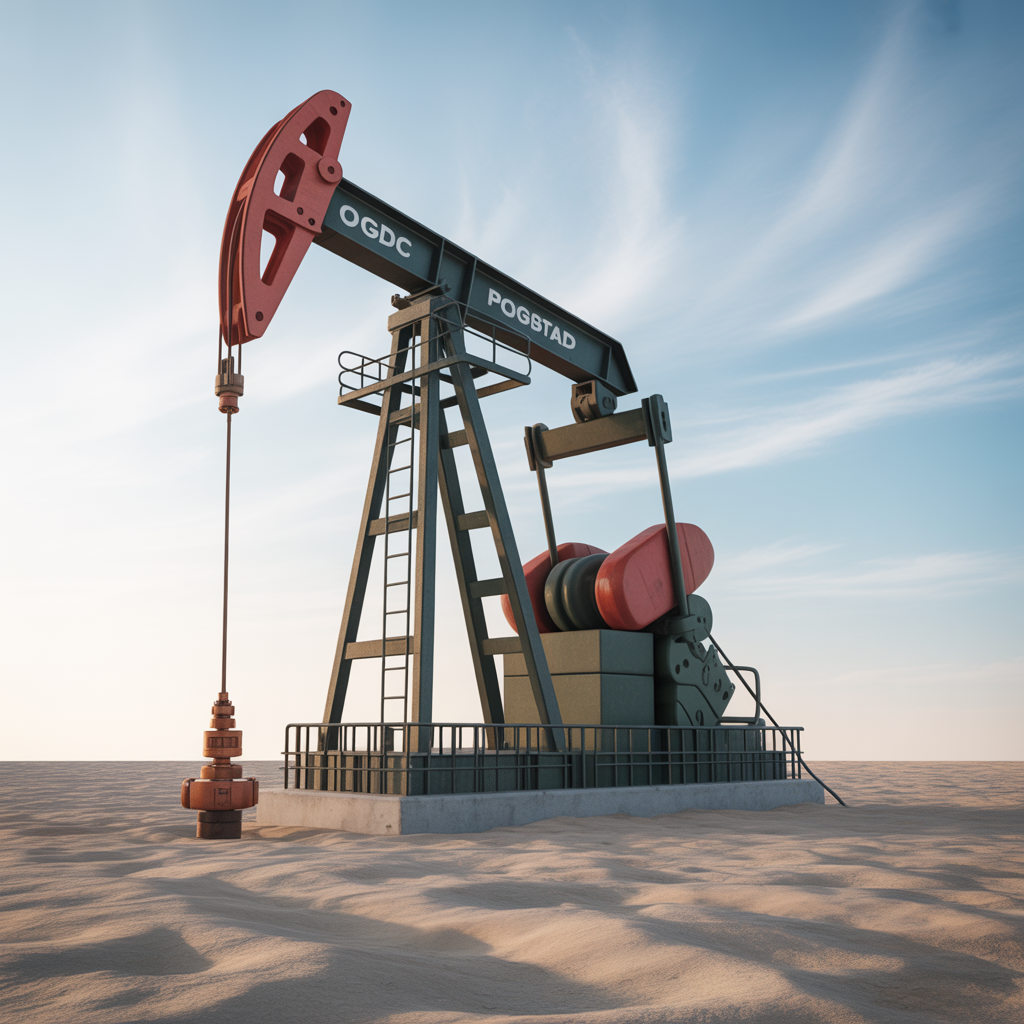
Gas & Oil Pakistan Limited, in partnership with Aramco, inaugurated its 50th retail station on Srinagar Highway, Islamabad. The event gathered senior management and industry leaders to celebrate this milestone, reflecting the company’s growing commitment to Pakistan’s retail fuel sector. Beyond expanding its network, the Aramco new station contributes to the creation of employment opportunities, local skill development, and economic activity in the surrounding community. Each new outlet supports operational staff, customer service teams, and supply chain partners, reinforcing the broader socio-economic impact of the investment. Since launching its first station in Lahore in 2024, the global oil giant has steadily expanded to 50 locations nationwide. This growth demonstrates the company’s dedication to delivering modern fueling experiences while actively contributing to Pakistan’s economic development and providing both jobs and infrastructure that benefit local communities.

Al Baraka Bank (Pakistan) Limited Celebrates 'Al Baraka Day' with Environmental Stewardship and Youth Engagement
Business, Environment

Al Baraka Bank (Pakistan) Limited Celebrates ‘Al Baraka Day’ with Environmental Stewardship and Youth Engagement

KARACHI Al Baraka Bank (Pakistan) Limited celebrated ‘Al Baraka Day’ by organizing an environmental awareness session and a joint plantation drive of 200 trees in collaboration with the Institute of Environmental Studies at the University of Karachi. This initiative is part of a broader, group-wide (Al Baraka Banking Group) commitment to community-focused volunteering activities under the banner of Al Baraka Day, first launched by (Al Baraka Banking Group) in 2022. The theme for this year’s ‘Al Baraka Day’ is “Life on Land,” a direct alignment with the United Nations Sustainable Development Goal (SDG) 15, which focuses on the protection, restoration, and sustainable use of terrestrial ecosystems and biodiversity. This activity also contributes to its flagship initiative “One Tree Per Staff Every Year” by promoting environmental stewardship and sustainability to reduce banks carbon footprint. This initiative reflects the banks deep-rooted commitment to climate change and its impact. Through this partnership with the University of Karachi, the bank is not only contributing to a greener Pakistan but also engaging the next generation in our collective mission to enable our youth to become the agents of change with the banks shared vision for a sustainable future. The event brought together Al Baraka Bank employees, university staff, and students in a hands-on effort to create a meaningful, lasting impact on the communities and environment.

BankIslami Named “Best Bank of the Year 2024” and “Best Islamic Bank” (Runnerup) at CFA Society Pakistan Awards
Business

BankIslami Named “Best Bank of the Year 2024” and “Best Islamic Bank” (Runnerup) at CFA Society Pakistan Awards

Karachi BankIslami has been recognized among the nation’s leading Islamic financial institutions, winning two major distinctions, “Best Bank of the Year 2024 (Mid-Sized Banks)” and “Best Islamic Bank (Runner-up)” at the 22nd CFA Society Pakistan Annual Excellence Awards. These accolades recognize BankIslami’s strong financial performance, strong governance standards, and its pioneering role in advancing Pakistan’s transition toward a Riba-free economy. The recognition reaffirms the Bank’s position as one of the country’s most progressive and purpose-driven Islamic financial institutions. The CFA Society awards are regarded as one of the most credible acknowledgments of excellence and governance in the country’s financial sector. Commenting on the achievement, Rizwan Ata, President & CEO of BankIslami, said: “At BankIslami, every initiative we undertake is guided by our mission of Saving Humanity from Riba. This recognition from the CFA Society is a testament to our unwavering commitment to ethical banking and our continued efforts to build a just, inclusive, and Shariah-compliant financial system for Pakistan.” This achievement adds to a remarkable year of success for BankIslami, with earlier recognition as Pakistan’s Best Islamic Bank from Euromoney, as well as local and international awards from Global Islamic Finance Awards (GIFA), Dragons of Asia, and the Pakistan Digital Awards, marking it as one of the most awarded Islamic banks in the country. With a network of 550+ branches across 210 cities, BankIslami continues to redefine Islamic banking through technology, innovation, and purpose. From launching Pakistan’s first fully digital Islamic banking solution, aik, to introducing accessible products for individuals, SMEs, and communities, the Bank remains at the forefront of transforming Pakistan’s financial future — one step closer to a truly Riba-free economy.

Business

Cybersecurity, Infrastructure Gaps Threaten Pakistan’s Digital Payments Momentum: SBP

Pakistan’s accelerating shift to digital payments faces mounting risks from cybersecurity vulnerabilities, uneven infrastructure, and weak institutional capacity, the State Bank of Pakistan (SBP) warned in its Annual Payment Systems Review for FY2024–25. The report highlights record expansion in the digital ecosystem, with retail payment transactions rising 38% to 9.1 billion—valued at PKR 612 trillion—during FY25. Digital channels accounted for 88% of all transactions, up from 78% two years ago. Yet, the SBP cautioned that the pace of adoption is outstripping the sector’s ability to manage operational and cyber risks effectively. “While digital transformation has gained remarkable traction, gaps in resilience, interoperability, and cyber readiness pose emerging challenges,” the central bank observed. Weak Cyber Defenses With mobile and internet banking volumes growing over 50% in a year, the review warned that banks and fintechs face increasing exposure to cyberattacks and fraud. Social engineering, phishing, and identity theft attempts have intensified, exploiting weaknesses in customer awareness and authentication systems. Although the SBP has issued detailed cybersecurity guidelines, implementation remains uneven—particularly among smaller financial institutions and Electronic Money Institutions (EMIs). The report stresses the need for a sector-wide fraud response mechanism and stronger investment in cybersecurity training and monitoring systems. Uneven Infrastructure, Persistent Cash Reliance Despite a 56% rise in POS terminals to 195,849 and the doubling of QR-enabled merchants to 1.1 million, access gaps persist in semi-urban and rural areas. The SBP acknowledged that “limited connectivity and low digital literacy continue to impede widespread adoption,” with many branchless banking agents still dependent on manual cash transactions. ATMs—now numbering more than 20,000—remain dominated by withdrawals, reflecting Pakistan’s enduring cash dependency. “The infrastructure expansion is encouraging but insufficient to displace cash without behavioral change and trust-building,” the review noted. Integration and Compliance Challenges The rollout of PRISM+, the new RTGS system, and the expansion of the Raast instant payment network have improved efficiency but created new compliance demands. Many microfinance and smaller banks struggle with the cost and complexity of system integration under ISO 20022 standards, the SBP said. The report concludes that sustaining the country’s digital payments growth “requires a coordinated approach to cybersecurity, interoperability, and capacity-building.” Without stronger resilience and user trust, it warns, Pakistan’s progress toward a cash-light economy could stall despite historic transaction growth.

Business

PSX surges nearly 5,000 points on ceasefire hopes between Pakistan and Afghanistan, posts 4th-highest single-day gain

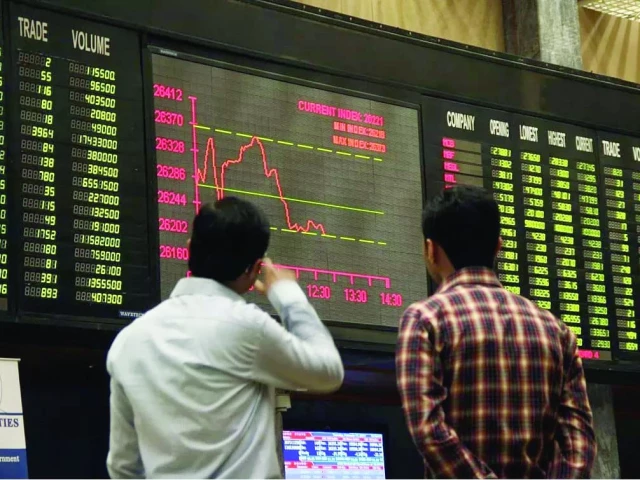
The Pakistan Stock Exchange (PSX) roared back to life on Friday, with the KSE-100 Index skyrocketing 4,899 points—or 3.13%—to close at 161,632, its fourth-highest single-day gain ever. The benchmark reclaimed the 160,000 mark after a week of heavy selling. The surge was sparked by optimism over a ceasefire between Pakistan and Afghanistan, mediated by Turkey and Qatar in Istanbul, easing geopolitical tensions, said Ali Najib of Arif Habib Ltd. “This revived investor confidence,” he noted. Banking giants like UBL, MCB, and HBL, alongside fertilizers (FFC) and cement (LUCK), drove 3,083 points of the rally. Volumes hit 951.3 million shares worth Rs42.2 billion, led by WorldCall Telecom. Weekly, the index dipped 1.02%, but analysts eye 165,000 if momentum holds, with support at 160,000.

Business

Customs seizes smuggled cigarettes, raw materials worth Rs1.1 billion

ISLAMABADIn a series of coordinated intelligence-based enforcement actions, Pakistan Customs (Enforcement) under the Chief Collectorate of Customs (Enforcement), Islamabad, has successfully dismantled multiple networks engaged in the illicit trade of smuggled cigarettes and raw materials used in illegal cigarette manufacturing.Major recoveries were made in Lahore and Hyderabad with the total value of seized goods estimated at over Rs. 1.1 billion, according to press release issued by Federal Board of Revenue (FBR).Acting on credible intelligence, the Collectorate of Customs (Enforcement), Lahore, conducted a major intelligence-led operation exposing an organized network of illegal cigarette manufacturers operating under the guise of rice mills.Acting on a tip-off, Customs officers raided M/s Ayesha Rice Mills, Daska and recovered a massive consignment of acetate tow, cigarette paper, filter rods, aluminum foil, and adhesive materials – all essential inputs for the production of counterfeit and non-duty-paid cigarettes.During follow-up investigation, another premises, M/s Nazeer Rice Mills, Daska, located nearby, was identified as a potential storage site. A detailed search revealed that the facility had been hurriedly vacated following the earlier raid.Evidence recovered from the site confirmed that the smuggled materials had been relocated to warehouses near Sundar Industrial Estate, Lahore.

Scroll to Top