Breaking News

FBR Tax Shortfall Widens to Rs684 Billion Amid Economic Pressures
Breaking News, Pakistan

FBR Tax Shortfall Widens to Rs684 Billion Amid Economic Pressures

The Federal Board of Revenue (FBR) tax shortfall has widened significantly, reaching Rs684 billion during the first 10 months of the current fiscal year, raising concerns over Pakistan’s revenue performance. According to reported data, Federal Board of Revenue collected Rs10,261 billion from July to April against a target of Rs10,945 billion, highlighting a substantial gap in tax collection. Revenue Targets Missed as Collection Slows The latest figures reveal that the FBR tax shortfall continues to grow as collection efforts fall behind expectations. In April 2026 alone, the FBR collected Rs956 billion against a target of Rs1,029 billion, resulting in a monthly shortfall of Rs73 billion. Officials acknowledged that the tax authority now faces mounting pressure to meet its revised annual target. To achieve the full-year goal of Rs13,979 billion, the FBR must collect an additional Rs3,718 billion in May and June—an ambitious target given the current pace of revenue generation. External Factors Deepen Fiscal Challenges Economic disruptions linked to the Gulf War have further aggravated the FBR tax shortfall. Officials noted that declining imports have led to a sharp drop in sales tax collection at the import stage, traditionally a major revenue source. At the same time, slowed economic activity has reduced overall taxable transactions, limiting income and sales tax inflows. An FBR official stated that both import contraction and reduced market activity have significantly constrained revenue growth in recent months. IMF Refuses to Revise Annual Target In light of the widening FBR tax shortfall, authorities approached the International Monetary Fund seeking a downward revision of the annual tax target. The FBR proposed reducing the target from Rs13,979 billion to around Rs13,400–13,500 billion. However, the IMF declined the request, maintaining strict fiscal targets as part of broader economic conditions tied to Pakistan’s financial programme. This decision has added further pressure on tax authorities to improve collection performance within a limited timeframe. Breakdown of Tax Collection Provisional data shows that the FBR tax shortfall persists despite contributions from multiple revenue streams. During the first 10 months: Income tax collection stood at Rs5,142 billionSales tax generated Rs3,825.5 billionFederal excise duty contributed Rs672.9 billionCustoms duty added Rs1,119.5 billion The total gross collection reached Rs10,760.6 billion. However, after issuing refunds amounting to Rs498.9 billion, the net collection remained Rs10,261.7 billion. Uncertainty Over Final Revenue Outcome Despite the widening FBR tax shortfall, officials indicated that achieving a collection between Rs13,000 billion and Rs13,200 billion by June could still be viewed as a reasonable outcome under current circumstances. However, meeting the original or even revised targets remains a major challenge. With only two months remaining in the fiscal year, the performance of key sectors, import trends, and enforcement measures will play a decisive role in determining the final revenue figures. The growing FBR tax shortfall underscores broader economic pressures facing Pakistan, as authorities struggle to balance fiscal discipline with slowing economic activity.

Petrol Prices in Pakistan Raised Again, Adding Pressure on Consumers
Breaking News, Pakistan

Petrol Prices in Pakistan Raised Again, Adding Pressure on Consumers

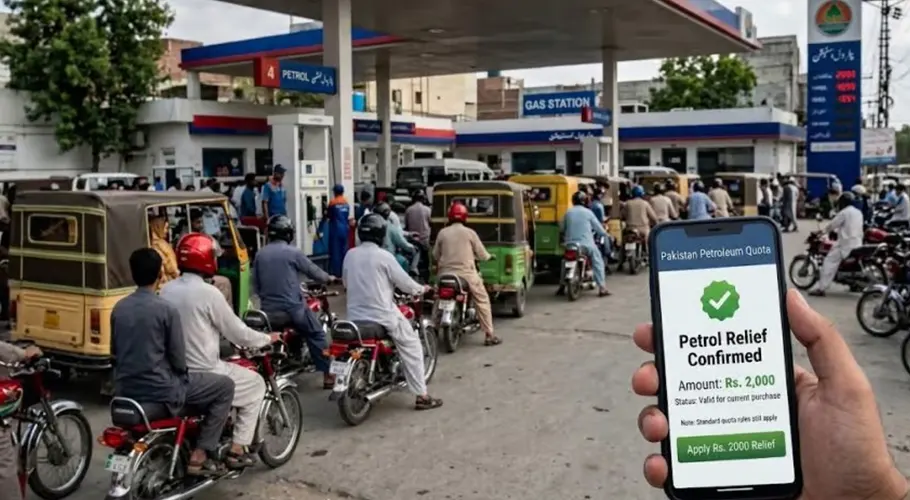
Pakistan has once again increased petrol prices, with the latest adjustment pushing rates higher by Rs7 per litre, adding further strain on already burdened consumers. The revision comes as part of the government’s routine fuel price review, influenced by fluctuations in global oil markets. According to official notification, the new prices have been implemented immediately and will remain in effect for the next fortnight. Authorities cited rising international oil prices and import costs as key reasons behind the increase. The hike is expected to have a ripple effect across the economy, particularly on transportation and logistics costs. As fuel prices rise, the cost of goods and services typically follows, contributing to inflationary pressures. Petrol, widely used in private transport and small vehicles, directly impacts household budgets, while increases in diesel—commonly used in heavy transport and agriculture—can drive up food and commodity prices nationwide. With Pakistan heavily reliant on imported fuel, global market volatility continues to play a decisive role in domestic pricing. Analysts warn that if international oil prices remain elevated, consumers may face further increases in the coming months.

Karachi’s long-delayed Red Line Bus Rapid Transit (BRT) project has regained momentum as the Frontier Works Organisation (FWO) takes over construction on a key section following the removal of the previous contractor. The takeover comes after authorities halted work by the Lot 2 contractor—covering the Mosamiyat to Hasan Square stretch—and sealed its office due to ongoing delays and performance concerns. With the site now handed over, FWO has deployed machinery and workforce to restart construction activities across multiple نقاط along the corridor. In the initial phase, efforts are focused on repairing roads being used as alternative traffic routes to ease commuter disruptions. The organisation has also placed signage along the route to inform the public about ongoing work and acknowledge the inconvenience caused by construction. This development follows the Sindh government’s decision to cancel the earlier contract due to persistent delays, slow progress, and failure to meet required standards. Officials aim to fast-track progress under FWO’s supervision, with renewed efforts to restore public confidence in one of Karachi’s most critical urban transport projects, which has faced repeated setbacks since its launch.
Breaking News, Pakistan

FWO Steps In as Karachi Red Line BRT Work Resumes After Contractor Removal

Karachi’s long-delayed Red Line Bus Rapid Transit (BRT) project has regained momentum as the Frontier Works Organisation (FWO) takes over construction on a key section following the removal of the previous contractor. Read More: https://theboardroompk.com/imc-among-top-toyota-manufacturing-affiliates-in-asia-pacific-after-winning-three-awards/ The takeover comes after authorities halted work by the Lot 2 contractor—covering the Mosamiyat to Hasan Square stretch—and sealed its office due to ongoing delays and performance concerns. With the site now handed over, FWO has deployed machinery and workforce to restart construction activities across multiple نقاط along the corridor. In the initial phase, efforts are focused on repairing roads being used as alternative traffic routes to ease commuter disruptions. The organisation has also placed signage along the route to inform the public about ongoing work and acknowledge the inconvenience caused by construction. This development follows the Sindh government’s decision to cancel the earlier contract due to persistent delays, slow progress, and failure to meet required standards. Officials aim to fast-track progress under FWO’s supervision, with renewed efforts to restore public confidence in one of Karachi’s most critical urban transport projects, which has faced repeated setbacks since its launch.

NEPRA Scraps Licensing for Small Solar Systems Under 25 kW
Breaking News, Pakistan

NEPRA Scraps Licensing for Small Solar Systems Under 25 kW

In a significant move to facilitate renewable energy adoption, the National Electric Power Regulatory Authority (NEPRA) has officially abolished the licensing requirement for solar power systems with a capacity of up to 25 kilowatts (kW). Read More: https://theboardroompk.com/alleged-fake-claims-oil-marketing-companies-accused-of-extracting-billions-from-govt/ This decision aims to simplify the process for residential and small commercial consumers who utilize net metering to offset their electricity bills. The policy change follows a formal request from the Power Division, acting on the special directives of Federal Minister for Energy, Sardar Awais Ahmad Khan Leghari. Previously, even small-scale solar installers had to navigate bureaucratic hurdles to obtain a license, which often acted as a deterrent for many households looking to switch to green energy. Simplifying the Net Metering Process The removal of the licensing condition is expected to drastically reduce the processing time for net metering applications. By cutting through the red tape, the government hopes to encourage more citizens to invest in solar technology, which helps reduce the burden on the national grid and lowers individual electricity costs. Focus on Clean Energy Goals This initiative is part of a broader government strategy to increase the share of renewable energy in Pakistan’s total energy mix. By making it easier for small-scale users to connect to the grid, the authorities aim to promote environmental sustainability while providing financial relief to the public amid rising energy prices.

Pakistan Faces Highest Fuel Burden in South Asia Despite Similar Fuel Prices
Breaking News, Pakistan

Pakistan Faces Highest Fuel Burden in South Asia Despite Similar Fuel Prices

Pakistan is facing the highest fuel affordability burden in South Asia, even though petrol prices remain broadly similar across the region in US dollar terms. New comparative data based on World Bank indicators highlights a growing income gap that places Pakistan at a disadvantage compared to neighboring economies. Read More: https://theboardroompk.com/heatwave-warning-issued-as-climate-conditions-turn-hotter-than-normal/ Fuel affordability Pakistan South Asia comparison shows that petrol prices in Pakistan, India, Bangladesh, and Sri Lanka often move within a close range depending on global oil trends, taxation policies, and exchange rate movements. However, the real pressure emerges when these prices are measured against income levels. Petrol Prices Remain Close Across Region Recent data shows that petrol prices in the region remain relatively aligned in international dollar terms. Pakistan records petrol prices at around $1.41 per litre. India follows at $1.10 per litre, while Bangladesh stands at $1.05 per litre. Sri Lanka reports approximately $1.40 per litre. Despite minor differences, the overall pricing trend reflects global oil market movements and domestic tax structures. Currency depreciation and subsidy adjustments also influence final retail rates in each country. In local currency terms, Pakistan’s petrol price stands at around Rs. 393 per litre. India records Rs. 310 to Rs. 315 per litre. Bangladesh shows Rs. 325 to Rs. 335 per litre. Sri Lanka reports Rs. 355 to Rs. 365 per litre. Income Gap Creates Major Affordability Crisis The real disparity appears when comparing fuel prices with per capita income across South Asia. According to World Bank-based estimates, Pakistan’s per capita income ranges between $1,400 and $1,600. India reports a higher per capita income of around $2,600 to $2,700. Bangladesh stands close behind at $2,500 to $2,600. Sri Lanka leads the region with more than $4,500 per capita income. This gap places Pakistan at the bottom of South Asia in terms of purchasing power. As a result, fuel costs take a much larger share of household income in Pakistan compared to its regional counterparts. Pakistan Faces Highest Fuel Pressure in Region The data clearly indicates that Pakistan remains the most financially strained country in South Asia when it comes to fuel affordability. Even small increases in petrol prices place a heavier burden on households due to lower income levels. Economists say this imbalance makes Pakistan more vulnerable to global oil price fluctuations. It also increases pressure on transport costs, food supply chains, and inflation rates. In contrast, countries like India and Bangladesh maintain relatively stronger income levels, which help absorb fuel price shocks more effectively. Sri Lanka, despite its recent economic crisis and sovereign default in 2022, now shows stronger per capita income recovery compared to Pakistan. Sri Lanka Shows Recovery Despite Past Economic Crisis Sri Lanka, which defaulted on its sovereign debt in April 2022, now reports the highest per capita income among the four South Asian countries in this comparison. The recovery reflects structural reforms and stabilization efforts in recent years. While fuel prices in Sri Lanka remain close to regional averages, higher income levels provide better affordability capacity for consumers. Pakistan Remains Exposed to Global Oil Shocks Experts note that Pakistan’s lower income base makes it highly sensitive to global oil price changes. Any increase in international crude prices quickly translates into higher domestic fuel costs. This creates ripple effects across the economy, including rising transportation costs, higher food prices, and increased production expenses. Analysts suggest that without significant income growth and structural economic reforms, Pakistan will continue to face the highest fuel affordability pressure in South Asia.

Islamabad Peace Summit: US Envoys Arrive as Iran Rejects Direct Dialogue
Breaking News, Pakistan

Islamabad Peace Summit: US Envoys Arrive as Iran Rejects Direct Dialogue

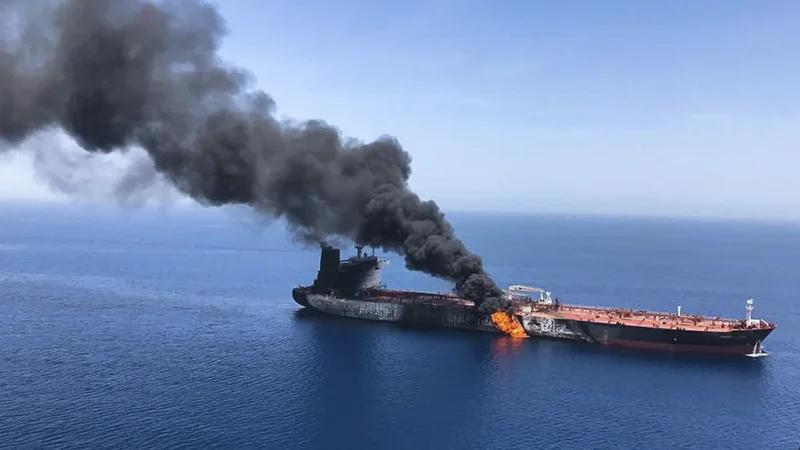
ISLAMABAD – A high-level delegation of U.S. negotiators is scheduled to arrive in the Pakistani capital this Saturday to revive stalled peace talks, even as Tehran maintains a firm stance against direct engagement. The mission, led by Special Envoy Steve Witkoff and Jared Kushner, aims to resolve a nine-week conflict that has disrupted global energy supplies and claimed thousands of lives. Mediation Through Interlocutors Despite the White House’s optimism that the “Iranians want to talk in person,” Iranian Foreign Ministry spokesperson Esmaeil Baqaei clarified on social media that no direct meeting is on the agenda. Instead, Tehran intends to use Pakistani officials as intermediaries to convey their concerns. Foreign Minister Abbas Araqchi, who arrived in Islamabad on Friday, has been coordinating with Pakistani leadership, emphasizing that “neighbors are our priority” while dismissing direct contact with the American team. Economic Stakes and the Nuclear Demand The backdrop of these talks is a crippling economic impasse. Iran has largely closed the Strait of Hormuz, a vital artery for 20% of global oil, in response to a U.S. blockade on its exports. U.S. Defense Secretary Pete Hegseth recently stated that Iran still has an “open window” to secure a deal, provided they abandon their nuclear ambitions in a verifiable manner. With Brent crude prices soaring by 16% this week, the international community is watching Islamabad closely for any sign of a breakthrough that could stabilize the market.

Petroleum Price Hike Devastating for Industry and Employment, Businessmen
Breaking News, Pakistan

Petroleum Price Hike Devastating for Industry and Employment, Businessmen

Karachi: President of the Korangi Association of Trade and Industry (KATI), Muhammad Ikram Rajput, has expressed serious concern over the government’s recent increase in petroleum prices, warning that the move will have damaging consequences for industry, employment, and the broader economy. Read More: https://theboardroompk.com/why-phevs-not-evs-are-winning-the-first-round-of-electrification-in-emerging-markets/ Reacting to the latest notification, he said the price of petrol has been raised by Rs26.77 per litre to Rs393.35, while high-speed diesel has increased to Rs380.19 per litre. He termed the sharp hike in energy costs “highly detrimental” to industrial and commercial activity. Rajput noted that higher fuel prices would significantly raise production costs, leading to an increase in the prices of essential goods and undermining export competitiveness. “Expensive fuel translates directly into expensive production,” he said, adding that the burden would ultimately be passed on to consumers. He urged the government to immediately reduce levies and other charges on petroleum products to bring prices within reach of the common man. “Fuel prices are rapidly moving beyond the affordability of ordinary citizens,” he said, warning that the rising cost of energy is making it increasingly difficult for industries to sustain operations. President KATI pointed out that the business community is already grappling with high electricity tariffs, elevated interest rates, and other financial constraints. “At such a time, an increase in petroleum prices will only compound the challenges faced by industrialists,” he added. Rajput called on the government to review its decision and introduce immediate relief measures for the industrial and trade sectors. He cautioned that if production costs continue to rise at the current pace, industrial activity could slow down, adversely affecting both economic growth and employment.

Pakistan Turns to Global Market for LNG
Breaking News, Pakistan

Pakistan Turns to Global Market for LNG

Pakistan has stepped up efforts to secure liquefied natural gas as energy pressures continue to mount. Pakistan LNG Limited has issued a fresh tender to purchase liquefied natural gas (LNG) cargoes from the international market. Read More: https://theboardroompk.com/kenya-rice-export-meeting-reap-members-discuss-export-hurdles-and-ways-to-enhance-trade/ PLL seeks three LNG cargoes According to an official advertisement, the company has invited bids from global suppliers for three LNG cargoes. Each cargo will carry around 140,000 cubic metres of gas. Authorities want delivery on a delivered-ex-ship basis at Port Qasim. PLL has specified clear delivery windows. The first shipment should arrive between April 27 and 30. The second cargo should reach between May 1 and 7. The third delivery is expected from May 8 to 14. The tender will close on April 24, leaving a short timeframe for bids. Energy shortage drives urgent move Officials say the tender reflects growing urgency in Pakistan’s energy sector. The country continues to face a gap between demand and supply. LNG imports play a crucial role in filling this gap. Pakistan depends heavily on gas to generate electricity and run industries. However, domestic gas production continues to decline. This trend has increased reliance on imported LNG. Authorities aim to secure spot cargoes quickly to stabilize supply. Without immediate imports, the risk of prolonged power outages remains high. Government entity leads procurement PLL operates as a public sector company under the Ministry of Energy. It functions as a subsidiary of Government Holdings Private Limited. The company manages the entire LNG supply chain from procurement to delivery. Officials say PLL handles importing, storing, transporting, and distributing LNG across Pakistan. It also ensures supply to end users, including power plants and industries. This centralized role makes PLL a key player in maintaining energy stability. Any disruption in its procurement process can impact the entire system. Azerbaijan offers LNG support In a positive development, SOCAR has expressed readiness to supply LNG to Pakistan. Company officials said they can provide cargoes as soon as Islamabad places a request. SOCAR highlighted a framework agreement signed in 2025. This agreement allows Pakistan to purchase LNG cargoes under a faster process. Officials believe this arrangement can help reduce delays in procurement. Pakistan may consider this option to secure immediate supplies. Quick deals could help bridge the current shortfall. Global factors add pressure Pakistan’s LNG challenges also link to global market conditions. The country faces price volatility due to international supply disruptions. The ongoing impact of the Ukraine war continues to influence LNG availability and costs. Fluctuating prices make it difficult for Pakistan to secure affordable cargoes. At the same time, competition from other buyers adds further pressure. These factors have forced authorities to explore multiple supply options. The current tender reflects this broader strategy. Load shedding continues amid shortages Energy shortages have already started affecting consumers. Sardar Awais Ahmad Khan Leghari recently confirmed that load shedding will continue during peak hours. He said LNG supply remains disrupted due to a force majeure declared by Qatar. This situation has reduced available gas for power generation. The country currently faces a shortfall of around 3,400 megawatts. Lower hydropower generation has worsened the crisis. Reduced rainfall and irrigation demand have limited water releases from reservoirs. Government explores alternative measures Authorities have started using furnace oil to manage electricity demand. They have also delayed maintenance of nuclear plants to keep power generation stable. Officials say these measures offer temporary relief. However, long-term stability depends on consistent LNG supply. The government continues to work on multiple fronts to address the crisis. Securing LNG cargoes remains a top priority. Critical weeks ahead for energy sector The coming weeks will prove crucial for Pakistan’s energy outlook. Successful bids in the current tender can ease immediate pressure. Delays or high prices could deepen the crisis. Authorities remain under pressure to act quickly. Consumers and industries continue to face uncertainty as demand rises.

Pakistan Pays Record Premium on Fuel Imports as Global Supply Disruptions Intensify
Breaking News, Pakistan

Pakistan Pays Record Premium on Fuel Imports as Global Supply Disruptions Intensify

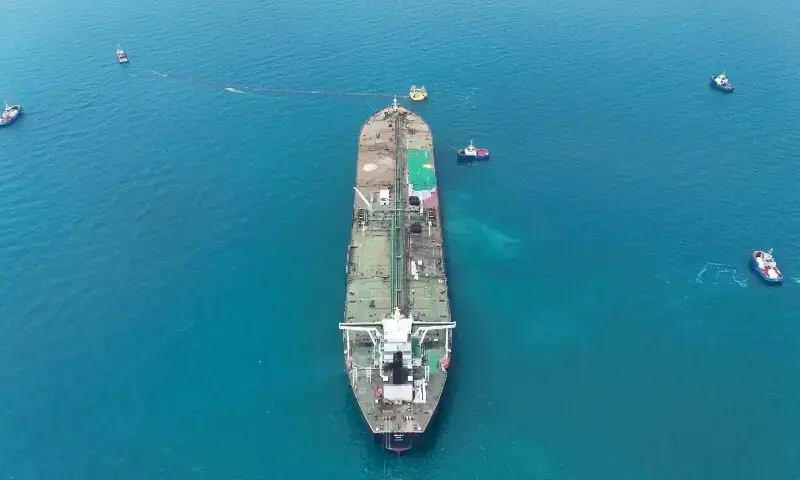
Pakistan is currently facing an unprecedented surge in fuel import costs, as the country is now paying record-high premiums on petroleum products amid ongoing global supply disruptions. The sharp increase is largely linked to geopolitical tensions in the Middle East, which have significantly impacted oil supply routes and pricing dynamics. Read More: https://theboardroompk.com/ccp-allows-acquisition-of-ranipur-sugar-mills-by-saakh-pharma-united-ethanol/ Recent data shows that the premium on imported fuel has climbed to around $34 per barrel, a dramatic jump compared to earlier levels of roughly $12 per barrel. This steep rise reflects tightening global supply conditions and increased competition for available cargoes. One of the key factors behind this spike is the disruption in the Strait of Hormuz—a critical global oil transit route—forcing countries like Pakistan to secure fuel at higher costs due to limited availability and increased freight risks. As a heavily import-dependent energy market, Pakistan is particularly vulnerable to such external shocks. The country relies on imports for a large portion of its fuel needs, making it highly exposed to fluctuations in global oil prices and supply chain disruptions. The financial impact is significant. Rising premiums are expected to push up the overall import bill, weaken the currency, and add further pressure on inflation. Historically, even moderate increases in oil prices have had a direct effect on Pakistan’s fiscal stability and current account balance. This situation is already translating into higher domestic fuel prices, placing an additional burden on consumers and businesses alike. With inflationary pressures mounting, the government faces difficult decisions regarding subsidies, pricing adjustments, and energy policy going forward. Looking ahead, uncertainty remains high. If global tensions persist and supply routes remain unstable, Pakistan could continue to face elevated fuel costs, further straining its economy and complicating recovery efforts.

Karachi Red Line BRT Faces Setback as Lot 2 Contract Terminated Over Delays
Breaking News, Pakistan

Karachi Red Line BRT Faces Setback as Lot 2 Contract Terminated Over Delays

Ongoing performance issues and missed deadlines force authorities to take decisive action on a key segment of the city’s transit project Karachi’s ambitious Red Line Bus Rapid Transit (BRT) project has suffered a major setback after authorities decided to terminate the Lot 2 contract, citing persistent delays and underperformance by the contractor. The move comes after concerns raised by the Asian Development Bank, which highlighted slow progress, quality shortcomings, and failure to meet environmental and safety standards during a recent review. Read More: https://theboardroompk.com/kcci-raises-alarm-over-targeted-attack-on-industrialist-warns-of-resurgent-extortion-mafia-collapsing-law-order/ The affected stretch—from Mosamiyat to Numaish—has faced repeated disruptions, including financial disagreements and halted construction work. Initially launched in 2022 with a target completion timeline of 30 months, the project has already missed its expected 2024 deadline, with uncertainty now surrounding its revised completion schedule. Officials have begun formal proceedings to end the contract, signaling a critical turning point for one of Karachi’s most important urban transport initiatives. The prolonged delays have not only stalled infrastructure development but also worsened traffic congestion, adding to the daily challenges faced by commuters across the city. As authorities move forward, the focus will shift to reassigning the contract and accelerating progress to ensure the project can eventually deliver on its promise of a modern, efficient public transport system for Karachi.

Scroll to Top