Auto

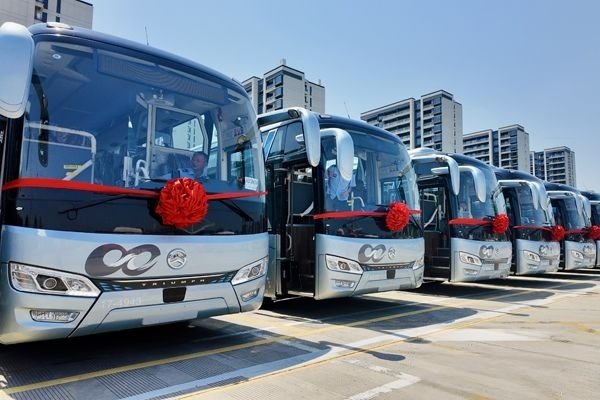
Ghandhara to Assemble Chinese Luxury Buses Locally
Auto

Ghandhara to Assemble Chinese Luxury Buses Locally

Pakistan’s automotive industry is poised for growth as Ghandhara Industries Limited announces a key alliance with China’s Zhongtong Bus Holding Co. Limited. The partnership, revealed through a filing to the Pakistan Stock Exchange on Friday, aims to roll out Zhongtong’s high-end buses in the local market. This move marks a major step in diversifying Ghandhara’s offerings, with plans to establish a dedicated assembly line alongside its current bus body production setup. Fully imported luxury models are slated for introduction in early 2026, while domestic manufacturing will kick off by mid-year, pending necessary approvals and facility upgrades. Zhongtong, established in 1958, specializes in eco-friendly and energy-efficient buses, serving international markets. Amid Pakistan’s auto sector—long led by Japanese brands like Suzuki, Honda, and Toyota—the deal intensifies rivalry from newcomers such as Hyundai, Kia, and Sazgar Engineering. Adding to the momentum, NexGen Auto, part of the Nishat Group, recently started electric vehicle output ahead of its timeline this month, signaling a shift toward innovative mobility solutions.

TDAP Invites Exporters: Join Pakistan Pavilion at Motobike Istanbul 2026
Auto, World

TDAP Invites Exporters: Join Pakistan Pavilion at Motobike Istanbul 2026

Karachi: Motobike Istanbul, the region’s largest motorbike exhibition, scheduled to be held from 22–25 April 2026 at the Istanbul Expo Center, Türkiye. It is a leading platform for the motorcycle, and bicycle parts, motor bike wears and accessories, which attracting thousands of international buyers and visitors. The event provides Pakistani manufacturers an excellent opportunity to showcase their products, explore new markets, and strengthen global business linkages. In the previous edition, 300 exhibitor brands from 31 countries participated, and the fair attracted 126,094 visitors overall. The exhibition covers a wide range of product groups, including:Motorcycle Parts & Components, Bicycle Parts & Components, Motorcycle Accessories, Bicycle Accessories, Repair & Maintenance, Electronics & Systems, and Service Groups. In 2025, five Pakistani companies participated under the Pakistan Pavilion: Ghauri Tyres & Tubes, Smooth Ways International, Asaqal Sports, Maxler Sewing Corporation, and Qasim Impex. TDAP aims to support local exporters by facilitating their participation in this internationally recognized fair, helping them expand business networks and enhance Pakistan’s presence in the global motorcycle industry. After the subsidy each stand is available for only PKR. 735,000/- while direct stand cost is Last Date to apply: 10 December 2025For more details, please visit our website:https://motobike-istanbul.tr.messefrankfurt.com/istanbul/en.html For TDAP to apply online: https://tdap.gov.pk/mis/

IMC proposes maintaining 40% tariff difference in upcoming auto policy
Auto

IMC proposes maintaining 40% tariff difference in upcoming auto policy

Karachi: Indus Motor Company proposed that the upcoming Auto Policy 2026–31 should maintain at least a 40% tariff difference between Completely Knocked Down (CKD) and Completely Built Up (CBU) vehicles to protect jobs and ensure competitiveness. This was proposed by Chief Executive IMC Ali Asghar Jamali while speaking at Pakistan Auto Show (PAPS) held at the Expo Center Karachi from November 14-16, in which IMC participated as a Diamond Sponsor. “Our participation at PAPS 2025 reflects our commitment to the ‘Make in Pakistan’ vision to produce world-class vehicles locally while supporting job creation and industrial growth. “We urge the government to maintain policies that promote local manufacturing and shield the industry from the negative impact of used car imports,” said Jamali, adding that there is a need for stable and forward-looking government policies to ensure the long-term sustainability of the local auto industry. He further emphasized that parts manufacturing in Pakistan should be nurtured, and imports of parts already produced locally should be subject to higher import duties to strengthen the local parts industry, develop Pakistani skill sets, and create sustainable employment. Jamali also called for decisive measures against the rising import of used vehicles, which threaten domestic production, Large Scale Manufacturing (LSM) growth, and employment generation. It is to be noted that currently 17 global automotive players have invested in Pakistan, establishing plants with a combined capacity of 500,000 vehicles, of which only one third is utilized. In this situation, he added, where major investments exist alongside underused capacity, the import of used cars, already 25% of the market, undermines investor confidence. “Insufficient capacity utilization also makes locally produced vehicles less competitive and more expensive for consumers,” reasoned Jamali. Over the past 35 years, he added, IMC has consistently invested in localization, human skills development, enabling high-quality vehicle production, job creation, and economic growth through its strong vendor network and technical collaborations. “The company continues to lead efforts for sustainability, innovation, and industrial advancement within Pakistan’s automotive ecosystem,” said Jamali. Jamali said that at IMC they believe in building a stronger Pakistan through localization, innovation, and continued investment in our people and industry. Through an active participation at PAPS 2025, he added, IMC reaffirmed its dedication to localization, industrial growth, and sustainable economic development, in line with the national vision of “Make in Pakistan.” At the IMC pavilion, visitors were drawn to the expended displays of the Toyota Yaris and Corolla Cross, highlighting the extensive localization achieved in these models. The exhibit reflected IMC’s enduring commitment to its “Make in Pakistan” philosophy, promoting local manufacturing, innovation, and industrial self-reliance. The event brought together original equipment manufacturers (OEMs), policymakers, government stakeholders, and the public to showcase advancements in Pakistan’s automotive industry.

Suzuki Unveils Stylish Fronx Compact SUV at PAPS 2025, Eyeing Pakistan's Growing Urban Market
Auto

Suzuki Unveils Stylish Fronx Compact SUV at PAPS 2025, Eyeing Pakistan’s Growing Urban Market

Karachi: In a buzzworthy reveal at the Pakistan Auto Show (PAPS) 2025, Suzuki has taken the wraps off its latest compact SUV, the Fronx, signalling a bold push into Pakistan’s competitive urban mobility segment. The event, unfolding at the Karachi Expo Center from November 14 to 16, drew crowds eager for innovative rides amid rising demand for versatile, fuel-efficient vehicles.The Fronx blends crossover flair with practicality, powered by a responsive 1.5-liter engine delivering 103 horsepower and 138 Nm of torque. Mated to a smooth 4-speed automatic transmission, it promises agile handling for city streets and light highway jaunts. With a 37-liter fuel tank, the model prioritizes efficiency without skimping on tech-forward amenities.At its core is a vibrant 9-inch touchscreen infotainment system, seamlessly integrating Android Auto and Apple CarPlay for effortless connectivity. Driver aids like cruise control, hill hold control (HHC), and a 360-degree camera elevate everyday drives, while safety is fortified with six airbags, rear parking sensors, and anti-lock braking system (ABS).Inside, the cabin caters to modern lifestyles with digital climate control, rear AC vents for passenger bliss, wireless charging pads, and intuitive multifunction steering wheel controls. While these specs hail from the international variant, Suzuki hints at tailored tweaks for the Pakistani lineup to suit local preferences and conditions.Industry watchers see the Fronx as a game-changer for young professionals and families seeking style on a budget. “This isn’t just a vehicle; it’s Suzuki’s vision for tomorrow’s roads,” remarked a company spokesperson at the unveiling. As PAPS continues, expect test drives and deeper dives into pricing and availability, potentially debuting in showrooms by early 2026.

Pakistan's Auto Sector Accelerates
Auto, Pakistan

Pakistan’s Auto Sector Accelerates: Car Sales Surge 46% in First Four Months of FY26

Karachi Pakistan’s automotive market demonstrated robust recovery with car sales, including jeeps and pick-ups, jumping 46% year-on-year to 59,600 units during July-October FY26, fueled by stabilizing economic conditions, a steadier Pakistani rupee, and the introduction of fresh models.Data released Tuesday by the Pakistan Automotive Manufacturers Association (PAMA) revealed a broad uptick across vehicle categories. Total sales of all vehicles—encompassing two-, three-, and four-wheelers—also climbed, though farm tractor volumes dipped.In September 2025 alone, jeep and pick-up sales rocketed 67% year-on-year to 17,174 units. Trucks and buses posted even steeper gains, rising 115% to 2,308 units and 59% to 322 units, respectively. Motorcycle and rickshaw sales accelerated 30% to 597,025 units, reflecting renewed consumer appetite.Auto sector analyst Muhammad Sabir Shaikh, speaking to Business Recorder, attributed the resurgence to post-pandemic normalization. “The industry endured a steep decline from 2022 through the first quarter of 2025, but it’s now building momentum,” he said. Shaikh highlighted how improved economic sentiment and rupee stability have restored buyer confidence, encouraging consumers to upgrade vehicles every three to four years—a habit disrupted by the Covid-19 fallout.The analyst also pointed to the influx of affordable Chinese motorcycles challenging pricier Japanese rivals, boosting two-wheeler demand. However, farm tractor sales fell 15% to 5,867 units, hampered by an 18% sales tax reimposed over the past 18 months, which had previously been waived to spur agricultural mechanization.Industry observers anticipate sustained growth, provided macroeconomic stability persists, positioning Pakistan’s auto sector for further expansion in the coming fiscal year.

Auto

Global Chip Shortage Escalates as US-China Tensions Hit Automakers Hard

The global automotive industry is facing a deepening crisis as semiconductor shortages intensify amid mounting US-China trade tensions. Chipmaker Nexperia, a critical supplier for major automakers, has been hit with new export restrictions on advanced chips — sending shockwaves across global production lines. Major Automakers in Crisis Mode – Nissan says current supplies will only last until early November, forcing reduced production schedules. – Honda has completely halted operations at its Mexican assembly plants, leaving thousands of workers idle and delaying key SUV releases. – Mercedes-Benz warns of looming disruptions across its global fleet. – Volkswagen, Fiat, and others in Brazil are preparing to shut down plants within weeks due to incoming shortages. Emergency Plans and ‘War Rooms’ Activated Automakers have set up emergency sourcing “war rooms,” urgently turning to chip stockpiles in Taiwan and South Korea in an attempt to stabilize operations. Market Impact Analysts forecast a 15–20% decline in Q4 automotive output, worsening EV rollout delays, tightening supply, and pushing up vehicle prices. Shares of impacted automakers fell 2–4%, reflecting escalating concerns. Industry Warning “This isn’t just a hiccup — it’s a supply chain meltdown,” said Ford’s procurement chief, urging diplomatic intervention to prevent further disruption.

Scroll to Top