Auto

Chery Tiggo 8 PHEV Pakistan Price Sees a Sharp Revision, Here’s What Changed
Auto

Chery Tiggo 8 PHEV Pakistan Price Sees a Sharp Revision, Here’s What Changed

The Chery Tiggo 8 PHEV Pakistan price has officially moved upward, marking the end of a highly anticipated introductory phase that had drawn significant attention from car buyers across the country. As of February 2, 2026, Chery Master Pakistan has implemented a new price for its flagship 7-seater plug-in hybrid SUV, signaling a new chapter for one of the most talked-about vehicle launches of the year. Read More: https://theboardroompk.com/toyota-recalls-161000-us-vehicles-over-rear-view-camera-display-fault/ This price revision was expected but the timing, demand, and limited availability are now raising fresh questions for potential buyers. Why the Chery Tiggo 8 PHEV Pakistan Price Increased When Chery Master Pakistan launched the Tiggo 8 PHEV, the company introduced a limited-time pre-registration incentive to generate early momentum. The SUV was offered at PKR 10,999,000, with a clearly stated deadline of January 31, 2026. That launch window is now closed. According to Chery, the response to the introductory pricing was “overwhelming,” with demand exceeding initial expectations. As a result, the company has revised the price upward to PKR 11,299,000, effective February 2, 2026. In simple terms, buyers who secured bookings before the deadline locked in savings of PKR 300,000, while new buyers will now pay the revised amount. Chery Tiggo 8 PHEV Pakistan Price: Old vs New Explained Instead of presenting the numbers in a table, here’s what the change means in practical terms: At launch, Chery positioned the Tiggo 8 PHEV aggressively below the Rs. 11 million mark to attract early adopters in Pakistan’s growing hybrid SUV segment. That strategy worked. Once the promotional allocation was exhausted, the price was adjusted upward to reflect standard market positioning, import costs, and strong demand. This pricing strategy mirrors global auto industry trends, where early buyers are rewarded for quick decisions, while later buyers face adjusted prices once market interest is validated. Limited Units, Limited Time, What Buyers Should Know One key detail many buyers may overlook is that the new Chery Tiggo 8 PHEV Pakistan price applies only to a limited batch of vehicles. Chery Master Pakistan has confirmed that this allocation comes with delivery timelines set for June 2026. This creates a classic supply-and-demand scenario: • Early buyers benefited from lower pricing• Current buyers face a higher price but still limited availability• Future pricing could shift again depending on demand, currency movement, and policy changes•For consumers watching Pakistan’s auto market closely, this move reinforces how quickly pricing dynamics can change especially in the hybrid and electric vehicle segment. Why the Tiggo 8 PHEV Is Creating Buzz in Pakistan The excitement around the Tiggo 8 PHEV isn’t just about pricing. The SUV enters Pakistan at a time when: • Fuel costs remain unpredictable• Hybrid technology is gaining mainstream acceptance• Buyers are seeking premium features without luxury-brand pricing As a 7-seater plug-in hybrid SUV, the Tiggo 8 PHEV appeals to families, urban professionals, and environmentally conscious buyers alike making its market reception a key indicator of where Pakistan’s auto industry is heading next. What This Price Hike Signals for Pakistan’s Hybrid Market The revision in Chery Tiggo 8 PHEV Pakistan price sends a broader signal to the market: hybrid vehicles are no longer niche products. Strong early demand shows that Pakistani consumers are willing to invest in advanced technology when pricing and features align. It also suggests that future hybrid launches may follow similar strategies introductory pricing followed by upward revisions once demand is confirmed. Final Thoughts If there’s one takeaway from this development, it’s this: timing matters. Buyers who acted early secured a significant advantage, while those entering now must decide quickly before allocations run out again. With deliveries planned for June 2026 and demand still high, the Tiggo 8 PHEV’s journey in Pakistan is just beginning and the pricing story may not be over yet.

2027 Mercedes S-Class Facelift Signals a Bold New Era of Flagship Luxury
Auto

2027 Mercedes S-Class Facelift Signals a Bold New Era of Flagship Luxury

The 2027 Mercedes S-Class Facelift has officially arrived, and it’s far more than a routine mid-cycle update. Mercedes-Benz has re-engineered its flagship sedan with renewed V8 muscle, next-generation artificial intelligence, and an interior that feels closer to a luxury tech lounge than a traditional car. Global sales are set to begin in late 2026, with Pakistan expected to follow through select import channels in 2027. Read More: https://theboardroompk.com/high-beam-headlights-ban-in-pakistan-signals-a-tough-new-stand-on-road-safety/ For decades, the S-Class has defined what luxury sedans should be. With this facelift, Mercedes is making it clear that leadership in the premium segment still runs through Stuttgart. Subtle Styling, Major Engineering: Inside the 2027 Mercedes S-Class Facelift At first glance, the 2027 Mercedes S-Class Facelift looks familiar but look closer and the details tell a different story. Mercedes has expanded the front grille by nearly 20%, adding more chrome accents to emphasize presence and authority. For the first time ever, buyers can opt for an illuminated Mercedes star hood ornament, a subtle yet unmistakable statement of modern luxury. Lighting plays a central role in the redesign. Both headlights and taillights now feature star-shaped LED signatures, reinforcing brand identity day and night. Beneath the surface, Mercedes confirms that over half of the vehicle’s components have been revised or replaced proof that this facelift goes far beyond cosmetic upgrades. Powertrain Evolution: V8 Returns Stronger in the 2027 Mercedes S-Class Facelift One of the most talked-about aspects of the 2027 Mercedes S-Class Facelift is the return of a newly developed V8 engine. Mercedes is offering three distinct powertrains globally, each designed to balance performance, efficiency, and refinement. The S500 variant uses a 3.0-liter turbocharged inline-six mild-hybrid system producing 442 horsepower, delivering smooth acceleration with improved fuel efficiency. Stepping up, the S580 introduces an all-new 4.0-liter twin-turbo V8 with a flat-plane crank, pushing output to an impressive 530 horsepower reasserting the S-Class as a true performance-luxury sedan. For buyers focused on electrification, the S580e plug-in hybrid pairs a six-cylinder engine with an electric motor, generating a combined 576 horsepower while offering extended electric-only driving. All variants feature a 9-speed automatic transmission, 4MATIC all-wheel drive, rear-axle steering, and intelligent suspension systems for superior ride comfort. AI Takes the Wheel: Interior Innovations in the 2027 Mercedes S-Class Facelift The cabin is where the 2027 Mercedes S-Class Facelift truly separates itself from rivals. The highlight is the new MBUX Superscreen, spanning nearly the entire dashboard. It combines a 12.3-inch digital driver display, a 14.4-inch central touchscreen, and a dedicated 12.3-inch passenger screen. Powered by Mercedes’ new MB.OS platform, the system introduces AI-assisted navigation, context-aware voice commands, and predictive user preferences. Simply put, the car learns how you drive, work, and relax. Rear passengers are treated like first-class travelers, with 13.1-inch displays capable of video conferencing, dual wireless charging, memory-linked climate vents, enhanced ambient lighting, and even heated seat belts, claimed as a world-first in the automotive industry. The S-Class is no longer just transportation it’s a mobile executive suite. Pricing and Pakistan Arrival: What to Expect Mercedes-Benz has yet to reveal official pricing for the 2027 Mercedes S-Class Facelift, but analysts anticipate a moderate price increase due to advanced technology, upgraded powertrains, and luxury enhancements. In Pakistan, the S-Class traditionally arrives through premium importers rather than official mass-market launches. Industry insiders expect limited units particularly the S500 and S580e to be available by early to mid-2027. Pre-orders are likely to open through high-end dealerships, with custom specifications and extended delivery timelines. Final Takeaway The 2027 Mercedes S-Class Facelift reinforces Mercedes-Benz’s dominance in the ultra-luxury sedan category. With V8 power restored, AI-driven intelligence, and unmatched interior refinement, the S-Class once again sets the benchmark others will chase. For Pakistani buyers seeking the ultimate expression of luxury and innovation, 2027 may be the year the S-Class becomes irresistible.

High-Beam Headlights Ban in Pakistan Signals a Tough New Stand on Road Safety
Auto

High-Beam Headlights Ban in Pakistan Signals a Tough New Stand on Road Safety

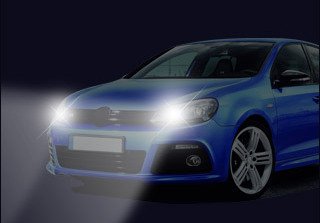
High-Beam Headlights Ban in Pakistan has emerged as a decisive response to a growing yet often ignored danger on the country’s roads: blinding vehicle lights that turn night driving into a life-threatening gamble. After years of complaints, rising crash data, and near-miss incidents, authorities have finally acted triggered by a tragic accident that proved impossible to overlook. Read More: https://theboardroompk.com/pibt-reko-diq-mining-company-formally-sign-agreement-for-mineral-exports/ The move is being described not as cosmetic enforcement, but as a critical road-safety intervention aimed at saving lives. A Fatal Crash That Changed Everything The tipping point for the High-Beam Headlights Ban in Pakistan came from a devastating incident in the Mohmand tribal district. A Toyota Fielder, navigating a mountainous road at night, veered off course and plunged into a deep ravine. Six passengers lost their lives, while another was critically injured. Preliminary investigations pointed to poor visibility compounded by intense headlight glare. Officials familiar with the probe said the driver may have been momentarily blinded an all-too-common experience for motorists facing laser or modified headlights on dark roads. This tragedy amplified long-standing concerns already flagged by traffic authorities, especially in regions with highways, hills, and narrow roadways. What Exactly Is Banned Under the New Rule? Under the High-Beam Headlights Ban in Pakistan, authorities have prohibited the use, sale, and installation of non-standard lighting systems. This includes aftermarket high-beam kits, laser headlights, and modified bulbs that exceed factory specifications. Instead of presenting the ban in tabular form, officials have clarified enforcement in practical terms: • Drivers using banned headlights will face fines and possible legal action• Shopkeepers and installers selling or fitting illegal lighting equipment may also be penalized• Factory-approved headlights remain fully legal and encouraged The objective is clear: eliminate glare-inducing lights that compromise visibility for oncoming traffic. Legal Backing and Enforcement Strategy To ensure compliance, enforcement is being carried out under Section 188 of the Pakistan Penal Code, which addresses disobedience of lawful orders issued by public servants. Traffic police in Peshawar and surrounding districts have already begun checks across urban centers, highways, and high-risk routes. Authorities say inspections will intensify over the coming weeks, particularly during night hours. Officials stress that this is not a short-term crackdown but a systemic safety measure aligned with accident-prevention data. Why Glare Is a Bigger Risk Than Drivers Realize According to traffic officials, night-time accidents linked to glare have been steadily increasing, especially on high-speed roads and hilly terrain. Even a split-second loss of vision can result in lane deviation, delayed braking, or complete loss of control. In mountainous areas like Mohmand, Swat, and parts of Khyber Pakhtunkhwa, glare-related risks are amplified due to sharp turns, steep drops, and limited road margins. This is why the High-Beam Headlights Ban in Pakistan is being framed as a preventive step one designed to reduce fatalities before another tragedy strikes. What Motorists Are Being Asked to Do Authorities are urging drivers to cooperate by adopting responsible driving habits. This includes sticking to factory-approved headlights, using low beams appropriately, and avoiding unnecessary modifications. Traffic officials believe that widespread compliance could significantly improve night-time visibility and reduce fatal crashes within months. A Turning Point for Road Safety Policy The High-Beam Headlights Ban in Pakistan marks a rare moment where enforcement, public safety, and accountability intersect. While some motorists may view the move as restrictive, regulators insist it is long overdue and essential. As enforcement rolls out nationwide, the success of this policy may well determine how future road-safety regulations are shaped in Pakistan.

Toyota Recalls 161,000+ US Vehicles Over Rear-View Camera Display Fault
Auto

Toyota Recalls 161,000+ US Vehicles Over Rear-View Camera Display Fault

Toyota Motor Corp. is recalling 161,268 vehicles in the United States due to a defect affecting the rear-view camera display when the vehicle is shifted into reverse. The announcement came from the National Highway Traffic Safety Administration (NHTSA) on January 31, 2026, highlighting a safety concern that could impair visibility while backing up. Read More: https://theboardroompk.com/daraz-pakistan-brings-the-spirit-of-ramadan-to-life-with-grand-ramadan-bazaar/ Defect Details The issue involves the rear-view camera display malfunctioning specifically in reverse gear. This can prevent drivers from seeing the required backup image, violating federal safety standards mandating functional rear-view cameras in vehicles to reduce crash risks with pedestrians or objects behind the car. Affected Vehicles and Scope The recall targets specific Toyota models sold in the U.S., though exact models and production years were not detailed in initial reports beyond the total count of 161,268 units. This comes amid a series of recent Toyota recalls related to camera and display issues, including larger ones in late 2025 affecting over a million vehicles with panoramic view monitor problems. Safety Risks If the display fails to show the rear-view image or becomes unreliable while reversing, it increases the potential for accidents, particularly in parking lots or driveways where visibility is critical. Rear-view cameras have been mandatory since 2018 to enhance safety during reverse maneuvers. Toyota’s Response Toyota is addressing the problem through a voluntary safety recall. Owners of affected vehicles will receive notifications, and dealers will perform necessary repairs or software updates at no cost. This aligns with Toyota’s proactive approach to compliance with NHTSA standards. Context of Recent Recalls This recall follows closely on similar issues, such as a January 2026 action involving around 162,000 Tundra and Tundra Hybrid models for multimedia display glitches that could freeze on camera view or go black, and a larger October 2025 recall of over 1 million vehicles for backup camera freezing or non-display problems across multiple Toyota and Lexus lines.Owner Guidance Affected owners should monitor for recall letters from Toyota and can check their vehicle’s status using the NHTSA website by entering their VIN. Prompt attention to the free remedy is recommended to restore full safety compliance.

Pakistan's Agricultural Machinery Imports Surge 21.64% in First Half of FY26
Auto

Pakistan’s Agricultural Machinery Imports Surge 21.64% in First Half of FY26

Pakistan’s imports of agricultural machinery and implements rose by 21.64% during the first six months of the current fiscal year (July-December 2025-26), reaching $65.760 million compared to $54.059 million in the same period last year. The figures come from the Pakistan Bureau of Statistics (PBS). Read More: https://theboardroompk.com/musk-regrets-govt-jobs-cutting-program-doge-role-somewhat-successful-but-wouldnt-lead-again/ Strong Growth Amid Broader Trade Trends This increase highlights growing demand for modern farming equipment to boost productivity in Pakistan’s agriculture sector, which remains a cornerstone of the economy. Higher imports reflect efforts to mechanize operations and improve efficiency. Context Within Overall Import Patterns While agricultural machinery showed positive momentum, related categories varied: agricultural and other chemicals increased by 9.04% to $5.373 billion, insecticides surged 45.38% to $97.937 million (19,003 metric tons), but fertilizers declined slightly by 2.62% in volume despite higher value. These trends indicate selective investment in farm inputs and tools. The growth in machinery imports supports modernization initiatives, potentially aiding higher yields, reduced labor dependency, and resilience against climate challenges. It aligns with ongoing pushes for technological adoption in rural areas. No specific reasons or sourcing countries were detailed in the report, but the uptick contrasts with some broader trade pressures, including a widening overall trade deficit in the period. Stakeholders view this as a positive signal for agricultural development and long-term food security.

Pakistan's Motorcycle Industry: 1.89 Million Units Produced as Sector Defies Economic Odds
Auto

Pakistan’s Motorcycle Industry: 1.89 Million Units Produced as Sector Defies Economic Odds

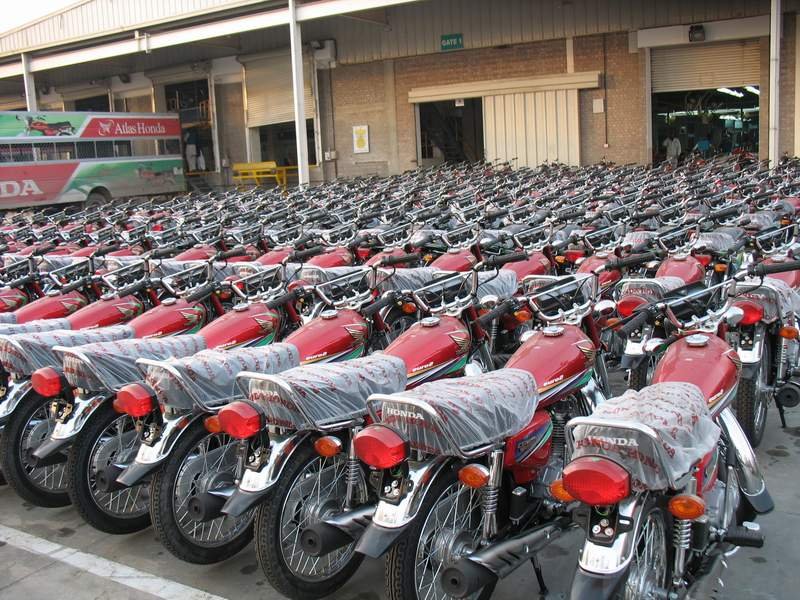
KARACHI: Pakistan’s motorcycle industry has reported a remarkable recovery in 2025, recording a historic 35% year-on-year increase in sales. This growth comes as a significant indicator of economic resilience, proving that demand for affordable mobility remains robust despite broader inflationary pressures. According to the latest data for the period of January to December 2025, the country produced a total of 1,898,767 motorcycles. The 70cc category remains the backbone of the market, accounting for over 1.09 million units sold, while the 125cc segment followed with 579,127 units. The growth was spread across various engine capacities, with 70cc bikes seeing a 56% jump and 125cc models growing by 32%. Mid-tier 100cc and 150cc categories also saw modest gains of 10% and 2% respectively, reflecting a diverse consumer preference for both economy and performance. Industry leaders showed exceptional performance; Unique led the pack with a staggering 90% growth, followed by United Motors at 51% and Hi-Speed at 60%. Market giant Honda also maintained strong momentum with a 32% increase in its sales volume. Industry expert Sabir Sheikh noted that this “speedy recovery” is a vital sign for the national economy. He highlighted that the surge will not only create more jobs but also stabilize the local supply chain and provide much-needed relief to the country’s vast network of dealers and parts manufacturers.

Wafi Energy to Supply OEM-Approved Shell Lubricants for Hyundai Vehicles Nationwide
Auto

Wafi Energy to Supply OEM-Approved Shell Lubricants for Hyundai Vehicles Nationwide

Wafi Energy Pakistan Limited and Hyundai Nishat Motors have signed a strategic agreement for the supply of Shell lubricants for Hyundai vehicles in Pakistan. The contract signing ceremony held in Lahore marked the launch of Shell Helix HX8 0W-20 AH, a lubricant developed as per Hyundai engine requirement. The ceremony was attended by senior leadership, including Zubair Shaikh, CEO of Wafi Energy Pakistan Limited, and Hasan Mansha, CEO of Hyundai Nishat Motors. This significant milestone underscores the commitment of both organizations to deliver premium lubrication solutions. Shell Helix HX8 0W-20 AH is the second co-branded lubricant introduced under the Hyundai–Shell collaboration in Pakistan, further expanding the jointly developed product range. Specifically designed in line with Hyundai’s technical specifications, the advanced lubricant delivers comprehensive engine protection, enhanced fuel efficiency, and optimized performance, particularly suited to local driving conditions across Pakistan. Under this strategic agreement, Wafi Energy Pakistan Limited will supply Shell lubricants aligned with Hyundai’s rigorous requirements, thereby strengthening aftersales support and ensuring Hyundai customers have seamless access to lubricant aligned with Hyundai specifications. This collaboration demonstrates a shared commitment to quality, technical excellence, and continuous innovation. The partnership reflects the dedication of both Wafi Energy and Hyundai Nishat Motors to deliver exceptional value and support to Hyundai vehicle owners across Pakistan. Through this collaboration, customers can confidently rely on authentic, OEM-approved lubricants that meet the highest standards of performance and reliability.

Auto Sector Profit Expected Jump 35% in Q2-FY26
Auto

Auto Sector Profit Expected Jump 35% in Q2-FY26

Pakistan’s automobile sector is experiencing a strong revival in fiscal year 2026 (FY26), with leading brokerage firm Topline Securities projecting robust profitability gains for major listed players in the second quarter (Q2 FY26, October–December 2025). According to Topline’s latest preview released on January 23, 2026, the “Topline auto universe”—primarily encompassing key assemblers like Indus Motor Company (INDU) (Toyota), Honda Atlas Cars (HCAR), and others—is expected to deliver 35% year-on-year (YoY) and 19% quarter-on-quarter (QoQ) growth in profitability. This surge is primarily fueled by a sharp 45% YoY increase in sales volumes, reaching approximately 27,821 units during the quarter, alongside a 36% QoQ rise.The momentum builds on a broader sector recovery. In the first half of FY26 (July–December 2025), total sales of cars, light commercial vehicles (LCVs), pickups, and vans climbed 46% YoY to 88,322 units, up from 60,676 units in the same period last year. This rebound follows several years of contraction triggered by high interest rates, currency volatility, and import restrictions.December 2025 showed solid demand despite a typical year-end slowdown, with passenger car sales rising 35% YoY to around 13,300 units, though down 14% month-on-month due to registration delays and buyers deferring purchases into the new calendar year. Two-wheeler sales remained particularly strong, supported by dominant players like Atlas Honda.Key performers in Q2 FY26 are anticipated to include:Indus Motor Company (INDU), assembler of Toyota vehicles, which is projected to post around 32% YoY earnings growth. Strong recovery in models like Corolla, Yaris, and Cross—along with SUVs like Fortuner and Revo—has driven volumes higher, benefiting from improved gross margins and new model introductions. Honda Atlas Cars (HCAR), showing even sharper momentum with expected 34% YoY (or higher in some estimates) earnings per share improvement. Honda’s sedans (Civic and City) and SUVs (BR-V, HR-V) have seen significant uptake, reinforcing its position in the premium segment. The sector’s turnaround is underpinned by several favorable macro factors: easing interest rates, which have revived auto financing; relative PKR stability; declining inflation; and improved consumer confidence. New model launches, including hybrids and more affordable variants, have also played a role in stimulating demand.However, challenges persist. December’s MoM dip highlights seasonal patterns, while rising SUV imports—particularly from Chinese brands like Changan, Haval, and emerging players—signal growing competition and potential risks from import dependency in 2026. Analysts note that while Japanese brands (Toyota, Honda, Suzuki) still dominate, Chinese assemblers are gaining share through competitive pricing, better features, and localization efforts.Topline’s outlook aligns with industry-wide optimism, as the sector contributes meaningfully to large-scale manufacturing (LSM) growth and reflects broader economic stabilization. With policy continuity and sustained low borrowing costs, the auto industry could extend its recovery trajectory, though vigilance on external account pressures and import dynamics remains essential.

Xiaomi Budget Electric Car Redefines Performance Expectations
Auto

Xiaomi Budget Electric Car Redefines Performance Expectations

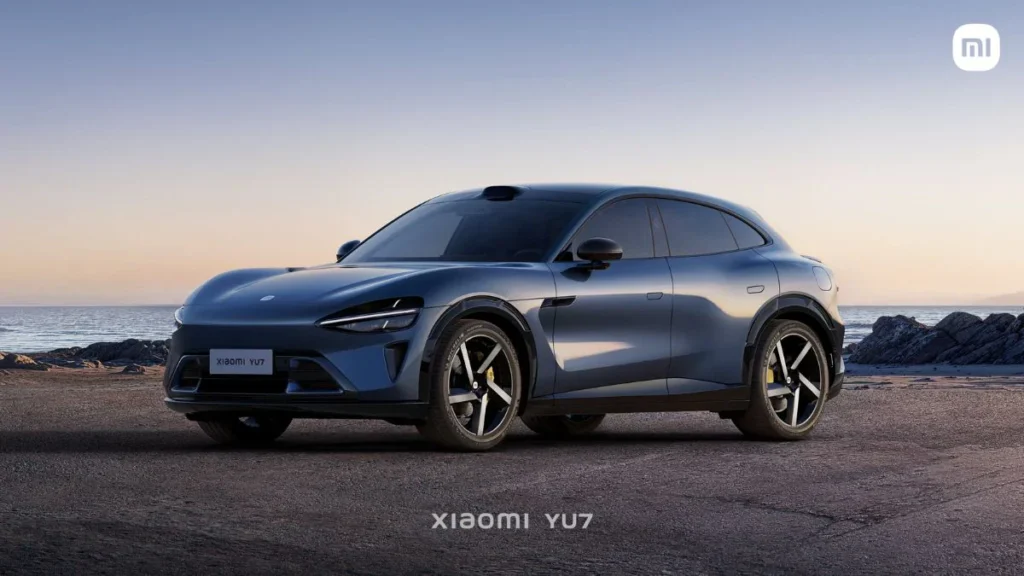
Xiaomi budget electric car has sent shockwaves through the global automotive and technology industries after outperforming the Ferrari SF90 XX in a head-to-head drag race. Known globally for disrupting the smartphone and consumer electronics market with affordable innovation, Xiaomi is now redefining expectations in the electric vehicle (EV) space—challenging even the most elite supercar brands. The stunning result has sparked intense debate across automotive forums, business circles, and investor communities, raising an important question: Are affordable electric vehicles about to overtake traditional high-performance combustion supercars? How the Xiaomi Budget Electric Car Beat a Ferrari Xiaomi Budget Electric Car vs Ferrari SF90 XX: Performance Explained In multiple drag race runs, Xiaomi’s budget electric car demonstrated faster off-the-line acceleration than Ferrari’s SF90 XX, one of the most powerful hybrid supercars ever produced. While Ferrari boasts decades of racing heritage and cutting-edge engineering, Xiaomi leveraged the inherent advantages of electric propulsion instant torque delivery, seamless power transfer, and optimized weight distribution. Instead of focusing on top speed, Xiaomi optimized its EV for real-world acceleration, where electric motors excel. The result was a surprising yet repeatable victory that has redefined perceptions of what a “budget” electric car can achieve. Key Performance Comparison Explained in Text When comparing both vehicles, the performance gap becomes clearer when broken down: • Acceleration: The Xiaomi budget electric car reaches 0–100 km/h significantly faster due to instant electric torque, while the Ferrari relies on complex hybrid power delivery.• Power Delivery: Xiaomi’s single-speed electric drivetrain eliminates gear shifts, giving it smoother and quicker launches.• Cost-to-Performance Ratio: Ferrari’s SF90 XX costs hundreds of thousands of dollars, whereas Xiaomi’s EV is positioned for mass-market affordability.• Technology Focus: Xiaomi emphasizes software optimization, battery efficiency, and motor tuning rather than mechanical complexity. This contrast highlights how electric mobility is shifting the performance paradigm away from traditional engineering prestige toward software-led innovation. Why Xiaomi’s Budget Electric Car Matters for the EV Market Xiaomi Budget Electric Car Signals Industry Disruption Xiaomi’s entry into electric vehicles is not just about selling cars it’s about reshaping industries. Much like its smartphones disrupted premium brands, Xiaomi is applying the same playbook to mobility: high specifications, aggressive pricing, and ecosystem integration. For investors and automakers, the implications are profound. Legacy car manufacturers now face competition not only from Tesla and Chinese EV startups, but also from global tech giants with massive supply chains and software expertise. Impact on Supercar Brands and Luxury Automakers The drag race result doesn’t mean Ferrari is obsolete but it does expose a vulnerability. Supercar brands have historically justified premium pricing through performance superiority. As electric vehicles democratize acceleration and efficiency, luxury brands must pivot toward design, heritage, and experiential value rather than raw speed alone. The Xiaomi budget electric car represents a broader shift: performance is no longer exclusive to luxury pricing. What This Means for Consumers and Businesses Xiaomi Budget Electric Car Creates New Buyer Expectations For consumers, this milestone reinforces the idea that affordable EVs can deliver thrilling performance without compromise. For businesses, especially in emerging markets like Asia, the Middle East, and Pakistan, Xiaomi’s EV strategy could accelerate EV adoption at scale. Fleet operators, ride-hailing companies, and urban commuters are likely to benefit from lower costs, better efficiency, and competitive performance reshaping transportation economics globally. The Future of Affordable High-Performance EVs The Xiaomi budget electric car beating the Ferrari SF90 XX is more than a viral moment—it’s a symbol of transformation. As battery technology improves and software-driven optimization advances, traditional benchmarks of automotive excellence are being rewritten. Xiaomi’s success suggests that the next era of performance vehicles will be defined not by price tags or legacy brands, but by innovation, efficiency, and intelligent engineering.

Ford Recalls Over 272,000 Electric and Hybrid Vehicles Over Park Failure Risk
Auto

Ford Recalls Over 272,000 Electric and Hybrid Vehicles Over Park Failure Risk

Ford Motor Company is recalling 272,645 vehicles in the United States due to a defect in the integrated park module that may prevent the vehicle from properly locking into park, potentially allowing it to roll away and increasing the risk of a crash. Affected Models and Scope The recall impacts several popular electric and hybrid models, including certain 2022-2026 Ford F-150 Lightning battery electric vehicles (BEVs), 2024-2026 Mustang Mach-E SUVs, and 2025-2026 Maverick pickups. Software-Related Failure According to the U.S. National Highway Traffic Safety Administration (NHTSA), the issue stems from a software-related failure in the park module, which fails to engage the park position even when selected by the driver. Read More: https://theboardroompk.com/mexicos-hikes-50-car-tariff-1-billion-indian-auto-exports-at-risk/ No crashes, injuries, or incidents have been reported in connection with this defect, providing some reassurance to owners amid growing scrutiny of vehicle safety recalls. Remedy and Owner Actions Ford has developed a straightforward fix: an over-the-air (OTA) software update to the park module, or a free dealer-performed update for vehicles without OTA capability. Dealers will handle the repair at no cost to owners. The recall, announced on December 19, 2025, highlights Ford’s commitment to proactive safety measures in its expanding lineup of electrified vehicles. This action underscores ongoing challenges in automotive electronics, particularly in newer EV platforms. Owners are advised to check their VIN on Ford’s recall portal or contact the company for confirmation.

Scroll to Top