Author name: Web Desk

Business Community Rejects OGRA’s Gas Price Hike, Terms Decision Devastating for Economy
Pakistan

Business Community Rejects OGRA’s Gas Price Hike, Terms Decision Devastating for Economy

Karachi: The Korangi Association of Trade and Industry (KATI) President, Ikram Rajput, has strongly rejected the Oil and Gas Regulatory Authority’s (OGRA) decision to increase gas tariffs for Sui Southern Gas Company, warning that the move will intensify economic hardships for both industries and the public.Rajput said the price hike is unjustified in the current economic environment and places an unfair burden on already struggling manufacturers and households. He stressed that the decision ignores key positive economic indicators, including a reduction in UFG (unaccounted-for gas) losses and declining interest rates, which should have supported stable or reduced gas tariffs.The KATI president called on Prime Minister Shehbaz Sharif to immediately intervene and direct the withdrawal of the revised gas tariff, noting that the increase will make Pakistani industries uncompetitive in global markets and undermine export performance.He reminded the government of its earlier commitments to support export-oriented industries, saying the tariff hike is contradictory to those promises. Rajput urged policymakers to prioritize pro-industry and pro-consumer measures that would help stabilize the economy and reduce unemployment.Rajput also criticized the tariff increase without first addressing gas theft and systemic inefficiencies, arguing that pushing the financial burden onto consumers is unjust. He cautioned that rising gas costs will particularly harm industries dependent on gas-fired plants, already grappling with high production costs and weakening international demand.He warned that escalating gas prices will further erode export competitiveness, deter investment, and heighten uncertainty among the business community. Rajput reiterated his appeal to the prime minister, urging him to place the welfare of citizens and industries at the center of national economic decision-making.“Pakistan’s economic recovery depends on sustainable industrial growth,” he said. “Raising gas prices at this stage risks undermining both industry and employment. The government must act swiftly in the national interest.”

COP30: Pakistan Tells World It's Rooftop Panels to Outstrip Daytime Grid Demand in 2026
Pakistan

COP30: Pakistan Tells World It’s Rooftop Panels to Outstrip Daytime Grid Demand in 2026

BELEM, Brazil: In a landmark shift for an emerging economy, Pakistan’s rooftop solar generation will exceed daytime grid demand in major industrial regions next year, according to Aisha Moriani, Secretary of the Ministry of Climate Change and Pakistan’s lead negotiator.She confirmed that cities like Lahore, Faisalabad, and Sialkot will experience “negative grid-linked demand” during peak sunshine hours in 2026 as behind-the-meter solar completely offsets consumption in large areas.Driven by frequent power outages and steep tariff hikes, Pakistan has become the world’s third-largest solar panel importer. Its solar adoption rate now surpasses even neighbouring China on a per-capita basis, slashing emissions and household bills but hammering the finances of debt-laden distribution companies.“Pakistan’s challenge is no longer whether renewables will grow, but how fast the grid, regulations, and market design can adapt,” Moriani said.To address revenue losses, the government plans new tariffs for large solar users and revised fixed charges to ensure fair contributions toward grid maintenance. The solar boom has also prompted Islamabad to renegotiate LNG contracts with Qatar, cancel Eni cargoes, and seek greater flexibility and lower prices.While grid demand is still projected to rise 3-4% this year, the rapid solar surge means traditional consumption growth will be increasingly suppressed during daylight hours, marking a turning point for South Asia’s energy landscape.

Pakistan and Malaysia agree on cadet exchange, port tech transfer & port collaboration framework
World

Pakistan and Malaysia agree on cadet exchange, port tech transfer & port collaboration framework

Islamabad: Pakistan and Malaysia have agreed to establish a new cooperation framework aimed at enhancing maritime training programs and deepening collaboration in the port sector. The breakthrough came during a bilateral meeting between Federal Minister for Maritime Affairs, Muhammad Junaid Anwar Chaudhry, and Malaysia’s Deputy Minister of Transport, Datuk Hasbi bin Habibollah, held on the sidelines of international maritime events in the United Kingdom on Tuesday. Both ministers reviewed existing cooperation under various MoUs and identified new areas for joint ventures, including faculty and cadet exchange programs, specialized training in port management, and technology transfer initiatives. Minister Chaudhry emphasized that the enhanced partnership will significantly boost Pakistan’s maritime human resource capabilities and modernize Gwadar and Karachi ports. An official statement from the Ministry termed the talks “highly productive,” adding that working groups will be formed soon to finalize actionable plans before the next Joint Ministerial Commission meeting.

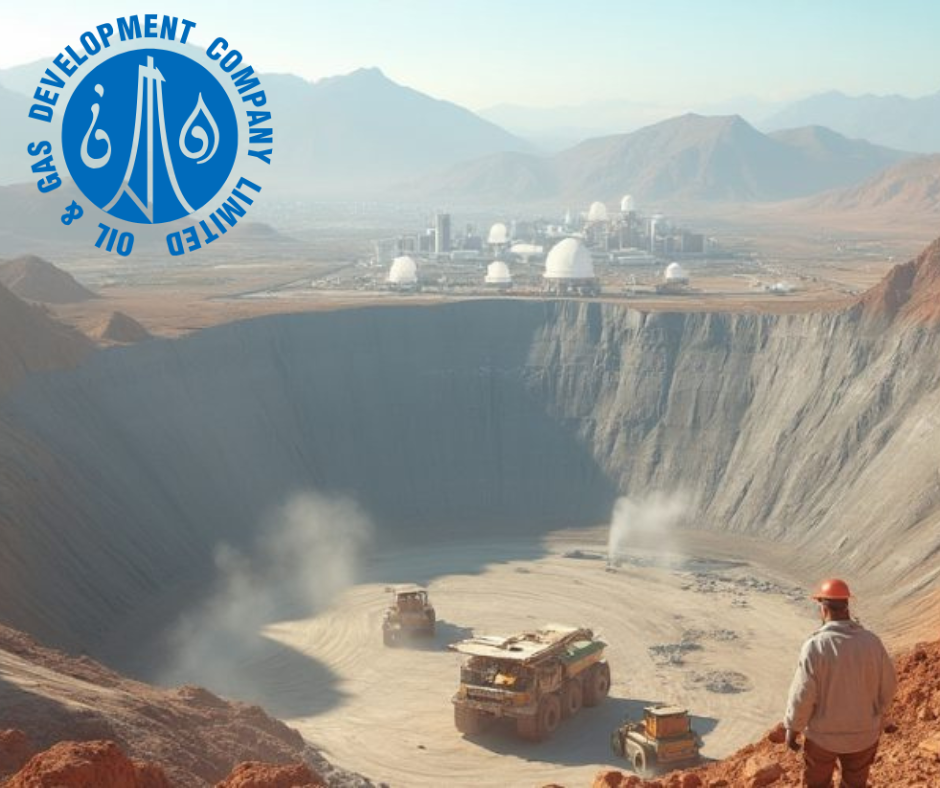
Pakistan’s flagship Reko Diq mining project will remain unaffected by any corporate changes at Barrick Gold, senior officials of Oil and Gas Development Company Limited (OGDCL) said on Monday. Addressing market concerns triggered by reports of a possible Barrick split or asset sales, OGDCL management stated during an analyst briefing that the Canadian miner has repeatedly assured Pakistani stakeholders that Reko Diq is a core, long-term holding and is not under consideration for divestment. “Barrick has made it very clear to us — both formally and informally — that Reko Diq is a strategic priority and will not be impacted,” the company said. OGDCL further highlighted the project’s robust governance framework involving multiple Pakistani government entities, which effectively rules out any surprise moves. With first production targeted for 2028, OGDCL expects the mine to generate $150–200 million in average annual cash flow for the company from its interest in the federal 25% stake, marking one of the most significant non-oil revenue streams in Pakistan’s history.
Pakistan, World

Reko Diq safe despite Barrick restructuring talks, OGDCL tells investorsNovember 25, 2025

Pakistan’s flagship Reko Diq mining project will remain unaffected by any corporate changes at Barrick Gold, senior officials of Oil and Gas Development Company Limited (OGDCL) said on Monday.Addressing market concerns triggered by reports of a possible Barrick split or asset sales, OGDCL management stated during an analyst briefing that the Canadian miner has repeatedly assured Pakistani stakeholders that Reko Diq is a core, long-term holding and is not under consideration for divestment.“Barrick has made it very clear to us — both formally and informally — that Reko Diq is a strategic priority and will not be impacted,” the company said.OGDCL further highlighted the project’s robust governance framework involving multiple Pakistani government entities, which effectively rules out any surprise moves.With first production targeted for 2028, OGDCL expects the mine to generate $150–200 million in average annual cash flow for the company from its interest in the federal 25% stake, marking one of the most significant non-oil revenue streams in Pakistan’s history.

COP30, Which US Didn't Attend, Ends in Division: Fossil Fuel Phase-Out Stalls Amid Global Tensions
World

COP30, Which US Didn’t Attend, Ends in Division: Fossil Fuel Phase-Out Stalls Amid Global Tensions

Belém, Brazil: The COP30 climate summit, which was not attended by the biggest emitter the United States of America, wrapped up on Saturday as one of the most fractious gatherings in three decades, with delegates voicing fury over the absence of any fossil fuel mention in the final agreement. Hosted by Brazil under President Luiz Inácio Lula da Silva, the event exposed deepening rifts between fossil fuel producers like Saudi Arabia and advocates for rapid decarbonization, including the EU and over 80 nations pushing for coal, oil, and gas phase-out roadmaps.Initial drafts hinted at vague transitions, but these were swiftly axed to preserve consensus, as COP President André Corrêa do Lago warned against forcing divisive issues. A Brazilian-style “mutirão” dialogue backfired, with Arab states boycotting talks. Brazil salvaged face by proposing informal roadmaps on deforestation and energy outside formal texts, earning applause but lacking binding force. “We make energy policy in our capitals, not yours,” a Saudi delegate rebuked EU pressure. The near-collapse underscored the COP’s eroding unity, leaving vulnerable nations frustrated.

Premium Textile Mills to add 7.5MW wind turbine in $4.15mn green push
Pakistan

Premium Textile Mills to add 7.5MW wind turbine in $4.15mn green push

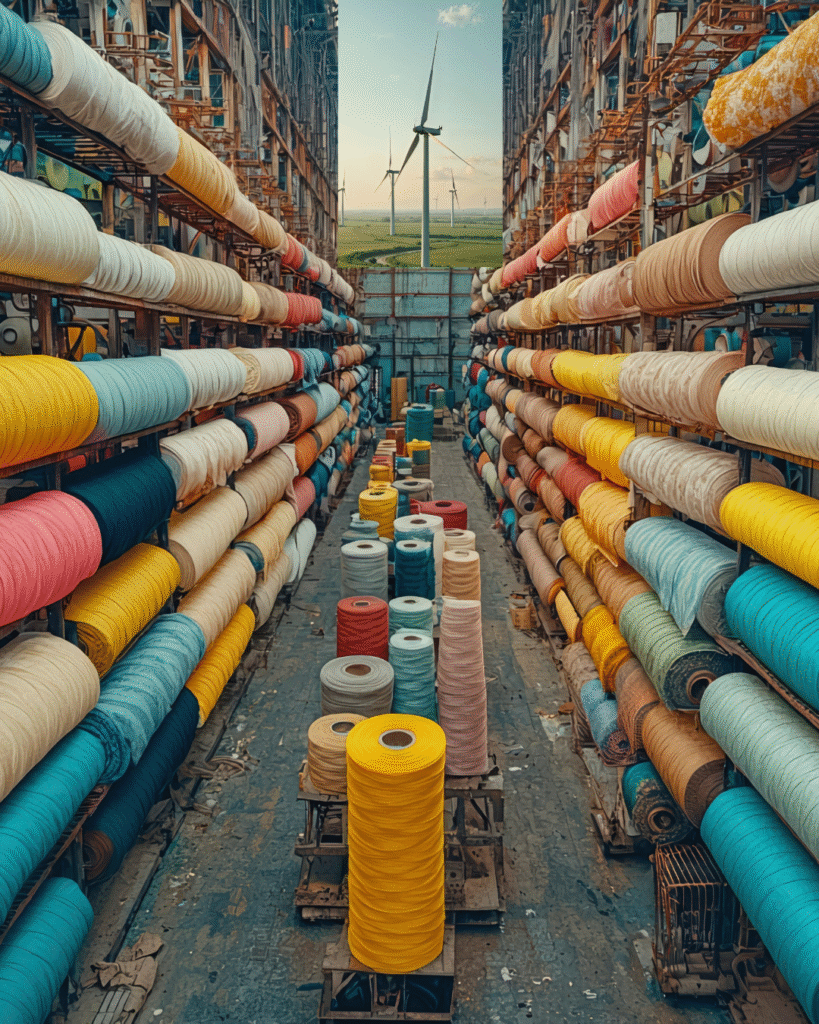
Karachi: Premium Textile Mills Limited (PSX: PRET), one of Pakistan’s leading yarn manufacturers, has approved a $4.15 million investment to install a 7.5-megawatt wind turbine, the company informed the Pakistan Stock Exchange on Monday.The decision was taken through a circular resolution by the Board of Directors on November 24, 2025. The new turbine will substantially boost the renewable share in the company’s energy mix and reduce reliance on grid electricity amid soaring power tariffs.“Keeping up with our commitment towards sustainable environment practices, the contribution of renewable energy in the power mix will significantly increase after the completion of the above-mentioned project, the filing stated. The project is the latest addition to Premium Textile’s ongoing efforts to adopt cleaner energy sources and lower its carbon footprint in an energy-intensive industry.

Export Development Surcharge Removed: Relief for Pakistani Exporters Amid Cost Pressures
Pakistan

Export Development Surcharge to be Removed: Relief for Pakistani Exporters Amid Cost Pressures

The federal government is going to abolish the Export Development Surcharge (EDS), a move widely welcomed by the export sector as critical relief at a time when rising input costs and regional competition continue to erode profitability. Waqas Ghani Kukaswadia, Head of Research at JS Global Capital, commented: “The removal of the Export Development Surcharge is a meaningful relief for exporters facing intense cost pressures. Although the direct fiscal burden of the surcharge was modest, its elimination sends a strong positive signal that policy is finally moving in the direction of export-led growth. The real test now is follow-through. This step needs to be supported by broader trade facilitation measures and structural reforms that tangibly lower the cost of doing business — faster tax refunds, competitive energy pricing for exporters, and streamlined temporary importation procedures will determine whether this marks a genuine turning point for Pakistan’s export competitiveness.” Export Development Surcharge imposed at 0.25% of the FOB value of exports, the EDS has been a longstanding grievance for exporters who argued it effectively taxed foreign exchange earnings at a time when margins were already under severe strain. Industry sources indicate that the decision is part of an emerging package of export-supportive measures, with expectations building for additional steps such as phased reduction in minimum turnover tax and duty rationalization on imported raw materials in the near term.  

Pakistan Local Mobile Phone Manufacturing Drops 23% MoM in October 2025
Tech

Pakistan Local Mobile Phone Manufacturing Drops 23% MoM in October 2025

Pakistan’s local mobile phone manufacturing and assembly witnessed a sharp slowdown in October 2025, with production falling to *2.33 million units, down *23% month-on-month and a steeper 34% year-on-year from 3.53 million units in October 2024, according to the latest data released by the Pakistan Telecommunication Authority (PTA). “The primary reason behind the decline, as per industry channel checks, is significant inventory pile-up across distributors and retailers, according toSania Irfan,Analyst at Topline Research. With excess stock already in the supply chain, manufacturers deliberately scaled back production to prevent further buildup and potential write-downs. Cumulative Picture (Jan–Oct 2025):Local manufacturers/assemblers produced 25.11 million units in the first ten months of 2025, reflecting a modest 4% YoY decline. Despite the slowdown, Pakistan’s reliance on local production remains strong. In 10M2025, 94% of the country’s mobile phone demand was met through domestic manufacturing/assembly — significantly higher than the 5-year average (2020–2024) of 77% and the 9-year average (2016–2024) of 52%. Top 10 Locally Assembled Brands (10M2025): Outlook:We expect mobile phone sales in Pakistan to rebound and grow 7–8% YoY over the next 12 months, supported by a relatively stable PKR, cooling inflation, and gradual improvement in consumer purchasing power. Among listed companies, Airlink Communication (AIRLINK) — which assembles Tecno, Xiaomi, and Samsung — and Lucky Cement (LUCK) through its exposure to the sector, are well-positioned to benefit from the anticipated recovery in demand.

Saudi Chief of Staff Meets PM Sharif to Boost Defence Ties
World

Saudi Chief of Staff Meets PM Sharif to Boost Defence Ties

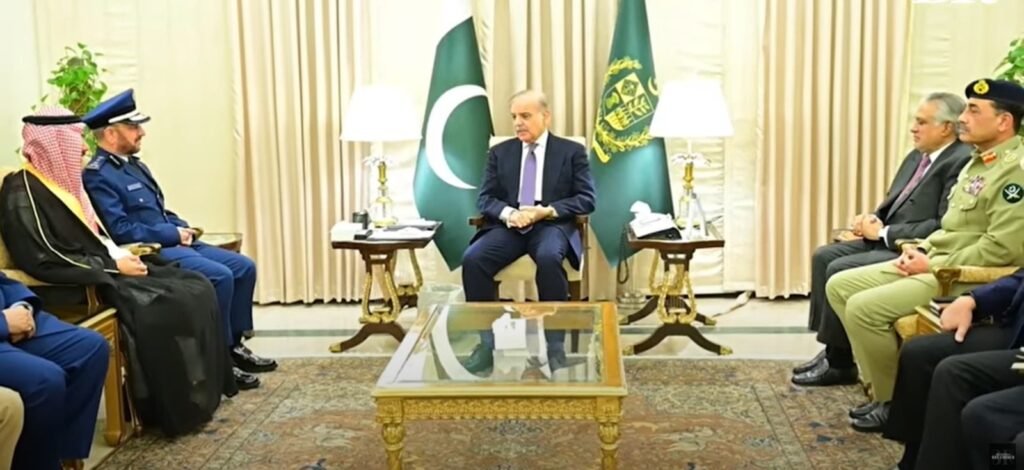
Saudi Arabia’s Chief of General Staff, General Fayyad bin Hamed Al-Ruwaili, met with Prime Minister Shehbaz Sharif on Monday to discuss ways to further enhance defence and security cooperation between the two nations, according to the Prime Minister’s Office. During the meeting, the prime minister extended warm regards to the Custodian of the Two Holy Mosques, King Salman bin Abdulaziz Al Saud, and Crown Prince Mohammed bin Salman. He reaffirmed Pakistan’s commitment to strengthening its longstanding ties with Saudi Arabia across defence, security, and economic sectors. Prime Minister Sharif expressed gratitude for Saudi Arabia’s “steadfast support and solidarity,” emphasizing that bilateral relations are grounded in shared faith, common values, and mutual trust. Recalling his recent visits to Riyadh, he highlighted the Strategic Mutual Defence Agreement and underscored Pakistan’s determination to expand defence cooperation through joint training, exercises, and knowledge exchange. He also stressed both countries’ shared resolve to combat terrorism and extremism, while promoting regional peace and stability. General Al-Ruwaili conveyed greetings from the Saudi leadership and reiterated Riyadh’s intent to further elevate its strategic partnership with Pakistan. The meeting included Deputy Prime Minister and Foreign Minister Ishaq Dar, Chief of Army Staff Field Marshal Syed Asim Munir, Defence Minister Khawaja Muhammad Asif, SAPM Tariq Fatemi, and senior officials from both sides. Earlier on Monday, General Al-Ruwaili also met with Pakistan’s COAS Field Marshal Syed Asim Munir at the General Headquarters, where they discussed matters of mutual interest, focusing on bolstering military and security cooperation. According to the ISPR, the discussions reviewed ongoing collaboration in defence, training, and counter-terrorism—key pillars of the Pakistan-Saudi partnership. The visiting official appreciated Pakistan’s support to the Saudi Armed Forces across multiple areas and reaffirmed Riyadh’s commitment to deepening bilateral cooperation.

Government Urged to Halt Rising Exit of Multinational Compan
Pakistan

Government Urged to Halt Rising Exit of Multinational Companies

The government is under increasing pressure to prevent a steady exodus of multinational companies from Pakistan. While more than 200 global firms remain active, their growing departures are raising serious economic red flags. These multinationals contribute a substantial portion of tax revenues, but their lack of exports and high repatriation of profits is creating an unsustainable pattern. According to insiders, the authorities are now considering a business-protection framework aimed at retaining these companies. A key part of this involves rethinking tax strategies—moving away from heavy import tariffs toward policies that reward efficient, export-oriented operations. One proposal under review is to eliminate or reduce the burden of federal excise duty and other indirect taxes for well-compliant multinationals. The sharp rise in foreign firm exits has been linked to a range of issues: discriminatory tax policies, steep corporate tax rates, regulatory uncertainty, and growing difficulties in repatriating profits. Additionally, rupee devaluation, inflation, and frequent policy changes are adding pressure. Some companies reportedly face blocked dividends running into the billions of dollars. Experts warn that a further foreign-company run could deal a blow to Pakistan’s reputation. These multinational players are not just profit machines—they bring advanced technology, best-in-class management practices, and valuable employment opportunities. Their exit creates a gap not only in capital but also in expertise and innovation. Industry associations are calling for urgent reforms. They want simplified tax structures, stable regulation, and clear protection mechanisms. Their concern is not just profit—it’s about sustaining foreign direct investment, preserving high-quality jobs, and maintaining the country’s competitiveness on the global stage. As the debate intensifies, the hope among business leaders is that the government recognizes the wider cost of these exits and takes decisive steps to stem the tide before it’s too late.

Scroll to Top