Author name: Web Desk

US Suspends Immigrant Visa Processing for 75 Countries, Including Pakistan
World

US Suspends Immigrant Visa Processing for 75 Countries, Including Pakistan

The U.S. State Department has announced an indefinite suspension of immigrant visa processing for nationals of 75 countries, effective January 21, 2026. This move, first reported by Fox News and confirmed via an internal State Department cable, targets applicants deemed at high risk of becoming a “public charge”—relying on U.S. government benefits. Read More: https://theboardroompk.com/xiaomi-budget-electric-car-redefines-performance-expectations/ The policy intensifies President Donald Trump’s immigration crackdown, following revocations of over 100,000 visas since his return to office. Scope of Suspension and Affected Nations The suspension applies specifically to immigrant visas (for permanent residency), not non-immigrant visas like tourist, business, or student visas—important amid upcoming events such as the 2026 World Cup and 2028 Olympics hosted by the U.S. The 75 countries span Africa, the Middle East, Latin America, the Caribbean, South Asia, and the Balkans. Notable inclusions are Afghanistan, Albania, Bangladesh, Brazil, Colombia, Egypt, Iran, Iraq, Nigeria, Pakistan, Russia, Somalia, Syria, Ukraine (wait—no, list: Afghanistan, Albania, Algeria, Antigua and Barbuda, Armenia, Azerbaijan, Bahamas, Bangladesh, Barbados, Belarus, Belize, Bhutan, Bosnia, Brazil, Cambodia, Cameroon, Cape Verde, Colombia, Democratic Republic of the Congo, Cuba, Dominica, Egypt, Eritrea, Ethiopia, Fiji, The Gambia, Georgia, Ghana, Grenada, Guatemala, Guinea, Haiti, Iran, Iraq, Ivory Coast, Jamaica, Jordan, Kazakhstan, Kosovo, Kuwait, Kyrgyzstan, Laos, Lebanon, Liberia, Libya, North Macedonia, Moldova, Mongolia, Montenegro, Morocco, Myanmar, Nepal, Nicaragua, Nigeria, Pakistan, Republic of the Congo, Russia, Rwanda, Saint Kitts and Nevis, Saint Lucia, Saint Vincent and the Grenadines, Senegal, Sierra Leone, Somalia, South Sudan, Sudan, Syria, Tanzania, Thailand, Togo, Tunisia, Uganda, Uruguay, Uzbekistan, and Yemen. Consular officers are directed to refuse pending cases, even if pre-approved but unprinted. Rationale and Broader Crackdown The State Department cites data showing nationals from these countries have historically sought public benefits, justifying the pause for reassessing screening and vetting procedures. A spokesperson emphasized preventing exploitation of U.S. resources, aligning with Trump’s “America First” agenda and prior directives on financial self-sufficiency. Critics, including immigration experts, argue it effectively bans nearly half of legal immigrants—potentially turning away 315,000 annually—and represents the most restrictive legal immigration policy in U.S. history. This builds on expanded travel bans, asylum pauses, and enforcement surges.

Afghanistan Limits Players to Three Foreign T20 Leagues Annually, Mandates APL Participation
World

Afghanistan Limits Players to Three Foreign T20 Leagues Annually, Mandates APL Participation

The Afghanistan Cricket Board (ACB) has introduced a landmark policy limiting top national players to a maximum of three international franchise leagues annually, in addition to mandatory participation in the upcoming domestic competition. Read More: https://theboardroompk.com/soccer-dominant-country-italy-prepares-for-first-cricket-t20-world-cup-appearance/ Approved during the ACB’s annual general meeting in Kabul on January 15, 2026, the rule aims to balance the growing demands of global T20 leagues with national team obligations and player health. Workload Management and Domestic Priority The policy, driven by concerns over player fitness and mental well-being, restricts elite cricketers—such as star leg-spinner Rashid Khan, Noor Ahmad, Mujeeb Ur Rahman, Rahmanullah Gurbaz, and young sensation AM Ghazanfar—from exceeding three overseas leagues per calendar year. All players must remain available for the rebooted five-team Afghanistan Premier League (APL), set to launch around October 2026 in the United Arab Emirates. The ACB emphasized that “this measure aims to manage workload and ensure peak performance for national duties,” highlighting the need to prevent burnout amid Afghanistan’s packed international schedule, including an upcoming T20I series against West Indies and the 2026 T20 World Cup in India. Implications for Players and Global Leagues The cap could impact earnings and exposure for Afghanistan’s sought-after T20 talents, who frequently feature in high-profile tournaments like the Indian Premier League (IPL), SA20, ILT20, Major League Cricket (MLC), and others. Rashid Khan, the highest wicket-taker in T20 history and captain of MI Cape Town in SA20, exemplifies players who may face financial trade-offs. The policy aligns with similar restrictions elsewhere—Pakistan limits centrally contracted players to two overseas leagues beyond the PSL, while India bars contracted players from foreign leagues entirely. Supporters view it as a step toward sustainable careers and stronger national team performances, though it may reduce Afghan star availability in international franchises.

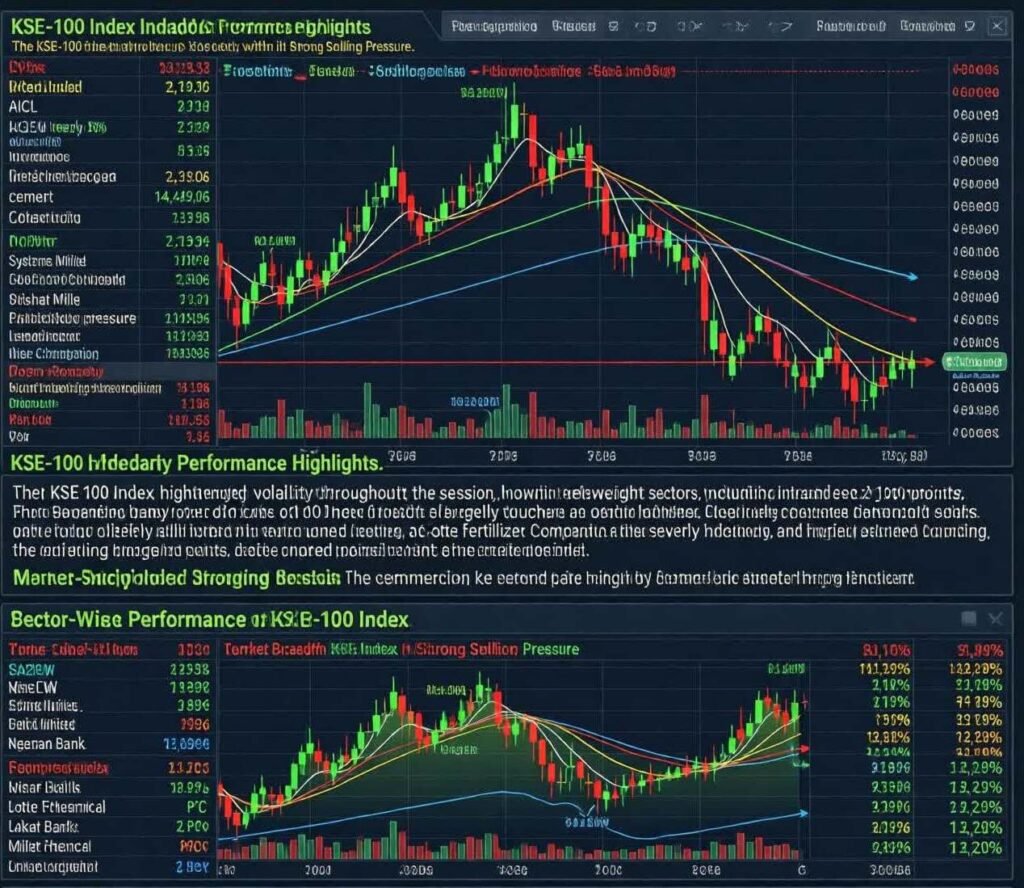
The KSE-100 Index took investors on a rollercoaster ride on Thursday, ultimately closing in the red after an intensely volatile trading session that tested market confidence and nerves alike. Despite touching a fresh intraday high early in the day, selling pressure across heavyweight sectors reversed gains and pulled the benchmark index sharply lower by the close. The KSE-100 Index settled at 181,456.33 points, shedding 1,113.48 points or 0.61%, a move that underscores how fragile sentiment remains even amid strong longer-term gains. KSE-100 Index Volatility Signals Market Unease What made this session particularly eye-catching was the sheer intraday volatility. The KSE-100 Index moved within a massive range of nearly 2,934 points, climbing to a high of 183,717.53 points before tumbling to a low of 180,783.62 points. Such wide swings suggest aggressive profit-taking and uncertainty over short-term direction. Trading volumes within the KSE-100 Index stood at 280.78 million shares, reflecting active participation as investors repositioned portfolios amid mixed cues. Out of the 100 index-listed companies, only 28 managed to close higher, while 71 stocks declined, highlighting the broad-based nature of the sell-off. Top Losers and Gainers in the KSE-100 Index Market weakness was led by sharp declines in select stocks that struggled under selling pressure. IBFL, SAZEW, PGLC, NML, and PSEL emerged as the day’s worst performers, each recording notable percentage losses. On the flip side, pockets of strength still existed. ATLH stole the spotlight with a strong rally, while JVDC, PKGS, PSX, and LOTCHEM also posted respectable gains, offering some relief in an otherwise bearish session. Heavyweights Drag the KSE-100 Index Lower From an index-point perspective, the pressure was unmistakable. Major banking and industrial names bore the brunt of selling. UBL alone erased nearly 172 points, while ENGROH, SYS, MCB, and EFERT collectively shaved hundreds of points off the KSE-100 Index. However, energy stocks played the role of market stabilizers. OGDC and PPL added over 200 points combined, cushioning the fall and preventing an even steeper decline. Select cement and investment-related stocks also provided marginal support. Sector-Wise Performance: Banks Hit Hard The KSE-100 Index was primarily dragged down by the Commercial Banks sector, which accounted for more than 550 negative points. Weakness also spilled over into Technology & Communication, Investment Companies, Cement, and Fertilizer sectors. In contrast, Oil & Gas Exploration Companies stood tall, contributing positively to the index. Additional support came from Property, Paper & Packaging, Auto Parts, and Leather & Tanneries, indicating selective buying interest in defensive and value-driven sectors. Broader Market Mirrors KSE-100 Index Weakness The broader market echoed the benchmark’s tone. The All-Share Index closed at 109,182.32 points, down 492.15 points or 0.45%. Total market volume declined to 820 million shares, while traded value slipped to Rs45.98 billion, reflecting cautious investor behavior. Out of 482 traded companies, only 150 closed higher, while 289 ended lower, reinforcing the dominance of selling pressure. Interestingly, activity remained concentrated in select stocks by volume, with HASCOLNC, MDTL, NCPL, and BOP attracting heavy investor attention suggesting speculative interest remains alive beneath the surface. KSE-100 Index Performance Still Strong Long Term Despite the day’s setback, the bigger picture remains compelling. The KSE-100 Index has surged by 55,829 points, or 44.44%, during the current fiscal year. Even in calendar-year terms, the index is up over 4%, a reminder that long-term momentum remains intact despite short-term turbulence. What This Means for Investors The latest session reinforces one key takeaway: the KSE-100 Index is entering a phase where volatility may persist. While fundamentals remain supportive, short-term corrections and sector rotations are becoming more frequent. For investors, this may be less about panic and more about opportunity especially for those with a long-term horizon.
Pakistan

KSE-100 Index Ends Lower After Wild Swings: What Really Shook the Market?

The KSE-100 Index took investors on a rollercoaster ride on Thursday, ultimately closing in the red after an intensely volatile trading session that tested market confidence and nerves alike. Despite touching a fresh intraday high early in the day, selling pressure across heavyweight sectors reversed gains and pulled the benchmark index sharply lower by the close. Read More: https://theboardroompk.com/kse-100-index-performance-declines-amid-broad-based-selling-pressure/ The KSE-100 Index settled at 181,456.33 points, shedding 1,113.48 points or 0.61%, a move that underscores how fragile sentiment remains even amid strong longer-term gains. KSE-100 Index Volatility Signals Market Unease What made this session particularly eye-catching was the sheer intraday volatility. The KSE-100 Index moved within a massive range of nearly 2,934 points, climbing to a high of 183,717.53 points before tumbling to a low of 180,783.62 points. Such wide swings suggest aggressive profit-taking and uncertainty over short-term direction. Trading volumes within the KSE-100 Index stood at 280.78 million shares, reflecting active participation as investors repositioned portfolios amid mixed cues. Out of the 100 index-listed companies, only 28 managed to close higher, while 71 stocks declined, highlighting the broad-based nature of the sell-off. Top Losers and Gainers in the KSE-100 Index Market weakness was led by sharp declines in select stocks that struggled under selling pressure. IBFL, SAZEW, PGLC, NML, and PSEL emerged as the day’s worst performers, each recording notable percentage losses. On the flip side, pockets of strength still existed. ATLH stole the spotlight with a strong rally, while JVDC, PKGS, PSX, and LOTCHEM also posted respectable gains, offering some relief in an otherwise bearish session. Heavyweights Drag the KSE-100 Index Lower From an index-point perspective, the pressure was unmistakable. Major banking and industrial names bore the brunt of selling. UBL alone erased nearly 172 points, while ENGROH, SYS, MCB, and EFERT collectively shaved hundreds of points off the KSE-100 Index. However, energy stocks played the role of market stabilizers. OGDC and PPL added over 200 points combined, cushioning the fall and preventing an even steeper decline. Select cement and investment-related stocks also provided marginal support. Sector-Wise Performance: Banks Hit Hard The KSE-100 Index was primarily dragged down by the Commercial Banks sector, which accounted for more than 550 negative points. Weakness also spilled over into Technology & Communication, Investment Companies, Cement, and Fertilizer sectors. In contrast, Oil & Gas Exploration Companies stood tall, contributing positively to the index. Additional support came from Property, Paper & Packaging, Auto Parts, and Leather & Tanneries, indicating selective buying interest in defensive and value-driven sectors. Broader Market Mirrors KSE-100 Index Weakness The broader market echoed the benchmark’s tone. The All-Share Index closed at 109,182.32 points, down 492.15 points or 0.45%. Total market volume declined to 820 million shares, while traded value slipped to Rs45.98 billion, reflecting cautious investor behavior. Out of 482 traded companies, only 150 closed higher, while 289 ended lower, reinforcing the dominance of selling pressure. Interestingly, activity remained concentrated in select stocks by volume, with HASCOLNC, MDTL, NCPL, and BOP attracting heavy investor attention suggesting speculative interest remains alive beneath the surface. KSE-100 Index Performance Still Strong Long Term Despite the day’s setback, the bigger picture remains compelling. The KSE-100 Index has surged by 55,829 points, or 44.44%, during the current fiscal year. Even in calendar-year terms, the index is up over 4%, a reminder that long-term momentum remains intact despite short-term turbulence. What This Means for Investors The latest session reinforces one key takeaway: the KSE-100 Index is entering a phase where volatility may persist. While fundamentals remain supportive, short-term corrections and sector rotations are becoming more frequent. For investors, this may be less about panic and more about opportunity especially for those with a long-term horizon.

India's Top Court Slaps Tax on Tiger Global's $1.6 Billion Flipkart Exit
World

India’s Top Court Slaps Tax on Tiger Global’s $1.6 Billion Flipkart Exit

India’s Supreme Court has delivered a landmark verdict against U.S. investment firm Tiger Global, holding that its $1.6 billion stake sale in e-commerce giant Flipkart to Walmart in 2018 is subject to capital gains tax in India. The ruling, issued on January 15, 2026, overturns a prior Delhi High Court decision favoring Tiger Global and strengthens New Delhi’s stance on preventing treaty abuse in cross-border transactions. Read More: https://theboardroompk.com/australia-student-visa-risk-india-canberra-flags-india-as-high-risk-for-student-visas/ Overturning Treaty Benefits and Tax Avoidance Claims The dispute centered on Tiger Global’s use of Mauritius-based entities to route the sale, claiming exemption under the India-Mauritius Double Taxation Avoidance Agreement (DTAA). The agreement’s grandfathering clause protected pre-April 2017 investments from tax, but Indian authorities argued the structure was an “impermissible tax avoidance arrangement” with Mauritius units serving merely as conduits. A bench led by Justices J.B. Pardiwala and R. Mahadevan agreed, stating the transaction’s principal purpose was tax avoidance, disqualifying it from treaty protections. This reverses the Delhi High Court’s finding of no wrongdoing and aligns with India’s post-2017 amendments curbing treaty shopping. Implications for Foreign Investors and Cross-Border Deals The decision hands a major win to India’s tax authorities, potentially redefining interpretations of international tax treaties like the India-Mauritius DTAA. Experts note it could impact future foreign investments, increase scrutiny on Mauritius-routed deals, and signal tighter enforcement against perceived avoidance. The case, heard since January 2025, drew global attention amid India’s booming e-commerce sector, where Walmart’s $16 billion Flipkart acquisition (including Tiger Global’s exit) remains a landmark. Tiger Global has not commented, while government lawyers hailed it as a globally watched precedent promoting fair taxation. The ruling may deter aggressive structuring but reinforce India’s appeal as a regulated investment destination.

BlackRock Posts 10% Profit Jump, Assets hit $14 trillion in 4th-Quarter
World

BlackRock Posts 10% Profit Jump, Assets hit $14 trillion in 4th-Quarter

BlackRock Inc., the world’s largest asset manager, reported a 10% year-on-year increase in fourth-quarter net income to $1.7 billion, or $11.04 per share, for the period ending December 31, 2025. The strong performance was fueled by record inflows into exchange-traded funds (ETFs) and index funds, pushing total assets under management (AUM) to a new high of $11.58 trillion as of year-end. Read More: https://theboardroompk.com/info-ministry-rejects-disinformation-alleging-pakistan-bases-for-us-iran-attack/ Record Inflows and ETF Dominance BlackRock attracted $281 billion in net inflows during Q4, the highest quarterly total in company history, with $152 billion directed to iShares ETFs alone. Long-term inflows reached $245 billion, driven by robust demand for low-cost index products, active ETFs, and fixed-income offerings. The iShares Core S&P 500 ETF and iShares Bitcoin Trust (IBIT) were standout performers, reflecting investor appetite for both traditional equity exposure and cryptocurrency-linked products. Equity ETFs saw $98 billion in inflows, while fixed-income ETFs added $41 billion amid expectations of interest-rate cuts. Strategic Growth and Future Outlook The results underscore BlackRock’s continued leadership in the ETF market, where it holds a 42% U.S. share. CEO Larry Fink highlighted the success of the firm’s technology platform Aladdin, which now manages $21.6 trillion in assets globally, and the rapid expansion of private markets and active strategies. Despite market volatility, BlackRock’s diversified revenue streams and scale provided resilience. The company also announced a 10% dividend increase to $5.50 per share annualized. Looking ahead, BlackRock expects sustained inflows in 2026 as retail and institutional investors favor passive strategies and seek yield in a normalizing rate environment. Analysts project full-year 2025 net income of approximately $6.8 billion, with AUM potentially reaching $12 trillion by mid-2026.

Spotify Raises Premium Subscription Price to $12.99 in US, other Key Markets
Tech

Spotify Raises Premium Subscription Price to $12.99 in US, other Key Markets

Spotify has announced a price increase for its monthly Premium subscription service to $12.99, up from the previous $11.99, in select markets including the United States, Estonia, and Latvia. The change, effective on subscribers’ next billing dates starting in February 2026, marks the latest adjustment in the company’s ongoing efforts to align pricing with rising costs and investments in features. Read More: https://theboardroompk.com/bingx-celebrates-reaching-40m-users-in-2025-with-beyond-the-alpha-campaign/ Targeted Markets and Implementation Details The hike affects the individual Premium plan in three countries: the US (Spotify’s largest market), and the Baltic nations of Estonia and Latvia. Existing subscribers will receive email notifications about the adjustment. This follows a pattern of gradual increases in various regions, with the US seeing its third hike in recent years after adjustments in 2023 and 2024. The move does not currently impact other plan types like Family, Duo, or Student, though past rounds have occasionally extended to multi-user options. Strategic Rationale and Market Response Spotify’s decision comes amid pressure to boost profitability through higher average revenue per user, especially as the company invests in audiobooks, video podcasts, and premium features like AI playlists and lossless audio. Analysts note that previous price rises have shown limited churn, with subscriber growth remaining strong. The announcement boosted Spotify’s shares nearly 3% in premarket trading on January 15, 2026, reflecting investor confidence in sustained monetization. While no explicit reasons were detailed in the announcement, the hike aligns with industry trends where streaming services adjust fees to offset licensing costs and inflation. Spotify continues to emphasize value additions, positioning the increase as part of delivering enhanced listening experiences in mature markets.

Overseas Pakistanis Economy: The Backbone Powering Pakistan’s Economic Future
Pakistan

Overseas Pakistanis Economy: The Backbone Powering Pakistan’s Economic Future

The overseas Pakistanis economy is no longer just a support system it is fast emerging as the central pillar of Pakistan’s financial stability, global credibility, and future growth. From record-breaking remittances to rising global demand for Pakistani talent, the economic footprint of overseas Pakistanis is reshaping national priorities. This powerful message was reinforced during a high-level engagement between the Federal Minister for Overseas Pakistanis and Human Resource Development, Chaudhry Salik Hussain, and Pakistan’s industrial leadership at the Korangi Association of Trade and Industry (KATI) in Karachi. Overseas Pakistanis Economy and Government Reforms Speaking to industrialists, Chaudhry Salik Hussain described overseas Pakistanis as the backbone of the national economy, stressing that the government is actively rolling out reforms to protect both overseas workers and local industry. One of the most significant developments is the complete digitalisation of institutions such as EOBI, aimed at ending physical notices, surprise inspections, and unnecessary harassment of businesses. According to the minister, industrialists will now experience facilitation instead of fear, a shift designed to rebuild trust and improve compliance. He further emphasized that the Federal Board of Revenue (FBR) must evolve from a rigid revenue collector into a business-friendly, facilitative institution that encourages voluntary participation and expands the tax base organically. How Overseas Pakistanis Economy Stabilises Pakistan Acting President KATI Zahid Hameed highlighted the sheer scale of overseas Pakistanis’ contribution. More than nine million Pakistanis living abroad send approximately $38 billion annually, providing crucial support to: • Foreign exchange reserves• Current account stability• National currency strength• Economic resilience during global shocks He called overseas Pakistanis the true ambassadors of Pakistan, noting that improved certification and skill development could unlock billions of dollars in additional remittances by moving workers into higher-paying roles. Skills, Jobs, and the Future of Overseas Pakistanis Economy A key pillar of strengthening the overseas Pakistanis economy lies in skills transformation. The government plans to send 800,000 Pakistanis abroad for employment this year, driven by rising demand in GCC countries, Korea, and Japan. Pakistan is launching soft-skills and technical training programmes in collaboration with international partners. A landmark reform announced during the event was the reduction in minimum age for women seeking overseas employment from 35 to 25 years, enabling longer careers, higher earnings, and increased remittance flows. To illustrate the earning potential, the minister revealed that Pakistani workers in Korea remit an average of $1,800 per month, underscoring the value of targeted skill development. Overseas Pakistanis Economy and Industrial Confidence Acting Patron-in-Chief KATI Zubair Chhaya drew attention to challenges undermining industrial confidence. Repeated audit notices, rigid tax enforcement, and high energy costs have discouraged investment and expansion. He pointed out that Korangi industrial area alone generates $3 billion in exports, proving that Pakistan’s industrial engine is capable of driving growth if properly supported. He urged policymakers to facilitate industrial contributors rather than penalize them, especially when competing economies offer lower costs and smoother regulatory environments. Public-Private Partnerships: A Growth Multiplier Former KATI President Masood Naqi reinforced the need for structured collaboration between government and industry. He noted that Korangi unmatched in revenue generation and employment, and already provides internationally competitive workforce training. He called for reforms within EOBI, resolution of pending court cases through consultation, and a modern governance structure to restore confidence. According to Naqi, effective mechanisms and skilled trainers already exist—what’s needed is alignment and trust. A National Opportunity Waiting to Be Unlocked Concluding the engagement, Chaudhry Salik Hussain invited industrialists to Islamabad, reaffirming the government’s commitment to dialogue, partnership, and actionable reforms. The message was clear: The overseas Pakistanis economy is not just sustaining Pakistan it is positioning the country for a stronger, smarter, and more competitive future.

Mastercard, Visa & Revolut Lose UK Challenge to Post-Brexit Cross-Border Fees Cap
World

Mastercard, Visa & Revolut Lose UK Challenge to Post-Brexit Cross-Border Fees Cap

In a significant victory for UK merchants and consumers, the London High Court has upheld the Payment Systems Regulator’s (PSR) authority to impose price caps on cross-border interchange fees. On January 15, 2026, Judge John Cavanagh rejected a legal challenge brought by Mastercard, Visa, and fintech firm Revolut, confirming the PSR’s powers to regulate fees charged when European consumers make online purchases from UK businesses. Read More: https://theboardroompk.com/xiaomi-budget-electric-car-redefines-performance-expectations/ Background of the Challenge and PSR Concerns The dispute stems from post-Brexit developments where Mastercard and Visa raised cross-border interchange fees—paid by UK merchants to EEA card issuers—for card-not-present (online) transactions to what the PSR deemed an “unduly high level.” The regulator outlined these concerns in December 2023 and, in December 2024, announced plans to consult on introducing a cap to address the lack of competition and protect UK businesses from excessive costs estimated at £150-200 million annually. Mastercard, Visa, and Revolut argued that the PSR lacked the legal power to impose such caps, with the specific level and timing still undecided. Court Ruling and Industry Implications Judge Cavanagh ruled in favor of the PSR, allowing it to proceed with developing and implementing the proposed caps. PSR Managing Director David Geale welcomed the decision, stating it “confirms our powers to ensure card payment costs are fair for UK businesses and consumers” and enables progress toward setting appropriate fee levels. Mastercard declined to comment, while Visa and Revolut did not immediately respond. The ruling comes as the UK government plans to abolish the PSR to reduce regulatory burdens, though this decision bolsters its short-term authority. It supports lower costs for UK e-commerce merchants accepting EEA payments, enhances competition in the payments sector, and may influence similar regulatory efforts elsewhere. No immediate implementation timeline was specified, with the PSR expected to continue consultations.

CCP Approves Toyota-Led Integration of Hino and Mitsubishi Fuso Operations
Uncategorized

CCP Approves Toyota-Led Integration of Hino and Mitsubishi Fuso Operations

ISLAMABAD, Jan 15: The Competition Commission of Pakistan (CCP) has approved two interconnected merger transactions that are part of a broader global restructuring involving Toyota Motor Corporation, Daimler Truck AG, Hino Motors Limited, and Mitsubishi Fuso Truck and Bus Corporation (MFTBC). Read More:https://theboardroompk.com/pakistan-car-sales-december-2025-jump-35-as-auto-sector-recovery-strengthens/ Together, they form a single integrated business restructuring aimed at consolidating and jointly managing the commercial vehicle operations of Hino and MFTBC through a newly established holding structure. Under the restructuring, Toyota Motor Corporation, through its subsidiary Hino Motors Limited, has acquired full ownership of Mitsubishi Fuso Truck and Bus Corporation. At the same time, Daimler Truck AG has acquired an interest in a newly incorporated holding company, AIB Limited, through which Hino and MFTBC will be jointly owned and managed. The Commission assessment of both transactions, focusing on their potential impact on competition in Pakistan, particularly in the manufacturing and distribution of buses and trucks. While the assessment identified some overlap between the commercial vehicle operations of Hino and MFTBC, the Commission found that the restructuring does not create or strengthen a dominant position in the relevant markets. The commercial vehicle sector in Pakistan remains competitive, with several established players continuing to operate in the market. Regarding Daimler Truck AG’s acquisition of an interest in the holding company, the Commission noted that Daimler Truck AG no longer has any independent commercial vehicle operations in Pakistan. Its only relevant interest, MFTBC, had already been acquired by Toyota under the first part of the restructuring. As a result, this transaction was found to be competitively neutral and does not affect market competition in Pakistan. Based on its assessment, the Competition Commission of Pakistan concluded that the two interconnected transactions, when considered together as part of a single broader restructuring, do not raise any competition concerns. Both transactions were reviewed and approved under the Competition Act, 2010 and the Competition Merger Control Regulations, 2016.

NDMA Issues Cold Wave Alert for Northern Pakistan Amid Forecast of Heavy Snowfall
Pakistan

NDMA Issues Cold Wave Alert for Northern Pakistan Amid Forecast of Heavy Snowfall

Pakistan’s National Disaster Management Authority (NDMA) has activated its National Emergencies Operations Center (NEOC) to issue a cold wave alert for Gilgit-Baltistan, upper Khyber Pakhtunkhwa, and Azad Jammu & Kashmir. The advisory, released on January 15, 2026, warns of very cold to extremely cold conditions, particularly at night and early morning, with daytime temperatures remaining below normal levels. Severe Weather Forecast and Potential Disruptions Meteorological data predicts moderate to heavy snowfall in high-altitude and hilly areas, which could lead to road blockages, transportation halts, and power outages in mountainous regions. Plains adjoining these areas are expected to face cold and dry weather, with frost forming in isolated pockets. Authorities highlight risks of snow slides and avalanches in vulnerable zones, posing threats to human life, infrastructure, livestock, and safety. Prolonged cold exposure increases health vulnerabilities for children, the elderly, and individuals with chronic conditions, while frost may damage standing crops and orchards in lower elevations. Public Safety Measures and Official Preparations NDMA urges the public to avoid unnecessary travel to high-altitude and snowfall-prone regions. If travel is essential, vehicles should be equipped with snow chains, and individuals must prepare warm clothing, heating arrangements, and adequate shelter—especially for vulnerable groups. Local communities are advised to heed instructions from provincial and district authorities. NDMA has instructed relevant departments to remain on high alert, ready for snow clearance, emergency response, and quick restoration of essential services like electricity and communications. The NEOC will continuously monitor developments and provide updates. Citizens are encouraged to rely on official channels, including television, radio, verified social media, and the “Pak NDMA Disaster Alert” mobile app (available on Android and iOS) for the latest information and alerts.

Scroll to Top