Author name: Web Desk

Saudi Arabia Negotiates JF-17 Purchase for $2B Loans on Pakistan
Pakistan

Saudi Arabia Negotiates JF-17 Purchase for $2B Loans on Pakistan

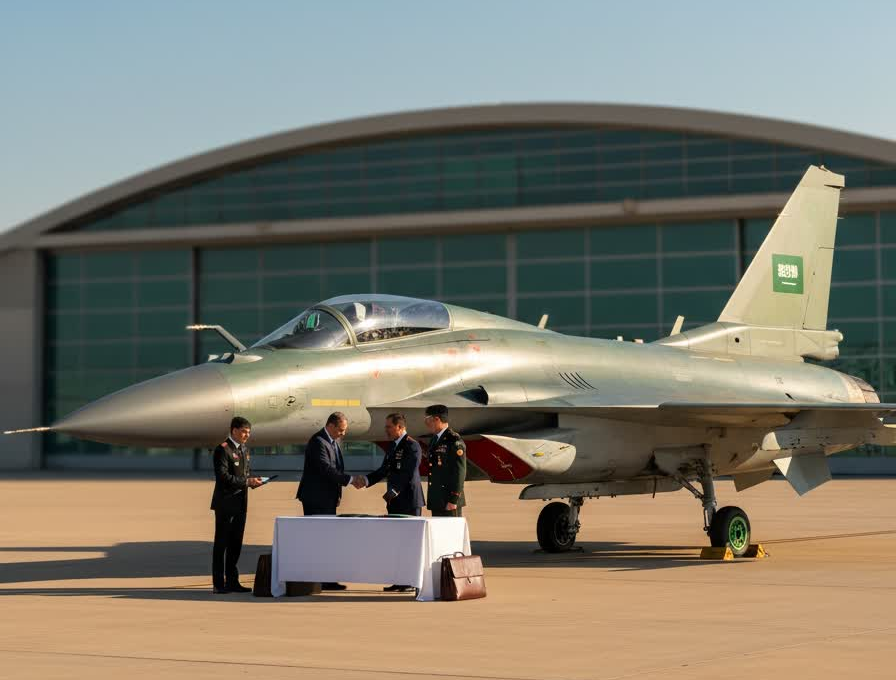
Islamabad and Riyadh are engaged in discussions to convert approximately $2 billion in existing Saudi loans into a purchase agreement for Pakistan’s JF-17 Thunder fighter jets. Sources close to the Pakistani military indicate that the negotiations aim to operationalize a mutual defence pact signed in September 2025, which treats aggression against one nation as an attack on both. Read More: https://theboardroompk.com/2-billion-rooftop-solar-investment-at-stake-amid-net-metering-policy-changes-fpcci/ The talks come at a pivotal time. Pakistan is grappling with severe economic challenges, including reliance on a $7 billion IMF programme, while Saudi Arabia seeks to diversify its security alliances amid uncertainties over U.S. commitments in the Middle East. The pact was prompted by regional tensions, including Israel’s strikes on alleged Hamas targets in Doha. JF-17 Thunder: A Combat-Tested Asset Boosting Pakistan’s Exports The JF-17, a lightweight multirole fighter co-developed by Pakistan and China, has gained appeal due to its cost-effectiveness and proven performance. It was deployed during Pakistan’s intense aerial clashes with India in May 2025, marking its combat credentials. One source revealed the potential deal could reach $4 billion, with an additional $2 billion for related equipment and systems. Pakistan’s Air Chief Zaheer Ahmed Baber Sidhu recently visited Saudi Arabia for talks on military cooperation. Retired Air Marshal Aamir Masood noted that Pakistan is negotiating or finalizing defence deals with six countries, including Saudi Arabia, highlighting the JF-17’s growing marketability. Defence Minister Khawaja Asif has expressed optimism, stating that surging arms exports could reduce Pakistan’s dependence on international lenders. Recent deals, such as a over $4 billion arms package with Libya including JF-17s, underscore this shift. Historically, Saudi Arabia has provided crucial financial support to Pakistan, including rollovers and deposits during economic crises. This jets-for-loans arrangement could alleviate Pakistan’s debt burden while enhancing Saudi air capabilities, fostering deeper bilateral ties rooted in long-standing security partnerships.
Reviving Air Links – Pakistan and Bangladesh Restore Direct Flights After 14 Years
Pakistan

Reviving Air Links – Pakistan and Bangladesh Restore Direct Flights After 14 Years

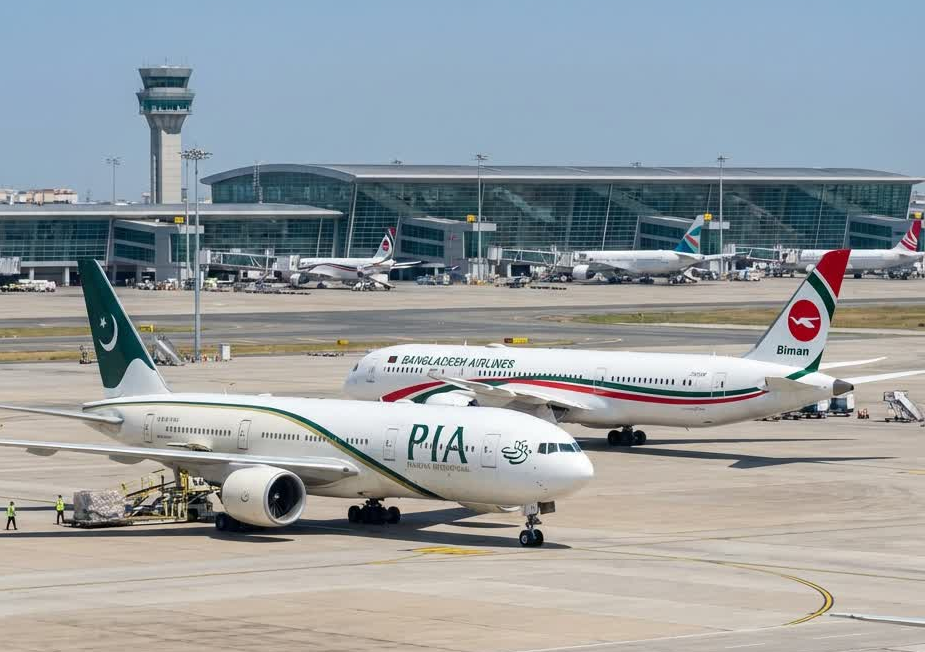
In a significant boost to bilateral relations, Biman Bangladesh Airlines will resume direct flights between Dhaka and Karachi starting January 29, 2026. The service, operating twice weekly on Thursdays and Saturdays, marks the first non-stop connection since 2012, ending a 14-year hiatus in direct air travel between the two nations. Read More: https://theboardroompk.com/exports-plunge-15-pakistans-jul-nov-trade-deficit-widens-to-15-54-billion/ Historical Context and Political Shift Pakistan and Bangladesh share a complex history, having been united until the 1971 Liberation War led to Bangladesh’s independence. Relations remained strained for decades, particularly under former Bangladeshi Prime Minister Sheikh Hasina’s administration, which was closely aligned with India. However, following Hasina’s ouster in a student-led uprising in August 2024, ties with Pakistan have warmed considerably. This shift has paved the way for renewed cooperation, including high-level diplomatic engagements like the visit of Pakistan’s Deputy Prime Minister Ishaq Dar to Dhaka last year. The resumption of flights follows months of discussions between aviation authorities. Pakistan’s Civil Aviation Authority has granted initial approval until March 30, 2026, on a trial basis. Flights will depart Dhaka at 8:00 PM, arriving in Karachi at 11:00 PM, with return legs leaving Karachi just after midnight. Economic and Cultural Impacts Officials from Biman Bangladesh Airlines emphasized that the route will enhance connectivity for business travelers, tourists, and families. “The resumption of direct flights will significantly improve connectivity, supporting business travel, tourism, and family reunions,” a airline spokesperson stated. This development aligns with growing trade ties, including the resumption of direct cargo shipping from Karachi to Chittagong in November 2024. Cultural exchanges are also increasing, with Pakistani artists performing in Dhaka and Bangladeshi patients seeking medical treatment in Pakistan. Previously, travelers relied on lengthy connecting flights via Gulf hubs like Dubai or Doha, often taking 8-12 hours. The direct route, covering about 2,370 km, promises shorter, more convenient journeys. As regional dynamics evolve, this air link symbolizes a new chapter in Pakistan-Bangladesh relations, fostering greater people-to-people contacts and economic collaboration.

Pakistan Decides to Fully Deregulate Sugar Sector in IMF-Aligned Reforms
Pakistan

Pakistan Decides to Fully Deregulate Sugar Sector in IMF-Aligned Reforms

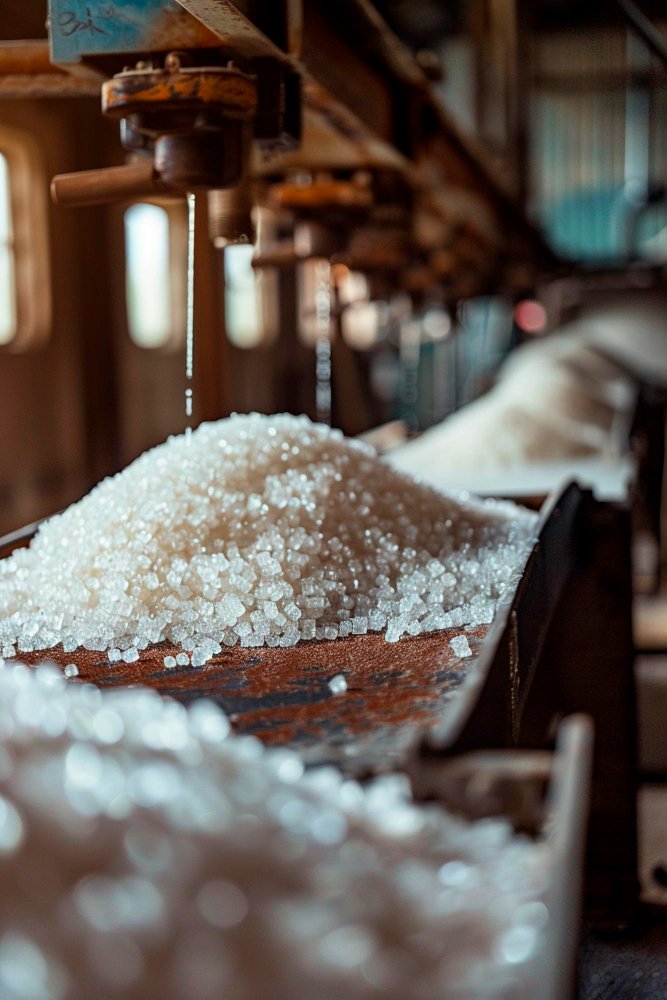
In a landmark decision announced on January 8, 2026, the Pakistani government has committed to fully deregulating the sugar sector, aligning with structural reforms mandated by the International Monetary Fund (IMF). This policy shift, developed in consultation with farmers and sugar industry stakeholders, aims to transition the industry from decades of state control to a market-driven model. Following the successful deregulation of the wheat sector, sugar now becomes the next major agricultural commodity to undergo liberalization, signaling a broader move towards reducing government intervention in key economic sectors. Read More: https://theboardroompk.com/pakistan-fertilizer-sector-urea-sales-set-a-historic-record/ Key Reforms and Implications The comprehensive reform plan eliminates several longstanding regulations. Farmers will gain unrestricted freedom to cultivate sugarcane, choosing varieties and planting zones without government restrictions, and can sell their produce to any mill or divert it for alternative uses like jaggery production. The minimum support price for sugarcane will be abolished, allowing prices to be determined purely by supply and demand dynamics. Export subsidies and quotas will be removed, while bans on sugar imports and exports will be lifted to enable free trade. Additionally, restrictions on establishing new sugar mills will end, fostering competition. Closed mills will be permitted to import raw sugar for processing, and all mills can refine imported raw materials alongside local sugarcane to boost capacity utilization and refined sugar exports.To safeguard farmers, authorities will annually publish a list of prohibited low-yield sugarcane varieties before sowing seasons. These measures are expected to enhance competitiveness, reduce fiscal burdens on the government, and promote efficiency. However, the transition may initially challenge stakeholders accustomed to regulated prices, potentially leading to short-term volatility in sugar prices. Overall, this deregulation promises a more dynamic sugar industry, potentially increasing exports and attracting investment, while fulfilling IMF commitments for fiscal relief and market-oriented reforms.

BYD New Energy Vehicle Sales 2025 Set New Global Benchmark
Breaking News, World

BYD New Energy Vehicle Sales 2025 Set New Global Benchmark

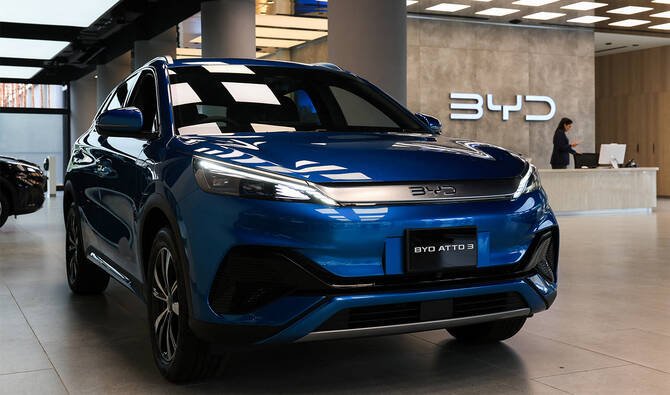
BYD New Energy Vehicle Sales 2025 have once again positioned the company as the world’s leading New Energy Vehicle (NEV) manufacturer, with global sales surpassing 4.6 million units. This achievement allows BYD to retain its No.1 global ranking, underscoring its dominance in the fast-growing electric and hybrid vehicle market. Read More: The milestone reflects BYD’s sustained momentum in a highly competitive automotive landscape, driven by technological innovation, superior product quality, and a strong commitment to customer-centric mobility solutions. BYD New Energy Vehicle Sales 2025 Highlight Global Leadership BYD’s performance in 2025 reinforces its long-standing leadership in the NEV sector. The company has successfully navigated shifting consumer preferences, regulatory transitions, and global sustainability demands by focusing on electric and plug-in hybrid technologies. A defining highlight of BYD New Energy Vehicle Sales 2025 is its international breakthrough. For the first time, BYD’s overseas sales crossed the one-million-unit mark in a single year, demonstrating strong global confidence in the brand. This expansion signals BYD’s transformation from a China-centric manufacturer into a truly global NEV powerhouse, with increasing presence across Asia, Europe, the Middle East, and emerging markets such as Pakistan. BYD Pakistan Growth Reflects Rising NEV Adoption Commenting on the company’s performance, Lei Jian, Country Head of BYD Pakistan, described 2025 as a landmark year. He highlighted that beyond record-breaking global sales, BYD is witnessing exceptional acceptance outside its home market. Since entering Pakistan in 2024, models including the BYD ATTO 3, BYD SEAL, and BYD SHARK 6 have generated strong consumer interest. Pakistani buyers are increasingly embracing advanced electric vehicle technologies that deliver efficiency, performance, and sustainability—aligning with BYD’s long-term vision for new energy mobility. BYD’s Technology Advantage Driving New Energy Vehicle Sales A major factor behind BYD New Energy Vehicle Sales 2025 is the company’s deep technological integration across the entire NEV value chain. Founded in 2003, BYD Auto operates as the automotive arm of BYD, a global high-tech enterprise focused on sustainable innovation. Unlike traditional automakers, BYD has developed in-house expertise in critical components, including batteries, electric motors, and electronic control systems. This vertical integration enables cost efficiency, quality control, and faster innovation cycles. Industry-Leading Innovations Powering BYD New Energy Vehicle Sales 2025 BYD has consistently introduced breakthrough technologies that set industry benchmarks. These include the Blade Battery, known for enhanced safety and longevity, and advanced hybrid systems such as DM-i and DM-p, which balance fuel efficiency with high performance. The company’s e-Platform 3.0, Cell-to-Body (CTB) integration, iTAC intelligent torque control, DiSus Intelligent Body Control System, and XUANJI Architecture collectively enhance vehicle stability, range, and driving intelligence. Notably, BYD became the first global automaker to fully discontinue fossil-fuel vehicle production, reinforcing its commitment to clean energy mobility. China Market Strength Supports Global Expansion In its home market, BYD has remained the top-selling new energy passenger vehicle brand in China for over a decade. This consistent domestic leadership provides the scale, financial strength, and manufacturing expertise that support its global expansion strategy. The strong performance in BYD New Energy Vehicle Sales 2025 confirms that the company’s China-led innovation model translates effectively into international markets. Future Outlook: BYD and Sustainable Mobility Looking ahead, BYD continues to invest heavily in research and development while expanding its international footprint. The company’s strategy focuses on delivering high-performance, technologically advanced NEVs tailored to diverse regional needs. With rising demand for electric mobility and supportive government policies worldwide, BYD New Energy Vehicle Sales 2025 represent not just a record year, but a foundation for long-term global leadership including accelerated growth in Pakistan.

Pak-Qatar General Takaful IPO Gets SECP Approval, Signaling Strong IPO Momentum in Pakistan
Pakistan

Pak-Qatar General Takaful IPO Gets SECP Approval, Signaling Strong IPO Momentum in Pakistan

Pak-Qatar General Takaful IPO has received a major regulatory green light as the Securities and Exchange Commission of Pakistan (SECP) approved the prospectus for the company’s Initial Public Offering (IPO). This development marks a significant milestone for Pakistan’s capital markets and the country’s rapidly expanding Islamic finance and Takaful sector. Announced on January 07, 2026, the approval allows Pak-Qatar General Takaful Limited (PQGTL) to issue, circulate, and publish its IPO prospectus, paving the way for its listing on the Pakistan Stock Exchange (PSX). Pak-Qatar General Takaful IPO: Key Offering Structure Explained Under the approved prospectus, the Pak-Qatar General Takaful IPO will consist of 30 million ordinary shares, representing 29.67% of the company’s total post-IPO paid-up capital. Rather than presenting figures in tabular form, the offering structure can be summarized as follows: The IPO will be conducted through the book-building method, a market-driven price discovery mechanism. Out of the total shares offered, 75% will be allocated to institutional and high-net-worth investors through book building, while the remaining 25% will be reserved for retail investors, ensuring broad-based public participation. This structure reflects growing regulatory emphasis on transparency, fair pricing, and wider investor inclusion in Pakistan’s equity market. First Dedicated General Takaful Company to Be Listed on PSX One of the most notable aspects of the Pak-Qatar General Takaful IPO is its historic significance. Upon listing, PQGTL will become Pakistan’s first dedicated General (non-life) Takaful company to be listed on the PSX. As a Shariah-compliant insurer, the company offers a wide range of general Takaful products, catering to individuals and businesses seeking Islamic insurance solutions. The listing is expected to strengthen investor confidence in Islamic financial institutions and deepen the Shariah-compliant investment ecosystem in Pakistan. Pak-Qatar General Takaful IPO Highlights PSX’s Strong IPO Pipeline The approval comes amid phenomenal IPO activity during FY2025–26. The Pak-Qatar General Takaful IPO is the sixth IPO on the PSX Main Board in the current fiscal year, reflecting renewed momentum in Pakistan’s primary market. Additionally, this approval marks the second IPO prospectus approved by the SECP within the first week of calendar year 2026, signaling regulatory efficiency and growing issuer confidence in the capital markets. Why the Pak-Qatar General Takaful IPO Matters for Investors New IPOs play a critical role in market development. The Pak-Qatar General Takaful IPO is expected to: Enhance market transparency through improved disclosures and reporting standardsPromote stronger corporate governance practicesProvide companies with access to long-term growth capitalOffer investors new Shariah-compliant investment opportunitiesSupport broader financial inclusion and capital market deepening For investors, the listing provides access to a regulated, disclosure-driven Islamic insurance business at a time when demand for ethical and Shariah-compliant financial products is rising. SECP’s Role in Strengthening Pakistan’s Capital Markets The SECP reaffirmed its commitment to fostering a facilitative and investor-friendly regulatory environment. By encouraging new listings such as the Pak-Qatar General Takaful IPO, the regulator aims to position capital markets as a sustainable source of financing while supporting economic growth and diversification. Outlook: What’s Next for the Pak-Qatar General Takaful IPO With regulatory approval secured, market participants now await the book-building dates, price band announcement, and listing timeline. Given the strong IPO momentum on the PSX and growing interest in Islamic finance, the offering is expected to attract significant attention from both institutional and retail investors.

KSE-100 Index Performance Strengthens as Market Ends Higher
Pakistan

KSE-100 Index Performance Strengthens as Market Ends Higher

KSE-100 Index performance remained firmly positive on Wednesday as Pakistan’s benchmark stock index closed with strong gains, reflecting growing investor confidence, sector-led buying, and sustained trading volumes at the Pakistan Stock Exchange (PSX). The KSE-100 Index ended the trading session at 186,518.71 points, registering a net increase of 1,456.61 points or 0.79 percent. The upbeat close highlights continued bullish sentiment driven by key sectors including power generation, oil and gas exploration, cement, and banking stocks. KSE-100 Index Performance: Intraday Movement and Market Breadth During the session, the KSE-100 Index performance showed notable volatility, trading within a wide range of 2,118 points. The index touched an intraday high of 187,015.11 points, gaining nearly 1,953 points, while the day’s low stood at 184,896.70 points, reflecting temporary profit-taking early in the session. Market breadth remained positive, with 72 out of 100 index companies closing higher, while 28 stocks ended in the red, reinforcing the overall bullish tone. Total trading volume for the KSE-100 stocks reached 569.86 million shares, indicating active participation from both institutional and retail investors. Top Gainers and Losers Driving KSE-100 Index Performance Several stocks posted strong percentage gains, providing momentum to the index. The top gainers included: • YOUW, which surged over 8 percent• AICL, gaining nearly 8 percent• PTC, advancing more than 6 percent• SAZEW and HALEON, both delivering solid upside moves On the downside, selective pressure was observed in stocks such as PSEL, FABL, HMB, JVDC, and UBL, though losses remained contained and did not derail the broader market trend. Index Contributors: Stocks Powering the KSE-100 Index Performance From a points contribution perspective, HUBC emerged as the single largest contributor, adding nearly 296 points to the index. Other heavyweight stocks supporting the rally included PPL, ENGROH, MCB, and MEBL, reflecting renewed interest in energy, industrial, and banking sectors. Conversely, index drag was led by UBL and FFC, which collectively erased over 400 points, followed by losses in PSEL, FABL, and HMB. Sector-Wise Impact on KSE-100 Index Performance Sectoral performance played a decisive role in shaping the day’s gains. The Power Generation & Distribution sector provided the largest boost, contributing nearly 300 points. This was followed by strong support from Oil & Gas Exploration, Cement, Investment Companies, and Technology & Communication sectors. However, some sectors faced selling pressure. Fertilizer stocks weighed on the index, while modest declines were also recorded in miscellaneous, property, chemical, and transport sectors. Broader Market Performance Mirrors KSE-100 Index Strength The positive momentum extended to the broader market, where the All-Share Index closed at 111,118.65 points, up 877 points or 0.80 percent. Overall market activity improved, with total traded volume rising to 1.33 billion shares, while traded value increased to Rs86.59 billion, reflecting enhanced liquidity. More than 606,000 trades were executed across 485 companies, with 298 stocks closing higher, confirming widespread participation. High-volume stocks included KEL, HASCOLNC, BOP, TELE, PTC, and TRG, signaling continued interest in energy, telecom, and financial counters. KSE-100 Index Performance: Year-to-Date and Fiscal Outlook From a longer-term perspective, the KSE-100 Index performance remains exceptionally strong. During the ongoing fiscal year, the index has gained over 60,800 points, marking an impressive 48 percent increase. On a calendar-year basis, the index is up more than 7 percent, underlining sustained momentum despite global and domestic economic challenges. Conclusion: KSE-100 Index Performance Reflects Market Resilience The latest trading session reinforces the resilience of Pakistan’s equity market. With improving volumes, sectoral leadership, and strong fiscal-year gains, KSE-100 Index performance continues to attract investor attention. If macroeconomic stability and corporate earnings momentum persist, the market may maintain its upward trajectory in the near term.

CDNS Revised Profit Rates January 2026: Full Breakdown of New National Savings Returns
Pakistan

CDNS Revised Profit Rates January 2026: Full Breakdown of New National Savings Returns

CDNS Revised Profit Rates January 2026 have officially come into effect from January 5, 2026, marking a fresh adjustment across Pakistan’s national savings landscape. The Central Directorate of National Savings (CDNS) has revised profit rates on both conventional and Islamic savings schemes to better align with prevailing market dynamics, monetary policy trends, and broader economic conditions. These revisions directly impact retirees, pensioners, long-term investors, and short-term savers who rely on National Savings schemes for stable and predictable returns. CDNS Revised Profit Rates January 2026 for Long-Term Savings Schemes Under the latest notification, Defence Savings Certificates (DSC) now offer a profit rate of 11.08% per annum for a 10-year tenure, following a reduction of 23 basis points. This adjustment reflects easing yields in the broader interest rate environment. Similarly, socially targeted savings instruments—Behbood Savings Certificates (BSC), Pensioners Benefit Accounts (PBA), and Shuhada Family Welfare Accounts (SFWA) have seen their profit rates reduced by 24 basis points. These schemes now provide a return of 12.48% per annum over a 10-year period, maintaining their position as relatively high-yield options for pensioners, widows, and families of martyrs. Regular Income and Special Savings Under CDNS Revised Profit Rates January 2026 The Regular Income Certificates (RIC), popular among investors seeking monthly income, now carry a profit rate of 10.56% per annum for a 5-year tenure, after a 36 basis point reduction. Despite the cut, RICs remain a reliable income-generating instrument in a declining rate cycle. In contrast, CDNS has increased returns on Special Savings Certificates (SSC) and Special Savings Accounts (SSA). These schemes now offer 11.00% per annum for a 3-year tenure, following a 40 basis point increase, making them more attractive for medium-term investors looking to balance yield and liquidity. Short-Term Investments in CDNS Revised Profit Rates January 2026 Short-duration investors will find differentiated returns across Short Term Savings Certificates (STSC). As per the revised structure: • A 3-month STSC offers 10.32% per annum• A 6-month STSC provides 10.36% per annum• A 12-month STSC yields 10.68% per annum These rates indicate CDNS’s intent to keep short-term instruments competitive while remaining aligned with policy rate expectations. Meanwhile, the Savings Account rate has been reduced by 50 basis points and now stands at 9.00% per annum on a running account basis, impacting depositors who prioritize liquidity over returns. Islamic Savings Schemes and CDNS Revised Profit Rates January 2026 In the Islamic finance segment, the Sarwa Islamic Savings Account (SISA) now offers a profit rate of 9.96% per annum on a running basis, reflecting a 4 basis point increase from the previous rate. For fixed-tenure Islamic investments, the Sarwa Islamic Term Account (SITA) presents mixed adjustments: • 9.96% per annum for 1 year (up 4 basis points)• 10.20% per annum for 3 years (down 10 basis points)• 10.44% per annum for 5 years (down 12 basis points) These selective changes highlight CDNS’s nuanced approach to Islamic savings products across different maturities. Premium Prize Bonds and Market Alignment The Premium Prize Bonds (Registered) continue to offer a return of 2.92% per annum, with bi-annual profit payments, unchanged under the CDNS Revised Profit Rates January 2026. This stability maintains their appeal among risk-averse investors seeking periodic income with prize incentives. What CDNS Revised Profit Rates January 2026 Mean for Investors The latest revision underscores CDNS’s ongoing effort to align national savings returns with policy rates, inflation trends, and fiscal conditions. While some long-term and income-focused instruments have seen reductions, targeted increases in special and short-term schemes provide investors with strategic alternatives. For savers, these changes highlight the importance of tenure selection, diversification, and timing when investing in National Savings schemes amid a shifting economic landscape.

Trump Announces Venezuela to Hand Over Up to 50 Million Barrels of Oil to US
World

Trump Announces Venezuela to Hand Over Up to 50 Million Barrels of Oil to US

US President Donald Trump has declared that Venezuela’s interim authorities will transfer between 30 and 50 million barrels of high-quality sanctioned oil to the United States, valued at around $2.8 billion, in a move tied to recent political upheaval in the South American nation. Details of the Oil Transfer Agreement In a post on Truth Social, Trump stated that the oil would be sold at market prices, with proceeds controlled by him to benefit both Venezuelans and Americans. This follows a US-backed military operation that ousted long-time President Nicolás Maduro, who was subsequently extradited to the US facing drug-trafficking and weapons charges. Delcy Rodríguez, Maduro’s former vice-president, was sworn in as interim president shortly before the announcement. Trump also expressed optimism about reviving Venezuela’s oil sector, predicting US industry operations there within 18 months and substantial investments. International Reactions and Historical Context China strongly condemned the US demands, including reported requirements for Venezuela to sever ties with Beijing, Moscow, Tehran, and Havana in exchange for an exclusive oil partnership. A Chinese foreign ministry spokesperson called it “bullying” and a violation of international law and sovereignty. Analysts note Venezuela holds the world’s largest proven reserves but production has plummeted due to sanctions and mismanagement. Historical disputes, including nationalizations under Hugo Chávez, complicate US claims of “stolen” oil assets. Major US firms like Chevron continue operations cautiously, while others monitor developments amid skepticism over quick production ramps-up due to infrastructure challenges.

Zuckerberg Turns 40: Wife Recreates Childhood Room and Iconic Harvard Dorm
World

Zuckerberg Turns 40: Wife Recreates Childhood Room and Iconic Harvard Dorm

For Mark Zuckerberg’s 40th birthday in 2024, his wife Priscilla Chan delivered a gift that resonated far beyond material value—one rooted in nostalgia, love, and shared history. Rather than opting for luxury, Chan meticulously recreated two pivotal spaces from Zuckerberg’s life: his childhood bedroom and the Harvard dorm room where Facebook was born. A Journey Back to Humble Beginnings The childhood bedroom recreation captured the essence of young Mark’s formative years—a space filled with computers, books, posters, and the desk where his passion for coding and invention first flourished. Every detail, from furniture placement to personal mementos, reflected Chan’s deep understanding of her husband’s origins. It served as a poignant reminder of the curious boy who tinkered endlessly, long before his ideas transformed the world. For Zuckerberg, stepping into this recreated room was like revisiting the quiet spark that ignited his extraordinary journey. Symbolism of the Harvard Dorm Recreation Even more symbolic was the recreated Harvard dorm room, the very place where late-night coding sessions turned into the foundation of a global platform. This was not just Zuckerberg’s turning point; it was where he and Chan first met, making it a cornerstone of their personal story too. The gesture honored not only his professional breakthrough but also their intertwined lives. The surprise quickly captured hearts online, going viral for its emotional depth. Netizens praised it as a masterclass in thoughtful gifting, proving that the most powerful presents celebrate identity, growth, and the unseen moments that shape success.

Pakistan Advances $558 Million Deals with China for Local Lithium-Ion Battery Production
Pakistan

Pakistan Advances $558 Million Deals with China for Local Lithium-Ion Battery Production

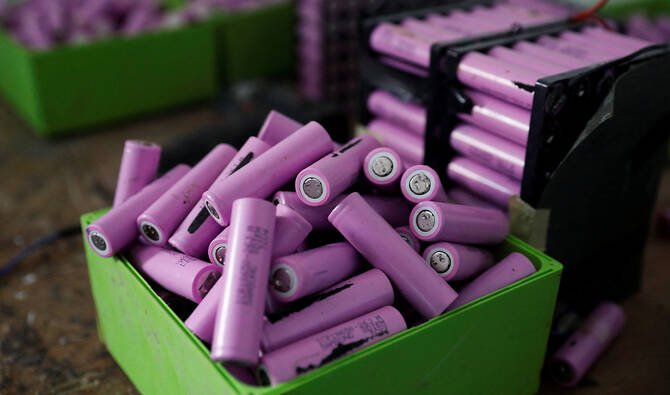
In a strategic push towards energy independence and value addition, the Pakistani government is forging ahead with $558 million worth of agreements with Chinese firms to localize lithium-ion battery assembly and manufacturing, leveraging domestic mineral reserves. High-Level Review of National Policy A key meeting chaired by Special Assistant to the Prime Minister on Industries and Production, Haroon Akhtar Khan, reviewed progress on the National Lithium-Ion Battery Manufacturing Policy 2026–2031. Attended by Secretary Industries and Production Saif Anjum, Engineering Development Board CEO Hammad Mansoor, and private-sector representatives, the session focused on integrating energy storage initiatives with Pakistan’s broader national energy security framework, as directed by the prime minister. Khan emphasized the critical role of private-sector involvement and partnerships with global investors to drive this transformation. Phased Plan for Domestic Supply Chain The discussions highlighted business-to-business engagements with Chinese companies to exploit local mineral resources and significantly reduce reliance on imported batteries. A comprehensive phased domestic supply plan was outlined, identifying key gaps in the supply chain, persistent import dependence, potential joint-venture opportunities, and essential policy interventions. This approach aims to foster domestic production capabilities, enhance value addition in the battery sector, and support the growing demand for energy storage solutions. By promoting local manufacturing, the initiative is expected to bolster economic growth, create jobs, and strengthen energy security amid global shifts towards renewable and electric mobility technologies.

Scroll to Top