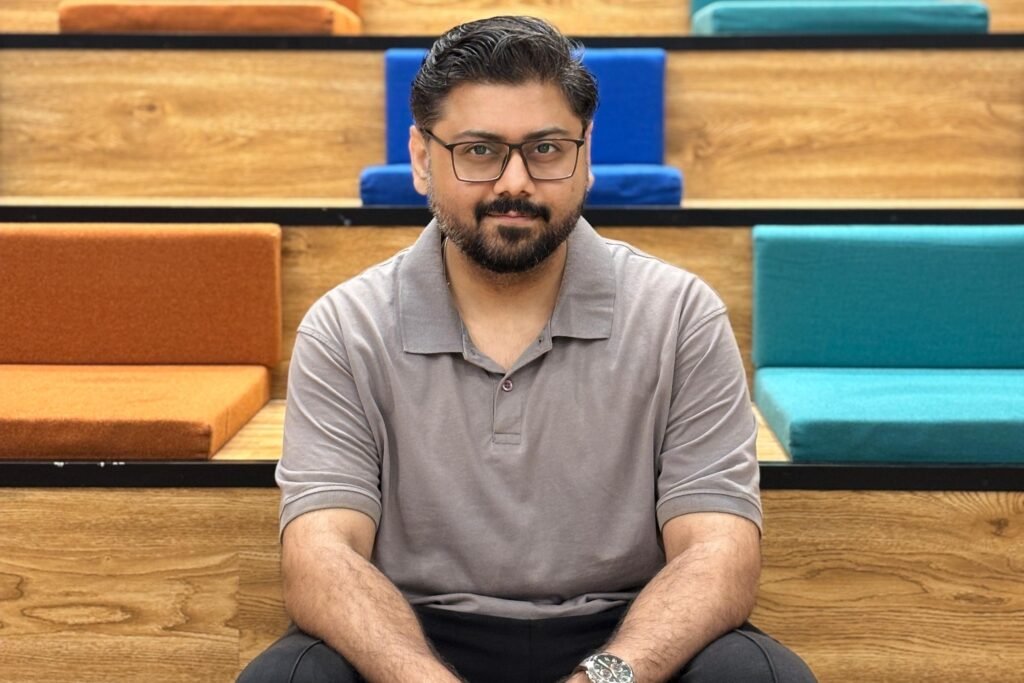
Building a Career at the Intersection: Asad Jawaid on Strategy, Risk, and Leading Through Change
In a session, we engage with Mr. Asad Jawaid, a seasoned strategy and commercial leader whose career is a masterclass in navigating the evolution of South Asia’s consumer landscape. With over a decade of experience, Asad uniquely bridges two worlds: the entrenched, distribution-heavy fundamentals of FMCG, honed at Reckitt, and the agile, data-driven arena of modern digital commerce, shaped within the Alibaba and Daraz ecosystem. He is recognized for translating complex insights into scalable growth and driving commercial transformation, with a track record of full P&L ownership and market strategy across Pakistan, Sri Lanka, and the wider region. We sat down with him to unpack his perspectives on the convergence of traditional and digital business models, the future of commerce, and the essential mindset for leading in a period of rapid transformation. TBR: You have built your career across different industries and roles. When you look back, what were the key chapters that shaped who you are as a leader today? AJ: My career has come in a few chapters. At Reckitt, I learned discipline, ownership, and how to understand customers from the field, not just presentations. Moving into Daraz and the Alibaba ecosystem shifted my thinking toward systems: category strategy, seller economics, and using data to move fast. Regional work across South Asia taught me to adapt playbooks to local realities. Across all of it, I have become more curious, more practical, and more focused on building teams that can scale. TBR: Was there a defining moment early in your career when you realised you wanted to work in high growth, consumer facing businesses rather than a more traditional path? AJ: Early on, I noticed I was most energised when the consumer was changing and the answers were not obvious. I enjoyed ambiguous problems where you have to build the approach, test it, and improve it quickly. That pace and constant learning felt more meaningful to me than a predictable path, so I leaned into high-growth roles where the market keeps you sharp. TBR: You now lead commercial strategy at Daraz, one of Pakistan’s most visible digital businesses. What were the most important skills or mindsets you had to develop along the way to make that transition possible? AJ: Three things helped most. First, systems thinking: seeing how assortment, pricing, traffic, seller health, and operations link together. Second, data fluency: spotting real signals, then converting them into actions fast. Third, a learner’s mindset: staying curious, unlearning what no longer applies, and partnering closely with cross-functional teams to execute. TBR: Every career has inflection points. Can you share one decision, move or risk you took that felt uncertain at the time but proved transformative later? AJ: Leaving a clear FMCG track for e-commerce was the biggest risk. I went from familiar brands to leading Fashion, learning new consumers, new metrics, and a new operating rhythm. It felt like starting over, but it forced faster learning and more structured thinking. I learned to build growth engines instead of relying on inherited playbooks. That move later unlocked multi-category leadership, regional exposure, and transformation work that still shapes how I approach strategy. TBR: Who have been the most influential mentors or role models in your journey, and what are the one or two lessons from them that you still apply every day? AJ: I have learned from leaders who combined high standards with trust. Two lessons stay with me. First, execution is where strategy becomes real, so keep plans simple, clear, and repeatable. Second, leadership is about enabling others: set direction, ask better questions, and give teams the tools and confidence to own outcomes. TBR: You have seen the evolution of Pakistan’s consumer and e-commerce landscape first hand. How has that context shaped your thinking about growth, partnerships and doing business here? AJ: Pakistan teaches resilience. Consumers are value-conscious, behaviour shifts quickly, and external conditions can change plans overnight. That has made me focus on fundamentals: trust, selection, service, and pricing discipline. It has also reinforced that partnerships must be win-win and grounded in data. The goal is flexible systems that can absorb shocks and still deliver consistent value. TBR: What kind of leader do you consciously try to be for your teams, and how has your leadership style changed from your first managerial role to now? AJ: Earlier, I thought leadership meant having answers and pushing hard. Now I try to create clarity, context, and momentum. I focus on direction, simple decision frameworks, and removing friction so teams can move faster. I encourage ownership, thoughtful experimentation, and learning from mistakes. My job today is less about doing the work myself and more about making strong execution repeatable. TBR: On a personal level, what keeps you motivated in demanding roles, and how do you reset or stay grounded outside of work? AJ: Progress motivates me: a category improving, a process scaling, or someone on the team stepping up. To reset, I lean on fitness, travel, and time with people who keep me grounded. I also reflect regularly on what is working, what is not, and what I need to learn next. TBR: If you were speaking to a young professional at the very start of their career, what honest advice would you give them about building a meaningful long term journey, not just chasing the next title? AJ: Optimise for skills, not titles. Take roles that stretch you and teach you how to solve unfamiliar problems. Work with people who challenge you and give direct feedback. Stay curious, stay humble, and build a reputation for reliability. Careers compound through capability and relationships, and the best opportunities usually follow consistent growth over time.