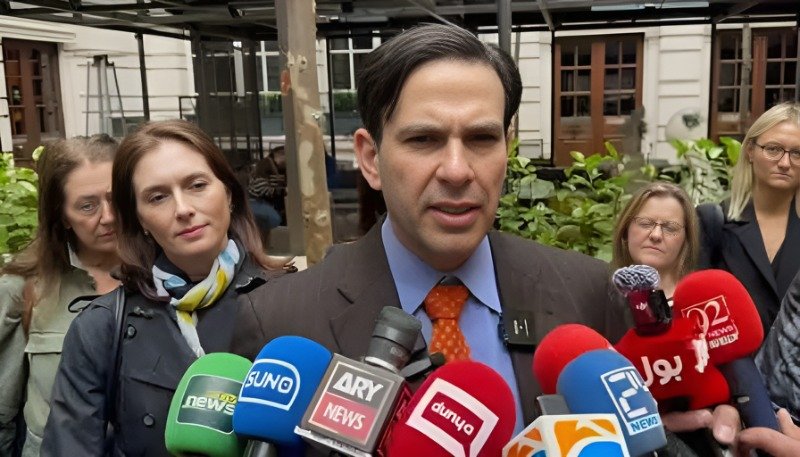
Zia Chishti

US Court Tells Zia Chishti: It’s Over
World

US Court Tells Zia Chishti: It’s Over

A U.S. federal appeals court has affirmed the dismissal of former TRG Pakistan and Afiniti Chief Executive Officer Zia Chishti’s defamation lawsuit against former Afiniti employee Tatiana Spottiswoode and her legal representatives, concluding that his claims fail as a matter of law. The ruling by the U.S. Court of Appeals for the District of Columbia Circuit upholds a September 2024 decision of the U.S. District Court for the District of Columbia, which dismissed the lawsuit with prejudice after finding that the claims could not proceed under applicable U.S. law. Appeals Court Affirms Earlier Dismissal The dispute arose from Spottiswoode’s testimony before a U.S. congressional committee in 2021 regarding a 2019 arbitration proceeding in which she prevailed on claims against Chishti. The congressional hearing later contributed to legislative changes in the United States ending mandatory arbitration for workplace sexual assault and sexual harassment claims. Defamation Claims Rejected Chishti subsequently filed a defamation lawsuit, alleging that Spottiswoode’s congressional testimony, subsequent media interviews, and related public statements were false and breached confidentiality obligations arising from the arbitration proceedings. In its decision, the appeals court agreed with the district court’s conclusion that the statements challenged by Chishti were protected under U.S. law and that his complaint failed to establish legally actionable defamation. The court also rejected arguments seeking to revisit the arbitration outcome through the litigation. Court Addresses Telegraph Settlement The judgment also addressed Chishti’s reliance on a settlement with The Telegraph in the United Kingdom, concluding that the agreement did not alter the findings of the U.S. arbitration or provide a basis to revive his defamation claims. Legal Proceedings Continue to Conclude The appeals court’s decision leaves intact the dismissal of the lawsuit, bringing to a close another stage of the legal proceedings stemming from the long-running dispute. Ruling Reinforces Earlier Court Decision By affirming the district court’s dismissal with prejudice, the U.S. Court of Appeals has concluded that the defamation claims cannot proceed under applicable U.S. law. The decision represents the latest judicial development in the legal dispute arising from the 2019 arbitration and subsequent congressional testimony.

https://image.pi7.org/
Pakistan

TRG Pakistan Legal Battle Deepens as US Court Restrains Zia Chishti from Global Litigation

The TRG Pakistan legal battle has entered a critical new phase after a United States federal court temporarily barred the company’s founder and former chief executive, Zia Chishti, from pursuing litigation linked to claims that had already been deemed settled. The latest ruling has injected fresh drama into one of Pakistan’s most closely watched corporate disputes, a conflict that has stretched across courtrooms in Pakistan and the United States while reshaping the balance of power within TRG Pakistan. US Court Delivers Major Blow to Zia Chishti According to a notice submitted to the Pakistan Stock Exchange, the United States District Court for the Southern District of New York issued an order on June 10, 2026, restraining Zia Chishti from initiating or continuing legal proceedings anywhere in the world involving claims that had previously been released under a settlement agreement. The temporary order will remain in force until July 1, 2026. During this period, the court will decide whether broader and potentially long-term injunctive relief should be imposed. The ruling represents a significant legal setback for Chishti, who has remained at the center of an increasingly bitter corporate battle despite a sharp decline in his shareholding. Why the TRG Pakistan Legal Battle Matters The dispute goes beyond a disagreement between shareholders. It has evolved into a battle for influence over one of Pakistan’s most prominent listed technology investment companies. The New York court had already ruled on May 12, 2026, that claims involving conduct before January 10, 2022, had been permanently released under an earlier agreement. As a result, those claims could not be litigated in any jurisdiction around the world. TRG Pakistan argued that several lawsuits initiated by Chishti, including a shareholder oppression petition pending before the Sindh High Court, were based on these previously released claims. The court further observed that it had earlier prevented Chishti from raising claims filed in a US arbitration within Pakistani legal proceedings. It stated that the same legal principles justified the latest restraint order. A Corporate War Spanning Two Countries The TRG Pakistan legal battle has become a complex cross-border conflict involving courts on both sides of the globe. Only weeks ago, Pakistan’s Supreme Court dismissed appeals filed by TRG International, Greentree Holdings and associated parties. The decision effectively upheld a Sindh High Court judgment declaring Greentree’s acquisition of nearly 30 percent of TRG Pakistan shares unlawful. At that time, the verdict was widely interpreted as strengthening the position of Chishti and minority shareholders seeking greater influence over the company. However, events quickly took another dramatic turn. How Zia Chishti Lost His Grip on TRG Pakistan Despite apparent legal momentum, Chishti’s influence over TRG Pakistan weakened significantly following the enforcement of pledged shares linked to a financing arrangement. On May 21, JS Bank acquired approximately 81.36 million TRG Pakistan shares through the enforcement of collateral previously pledged by Chishti. The transaction represented nearly 14.92 percent of the company’s total shareholding. Based on the disclosed price of Rs62.92 per share, the acquisition was valued at approximately Rs5.12 billion. The impact on the company’s ownership structure was immediate and substantial. Entities associated with the JS Group increased their combined stake in TRG Pakistan to roughly 29.3 percent. Meanwhile, Chishti’s ownership declined dramatically to approximately 1.2 percent. The shift fundamentally altered the shareholder landscape and significantly reduced the founder’s direct influence over the company’s future direction. What Happens Next in the TRG Pakistan Legal Battle? TRG Pakistan has confirmed that it is reviewing its legal options following the latest US court order. The court’s decision in July could determine whether the temporary restrictions evolve into a broader injunction capable of limiting Chishti’s ability to pursue related claims globally. For investors, the outcome could shape not only the future governance of TRG Pakistan but also set important precedents regarding cross-border shareholder disputes involving Pakistani listed companies. As the courtroom battle intensifies, shareholders and market participants will be closely watching whether this latest development marks the beginning of the end of a prolonged corporate war or merely another chapter in one of Pakistan’s most dramatic boardroom conflicts.

TRG Supreme Court Appeal Ends in Major Blow for Company
Pakistan

TRG Supreme Court Appeal Ends in Major Blow for Company

The TRG Supreme Court Appeal has ended in a dramatic setback for TRG Pakistan Limited after the Supreme Court of Pakistan dismissed appeals challenging the cancellation of Greentree Holdings’ 30% shareholding in the company. The verdict has triggered serious debate across Pakistan’s corporate and technology sectors. Investors, analysts, and governance experts are now questioning how the ruling could reshape shareholder control, foreign investment confidence, and the future direction of one of Pakistan’s most watched tech-linked firms. The decision also sparked concerns about broader governance risks linked to Pakistan’s business environment at a time when the country is trying to attract international capital into emerging sectors. TRG Supreme Court Appeal Dismissed After Months of Legal Battle According to disclosures sent to the Pakistan Stock Exchange, the apex court dismissed appeals filed by TRG Pakistan Limited, The Resource Group International Limited, and Greentree Holdings Limited. The appeals were filed against a June 2025 ruling by the Sindh High Court that cancelled Greentree Holdings’ 30% stake in TRG Pakistan. In its short order, the Supreme Court stated that all parties had already presented arguments and the petitions were converted into appeals before being dismissed. The ruling instantly became one of the most talked-about corporate legal developments in Pakistan’s capital markets this year. Why the TRG Supreme Court Appeal Matters The significance of the TRG Supreme Court Appeal goes far beyond a courtroom dispute. TRG Pakistan’s most valuable asset is its stake in The Resource Group International Limited, where it reportedly holds nearly 45% voting power. This means any major change in TRG Pakistan’s shareholding structure could directly affect voting control, board influence, and strategic decisions across the wider TRG ecosystem. TRG International warned that the cancellation of Greentree’s shares could materially alter voting dynamics and potentially increase the influence of Zia Chishti within the broader corporate structure. The company described the situation as a possible threat to governance stability and stakeholder confidence. Foreign Investment Concerns Deepen After TRG Supreme Court Appeal One of the strongest reactions came from TRG International, which claimed the ruling could negatively impact perceptions about Pakistan’s investment climate. The Washington-based company stated that nearly $90 million invested into Pakistan through Greentree Holdings now appears at risk. The company further argued that the decision may conflict with established corporate jurisprudence principles and could create uncertainty for foreign investors considering Pakistan’s technology and startup sectors. This concern arrives at a sensitive moment for Pakistan’s economy, where authorities are aggressively seeking foreign direct investment to stabilize growth and support digital transformation initiatives. Market observers believe the case may become a reference point for future debates on shareholder protections and corporate governance standards in Pakistan. Zia Chishti Factor Adds More Drama to TRG Supreme Court Appeal The controversy surrounding Zia Chishti has added another layer of intensity to the legal dispute. TRG International claimed that any renewed association of Chishti with TRG-related entities could create reputational and governance risks for stakeholders and portfolio companies. The company also disclosed that shares held by Chishti in TRG International were placed into receivership earlier this year under an order issued by the Supreme Court of Bermuda. At the same time, TRG International emphasized that it has already implemented multiple governance safeguards to protect its business operations and investment portfolio regardless of developments in Pakistan. TRG Pakistan Reviewing Legal Options After Supreme Court Decision Despite the setback, TRG Pakistan Limited confirmed that it is still reviewing possible legal options with its counsel. TRG International also stated that it is waiting for the court’s detailed reasoning before deciding its next strategic and legal steps. The company maintained that it would continue pursuing all lawful measures to protect its investments, employees, and portfolio companies globally. For investors, however, uncertainty remains high. The case has now evolved from a shareholder dispute into a broader test of investor confidence, governance credibility, and legal predictability in Pakistan’s evolving technology sector. Analysts say the final detailed judgment in the TRG Supreme Court Appeal could become critical for determining the future direction of TRG Pakistan and investor confidence in Pakistan’s corporate landscape.

Scroll to Top