
Telenor Pakistan

Pakistan Mobile SIM Base Hits 210 Million as Ufone and Telenor Merger Set to Reshape Telecom Market
Business

Pakistan Mobile SIM Base Hits 210 Million as Ufone and Telenor Merger Set to Reshape Telecom Market

Pakistan’s active mobile SIM base has reached 210 million, highlighting the enormous scale of the country’s telecom market even as operators continue to struggle with network reliability, restructuring pressures and slow adoption of newer technologies. The latest development came during a meeting of the Senate Standing Committee on Cabinet Secretariat, where the Pakistan Telecommunication Authority Chairman briefed lawmakers on telecom competition rules, Ufone’s operational problems and the proposed merger between Ufone and Telenor. The merger could become one of the most significant developments in Pakistan’s telecom industry in recent years, as it is expected to create a new telecom company and potentially alter the competitive balance among the country’s major mobile operators. Ufone and Telenor Merger Could Reshape Pakistan Telecom Market The PTA chairman confirmed that the planned Ufone and Telenor merger will result in the creation of a new telecom company. The development comes as Pakistan’s mobile market has expanded to an active SIM base of around 210 million. For consumers, however, the bigger question is whether consolidation will improve service quality or reduce competition. A merger of two major operators could create opportunities for greater investment in infrastructure, network expansion and spectrum utilization. It could also allow the combined company to reduce duplication and improve operational efficiency. But there is a significant concern that a smaller number of major operators could weaken competitive pressure in the market. If competition declines, consumers could ultimately face fewer choices, slower innovation or less pressure on companies to improve service quality. Regulators will therefore need to scrutinize the transaction carefully rather than treating consolidation simply as a corporate restructuring exercise. Ufone Network Outages Raise Questions About Service Quality The Senate committee also questioned the PTA chairman about recurring service disruptions on Ufone’s network. The PTA chief acknowledged operational challenges at Ufone and said the problems were expected to be resolved in the coming days. He also informed lawmakers that PTCL and Ufone are being separated as part of an ongoing restructuring process. The repeated network disruptions are particularly concerning given Ufone’s position in a market serving millions of customers. Pakistan’s telecom sector has made major progress in expanding connectivity, but network reliability remains a critical issue. Consumers increasingly depend on mobile networks not only for voice calls but also for banking, digital payments, online businesses, education, remote work and government services. This means that prolonged or repeated outages are no longer merely an inconvenience. They can directly affect economic activity. The regulator should therefore demand greater transparency from operators regarding major outages, including their causes, duration and corrective measures. Pakistan SIM Issuance Could Move Online Through Pak ID The PTA is also working with the National Database and Registration Authority to introduce SIM issuance through the Pak ID digital platform. If implemented successfully, the initiative could significantly change how consumers obtain mobile connections in Pakistan. Citizens would potentially be able to complete the SIM issuance process remotely instead of visiting customer service centers. This could reduce administrative costs, save consumer time and make telecom services more accessible. However, the digital process will need strong safeguards against identity theft, unauthorized SIM issuance and fraud. Convenience cannot come at the expense of security. eSIM Adoption Becomes Another Telecom Test Senator Saleem Mandviwalla also urged the authorities to accelerate eSIM adoption in Pakistan, pointing out that many international markets have already moved toward the technology. The criticism is relevant because eSIM technology can make it easier for consumers to switch networks, activate connections and use multiple mobile services without requiring a physical SIM card. Pakistan’s slow transition toward eSIMs reflects a broader challenge facing the telecom industry: infrastructure and technology adoption are progressing, but not always at the pace demanded by consumers and businesses. The combination of the Ufone and Telenor merger, Ufone’s network problems, digital SIM issuance and eSIM adoption suggests that Pakistan’s telecom sector is entering a major transition phase. The real test will not simply be whether companies merge or new digital services are launched. It will be whether these changes deliver faster networks, stronger competition, better consumer protection and more reliable services for Pakistan’s 210 million active SIM connections.

Ufone-Telenor Merger Narrows Gap with Jazz, Signals Major Shift in Pakistan's Telecom Market
Pakistan

Ufone-Telenor Merger Narrows Gap with Jazz, Signals Major Shift in Pakistan’s Telecom Market

Pakistan’s mobile telecom sector is approaching a historic turning point as the Ufone-Telenor merger rapidly closes the gap with long-time market leader Jazz. The latest subscriber data released by the Pakistan Telecommunication Authority (PTA) shows the combined operator is now just over half a million subscribers behind Jazz, setting the stage for one of the biggest competitive shifts in the country’s telecommunications history. With network integration progressing and customer numbers continuing to rise, industry experts believe the merged company could soon overtake Jazz to become Pakistan’s largest mobile operator. Ufone-Telenor Merger Brings Subscriber Base Close to Jazz According to the latest PTA statistics, Jazz remains Pakistan’s largest telecom operator with 75.42 million subscribers. However, the combined subscriber base of Ufone and Telenor Pakistan has climbed to 74.86 million, reducing the difference to just 564,166 subscribers. The narrowing gap reflects the strong momentum gained since the merger, positioning the combined operator as a serious challenger for the industry’s top position. Merger Strengthens Competitive Position The merger has brought together the infrastructure, spectrum assets, retail presence, and digital capabilities of both telecom operators, creating a stronger nationwide network. Industry analysts believe the integration is expected to deliver several long-term benefits, including: Improved Network Coverage The combined infrastructure enables broader nationwide coverage while improving network reliability and capacity. Enhanced Service Quality Pooling spectrum resources and technical capabilities is expected to improve voice quality, mobile internet speeds, and overall customer experience. Faster Customer Growth A larger retail footprint and expanded service portfolio could help the merged operator attract new subscribers while improving customer retention. Pakistan’s Mobile Subscriber Base Continues to Expand The PTA data also highlights continued growth across Pakistan’s telecom sector. Pakistan’s total mobile subscriber base reached 208.06 million in June 2026, reflecting steady demand for digital connectivity. Several factors continue to support this growth, including: Rising Smartphone Adoption More consumers are switching to smartphones, increasing demand for mobile broadband services. Expanding 5G Services The rollout of 5G-compatible services is encouraging users to upgrade both devices and mobile packages. Higher Digital Usage Growing reliance on digital banking, online education, video streaming, e-commerce, and remote work continues to boost mobile data consumption across the country. Competition Moves Beyond Subscriber Numbers While subscriber growth remains important, industry experts note that competition is increasingly focused on overall service quality rather than customer numbers alone. Telecom operators are now competing across multiple areas, including: Network Performance Reliable connectivity and faster mobile internet have become key factors influencing customer choice. Digital Innovation Operators are investing heavily in fintech, digital payments, cloud services, entertainment platforms, and enterprise solutions. Customer Experience Improved customer support, attractive data packages, and value-added services are becoming increasingly important in retaining subscribers. The merged Ufone-Telenor operator is expected to leverage its expanded infrastructure to strengthen its position across consumer, enterprise, and digital financial services. Jazz Faces Strongest Challenge in Nearly Two Decades Jazz has maintained its position as Pakistan’s largest mobile operator for almost two decades. However, the latest PTA figures indicate that the competitive gap has narrowed to its lowest level in recent years, making a change in market leadership increasingly possible. If current subscriber growth trends continue, Pakistan’s telecom market could witness its most significant leadership transition in decades. Consumers Stand to Benefit Most Industry observers believe increased competition between major telecom operators will ultimately benefit consumers. Greater rivalry is expected to encourage: Wider 5G Expansion Operators are likely to accelerate investment in next-generation mobile networks. Better Service Quality Competition typically drives improvements in network performance and customer support. More Competitive Packages Consumers may benefit from better data offers, value-added services, and digital products as operators compete for market share. Pakistan’s Telecom Industry Enters a New Phase The Ufone-Telenor merger is reshaping Pakistan’s telecommunications landscape by creating a stronger competitor capable of challenging the industry’s long-standing leader. As subscriber numbers continue to grow and digital services become increasingly important, the race for market leadership is expected to intensify. Whether the merged operator ultimately overtakes Jazz or not, the heightened competition is likely to accelerate innovation, improve connectivity, and support Pakistan’s broader digital transformation.

Telenor Pakistan and UNICEF Advance Child Online Protection, Championing Safety in Pakistan’s Digital Space
Pakistan

Telenor Pakistan and UNICEF Advance Child Online Protection, Championing Safety in Pakistan’s Digital Space

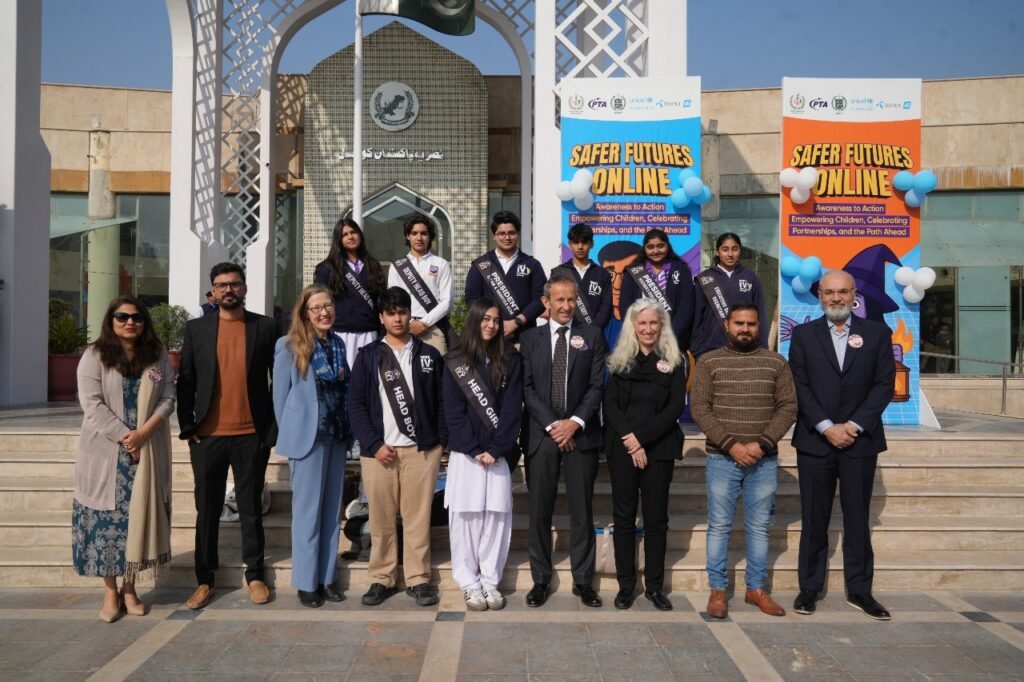
Islamabad: Telenor Pakistan and UNICEF jointly hosted the closing ceremony of their three-year partnership (2022–2025) dedicated to advancing child online protection. The event brought together representatives from government bodies including Pakistan Telecommunication Authority (PTA), the National Commission on the Rights of Child (NCRC) and the National Cyber Security emergency Response Team, Cabinet Division (NCERT), UN agencies, diplomatic missions, private sector partners, civil society, academia, as well as children and youth, providing a platform to celebrate achievements, foster dialogue, and envision the future of child online safety in Pakistan. The ceremony marked a milestone in advancing children’s safety in the digital space, highlighting achievements through collaboration between government, private sector, and civil society. Children’s voices were celebrated through creative showcases and youth-led messages promoting safe, responsible, and inclusive digital citizenship. The launch of the “Child Online Protection Anthem” by the NCRC Child Advisory Panel reinforced the collective commitment to protecting children online and tackling child sexual exploitation and abuse.Read more: PTCL-Telenor Acquisition Review is Now in Final Stages Speaking at the ceremony, Fridtjof Rusten, CEO, Telenor Pakistan, said, “Online safety is a global emergency, with one in three internet users being a child, many facing exploitation and abuse. In Pakistan, the situation is particularly urgent. Protecting children’s digital rights requires collaboration across all sectors. Through our partnership with UNICEF, we have laid the foundations, and at Telenor Pakistan, we know that keeping children safe online is a shared responsibility.” During the event, preliminary insights were shared from the ongoing Disrupting Harm II study, conducted in partnership with ECPAT International and INTERPOL. The study represents one of the most comprehensive research initiatives on online child sexual exploitation and abuse in Pakistan. Its full findings, expected in April 2026, are set to inform evidence-based policies, legislative reforms, and a costed national action plan to strengthen child online protection across the country. The ceremony also featured an engaging panel discussion with experts from government, civil society, academia, and the private sector, who shared perspectives on sustaining child online protection, highlighting key priorities, and exploring collaborative solutions to emerging digital risks. “As Pakistan’s connectivity grows, so does our responsibility to protect children from online risks. Our collaboration with Telenor and national partners has laid the foundations of a safer digital environment – from evidence generation, to establishing the first Child Online Protection Committee and to empowering children, parents, and educators. We are united around one shared goal: keeping every child safe online,” said Pernille Ironside, UNICEF Representative in Pakistan. Over the past three years, the UNICEF–Telenor partnership has empowered children, youth, parents, and teachers through digital campaigns, community engagement, and capacity-building initiatives, while advocating for stronger policies and embedding child online safety within national education frameworks. By combining expertise, evidence-driven interventions, and sustained advocacy, the partnership has strengthened Pakistan’s digital protection ecosystem and set a benchmark for collaborative, sustainable efforts in safeguarding children online.

Scroll to Top