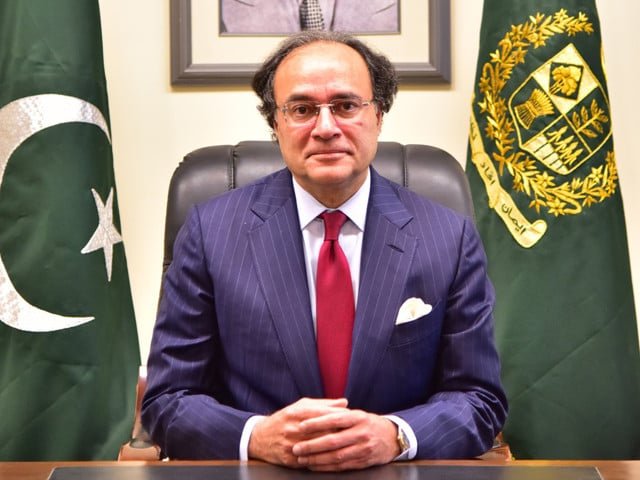
Muhammad Aurangzeb

Petrol Prices in Pakistan Expected to Decline Amid Global Oil Market Shift
Pakistan

Petrol Prices in Pakistan Expected to Decline Amid Global Oil Market Shift

Petrol prices in Pakistan are expected to decrease in the upcoming fortnightly review following a decline in international oil prices linked to growing expectations of a possible peace agreement between the United States and Iran. Sources said preliminary calculations for the revision in petroleum prices have already been completed, while the Oil and Gas Regulatory Authority is finalising its recommendations for the government. According to official sources, the Oil and Gas Regulatory Authority will forward its pricing summary to the Petroleum Division after completing the initial working process. However, the final decision regarding revised petrol and diesel prices will only be announced after approval from Prime Minister Shehbaz Sharif. Petrol and Diesel Prices May Fall Sources stated that if the current calculations are approved, petrol prices may decrease by Re1 per litre, while diesel prices are likely to fall by Rs2 per litre. The expected reduction comes after fluctuations in global crude oil prices during recent weeks. International oil markets have remained sensitive to geopolitical developments, particularly tensions involving the United States and Iran. Officials said lower global oil prices created room for a possible reduction in domestic fuel prices. However, they also warned that the final outcome depends on government decisions regarding taxes and petroleum levies. Petroleum Levy Could Change Final Prices Sources added that fuel prices could instead increase if the government decides to revise the petroleum levy upward. According to officials familiar with the matter, an increase in the levy could push petrol prices higher by up to Rs15 per litre, while diesel prices may rise by as much as Rs16 per litre. Currently, the government charges a petroleum levy of Rs103.50 per litre on petrol and Rs28.69 per litre on diesel. Economic experts believe that any major increase in the levy could offset the benefit of lower international oil prices for consumers. The government has frequently used petroleum levies as a tool to support revenue collection targets amid ongoing fiscal challenges and commitments linked to economic reforms. Finance Minister Comments on Fuel Price Review Federal Finance Minister Muhammad Aurangzeb said that the Ministry of Petroleum holds the final authority for announcing changes in petroleum product prices. He stated that the government is reviewing various measures aimed at providing relief to the public while also managing economic stability. Aurangzeb said officials are closely assessing the impact of global oil price movements on Pakistan’s domestic market. He added that the government continues efforts to improve the country’s economic situation and maintain financial discipline. The finance minister’s remarks came as consumers across Pakistan closely monitor fuel prices due to their direct impact on transportation costs, inflation, and household expenses. International Oil Prices Remain Volatile In the international market, oil prices moved higher on Friday after renewed tensions emerged between the United States and Iran. Reports indicated that the fragile ceasefire situation between the two countries faced fresh uncertainty, reducing hopes for immediate progress toward reopening the Strait of Hormuz. The Strait of Hormuz remains one of the world’s most critical energy routes, handling a large share of global oil and liquefied natural gas shipments. Analysts warned that any disruption in the region could trigger fresh volatility in global energy markets and directly influence fuel prices in importing countries like Pakistan. Despite the recent increase in oil prices, market observers said broader expectations of diplomatic engagement between Washington and Tehran had earlier contributed to a downward trend in crude prices. Public Awaits Official Announcement Consumers and businesses across Pakistan are now waiting for the government’s official announcement regarding revised fuel prices. Any reduction in petrol and diesel prices is expected to provide limited relief to transporters, industries, and households already dealing with inflationary pressures. Petrol prices play a major role in determining transportation fares and the cost of essential goods across the country. The government usually revises petroleum product prices twice every month based on changes in international oil markets, exchange rates, and tax adjustments. Officials said the final pricing decision will become clear once the prime minister reviews OGRA’s recommendations and approves the summary sent by the Petroleum Division.

IMF Restrictions Force Changes to the Sovereign Wealth Fund in Pakistan
Pakistan

IMF Restrictions Force Changes to the Sovereign Wealth Fund in Pakistan

The federal government has officially committed to stripping the Sovereign Wealth Fund in Pakistan of its independent legal powers. This decision follows strict demands from the International Monetary Fund. Pakistan must now amend the law to prevent the direct sale of state assets to foreign nations. The government will not make the fund operational until Parliament approves these changes. The new law will lower the status of the fund to a simple holding company. Finance Ministry officials previously missed the March deadline to submit these amendments. To ensure compliance the IMF has blocked the fund from starting any work. The global lender insists that the law must meet international standards of transparency. The original act allowed the fund to bypass competitive bidding when selling assets. The IMF found this governance structure unacceptable. This pressure has effectively frozen the Sovereign Wealth Fund in Pakistan until legal revisions are complete. Shrinking the Legal Mandate The original 2023 law aimed to transfer shares of seven profitable state entities. These included the Oil and Gas Development Company and Pakistan Petroleum Limited. National Bank of Pakistan and Mari Petroleum were also on the list. The government wanted to sell these shares overseas to raise quick cash. However the IMF objected to the lack of a competitive process. The new amendments will drastically narrow the role of the fund. It will now only manage state owned enterprises on behalf of the state. Its primary goal will be to create value through financial and operational improvements. Under the new agreement the Sovereign Wealth Fund in Pakistan can no longer sell assets directly to local or foreign players. Any future sale must follow open and transparent procedures. These procedures must include full disclosure of beneficial ownership. New Fiscal Safeguards and Bans The Finance Ministry must also implement strict fiscal safeguards. All revenues from the fund and its sub funds must go directly to the government treasury. Unlike the first version of the law the fund cannot keep money for its own investments. If the fund needs money for a project the government must allocate it through the national budget. This change ensures that all public money remains under parliamentary oversight. There is now a complete ban on the fund incurring any debt or borrowing money. The fund cannot provide guarantees or use state assets as collateral. It is also forbidden from lending to any public or private person. The fund cannot participate in public private partnerships or acquire financial instruments. Furthermore it cannot receive contributions from the central bank or other state companies. These restrictions ensure that the Sovereign Wealth Fund in Pakistan does not become a source of hidden debt. Transparency and Board Appointments Governance remains a top priority for the international lenders. The government promised to make board appointments through a merit based process. This will help safeguard the fund from undue political influence. New rules will introduce cooling off periods for board members to ensure independence. The accountability mechanisms used for other state companies will now apply to the wealth fund. The government also agreed to withdraw several exemptions previously granted to the fund. These legal changes aim to align the entity with global best practices. Finance Minister Muhammad Aurangzeb assured the IMF that these amendments are a priority. The IMF is expected to approve two loan tranches worth $1.2 billion this Friday. This funding depends heavily on the government following through on these structural reforms. Challenges on the Privatisation Front While the government makes promises it still faces hurdles in privatisation. The state currently lags behind most of its targets in this area. The sale of Pakistan International Airlines is the only major success so far. The government recently told the IMF about delays in selling power distribution companies. It needs more time to address market concerns before private investors will step in. The transition of the wealth fund into a holding company marks a shift in economic strategy. The government can no longer use the fund to sell national assets in secret deals. Instead it must focus on improving the performance of state companies. This approach aims to attract foreign direct investment through strategic commercial ventures. The success of this plan rests on the government ability to pass the new law quickly.

Pakistan-China Economic Cooperation Discussed at IMF–World Bank Meetings
Editor pick, Pakistan

Pakistan-China Economic Cooperation Discussed at IMF–World Bank Meetings

Pakistan-China economic cooperation took center stage as Finance Minister Muhammad Aurangzeb held high-level meetings with Chinese leadership during the IMF and World Bank Spring Meetings in Washington D.C.. The engagements focused on strengthening bilateral ties, mobilising external financing, and reinforcing Pakistan’s improving economic outlook. The minister used the platform to highlight Pakistan’s macroeconomic progress and ongoing reform measures. He emphasized the government’s commitment to stabilizing the economy and expanding strategic partnerships. Meeting with Chinese Finance Minister During his meeting with Lan Fo’an, Aurangzeb expressed appreciation for China’s consistent support for Pakistan. He acknowledged Beijing’s role in facilitating Pakistan’s engagements with the International Monetary Fund. The finance minister briefed his Chinese counterpart on Pakistan’s progress under the IMF programme. He highlighted the successful Staff-Level Agreement for the third review under the Extended Fund Facility and the second review under the Resilience and Sustainability Facility. Officials expect the IMF Executive Board to approve these reviews in early May. This approval would unlock further financial support and strengthen investor confidence. Updates on Financial Stability Measures Aurangzeb informed the Chinese side that Pakistan has repaid a $1.4 billion Eurobond. He also highlighted additional financial inflows secured from Saudi Arabia, which have supported foreign exchange reserves. He shared details about Pakistan’s plan to issue its first Panda Bond. This move aims to diversify funding sources and tap into China’s capital markets. The minister also noted a growing trend in bilateral trade settlement using the Chinese Renminbi. He stressed the need to expand the currency swap facility to support increasing trade volumes between the two countries. Regional Diplomacy and Strategic Support The finance minister appreciated China’s recognition of Pakistan’s mediation efforts in ongoing regional tensions. He reaffirmed Pakistan’s commitment to promoting peace and stability in the region. Aurangzeb also reiterated Pakistan’s full support for the establishment of the Shanghai Cooperation Organization Development Bank. He noted that Pakistan will actively pursue this initiative during its upcoming presidency of the SCO. Both sides expressed satisfaction with continued coordination at international financial forums. They agreed to strengthen collaboration at both the IMF and World Bank levels. Meeting with People’s Bank of China Governor In a separate meeting, Aurangzeb met Pan Gongsheng, Governor of the People’s Bank of China. The discussion focused on Pakistan’s financing strategy and ongoing IMF programme reviews. The finance minister updated the Chinese central bank on progress related to the Panda Bond issuance. He requested faster regulatory approvals to ensure timely execution of the plan. Aurangzeb also highlighted Pakistan’s policy measures to address economic challenges linked to regional instability. These measures include targeted subsidies and demand management strategies to protect key sectors. Invitation to Strengthen Bilateral Engagement Pan Gongsheng invited the finance minister to visit Beijing in the near future. The invitation reflects China’s interest in deepening economic engagement with Pakistan. Officials see this as an opportunity to accelerate financial cooperation and expand bilateral trade frameworks. Future discussions are expected to focus on investment, infrastructure, and financial integration. Strengthening Economic Outlook The meetings underscore Pakistan’s efforts to build stronger economic partnerships while maintaining reform momentum. Engagement with China remains central to Islamabad’s strategy for long-term stability and growth. Analysts believe continued cooperation between Pakistan and China will help address external financing needs and promote sustainable development. The focus on Pakistan China economic cooperation highlights the importance of strategic alliances in navigating global economic challenges. Both countries appear committed to expanding collaboration across financial, trade, and development sectors.

Saudi Deposit Extension Supports Pakistan’s External Stability
Pakistan

Saudi Deposit Extension Supports Pakistan’s External Stability

The Saudi Fund for Development has agreed to a Saudi deposit extension of $3 billion with the State Bank of Pakistan, providing continued financial support to Pakistan’s economy. Officials finalized the agreement in Washington D.C., where Chief Executive Officer Sultan bin Abdul Rahman Al-Marshad and SBP Governor Jameel Ahmad signed the deal. Finance Minister Muhammad Aurangzeb also attended the signing ceremony. The agreement extends the tenure of the $3 billion deposit held with Pakistan’s central bank. It aims to strengthen the country’s external account position and ensure continued financial stability. Strengthening Economic Partnership Officials described the agreement as a reflection of strong and longstanding ties between Pakistan and Saudi Arabia. Both countries have maintained close economic cooperation over the years, particularly in financial assistance and investment. The extension provides breathing space to Pakistan’s economy. It supports foreign exchange reserves and helps manage external financing needs. Analysts say such arrangements play a critical role in stabilizing macroeconomic conditions. They also send a positive signal to international markets and lenders. Support for External Sector Stability The Saudi deposit has remained a key component of Pakistan’s financial support framework. By extending its maturity, authorities aim to maintain stability in the external sector. Officials noted that the agreement will help Pakistan manage short-term repayment pressures. It will also improve confidence in the country’s financial outlook. The move comes at a time when Pakistan continues efforts to stabilize its economy. Strengthening foreign reserves remains a top priority for policymakers. Additional $2 Billion Inflow Confirmed In a related development, the State Bank confirmed it has received an additional $2 billion from Saudi Arabia. The funds were transferred by the Saudi Ministry of Finance. The central bank shared the update on X, stating that the amount was received with a value date of April 15, 2026. This inflow adds further support to Pakistan’s reserves. It also highlights continued financial backing from Saudi Arabia during a critical period. Positive Signal for Financial Markets Economic experts view the Saudi deposit extension as a positive development. It demonstrates confidence in Pakistan’s reform efforts and economic direction. The agreement may also improve Pakistan’s standing with international financial institutions. It shows that key partners remain committed to supporting the country’s stability. Officials expect the move to ease pressure on the exchange rate. It may also create a more stable environment for trade and investment. Long-Term Implications The extension of the $3 billion deposit and the additional inflow underline Saudi Arabia’s continued role as a key economic partner. These measures help Pakistan navigate financial challenges and maintain stability. Going forward, policymakers aim to build on this support. They plan to strengthen economic reforms, increase exports, and attract foreign investment. The Saudi deposit extension serves as a timely boost. It reinforces confidence in Pakistan’s financial system and provides a cushion against external shocks.

Finance Minister Aurangzeb Begins Washington Visit for IMF and World Bank Talks
Pakistan

Finance Minister Aurangzeb Begins Washington Visit for IMF and World Bank Talks

Finance Minister Muhammad Aurangzeb arrived in Washington on Monday to attend the Spring Meetings hosted separately by the International Monetary Fund and the World Bank. The Finance Minister begins a critical visit aimed at strengthening Pakistan’s economic position on the global stage. The meetings will take place from April 13 to April 18. They will bring together finance leaders, policymakers, and development partners from across the world. Officials said the Finance Minister will present Pakistan’s reform progress. He will also highlight priorities to stabilize the economy and attract foreign investment. Finance Minister to Hold Separate Talks with IMF and World Bank The Finance Minister will engage both institutions through distinct meetings aligned with their mandates. He will discuss macroeconomic stability and fiscal reforms with the IMF. He will also hold separate discussions with the World Bank on development financing and social protection. Aurangzeb will meet senior IMF leadership including Nigel Clarke and Jihad Azour. These discussions will focus on Pakistan’s economic outlook and reform trajectory. In parallel, the Finance Minister will meet World Bank officials including Anna Bjerde. He will also engage with Makhtar Diop and Tsutomu Yamamoto. These engagements will focus on investment and development support. Finance Minister Strengthens Economic Engagement with United States The Finance Minister will hold meetings with senior officials of the United States administration. These include representatives from the State Department and the Treasury. He will also meet Jamieson Greer to discuss trade cooperation and market access. These talks aim to deepen economic ties between Pakistan and the United States. Officials said the Finance Minister will highlight improvements in Pakistan’s economic indicators. He will also present policy measures designed to encourage investment and growth. Finance Minister Engages Global Financial Institutions and Investors The Finance Minister will meet top global financial institutions during his visit. These include JP Morgan Chase, Citibank, Rothschild & Co., and Franklin Templeton. He will participate in investment forums and policy discussions. These sessions will provide an opportunity to directly engage with institutional investors. The Finance Minister aims to build investor confidence. He will highlight key sectors and reforms that improve Pakistan’s investment climate. Finance Minister Expands Bilateral Economic Partnerships The Finance Minister will also meet counterparts from key partner countries. These include China, Saudi Arabia, United Arab Emirates, Türkiye, and the United Kingdom. These meetings will focus on strengthening bilateral cooperation. They will also explore opportunities for investment and financial collaboration. Officials believe these engagements will support Pakistan’s long term economic strategy and help secure external financing. Finance Minister Showcases Pakistan Social Protection Success A major highlight of the visit will be Pakistan’s participation in a World Bank roundtable on digital social protection. The Finance Minister will present Pakistan’s experience with Government to Person payment systems. These systems operate under the Benazir Income Support Programme. The programme has improved financial inclusion and transparency. It has also helped deliver support to vulnerable populations across the country. Pakistan will share its model with countries from the Middle East and North Africa. This engagement will highlight innovation in public service delivery. Finance Minister Participates in Global Policy Forums The Finance Minister will attend several multilateral forums during the visit. These include meetings of the G Twenty Four Finance Ministers and Central Bank Governors. He will also participate in the Coalition of Finance Ministers for Climate Action. These forums will address global economic stability and climate finance challenges. Aurangzeb will contribute to discussions on financial reforms and development priorities. These engagements will allow Pakistan to play an active role in global policymaking. Finance Minister Undertakes Extensive Diplomatic Engagements Officials confirmed that the Finance Minister will participate in more than fifty engagements during his visit. These include bilateral meetings, policy dialogues, and investment roundtables. He will also engage with development partners such as the International Fund for Agricultural Development, the Gates Foundation, and institutions like the Asian Development Bank, JICA, and the Asian Infrastructure Investment Bank.

Pakistan $1 Billion Syndicated Financing Wins Global Islamic Finance Honors
Pakistan

Pakistan $1 Billion Syndicated Financing Wins Global Islamic Finance Honors

Pakistan $1 Billion Syndicated Financing has captured global attention after securing two prestigious international accolades at the IFN Deals of the Year Awards 2025 a remarkable milestone that signals renewed investor confidence in the country’s economic direction. In a year marked by global financial uncertainty, Pakistan’s landmark Shariah-compliant transaction stood out for its innovation, scale, and execution. The deal was awarded both the IFN Pakistan Deal of the Year 2025 and the IFN Syndicated Finance Deal of the Year 2025, reinforcing Pakistan’s growing footprint in international Islamic capital markets. These awards, presented by Islamic Finance News, recognize transactions that demonstrate exceptional structuring, market impact, and execution excellence. Why Pakistan $1 Billion Syndicated Financing Matters The Pakistan $1 Billion Syndicated Financing is more than just a headline figure. It represents a strategic shift in how Pakistan is diversifying its funding sources and strengthening its external buffers. In practical terms, this financing: • Expanded Pakistan’s access to international Islamic liquidity.• Reduced reliance on traditional borrowing channels.• Strengthened foreign exchange reserves amid volatile global conditions.• Enhanced credibility in Shariah-compliant financial markets. Rather than viewing the deal as a standalone borrowing exercise, policymakers see it as a calculated move within a broader macroeconomic stabilization strategy. A Signal of Restored Economic Credibility Federal Minister for Finance and Revenue, Muhammad Aurangzeb, described the recognition as a powerful endorsement of Pakistan’s economic management. According to the Ministry of Finance, the award reflects: • Improved fiscal discipline.• Structured macroeconomic reforms.• Transparent policy direction.• Effective coordination with global development partners. The minister emphasized that the Pakistan $1 Billion Syndicated Financing is not just a financial achievement it is a credibility milestone that signals renewed global trust in Pakistan’s economic governance. The Role of Strategic Partnerships The success of the transaction was made possible through collaboration with key financial stakeholders, including the Asian Development Bank and participating international banks. Their involvement helped enhance the structure, mitigate risk, and attract competitive participation from Islamic financial institutions. In essence, the deal combined: • Multilateral institutional backing• Strong syndication strategy• Innovative Shariah-compliant structuring• Robust execution amid tight global liquidity conditions This combination positioned Pakistan’s financing among the most notable Islamic syndicated transactions globally in 2025. Strengthening Pakistan’s Position in Islamic Capital Markets Recognition at the IFN Deals of the Year Awards places Pakistan firmly on the global Islamic finance map. The awards ceremony, scheduled for April 2026 at prestigious venues including the Palazzo Versace Dubai and EQ Kuala Lumpur, will bring together policymakers, bankers, and investors from across the Islamic finance ecosystem. This global spotlight matters. Islamic finance is one of the fastest-growing segments of international finance, with trillions of dollars in Shariah-compliant assets worldwide. By successfully executing the Pakistan $1 Billion Syndicated Financing, the country has demonstrated its ability to compete in this sophisticated and increasingly competitive space. What This Means for Pakistan’s Economic Future The dual awards reinforce several important trends: At a time when emerging markets face tightening liquidity and elevated borrowing costs, Pakistan’s ability to structure and close a billion-dollar syndicated Islamic financing deal sends a strong message: the country is positioning itself for sustainable, innovative economic management. The Pakistan $1 Billion Syndicated Financing is not merely a transaction it is a strategic statement about Pakistan’s evolving role in global financial markets. As global Islamic finance leaders gather in Dubai and Kuala Lumpur next year, Pakistan’s achievement will stand as a case study in resilience, reform, and renewed credibility.

Scroll to Top