
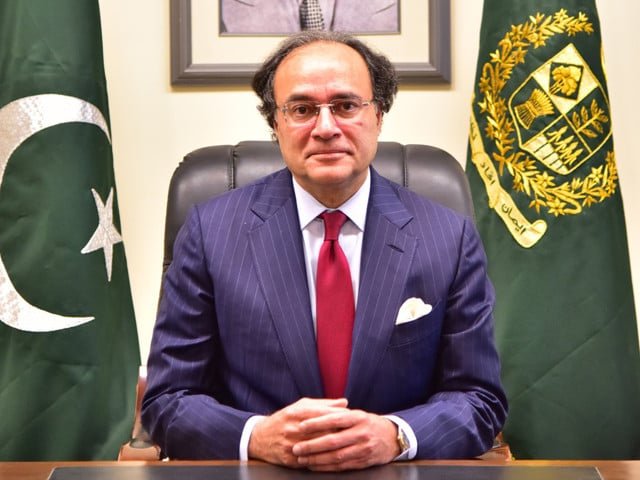
Finance Minister Muhammad Aurangzeb told the National Assembly Standing Committee on Finance that Pakistan remains broadly on track on key economic indicators. He spoke amid heightened regional tensions and external pressures. Aurangzeb expressed confidence that the International Monetary Fund Executive Board would approve the next loan tranche at its scheduled Friday meeting.
“Pakistan’s financial position is significantly stronger compared to previous crises.” says Finance Minister Muhammad Aurangzeb
Strong fiscal performance
The minister briefed the committee on Pakistan’s current economic performance. He said the government has maintained its primary surplus and met external payment objectives through April 2026. Prudent fiscal management, improved external account performance, and investor-confidence measures have kept Pakistan on target.
Aurangzeb confirmed that a staff-level agreement with the IMF has already been endorsed by Fund management. He said no obstacle stood in the way of board approval. Pakistan successfully issued USD 750 million in bonds despite a difficult global and regional environment. The government also plans to launch a USD 250 million Panda Bond before the fiscal year closes.
Remittances and Digital Inflows Surge
Committee chairman Syed Naveed Qamar praised encouraging economic indicators. He highlighted increased remittance inflows through Roshan Digital Accounts, improved access to international capital markets through Eurobond issuances, and progress on the Panda Bond approval process.
Inflows under the Roshan Digital Account scheme rose sharply. The government received USD 260 million in March alone and expects further inflows in April. Exports posted growth on both monthly and annual bases. Remittances and IT exports also continued to climb. Pakistan expects to maintain a current account surplus, and foreign exchange reserves are projected to reach the equivalent of three months of imports by June.
Crisis resilience on display
Aurangzeb drew a sharp contrast between the 2022 floods and 2025’s more severe disaster. The 2022 floods affected one province, and the government sought international financial assistance. In 2025, floods struck three provinces, yet Pakistan managed the crisis without requesting external aid. The minister said this demonstrated a marked improvement in the country’s financial resilience.
Economic growth for the current fiscal year is expected to come in between 3.7% and 4%. The minister acknowledged that petroleum import costs have raised the overall import bill. He also admitted that inflation remains a major challenge for ordinary citizens.
However, he said the government had taken targeted measures to control price pressures and preserve macroeconomic stability during the crisis period.
Export Diversification and Supply-Side Concerns
Committee members stressed the need to sustain economic growth momentum. They called for stronger exports, diversification of export destinations, and addressing key supply-side constraints. Members argued that these steps are essential for long-term economic resilience and stability. The minister responded in detail to questions and queries raised by the chair and committee members.
State Bank of Pakistan Governor also briefed the committee. He covered foreign investment policy, including the repatriation of capital and returns. He outlined key investor challenges and presented measures aimed at strengthening investor facilitation and confidence.
Housing Finance Sector in Focus
The committee also held detailed deliberations on reforms targeting the housing finance sector. The minister and committee members discussed measures to deepen mortgage lending and expand affordable housing finance across the country. Officials signalled that strengthening this sector forms part of the broader strategy to stimulate domestic investment and support economic growth.
Power Sector Pricing Kept Under Wraps
Speaking to journalists outside Parliament House after the meeting, Aurangzeb declined to comment on electricity price changes. He said Prime Minister Shehbaz Sharif and the energy minister are working extensively on power sector reforms. He added that the Ministry of Energy will share details on electricity pricing at a later stage.
The broader message from the finance minister remained one of cautious optimism. Pakistan has navigated external shocks, internal pressures, and a difficult global environment. The government maintains that strong institutional commitments, improved fiscal discipline, and a strengthening external account position the country for continued stability ahead of the IMF board’s decision.