
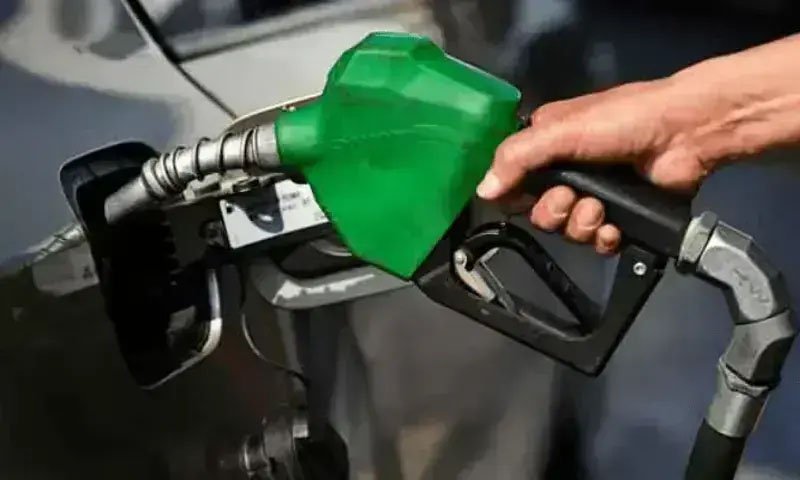
Pakistan is preparing to gradually deregulate its petroleum market by reducing government involvement in fuel pricing while introducing a more transparent, market-based system. Alongside deregulation, the government plans to digitalize the petroleum supply chain to improve transparency, operational efficiency, and oversight, as Pakistan continues to navigate global energy market volatility.
ISLAMABAD: Pakistan is preparing to reform its petroleum sector by gradually reducing government control over fuel pricing and introducing a more transparent, market-driven system, Petroleum Minister Ali Pervaiz Malik said on Tuesday.
While briefing the National Assembly Standing Committee on Petroleum, the minister outlined the government’s roadmap to deregulate the petroleum market, improve transparency, and modernize the country’s fuel supply chain through digitalization.
He said the government aims to reduce its direct role in determining petrol and diesel prices while continuing to monitor the supply chain to ensure uninterrupted fuel availability across the country.
“The objective is to create a competitive and transparent petroleum market that reflects international price trends while ensuring a reliable supply of petroleum products,” the minister told the committee.
Digital Fuel Supply Chain to Improve Transparency
As part of the planned reforms, the government is digitalizing Pakistan’s petroleum supply chain to strengthen oversight, improve operational efficiency, and reduce irregularities.
Ali Pervaiz Malik also revealed that the government is considering publishing daily Platts benchmark prices, allowing consumers and industry stakeholders to track international fuel prices that influence domestic petroleum rates.
The move is expected to provide greater transparency in the pricing mechanism and help explain fluctuations in local fuel prices.
Heavy Reliance on Imported Fuel
The minister said Pakistan remains highly vulnerable to global oil price movements because of its dependence on imported petroleum products.
According to the minister, the country imports around 70% of its petrol requirements and approximately 33% of its diesel consumption, making domestic fuel prices sensitive to changes in international crude oil and refined fuel markets.
He said any increase in global oil prices, freight charges, insurance costs, or shipping premiums directly affects Pakistan’s import bill and retail fuel prices.
Regional Conflict Increased Import Costs
Recalling the recent regional conflict in the Middle East, Ali Pervaiz Malik said Pakistan successfully maintained uninterrupted fuel supplies despite severe disruptions in international markets and limited domestic storage capacity.
Before the conflict, international crude oil traded at around $71 per barrel, while diesel prices were close to $78 per barrel.
However, the crisis caused freight charges, insurance premiums, and transportation costs to surge. As a result, gasoline prices climbed to between $180 and $190 per tonne, while diesel became scarce in international markets.
Although global crude oil prices have since fallen below pre-conflict levels, the minister said domestic petrol and diesel prices remain relatively high because import-related costs have not yet returned to previous levels.
Govt Ensured Uninterrupted Fuel Supplies
Ali Pervaiz Malik said the government successfully managed fuel supplies throughout the crisis, ensuring fertilizer plants, power stations, and other critical industries continued operating without disruption.
He added that only limited restrictions were imposed on domestic natural gas consumption during meal hours to manage demand while protecting essential services.
Petroleum Levy and IMF Commitments
The minister also informed lawmakers that the petroleum levy on petrol has exceeded Rs80 per litre, in line with commitments made under Pakistan’s agreement with the International Monetary Fund (IMF).
Responding to concerns about the energy sector’s financial challenges, he said the government remains engaged in discussions with the IMF on resolving the issue of circular debt.
Ali Pervaiz Malik expressed confidence that there would be no increase in the energy sector’s circular debt by the end of the current fiscal year, reflecting the government’s efforts to improve financial discipline and strengthen the long-term sustainability of Pakistan’s energy sector.