
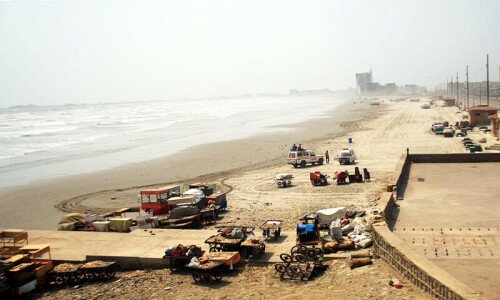
Federal and provincial authorities have agreed to strengthen coordination to tackle marine pollution and protect Pakistan’s coastal ecosystems, underscoring the need for joint efforts to promote environmental sustainability and safeguard coastal livelihoods.
The understanding was reached during a meeting between Federal Minister for Maritime Affairs Muhammad Junaid Anwar Chaudhry and Sindh Governor Syed Muhammad Nehal Hashmi at the minister’s chamber in the National Assembly. Both leaders discussed shared priorities related to waste management, conservation of marine resources, and sustainable economic activities along Sindh’s coastline.
Marine Pollution Control Board Meeting Planned
Minister Junaid Anwar Chaudhry announced that he would convene a meeting of the Marine Pollution Control Board during his upcoming visit to Karachi. The meeting will review ongoing efforts aimed at addressing marine pollution and provide the Sindh governor with an update on institutional measures to tackle marine litter and coastal degradation.
He said the Karachi Port Trust (KPT) has already been conducting routine cleanup operations in port waters and adjoining areas as part of its environmental management and maintenance activities.
The minister emphasized that closer cooperation between federal and provincial institutions is essential to effectively address the growing environmental challenges facing Pakistan’s coastal regions.
Plastic Pollution Poses a Global Threat
Referring to assessments by the United Nations Environment Programme (UNEP), the minister said that between 19 million and 23 million tonnes of plastic waste enter aquatic ecosystems every year worldwide.
He noted that international studies, including those supported by the World Bank, show that plastic often accounts for more than 50 percent of marine litter by item count, although the exact proportion differs across regions and research methods.
According to Junaid Anwar Chaudhry, healthy oceans play a critical role in climate regulation, biodiversity conservation, and sustaining coastal communities. He highlighted the importance of protecting mangrove forests and fisheries, which support the livelihoods of millions of people living in Sindh and Balochistan.
Circular Economy Can Reduce Pollution and Create Jobs
The maritime affairs minister said a transition toward a circular economy could help address environmental challenges while creating new economic opportunities.
He stressed that improved recycling and resource recovery systems could generate employment and reduce pressure on ecosystems. He also called for stronger waste management systems to prevent pollution at its source.
The minister said better municipal and industrial waste collection, treatment, and recycling infrastructure are necessary to stop waste from reaching the sea and damaging marine habitats.
Sindh Governor Calls for Greater Coordination
Governor Syed Muhammad Nehal Hashmi emphasized the importance of stronger cooperation between federal and provincial authorities.
He said effective waste management and sustainable economic development are essential for the welfare of coastal communities across Sindh. The governor added that coordinated efforts are needed to preserve marine resources and ensure long-term environmental sustainability.
Both leaders agreed that maritime affairs institutions, environmental agencies, local governments, and industrial regulators must work together within a comprehensive policy framework to achieve meaningful progress.