
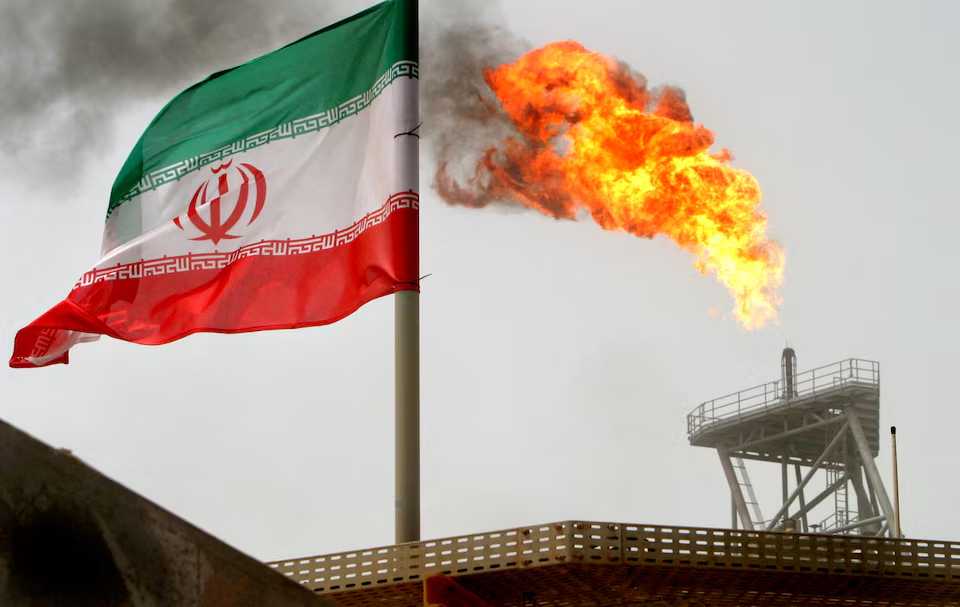
The United States has authorised the production, delivery and sale of Iranian oil, marking a significant easing of long-standing sanctions.
Read More: https://theboardroompk.com/another-indian-becomes-head-of-us-tech-giant-kunal-shah-to-lead-whatsapp/
This temporary measure comes as both sides continue high-level talks aimed at sealing a comprehensive peace deal.
Diplomatic Framework Takes Shape
The Treasury Department issued a general license valid through August 21. It covers crude oil, petrochemicals and petroleum products of Iranian origin. Treasury Secretary Scott Bessent highlighted Iran’s commitments to free and open transit in the Strait of Hormuz and allowing International Atomic Energy Agency (IAEA) inspectors access.
The move fulfills a promise under last week’s memorandum of understanding between Washington and Tehran.
Market and Energy Implications
Transactions now include importation of Iranian-origin products into the United States when needed to complete sales or deliveries. The license explicitly excludes dealings involving North Korea or Cuba.
For global oil markets, the development could add supply and exert downward pressure on prices. Brent crude recently hovered around $75 per barrel.
Pakistan, a major importer of energy, may benefit from potentially softer international oil prices in coming weeks. Lower costs could ease pressure on the country’s import bill and help contain inflation. Analysts note that stable Strait of Hormuz transit remains critical for Pakistan’s energy security, given the chokepoint’s role in global crude flows.
Broader Regional Context
The authorisation follows recent US-Iran engagements in Switzerland. Vice President JD Vance described the talks as laying a strong foundation for a successful final deal.
Iranian President Masoud Pezeshkian is scheduled to visit Pakistan shortly, opening avenues for bilateral discussions on energy cooperation and trade. The 60-day window provides breathing space for technical teams to hammer out details of a permanent agreement.
Experts suggest successful implementation could unlock frozen assets and facilitate reconstruction efforts in the region. For Pakistani businesses, particularly in transport, power and manufacturing sectors, any sustained decline in fuel prices would translate into lower operational costs.
The development also carries potential for renewed regional trade dynamics. Improved US-Iran relations may influence broader Middle East stability, affecting Pakistan’s strategic interests. Observers caution that the license is temporary and progress on the final deal will determine longer-term outcomes.
Continued monitoring of oil market reactions and diplomatic updates remains essential for policymakers in Islamabad.