World

Pakistan's FDI Slumps 43.3% in H1 FY26 Amid Widening Trade Deficit
World

Pakistan’s FDI Slumps 43.3% in H1 FY26 Amid Widening Trade Deficit

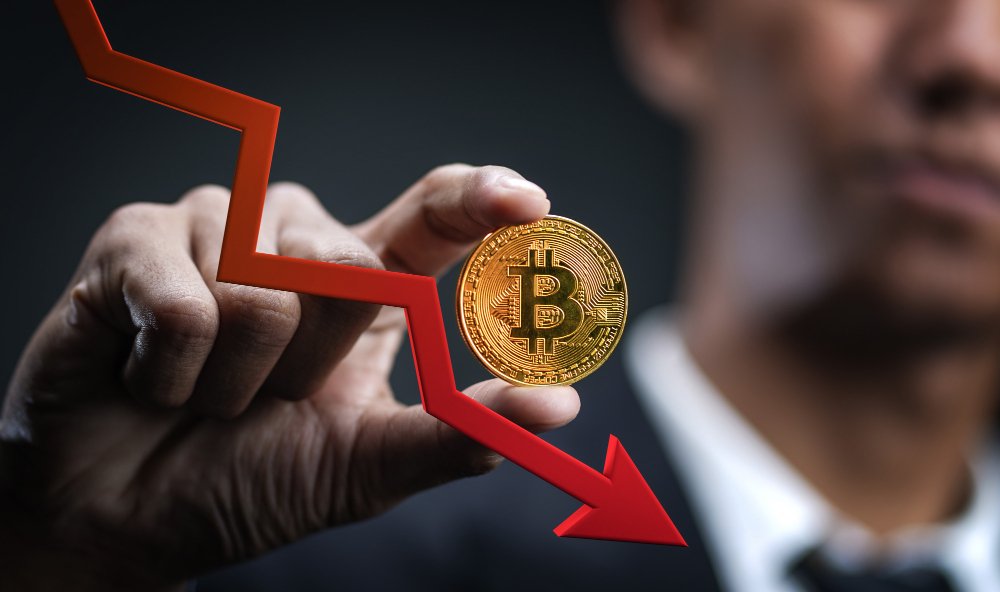
Pakistan’s economy faces a significant setback as Foreign Direct Investment (FDI) plummeted by 43.3% during the July-December period of fiscal year 2026 (FY26), according to the Finance Division’s Monthly Economic Update and Outlook for January 2026. Read More: https://theboardroompk.com/psx-hits-record-high-of-187000-amid-ffc-stock-split-buzz/ The FDI inflows totaled just $808.1 million, down from $1.424 billion in the same period last year, amid broader challenges including a widened current account deficit and declining exports. Decline in Key Inflows and Sector Impacts The report highlights that China remained the top contributor with $422.9 million, followed by Hong Kong at $163.8 million. However, sectors like communications saw massive outflows of $411.4 million, offsetting gains in power ($470.9 million) and financial services ($401.5 million). Portfolio investments also stayed negative at -$225.1 million, similar to the previous year’s -$221.8 million. Total foreign investment dropped to $207 million from $1.343 billion. In December 2025 alone, FDI turned negative at -$134.7 million, compared to $182.4 million the year before. Mixed Economic Indicators and Outlook Despite the FDI slump, positive signs emerged elsewhere. The stock market surged, with the KSE-100 Index rising 64.2% and market capitalization up 49.9%. Remittances grew 10.6% to $19.7 billion, driven by inflows from Saudi Arabia and the UAE. Inflation eased to 5.6% in December 2025, averaging 5.2% for the half-year, down from 7.2% last year. Large Scale Manufacturing (LSM) expanded by 6%, with strong growth in textiles, apparel, and automobiles. Agriculture showed 2.9% growth in Q1 FY26, aided by higher credit disbursement (up 11.4% to Rs. 1,411.6 billion) and machinery imports (up 21.6%). The current account deficit widened to $1.174 billion from a surplus last year, with exports down 5% and imports up. Goods exports fell to $15.5 billion, while imports rose to $31.3 billion. Fiscal management improved, yielding a 0.8% GDP surplus for July-November FY26, thanks to 7.8% revenue growth and reduced expenditures. The report projects inflation at 5-6% in January and a continued current account deficit, but robust remittances and IT exports may mitigate pressures. Prudent policies and structural reforms are expected to sustain growth momentum.

WhatsApp Launches ‘High-Security Mode’ to Guard Against Targeted Spyware Attacks
World

WhatsApp Launches ‘High-Security Mode’ to Guard Against Targeted Spyware Attacks

In a major move to protect its nearly 3 billion users, WhatsApp has officially unveiled “High-Security Mode,” a specialized setting designed to defend against the world’s most sophisticated digital threats. Read More: https://theboardroompk.com/facebook-parent-company-meta-inks-nuclear-deals-for-6-6-gw-to-power-ai-ambitions/ The feature, announced on Tuesday, is the latest effort by Meta to position its messaging platform as the gold standard for privacy in an era of increasing state-sponsored cyberespionage. By activating this mode, users can severely restrict the types of data their device processes, effectively closing off common “backdoors” used by hackers to deploy “zero-click” spyware. Fortifying the Digital Perimeter The new mode works by disabling several common but vulnerable features, such as link previews and the automatic downloading of certain file attachments. While this slightly reduces the app’s convenience, it provides a crucial layer of protection for high-risk individuals, including journalists, activists, and government officials. WhatsApp head Will Cathcart stated that while the app is already end-to-end encrypted, High-Security Mode is designed specifically to mitigate “complex, targeted attacks” that attempt to compromise the device itself rather than the message transmission. A Response to the Global Spyware Crisis The rollout follows years of legal and technical battles between Meta and private surveillance firms. By offering this feature, WhatsApp is following in the footsteps of Apple’s “Lockdown Mode,” signaling a broader industry trend toward “extreme” security options for the general public. Security experts have lauded the move, noting that as artificial intelligence makes phishing and malware more convincing, giving users a “one-tap” solution to harden their defenses is a vital step in modernizing mobile security for the mass market.

India Cuts EU Car Duties from 110% to 10%; EU Slashes 99.5% duty on Indian Exports
World

India Cuts EU Car Duties from 110% to 10%; EU Slashes 99.5% duty on Indian Exports

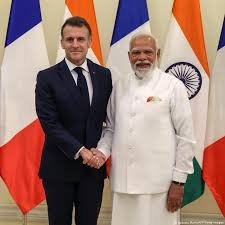
After nearly two decades of stalled negotiations, India and the European Union officially finalized a landmark Free Trade Agreement (FTA) on Tuesday. Prime Minister Narendra Modi, alongside European Commission President Ursula von der Leyen, hailed the pact as a transformative milestone that creates a free trade zone for over two billion people. Read More: https://theboardroompk.com/pakistan-qatar-uae-saudi-arabia-turkiye-egypt-jordan-indonesia-join-trumps-board-of-peace/ Described by both leaders as the “mother of all deals,” the agreement is expected to represent roughly 25% of global GDP and one-third of world trade, providing a strategic hedge against growing global economic volatility and shifting alliances. A Strategic Shift in Global Commerce The deal comes at a critical time as both New Delhi and Brussels navigate a turbulent international environment, particularly regarding trade tensions with the United States. By deepening economic integration, the pact seeks to diversify supply chains and reduce reliance on single-market dependencies. Prime Minister Modi noted that the agreement serves as a “global double engine of growth,” signaling to the world that cooperation remains the most effective response to geopolitical challenges. The timing is seen as a decisive move to strengthen the strategic partnership between the world’s second and fourth-largest economies. Immediate Gains and Market Access Under the terms of the agreement, the European Union will eliminate or significantly reduce tariffs on 99.5% of Indian exports, with many duties dropping to zero immediately. This provides a massive boost to India’s labor-intensive sectors, including textiles, leather, and gems. Conversely, India will open its guarded market by slashing tariffs on European machinery, chemicals, and automobiles. Notably, import duties on European cars will be reduced from 110% to just 10% over five years, while tariffs on wines and spirits will also see significant cuts, marking the most substantial market opening India has ever offered a trading partner.

Balochistan Targets Illegal Chromite Extraction: 47 Illegal Chromite Mines Shut in Pishin
World

Balochistan Targets Illegal Chromite Extraction: 47 Illegal Chromite Mines Shut in Pishin

Balochistan authorities have intensified efforts against illegal mining, sealing 47 unauthorized chromite mines in Pishin district through a joint operation. The crackdown was announced by Chief Minister Mir Sarfraz Bugti on January 23, 2026, underscoring the provincial government’s firm stance on protecting mineral resources. Read More: https://theboardroompk.com/china-keeps-low-profile-at-davos-to-seek-western-investment-amid-slowdown/ Crackdown on Illegal Operations The operation, conducted by the district administration in collaboration with law enforcement agencies, targeted illegal chromite extraction sites in Pishin. Chief Minister Bugti described these activities as detrimental, stating they damage both national and provincial treasuries while posing serious challenges to law enforcement. He emphasized that mineral resources belong to the people of Balochistan collectively and that no illegal exploitation would be tolerated under any circumstances. Broader Policy and Revenue Concerns Bugti highlighted that illegal mining has severely limited provincial earnings from the mines and minerals sector, with annual revenue falling below Rs 10 billion despite Balochistan’s rich deposits. This deprives the province of rightful income and local communities of their legitimate benefits. The Chief Minister announced plans for a comprehensive new policy to eradicate illegal mining entirely, reform the sector for transparency, meet legal standards, attract investment, boost revenue significantly, and ensure direct advantages for local populations. He vowed strict action against all illegal elements involved. The move reflects ongoing provincial efforts to enforce rule of law in the resource-rich region and curb smuggling and unregulated extraction. (Word count: 298) Balochistan Chief Minister Mir Sarfraz Bugti has declared zero tolerance for illegal mining, revealing that 47 chromite mines operating unlawfully in Pishin district have been closed following a coordinated enforcement drive. The announcement came on January 23, 2026, as part of broader measures to safeguard provincial assets. Enforcement Action and Official Stance A joint team comprising the district administration and law enforcement agencies carried out the sealing of these 47 illegal sites. Bugti stressed that such activities not only harm the treasury but also undermine law and order. He reiterated: “The mineral resources of Balochistan are the collective property of the people of the province and any illegal activity on these resources would not be tolerated under any circumstances.” The Chief Minister described the operation as practical proof of the government’s commitment to protecting resources and upholding the rule of law. Addressing Revenue Losses and Future Reforms The province currently earns less than Rs 10 billion annually from its mines and minerals sector due to widespread illegal practices, smuggling, and weak oversight—far below its potential. Bugti pointed out that this results in lost revenue and denied rights for locals. To address this, the government is set to roll out an effective, transparent policy aimed at eliminating illegal mining, improving sector governance, promoting legal investment, increasing income, and ensuring benefits reach the local population directly. Strict enforcement against violators will continue under this framework.

China Keeps Low-Profile at Davos to Seek Western Investment Amid Slowdown
Uncategorized, World

China Keeps Low-Profile at Davos to Seek Western Investment Amid Slowdown

China adopted a notably low-key presence at the World Economic Forum’s Annual Meeting in Davos, Switzerland, held from January 19-23, 2026, as it sought to attract Western investment amid economic headwinds and geopolitical tensions. Read More: https://theboardroompk.com/trump-revokes-canadas-invitation-to-join-board-of-peace-after-carneys-davos-speech/ Unlike previous years with high-profile delegations and prominent pavilions, China’s footprint was subdued, reflecting a strategic shift focused on quiet diplomacy and targeted outreach. Subdued Visibility and Contrast with Others China’s delegation maintained a minimal public profile, with fewer events, smaller promotional setups, and limited visibility on Davos’ main street compared to past gatherings. This approach stood in stark contrast to the United States, which featured a more assertive and visible participation, including prominent business leaders and policy messaging. Chinese officials avoided large-scale media spectacles, opting instead for behind-the-scenes meetings and bilateral discussions to court foreign capital. Key Participation and Messaging Vice Premier He Lifeng delivered a special address at the forum on January 20, 2026, emphasizing China’s commitment to openness, multilateralism, and global cooperation. He stated that China never deliberately pursued trade surpluses and is willing to serve as “the world’s market.” He Lifeng highlighted efforts to boost investment in physical assets and human capital, expand consumption in priority sectors, and promote high-standard opening-up. He called for joint responses to challenges like fragmentation and protectionism, positioning China as a reliable partner for sustainable global growth. Economic Context and Strategic Goals The low-profile strategy coincided with China’s economic growth hitting a three-year low, prompting Beijing to prioritize attracting foreign direct investment to support recovery and technological advancement. Business leaders at Davos noted potential opportunities for China to benefit from U.S.-Europe tensions, though challenges remain in building trust with Western partners. The restrained approach allowed focused engagement without drawing excessive scrutiny amid ongoing trade and tech frictions.

Trump Revokes Canada's Invitation to Join Board of Peace After Carney's Davos Speech
World

Trump Revokes Canada’s Invitation to Join Board of Peace After Carney’s Davos Speech

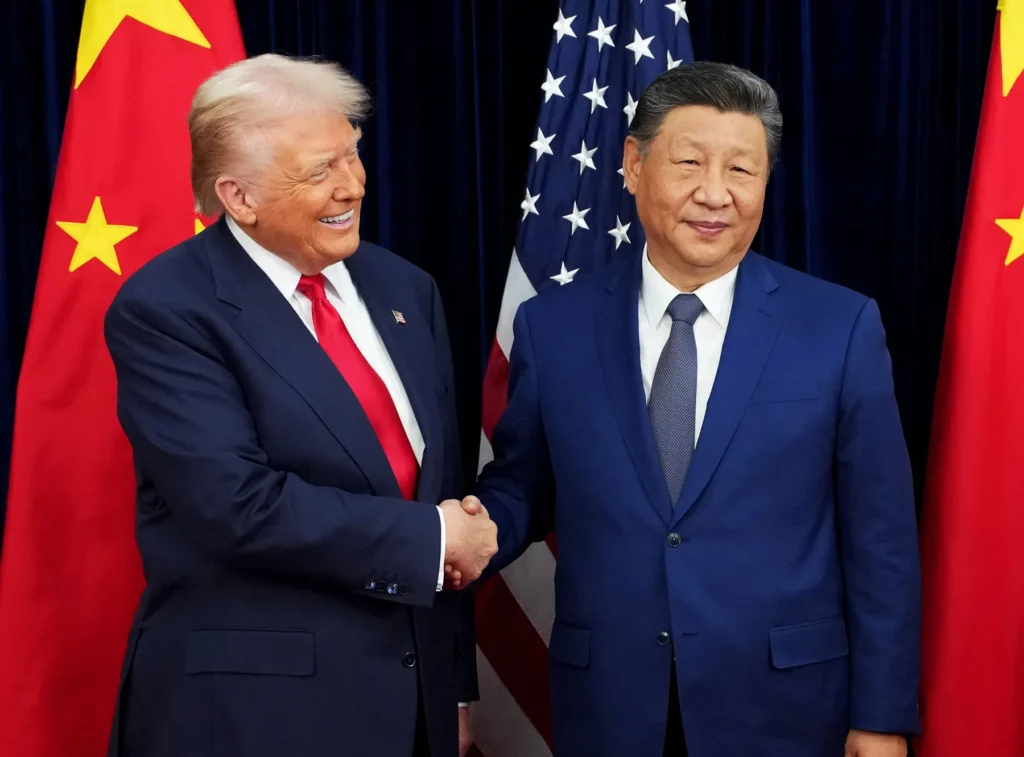
U.S. President Donald Trump announced on January 22, 2026, that he is withdrawing Canada’s invitation to join his newly launched “Board of Peace,” a high-profile initiative aimed at resolving global conflicts, starting with a Gaza ceasefire. Read More: https://theboardroompk.com/pakistan-commits-rs-100-36-billion-to-electrify-transport-by-2030-under-nevp/ The decision came via a post on Truth Social, directly responding to recent comments by Canadian Prime Minister Mark Carney. Trigger and Trump’s Statement Trump’s move followed Carney’s speech at the World Economic Forum in Davos, where the Canadian leader criticized powerful nations for weaponizing economic integration and tariffs, warning of a potential rupture in the U.S.-led global order. Carney suggested middle powers like Canada could collaborate to counter hegemony, especially after Canada’s recent trade deal with China. In his post, Trump wrote: “Please let this Letter serve to represent that the Board of Peace is withdrawing its invitation to you regarding Canada’s joining, what will be, the most prestigious Board of Leaders ever assembled, at any time.” He added that Canada “lives because of the United States” and addressed Carney personally: “Remember that, Mark, the next time you make your statements.” Background on the Board of Peace Trump officially launched the Board of Peace on January 22, 2026, in Switzerland, endorsed by a U.N. Security Council resolution primarily focused on cementing a Gaza ceasefire. The board requires each permanent member to contribute $1 billion in funding and is intended to operate in conjunction with the United Nations. Trump described it as enabling broad actions: “Once this board is completely formed, we can do pretty much whatever we want to do.” Current members include Argentina, Bahrain, Morocco, Pakistan, and Turkey, while allies like Britain, France, and Italy have declined to join for now. A U.N. spokesperson noted limited engagement tied specifically to the Gaza context. Reactions and Implications Neither Carney’s office nor the White House immediately commented on the withdrawal. The episode highlights escalating tensions in U.S.-Canada relations, exacerbated by trade disputes and differing views on global economic governance. Carney had previously indicated acceptance of the invitation last week. The revocation underscores Trump’s sensitivity to criticism and his use of the board as a platform for influence, potentially affecting multilateral efforts on peace initiatives.

Bangladesh Rejects ICC Ultimatum, Risks Exclusion from T20 World Cup Over Safety Fears
World

Bangladesh Rejects ICC Ultimatum, Risks Exclusion from T20 World Cup Over Safety Fears

The Bangladesh Cricket Board (BCB) has reaffirmed its refusal to send the national team to India for the 2026 ICC Men’s T20 World Cup, citing safety concerns amid escalating political tensions between the two nations. Read More: https://theboardroompk.com/icc-rejects-bangladesh-bid-to-move-t20-world-cup-matches-out-of-india/ In a statement on January 22, 2026, the BCB declared it would again request the ICC to relocate Bangladesh’s matches to Sri Lanka, despite the ICC’s firm rejection of any schedule changes and a 24-hour ultimatum issued earlier. Stance on India Tour and Safety Issues BCB president Aminul Islam emphasized the board’s unwavering position, stating: “We will go back to the ICC with our plan to play in Sri Lanka. They did give us a 24-hour ultimatum but a global body can’t really do that. ICC will miss out on 200 million people watching the World Cup (if Bangladesh is axed). It will be their loss…” Sports adviser Asif Nazrul expressed hope for ICC flexibility, noting the decision stemmed from Bangladesh’s interim government. The refusal follows prior fallout, including the ban on IPL broadcasts in Bangladesh and the dropping of player Mustafizur Rahman from his IPL contract with Kolkata Knight Riders. ICC’s Position and Tournament Details The ICC has dismissed Bangladesh’s safety concerns, asserting no security threats exist for players or fans in India. The 2026 T20 World Cup, co-hosted primarily by India (with Pakistan’s matches in Sri Lanka due to similar political issues), is scheduled to begin on February 7, 2026. The governing body has ruled out alterations close to the event, citing precedent and logistical challenges. Bangladesh’s participation hangs in the balance, with potential replacement by another team if the stance persists. Broader Implications The standoff highlights how geopolitical tensions can disrupt international cricket. Bangladesh risks missing a major global tournament, potentially affecting its standing and fanbase of around 200 million. The ICC’s hard line aims to maintain schedule integrity, while parallels exist with Pakistan’s Sri Lanka arrangement. The situation remains fluid, with further ICC decisions expected soon.

Trump Backs Off Greenland, NATO Eyes Stronger Arctic Role
World

Trump Backs Off Greenland, NATO Eyes Stronger Arctic Role

DAVOS/NUUK: U.S. President Donald Trump has backed off aggressive threats over Greenland, ruling out force and tariff retaliation, triggering widespread relief across Europe and a rebound in markets. Read More: https://theboardroompk.com/ai-driven-memory-chip-crisis-price-hikes-loom-for-smartphones-laptops-consoles/ The shift followed weeks of escalating rhetoric that strained NATO ties and risked a transatlantic trade war. U-Turn After Davos Talks On January 21, 2026, at the World Economic Forum in Davos, Trump met NATO Secretary General Mark Rutte and declared no use of force to acquire the Danish autonomous territory. He posted on Truth Social that a “framework of a future deal” had been formed regarding Greenland and the broader Arctic, leading him to cancel planned tariffs on eight European nations set for February 1. Trump emphasized U.S. and NATO security needs, including missile defense and blocking Russia-China influence, without discussing mineral exploitation. European and Greenlandic Reactions Danish Prime Minister Mette Frederiksen welcomed the de-escalation but stressed no NATO talks had touched Greenland’s sovereignty. Negotiations on security would continue bilaterally among the U.S., Denmark, and Greenland. In Nuuk, resident Ivi Luna Olsen expressed relief at the climbdown but urged caution, recalling Trump’s earlier forceful language. German Chancellor Friedrich Merz called for preserving the transatlantic partnership despite recent strains. Market and Alliance Impact The reversal calmed fears of alliance rupture, boosting European stocks. However, diplomats noted lasting damage to trust, with one EU source saying Trump had “crossed the Rubicon” and predictability was gone. Business groups highlighted risks from policy volatility.

World

Pakistan, Qatar, UAE, Saudi Arabia, Türkiye, Egypt, Jordan, Indonesia- join Trump’s ‘Board of Peace’

WASHINGTON/DOHA: In a significant diplomatic outreach, President Donald Trump secured commitments from Saudi Arabia, Turkey, Egypt, Jordan, Indonesia, Pakistan, Qatar, and the United Arab Emirates to participate in his newly established “Board of Peace.” Read More: https://theboardroompk.com/jpmorgan-allen-co-to-earn-180-million-no-matter-who-buys-warner-bros/ Announced January 21, 2026, the advisory group aims to provide counsel on ending regional conflicts and promoting long-term stability across the Middle East and beyond. Non-Binding Forum with High-Level Representation Each participating nation will appoint senior diplomats or former leaders to the board. Meetings will focus on Gaza ceasefire sustainability, Lebanon reconstruction, Yemen de-escalation, and measures to contain Iran’s regional activities. Trump stressed the board would operate independently of the United Nations or existing frameworks, offering “fresh ideas from respected voices.” Differing National Motivations Gulf states—Saudi Arabia, UAE, and Qatar—view participation as aligning with their economic diversification and security goals. Egypt and Jordan see it as reinforcing their roles in Palestinian-Israeli mediation. Türkiye joins despite past friction with Trump, signalling willingness to engage on Syria and broader Muslim-world issues. Indonesia and Pakistan emphasize humanitarian and multilateral dimensions, with Pakistan highlighting nuclear risk reduction in South Asia. Strategic Context The initiative follows Trump’s return to office and his stated desire to resolve lingering Middle East conflicts quickly. It builds on the Abraham Accords legacy while attempting to include previously skeptical actors. Critics note the absence of Iran, Syria, and direct Palestinian Authority representation, raising questions about inclusivity. Supporters argue the board’s non-binding nature allows frank discussion without immediate political costs. Outlook The first session is set for mid-February 2026. Success will depend on follow-through and whether recommendations translate into tangible policy shifts.

JPMorgan, Allen & Co. to Earn $180 Million No Matter Who Buys Warner Bros
World

JPMorgan, Allen & Co. to Earn $180 Million No Matter Who Buys Warner Bros

NEW YORK: Investment banks JPMorgan Chase and Allen & Co. stand to earn up to $180 million in advisory fees from the ongoing sale process of Warner Bros. Discovery’s assets, regardless of which bidder ultimately prevails. Read More: https://theboardroompk.com/netflix-shares-sink-6-as-co-ceos-defend-warner-bros-acquisition-on-earnings-call/ The Reuters analysis, published January 21, 2026, highlights the lucrative role of the two firms as lead financial advisers to WBD in what could become one of the largest media-industry deals in years. Dual-Track Process Fuels Fee Windfall Warner Bros. Discovery launched a formal sale process in late 2025 after receiving multiple unsolicited takeover approaches. JPMorgan and Allen & Co. were retained to run an auction covering various business units, including studios, streaming (Max), cable networks, and sports rights. Both banks are positioned to collect success fees tied to deal completion, plus retainers and expense reimbursements—totalling an estimated $180 million combined if a transaction closes. Fee Structure Insulates Banks from Outcome The arrangement ensures JPMorgan and Allen & Co. receive substantial compensation even if the company sells only select assets, merges with another entity, or restructures through a spin-off. Industry sources noted that such fee packages are standard in complex, multi-party media auctions where breakup or partial-sale scenarios are common. Bidders Circle Key Assets Potential suitors include Apollo Global Management, Sony Pictures, Comcast (parent of NBCUniversal), and private equity firms eyeing cable networks and studio libraries. Warner Bros. Discovery has a market value of roughly $20–25 billion, with debt levels adding complexity to any deal. CEO David Zaslav has emphasized maximizing shareholder value amid streaming losses and declining linear TV revenue. Broader Industry Trend The hefty advisory payout underscores Wall Street’s continued profitability from media consolidation, even as traditional entertainment faces disruption from tech platforms. The process remains fluid, with no final bidder or structure confirmed as of late January 2026.

Scroll to Top