Uncategorized

India Moves to Lift Restrictions on Chinese Firms in Government Tenders
Uncategorized

India Moves to Lift Restrictions on Chinese Firms in Government Tenders

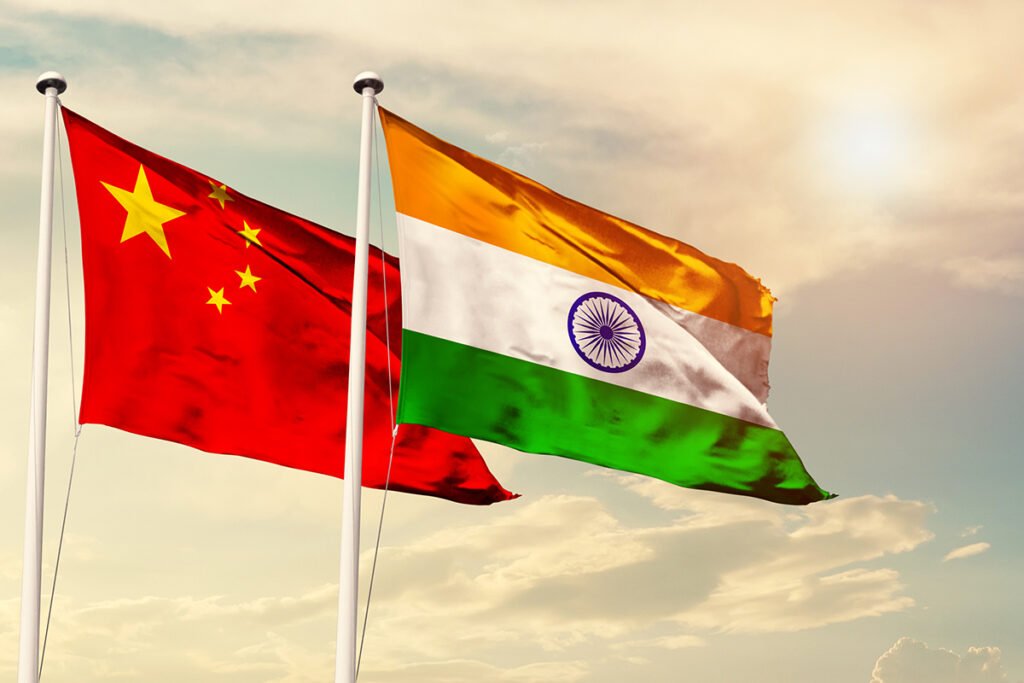
India’s finance ministry is planning to scrap restrictions imposed in 2020 that effectively barred Chinese companies from bidding on lucrative government contracts worth an estimated $700-750 billion. The curbs, introduced after a deadly border clash between Indian and Chinese troops, required bidders from bordering nations to register with a government committee and secure political and security clearances—a process that often led to disqualifications. Practical Pressures and Policy Recommendations Drive Change Multiple government ministries have sought exemptions, citing shortages, project delays, and hindrances to sectoral goals, such as expanding thermal power capacity to 307 GW over the next decade due to restricted imports of Chinese equipment. A high-level committee led by former cabinet secretary Rajiv Gauba recommended easing the rules. Sources indicate the final decision rests with Prime Minister Narendra Modi’s office. This shift follows eased diplomatic tensions, Modi’s visit to China last year, and agreements to deepen commercial ties—partly influenced by external factors like U.S. tariffs on Indian goods. However, restrictions on Chinese foreign direct investment remain intact, signaling a cautious approach. The move could revive competition in infrastructure and manufacturing tenders, reversing trends like a 27% drop in awards to Chinese bidders in 2021.

United Bank Limited Market Capitalization Sets a New Record at PSX
Uncategorized

United Bank Limited Market Capitalization Sets a New Record at PSX

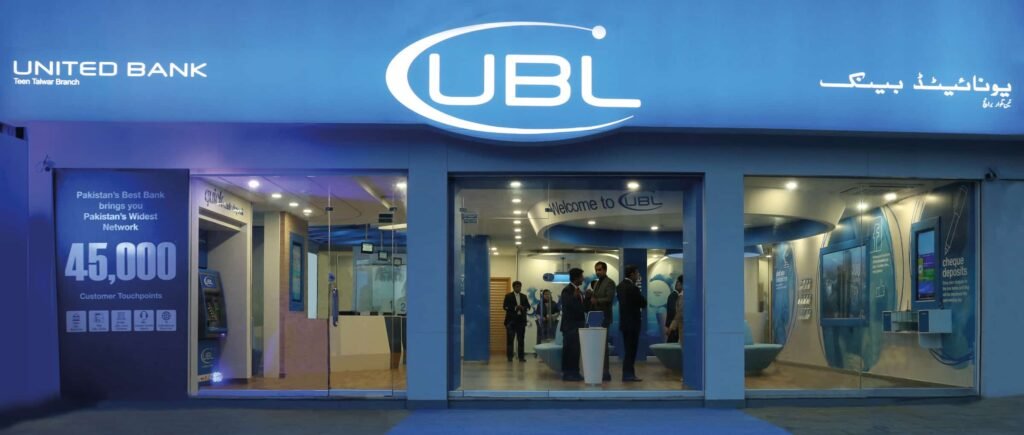
United Bank Limited market capitalization has reached a historic milestone, as UBL (PSX: UBL) becomes the largest listed company at the Pakistan Stock Exchange (PSX) by market value during today’s trading session. This landmark achievement marks a turning point for Pakistan’s banking sector and underscores renewed investor confidence in the country’s equity markets. During intraday trading, United Bank Limited market capitalization surged past Rs 1.275 trillion (approximately $4.5 billion), overtaking Oil & Gas Development Company Limited (OGDC), which had dominated the top position at PSX for several years. United Bank Limited Market Capitalization Surpasses OGDC According to Sohail Mohammed, Chief Executive Officer of Topline Securities, UBL’s rise to the top reflects a broader shift in market leadership. OGDC, historically regarded as Pakistan’s most valuable listed company due to its energy sector dominance, has now been eclipsed by a financial institution signaling a structural transformation in the equity landscape. This shift highlights how banking stocks, supported by higher profitability, strong balance sheets, and disciplined capital management, are increasingly attracting long-term investors. A Three-Year Transformation in United Bank Limited Market Capitalization What makes this achievement even more remarkable is the pace of UBL’s growth. Just three years ago, United Bank Limited market capitalization stood at below $500 million. Today, it has expanded nearly ninefold, reflecting exceptional strategic execution and operational resilience. In simple terms, UBL’s journey can be explained as follows: • From a sub-$500 million valuation to over $4.5 billion• Driven by consistent earnings growth and improved asset quality• Supported by rising dividend payouts and shareholder-friendly policies This transformation positions UBL as one of the most successful turnaround stories in Pakistan’s corporate history. United Bank Limited Share Price Performance and Market Reaction At the time of writing, UBL shares were trading at Rs 510, gaining Rs 22.2 in a single session, representing a 4.55% increase. This sharp upward movement reflects strong institutional buying and heightened investor optimism following the milestone. Higher trading volumes and sustained price momentum indicate that market participants are re-rating the stock based on its long-term earnings potential rather than short-term cycles. Why United Bank Limited Market Capitalization Matters for Pakistan The rise of United Bank Limited market capitalization is more than just a corporate success story it carries broader implications for Pakistan’s financial markets. First, it reinforces the banking sector’s leadership within the PSX, highlighting its role as a key driver of market returns. Second, it signals improving investor sentiment toward Pakistan’s macroeconomic outlook, particularly in relation to interest rate stability and financial sector reforms. Finally, UBL’s ascent positions the bank as a bellwether stock, meaning its performance could influence overall market direction in the coming years. United Bank Limited as a Bellwether for the Equity Market UBL’s scale, liquidity, and profitability now place it at the center of Pakistan’s equity ecosystem. As the largest listed company by market capitalization, its financial results, dividend announcements, and strategic decisions are likely to shape investor expectations across the broader market. For domestic and foreign investors alike, United Bank Limited market capitalization serves as a benchmark for evaluating Pakistan’s financial sector strength and long-term growth potential. A Defining Moment for United Bank Limited Market Capitalization The rise of United Bank Limited market capitalization to the top of the Pakistan Stock Exchange marks a defining moment for both the bank and the country’s capital markets. It reflects disciplined management, resilient fundamentals, and sustained value creation for shareholders. As Pakistan’s largest listed company, UBL is now positioned not only as a banking leader but also as a symbol of confidence in the future of Pakistan’s equity market.

20 million Pakistani children, equal to whole Sri Lanka, remain out of school, First-Ever Digital HIES 2024–25:
Uncategorized

20 million Pakistani children, equal to whole Sri Lanka, remain out of school, First-Ever Digital HIES 2024–25:

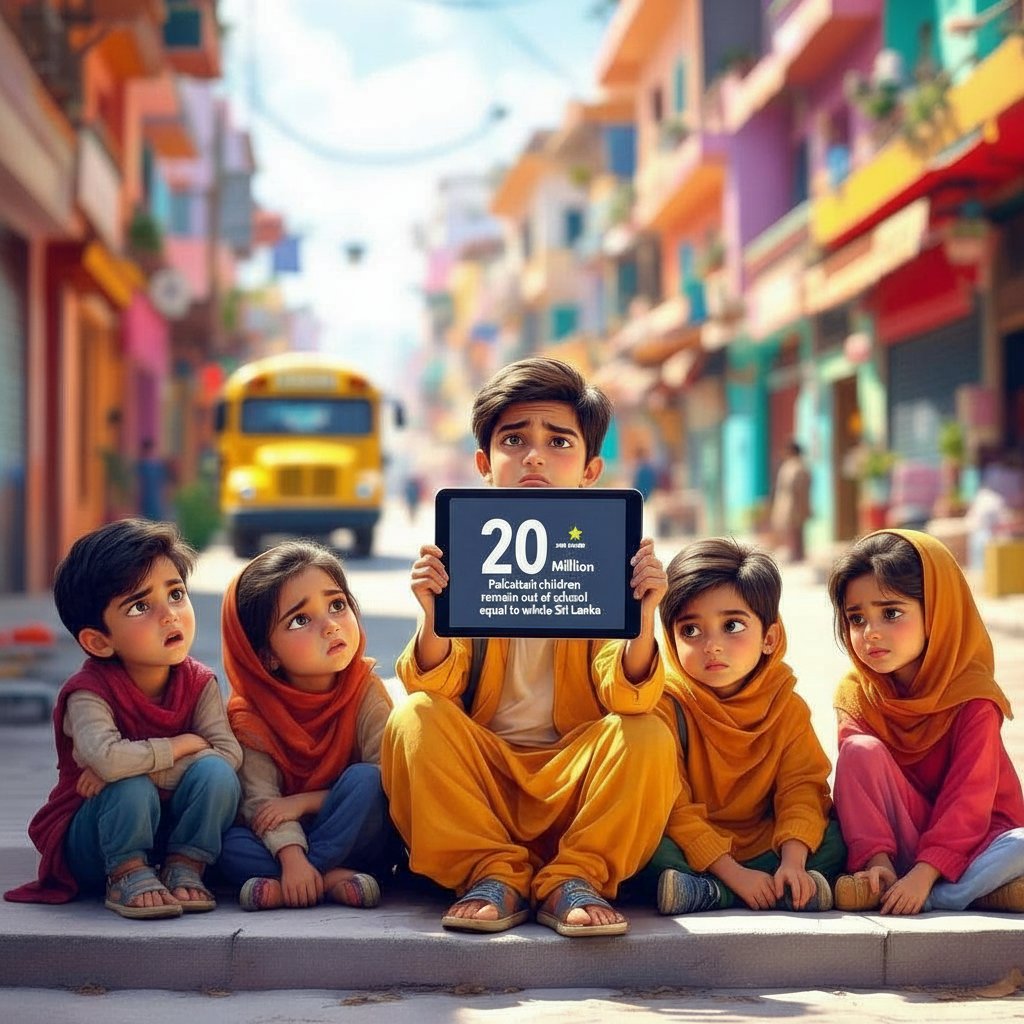
On January 1, 2026, Federal Minister Ahsan Iqbal launched Pakistan’s first-ever fully digital Household Integrated Economic Survey (HIES) 2024–25 at the Ministry of Planning in Islamabad. Conducted by the Pakistan Bureau of Statistics (PBS), the survey covered 32,000 households quarterly until June 2025, using an integrated ERP system for real-time data collection post the 2023 Digital Census. Key highlights include nationwide literacy rising from 60% to 63%, out-of-school children dropping from 30% to 28% approximately 20 million, and gender parity at primary level improving from 92% to 96%. Household internet access surged dramatically from 34% to 70%, with individual internet usage jumping from 17% to 57%. Smartphone ownership reached 96%, underscoring rapid digital penetration. Health and Living Standards Show Positive Trends Amid Calls for Action Health indicators reflected progress, with full immunization coverage (record-based) increasing from 68% to 73%, neonatal mortality falling from 41 to 35 per 1,000 live births, and infant mortality declining from 60 to 47. The total fertility rate edged down from 3.7 to 3.6 children per woman, while clean fuel usage rose from 35% to 38%. Household incomes and consumption grew, with major spending on food (37%) and housing/fuel (26%). Minister Iqbal praised PBS’s transformation into a data-driven institution, emphasizing the survey’s role in evidence-based policymaking and tracking SDGs. He urged addressing the education emergency to reach 90% participation and reduce 25 million out-of-school children, while calling for national unity toward a trillion-dollar economy by 2035.

CCP battles in the courts in 2025: Imposes Rs2.36bn Penalties, Recovers Rs933m; Issues 47 Show-Cause Notices
Uncategorized

CCP battles in the courts in 2025: Imposes Rs2.36bn Penalties, Recovers Rs933m; Issues 47 Show-Cause Notices

ISLAMABAD, Jan 1, 2026: During 2025, the Competition Commission of Pakistan (CCP) imposed penalties of Rs2.363 billion, recovered Rs932.56 million, and issued 47 show-cause notices to undertakings involved in cartelization, price-fixing, prohibited agreements, and deceptive marketing practices. During the year, the CCP made significant progress in reducing its court case backlog by 70 percent. Through early hearing applications, the appointment of competent lawyers, and effective follow-up, the Commission secured decisions in 434 cases out of a total backlog of 567 cases as of August 2023. This represents an average of almost one case resolved every two days. Read More: https://theboardroompk.com/ccp-sounds-alarm-fake-pesticides-widespread-in-punjab-and-sindh-causing-massive-farmer-losses/ Moreover, the Commission passed eleven orders under the Competition Act, 2010. These included five orders related to cartelization and prohibited agreements and four orders for deceptive marketing. One order in the FMCG sector set aside a show-cause notice due to lack of evidence. The CCP also granted second-phase merger approval for the acquisition of Telenor Pakistan and Orion Towers by Pakistan Telecommunication Company Limited. The PTCL–Telenor transaction order was highly complex, involving assessment across five different markets, and was one of the most distinctive transactions globally. In 2025, the Commission imposed penalties amounting to Rs2.363 billion across key sectors. These included Rs1.562 billion on Aisha Steel Mills Limited and International Steels Limited for price-fixing, Rs375 million on the Fertilizer Manufacturers of Pakistan Advisory Council and six member companies for collusive practices, and Rs155 million on the Pakistan Poultry Association and eight Day Old Chicks (DOC) companies for fixing prices. Penalties were also imposed on Hyundai Nishat Motors, Al-Ghazi Tractors, British Lyceum, Kingdom Valley, pharmaceutical distributors, and transporters’ associations for deceptive marketing and prohibited agreements. As part of its enforcement actions in 2025, the CCP issued 47 show-cause notices. These included 14 notices for deceptive marketing involving FMCG companies, certification services, and veterinary medicine suppliers. Twenty notices were issued to school systems for anti-competitive practices. Thirteen notices were issued under Section 4 for cartelization, including notices to ten sugar mills, two steel mills, and an edible oil transporters’ association. Most of these enforcement actions were directly related to safeguarding the general public and consumer interests. On the compliance front, the CCP recovered Rs932.56 million during 2025 through active adjudication and enforcement follow-up. This raised total penalty recoveries to over Rs1.194 billion in the last two years, compared to Rs200 million recovered in the previous 17 years since the Commission’s inception. The Commission reviewed 159 mergers across 34 sectors, including energy and power, telecommunications, services, industrial and manufacturing, financial services, consumer goods, and real estate. Key transactions reviewed during this period included the PTCL–Telenor acquisition, Shell Pakistan’s acquisition by Wafi Energy, SadaPay share transfer, Lotte Chemical Pakistan transaction, Total Parco restructuring, and the TCS Logistics acquisition. Building on this momentum, the CCP aims to further strengthen the impact of its enforcement nationwide. The Commission plans to establish offices in major cities to enhance market outreach, improve stakeholder engagement, and ensure more effective enforcement across Pakistan.

Punjab Closes 12 Canals for Annual Desilting: Mangla Command Shutdown Begins
Uncategorized

Punjab Closes 12 Canals for Annual Desilting: Mangla Command Shutdown Begins

LAHORE, Dec 29: The Punjab Irrigation Department has initiated its routine annual canal closure programme amid reduced inflows in the Indus and Jhelum rivers due to limited snowmelt and low rainfall in catchment areas. This essential maintenance exercise focuses on desilting, repairs, and rehabilitation to enhance the efficiency of the province’s vast irrigation network. Twelve canals under the Mangla Command have been closed starting December 26, with water supply suspended for two weeks on a rotational basis. Desilting operations commence once the canals are fully emptied, allowing engineers to inspect and repair embankments, structures, and other infrastructure components. No Major Impact on Rabi Crops Assured The closures form part of a two-phase plan, with the remaining nine canals of the Tarbela Command scheduled to shut down within the next two weeks for a similar two-week period. The entire programme is expected to conclude by January 31, ensuring canals are ready for increased demand in February. Irrigation experts highlight that Punjab’s extensive canal system spans over 36,000 kilometres, with nearly 18,000 kilometres of main canals closed annually for desilting. Officials, including Chief Engineer Engr Rashid Minhas and Director Punjab Irrigation Research Institute Dr Ghulam Zakir Hassan Sial, emphasize that the shutdown provides a critical window to identify damages and carry out necessary improvements. Agriculture consultants, such as Dr Anjum Ali, reassure farmers that the timing poses no significant threat to Rabi crops like wheat, as irrigation needs remain low in January. Farmers can rely on tubewell water during this period, with canal supplies resuming fully in February to support peak requirements.

Customs intercepts smuggled mobile phones worth Rs. 62 million
Uncategorized

Customs intercepts smuggled mobile phones worth Rs. 62 million

ISLAMABAD: The Anti-Smuggling Organization (ASO) of Collectorate of Customs Enforcement, Karachi successfully intercepted a consignment of smuggled mobile phones worth approximately Rs.62 million during an intelligence-based operation conducted on Thursday morning.Acting on credible information regarding the movement of a Mazda truck transporting smuggled mobile phones from Balochistan to Karachi, ASO teams swiftly deployed plainclothes squads at strategic locations, said a news release. Read More: https://theboardroompk.com/foreign-branded-phones-surge-in-china-shipments-more-than-double-in-november/ Mazda truck bearing registration number NAF-859, approaching from Sakran Road, was intercepted at the Hamdard Checkpost which was subsequently shifted to the CPF Warehouse for detailed examination.During inspection, 803 assorted-brand mobile phones, including iPhone, Vivo, Google Pixel, Infinix, and Spark, were recovered from a specially concealed cavity inside the vehicle.The seized mobile phones are valued at approximately Rs. 62 million, while the Mazda vehicle is estimated to be worth Rs. 25 million, bringing the total value of the case to around Rs. 87 million.The driver and helper have been taken into custody, and further legal proceedings are underway. An FIR is being lodged in accordance with the relevant provisions of law.This successful operation reflects FBR’s sustained commitment to combat smuggling and illicit trade.

Foreign-branded smartphones have made a strong comeback in China as shipments more than doubled in November, signaling renewed consumer demand despite intense competition from domestic brands. 👉 For full shipment data, market context, and what’s driving the surge, click the link in the first comment. #ChinaTech #Smartphones #Apple #MobileMarket #TechNews #ConsumerTrends
Uncategorized

Foreign-Branded Phones Surge in China: Shipments More Than Double in November

Data released by the China Academy of Information and Communications Technology (CAICT) on December 25, 2025, revealed a dramatic surge in foreign-branded mobile phone shipments to China in November, more than doubling year-on-year to 6.93 million units—a 128.4% increase. This sharp rise contrasts with the overall market’s modest 1.9% growth to 30.16 million units, highlighting renewed consumer interest in international brands, particularly Apple’s iPhones, amid a stabilizing domestic economy. Read More: https://theboardroompk.com/india-considers-mandating-constant-smartphone-location-surveillance-amid-backlash-from-apple-samsung-and-google/ Background on China’s Smartphone Market Dynamics China, the world’s largest smartphone market, has long been dominated by local brands like Huawei, Vivo, Xiaomi, and Oppo, which collectively hold over 70% share in recent years. Foreign brands, led by Apple, faced headwinds from intense competition, U.S.-China trade tensions, and Huawei’s resurgence post-sanctions. Apple’s sales declined for several quarters through early 2025, dipping below 20% market share at times. However, the September 2025 launch of the iPhone 17 series, featuring advanced AI capabilities and localized features, sparked a turnaround. October saw Apple’s sales jump 37% year-on-year, capturing 25% market share—the highest since 2022. Drivers Behind the November Surge and Implications The November spike is largely attributed to sustained demand for the iPhone 17 lineup, including the popular base model and Pro variants, boosted by holiday promotions and year-end inventory builds. Foreign brands’ share rose significantly, signaling a shift in premium segment preferences. Analysts note this recovery reflects Apple’s strategic pricing adjustments, ecosystem loyalty, and innovations countering domestic rivals. While overall market growth remains tepid, this foreign brand momentum could pressure local manufacturers to accelerate AI and foldable innovations. For global players, it underscores China’s enduring importance, potentially adding billions in revenue amid broader economic recovery signals.

From OpenAI to Nvidia, Tech Giants Pour Trillions into AI Infrastructure Amid Explosive Demand
Uncategorized

From OpenAI to Nvidia, Tech Giants Pour Trillions into AI Infrastructure Amid Explosive Demand

In late 2025, major technology firms are accelerating investments in artificial intelligence infrastructure, with deals totaling hundreds of billions of dollars announced throughout the year. From OpenAI securing massive funding and computing commitments to hyperscalers like Google expanding data centers, the sector is experiencing unprecedented growth driven by the need for immense computing power to advance AI models toward human-level intelligence or beyond. President Donald Trump highlighted projects like the Stargate data center initiative in January, projecting up to $500 billion in investments. This surge reflects surging demand for generative AI tools like ChatGPT and video generators, pushing companies to secure chips, cloud capacity, and facilities amid fierce competition. Background on the AI Boom The generative AI revolution ignited by OpenAI’s ChatGPT in late 2022 has evolved into a full-scale infrastructure arms race by 2025. Companies require vast data centers equipped with advanced GPUs and custom processors to train and run increasingly complex models. Nvidia dominates chip supply, while cloud providers like Oracle, Amazon Web Services, and Microsoft Azure compete for workloads. Key deals include Nvidia’s potential $100 billion investment in OpenAI, Amazon’s talks for a $10 billion stake valuing OpenAI over $500 billion, and Oracle’s $300 billion computing commitment to OpenAI over five years. Partnerships extend to content, with Disney investing $1 billion in OpenAI for character integration into tools like Sora. Major Deals and Expansions Notable transactions involve Meta securing $14 billion in computing from CoreWeave and a 49% stake in Scale AI for $14.3 billion. Google is investing $40 billion in Texas data centers through 2027, while a Nvidia-backed group acquired Aligned Data Centers for $40 billion. Anthropic received investments from Microsoft ($5 billion) and Nvidia ($10 billion). These moves address energy-intensive demands, with projects like Stargate aiming to build massive facilities. As demand outpaces supply, companies are forming alliances for chips (e.g., Broadcom and AMD with OpenAI) and cloud services, signaling sustained multi-year spending.

Holiday Boost for PSX: Benchmark Index Gains Nearly 1,200 Points
Uncategorized

Holiday Boost for PSX: Benchmark Index Gains Nearly 1,200 Points

The Pakistan Stock Exchange (PSX) experienced a robust opening on December 26, 2025, following a holiday closure on Christmas Day. The benchmark KSE-100 Index surged by nearly 1,200 points in the morning session, reflecting renewed investor confidence amid global market trends and domestic economic signals. This gain comes after a slight dip earlier in the week, highlighting the market’s resilience in a roll-over period typically marked by caution. Background: The KSE-100, introduced in 1991, serves as the primary gauge of Pakistan’s equity market performance, comprising the top 100 companies by market capitalization on the PSX. Over the past year, the index has navigated volatility driven by factors like inflation, interest rate adjustments by the State Bank of Pakistan, and geopolitical tensions. In 2025, the economy showed signs of recovery with GDP growth projected at 3.5%, supported by IMF-backed reforms and increased remittances. However, challenges such as energy shortages and fiscal deficits have periodically pressured stocks. The previous trading day on December 24 saw the index close down 0.14% at 170,830.22 points due to selective selling in heavyweights. Today’s rally, pushing the index to 172,008.63 by midday, is attributed to buying in blue-chip sectors, buoyed by positive Asian market cues where indices like Japan’s Topix hit record highs Read More: https://theboardroompk.com/ogdc-circular-debt-settlement-advances-with-sixth-tfc-interest-payment/ Sector-Wise Performance Boosts Momentum Key sectors including automobile assemblers, cement, commercial banks, fertilizers, oil and gas exploration, oil marketing companies (OMCs), and refineries led the charge. Index-heavy stocks such as Attock Refinery (ARL), Pakistan Refinery (PRL), Hub Power (HUBCO), Mari Petroleum (MARI), Oil & Gas Development Company (OGDC), Pakistan Petroleum (PPL), Pakistan State Oil (PSO), Wah Noble (WAFI), Habib Bank (HBL), MCB Bank (MCB), and National Bank of Pakistan (NBP) all traded in positive territory. This broad-based buying indicates investor bets on improving corporate earnings and potential policy easing in the new year. Global Influences and Future Outlook Internationally, Asian stocks reached six-week highs, with South Korea’s benchmark up 72% annually and China’s blue-chips gaining 18%. A softer yen and precious metals rally added to the risk-on sentiment, spilling over to emerging markets like Pakistan. Analysts suggest this intra-day strength could sustain if trading volumes rise, though thin liquidity due to holidays in Europe and parts of Asia might cap gains. With the PSX’s BR100 up 0.74% and BR30 surging 1.17%, the market appears poised for a positive close to 2025, potentially setting the stage for continued growth in 2026 amid stabilizing macroeconomic indicators.

Apple CEO Tim Cook Doubles Nike Stake with $3 Million Purchase
Uncategorized

Apple CEO Tim Cook Doubles Nike Stake with $3 Million Purchase

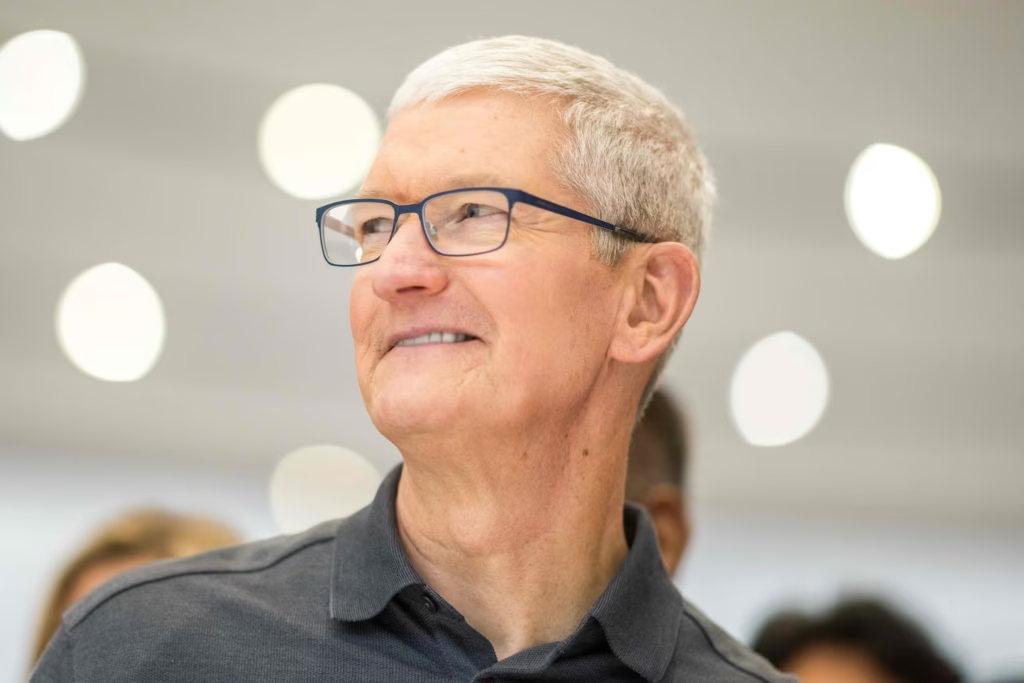
Apple CEO Tim Cook, a long-time member of Nike’s board since 2005 and its lead independent director, purchased 50,000 shares of Nike stock on December 22, 2025, at an average price of $58.97 per share. The transaction, valued at approximately $2.95 million, nearly doubled his personal stake to about 105,000 shares, worth roughly $6 million at recent levels. This marks one of the largest open-market purchases by a Nike director or executive in over a decade. The move came shortly after Nike reported weaker quarterly margins and sluggish sales in China on December 18, which had caused the stock to slump nearly 13% in the following days. Read More: https://theboardroompk.com/apple-and-google-issues-warnings-of-passwords-breach-warnings-around-world-including-pakistan/ Stock Rebounds Amid Challenges Following the disclosure of Cook’s purchase via a regulatory filing, Nike shares (NKE) closed 4.6% higher on December 23 at $60, making it one of the top performers on the S&P 500 that day. Analysts interpreted the buy as a strong endorsement of new CEO Elliott Hill’s “Win Now” turnaround strategy, which includes fresh marketing, innovation in running and sports categories, phasing out underperforming lifestyle brands, and improving relationships with wholesalers. Another board member, former Intel CEO Robert Swan, also bought around 8,700 shares for about $500,000 this week. Despite ongoing headwinds like excess inventory, competition from newer brands, and market share losses, Cook’s action—viewed as a “modest positive” by some investors—provided a lift to sentiment as Nike aims to stabilize amid its fourth consecutive year of potential stock declines.

Scroll to Top